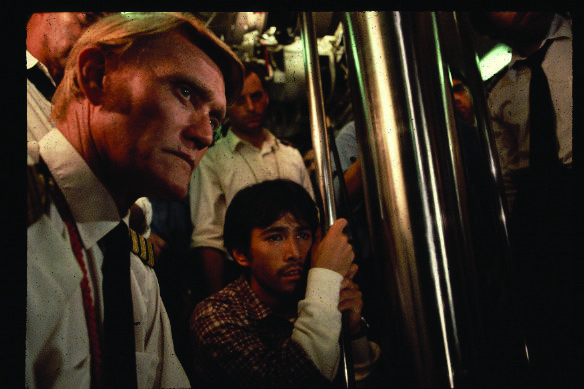
Fukkatsu no Hi © KADOKAWA 1980
Series | Home Cinema Vol. 2: Rediscovering Kadokawa Films, the Grand Epics of the Showa Era (Part 1)
Cinema At Home
Volume 2: Rediscovering Kadokawa's Epic Films of the Showa Era (Part 1)
The film industry has seen new productions halted due to the pandemic. While there are now moves to release new films online, one way to support the filmmakers who always entertain us is by watching older movies.Watch original content from streaming servicesbut it's also recommended to revisit films you saw as a child, cherished movies you want to see again, or classic Showa-era masterpieces you missed. When new films are released one after another, it's easy to put off watching older ones. Now is the perfect chance to reconnect with nostalgic classics. For me, born in the Showa era, Kadokawa films—which left a powerful impression in my childhood—were a welcome reunion.
Text by MAKIGUCHI June | Edit by ANDO Sara
Enjoying Grandeur and Scale: "THE Japanese Entertainment"
Even if you've seen a film before, rewatching it as you age can lead to entirely different impressions. This is likely due to a deeper understanding of details you overlooked previously. While browsing streaming service lists for something to watch from the past, I came across "Virus.
"Virus." It's precisely what the world is waiting for. So, taking this "STAY HOME" opportunity, I decided to watch this film first on a streaming service. I heard it wasn't a box office hit at the time of its release, but the film is regaining attention among those contemplating the global changes surrounding COVID-19 and the future "with COVID-19 society." This may truly be its time for a "resurrection."
It's unlikely that this adaptation of Sakyo Komatsu's novel has ever been received with such realism and terror.
In the film, the worst tragedy begins when a new strain of virus, developed for biological warfare, is accidentally released. In 1981, the "monster in the form of a virus" spread rapidly across the globe, attacking Europe, the Americas, Asia, and the Japanese archipelago. The only continent untouched by the monster was Antarctica. By the autumn of 1982, humanity was nearly extinct. The survivors numbered 863 people stationed at bases in Antarctica.
A survival drama then unfolds. The concept of borders, now meaningless, is discarded as people, amidst confusion, fear, and anxiety, join hands—a truly poignant sight. The roles assigned to the few remaining women are also harrowing. Furthermore, natural disasters like earthquakes and the retaliatory systems of nuclear missiles deployed during the Cold War become threats at ironic moments, as one catastrophe after another strikes.
It's unlikely that this adaptation of Sakyo Komatsu's novel has ever been received with such realism and terror.
In the film, the worst tragedy begins when a new strain of virus, developed for biological warfare, is accidentally released. In 1981, the "monster in the form of a virus" spread rapidly across the globe, attacking Europe, the Americas, Asia, and the Japanese archipelago. The only continent untouched by the monster was Antarctica. By the autumn of 1982, humanity was nearly extinct. The survivors numbered 863 people stationed at bases in Antarctica.
A survival drama then unfolds. The concept of borders, now meaningless, is discarded as people, amidst confusion, fear, and anxiety, join hands—a truly poignant sight. The roles assigned to the few remaining women are also harrowing. Furthermore, natural disasters like earthquakes and the retaliatory systems of nuclear missiles deployed during the Cold War become threats at ironic moments, as one catastrophe after another strikes.
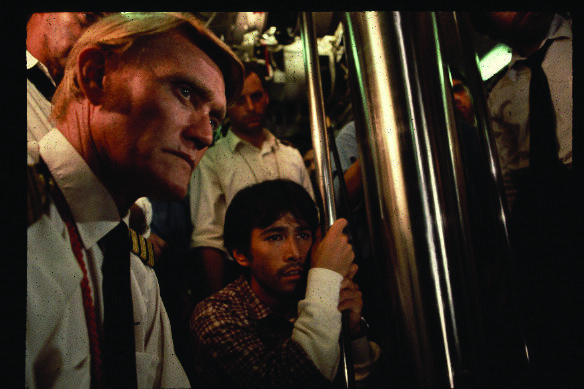
"Virus." © KADOKAWA 1980
It made me wonder if the current world is perhaps better off than the one depicted in the film. The medical system collapsing, the speed of infection spread, the confrontation between the US and China, the frequent earthquakes—many aspects align with the reality reported in the news. In the story, what initiates humanity's unprecedented crisis of extinction, and what ultimately delivers the final blow, are both human creations. Conversely, the hope for salvation comes from nature, which humans have so relentlessly destroyed—the harsh environment of Antarctica. This is also quite ironic.
In reality, Antarctica has reported no cases of the COVID-19 pandemic currently sweeping the globe. A BBC article from May 15, 2020, referred to Antarctica as "the only continent on Earth free of the novel coronavirus." Antarctica, isolated from the world for several months, currently hosts bases from 29 countries. Before COVID-19, there was frequent interaction and cooperation among these bases. An Indian doctor stationed there noted that such harmony between nations is unimaginable in the real world (outside Antarctica). The film depicts the Antarctic team members, facing the brink of human extinction, working together with remarkable rationality, albeit with some confusion, to survive. This, needless to say, is a key factor in overcoming the virus. While the film has become perhaps too realistic for mere entertainment, its scale, achieved through a production cost of 2.5 billion yen and the dedication of its crew—including 40 days of filming in Antarctica and location shoots in Alaska and Machu Picchu—is a testament to the power of live-action filming over special effects.
In reality, Antarctica has reported no cases of the COVID-19 pandemic currently sweeping the globe. A BBC article from May 15, 2020, referred to Antarctica as "the only continent on Earth free of the novel coronavirus." Antarctica, isolated from the world for several months, currently hosts bases from 29 countries. Before COVID-19, there was frequent interaction and cooperation among these bases. An Indian doctor stationed there noted that such harmony between nations is unimaginable in the real world (outside Antarctica). The film depicts the Antarctic team members, facing the brink of human extinction, working together with remarkable rationality, albeit with some confusion, to survive. This, needless to say, is a key factor in overcoming the virus. While the film has become perhaps too realistic for mere entertainment, its scale, achieved through a production cost of 2.5 billion yen and the dedication of its crew—including 40 days of filming in Antarctica and location shoots in Alaska and Machu Picchu—is a testament to the power of live-action filming over special effects.
Many people I know claimed to have seen "The Inugami Family," a film with such iconic scenes, yet surprisingly few had actually watched it in its entirety. This was the very first Kadokawa film. The white mask covering Sukekiyo's face. Two legs sticking out of the lake. These images were so catchy that perhaps people assumed they had seen it. Although I've watched it many times, this was my first viewing as a film critic, and while I found many points to critique, I thoroughly enjoyed the high-quality entertainment.
The story revolves around a series of gruesome murders at the Inugami family's lakeside estate in Shinshu. It's a mystery drama characteristic of the Showa era, where hidden truths about post-war societal upheaval, inheritance disputes over vast fortunes, and conflicts between half-siblings were often buried. Detective Kosuke Kindaichi unearths the dark secrets of the prominent family. He serves as our guide into this world of shadows.
His disheveled hair, traditional attire, wooden clogs, and seemingly absentminded demeanor provide a sense of relief amidst the tense and eerie atmosphere, bringing a perfect balance of light and shadow to the narrative. In a way, he might be compared to Columbo. The contrast between the serious investigation and Kindaichi's bumbling persona, played by the handsome Koji Ishizaka when he's not acting the part, doubles the amusement.
This story by Seishi Yokomizo is highly popular and has been adapted into film multiple times, but the Kadokawa film version (1976) remains unparalleled in its depiction of a dubious era and its grotesque elements. The golden duo of director Kon Ichikawa and star Koji Ishizaka is also superb. Ichikawa's innovative direction, featuring unique camerawork, tension-building cross-cutting, extensive use of still shots, and a memorable drum-heavy score, showcases his adventurous spirit as a filmmaker.
The story revolves around a series of gruesome murders at the Inugami family's lakeside estate in Shinshu. It's a mystery drama characteristic of the Showa era, where hidden truths about post-war societal upheaval, inheritance disputes over vast fortunes, and conflicts between half-siblings were often buried. Detective Kosuke Kindaichi unearths the dark secrets of the prominent family. He serves as our guide into this world of shadows.
His disheveled hair, traditional attire, wooden clogs, and seemingly absentminded demeanor provide a sense of relief amidst the tense and eerie atmosphere, bringing a perfect balance of light and shadow to the narrative. In a way, he might be compared to Columbo. The contrast between the serious investigation and Kindaichi's bumbling persona, played by the handsome Koji Ishizaka when he's not acting the part, doubles the amusement.
This story by Seishi Yokomizo is highly popular and has been adapted into film multiple times, but the Kadokawa film version (1976) remains unparalleled in its depiction of a dubious era and its grotesque elements. The golden duo of director Kon Ichikawa and star Koji Ishizaka is also superb. Ichikawa's innovative direction, featuring unique camerawork, tension-building cross-cutting, extensive use of still shots, and a memorable drum-heavy score, showcases his adventurous spirit as a filmmaker.
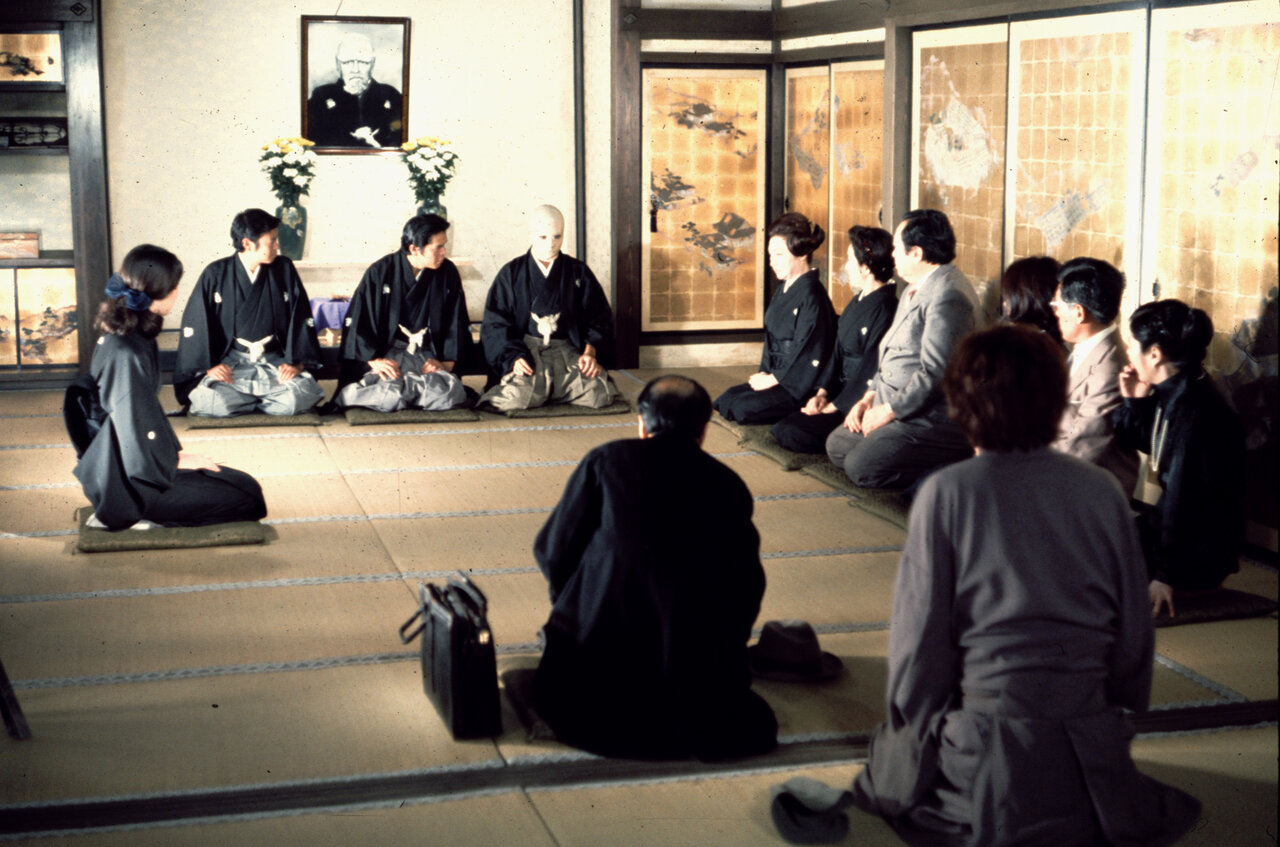
"The Inugami Family" © KADOKAWA 1976
Incidentally, this duo went on to create five Kindaichi Kosuke films based on Yokomizo's stories: "The Devil's Bow-Legged Wife," "Gokumon Island," "The Beehive," and "The House with a Clock Tower." Only the first, "The Inugami Family," was a Kadokawa film. The subsequent four were produced by Toho, with Kadokawa participating in the planning (and the novels published under the Kadokawa Bunko imprint). Throughout the series, Ichikawa's experimental direction reveals his joy as a filmmaker, and Ishizaka's Kindaichi is a compelling character.
I highly recommend watching not just the first film, but all of them. One unique pleasure you can experience only by doing so is seeing the same actors appear multiple times in different roles. Showa-era superstars like Takeshi Kato, Ryoko Sakaguchi, Mitsuko Kusabue, Hideji Otaki, Shoji Kobayashi, and Norihei Miki repeatedly portray similar characters, showcasing their immense talent and providing a remarkable sense of stability to the world they inhabit. It's as if parallel universes exist, centered around Kindaichi. The familiarity of seeing known faces adds a sense of closeness to the films, a distinct advantage of a series.
I highly recommend watching not just the first film, but all of them. One unique pleasure you can experience only by doing so is seeing the same actors appear multiple times in different roles. Showa-era superstars like Takeshi Kato, Ryoko Sakaguchi, Mitsuko Kusabue, Hideji Otaki, Shoji Kobayashi, and Norihei Miki repeatedly portray similar characters, showcasing their immense talent and providing a remarkable sense of stability to the world they inhabit. It's as if parallel universes exist, centered around Kindaichi. The familiarity of seeing known faces adds a sense of closeness to the films, a distinct advantage of a series.
Speaking of actors, I paid little attention to their performances as a child. The persuasiveness embedded in their acting held little significance for me then, unlike now. "The Inugami Family" features major screen stars, and their brilliance still surprises me. The fact that so many prominent figures collaborated highlights how special Kadokawa films were.
Returning to "Virus," Masao Kusakari was outstanding. While he continues to age gracefully and is highly active today, he was incredibly cool back then. More than just his looks, he portrayed the shy researcher role with remarkable sensitivity and displayed a commanding presence unusual for a newcomer. With the setting in Antarctica, the interactions with personnel from various countries stationed at Antarctic bases form the core of the story. Among the international cast, 80% of the dialogue is in English. I was completely captivated by his talent in fearlessly expressing human vulnerability, regret, and strength of will. Reuniting with films as an adult offers the great reward of rediscovering the actors' charms.
Incidentally, Masao Kusakari's comical performance in "The House with a Clock Tower" (which, I repeat, is a Toho film) is refreshingly lighthearted. His rapport with Kindaichi is also a highlight.
Countless individuals contributed to the success of Kadokawa films, from the original authors and production teams to the directors. However, the achievements of the actors who fully embodied their roles are undeniable. Kadokawa was a genre that consistently prioritized "screen stars" and upheld the star system until the very end. I'll discuss this further in the second part.
Returning to "Virus," Masao Kusakari was outstanding. While he continues to age gracefully and is highly active today, he was incredibly cool back then. More than just his looks, he portrayed the shy researcher role with remarkable sensitivity and displayed a commanding presence unusual for a newcomer. With the setting in Antarctica, the interactions with personnel from various countries stationed at Antarctic bases form the core of the story. Among the international cast, 80% of the dialogue is in English. I was completely captivated by his talent in fearlessly expressing human vulnerability, regret, and strength of will. Reuniting with films as an adult offers the great reward of rediscovering the actors' charms.
Incidentally, Masao Kusakari's comical performance in "The House with a Clock Tower" (which, I repeat, is a Toho film) is refreshingly lighthearted. His rapport with Kindaichi is also a highlight.
Countless individuals contributed to the success of Kadokawa films, from the original authors and production teams to the directors. However, the achievements of the actors who fully embodied their roles are undeniable. Kadokawa was a genre that consistently prioritized "screen stars" and upheld the star system until the very end. I'll discuss this further in the second part.
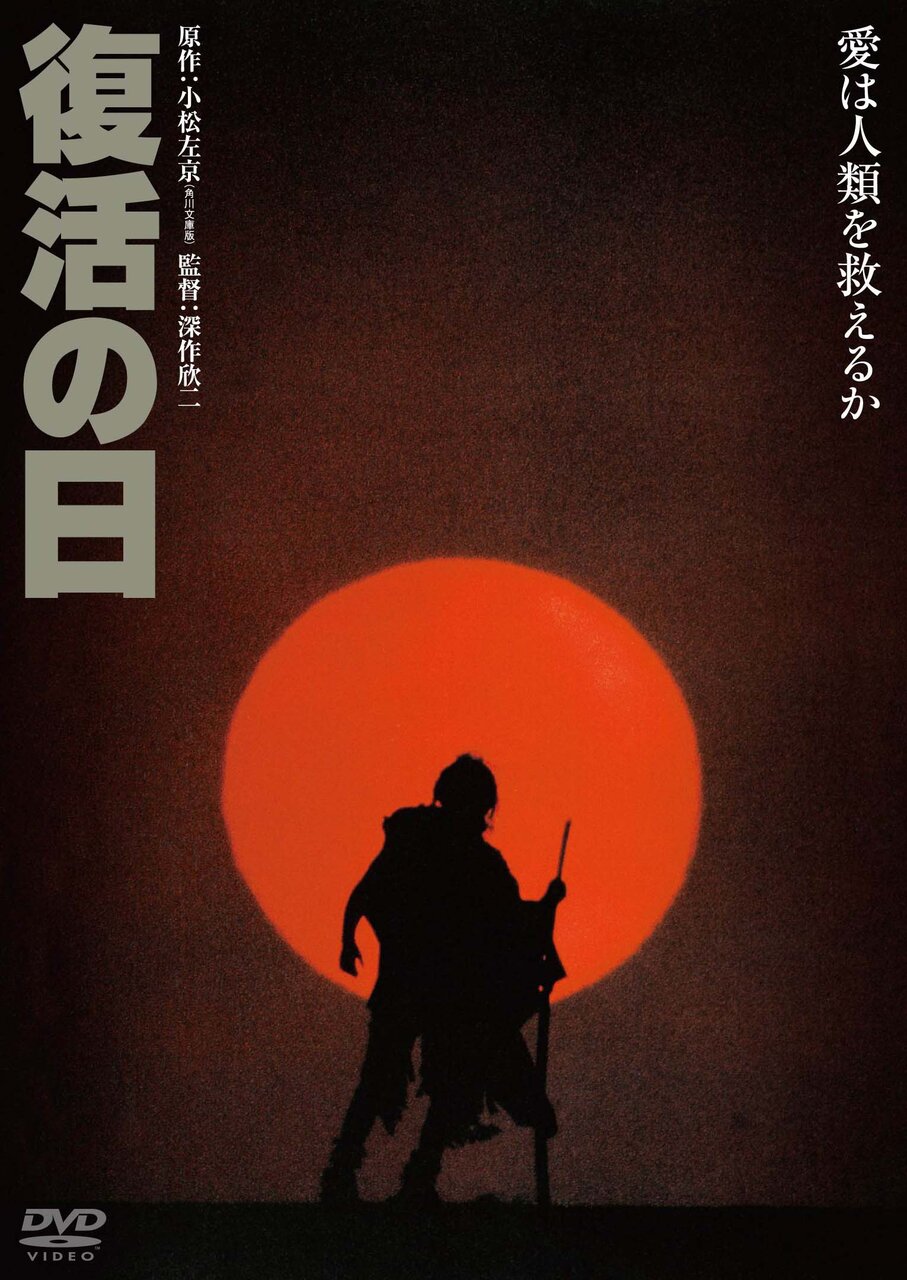
"Virus: Kadokawa Film THE BEST"
Price | Blu-ray ¥2,000 (excluding tax)
Distributor | KADOKAWA CORPORATION
Price | Blu-ray ¥2,000 (excluding tax)
Distributor | KADOKAWA CORPORATION
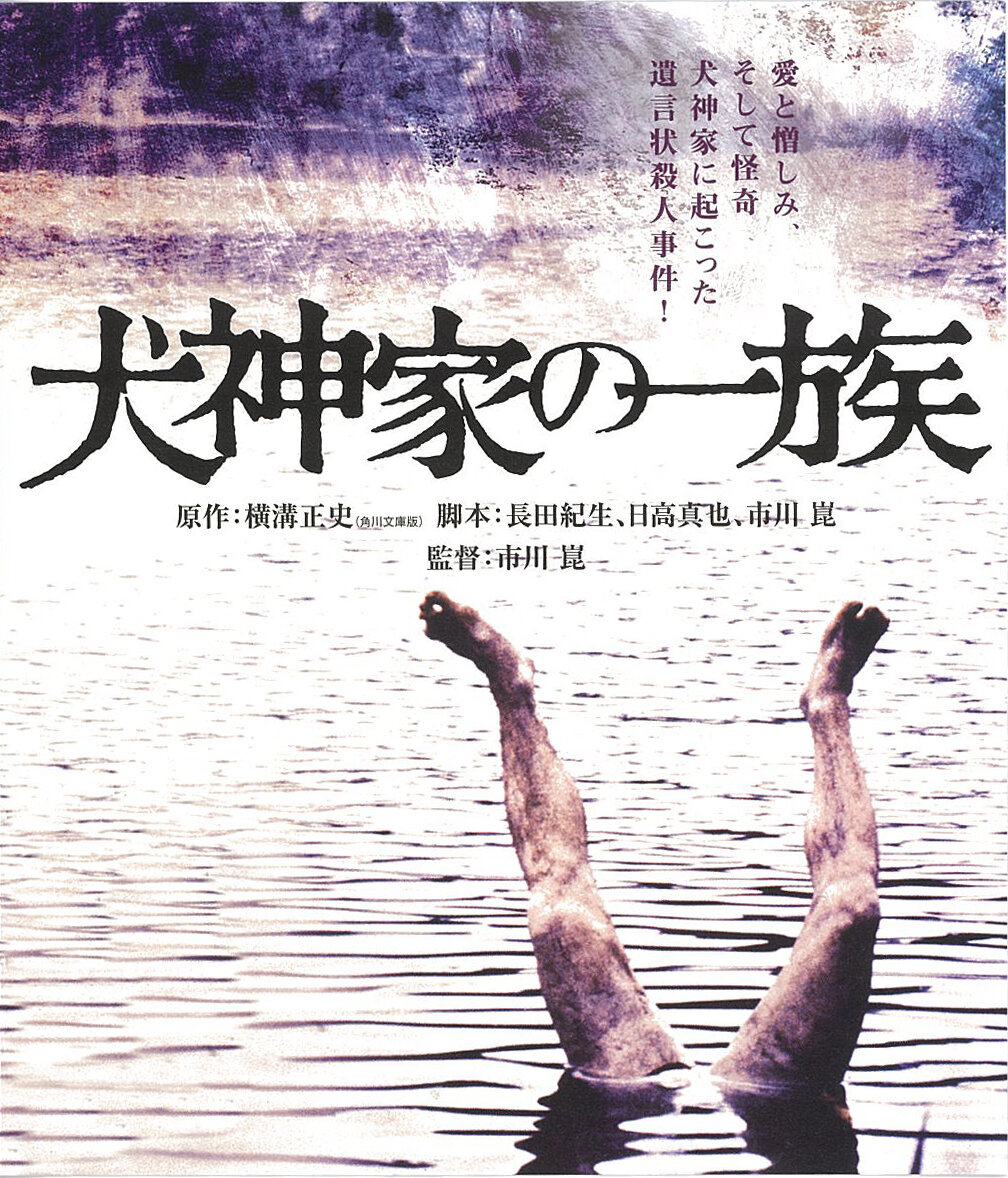
"The Inugami Family: Kadokawa Film THE BEST"
Price | Blu-ray ¥2,000 (excluding tax)
Distributor | KADOKAWA CORPORATION
Price | Blu-ray ¥2,000 (excluding tax)
Distributor | KADOKAWA CORPORATION