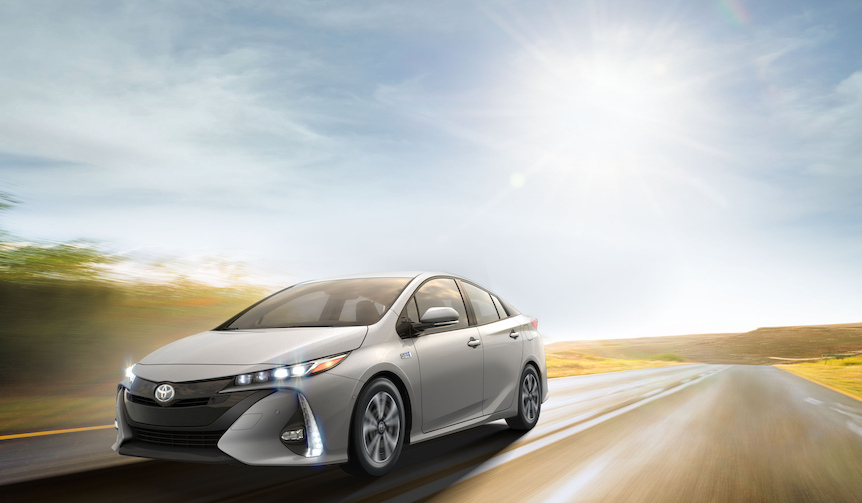
Toyota Unveils Second-Generation Prius Plug-in Hybrid | Toyota
Toyota Prius PHV
Toyota Announces Second-Generation Prius Plug-in Hybrid
At the New York Auto Show, Toyota unveiled the plug-in hybrid version of the new Prius, the Prius PHV.
Text by HORIGUCHI Yoshihiro (OPENERS)
Design That Clearly Identifies It as a PHV
Announced last DecemberThe fourth-generationPrius, like its predecessor, will also feature a plug-in hybrid version, the Prius PHV. In the United States, where it was announced, it is named the "Prius Prime."
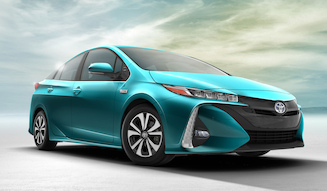
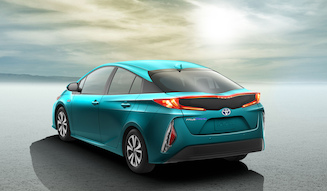
The new model, the second-generation PHV, features an acrylic grille and four-lens LED projector headlights at the front. Additionally, it sports a distinct design from the standard Prius, including a double-bubble shape that extends from the rear glass to the spoiler, differentiating it clearly as a PHV.
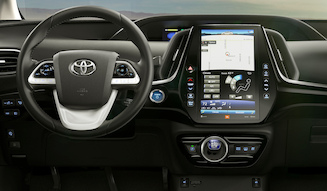
Inside, a vertical 11.6-inch full HD display is centrally located. It supports not only touch but also pinch and flick gestures, allowing for intuitive operation of navigation, climate control, and other functions.
The powertrain combines a 1.8-liter inline-four engine, producing a maximum output of 72 kW (98 ps) and a peak torque of 142 Nm (14.5 kgm), with an electric motor. Furthermore, by adding a one-way clutch between the generator and the engine, the generator can temporarily assist as a drive motor.
The battery is a larger capacity lithium-ion unit, enabling an electric-only driving range of up to 60 km. In the Japanese specification, it supports rapid charging, which was not possible with the previous model. Using rapid charging facilities, which are becoming common at highway service areas, convenience stores, and public facilities, allows for an 80% charge in approximately 20 minutes.
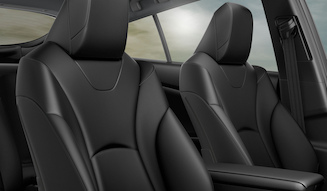
Due to the enlarged battery, the luggage space has been raised by 77 mm. The rear seats are designed for two occupants with a center console.
In the Japanese specification, a solar charging system is adopted for the roof. Toyota explains that this solar power generation system, which charges the drive battery while parked, is a world first, unlike previous systems for low-power devices.
In addition to these features, the new model incorporates the lightweight "TNGA" architecture adopted from the fourth-generation Prius, a function that anticipates navigation and informs the driver of the optimal deceleration timing (i.e., when to start regenerative braking), and a heat pump automatic air conditioner with gas injection. These contribute to achieving a JC08 mode hybrid fuel economy of 37.0 km/ℓ, an approximately 17 percent improvement over the previous generation's 31.6 km/ℓ.
Naturally, it also includes the function expected of a PHV: serving as an emergency power source utilizing its large-capacity battery. While equipped with a 100V power outlet as standard inside the vehicle, it is also possible to supply power externally by connecting an accessory outlet with a waterproof cover, with considerations for accidental vehicle startup and theft. This feature is also exclusive to the Japanese specification.

Toyota Prius PHV (Prius Prime in the US)
Body Dimensions: Length 4,645 x Width 1,760 x Height 1,470 mm
Wheelbase: 2,700 mm
Engine: 1,797 cc Inline-4
Engine Max Output: 72 kW (98 ps) / 5,200 rpm
Engine Max Torque: 142 Nm (14.5 kgm) / 3,600 rpm
Motor 1 Max Output: 53 KW (72 ps)
Motor 1 Max Torque: 163 Nm (16.6 kgm)
Motor 2 Max Output: 23 KW (31 ps)
Motor 2 Max Torque: 40 Nm (4.1 kgm)
Drivetrain: FF
Hybrid Fuel Consumption (JC08 Mode): 37.0 km/ℓ
EV Driving Range: 60.0 km
* All are reference values based on internal measurements of US specifications.