December 4, 2014
The 20th Century's Greatest EV Brand Is Back: Detroit Electric
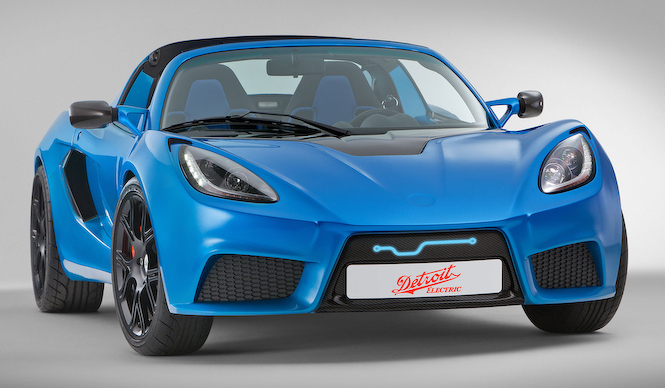
Detroit Electric SP:01
20th Century's Greatest EV Brand is Revived in China
With the electric mid-ship two-seater sports car called "SP:01"Shanghai Motor ShowDetroit Electric, which appeared at the show, is a brand that is both new and has a long history. Motohiro Yamazaki explains its origins and future.
Text by YAMAZAKI Motohiro
The Origins of Detroit Electric
Detroit, Michigan, USA. In the early 20th century, an EV manufacturer called Detroit Electric existed here.
Founded in 1907, the company sold approximately 13,000 EVs by 1939. Unfortunately, it became impossible to continue the business, and it remained only a name in history.
Incidentally, this figure of 13,000 units is the largest among EVs sold in the 20th century. In other words, Detroit Electric was the most successful EV manufacturer of the 20th century.
This Detroit Electric has now been revived in the modern era. The new leader, Albert Lam (Lin Xiushan), is a person who has demonstrated his skills as the CEO of Lotus Engineering and Executive Director of Lotus Cars, and his roots are in China.
Will it be the Second Tesla?
It goes without saying that the reason Auto Shanghai was chosen as the stage for its official debut is that its revival was made possible by capital investment from China.
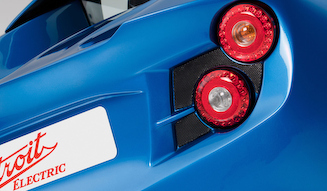
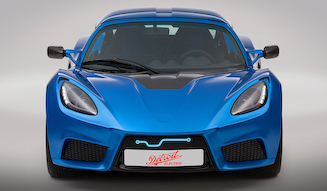
The new Detroit Electric, of course, has its development and production base in Detroit. The model announced at Auto Shanghai is the "SP:01," its first model. As its styling easily suggests, it is a mid-ship two-seater sports car with a basic structure of an aluminum frame supplied by Lotus.
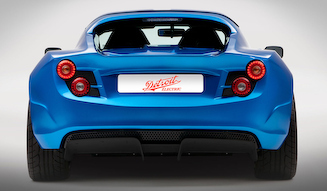
A limited production run of 999 units is planned to start in markets worldwide, including Japan, within 2013.
Furthermore, the company plans to launch two sedan models in 2014. The process here is similar to that ofTeslawhich, though once called an EV venture, achieved historical success in just a few years to be regarded as a veteran brand among EV manufacturers.
Its Architecture
The electric motor generating the drive power has a maximum output of 201 ps at 7,000-8,000 rpm. Combined with a 4-speed gearbox, the synergy with its lightweight 1,090 kg body achieves 0-100 km/h acceleration in 3.7 seconds and a top speed of 249 km/h.
Additionally, an optional 5-speed gearbox, and even a 2-speed automatic gearbox called "Twin Speed," are available.
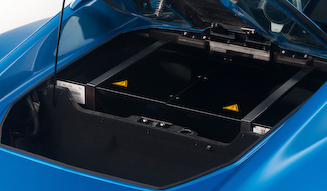
The lithium-ion polymer batteries, split into two packs and mounted in the floor section behind the cabin, are supplied by KOKAM of South Korea. However, the battery packs and thermal management systems are developed by Detroit Electric.
The battery capacity is 37 kWh, and the total weight of the two packs is announced as 300 kg. The driving range on a full charge is 288 km according to the NEDC test. A full charge requires 4.3 hours from a 240V power source.
The front and rear suspension design is basically the same double wishbone type as Lotus', but a unique setup has been achieved with Bilstein dampers and Eibach springs.
The steering is a conventional, non-assisted system, a choice made with the intention of creating a natural steering feel. Customers familiar with Lotus cars will surely know that this choice does not lead to significant dissatisfaction.
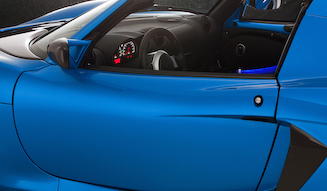
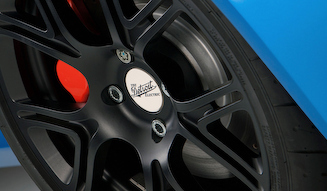
The brakes use AP Racing components at the front and Brembo at the rear, with ABS as standard equipment. The tires are sized 175/55R16 at the front and 225/45R17 at the rear, a staggered setup.
Scheduled to Launch in Japan
According to Mr. Lam, the SP:01 successfully garnered over 30 orders on the first day of Auto Shanghai alone.
The price in the US market is $135,000. Optional features include the choice of gearboxes mentioned earlier, a CFRP hardtop, and leather seats and trim available in blue, red, and tan.
Regarding sales in the Japanese market, Mr. Lam stated that preparations are already underway and an official importer is expected to be announced soon.