February 15, 2022
Test Drive: The New Mitsubishi Outlander PHEV, a Flagship SUV That Excels in Both Performance and Design
MITSUBISHI OUTLANDER PHEV
Test Drive: The New Mitsubishi Outlander PHEV
The flagship Mitsubishi SUV, the Outlander, has undergone a full model change for the first time in nine years. The previous model, released in 2012, garnered significant attention as an SUV equipped with a plug-in hybrid (PHEV) system, a configuration with no rivals at the time. However, it's also true that while the driving system was excellent, the interior and exterior were just a step away from matching the price point, which hindered sales growth. This new Outlander PHEV aims to thoroughly address those shortcomings, boasting improvements in both performance and design. I participated in a public road test drive event held in Chiba Prefecture to assess its capabilities.
Text & Photographs by HARA Akira
An Interior and Exterior of "Majestic Dignity"
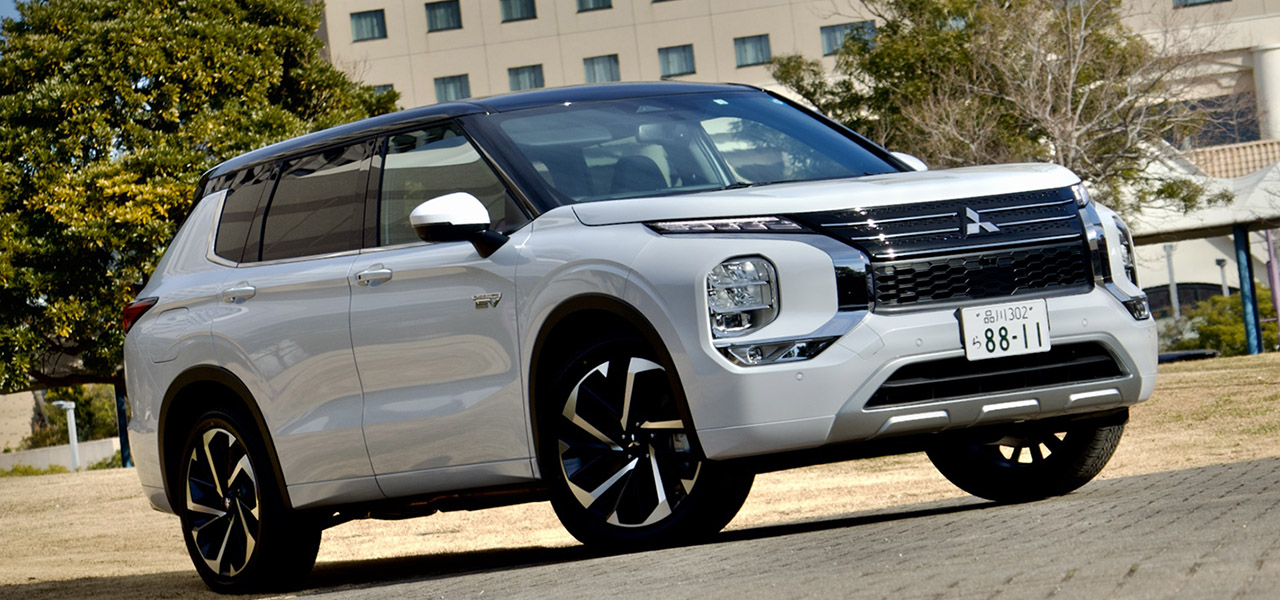
The test car, parked in the hotel parking lot in Makuhari, was the top-tier "P" grade of the new Outlander PHEV. Utilizing a common platform from the Nissan-Renault-Mitsubishi alliance, the body measures 4,720mm long, 1,860mm wide, and 1,745mm high. This makes it 15mm longer, 60mm wider, and 35mm taller than its predecessor, with a wheelbase extended by 35mm to 2,705mm.
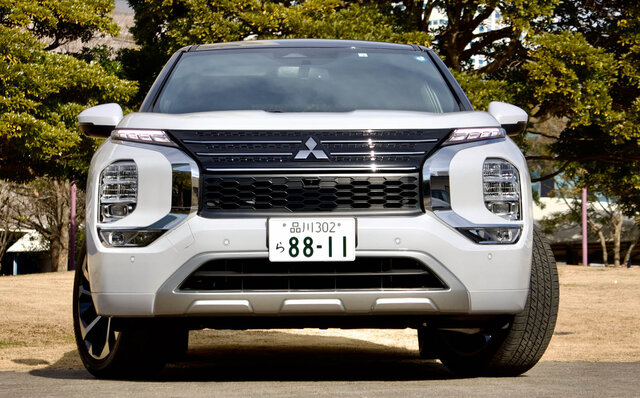
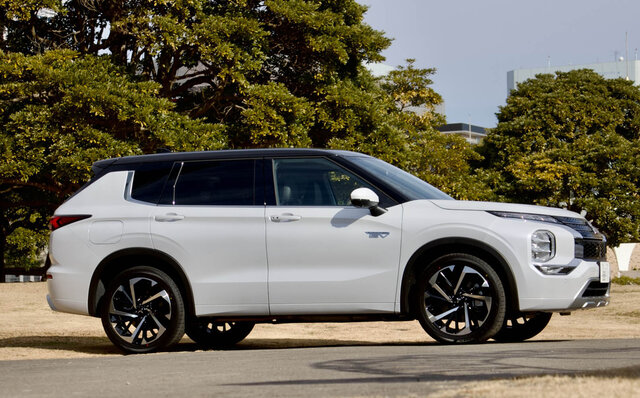
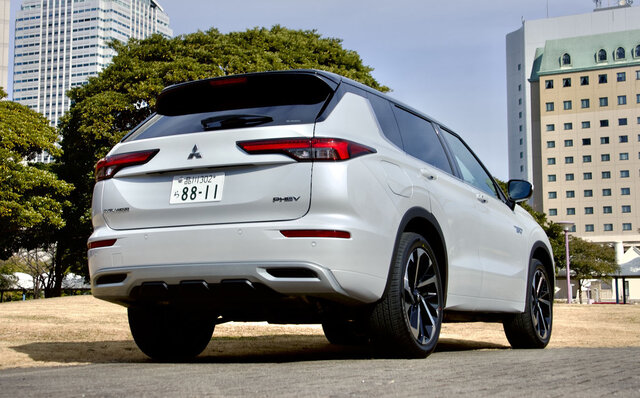
The two-tone body, in White Diamond and Black Mica, embodies the development concept of "majestic dignity" and looks quite impressive. The front features the distinctive "Dynamic Shield" face, a hallmark of recent Mitsubishi models, with a high bonnet line that extends horizontally towards the rear. The large 20-inch tires at each corner symbolize its power and contribute to its off-road capability, with approach, departure, and breakover angles of 19.7°, 23.3°, and 19.6° respectively.
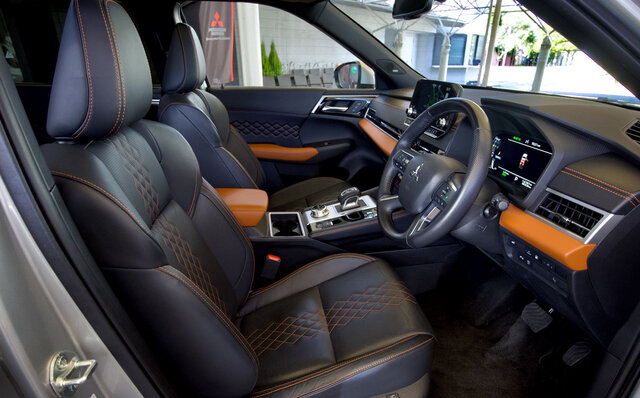
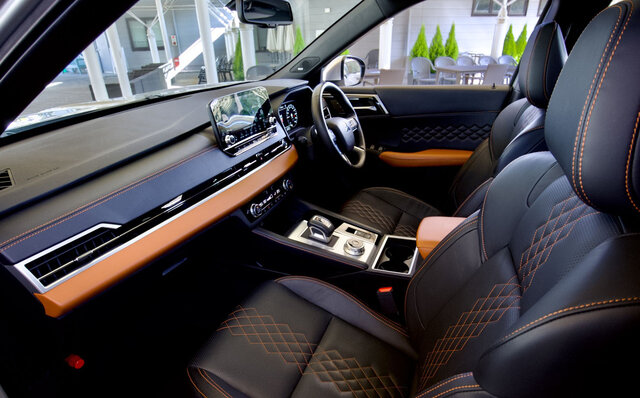
The new interior is particularly noteworthy. The black-themed cabin is accented with soft pads in a subdued saddle tan color on the lower dashboard and door armrests, creating a sense of luxury unusual for an SUV. It's a world of difference from the predominantly plasticky interior of the previous model (perhaps an exaggeration). The seats, made with a dual-layer urethane structure, are thick and offer good support. The Nappa leather upholstery features diamond-shaped quilting stitched with thread of the same color as the pads, adding a refined touch without being ostentatious.
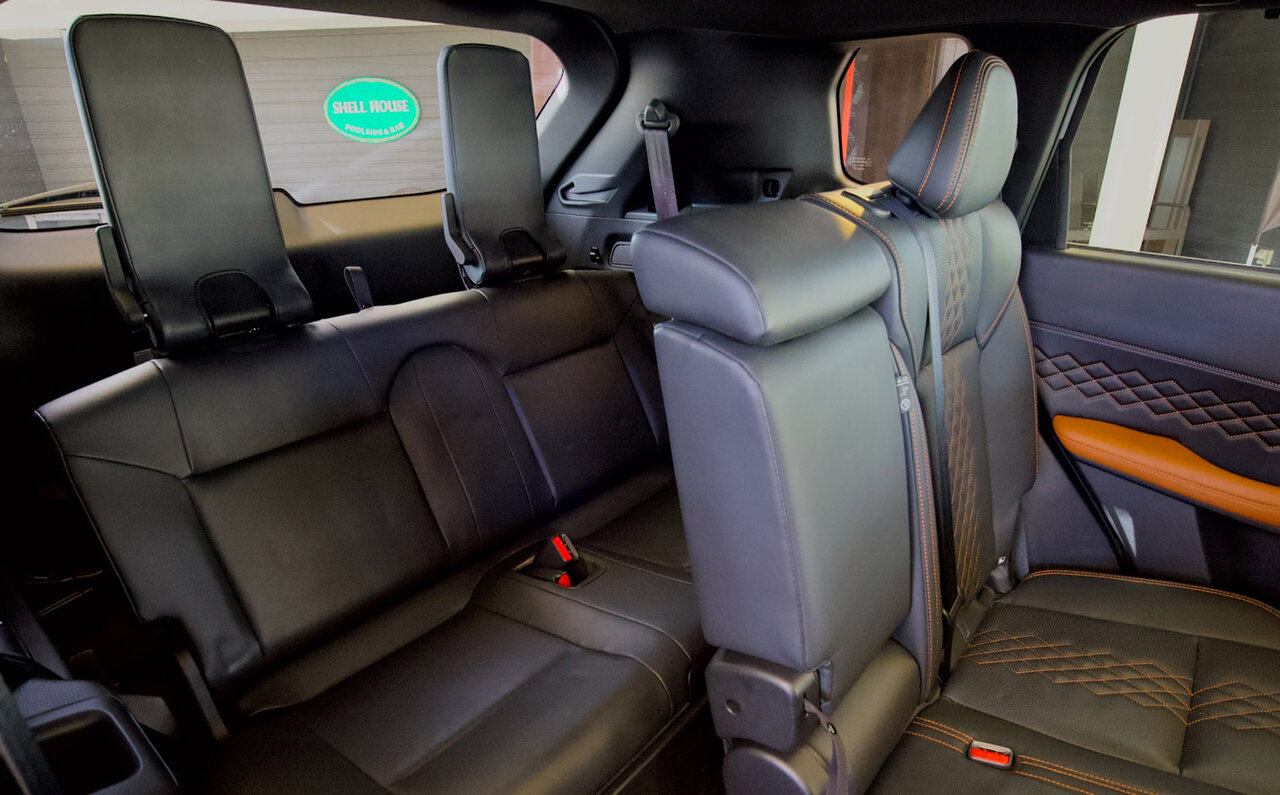
While the previous PHEV model was limited to five seats due to battery packaging, the new model, through innovative design (a compact, retractable storage system), now offers a three-row, seven-seat configuration as standard. Although the legroom in the third row is tight for an adult of my height (170cm), making it more suitable for emergency use, the ability to carry more passengers when needed is a significant advantage.
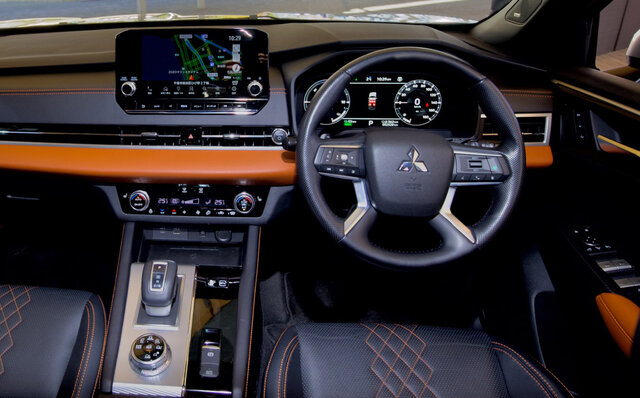
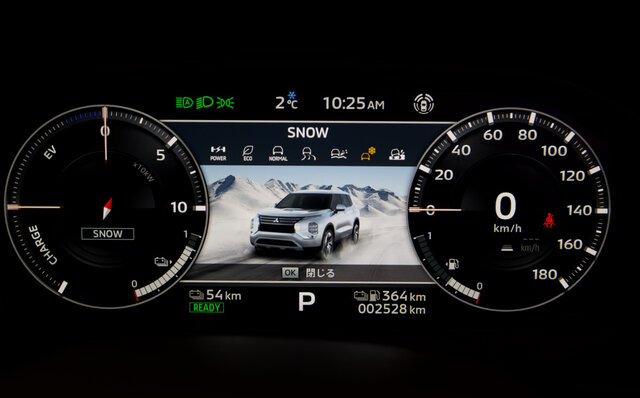
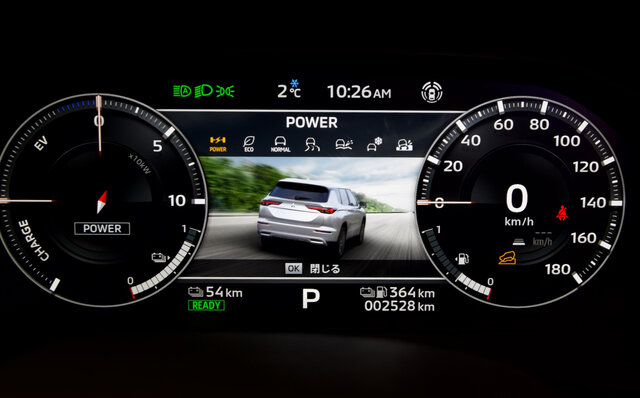
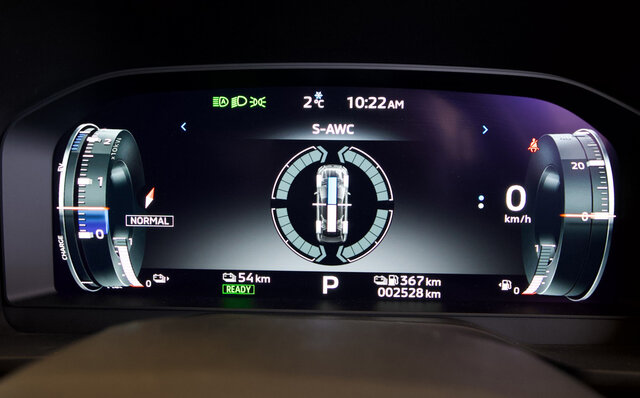
The full-color LCD display in front of the driver is a generous 12.3 inches, among the largest in Japan (matching the Nissan Note Aura). It offers two modes: "Classic Mode" with circular gauges for speed and hybrid system status, and "Enhance Mode" where the central display area expands. Both are clear, easy to read, and visually appealing. Perhaps Mitsubishi's TV display technology is utilized here. The "Enhance Mode" sound effects were co-developed with Bandai Namco Research, suggesting a gamer among the development team.