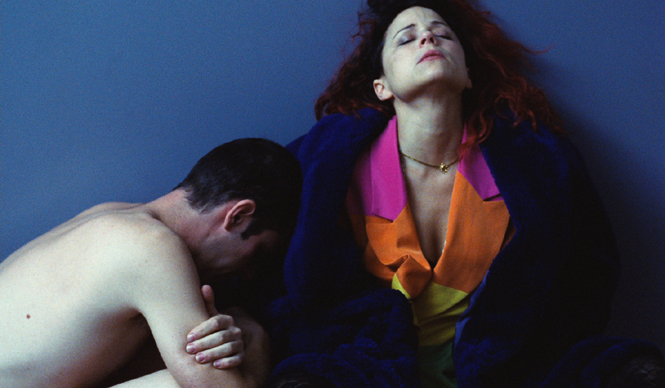
The shocking film "Laurence Anyways" by Cannes regular, director Xavier Dolan.
He wanted to be a woman. He wanted to love her.
A shocking work by Cannes regular, director Xavier Dolan
The love story of a "man who wants to be a woman" and his lover, "Laurence Anyways" (Part 1)
Director Xavier Dolan, a mere 24 years old, has had all three of his previous films selected for the Cannes Film Festival, generating considerable buzz. His deeply moving love story, "Laurence Anyways," begins its nationwide theatrical release on Saturday, September 7th, at Shinjuku Cinema Qualité and other theaters.
Text by KUROMIYA Yuzu
A strong, beautiful, and poignant love spanning 10 years

"Laurence Anyways" is a love story that powerfully, beautifully, and at times poignantly depicts the long years walked by Laurence, a "man who wants to be a woman," and his lover, Fred. The film was officially selected for the Un Certain Regard section at last year's Cannes Film Festival, where it received high acclaim.
Born in Quebec, Canada, director Xavier Dolan is currently 24 years old. At 18, he produced his debut film "I Killed My Mother," followed by "Heartbeats" at 19. He has achieved the remarkable feat of having all three of his films, including this one, selected for the Cannes Film Festival, marking him as a promising young director.
Hollywood maverick Gus Van Sant was so impressed by his talent that he volunteered to present the film during its American release. This anecdote highlights the significant attention the film has garnered.
The protagonist Laurence is played by French actor Melvil Poupaud, known for films like "The Son of the Girl with No Tears." His mother, Julienne, is portrayed by Nathalie Baye, a leading actress of the Nouvelle Vague. Suzanne Clément, who plays Fred, won the Best Actress award in the Un Certain Regard section at the 2012 Cannes Film Festival.
The story accelerates with the lover's coming out
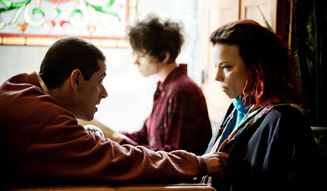
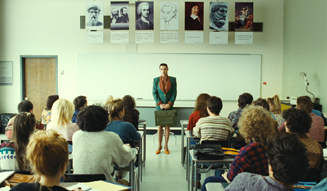
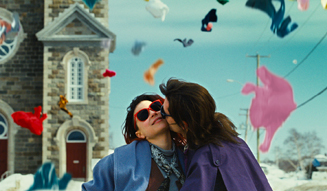
Laurence, a language teacher living in Montreal, confesses to his lover, Fred, "I want to become a woman." Upon hearing this, Fred vehemently criticizes Laurence but resolves to be his greatest supporter. Overcoming all opposition and their own doubts, they bravely confront societal prejudice and rejection through the passage of many years. What awaits them at the end?
We hope you will witness for yourself the story of Laurence and Fred's love, which confronts the issue of transgender identity without fear of societal backlash.
"He wanted to be a woman. He wanted to love her."
A shocking work by Cannes regular, director Xavier Dolan
The love story of a "man who wants to be a woman" and his lover, "Laurence Anyways" (Part 2)
Now, we present an interview with director Xavier Dolan. He candidly shares his reasons for tackling the theme of transsexuality (people with gender identity disorder) and what influenced him in making this film.
Edited by TANAKA Junko (OPENERS)
Autobiographical, and not autobiographical
—What inspired you to make this film?
It's based on a past romantic experience of one of the crew members from "I Killed My Mother." After hearing his story, I imagined: What would it feel like if a friend, parent, or partner suddenly confronted you with a shocking revelation? Even if all the time spent together wouldn't vanish, what would it feel like to have question marks placed upon it? That night, I went home and immediately wrote 30 pages of text. By then, I already knew the title and the ending.
—Is this an autobiographical work?
You could say it is, and you could say it isn't. The reason it isn't is, first and foremost, I am not transgender, and that issue is already resolved (Note: Director Dolan has publicly stated he is gay). On the other hand, you could say it is, because all the films I've made so far are autobiographical, reflecting my experiences and opinions. I don't think that stance will change in the future. Of course, there are films I make based on commissions. But a director always projects a little bit of themselves into their work. And I don't believe films that are 100% fiction actually exist.
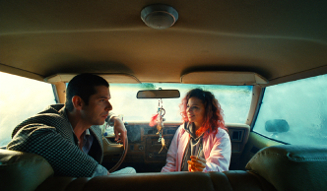
It seems I have a nature that compels me to express my feelings in my work. I don't mind being called a narcissist at all. I don't want to confuse the audience by talking about things I don't know well or can't control. It's not out of laziness or lack of ambition. But for now, I want to compete within my own domain. However, along with the sense of security that comes from having everything under control, there's also the aspect of directly receiving criticism from others. There's no buffer or protective screen; you're directly exposed.
People who see the film get to know Xavier Dolan as a person. The reason I entered the film industry was the fear of being forgotten. That's why I started acting in films. So, for me, every film is autobiographical in a sense. A director sells their personal memories to collective memory because they don't want to be forgotten. They might even sacrifice their lives for it. However, with each film, the references to memory decrease, and the focus shifts inward. Only then, I think, does the work truly speak about cinema itself.
—Why do you handle not only directing and screenwriting but also costume concepts and editing?
Cinema is the seventh art (Note*), meaning it integrates the other six arts (architecture, sculpture, painting, dance, music, and poetry). Fashion is often overlooked. In essence, I believe one should be interested in all aspects of filmmaking to truly understand it. Ultimately, I chose the art form that is the most expensive. While the concept can be conceived alone, production is naturally a collective effort. Certainly, costumes and editing are distinct aspects, but I want to be involved in both. I'm passionate about both.
—The music in this film is used very effectively. Could you tell us about your specific approach to music?
When a story spans over ten years, music can serve as a marker of time and place. But beyond that role, music accompanies the lives of the characters I've created. It reminds them of who they are and evokes the people they loved. It calls back forgotten individuals from oblivion, soothes sorrow, and recalls countless innocent lies and abandoned ambitions. Music has the power to affect our individual emotions. It's the only element with an impact that directors, actors, and cinematographers cannot freely control. This is why music is called the "soul of the film."
An era when prejudice against gay people began to fade
—What influenced this film?
For preparation, I bought dozens of fashion magazines, art books, and photo collections from Amazon and eBay. If I had to name specific influences, I'd mention photographer Nan Goldin. And countless others whose names I can't recall. For composition, I looked at Matisse, Tamara de Lempicka, Chagall, Picasso, Monet, Bosch, Seurat, and Mondrian. For color, Klimt. In terms of film, I paid a very precise homage, albeit brief, to Marlon Brando in "A Streetcar Named Desire."
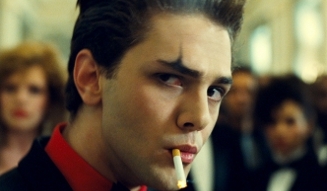
It's common to be inspired by everything you read, see, and hear while writing, even if it's not to your personal taste. First, you are moved by something. Influenced by that "something," we aim for our own form of expression. It's a game of telephone through imagination. In any case, all forms of expression in cinema have already been explored. While I have ambitions as a filmmaker, I have no intention of wasting time with the arrogance of thinking I've invented a style or a theory.
—Why did you set the film in the late 1980s and 1990s?
Setting the film in my childhood was a natural choice. It was an era when prejudice against the gay community was beginning to lessen, and the exclusive preconceptions surrounding AIDS were finally subsiding. The "iron curtain" was lifting. Through that period, society embraced freedom, and everything seemed permissible.
It's quite logical that the protagonist, Laurence Alia, would conceive of survival amidst the euphoria of this era. However, transgender individuals were likely still a taboo subject then. Thus, Laurence encounters a wall that is on the verge of collapse but doesn't quite crumble. Even today, a transgender teacher would likely stir the anxieties of parents who want to keep their children confined within a narrow cage.
To me, transgender identity represents the ultimate expression of "difference." There was no period more fitting than the 1990s to examine how much society had truly changed in a meaningful sense over the course of a decade. While this film presents this discussion, it only skims the surface.
"Laurence Anyways"
Nationwide release begins Saturday, September 7th, at Shinjuku Cinema Qualité and other theaters.
Director & Screenplay: Xavier Dolan
Starring: Melvil Poupaud, Suzanne Clément, Nathalie Baye
2012 / 168 min / Canada-France / Original Title: "Laurence Anyways"
http://www.uplink.co.jp/laurence