Equally Beautiful: Episode 4
A world where all is of equal value. A series contemplating the environment, begun with the idea that human life and the life of the Earth are Equally valuable.
My apologies for starting with such a trivial matter, but I'd like to talk about how I make coffee.
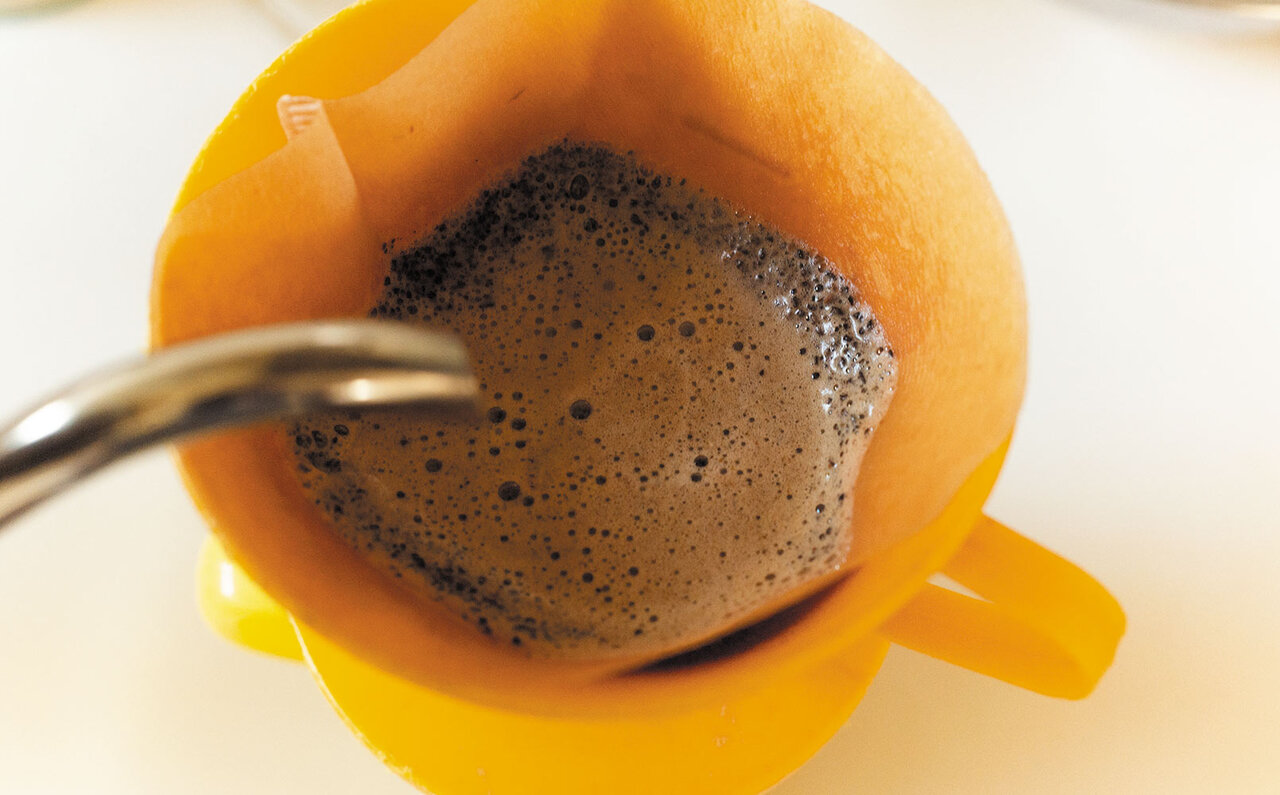
If it's just for one cup, I put water in the cup. If it's for a pot to share among a few people, I put water in the pot, then transfer that water to a narrow-mouthed drip kettle for coffee, place it on the stove, and turn on the heat. Then, I begin to drip.
Why? It's hard to explain, but I believe it conserves water and gas, and reduces CO2 emissions. You could call it saving money, and that's true, but I wonder if what we must consider globally right now isn't truly the accumulation of small actions by each individual. The mindset of valuing even a cup of water is something I want to carry forward.
Biomass Plastics: An Action for the Environment!
By now, readers are likely quite familiar with biomass plastics, but what OPENERS focuses on is how well they align with the current sustainable landscape. While sometimes used for fertilizers, they utilize non-edible raw materials such as "tall oil," a byproduct of pulping when using waste cooking oil or pine wood. Referred to as second-generation biomass resins, these are eco-friendly materials. The fact that biomass plastics have physical properties comparable to petroleum-based plastics is also appealing. Depending on future applications, there's potential for development, allowing us to create familiar products while being mindful of the environment. Furthermore, it's a welcome development that they don't interfere with other recycling systems, enabling the creation of a new virtuous cycle from scratch.
The Mass Balance Approach: Evolving Biomass Plastics.
As I researched biomass plastics, I came across the term "mass balance approach," which I'd like to explain briefly.
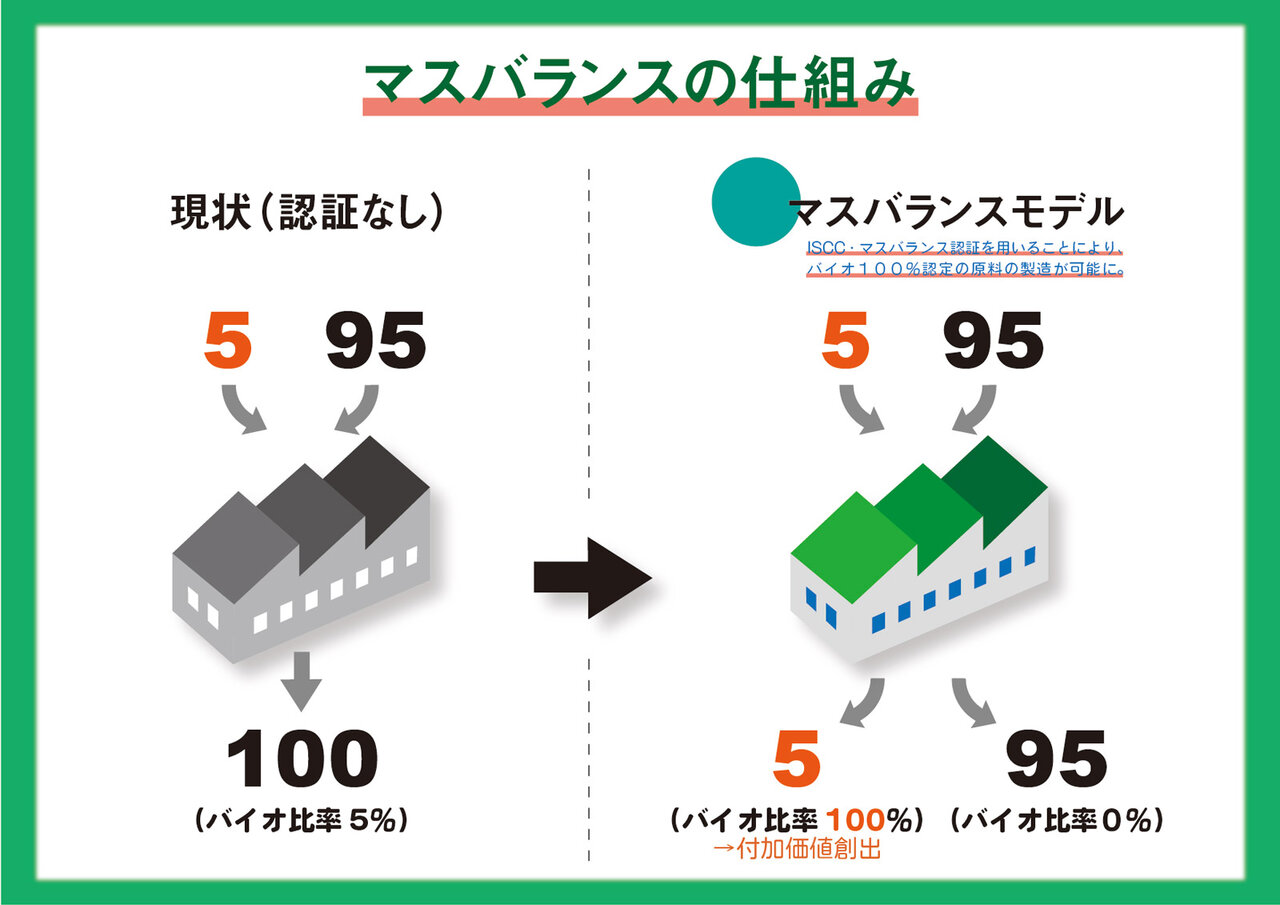
Mass balance refers to the balance of input resources and output substances. It's a concept already used in various industries, including paper, palm oil, and electricity. Let's consider applying the mass balance approach to biomass plastics. For example, if out of 100 tons of propane, the raw material for biomass polypropylene (PP), 10 tons are bio-propane and the remaining 90 tons are petrochemically derived propane, then 10 tons of the total PP produced can be considered "100% biomass PP."
The mass balance approach makes things visible. The clearer the input and output are, the more transparent the system becomes. The mass balance approach ensures traceability.
With the mass balance approach, the amount of raw materials inputted and the shipment volume of products made with those same materials must be strictly managed. Therefore, all value chains, from raw materials to packaging processing, are audited by third-party certification bodies. Users can also confidently choose "certified biomass products."
Moreover, this method allows production in existing factories without needing to build new ones for new materials, reducing environmental impact and initial investment. This affects product costs, and by not needing to construct new factories for biomass plastics, the environmental burden is lessened. It's a highly reliable system for the environment. In the first place, building small, dedicated factories would be energy-inefficient, so utilizing existing, energy-efficient (and thus low-environmental-impact) factories is a crucial point. You might be surprised, but building new, small factories can ultimately be detrimental to the environment.
The Future of Plastics: Towards a "Biomass" World.
When you hold a product certified as "biomass plastic," you feel you are doing something good for the global environment. It fosters a sense of purchasing environmentally friendly items. As consumers, we pay attention to each action and practice it ourselves. Unconsciously, this contributes to helping the environment. Isn't this the true meaning of sustainability?
To the readers of OPENERS, who I believe possess a global perspective, I have one final message from this interview. What I want you to keep in mind is this: "My single action extends the life of the Earth by one second." Extending the life of this planet is directly linked to our own health, and considering our health and the environment is undeniably beneficial for the global environment. Sustainability isn't just about cycles; interdependence is paramount.
Choosing biomass plastics is, in itself, an important action.