Equally Beautiful: Episode 3
A world where all is of equal value. Human life and the life of the Earth are equally important. A series that encourages us to think of the planet as our own.
Among biomass plastics, those derived from plants are gaining attention. They are made from surprisingly common materials. We should know about the current state of biomass plastics, made from resources that place less burden on the Earth.
Biomass plastics are created from resources that will truly open your eyes.
The other day, I visited a joint exhibition featuring several fashion brands and discovered a booth dedicated solely to eco-bags. The brand was "BALL&CHAIN." Their designs were stylish, and they offered a friendly and catchy lineup featuring collaborations with famous brands and popular characters. I suspect this was an innovative business idea launched in response to the mandatory charge for plastic shopping bags, which began on July 1, 2020, a date still fresh in our memory.
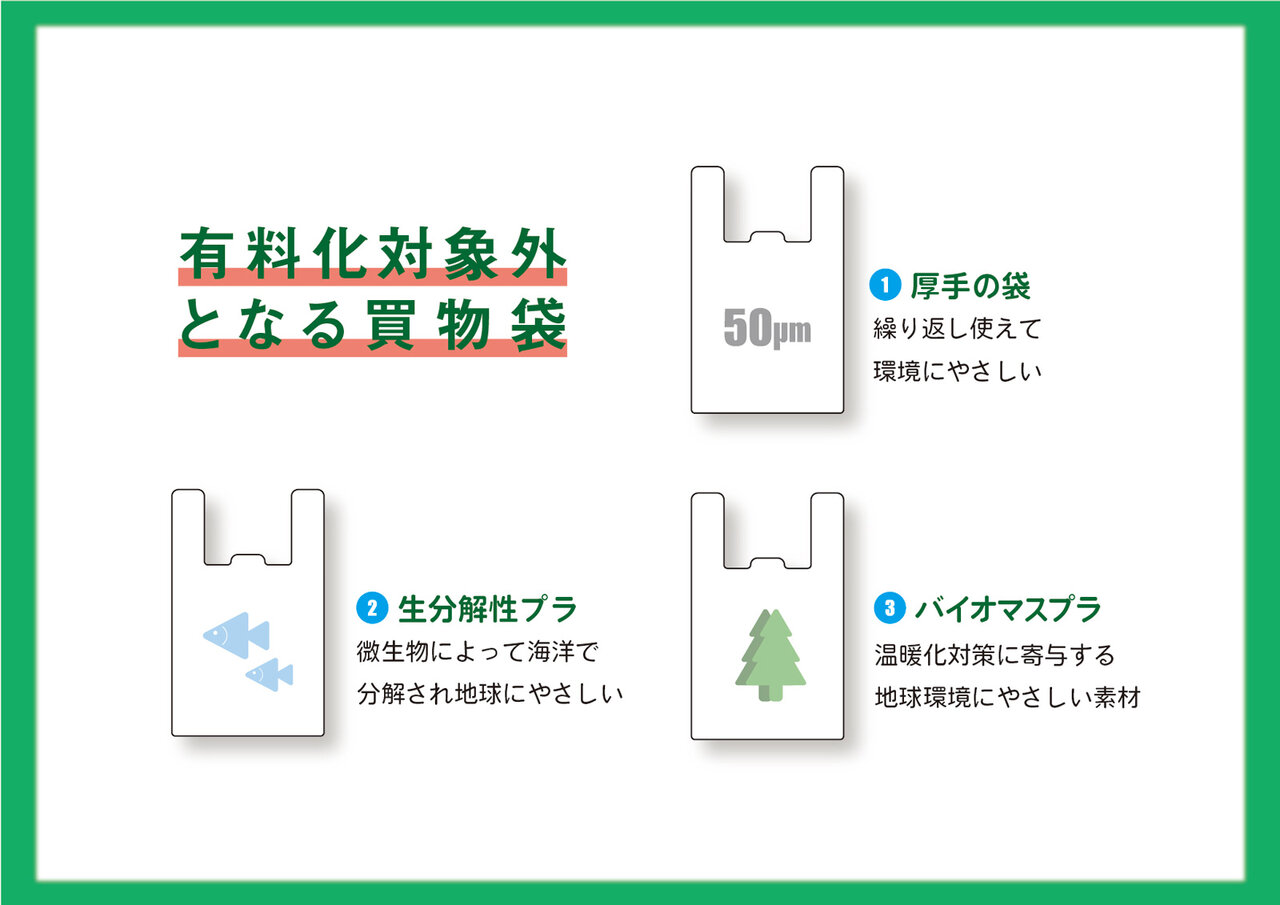
This charge has prompted everyone to start carrying eco-bags, or personal shopping bags. However, there are also plastic shopping bags that are exempt from the charge, which I'd like to briefly introduce.
Among these three categories, items 2 and 3 are what we call bioplastics, which I discussed in my previous article. You can see that these bioplastics have become a part of our daily lives. To recap from last time, bioplastics are divided into biodegradable plastics and biomass plastics. The Ministry of the Environment particularly recognizes the significance of "biomass plastics."
So, what exactly are biomass plastics? Let's delve a little deeper. I found an article in the September 25, 2020, morning edition of the "Nihon Keizai Shimbun" titled "Itochu Corp. to Make Packaging Plastic from Used Cooking Oil for Food and Daily Goods." This article contained crucial information about biomass plastics.
I'd like to summarize it briefly.
It means manufacturing and selling plastic products using used cooking oil, such as the waste oil from frying food at restaurants, as a raw material. Furthermore, it's not just waste oil; they also create plastics from tall oil, a byproduct generated during paper pulp production. Tall oil is similar to pine resin and is an oil primarily composed of resin and fatty acids, produced as a byproduct when making kraft pulp from wood. These two types of oil are called "non-edible," and while they previously had uses like fertilizer, the fact that this surprising waste oil can become a raw material for plastics is remarkable. It's also referred to as second-generation biomass resin.
Using these as raw materials, they produce major plastics like polypropylene (PP) and polyethylene (PE).
Incidentally, PP is used for packaging materials and accounts for one-fifth of all domestic plastics, with approximately 2.5 million tons circulated annually.
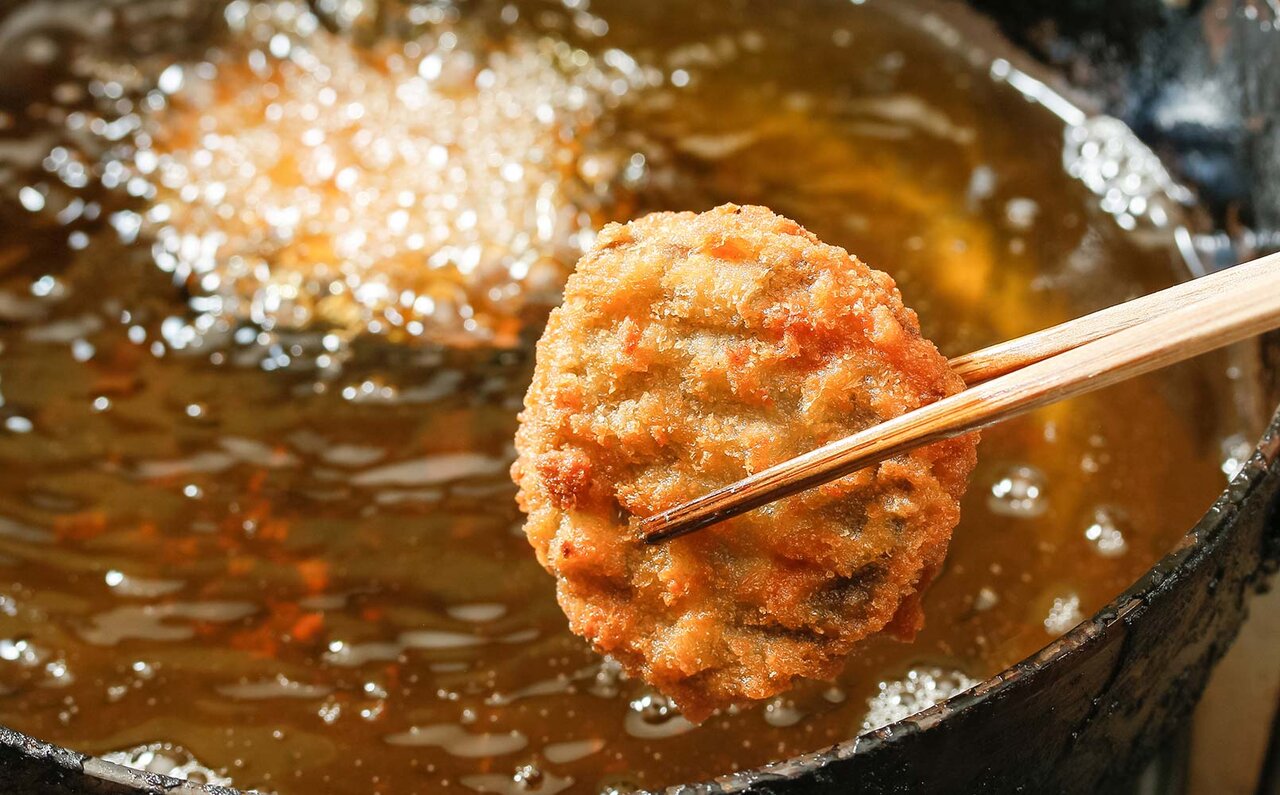
Given the high demand for PP, introducing bioplastics that don't rely on petroleum is a crucial action that contributes to CO2 reduction. In the future, it may not be a distant dream to create biomass plastics from the waste oil used to fry popular items like Famichiki.
Biomass plastics offer a multitude of benefits.
I wanted to learn more, so I requested materials from Itochu Corporation.
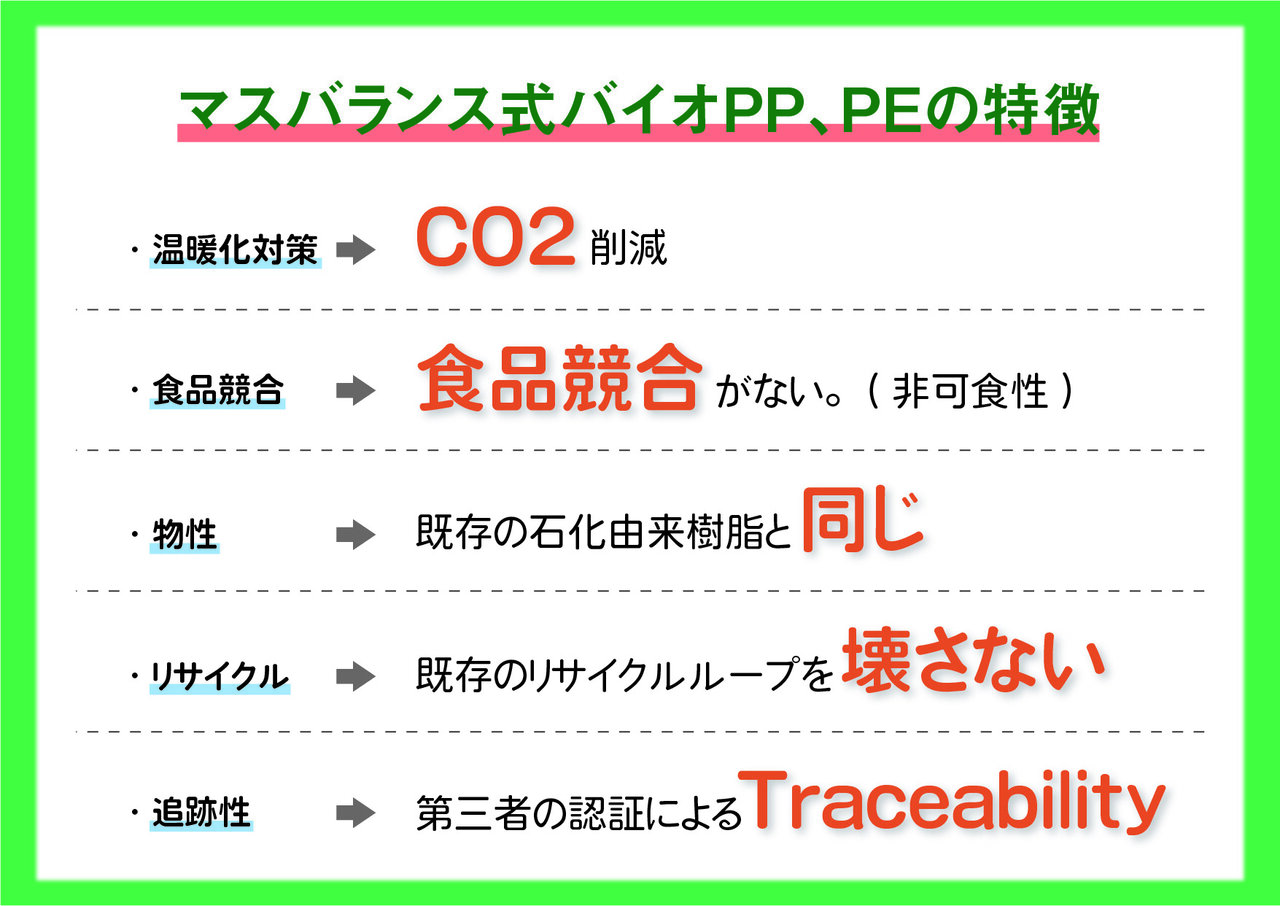
First, please take a look at this diagram.
I would like to explain this diagram in a bit more detail.
1. CO2 reduction. In other words, it contributes to global warming countermeasures.
2. Since it's non-edible, there's no competition with food resources.
3. It has the same quality as existing petrochemical resins.
4. By using already recycled materials, it does not disrupt existing recycling loops.
5. Reliability is assured through third-party certification.
These are some of the key points.
Biomass plastics are high-quality plastics that also help combat global warming.
In the next installment, I plan to focus on point 5 of the benefits of biomass plastics: "Reliability is assured through third-party certification."