Equally beautiful. The second time.
To a world where all is equally valued. The lives of people and the life of the planet are Equally important. A special series focusing on environmental issues that are gaining increasing attention!
The second installment is a bit of a study session. Biomass plastics are starting to permeate our cities. You might find yourself thinking, "This item I bought while shopping is made of biomass plastic!" So, we've summarized what you should know first.
Bio-plastics are poised to become a trend.
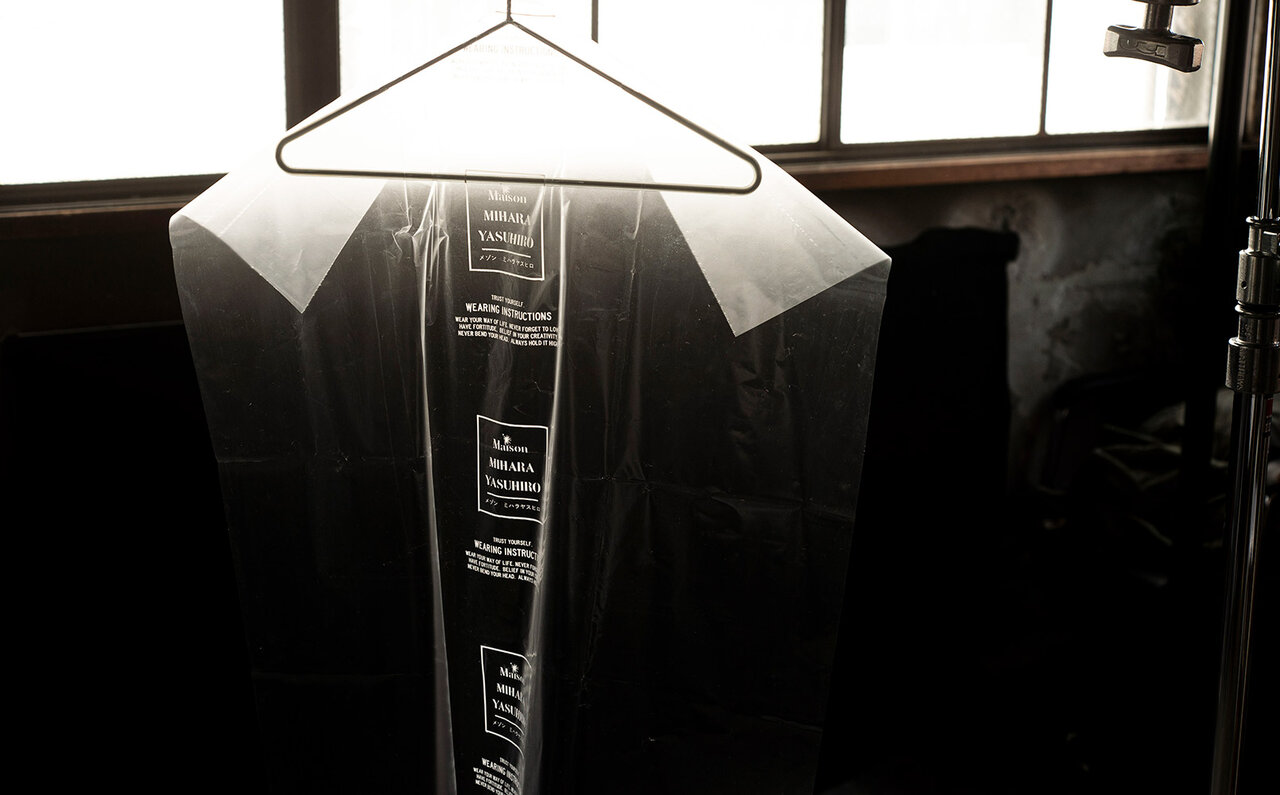
To write this article, I took a closer look at some everyday items. I was surprised to find that biomass plastics are already being used in things like this! It was the case I received when I bought a jacket, a so-called garment case. Mr. Yasuhito Mihara, the designer of the Paris Collection brand <Maison MIHARA YASUHIRO>, is deeply concerned about environmental issues and seems to have been an early adopter of such initiatives.
I had thought it would be difficult to introduce eco-friendly options for consumables like these, as they are ordered in large quantities. However, brands with a strong interest are switching over quickly.
Biomass plastics are increasingly making their way into the fashion industry, and it's worth considering them a little more closely.
First, let's look at the materials from the Ministry of the Environment.
"Efforts are being made to achieve a carbon-neutral society by 2050, where greenhouse gas emissions are reduced to net zero. Within this framework, bio-plastics (a general term for biomass plastics and biodegradable plastics) are drawing attention as necessary measures to reduce the use of finite resources such as fossil resources, curb greenhouse gas emissions, and eliminate pollution from new plastic waste in the oceans." (Excerpt from the Ministry of the Environment's Bio-plastic Introduction Roadmap)
The bio-plastics spreading in the fashion world are precisely in line with this roadmap. By the way, "carbon neutral" means making "carbon" "neutral." In other words, it's a state where the emission and absorption of greenhouse gases like carbon dioxide, which causes global warming, are balanced to zero. To achieve this, it is essential to change how we use energy and our manufacturing systems.
There's a difference in the impact on the planet between bio-based products and conventional petrochemical products. Because bio-based products are plant-derived, the CO2 absorbed during plant growth can offset the CO2 released during incineration, reducing CO2 emissions to about 20-30% of petrochemical products.
So, what exactly are "bio-plastics"? We can see that bio-plastics fall into two main categories.
One is "biodegradable plastic." Readers may be becoming more familiar with this term, and the Ministry of the Environment defines it as follows:
"In addition to having the functions and properties of plastic, it has the characteristic of being decomposed by microorganisms abundant in nature under certain conditions, eventually breaking down into carbon dioxide and water. The raw materials used can be renewable organic resources such as plants, or fossil resources." (Excerpt from the Ministry of the Environment's Bio-plastic Introduction Roadmap)
The advantage here is that it's gentle on the planet when disposed of.
And the other is what's called "biomass plastic." Many people may not be familiar with this term yet, but I think it's worth remembering. After all, it's a trending word. The definition is:
"Plastic material that uses renewable organic resources such as plants as raw materials." (Excerpt from the Ministry of the Environment's Bio-plastic Introduction Roadmap)
These two, "biodegradable plastic" and "biomass plastic," are collectively referred to as "bio-plastics."
What we should focus on now is biomass plastic.
The Ministry of the Environment's roadmap also contains passages that indicate a focus on biomass plastics.
"The 'Plastic Resource Circulation Strategy' proposes 3R+Renewable as a basic principle, and as a key strategy, it presents policies such as appropriately switching the raw materials for plastic containers, packaging, and products to materials derived from renewable resources, including biomass plastics, with the premise of enhancing sustainability. Furthermore, towards the introduction of bio-plastics (details omitted)..." (Excerpt from the Ministry of the Environment's Bio-plastic Introduction Roadmap)
This means that gradually shifting the plastic industry to biomass plastics is essential for a sustainable society.
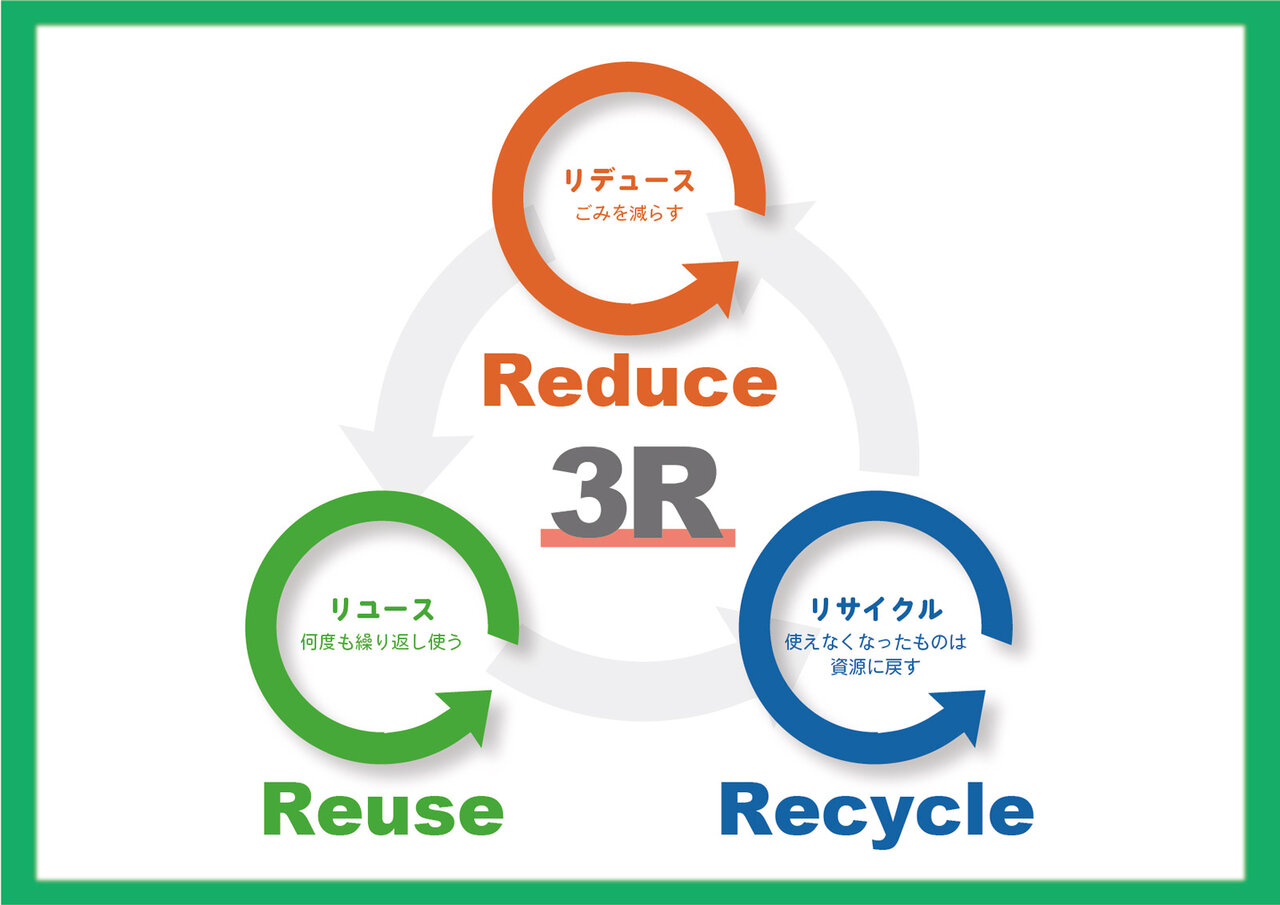
By the way, what is 3R+Renewable? First, 3R.
This is a keyword for aiming for a circular economy, and it refers to the three "R"s: Reduce (to decrease waste), Reuse (to use repeatedly), and Recycle (to turn used items back into resources: re-resource). These three are collectively called "3R."
And "Renewable" literally means "able to be renewed," but here it's used in the sense of "sustainable resources." Examples include sunlight, wind, and tides.
The connection between "sustainability" and ourselves has become unexpectedly and rapidly profound. Next, we will delve a little deeper into "biomass plastics," which we have focused on this time.