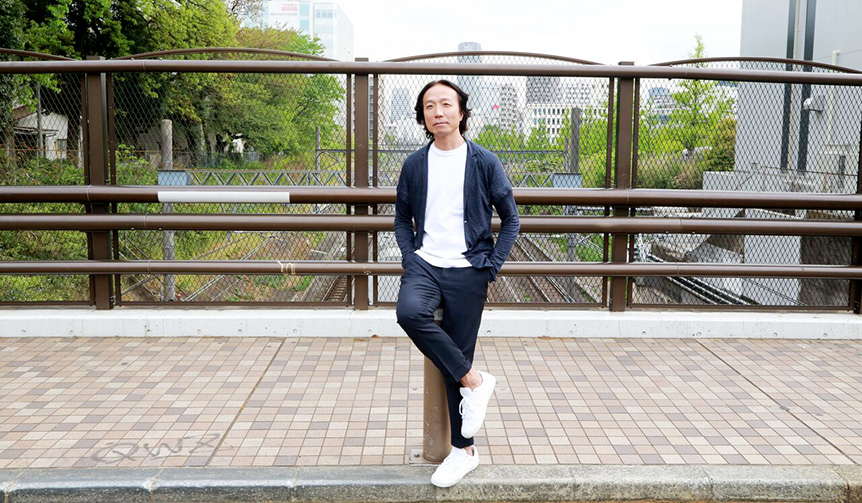
Tomoki Yuzuka & Editor Daimaou Talk | Vol. 21 Satoshi Takamatsu (Civilian Astronaut) (Part 2)
Page. 1
Continuing from last time, our guest for the Editor Daimaou Conversation is Satoshi Takamatsu, who is scheduled to travel to the ISS (International Space Station) as the first Japanese civilian astronaut. Now that his childhood dream of becoming an astronaut and going to space is becoming a reality, he has added a new perspective on what he will actually do in space. We continued our conversation with Takamatsu, who is devising projects that are meaningful to the world while leveraging the career he has cultivated as a creative director.
Tomoki Sukezane & Editor Daimaou Talk | Vol. 20 Satoshi Takamatsu (Civilian Astronaut) (Part 1)
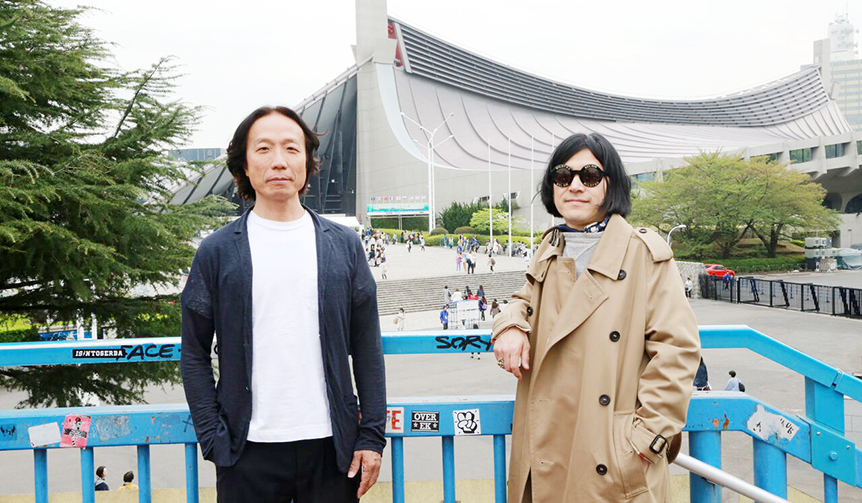
Interview by SUKEZANE TomokiPhotographs by SATO YukiText by ANDO Sara (OPENERS)
Now That His Childhood Dream Is Fulfilled, What Path Does He Aim For?
Tomoki Sukezane & Editor Daimaou (hereinafter, Sukezane)I think the desire to go to space, even through harsh training and test studies, is wonderful. It's not something one can easily do, even with interest.
Civilian Astronaut Satoshi Takamatsu (hereinafter, Takamatsu)It all started when I was 6 years old and saw the live broadcast of the Apollo 11 moon landing.
SukezaneI saw it too. I also queued up for the World Expo.
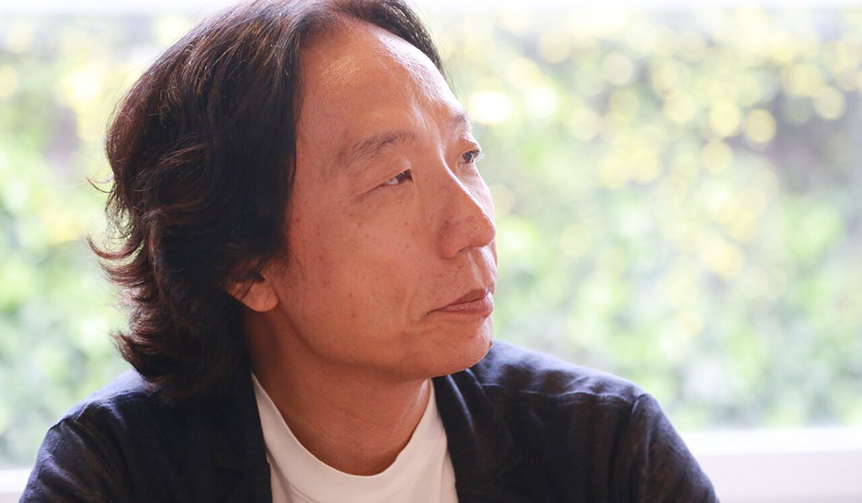
TakamatsuI queued up too. It was groundbreaking that humanity was going to another celestial body for the first time. Going to Mars would be amazing, but perhaps it wouldn't generate the same global excitement as the moon landing. Seeing the moon landing when I was just old enough to remember things, and thinking that humans were walking on that moon visible in the night sky from my balcony, I was impressed even at 6 years old, thinking, 'Humans are amazing. Science is amazing. Technology is amazing.' and I wanted to become an astronaut.
It's a simple childhood dream, but I think tens of millions of people felt the same way I did. Fortunately, I was good at science, so I went to the Faculty of Science and Technology at university, and I thought I was on the shortest path to becoming an astronaut. However, when I obtained the application for NASDA (now JAXA, Japan Aerospace Exploration Agency) upon graduating from university, I couldn't meet the eyesight requirement of uncorrected vision and had to give up. After that, I didn't feel drawn to a life in a white coat at some research institute, so I joined Dentsu, which seemed less pure (laughs), to forget my pure dream.
SukezaneIt's amazing that you were able to join Dentsu, even if it was out of desperation.
TakamatsuBecoming an astronaut and going to space as a profession was my dream since I was six. Another thing is that I became fascinated with physics around the time I was in junior high school and loved it as a hobby. Encountering Einstein's theory of relativity made me think, 'This is incredible.' Things like returning from space in a rocket traveling near the speed of light, only to find that 10,000 years have passed. I developed a desire to know the various laws of the universe. I majored in condensed matter physics at university, but I'm not a genius like Einstein or Newton, so I can't discover grand theories. But I desperately want to understand what others have discovered. So I read many books, but I genuinely thought that going to space, where seeing is believing, might link the hundred books I've read. I want to go to space because I want to understand space. My dream was dashed once, but after joining Dentsu, I was able to film Pocari Sweat and Cup Noodle commercials in space. I taught astronauts in blue jumpsuits how to read storyboards and use cameras, and during the actual shoot, I was in the control center, like in the movies, talking to the astronauts via intercom while filming. I was getting closer to space, but I never dreamed I would be the one wearing the blue jumpsuit and training others. Even while filming commercials, I couldn't imagine myself being the actor, it felt like two different worlds, but through various connections, this is how it turned out.
SukezaneDreams do come true. When do you think you'll be able to go to space?
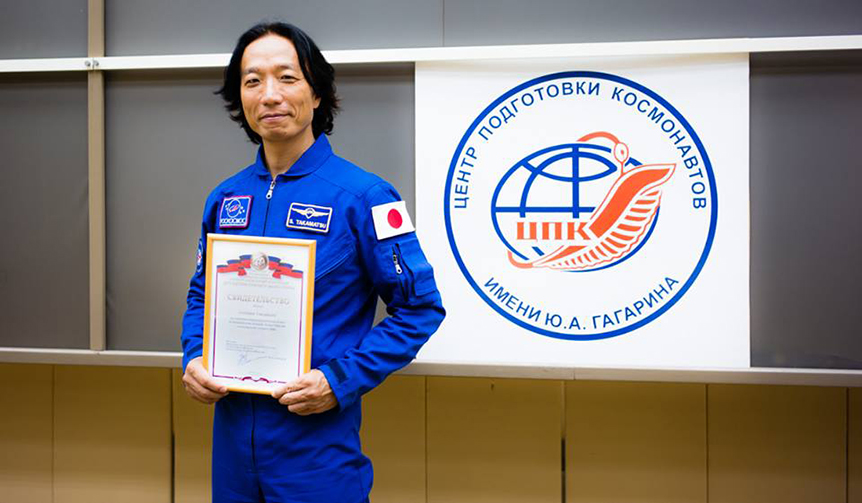
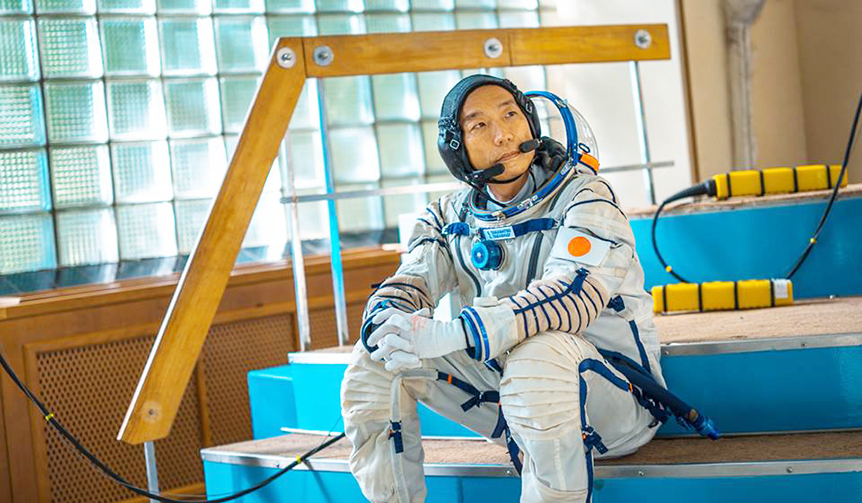
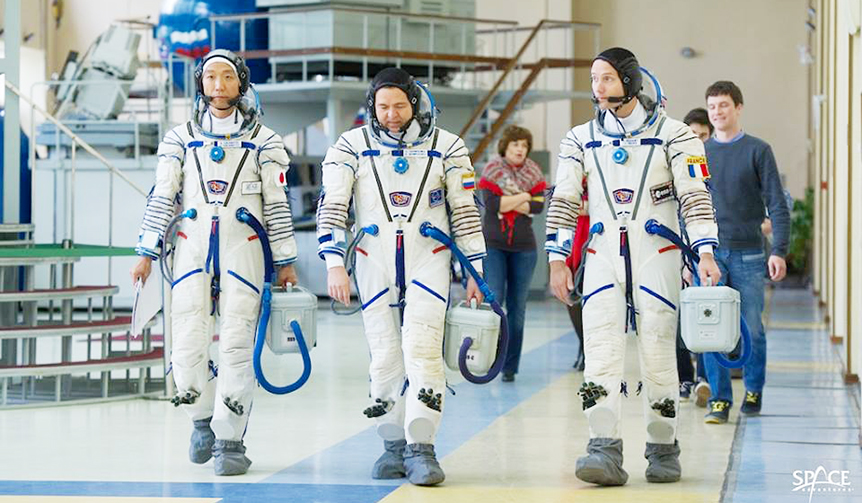
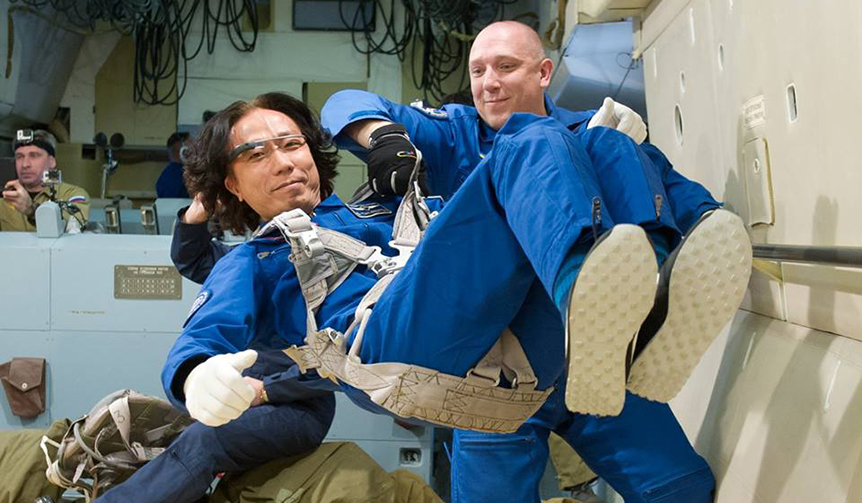
From Takamatsu's Facebook (https://www.facebook.com/Cosmo.Takamatsu/)
TakamatsuEverything is quite fluid. It's 2017 now, so I don't think I'll be able to go in 2018. 2019 to 2021 seems more realistic.
SukezaneIs there anything you want to do in space?
TakamatsuIf I start thinking about it, there are endless things I want to do.
SukezaneAre there any specific things you want to do?
TakamatsuEarlier, when asked why I wanted to go to space so badly, I answered: first, the dream, and second, to understand space. But while training in Russia, I started to think that wanting to become an astronaut was a bit foolish. Being an astronaut is a profession, isn't it? Even though I'm undergoing the same training, it's still not a profession for me. After all, everyone around me is a 'real' astronaut, so aiming to become an astronaut feels childish. Going to space is still a dream, but then the dream would be fulfilled the moment I go, wouldn't it? Becoming an astronaut, going to space – these childish dreams were my driving force, but the more I trained, the more I felt that what I would *do* in space was more important. I realized I had been focusing too much on going to space and not enough on what I would do once I got there.
SukezaneI see. A few years ago, going to space wasn't even a possibility, was it?
TakamatsuThat's right. In 2014, the goal was simply to pass the exams. In 2015, it was to get through the training and survive. And now, the dream has shifted from potentially going to space in a few years to what I will do in space.
SukezaneThat's interesting. It's wonderful.
TakamatsuProfessional astronauts on the ISS have a packed schedule, with many things to do minute by minute. Civilians have very little they *must* do, so in essence, we have free time.
SukezaneSo you can just watch the Earth from the window all day?
TakamatsuOne day is fine, but after four or five days of looking out the window, even if you don't get bored, you'd want to do something, right? Civilians can do what they want. Since time is limited, I'm thinking about what I absolutely want to do and in what order.
Page02.Finding the Intersection of What I Want to Do, What I'm Good At, and What Is Meaningful to the World
Page. 2
Finding the Intersection of What I Want to Do, What I'm Good At, and What Is Meaningful to the World
SukezaneWhat are you thinking about now?
TakamatsuIt's probably impossible for me to go to the ISS with my own money. Even spending all my assets wouldn't be enough. I need help from others. Crowdfunding and sponsors will be necessary. In that case, it's only natural that I need to plan something meaningful for others, for everyone, to get support. If I just say, 'I'm going to space, will you be my sponsor?' no one will help me. Because that's just my dream. But if I say, 'We will carry out this incredibly meaningful project. We would like your cooperation to make it happen,' then perhaps there will be people and companies who empathize and help. Because 'my dream alone' becomes 'everyone's dream.' So right now, I'm looking for the intersection of what I want to do, what I'm good at, and what is meaningful to the world. I believe the hints lie in what I've done for many years as a creative director. I may not become a professional astronaut, but I think I can do things in space that others can't by leveraging my own profession. Since I've worked with video and photography, I believe my activities will be based on shooting in space.
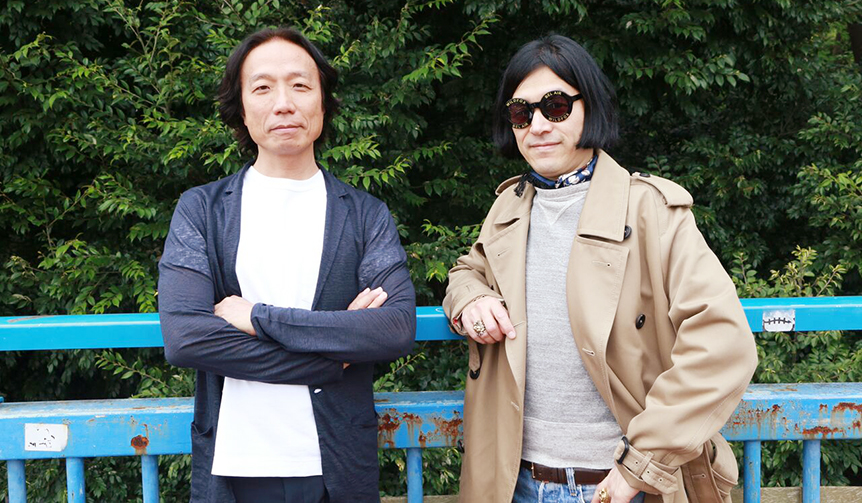
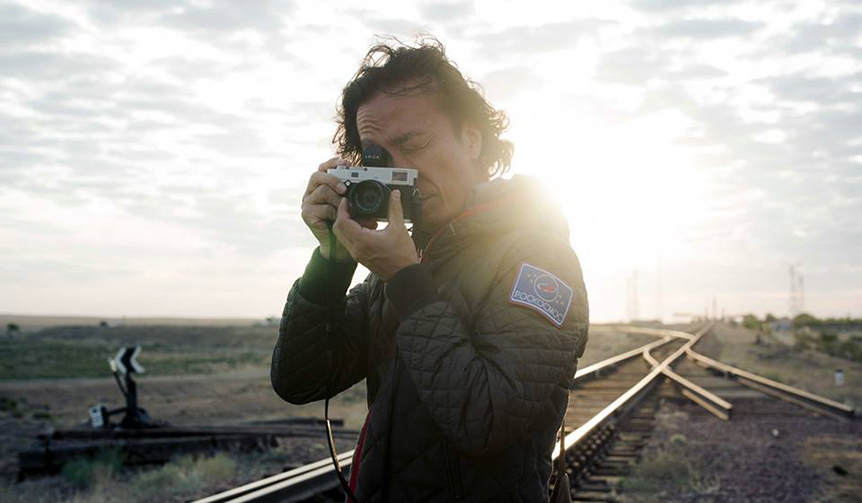
From Takamatsu's Facebook (https://www.facebook.com/Cosmo.Takamatsu/)
SukezaneSo, activities as an artist in space?
TakamatsuWhile equipment isn't everything, I want to shoot with the best cameras and lenses imaginable. In the era of the Apollo moon landing, everyone was shooting with Hasselblad 66. Although not many shots could be taken, many great photos remain. What's on the ISS now is, of course, a digital SLR. We can take an enormous number of photos, but still, if the beauty of the Earth seen from space is 100, perhaps only 10 is conveyed. I want to find a way to make that 70 or 80. The underlying issue is that technologies like pixel count, dynamic range, 3D, and VR haven't quite caught up. If the photos and videos taken overcoming these limitations could be seen on Earth, people could see the Earth, which only those who have been to space can see, without actually going to space. I believe that viewing experience is very meaningful. It might make people think, 'I want to go to space too,' or perhaps make them think about protecting the environment, or question why wars are happening. I was lucky to find an entrance to space. But many people can't go to space that easily. Therefore, I strongly feel a desire to be responsible for recreating the view from space on Earth.
SukezaneThat's wonderful. I think it's a great idea.
TakamatsuAstronauts from NASA or JAXA probably don't have abundant time to dedicate to photography and videography due to their packed daily schedules. So, I'm thinking about what I can do by leveraging the privilege of free time as a civilian and my own background.
SukezaneI'd love to see the making of that. It's a grand vision, but it feels realistic.
TakamatsuPerhaps it's because I like photography. Besides the idea I just mentioned, I'm thinking of a project where a high-resolution camera is permanently attached to the ISS window for live streaming, and anyone in the world could press the shutter of the ISS camera via a smartphone app for $100. When you log in, you could download the RAW data of the photo taken at that moment as 'your photo.' For those who want to develop the RAW themselves as their own work from space, it would be $200. And for those who want it framed, an additional $200. Wouldn't it be wonderful if we could create an infrastructure that allows people worldwide to take photos of Earth from space? This is an idea suited for crowdfunding. Someone on Earth would be pressing the shutter at all times. This would result in hundreds of thousands of photos, and curating the best 100 for an exhibition at a museum would be great. For those whose photos weren't selected for the top 100, if they scan a QR code at the museum, their work would be displayed for three minutes. I'm thinking of a project like 'Top 100 Plus Your Work.'
SukezaneIt would be wonderful if it could be realized.
TakamatsuUltimately, it might be similar to the initiatives I was involved in during my time at Dentsu. Whether I'm a creative director or an artist, I feel that without a mission to carry, my lazy self won't get into gear (laughs).
SukezaneStill, it's amazing you can imagine all that. Do you think about it every day?
TakamatsuNot every day, but I thought about it a lot while training in Russia. The training facility grounds were vast, and since I didn't have a car, I used to walk or cycle through the woods and along the lake on the grounds every day. There were no restaurants, bars, or cafes, only woods, a lake, and the starry sky. Naturally, you end up thinking about many things.
SukezaneA state of enlightenment.
TakamatsuAs going to space becomes a reality, I find myself cherishing various things on Earth. Seeing flowers blooming in my garden makes my heart ache. I kept saying 'space, space,' but before going to space, I felt a desire to see the Earth first, so I've been to the Arctic Circle twice in the past three months. I wanted to see the aurora from the ground first, so I sailed through the Norwegian fjords. Even though I have some confidence in my photography skills, practice is important, so I went there partly for shooting. Just before that, I went to Cape Town, South Africa.
SukezaneThe northernmost and southernmost points on Earth.
TakamatsuRight now, I just want to see the nature on Earth. On the other hand, I also want to see people. I want to see the culture, architecture, and art that humans have created. If I had more time, I'd love to travel the world. But in reality, I have to work, and I can't just rely on others; I have to earn my own living.
SukezaneA mix of business, what you want to do in space, and what you want to do on Earth.
TakamatsuYes. Also, while it's common on space stations, many things are actually outdated. To put it simply, no one complains if the toilet paper remains hard and unchanged in space. This is because it takes time and money to conduct safety tests when introducing something new. For instance, there are no mobile phones on the International Space Station. Even though people live there for a year.
SukezaneHow do you communicate with your family?
TakamatsuThere's a shared computer. There's a rotation where you get a set amount of time to talk with your family at a designated time. Family on Earth also has to make themselves available during that time.
SukezaneSo there's no private time at all.
TakamatsuAstronauts do have some off-time. For example, when looking out the window at Earth, if you happen to be flying over San Francisco, where my daughter attends university, wouldn't it be wonderful to casually text her, 'Dad's looking from above'? That's not possible now. If you want to take a smartphone to space, there are safety concerns about lithium batteries and Wi-Fi, and the inspection process takes time and money. However, if you have sponsors, there's a higher chance of overcoming these hurdles.
SukezaneIf you can take a smartphone, you can easily communicate and search for information, right?
TakamatsuYes, you can search. That's revolutionary. Right now, humans are quite isolated informationally in space. If you suddenly want to know something, you can't easily look it up. With a smartphone, you could search and access Earth's knowledge easily.
SukezaneYou never know what you might want to know when you go to space.
TakamatsuYou might suddenly want to know about physics, geography, history, or religion. Being able to search on a smartphone in space would be truly revolutionary. Being able to stream music too. Right now, I make a playlist of my favorite music to take with me, but I might suddenly want to listen to Bach. With streaming, I could listen to anything. While in space, you could connect to Earth's knowledge, music, books, and all sorts of content.
Page03.Ideas for What to Do in Space Expand Infinitely
Page. 3
Ideas for What to Do in Space Expand Infinitely
SukezaneBy the way, do you wear anything other than a spacesuit in space?
TakamatsuWearing a spacesuit is only for training and emergencies. Otherwise, it's just casual clothing like a polo shirt and shorts.
SukezaneIt would be nice to have styling for those moments, wouldn't it? A Louis Vuitton suitcase by your side, why not?
TakamatsuThe theme of Vuitton is travel, after all. A monogrammed bag floating in zero gravity with the Earth in the background would be a beautiful image. I think the era where you have to undergo harsh training to become an astronaut is ending with me. Space travel will become a much broader form of enjoyment in the future.
SukezaneThe birth of luxury space.
TakamatsuIf that happens, brands will emerge wanting to create foundations for use in space. For now, all sorts of adult pleasures have been stagnant and undeveloped in space for decades. If I said I wanted to drink delicious third-wave coffee in space, that would be a first. Wearing beautifully tailored, stylish clothes would also be a first. Things that are done for the first time are usually fun. Just by going to space once, I feel like I can undertake a wide variety of projects, from dreamy endeavors to the luxuries of adult men.
SukezaneYour past experiences will be useful.
TakamatsuSurrounded by real astronauts during training, my focus shifted from simply wanting to go to space to what I would do in space. Finally, my career and what only I can do began to overlap and connect.
SukezaneTo me, it sounds grand, but it's similar to the feeling of wanting to go to Tokyo or New York. Speaking of which, you once said that the era of being able to travel from New York to Tokyo in two hours would come.
TakamatsuI think it will be possible in 10 to 15 years. In about 5 years, I think it will become unclear whether the person on the other end of the phone is human or AI. If that happens, call center jobs will disappear. For better or worse, it's certain that such an era is coming at an incredible speed.
SukezaneIt's astonishing that we can now call a taxi with our phones. When did this happen?
TakamatsuIn English-speaking countries, I think there will be many autonomous taxis running within about 5 years. In 10 years, taxi drivers might become a minority.
SukezaneThere will still be chauffeurs, of course. If you don't particularly like driving, you can also drink alcohol.
TakamatsuPerhaps in about 5 years, the era will arrive where the male you can talk to most honestly is your AI boyfriend, Hiroshi.
SukezaneThere are times when you just want to talk to someone.
TakamatsuThere are special people with whom you can speak honestly about everything, which cannot be fulfilled by counselors, confessionals at churches, or sharing your true feelings at AA meetings. Even things you can't tell close friends, you can tell an AI. Moreover, there's a semblance of friendship after you've spoken. If they can respond at any hour, whether late at night or early in the morning, and even simulate emotions...
SukezaneThe other day, when Kishin Shinoyama photographed love dolls, I was there for styling. They look human. I thought I wouldn't buy one, but if I lived alone and came home to find one there, I might find myself talking to it. If it could speak, move, and seem to have emotions, wouldn't real friends become unnecessary for most people, unless they were exceptionally compatible?
TakamatsuIt's sad, but such an era is likely just around the corner. The speed of evolution is increasing exponentially, not linearly, year by year. What used to take two years will now take one, and soon, an acceleration of evolution will occur, making it possible in six months.
SukezaneConvenience stores will also become unmanned.
TakamatsuIn America, unmanned convenience stores where you're automatically charged as soon as you take an item have already started.
SukezaneSo many things will truly change. It seems plausible that models walking the fashion show runway could be robots.
TakamatsuThat's possible within 10 years. Brands might emerge that announce after the show that the model who walked the first look was actually a robot.
SukezaneLet's meet again in about three years. I'm looking forward to seeing how this conversation unfolds. Thank you for your time today.
TakamatsuThank you as well. I might be a different person by the time I return.
SukezaneYou might not have time for me then, so I'll make a promise now.
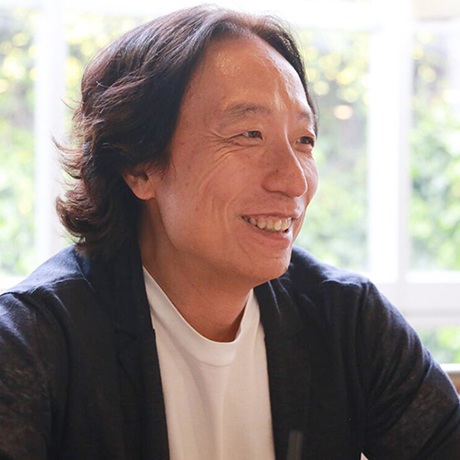
Satoshi TAKAMATSU
Born in Tochigi Prefecture in 1963. Graduated from the University of Tsukuba, Department of Engineering in 1986, and joined Dentsu. After working in sales for over 10 years, he moved to the creative field in 2002. He left Dentsu in 2005 and founded the creative agency ground and the space video production company SPACE FILMS. His major works include projects for Skyperfect TV!, Adidas, NTT Resonant "goo," and Nissin Cup Noodles "NO BORDER" and "FREEDOM." He executed the world's first commercial filming in space for Otsuka Pharmaceutical's Pocari Sweat with the "Space CM."