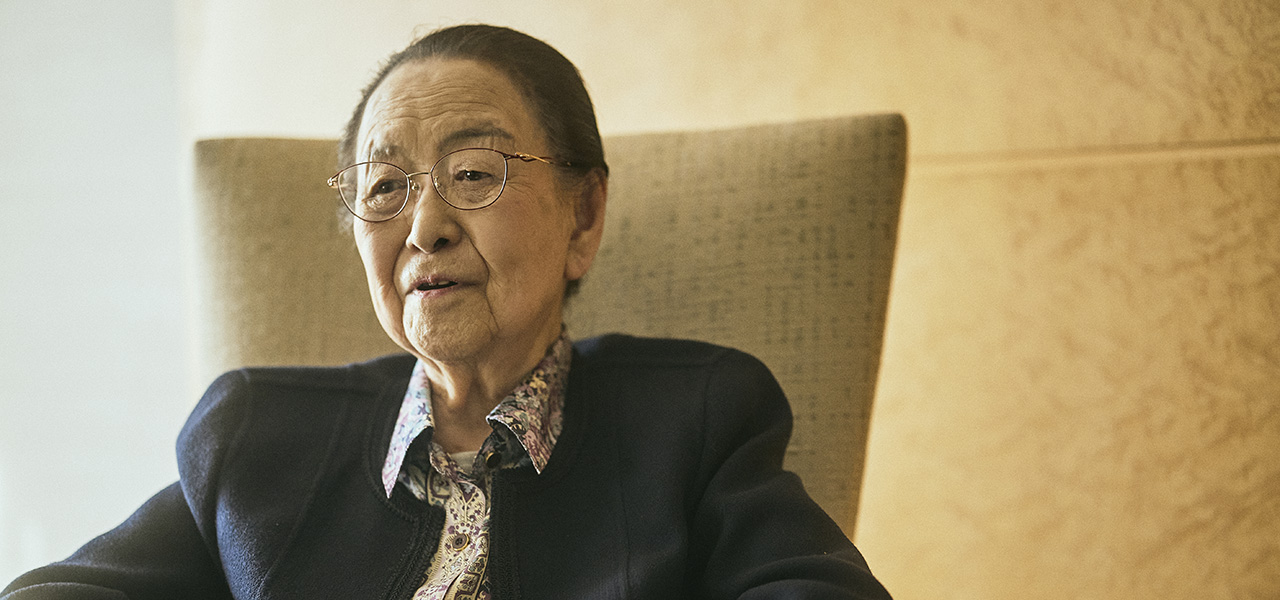
The terrifying persistence of obsession as seen in "Yamauba."
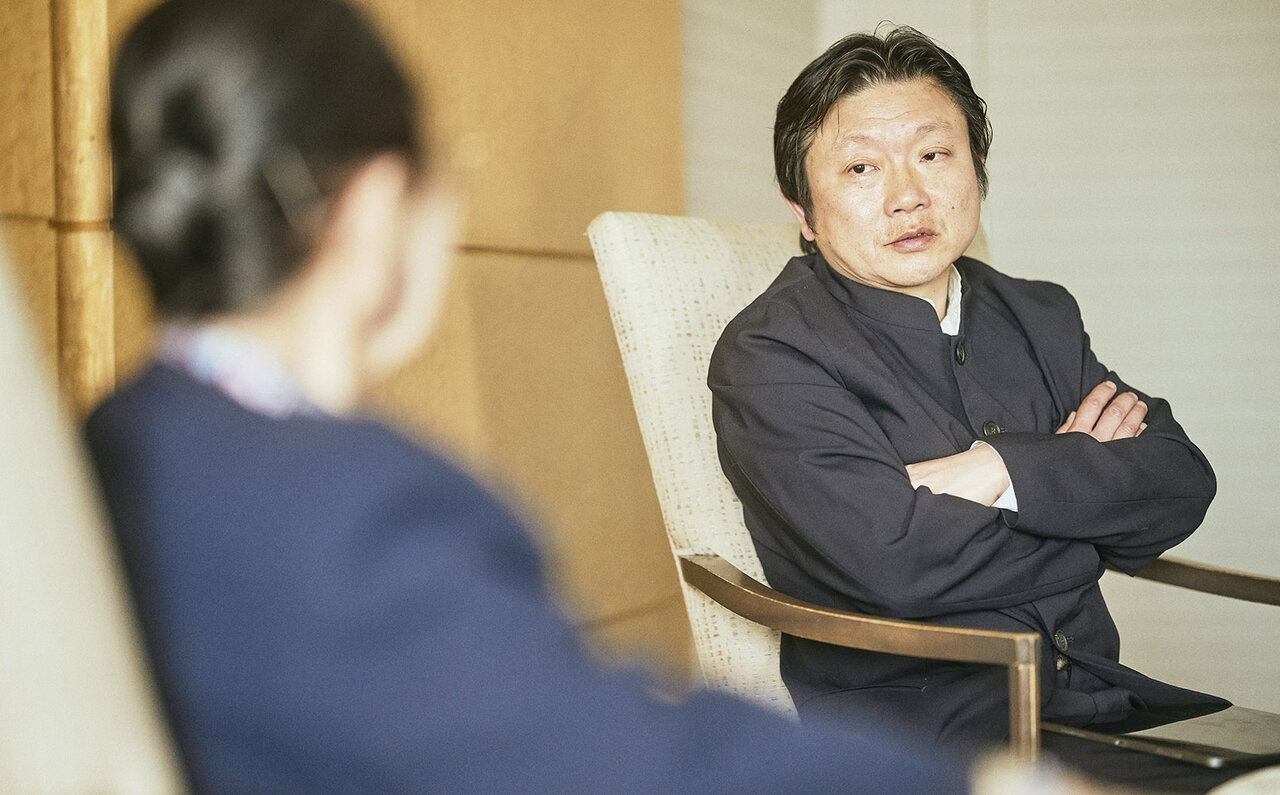
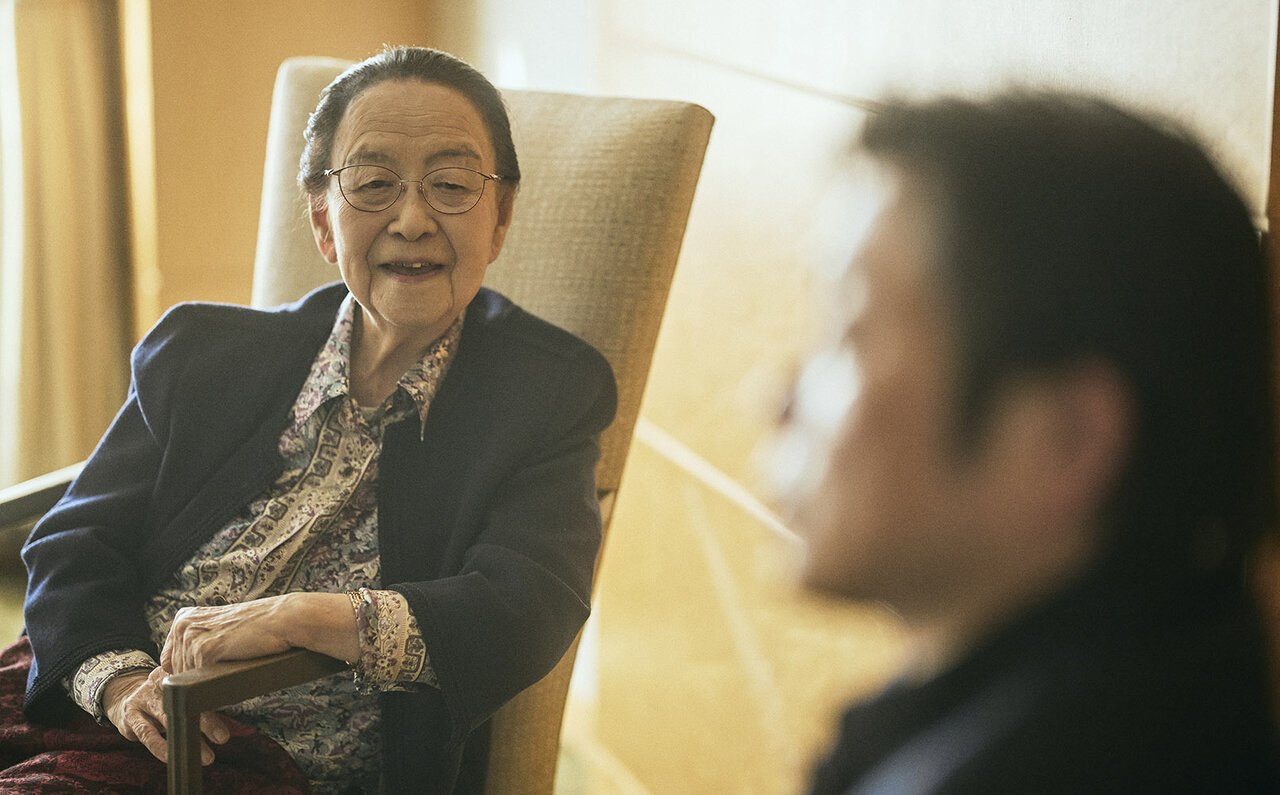
A Special Conversation: Poet Akiko Baba x Noh Actor Shinya Tomoe (Kita School)
Noh, one of Japan's traditional performing arts, is often perceived as difficult to understand. However, its very complexity is said to hold a hidden charm. With the thought that one might gain various insights through Noh, we invited Shinya Tomoe, a Noh actor of the Kita school and author of "Mō Ichido Tanoshimu Nō" (Noh: Enjoy It Once More, published by Tankosha), and Akiko Baba, a poet who also studies the Kita school, for a conversation. We will present the content in three parts. The theme of the first installment is Zeami's masterpiece "Yamauba," which centers on the legend of the mountain-dwelling ogress "Yamauba" making her rounds in the mountains.
Text by AMARI Mio Photographs by TAKAYANAGI Ken
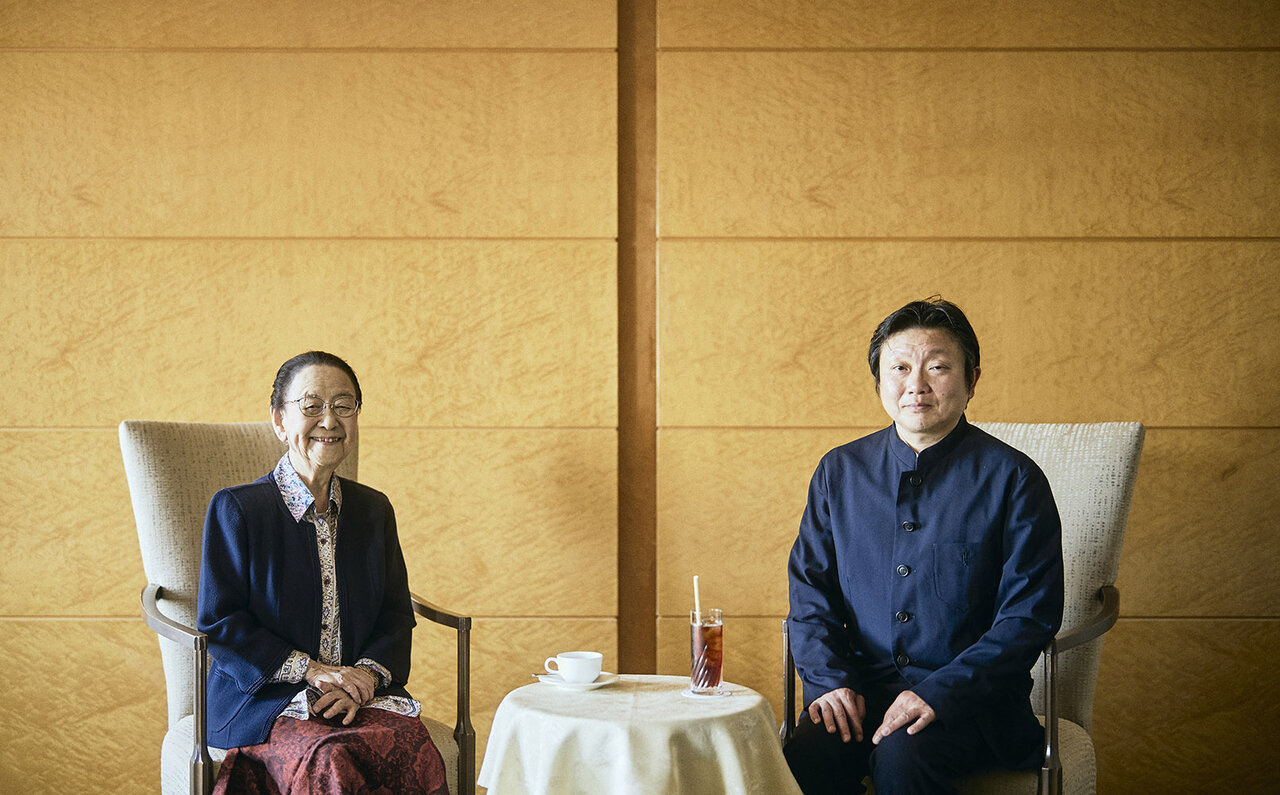
TomoeOn July 20, 2025, we will hold the 12th Eikano Nō, where I will perform the role of shite (the protagonist) in "Yamauba." This will be a repeat performance for me, and I am currently experiencing the struggle of embodying the role anew (laughs wryly).
BabaI understand completely. I am Yamauba myself (laughs).
TomoeTo begin with, who exactly is Yamauba? Perhaps revealing this would spoil the joy of appreciation.
BabaIn the first part, Yamauba (the shite) sings, "Whether a demon or a human, I am a woman who lives in the mountains." If we were to paraphrase this into modern Japanese, it would mean, "Whether I am a demon or a human, it doesn't matter. I am Yamauba." Isn't this strong assertion of self the core of the play "Yamauba"?
The accompanying character (tsure), Hyakuma Yamauba, a courtesan from the capital popular for her kyōgen dance about Yamauba's mountain rounds, is asked, "Do you know what Yamauba truly is?" and replies, "In the mountain-dwelling demoness and the kyōgen dance." There is also a passage about "clearing away obsession through mountain rounds," which might make it difficult to understand who Yamauba is. However, I believe the clues to understanding Yamauba lie precisely here.
For example, according to one theory in folklore studies, Yamauba is the "foster child" of the mountain deity. This means that a deity needs a shrine maiden to serve them, but when that maiden grows old and misses her chance to marry, she eventually becomes an old woman. Yamauba is said to be the end result of this. Yamauba, who grew up in the mountains, might be unsightly but strong, and would sometimes carry travelers' luggage like a porter or make bamboo baskets to sell, barely making a living. However, this alone would make her a folk tale, not a Noh play. Thus, Zeami is said to have adapted the question "Who is Yamauba?" into a work based on Buddhist philosophy.
This "Yamauba" is strongly influenced by Zen; it embodies the philosophy of "good and evil are one" and "defilement and purity are one." In essence, whether one resents being a spirit demon in this life due to past misdeeds, or rejoices in becoming a celestial being in this life due to past good deeds, from an enlightened perspective, there is no distinction; they are merely phenomena. Nevertheless, in "Yamauba," Yamauba reigns supreme and says, "Look at me." This is truly fascinating.
Why can Yamauba be so dignified? For Yamauba, who communes with the spirit of the mountain, humans are not a concern, so it is no trouble for her to occasionally serve humans in her mountain life. "Yamauba making her rounds in the mountains" is a metaphor for having seen all sorts of people—evil doers, the poor, arrogant nobles, and the very wealthy. Perhaps Yamauba embodied the philosophy that death comes equally to all humans, and ultimately, all returns to nothingness. However, since this is not explicitly stated in "Yamauba," it is difficult to understand.
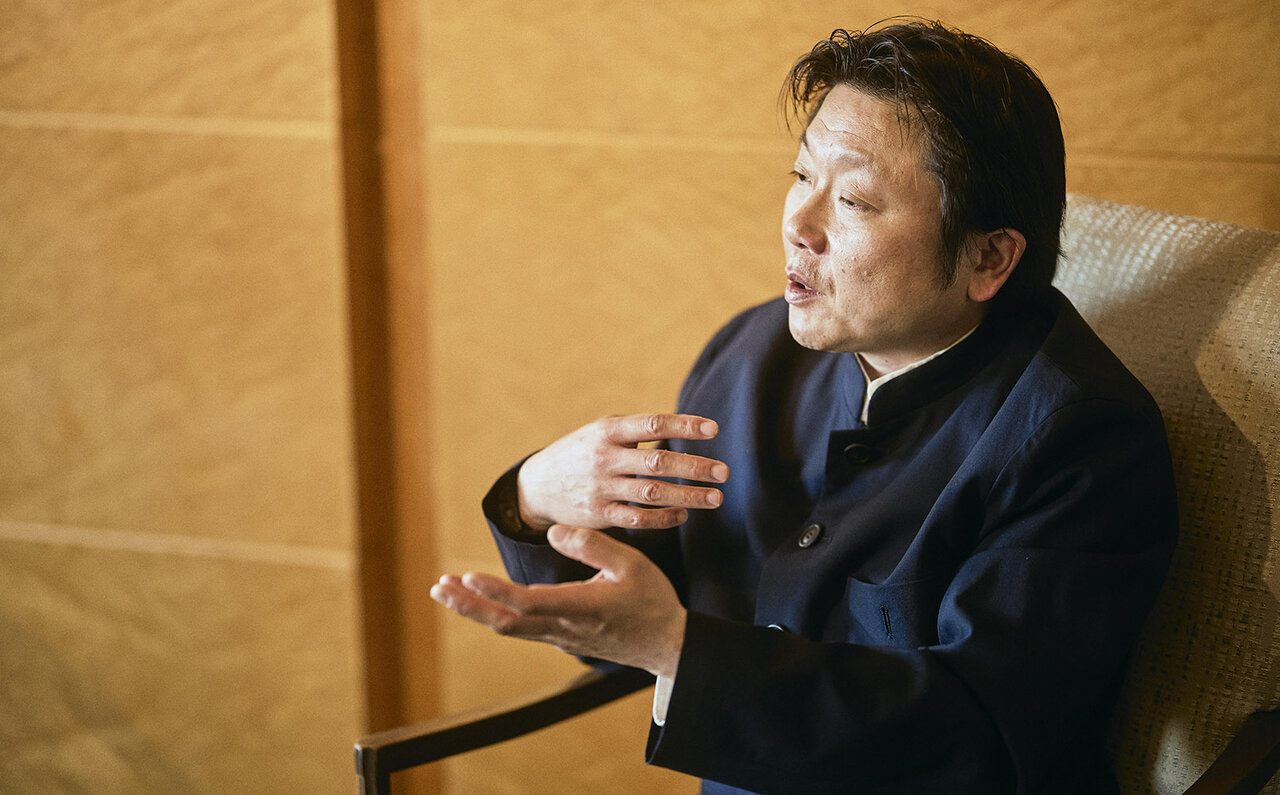
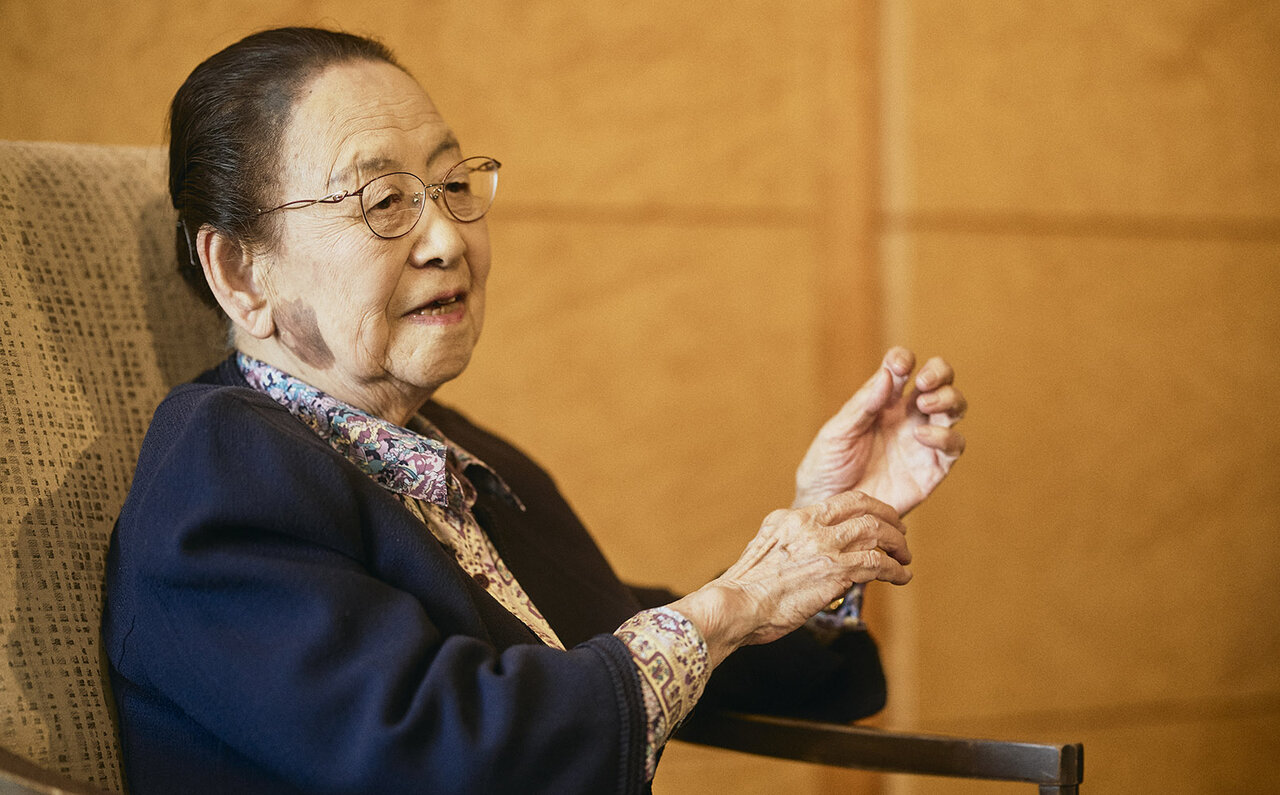
TomoeDuring my practice, I encounter the word "mōshū" (obsession) three times. The first is, "Singing, and thus clearing away my obsession." In other words, by your performing your art, my obsession is cleared away.
BabaJust before that, she also says, "The reason I have come here today is to hear about the virtue of my name." What is the virtue of living my life being called Yamauba? I am drawn to this line, "to hear about the virtue of my name." Yamauba wants to hear how excellent she is, but Hyakuma Yamauba, the courtesan with that epithet, remains silent, unable to answer. Yamauba must find this regrettable. No one points out her virtue, no one praises her. This psychological state of not being recognized is obsession.
TomoeI see. That's why at the end, it says, "Returning to the capital, and having it made into a worldly tale, is this still obsession?"
BabaYes. If the courtesan had acknowledged her virtue and sung about it in her dance, her obsession would have been cleared, but instead, she dismisses it with a casual remark like, "I hear you make mountain rounds," which only deepens her obsession. This dialogue is profound.
All phenomena in this world are "defilement and purity are one."
TomoeThe final lines of the jion (chorus) continue, "Round and round, the clouds of obsession, unable to escape the cycle of reincarnation, pile up, and one becomes Yamauba." What do you think this means?
BabaIn the Muromachi period, the class system became established. In other words, there was discrimination. Those who were discriminated against, even if they possessed great virtue, were not evaluated. They only made a living by making bamboo baskets and selling them for a little rice cake or rice. However, living in the mountains, eating tree roots and wild boar meat, they were strong. Thus, they also did heavy labor like carrying loads. I believe the anger and sorrow of those born under such stars are contained within "Yamauba." The phrase "reaching the very bottom" (金輪際に及べり) in the finale, isn't that precisely what it refers to?
TomoeYou mean the part, "The Dharma nature peak towers, revealing the upward seeking of enlightenment; the deep appearance of the valley of ignorance, representing the downward conversion of sentient beings, reaches the very bottom."
BabaIsn't dancing also strenuous?
TomoeYes, it is.
BabaIt's truly the depth of life. It means there are all sorts of people in this world. That is, there is Yamauba, and there is Hyakuma Yamauba, the courtesan. There are those who hunt and sell birds and beasts, thus making a living by committing the greatest sin forbidden by Buddha: killing. They kill to support the nobility, yet the killer is sinful, while the eater is not.
TomoeTherefore, defilement and purity are one.
BabaExactly. "Yamauba" is a profound work. I think Zeami depicted it skillfully, albeit indirectly.
TomoeAs Noh actors, we approach "Yamauba" from the perspective of performance. First, we learn the shimai (dance), and after gaining some experience, we perform the tsure (supporting role).
BabaThe tsure in "Yamauba" is physically demanding. You can't move at all while sitting.
Tomoe"Yamauba" is a showcase of various skills, so the shite is also desperate. We tend to focus on the performance, but needless to say, we must also value the lyrics. What interests me is, "To perfect the path and establish a name, and bloom the wondrous flower of myriad virtues in the world—is this not the purpose of this single dance?"
BabaThe phrase "to bloom the wondrous flower of myriad virtues" seems to express Zeami's own profound feelings. You see, Zeami, along with his father Kan'ami, was favored by Ashikaga Yoshimitsu and greatly developed Sarugaku of Yamato. There must have been many things he couldn't say due to his position, but he tried to convey the sorrow of Yamauba within his lifetime, ultimately succeeding by invoking nature. He must have thought this would be permissible.
In the Kanze school, there is a production called "Setsugetsuka no Mai" (Dance of Snow, Moon, and Flowers), where the Chūno Mai is inserted after the shidai in the latter half. The introduction to the dance includes the lines, "The blossoms and red leaves of Yoshino and Tatsuta, the moon and snow of Sarashina and Kōji." This is not merely depicting elegant nature, but perhaps it is an indirect way of conveying Yamauba's reality?
TomoeThat's an interesting perspective.
BabaYou, Shinya-sensei, have the perspective of a Noh performer, and those who watch Noh have a different perspective. It's interesting because they are different.
Incidentally, people who watch Noh sometimes ask questions like this: "What does it mean to wander through endless mountains?"
TomoeHow do you answer, Baba-san?
BabaI answer that humans have obsession until the very end. It is human nature not to be able to let go of obsession, and then they laugh. But isn't that true? It is because of obsession that we are human; if obsession were gone, we would not be human.
TomoeI feel that Zeami has an attitude of acknowledging human weakness.
Also, for me, the line "striking bones in the cold forest" in the latter half of the shite's performance is impressive. Perhaps because it's in a classical Chinese style, it stays with you.
BabaIt sounds rather grand, doesn't it? Zeami elevates Yamauba, who is an all-knowing being.
TomoeYou must have seen many performances of "Yamauba" up to today, Baba-san.
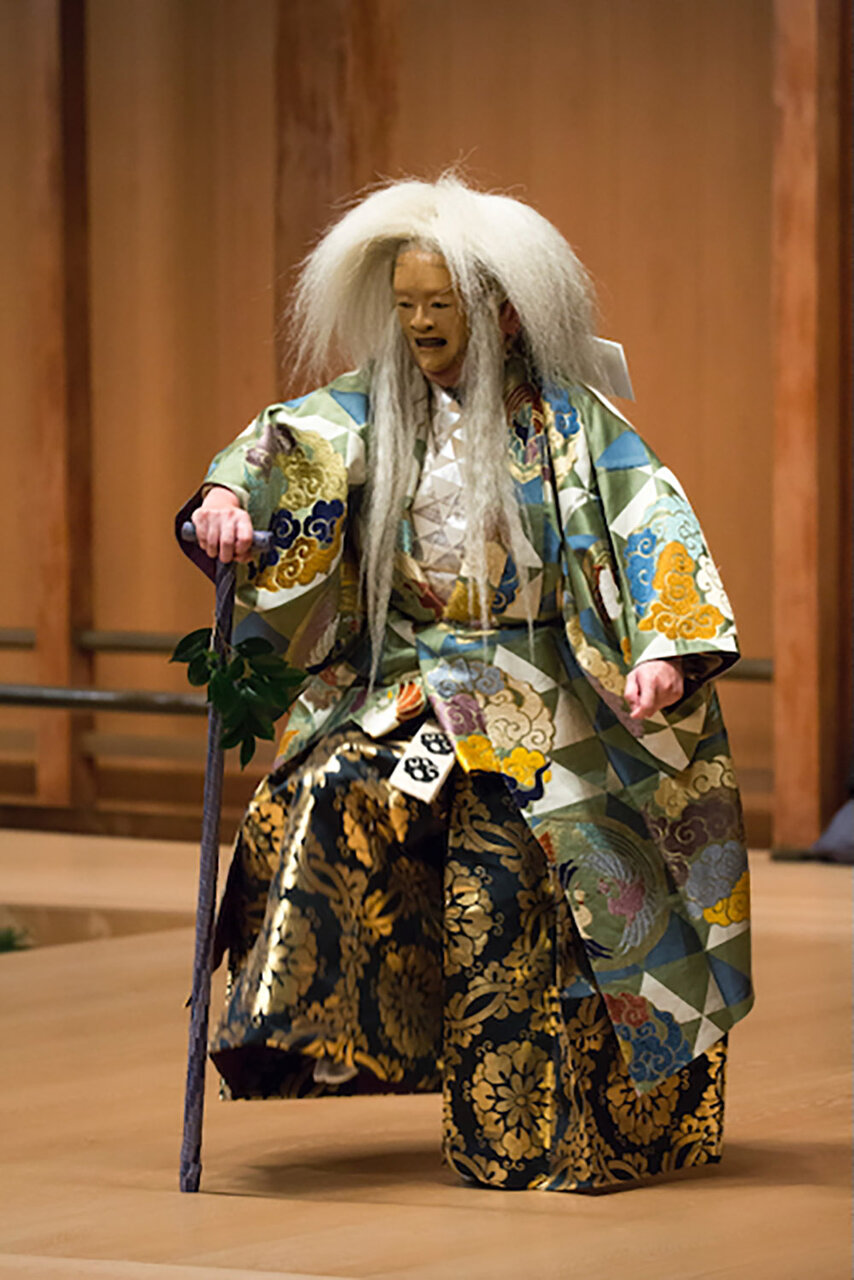
BabaI like the Kita school's "Yamauba." It has substance.
TomoeWhat aspects do you particularly like?
BabaRegarding Kashirakoshi no issei (※), where Yamauba strikes her staff and reveals her monstrous form, the late 14th head of the Kita school, Rokuhei Okura, gave instructions. He said it must be performed with strength. 'This is different from Tadanobu.' Since Kashirakoshi became known, more people seem to pay attention to that scene.
(※) Issei is a type of introductory music. Introductory music is the percussion piece played when characters like the shite or waki appear in Noh. Issei is used for various characters such as humans in the real world, ghosts, and Yamauba, expressing their appearance as if arriving by vehicle or suddenly materializing. Kashirakoshi is a method in Issei where the 'koshi' sequence, normally in the middle, is played at the beginning. There are also Issei performances without 'koshi'.
TomoeFor the 12th Eikano Nō, I plan to perform it with a wig. Using a wig makes the mask stand out better. I believe we will be able to show you a fine mask this time.
BabaI'm looking forward to it. By the way, if we classify "Yamauba" according to the five-part structure, is it categorized as a demon play in the fifth category?
TomoeWhile some schools classify it as a fifth-category play, the Kita school considers it a fourth-category play.
BabaThe reason it's not considered a fifth-category play likely relates to the latter part of the play. In essence, after wandering through the mountain of worldly desires, what became of Yamauba? Did she escape her desires? Or did she not? We don't know. Therefore, it's a fourth-category play. Although Yamauba's mask resembles a demon's, it's quite different from a true demon.
TomoeFurthermore, regarding "Yamauba," I feel there is a certain relationship lurking between "Yamauba" and "Obasute" (abandoning the elderly).
BabaI completely agree. The two are closely related.
TomoeWe could delve deeper into this, but as it's getting long, shall we pause here for now?
Akiko Baba
Poet and literary critic. Born in 1928 in Tokyo. After graduating from the Japanese Literature department at Joshi Senmon Gakko (now Showa Women's University), she joined the poetry magazine "Mahiru no Yo" and studied under Shoichiro Kubota. In 1972, she co-founded the tanka (Japanese poetry) society magazine "Karin" with her husband, Tadashi Iwata. She served as an editor for the tanka section of the Asahi Shimbun. She will retire from her role as editor of the Asahi Tanka section, a position she held for 47 years, at the end of March 2025. Member of the Japan Art Academy. Person of Cultural Merit. She has a deep understanding of Noh, having entered the Kita school under the 15th head, Minoru Kita, in 1947. She has also been involved in creating new Noh plays and writing critiques on Noh. In addition to poetry collections, she has authored numerous works on tanka, Noh, folklore, and classical literature.
Poet and literary critic. Born in 1928 in Tokyo. After graduating from the Japanese Literature department at Joshi Senmon Gakko (now Showa Women's University), she joined the poetry magazine "Mahiru no Yo" and studied under Shoichiro Kubota. In 1972, she co-founded the tanka (Japanese poetry) society magazine "Karin" with her husband, Tadashi Iwata. She served as an editor for the tanka section of the Asahi Shimbun. She will retire from her role as editor of the Asahi Tanka section, a position she held for 47 years, at the end of March 2025. Member of the Japan Art Academy. Person of Cultural Merit. She has a deep understanding of Noh, having entered the Kita school under the 15th head, Minoru Kita, in 1947. She has also been involved in creating new Noh plays and writing critiques on Noh. In addition to poetry collections, she has authored numerous works on tanka, Noh, folklore, and classical literature.
Shinya Tomoe
Noh actor (shite) of the Kita school, and a member of the school's executive board. Member of the Noh Association. Designated as a holder of Important Intangible Cultural Property. Born in 1969 in Tokyo. Grandson of the late Kikuo Tomoe, an executive of the Kita school. Made his debut at the age of three with the shimai "Tsukimiyadono." Studied under the late Minoru Kita, the 15th head of the Kita school. After training as an live-in disciple within the Kita school, he now studies under his uncle, Akitsugu Tomoe. He premiered "Shōjō Ran" in 2004, "Dōjōji" in 2008, and "Ishibashi (Red Lion)" in 2011. A member of "San no Kai." Director of "Eikano Nō." Scheduled to perform "Yamauba" at the 12th Eikano Nō on Sunday, July 20, 2025, at the Kita Noh Theater.
https://tomoeda-kai.com/schedule-noh/6305/
Noh actor (shite) of the Kita school, and a member of the school's executive board. Member of the Noh Association. Designated as a holder of Important Intangible Cultural Property. Born in 1969 in Tokyo. Grandson of the late Kikuo Tomoe, an executive of the Kita school. Made his debut at the age of three with the shimai "Tsukimiyadono." Studied under the late Minoru Kita, the 15th head of the Kita school. After training as an live-in disciple within the Kita school, he now studies under his uncle, Akitsugu Tomoe. He premiered "Shōjō Ran" in 2004, "Dōjōji" in 2008, and "Ishibashi (Red Lion)" in 2011. A member of "San no Kai." Director of "Eikano Nō." Scheduled to perform "Yamauba" at the 12th Eikano Nō on Sunday, July 20, 2025, at the Kita Noh Theater.
https://tomoeda-kai.com/schedule-noh/6305/
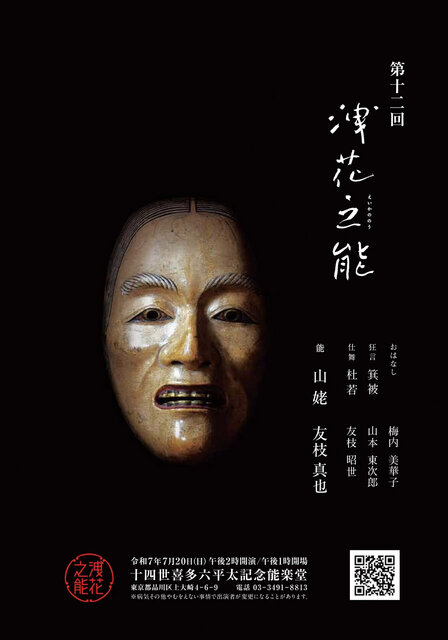
Please note that as of early June 2025, tickets for the "Yamauba" performance mentioned above are in very limited supply.