April 28, 2015
SUS gallery Opens on Aoyama's Killer Street
An Answer in Ecology and Design
Exploring New Possibilities for Stainless Steel: SUS gallery Opens
In April, a new space called "SUS gallery" opened on Aoyama's Killer Street. The interior design was handled by interior/product designer Akiko Fukuda, while the green design was by garden/flower designer Yuji Tsukada. Drawn in by the "wall slope" adorning the street-facing wall, I stepped inside the gallery.
Photo by JamandfixSummary by Makoto Kajii (This Magazine)
The Double Meaning of "SUS"
"SUS" in the gallery's name is an abbreviation for Stainless Used Steel. Furthermore, "SUS" also stands for Sustainable. Stainless steel, used extensively in our daily lives, boasts a high recycling rate and is gaining attention as a metal that minimizes environmental impact. The "SUS" project aims to propose creative and sustainable lifestyles using this material, and will also involve the development and proposal of original products.
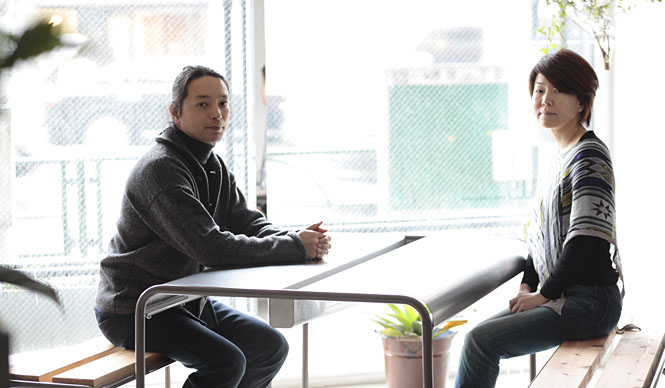
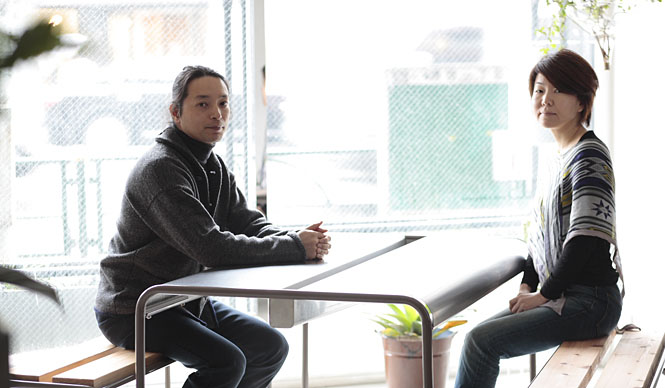
Garden/flower designer Yuji Tsukada (left) and interior/product designer Akiko Fukuda (right)
— How has the response been since opening the gallery?
FukudaI'm surprised by how many people already love stainless steel itself. Some visitors are drawn in by the "wall slope" greening on the street-facing wall, and we've received inquiries about it.
TsukadaIt's rewarding when people see the "wall slope" installed here, understand the concept, and react with an "Ah, I see!"
FukudaElderly women, in particular, often stop and admire it for a long time.
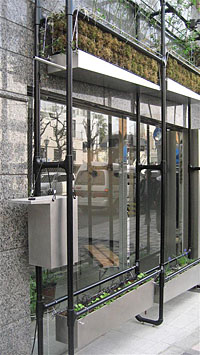
"wall slope"
— The products on display have a unique design.
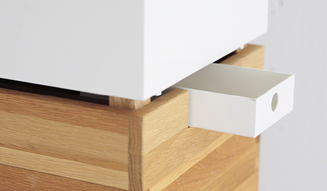
FukudaThe original vases and planters from limbgreen here are designed not so much for a specific aesthetic or style, but to encourage enjoyment of the act of tending to plants. Many people say they like plants but tend to kill them; we want to foster a more positive engagement for them.
TsukadaWe call these "indoor garden furniture." By highlighting drainage, which can have a negative connotation, we encourage a deeper connection with plants. These products also expand the possibilities for enjoying plants in increasingly common high-rise apartments and offices.
FukudaDrainage is a major hurdle for living with plants indoors. We've created "communicative designs" where you can water plants and even drain excess water indoors by turning a valve, using a drainage tray, or removing a cork stopper.
— Why did you focus on stainless steel?
FukudaStainless steel's primary appeal is that it doesn't rust or is highly resistant to rust. It's a circular, recycled material with an established collection system, making it durable and relatively resistant to aging. Moreover, among non-rusting materials, it's notable for being weldable and bendable. Before getting involved with the "SUS" project, I had experience working with wood and metal. Meeting Mr. Unno, the representative of "SUS," and Kosei Co., Ltd., which handles metal recycling, including stainless steel, in Tsubame City, Niigata Prefecture, was also a significant factor.
TsukadaStainless steel pairs well with water and soil, and offers high material grades and workability. Centered around stainless steel, we also offer variations in tin and steel, ensuring they complement indoor aesthetics and are built to last.
FukudaFor our original vases, we combine stainless steel, tin, and steel with materials like oak, offcuts from furniture production, and thinned cypress wood. Stainless steel itself can be used in various ways through different processing techniques, and we're keen to explore resins and paper in the future.
TsukadaWe want to experiment not only with new materials but also with novel applications for materials with established identities.
FukudaCompared to Westerners who have a high awareness of maintaining stone and wood, I feel that Japanese people don't have much awareness regarding materials. They don't know how to care for new building materials, for instance.
TsukadaPerhaps we've become too accustomed to the idea of simply replacing things, opting for the easier route.
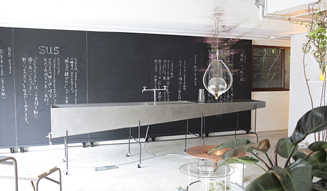
What We Hope You'll Feel at SUS gallery
FukudaOur designs and products are intended to foster an awareness that plants are not possessions, but rather that the relationship begins the moment you engage with them. By interacting with plants, people can find healing. We want them to incorporate plants into their lives, touch them, and find joy in doing so.
TsukadaThis space, too, was designed by Ms. Fukuda, and we want visitors to feel the value placed on craftsmanship. If they can sense that dedication, I believe their possibilities for connecting with plants and enriching their lives will expand.
FukudaA common comment we receive about the vases and planters is, "They seem quite large." Indeed, they might be a bit big for a typical home. However, the size is determined by what's suitable for the plants and the material's workability, striking a balance. When displayed in a space, they create a vibrant presence.
TsukadaThis particular size is necessary to achieve the right texture. While the price of the planters might be a bit high, we hope they'll be viewed as "indoor garden furniture."
— Thank you very much.
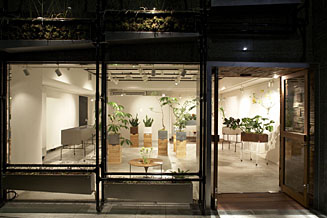
Photo by MASAYUKI HAYASHI
SUS gallery
Address: 1F, Famille Grand Jingumae, 3-1-27 Jingumae, Shibuya-ku, Tokyo
Phone: 03-6662-6312
Hours: 12:00 PM - 6:00 PM
Closed: Sundays and Mondays
Official Website: http://www.sus-gallery.jp/