August 12, 2015
FARO: World-Class Leather Goods Born from Japanese Craftsmanship (1)
FARO
Japan's Craftsmanship: World-Class Leather Goods (1)
FARO products are increasingly recognized, appearing in various popular select shops due to their exceptional quality. However, their minimalist design can make them appear like ordinary leather goods at first glance. Why, then, do discerning buyers, among Japan's most astute, support these products? Understanding their manufacturing process should shed light on this question.
Photo: JAMANDFIXText & Interview: Eizaburo Toyama

Thin yet Strong: The 'Beta-bari' Technique
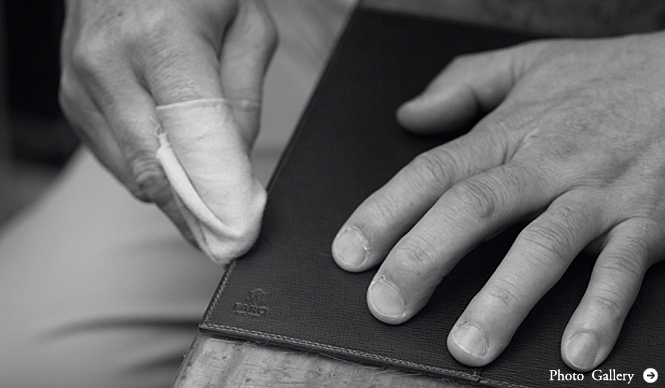
Wallets, a quintessential men's leather accessory, are traditionally meant to be slipped into a suit's breast pocket. Therefore, thickness is undesirable. Yet, they must also maintain their form without becoming flimsy. To address this, FARO employs 'beta-bari,' a technique where two extremely thin leather pieces, each 0.4mm thick, are bonded together to ensure durability.
By firmly adhering these thin layers, their strengths combine to create a surprisingly resilient and firm material. However, as leather is a natural material, simply applying adhesive can cause warping or shrinkage. This seemingly simple technique relies on world-class skills that only a specific craftsman in a particular factory town can achieve. FARO dedicates its utmost effort to this fundamental process of bonding leather.
Traditional Edge Finishing Possible with Tannin-Tanned Leather
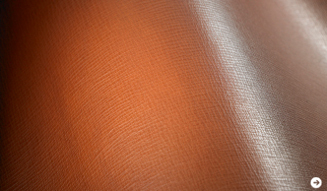
FARO also uses traditional methods for its edge finishing. This is another process not achievable with standard chrome-tanned leather. Only vegetable-tanned leather, which retains its natural proteins, can develop a beautiful, amber hue through heat and water polishing. While edge finishing is fundamental to leather goods, its depth is truly remarkable.
Rich Texture and Finish Achieved Through Water Dyeing
For coloring, FARO uses 'water dyeing,' where dye is dissolved in water and absorbed into the leather, rather than sprayed. While this method doesn't produce vivid colors, it results in products with a rich texture and warm feel. We hope you will enjoy the unique character that FARO's commitment to water dyeing brings.
Uncompromising Precision in Cutting and Sewing
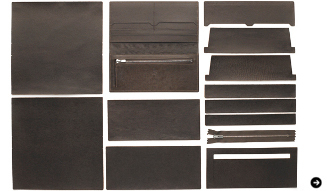
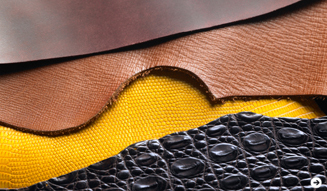
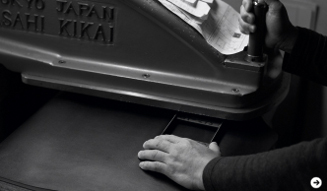
The cutting process involves carefully assessing the grain and fiber direction to select the optimal part of the leather for each component. This step is crucial for high-quality manufacturing. Cutting the leather to showcase its beauty might seem basic, but it is a highly challenging skill that is increasingly rare today.
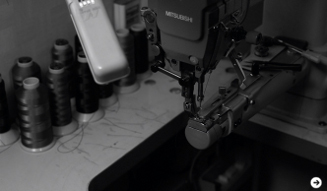
In sewing, meticulous effort is made to ensure the intersection of the two threads lies as close to the center of the leather as possible. Achieving this with extremely thin leather requires not only skill but also intense concentration. Perfectly spaced and aligned stitches are another example of a seemingly simple yet highly advanced artisanal technique.
The Greatness of Doing the Obvious, Perfectly
As evident from the above, FARO's definition of 'world-class' encompasses being thin, durable, minimalist, and beautiful. These are all straightforward principles, seemingly obvious to anyone. However, achieving them to the extreme is incredibly difficult. FARO's appeal is best understood by experiencing their products firsthand. In an era prioritizing efficiency, their uncompromising craftsmanship is born from inefficient processes. We invite you to experience these genuine men's leather goods, crafted with traditional artisanal integrity.