
LOOPWHEELER: Japan's Proud
LOOPWHEELER | LOOPWHEELER
The Pinnacle of Loopwheel Knitting
Japan's Proud, Most Authentic Sweatshirt
“The most authentic sweatshirt in the world.” With this aspiration, LOOPWHEELER was founded in 1999. The brand exclusively disseminates comfortable loopwheel knitwear, crafted by highly skilled artisans. Now, in its 16th year since its establishment in 2015, we revisit its unique charm.
Text by IWANAGA Morito (OPENERS)

Three Classic Items Embodying the Brand's Philosophy
LOOPWHEELER boasts an extensive lineup of items made from sweatshirt fabric. The collection continually expands the possibilities of sweatshirts by ambitiously releasing new designs each year. Here, we introduce three classic tops that embody the brand's philosophy.
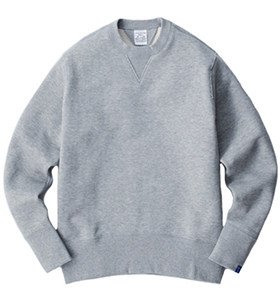
If we consider the sweatshirt itself a traditional item, then LOOPWHEELER's pieces offer a contemporary interpretation. While retaining the authentic mood of American-born products, they are updated with modern arrangements, blending global symbolism with unique individuality.
The classic sweatshirt, known as 'LW01', is the representative model of LOOPWHEELER's Standard Series. Adhering to the original manufacturing principles of sweatshirts, it features a tubular body knitted without side seams.
For sewing, flatlock seams are used in areas expected to come into direct contact with the skin, ensuring comfort. Furthermore, with V-gussets at the neckline both front and back, it is constructed with the most authentic combination, mirroring vintage items.
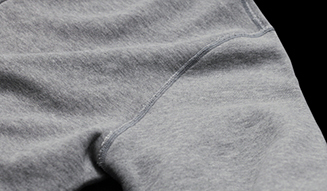
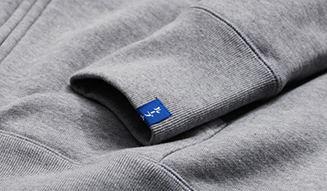
Available in versatile colors such as grey mélange, marine, black, and oatmeal. The generously sized ribbed cuffs and hem act as accents, creating a unique and exquisite balance.
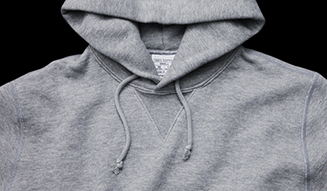
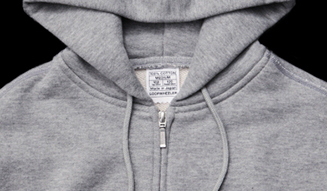
The sweatshirt hoodie is another classic item with enduring popularity. We offer the pullover 'LW05' and the full-zip 'LW09', both featuring a tubular body and flatlock seam construction.
The silhouette, created by a compact sizing, offers a relaxed feel without appearing sloppy. The lining is also dyed the same color as the body, enhancing the sharp appearance of the plain design.
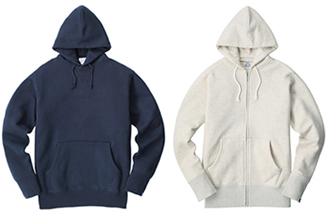
Attention to detail is evident: the hood features round drawstrings, the LW05 has a V-gusset at the neckline, and the full-zip LW09 uses an authentic open-style zipper. Within these simple items, carefully selected parts and details encapsulate design philosophy, culture, and a subtle balance.
HOW TO CARE
LOOPWHEELER items are highly versatile sweatshirts, and the characteristics of fabric knitted on loopwheel machines make them durable companions. While they can be cared for in a household washing machine, paying attention to the following points will allow you to fully enjoy their texture for years to come. Please use this as a guide.
1. Wash with plenty of water, using the slowest possible spin cycle.
→ Select a "Dry" or "Soft" course and use a laundry net to minimize stress on the garment.
2. Avoid tumble drying.
→ This can cause loss of shape, shrinkage, and fabric damage.
3. Wash inside out.
→ This helps to prevent pilling on the surface.
4. For items with zippers, close the zipper before washing.
→ This prevents snagging of the fleece lining or other garments.
5. For items with buttons, unbutton before washing.
→ This prevents distortion of the buttonholes.
These are general care points for all garments, but we ask that you reconfirm them. LOOPWHEELER products allow each wearer to experience the essence of clothing. Truly high-quality everyday wear should positively impact not only one's style but also one's motivation in life.
LOOPWHEELER | LOOPWHEELER
The Pinnacle of Loopwheel Knitting
Japan's Proud, Most Authentic Sweatshirt (2)
Understanding the "Loopwheel Machine"
The "loopwheel machine" used by LOOPWHEELER is an old-fashioned knitting machine. It was commonly used for producing fabrics like jersey and fleece until the mid-1960s. The primary characteristic of the fabric produced is its comfortable texture. As clothing worn closest to the skin and as activewear, loopwheel fabrics retained their properties even after repeated washing, making them ideal materials for sweatshirts and T-shirts at the time.
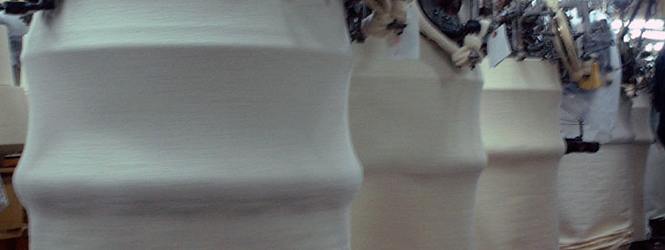
However, with the advent of mass production and consumption in the apparel industry, and the establishment of production systems prioritizing efficiency, these loopwheel machines gradually disappeared. "Loopwheel fleece" fabric can only be knitted at a rate of one meter per hour, and requires constant adjustment by skilled artisans during operation. Consequently, many factories adopted "sinker knitting machines," which could produce 10 to 30 times more fabric, to increase production efficiency.
LOOPWHEELER has committed to using loopwheel machines in the modern era. This is solely to provide fabric with an indescribable "comfort" and "pleasant feel" that CEO Suzuki has always embodied. As mentioned earlier, the greatest characteristic of sweatshirt fabric made on loopwheel machines is its softness. Operating at a slow speed of 24 rotations per minute, the yarn is knitted without excess tension, resulting in a fabric that is as soft and fluffy as if it were woven from air.
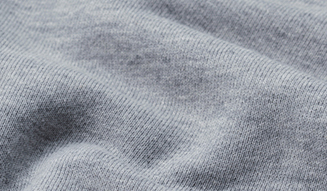
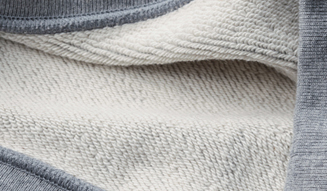
Its durability is also noteworthy. Sweatshirts made before the 1960s are cherished as vintage items, transcending time. While rarity is a significant factor, fabrics made on loopwheel machines, unlike those from sinker knitting machines, are not subjected to stress during the knitting process. This makes them less prone to shrinkage or stretching, maintaining their shape and enduring years of use.
Currently, approximately 400 loopwheel machines exist in Wakayama Prefecture, Japan, with about 200 of them in operation. The production process, requiring the skills of experienced artisans for knitting, repair, and maintenance, is undeniably "inefficient" by modern standards.
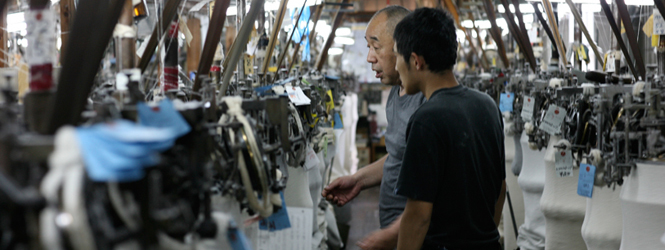
However, this is precisely where the spirit of craftsmanship resides. In processes such as material selection, design, pattern making, and sewing, artisans in each section dedicate time and concentration to complete the product. Unlike factories geared towards mass production, the smaller lot sizes allow for the accommodation of detailed requests from the makers. Consequently, LOOPWHEELER's products, though machine-produced, guarantee a quality that could only be achieved through human craftsmanship.
LOOPWHEELER
http://www.loopwheeler.co.jp/