August 12, 2015
FARO: World-Class Leather Goods Born from Japanese Craftsmanship
FARO
World-Class Leather Goods Crafted with Japanese Artisan Techniques
Born from a desire to create leather goods that rival the world's best, using the masterful techniques found in Japan, FARO's quality has gradually gained recognition, steadily building a loyal following. But what exactly constitutes world-class leather goods?
Text by TOMIYAMA EizaburoPhoto by Jamandfix

Thin yet Strong: The Betari Method
Wallets, a quintessential men's leather accessory, are traditionally meant to be slipped into a suit's breast pocket. Therefore, thickness is undesirable. Furthermore, they must not lose their integrity even when thinned. To address this, FARO employs "betari," a technique where two extremely thin, 0.4mm-thick leather pieces are bonded together to maintain strength.
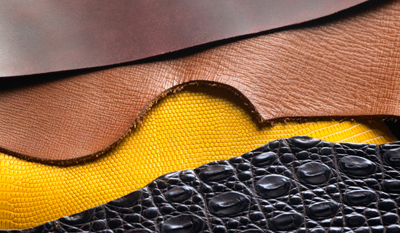
By firmly adhering thin layers together, their forces interact effectively, creating a surprising resilience and firmness. However, as leather is a natural material, simply applying adhesive can cause warping or shrinkage. This seemingly simple technique actually requires highly advanced skills, achievable only by a select few artisans.
Traditional Edge Finishing Possible with Vegetable-Tanned Leather
FARO also utilizes traditional methods for edge finishing. This is also impossible with commonly used chrome-tanned leather. By using vegetable tanning, which retains the leather's natural proteins, the edges transform into a beautiful, amber hue with just water and friction, thanks to the heat generated.
Rich Texture and Finish Achieved Through Water Dyeing
For coloring the leather, instead of spraying paint, they use "water dyeing," where pigment is dissolved in water and then applied. While this method doesn't produce extremely vibrant colors, it results in products with a rich texture and a warm, inviting feel.
A Commitment to Precision in Cutting and Sewing
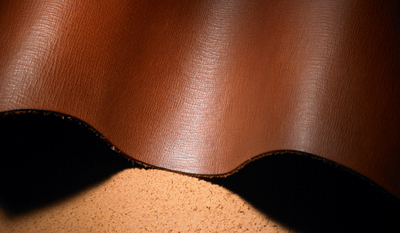
Furthermore, cutting, which involves discerning the grain and fiber direction to select the optimal part for each component, is another crucial element supporting high-quality craftsmanship. The leather is cut to showcase its beauty. While it may seem basic, it is actually a difficult skill that has been increasingly lost in recent years.