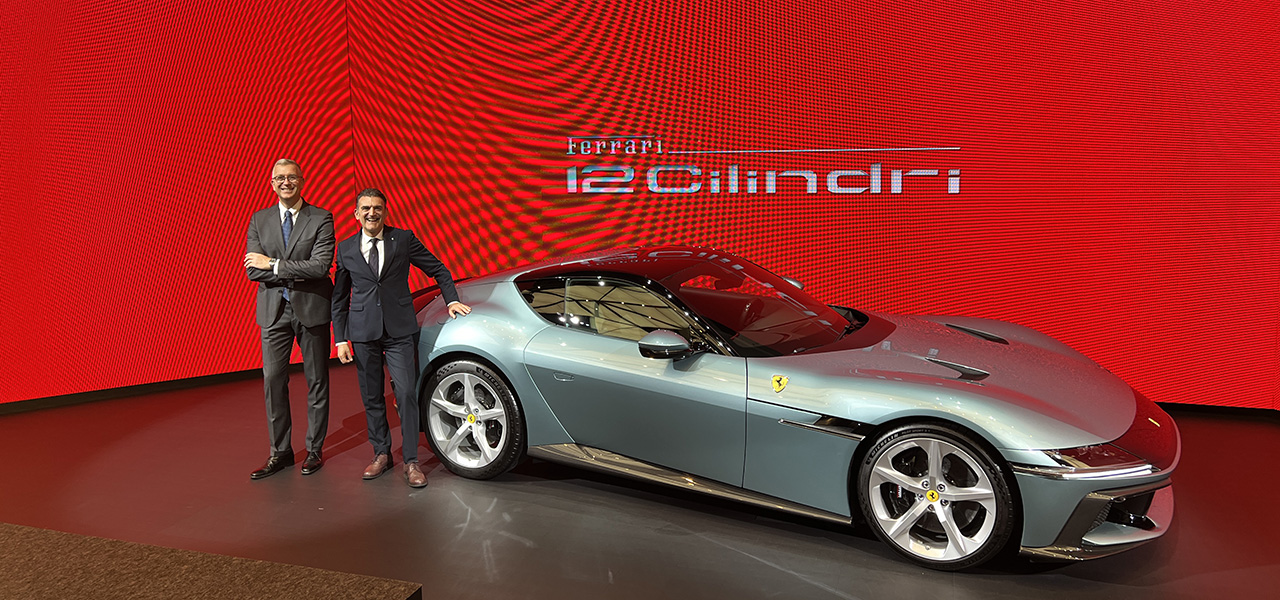
Emanuele Caland, Head of Product Marketing at Ferrari S.p.A. (left), and Donato Romagnier, President
Ferrari's New V12 Grand Tourer, the "12 Cilindri," Debuts in Japan
Ferrari 12Cilindri | Ferrari Dodici Cilindri
Ferrari's New V12 Flagship "12 Cilindri" Arrives in Japan
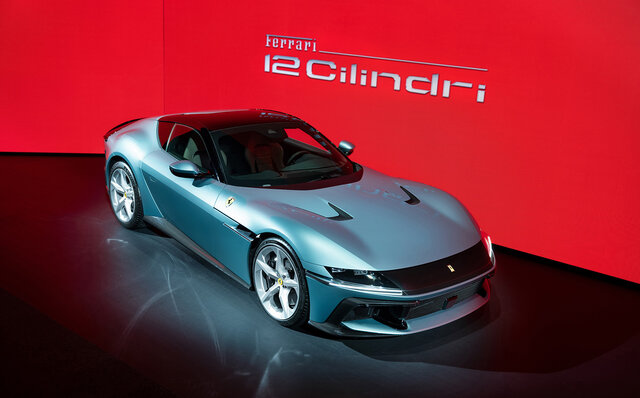
Ferrari Japan has unveiled the new V12 flagship model, the "12 (Dodici) Cilindri," for the first time in Japan.
An Exterior Blending Classical and Futuristic Sensibilities
The "12 Cilindri," Ferrari's new flagship two-seater unveiled in Miami in May, made its Japan premiere.
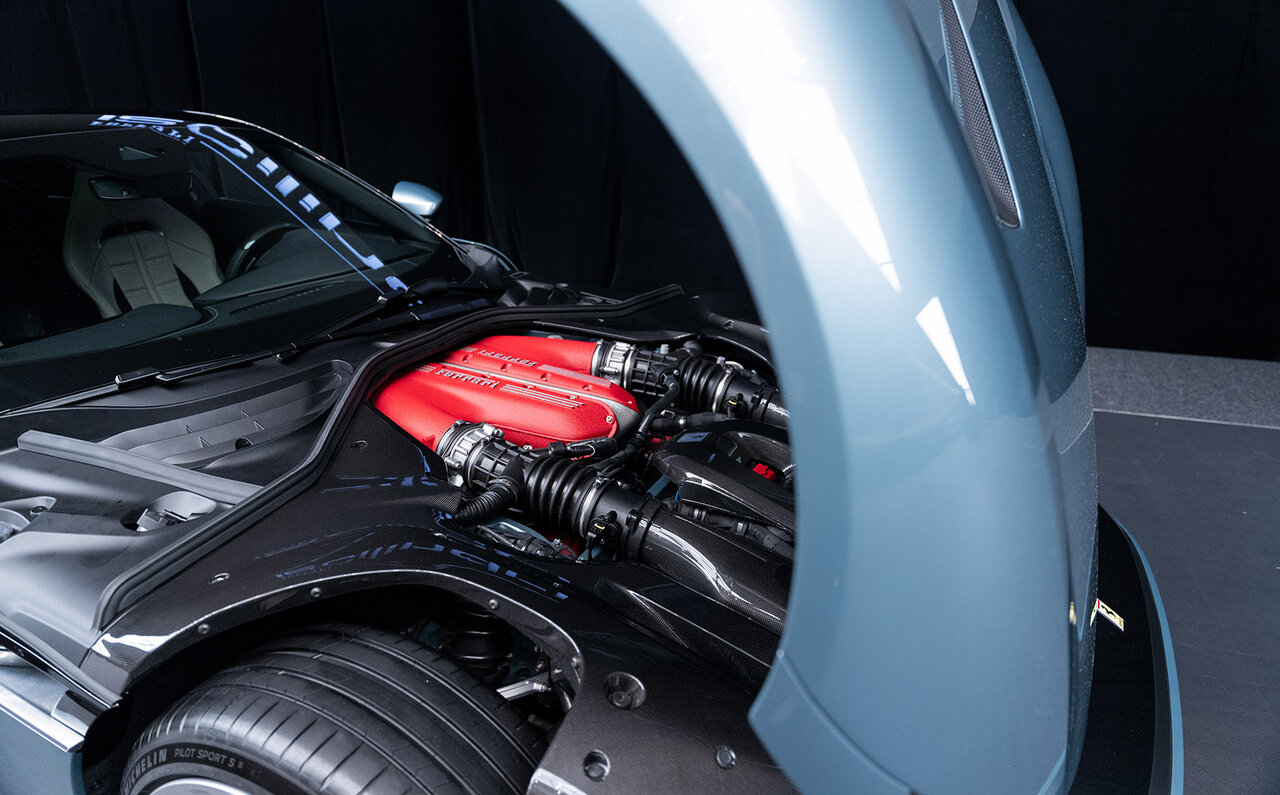
The "12 Cilindri" is a two-seater grand tourer featuring a naturally aspirated V12 engine mounted mid-front, an icon of Ferrari since its founding in 1947. The name itself derives from this 12-cylinder configuration.
"The 12 Cilindri is a compelling vehicle for those seeking the pinnacle of performance, comfort, and beautiful design, representing Ferrari's DNA of pursuing the perfect powertrain philosophy,"
said Donato Romaniello, President of Ferrari Japan, at the Japan premiere.
The engine is a 6.5-liter V12, producing a maximum output of 830 ps and peak torque of 678 Nm. Employing new technologies such as titanium connecting rods, it achieves a maximum engine speed of 9,500 rpm and drives the rear wheels through an 8-speed DCT (Dual Clutch Transmission).
Performance figures include a top speed of 340 km/h and 0-100 km/h acceleration in 2.9 seconds.
A key improvement highlighted for the V12 engine is the optimization of torque delivery under all operating conditions. This enhancement reportedly allows for seamless response and maximum power output at the redline.
Furthermore, the engine sound, one of the hallmarks of Ferrari's 12-cylinder models, has been meticulously crafted. Ferrari has optimized the intake and exhaust ducts to create a sound that resonates with all the harmonic components dictated by the firing order.
The sound within the cabin has also been enhanced by repositioning the resonators, resulting in a richer tonal range.
Aerodynamics were optimized through the underbody design to maximize downforce. This also contributes to managing airflow from the central radiator; the central underbody opening features louvers, whose planar arrangement and side shaping minimize the impact of low-velocity hot air.
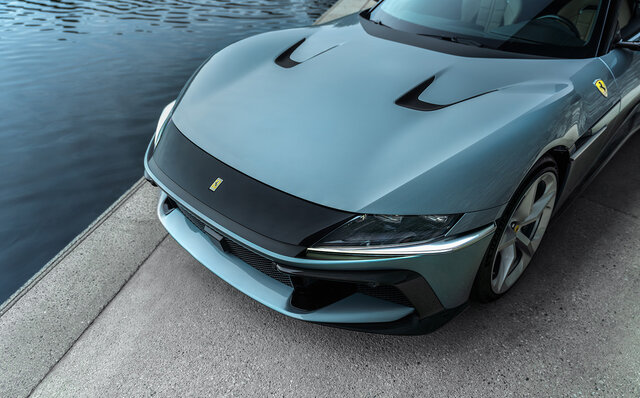
Seven openings are integrated into the front bumper to expel heat from the V12 engine. Simultaneously, ample cooling ducts for the brakes are provided. Air intake openings for cooling are located in two places: between the radiator intakes and within the front splitter. The outer ducts cool the engine oil radiators, while the inner ducts are dedicated to brake cooling.
The chassis is newly developed and constructed entirely of aluminum. Vehicle dynamics incorporate ABS Evo and a 6D sensor, first introduced on the "296 GTB." This enables control of systems such as "PCV (Virtual Short Wheelbase) 3.0" and "SSC (Side Slip Control) 8.0," contributing to shorter braking distances.
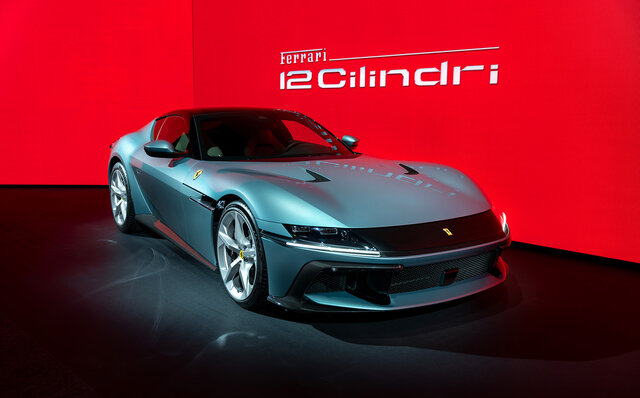
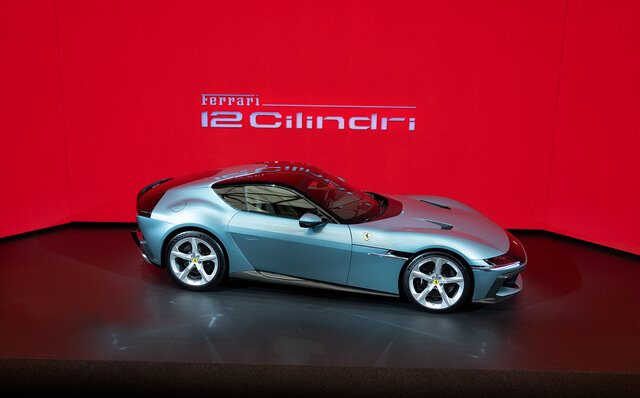
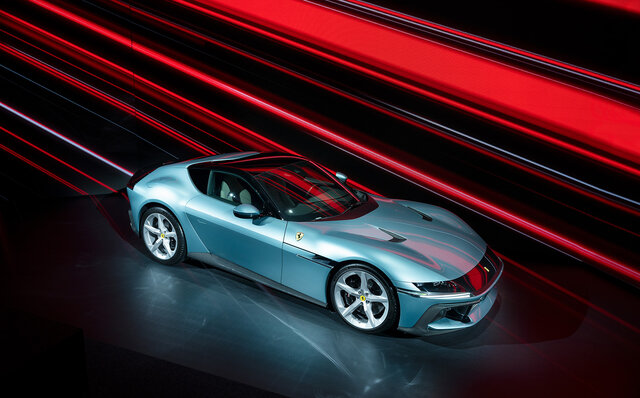
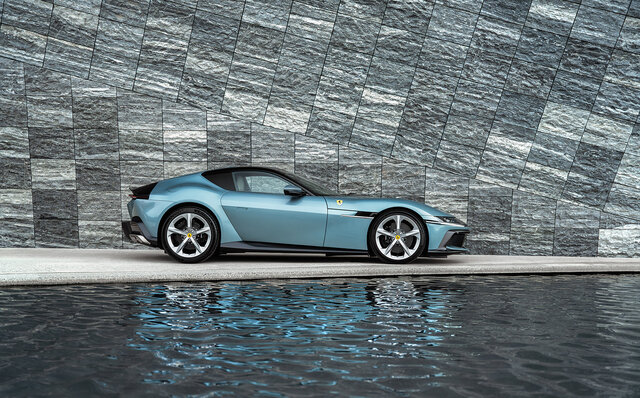
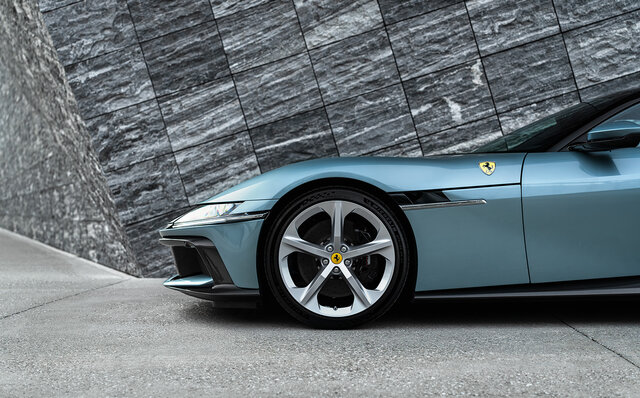
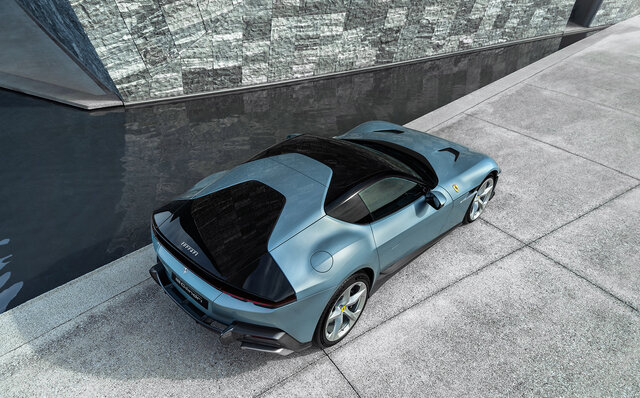
The exterior, as Chief Design Officer Flavio Manzoni stated, "We wanted to fundamentally change the styling code of Ferrari's V12 front-midship engines," represents a significant departure from its predecessor, the 812 Superfast. Its clean lines are striking, eschewing the familiar design elements of recent Ferrari V12 models, such as pronounced body-side contours and prominent air intakes.
The front features geometric shapes and a horizontally blacked-out beltline, reminiscent of the legendary 1970s "365 GTB4 'Daytona'," rather than Ferrari's characteristic slender headlights and traditional grille.
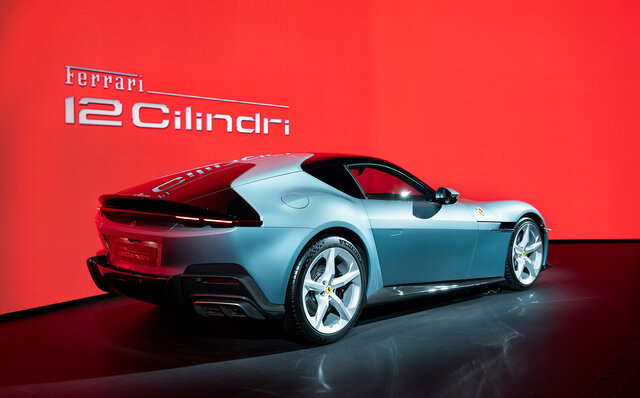
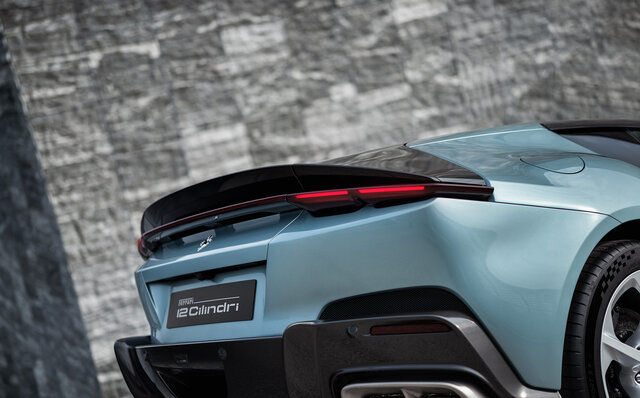
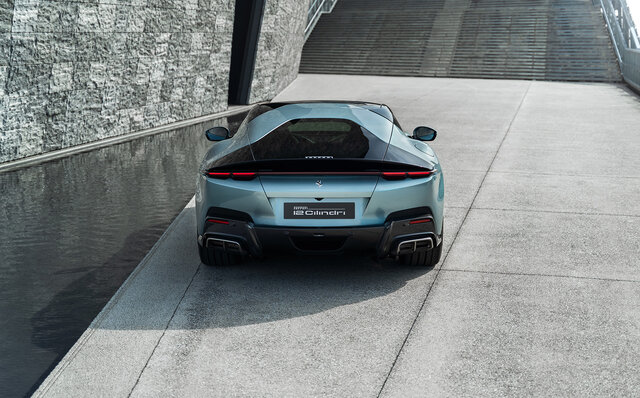
The rear presents an unprecedentedly novel view, with the area from the rear window to the rear deck blacked out in a shape inspired by the delta wing of the supersonic aircraft "Concorde."
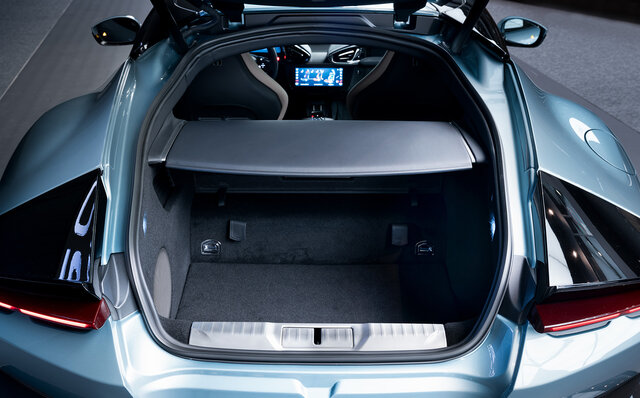
To maintain this clean design, two active flaps integrated with the rear screen replace a traditional rear spoiler, creating a clean and seamless style across the entire rear.
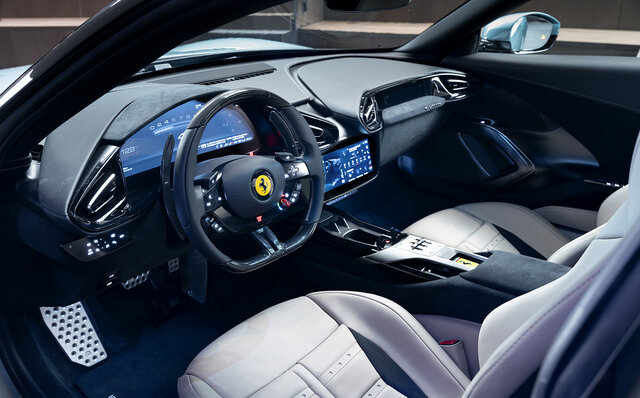
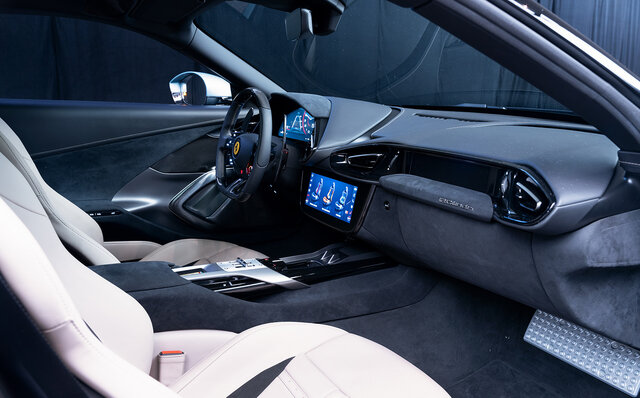
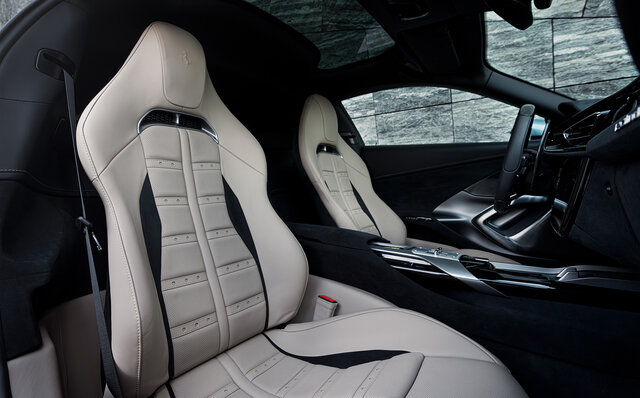
The cockpit adopts a "Dual Cockpit Concept," similar to the Roma and Purosangue, featuring a nearly symmetrical layout. Combined with a newly enlarged tinted glass roof, it creates an open and clean interior space.
Notably, sustainable materials are widely used, including Alcantara, which contains 65% recycled polyester.
The center of the cockpit features a 10.25-inch touchscreen. In addition to the 15.6-inch driver display, an 8.8-inch display is provided in front of the passenger seat, offering a co-driver-like experience.
The price of the "12 Cilindri" is 56.74 million yen. The Spider, an open-top model, will also be introduced, priced at 62.41 million yen.
Ferrari 12Cilindri | Ferrari Dodici Cilindri
Body Dimensions | Length 4,733 x Width 2,176 x Height 1,292 mm
Wheelbase | 2,700 mm
Tread Front/Rear | 1,686 / 1,645 mm
Weight | 1,560 kg
Engine | 6,496 cc Naturally Aspirated V12
Maximum Output | 830 ps / 9,250 rpm
Maximum Torque | 678 Nm / 7,250 rpm
Transmission | 8-speed DCT
Top Speed | 340 km
0-100 km/h Acceleration | 2.9 seconds
Tire Size | Front 275/35 R21 Rear 315/35 R21