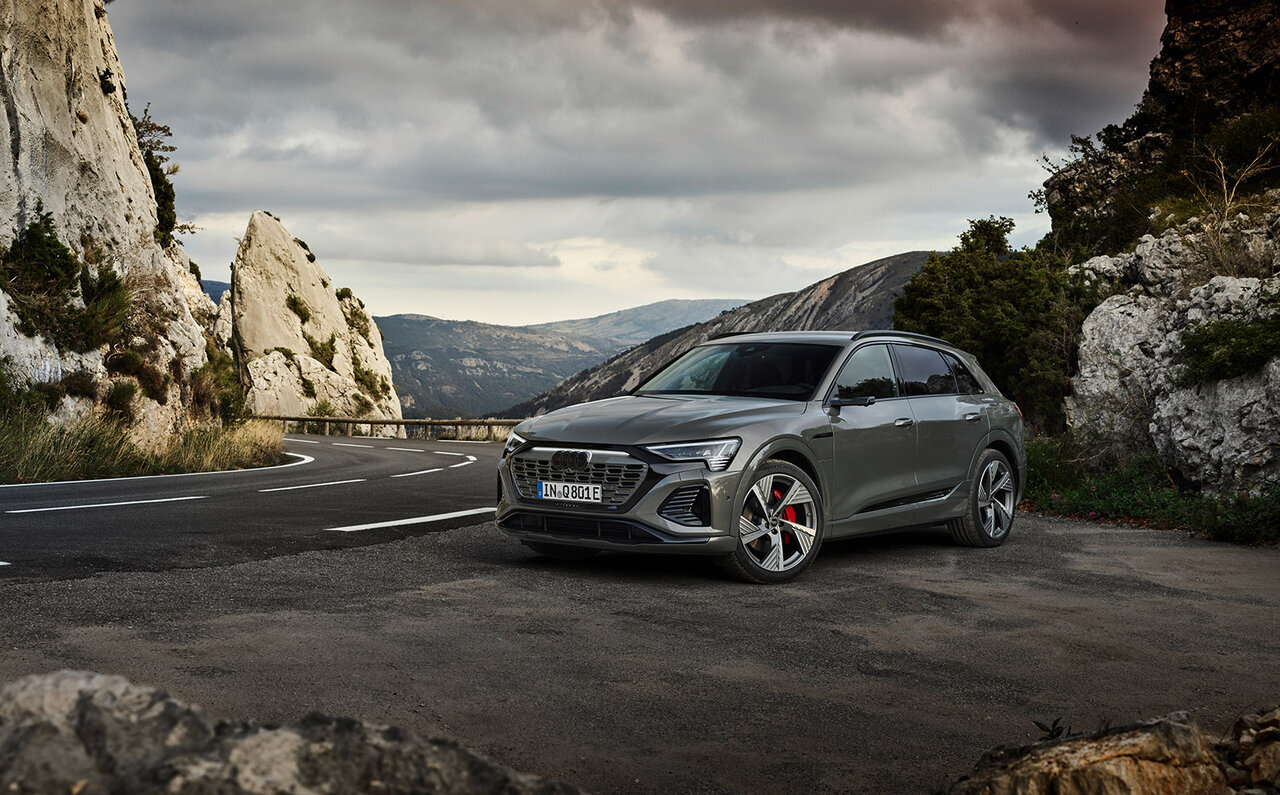
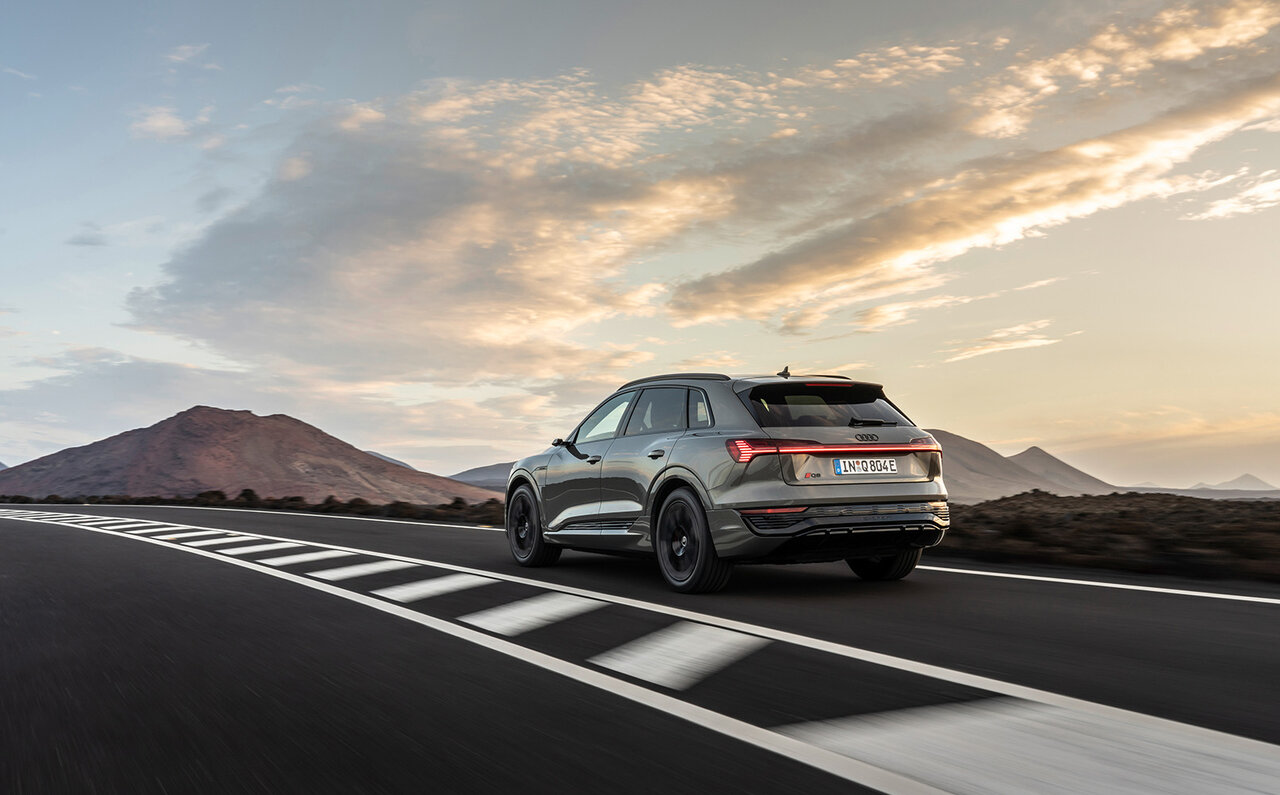
Audi Unveils Flagship Electric SUV Models: the Q8 e-tron and Q8 Sportback e-tron
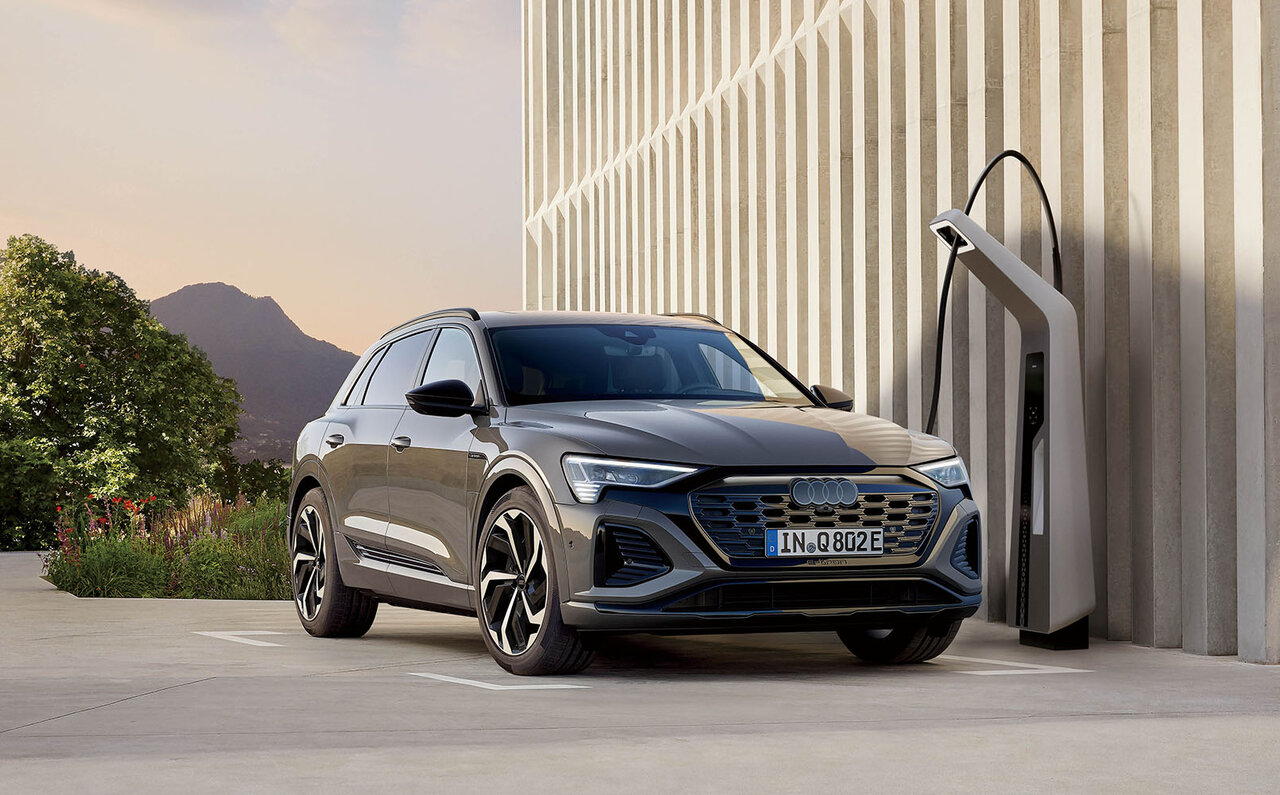
Audi Q8 e-tron
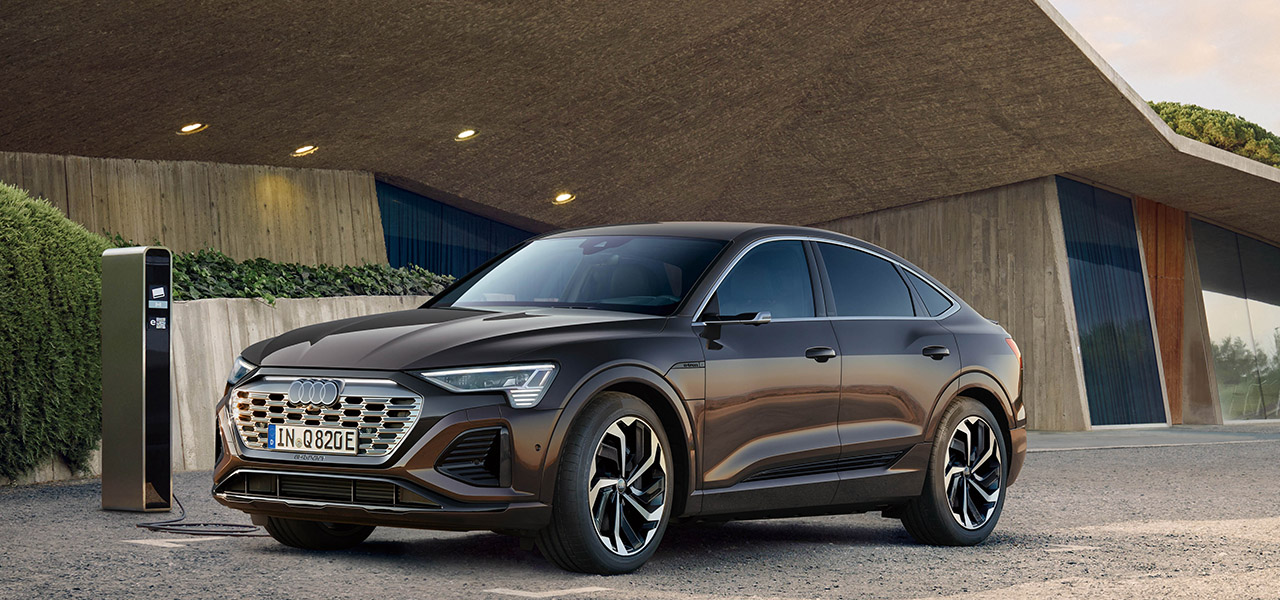
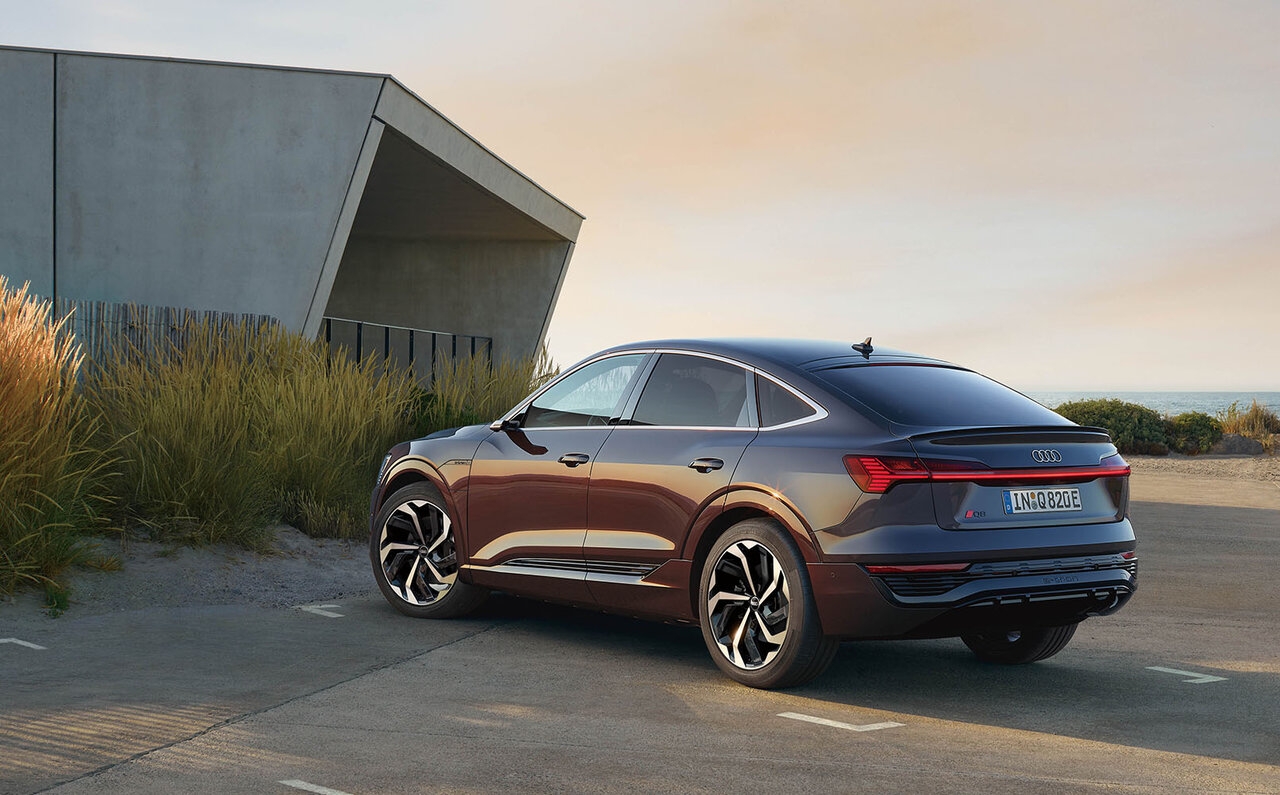
Audi Q8 Sportback e-tron
Audi's First BEVs, the e-tron and e-tron Sportback, Evolve Significantly
Audi Japan has announced the Audi Q8 e-tron and Q8 Sportback e-tron, successors to Audi's first BEVs (Battery Electric Vehicles), the Audi e-tron and e-tron Sportback. The new models adopt the "Q8" designation, signifying their position at the pinnacle of the SUV/crossover lineup. Sales are slated to begin this summer or later.
Interior Materials Reflect Commitment to a Sustainable Society
The newly announced Audi Q8 e-tron and Q8 Sportback e-tron are positioned as the successors to the Audi "e-tron" and "e-tron Sportback," which, as Audi's first BEVs, have sold approximately 160,000 units worldwide as of the end of 2022.
The Audi Q8 e-tron will be available in "50" and "55" variants, while the Q8 Sportback e-tron will feature the "55" designation. Notably, the 50 e-tron quattro S line is equipped with a total battery capacity of 95 kWh (89 kWh net capacity), an increase of 24 kWh over its predecessor. This allows for a driving range of 424 km (WLTC mode) on a single charge, an improvement of 89 km compared to the previous model.
Meanwhile, the 55 e-tron quattro S line boasts a larger battery with a total capacity of 114 kWh (106 kWh net capacity), an increase of 19 kWh from the previous model. This enables a driving range of 501 km on a single charge, an enhancement of 78 km over its predecessor.
Audi attributes the improved driving range in both the 50 e-tron quattro and 55 e-tron quattro models to an increase in usable net energy capacity relative to the total battery capacity, alongside enhancements in aerodynamic performance and motor efficiency.
In the 55 e-tron quattro S line, the energy density has been increased without altering the battery size or module count from the previous model. This was achieved by minimizing gaps in the electrode material during battery production through a stacking method, where materials are arranged in a folded manner. This innovation has led to an increased battery capacity.
Furthermore, the energy density has been further improved by modifying the chemical composition of the materials within the cells.
Regarding charging, all models support fast charging up to 150 kW. Users can utilize the services of the Premium Charging Alliance (PCA), a joint venture between Audi Japan, Porsche Japan, and Volkswagen Japan, as well as the 150 kW fast chargers being installed at Audi e-tron dealerships.
Turning to the design, both the Audi Q8 e-tron and Sportback e-tron feature a new front design with a singleframe grille, characterized by its reduced openings and framed by a black mask, emphasizing their e-tron identity. Additionally, the new corporate identity is represented by the two-dimensional Audi rings.
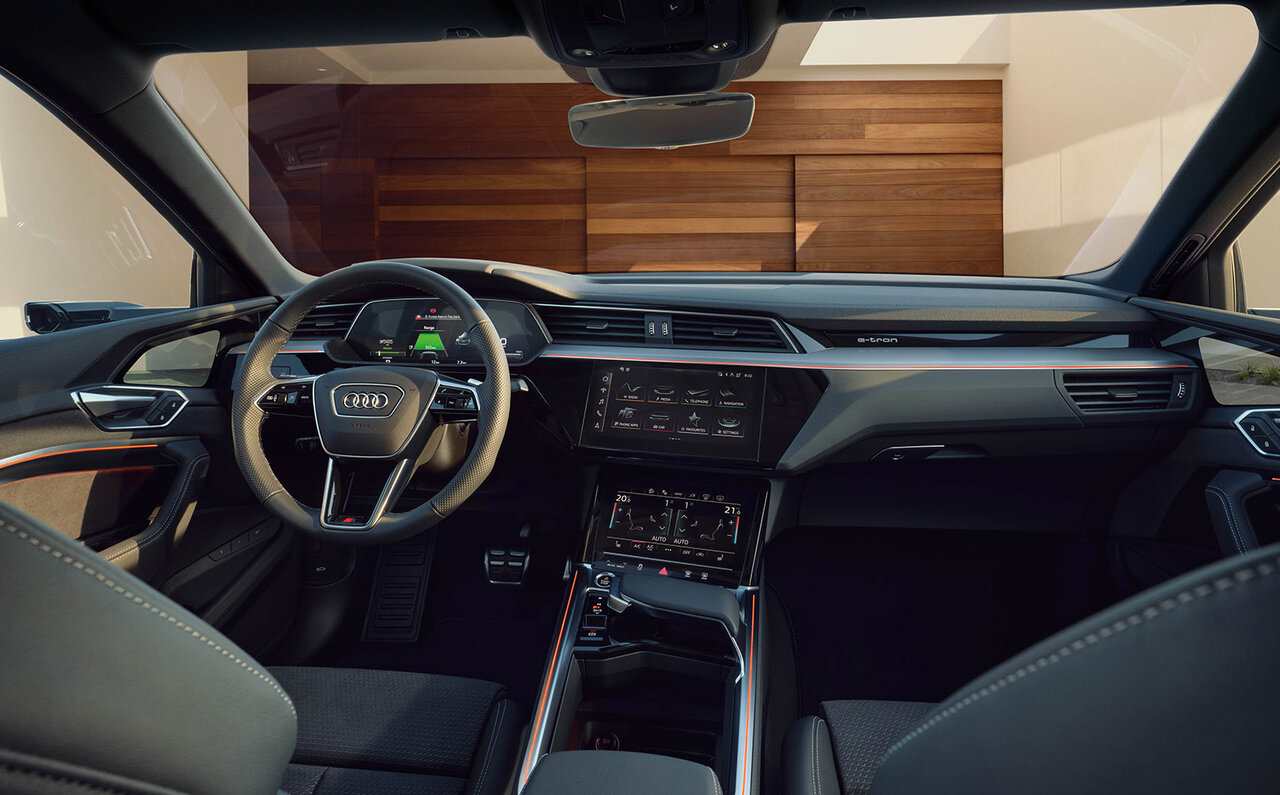
Inside, the commitment to sustainability is evident through features such as seats made from Dinamica, a material derived from recycled PET bottles, and seatbelt buckle covers crafted from recycled mixed plastic waste from automotive production.
Notably, these seatbelt buckle covers represent the first time Audi has incorporated recycled materials into safety-related components. By utilizing these materials in the Q8 e-tron, Audi aims to reduce the amount of resources used in component manufacturing and contribute to the realization of an efficient and sustainable circular economy.
Audi's "Vorsprung 2030" electrification strategy outlines plans to launch only BEVs for all new models introduced from 2026 onwards, with all sales transitioning to BEVs by 2033.
Concurrently, the company is pursuing carbon neutrality in its manufacturing processes, with a goal to achieve carbon-neutral operations across all Audi plants by 2025. The Brussels plant in Belgium, where the Audi Q8 e-tron is produced, switched to green electricity in 2012 and now supplies sustainable energy, supplemented by one of the largest solar power generation systems in the region installed on the factory premises.
The new Q8 e-tron is poised to play a pivotal role, both in name and substance, in Audi's ongoing drive towards electrification and the realization of a sustainable society.
Pricing is as follows: the Q8 50 e-tron quattro S line is ¥10.99 million, the Q8 55 e-tron quattro S line is ¥12.75 million, and the Q8 Sportback 55 e-tron quattro S line is ¥13.17 million.