McLaren's New Hybrid, the Artura, Has its Japan Premiere | McLaren
McLaren Artura
McLaren's New Hybrid, the Artura, Has its Japan Premiere
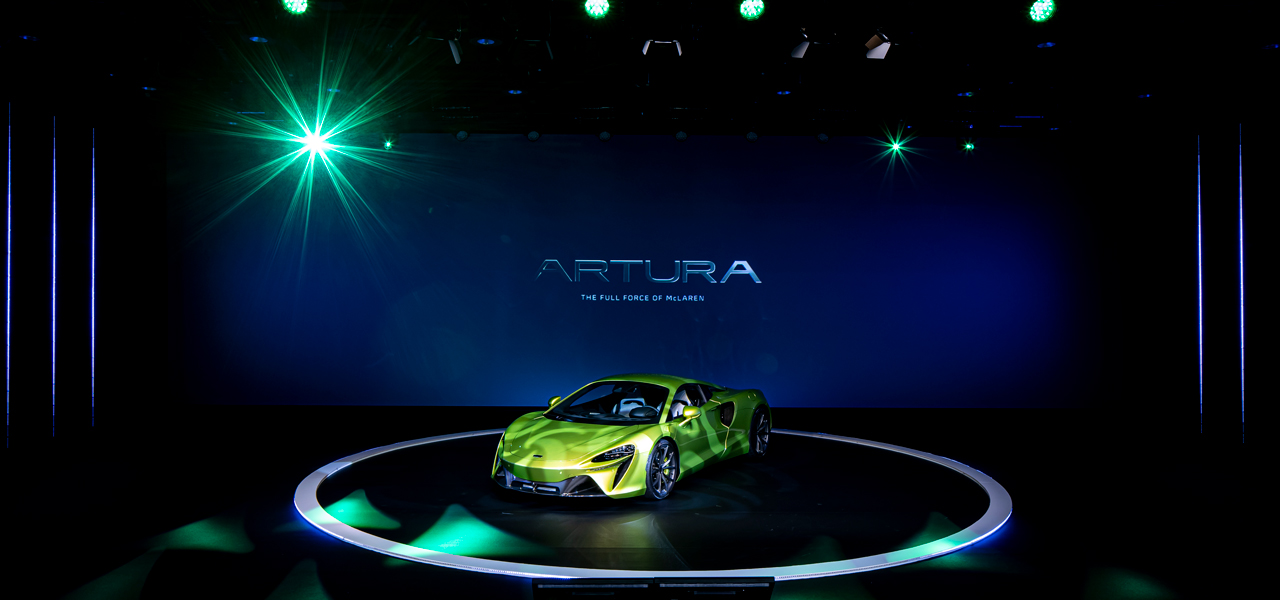
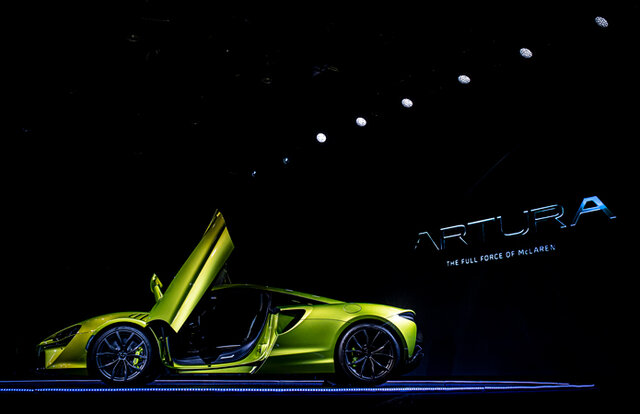
On April 13, McLaren Automotive unveiled the Artura, its first mass-produced hybrid high-performance supercar, in Tokyo.
Text by HARA Akira
Priced at ¥29.65 million, deliveries are scheduled for the third quarter of this year.
The Artura measures 4,539mm long, 1,976mm wide, and 1,193mm high. Its powertrain combines the M630 2,933cc V6 twin-turbo engine, producing a maximum output of 585ps at 7,500rpm and a peak torque of 585Nm between 2,250-7,000rpm, with an electric motor delivering 95ps and 225Nm, and a battery pack with five externally chargeable lithium-ion cells. The combined system generates a maximum output of 680ps and a peak torque of 720Nm. Power is delivered through an 8-speed dual-clutch transmission called SSG, enabling it to achieve 0-100km/h in 3.0 seconds, 0-200km/h in 8.3 seconds, 0-300km/h in 21.5 seconds, a 10.7-second quarter-mile time, and a top speed of 330km/h (electronically limited).
Yoshihiro Masumoto, Representative of McLaren Automotive Asia, Japan Branch
The powertrain settings include four modes: E-mode, Comfort, Sport, and Track. The battery pack has a maximum capacity of 7.4kWh, allowing for 30km of electric-only driving at speeds up to 130km/h. Thanks to its plug-in hybrid (PHEV) capability, an 80% charge can be achieved in just two and a half hours using the EVSE cable.
The body utilizes the new McLaren Carbon Lightweight Architecture (MCLA) for the first time, achieving a dry weight of just 1,395kg through the use of carbon fiber and superformed aluminum. The power-to-weight ratio stands at 488ps/t.
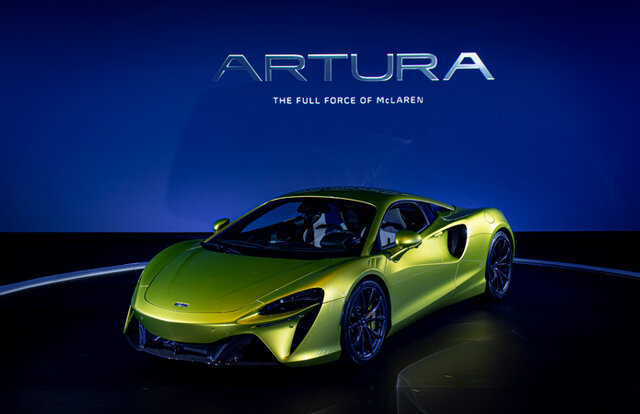
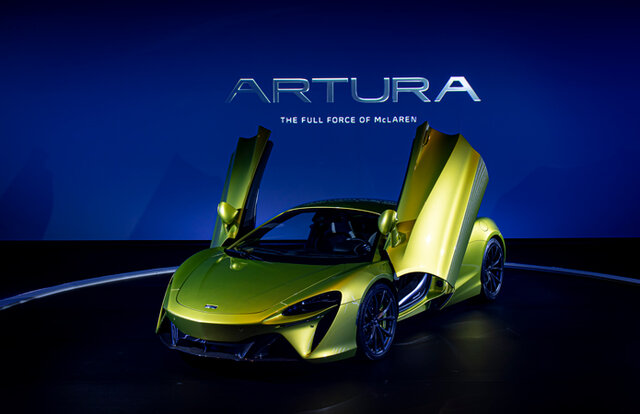
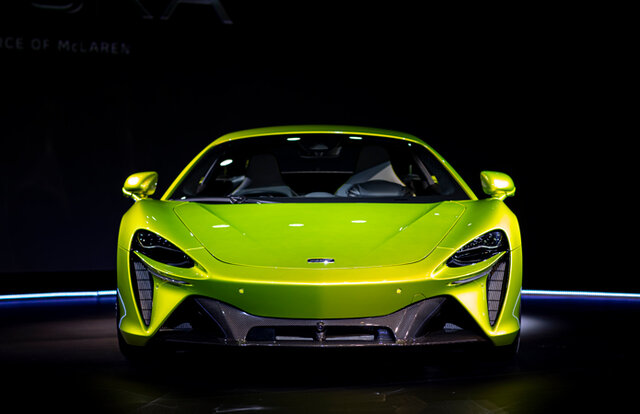
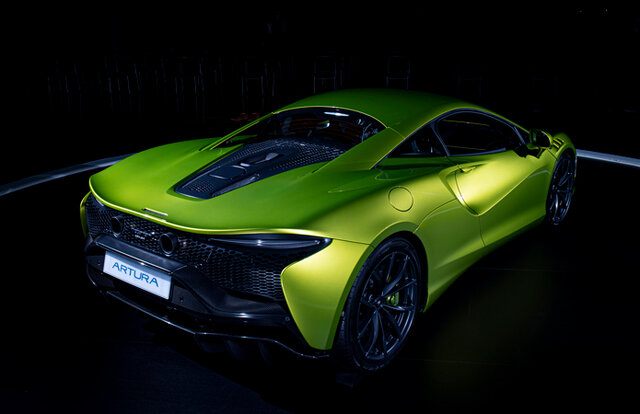
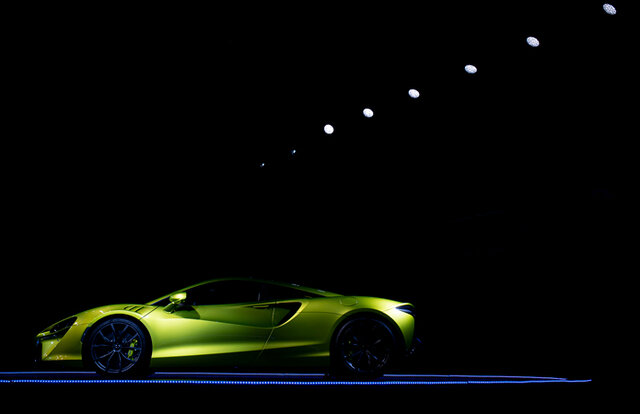
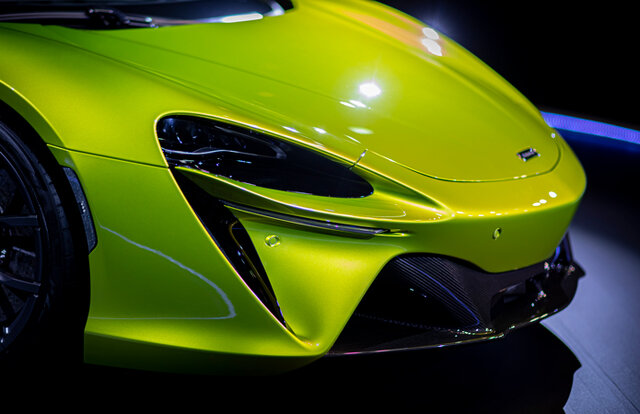
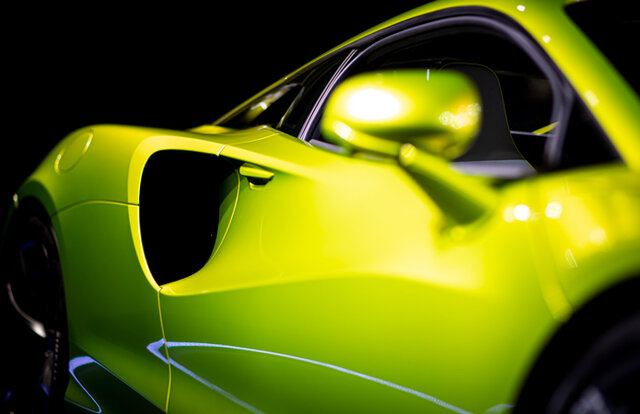
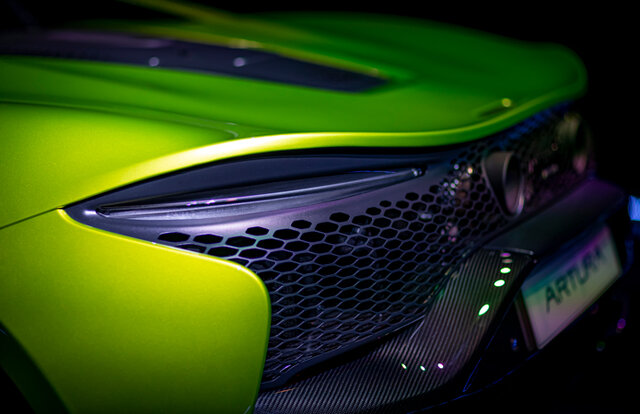
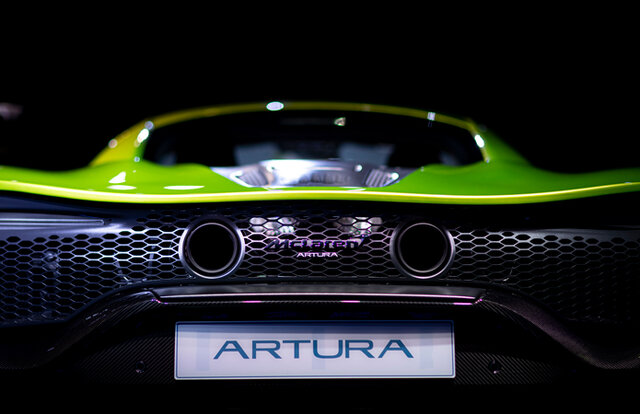
The exterior design features a low nose characteristic of a supercar, with a cab-forward, high-tail stance. McLaren's signature dihedral doors open closer to the body, and the mirrors fold more tightly for storage. Adopting McLaren's new design approach, described as 'shrink-wrapped,' the body boasts supple, technical contours with minimized shut lines and panel joints. For instance, the rear clamshell is designed from a single panel formed through superforming.
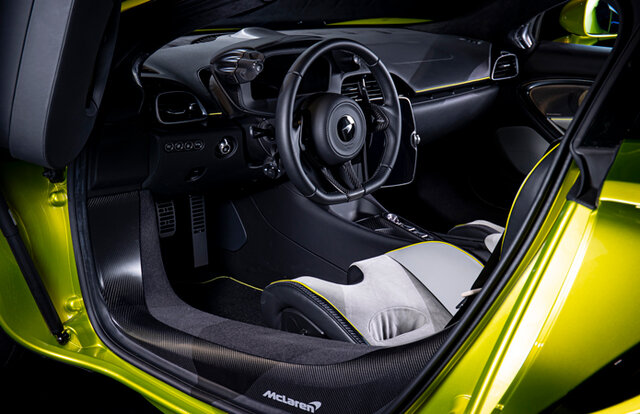
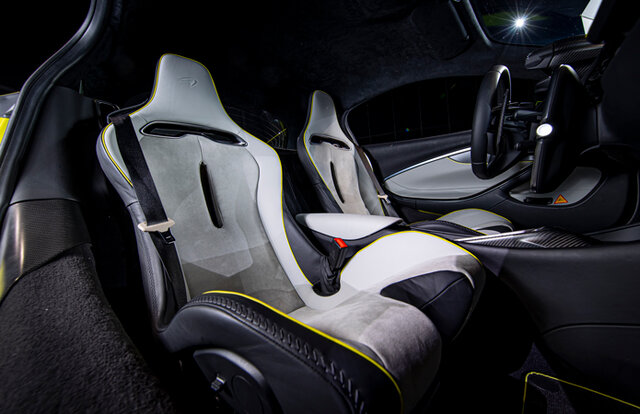
The cockpit has become an even more driver-centric space. The drive mode selector (powertrain and handling can still be set independently) has moved to the instrument binnacle, which is now mounted on the steering column and adjusts with the steering wheel. This enhancement in driving ergonomics allows for drive mode adjustments without removing hands from the steering wheel.
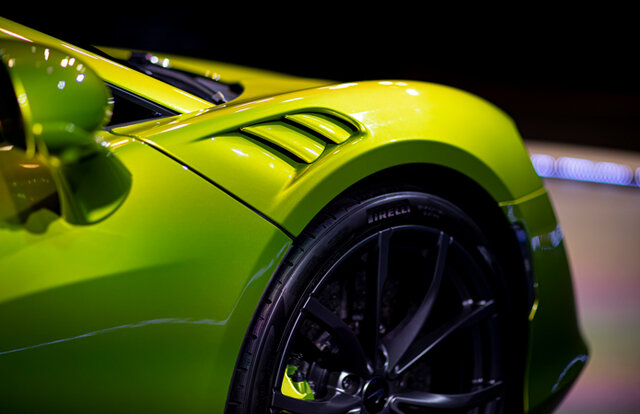
The suspension system features the debut of an electronic differential (e-diff). Synergizing with the rear suspension, which combines upper wishbones with two lower links and a tie rod forward of the wheel center, and the short wheelbase, cornering performance is enhanced. The Pirelli P-ZERO tires are embedded with an electronic chip that monitors tire pressure to optimize performance. Additionally, a polyurethane foam insert absorbs vibrations, significantly improving noise, vibration, and harshness during electric-only driving.
Priced at ¥29.65 million, deliveries are scheduled for the third quarter of this year.