Volvo Announces Research Results for Wireless EV Charging | Volvo
Volvo
Volvo Achieves Wireless Charging for EVs
Volvo Car Group has announced its success in wireless charging for electric vehicles.
Text by HORIGUCHI Yoshihiro (OPENERS)
Enhancing EV Convenience
Volvo Car Group is advancing research and development into charging electric vehicles without the hassle of cables, which can be cumbersome to handle and store. The results of this recent test have been announced as one outcome of these efforts.
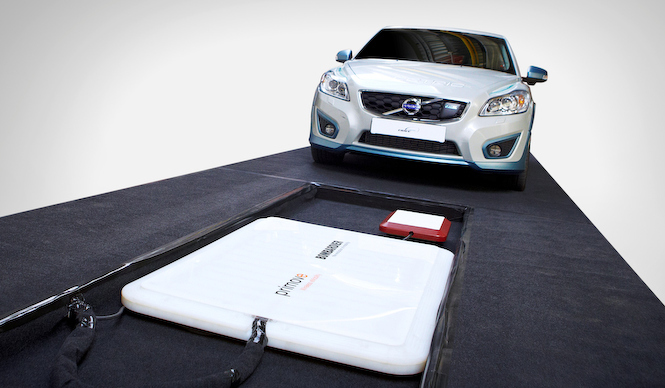
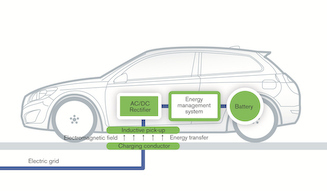
The wireless charging test involves generating electromagnetic fields by passing current through a coil on the charging station side. A coil embedded in the vehicle receives this electromagnetic energy, converts it into electric current, and charges the battery. The basic structure is similar to the contactless stand chargers commonly used for electric toothbrushes or cordless phones, a method already widespread among consumers.
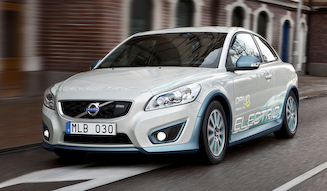
The test utilized the electric vehicle "C30 Electric," based on the compact car "C30C30," equipped with a motor delivering a maximum output of 89kW (120ps). In the experiment, the C30 Electric, with a battery capacity of 24kWh, was fully charged in two and a half hours at an output of 20kW.
This testing, along with a series of research and development initiatives in wireless charging for automobiles and buses, is being conducted at "Flanders Drive," a knowledge center for the automotive industry in the Flanders region of Belgium. This project is centered around a consortium including Volvo Car Group, Bombardier Transportation (the rail division of Canada's Bombardier Group), and Van Hool, a Belgian coachbuilder that manufactures buses and other vehicles. A portion of the funding for this project is also provided by the Flemish administration.
Volvo explains that wireless charging, which begins simply by parking in the designated spot, is a key factor in dramatically improving the convenience of electric and plug-in hybrid vehicles, and they will continue various testing in the future.