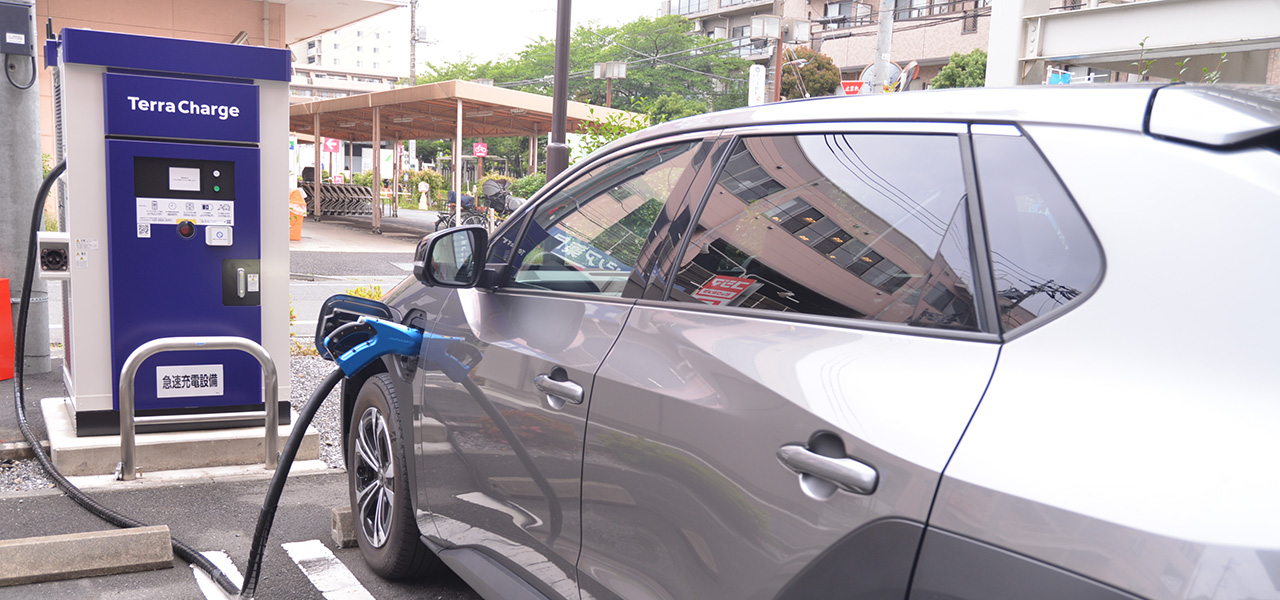
Challenging a New Industry with Charging Infrastructure: Terra Charge's Path to "Japan as Number One"
Terra Charge
The environment surrounding the spread of EVs is becoming increasingly challenging. Major manufacturers are being forced to revise their business plans, including Volkswagen considering factory closures due to slowing EV demand, Volvo retracting its goal of making all its models EVs by 2030, GM postponing production of large EVs, and Toyota announcing a reduction in its 2026 global EV sales target to one million units.
EVs inherently face a "triple threat" of high vehicle prices compared to gasoline cars, insufficient charging infrastructure, and limited driving range. We spoke with Ryu Kamimoto, Executive Officer at Terra Charge, a company addressing the charging infrastructure issue, about the outlook for the EV infrastructure business.
EVs inherently face a "triple threat" of high vehicle prices compared to gasoline cars, insufficient charging infrastructure, and limited driving range. We spoke with Ryu Kamimoto, Executive Officer at Terra Charge, a company addressing the charging infrastructure issue, about the outlook for the EV infrastructure business.
Text by YAMAGUCHI Koichi
Building a New Industry with "Power and Place"
There are many skeptical views within the industry regarding the profitability of the charging infrastructure business. Some point out that it is difficult to make it a viable business, as charging takes time while electricity prices for sales are low. In response, Kamimoto argues that profitability can be secured through structural reforms of the business.
"Our business model involves purchasing electricity from power companies and selling it with a markup. However, with the deregulation of electricity, various plans are emerging. We believe the business can be sufficiently viable by reducing procurement costs through partnerships with power companies and expanding charging spots in diverse locations such as condominiums, municipalities, and commercial facilities."
Terra Charge is a charging infrastructure provider that deploys charging equipment in various locations, including condominiums, hotels, and commercial facilities. After graduating from university, Kamimoto, who was active in a startup focused on digital marketing for the retail industry, is now in charge of developing charging spots as the head of domestic sales.
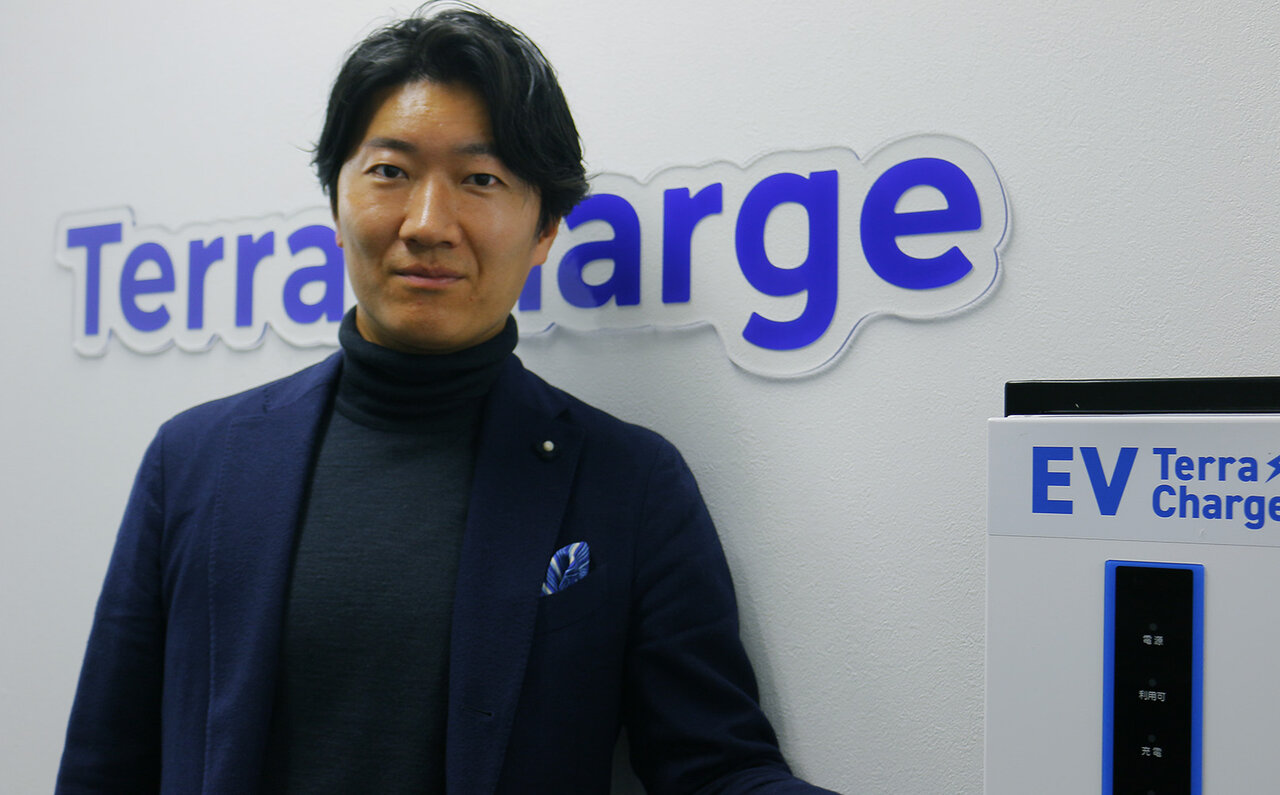
Ryu Kamimoto, Executive Officer at Terra Charge
"It's like installing our own vending machines in locations where demand is expected," Kamimoto explains the business model. "Although the domestic EV adoption rate is still only 2-3%, we believe that as the adoption rate increases, the utilization rate of our spots will grow quadratically, leading to increased revenue."
What sets the company apart from its competitors is its involvement in all three main installation categories: basic charging for condominiums, route charging for commercial facilities, and destination charging for hotels and airports.
"We develop and manufacture charging equipment for condominiums ourselves, and we deploy rapid chargers and regular chargers for hotels through OEM partnerships with other companies."
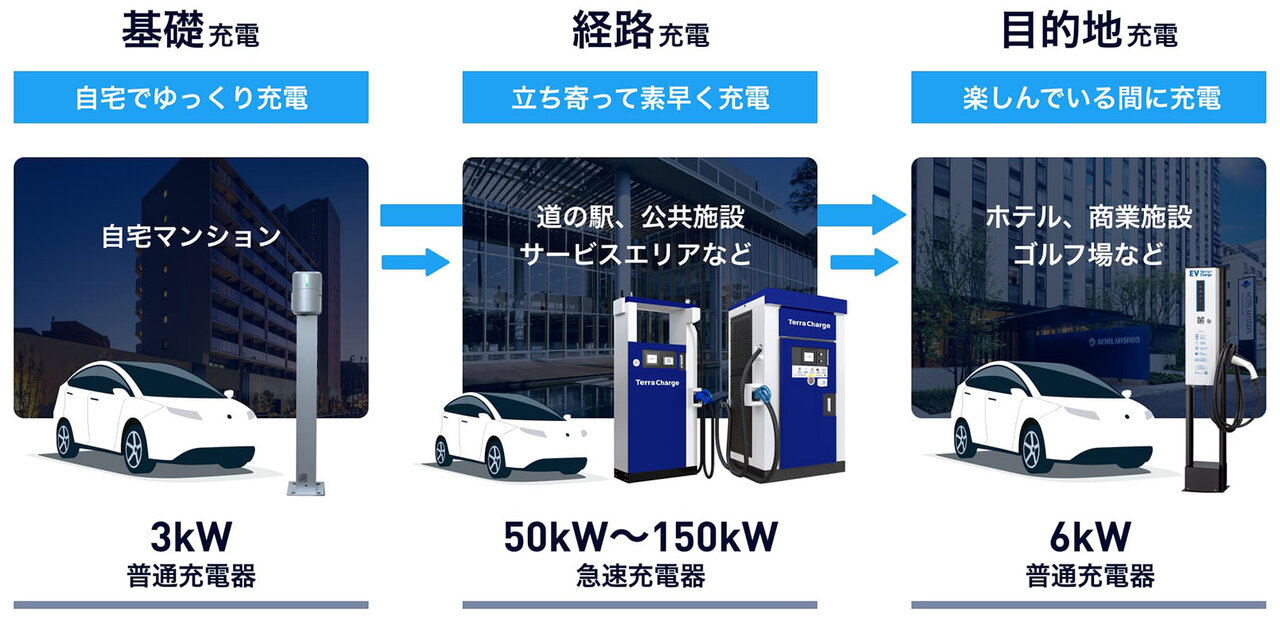
© Terra Charge
Kamimoto emphasizes that the painstaking sales efforts required to develop installation locations are a key strength of Terra Charge.
"For example, installing chargers in a condominium requires not only explaining to the management company but also repeatedly visiting the residents' association and patiently explaining the benefits. One of our company's strengths is that we can deploy over 100 staff members for such diligent efforts."
Currently, we offer free installation plans, subsidized by government grants where applicable, with the remaining costs covered by our company. "For a regular charger installed in a condominium, the cost including the charger is about 500,000 yen. For installation in hotels and similar facilities, it's around 1 million yen. We cover the portion not covered by subsidies."
Gazing at the Turning Tide of EV Adoption
While EV adoption is slower than anticipated, the company is accelerating investment in charging infrastructure. Their aim, they say, is to dominate the industry.
"For instance, we have an agreement to install charging spots at the 'Tokyo Station Hotel' and its parking facilities, and we will be handling the hotel's charging infrastructure going forward. Once we secure the power source and location, there's no room for other companies to enter later, much like QR code payments," Kamimoto states. This is why Terra Charge is accelerating its infrastructure investments.
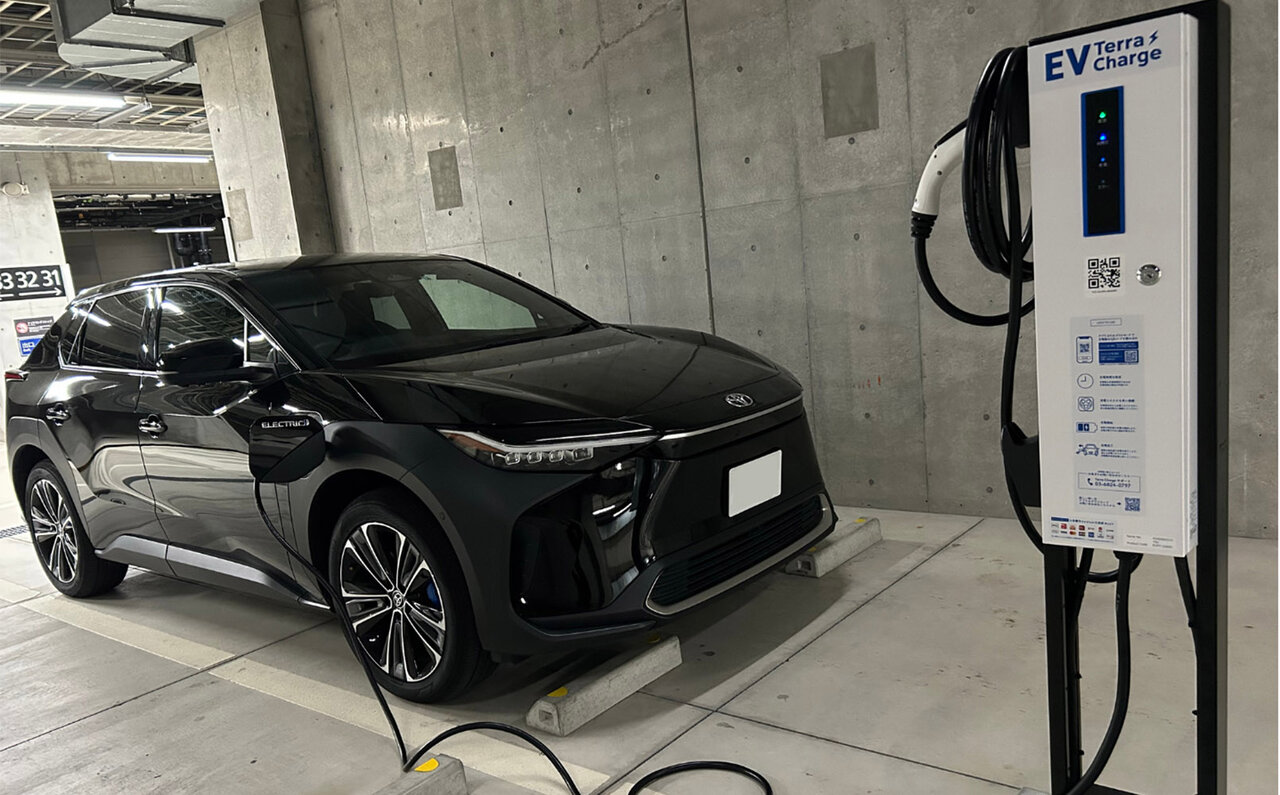
Charging spots installed at the Tokyo Station Hotel © Terra Charge
"The charging infrastructure markets in China, Europe, and the United States are dominated by a few companies. While about 10 companies are currently entering the Japanese market, it requires enormous upfront investment, and it's not a market where startups can easily enter. Our strength lies in being the only company that can cover all areas, from rapid charging to regular charging, across various markets such as condominiums, commercial facilities, and municipalities."
This strategy, considering the market characteristics, is underpinned by a vision for the structural changes in the automotive industry. "Amidst a situation where only China's BYD and Tesla are showing growth in the EV market, Japanese manufacturers must also create compelling EVs. In fact, major Japanese manufacturers like Toyota and Honda have announced plans to launch multiple new EV models in the coming years. It's said that the tide will turn around 2027, when these plans begin to bear fruit," says Kamimoto.
As evidence, he points to an interesting phenomenon in the Japanese automotive market: the EV ratio among imported cars exceeds 10%, a figure significantly influenced by the wide variety of available models.
"If Toyota and Honda properly expand their EV lineups, attractive options for users will increase. In that case, adoption should progress from perspectives other than environmental concerns."
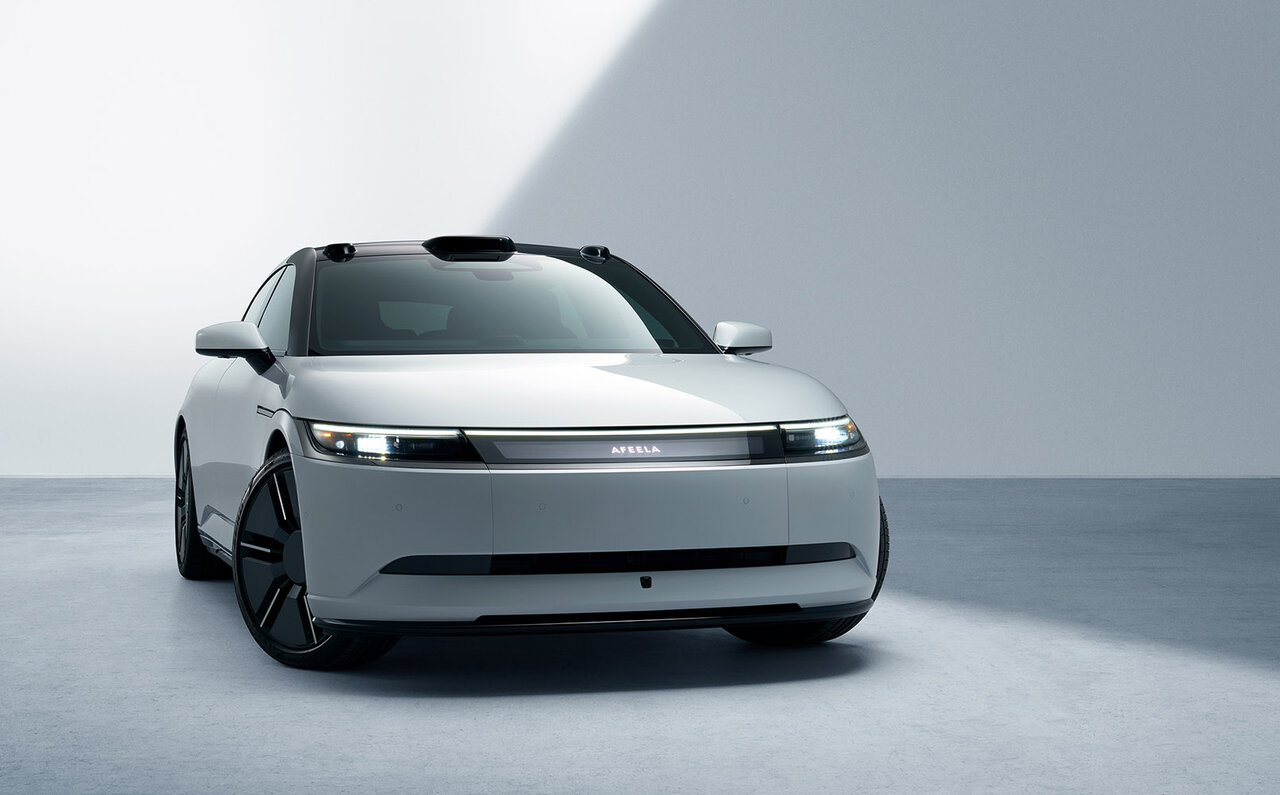
The EV "Affyla 1" from Sony Honda Mobility, launched at CES (Consumer Electronics Show) 2025. Introduction to Japan is also planned. © Sony Honda Mobility
With the anticipated shift in market dynamics, the company is accelerating infrastructure development while simultaneously promoting EV adoption. For example, in condominiums where charging facilities are installed, they partner with car manufacturers and dealers, including Hyundai, to promote sales and maximize the benefits. Concrete measures, such as a one-year free charging campaign for purchasers, have already begun.
The company's numerical targets for its aggressive investment are ambitious. Their goal of installing 100,000 charging units by 2027 accounts for one-third of the Ministry of Economy, Trade and Industry's national target of 300,000 units by 2030. Kamimoto explains the progress: "We currently have 25,000 units on order, with over 10,000 already installed."
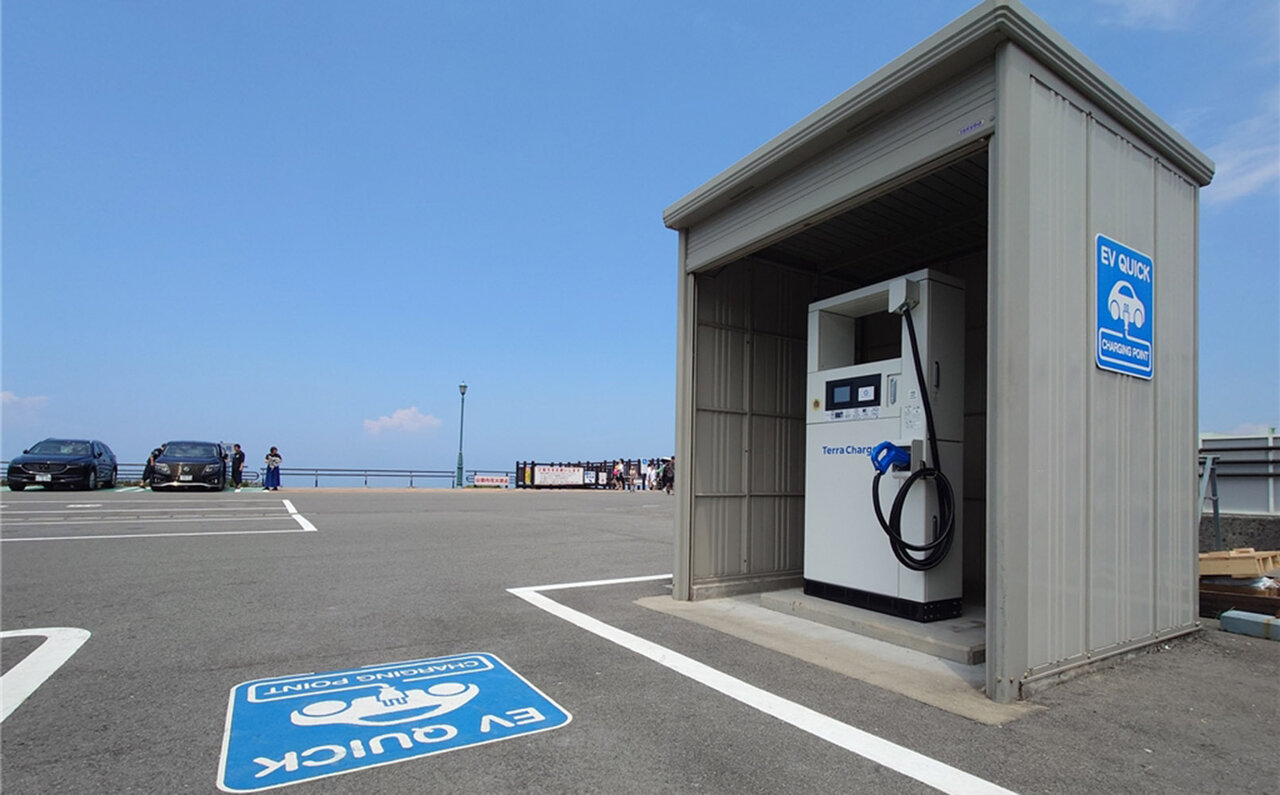
They are also proceeding with the installation of rapid chargers at roadside stations nationwide as route charging. Pictured is the roadside station "Futami" in Iyo City, Ehime Prefecture. © Terra Charge
Furthermore, the expansion of the charging infrastructure network creates new business opportunities. Users will spend at least 10 minutes with rapid charging and even longer with regular charging. Kamimoto redefines charging spots as "places where people gather," leveraging this characteristic. This opens up possibilities for new revenue models, including advertising.
Growth Strategy in Thailand and Indonesia
They are also actively pursuing overseas expansion, with a particular focus on Thailand and Indonesia. "For example, in Indonesia, the EV adoption rate jumped from 1% in 2023 to 10% in 2024. Electricity sales revenue is significantly higher than in Japan."
However, the deployment method differs from Japan. "In Japan, we actively promote free installations utilizing subsidies, but in Thailand and Indonesia, where EVs are already widespread, subsidies are not expected. Therefore, although the installation pace is slower than in Japan, we are efficiently installing chargers in locations with higher demand."
The strategy in both countries, similar to Japan, centers on securing prime locations. "In Thailand and Indonesia, we aim to become number one in each country by securing excellent locations, such as condominiums and hotels," Kamimoto states enthusiastically. They are particularly emphasizing the development of basic charging facilities in condominiums, tailoring their approach to the residential environments of each country.
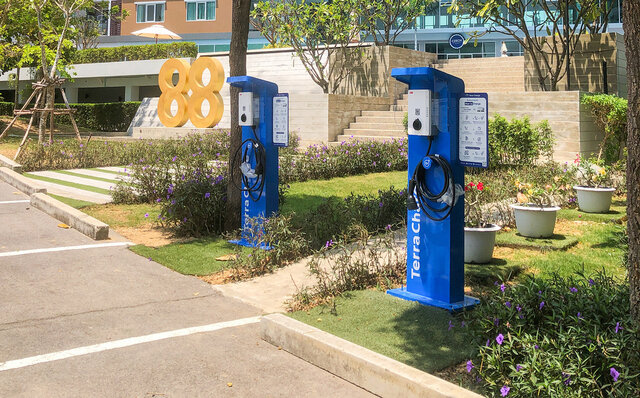
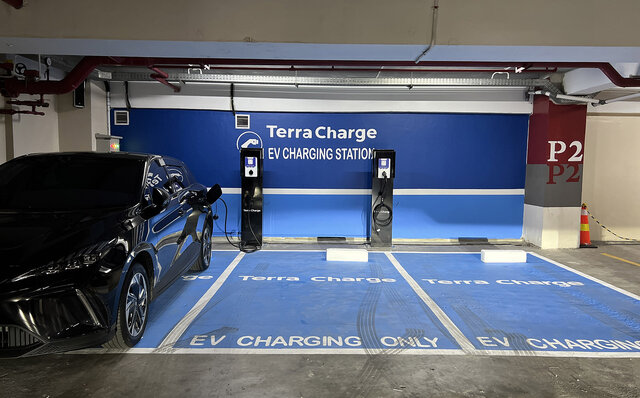
The company's involvement in the charging infrastructure business stems from a broader perspective. "When the world changes, the old ways are replaced. We want to be the catalyst and the driving force for that change. We aim to achieve this not only in Japan but globally," Kamimoto asserts.
"Regarding the challenges referred to as the 'triple threat,' manufacturers will inevitably improve vehicle prices and driving range. Infrastructure is the part that manufacturers cannot monopolize. Rather, I believe there is meaning in challenging what is considered difficult."
Towards the Future of Energy Management
Charging technology is also evolving rapidly. Chinese manufacturers are commercializing battery swapping, and research is underway on in-motion charging using contactless power transfer. When asked about the risk of current charging equipment becoming obsolete due to such technological innovations, Kamimoto surprisingly expresses an optimistic view.
"Even if the current charging methods change, we have secured the power sources and locations, allowing us to flexibly and quickly offer new services to customers, much like switching from incandescent bulbs to LEDs. What's more important is to adopt new technologies early and collaborate with manufacturers and partner companies to create better services."
With such technological advancements in mind, they also aim to expand into the energy business in the future. "After installing charging infrastructure, it naturally leads to energy management. Decarbonization is a major challenge that goes beyond simply electrifying vehicles; it involves moving away from fossil fuels. EVs also serve as distributed storage batteries, contributing to the utilization of renewable energy. Therefore, we have entered into agreements for capital and business alliances with energy companies such as Toho Gas and Osaka Gas."

"To win globally in new industries. This is our grand theme," Kamimoto states powerfully. "Japan once produced companies that dominated the world, like Sony and Honda. We want to reclaim that Japanese momentum in new industries. This aspiration is strongly shared across our entire management team."
However, the full-scale profitability of the charging infrastructure business is yet to come, and global expansion has only just begun. With the EV market growing slower than initially anticipated, sustained investment with a long-term perspective is required. We hope that their bold challenge in a new industry will bring a fresh breeze to Japan's industrial world.
Contact
Terra Charge
https://terra-charge.co.jp/