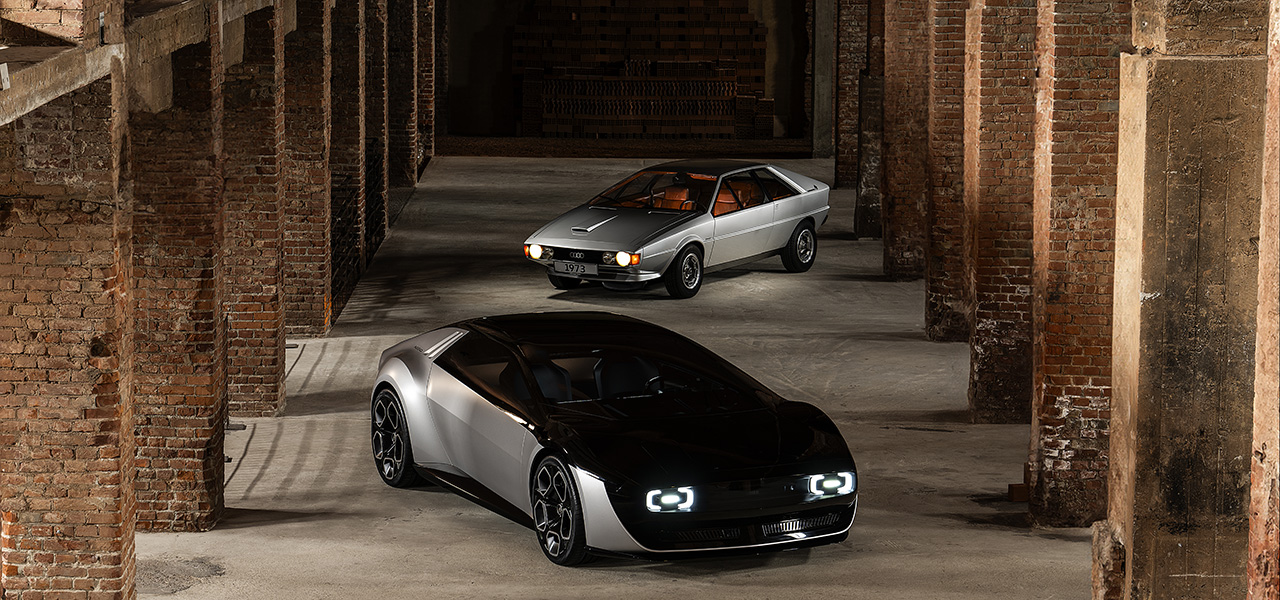
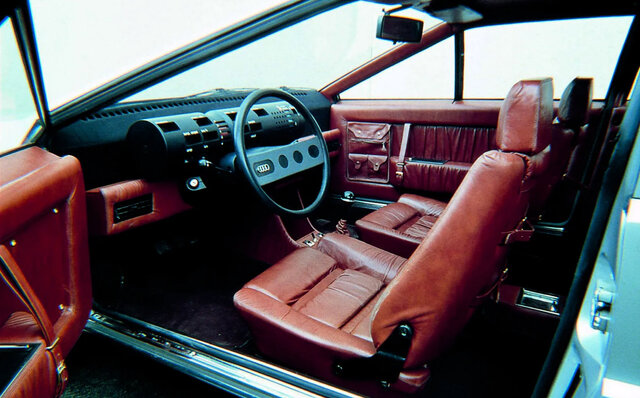
Italdesign Asso di picche in movimento (2024) and Asso di picche (1973). Photo: Italdesign
Milan Design Week 2024 Report: The Future of Mobility as Envisioned by Automotive Brands
Milano Design Week 2024
Automotive Brands at Milan Design Week Hint at Future Mobility
Milan Design Week 2024 took place from April 15 to 21, 2024. We report on the automotive brands that exhibited, with a particular focus on future mobility, from the perspective of Akio Lorenzo Oya, a journalist based in Italy.
Text by Akio Lorenzo OYA | Photographs by Akio Lorenzo OYA, Mari OYA, ITALDESIGN
Beyond "Multifunctionality" and "City EVs"?
Milan Design Week was held from April 15 to 21, 2024. The event, which coincides with the Salone del Mobile furniture fair, unfolds annually across various locations in the city. This year's edition featured 1,125 projects listed in the catalog of the main organizer, Fuorisalone, a 30% increase from the previous year, generating an estimated economic impact of approximately 260.8 million euros (about 43.8 billion yen) for the week.
Automotive brands also contributed to the event's vibrancy with diverse approaches. This report will focus on those that offered a glimpse into future mobility.
Italdesign, one of Italy's leading car design firms, unveiled the "Asso di Picche in Movimento" EV concept to the world.
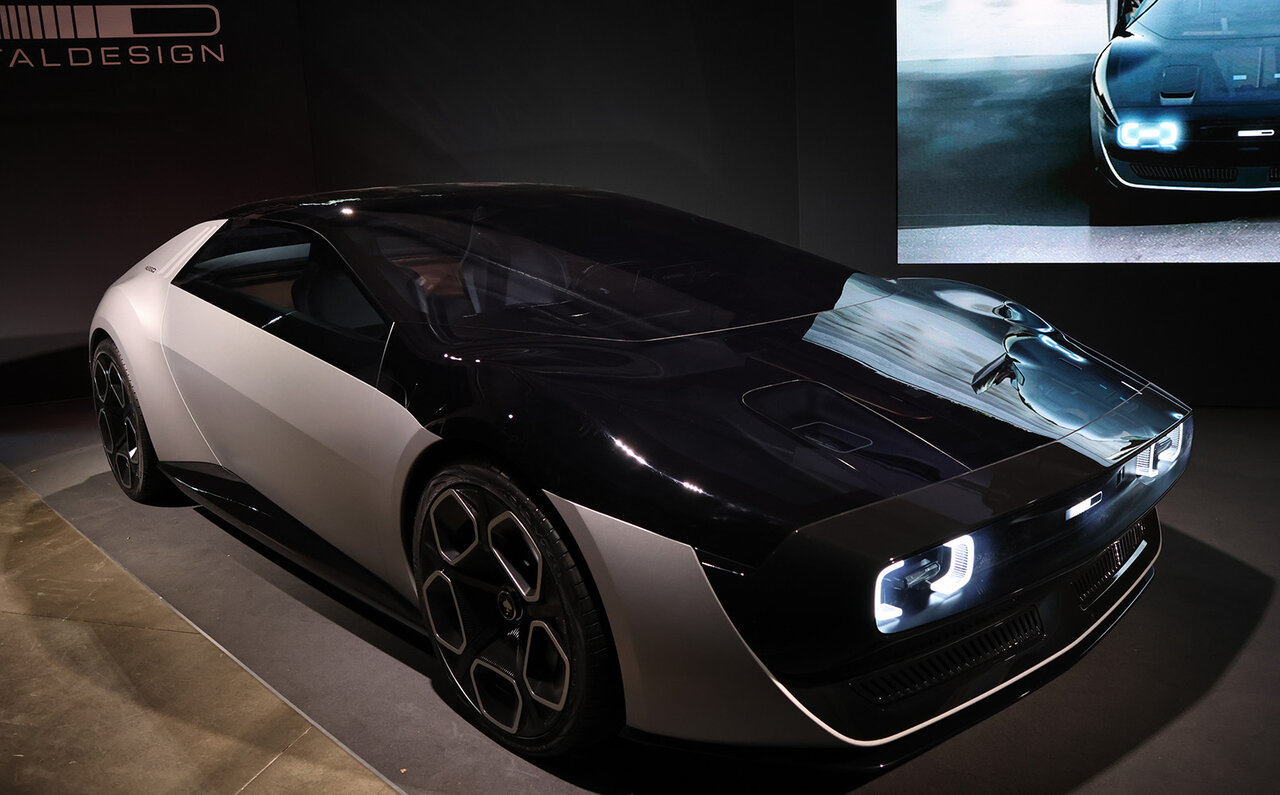
Italdesign Asso di Picche in Movimento (2024)
This follows its virtual unveiling in 2023 and draws inspiration from the "Asso di Picche" show car, created by founder Giorgetto Giugiaro in 1973 based on the Audi 80.
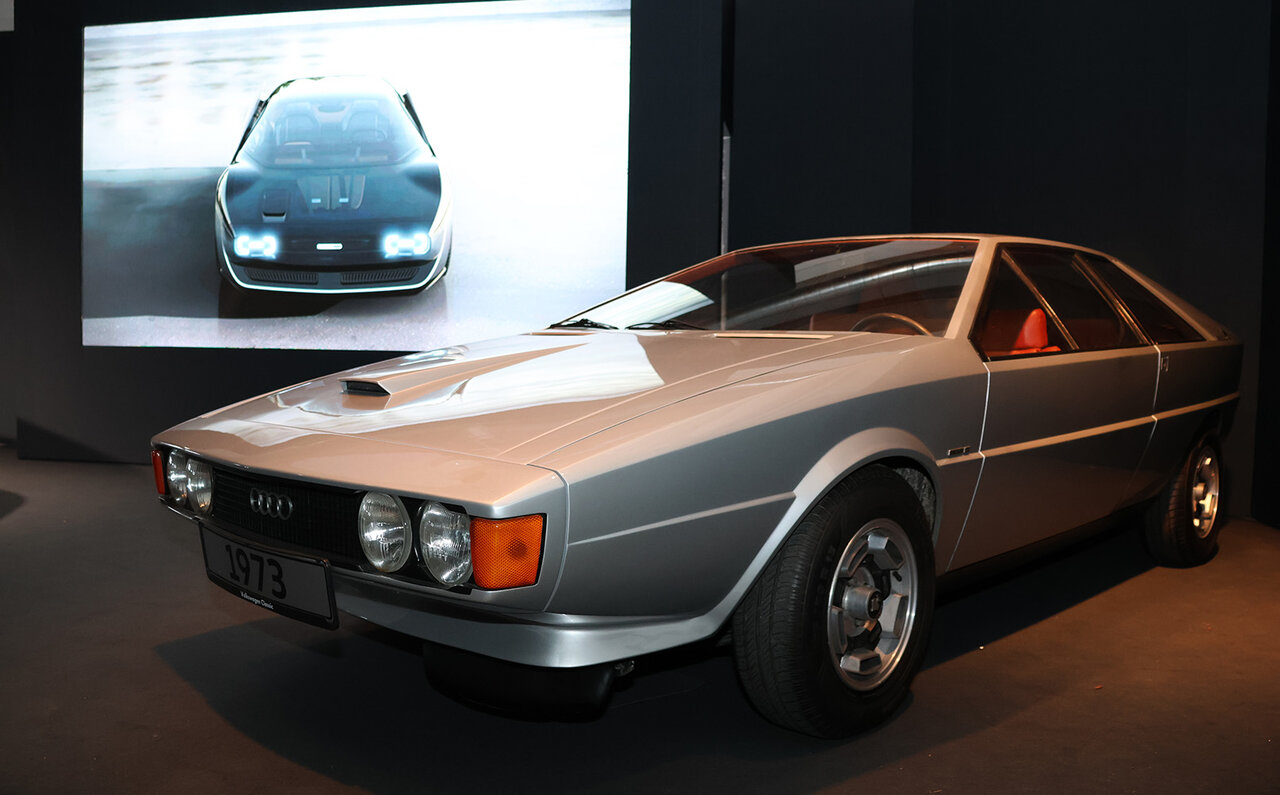
Italdesign Asso di Picche (1973)
Respecting the simplicity of the original, it is a 2+2 coupe measuring 4715mm long, 2032mm wide, and 1300mm high, reflecting contemporary car design principles. Both feature a seamless aluminum structure and polycarbonate windows for brightness and strength.
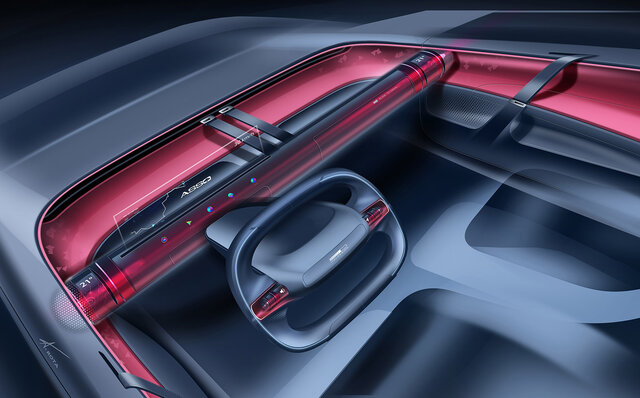
Equally noteworthy is the interior concept presented. As this exhibit was a mockup, it lacked door opening mechanisms, and the interior detailing was kept to a minimum.
However, the dashboard retains the original cylindrical design while embracing a minimalist approach. According to the explanation, displays are designed to be unobtrusive until needed, minimizing the effort and attention required from the driver.
For reference, the European New Car Assessment Programme (Euro NCAP) will add a check for excessive touchscreen dependency in 2026. This exploration of simplification is a welcome development, addressing what comes after the multifunctionality offered by large displays.
Meanwhile, China's GAC (Guangzhou Automobile Group) opened its permanent European R&D studio in the Tortona district. They exhibited a scale model of the third installment in their "Car Culture Project" EV concept series.
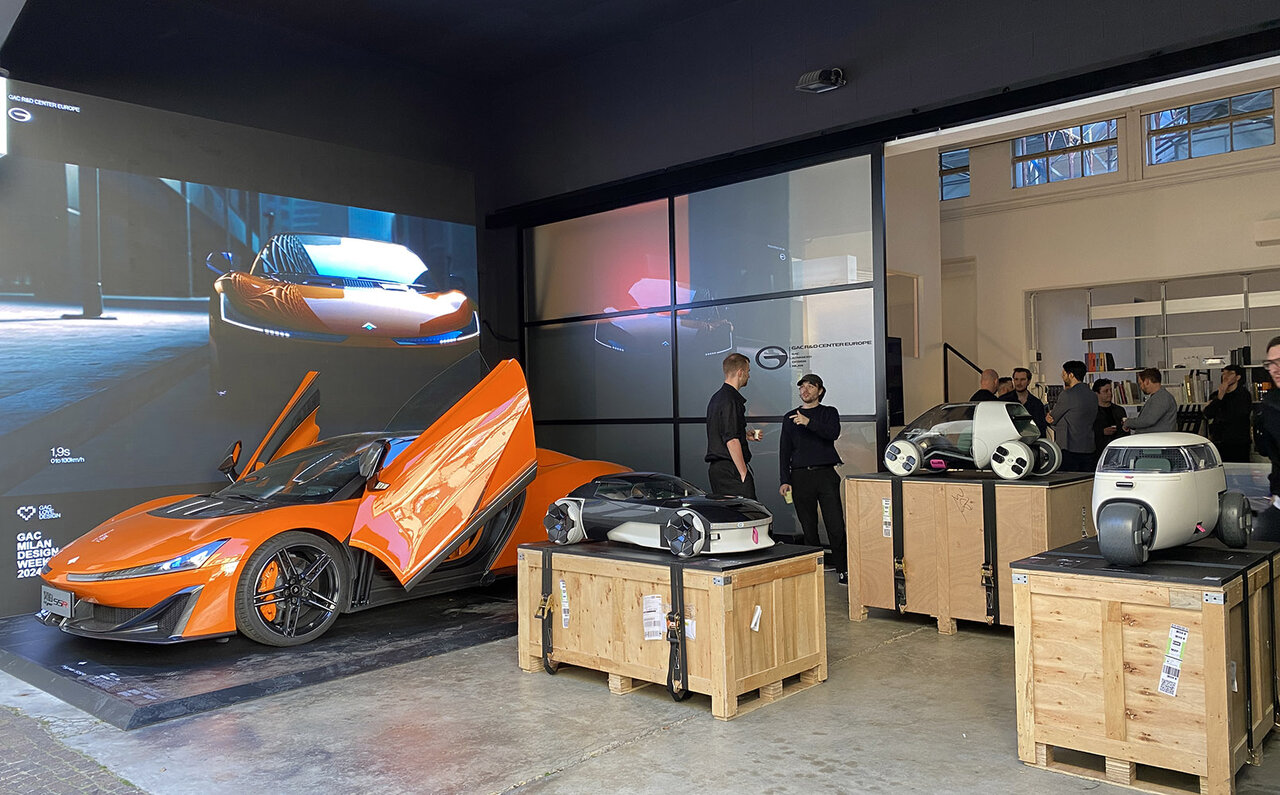
GAC R&D Center Europe
The "City_Pod," inspired by the 1950s Italian microcar Isetta, is a city car designed for Milan. Its panoramic glass aims to minimize blind spots.
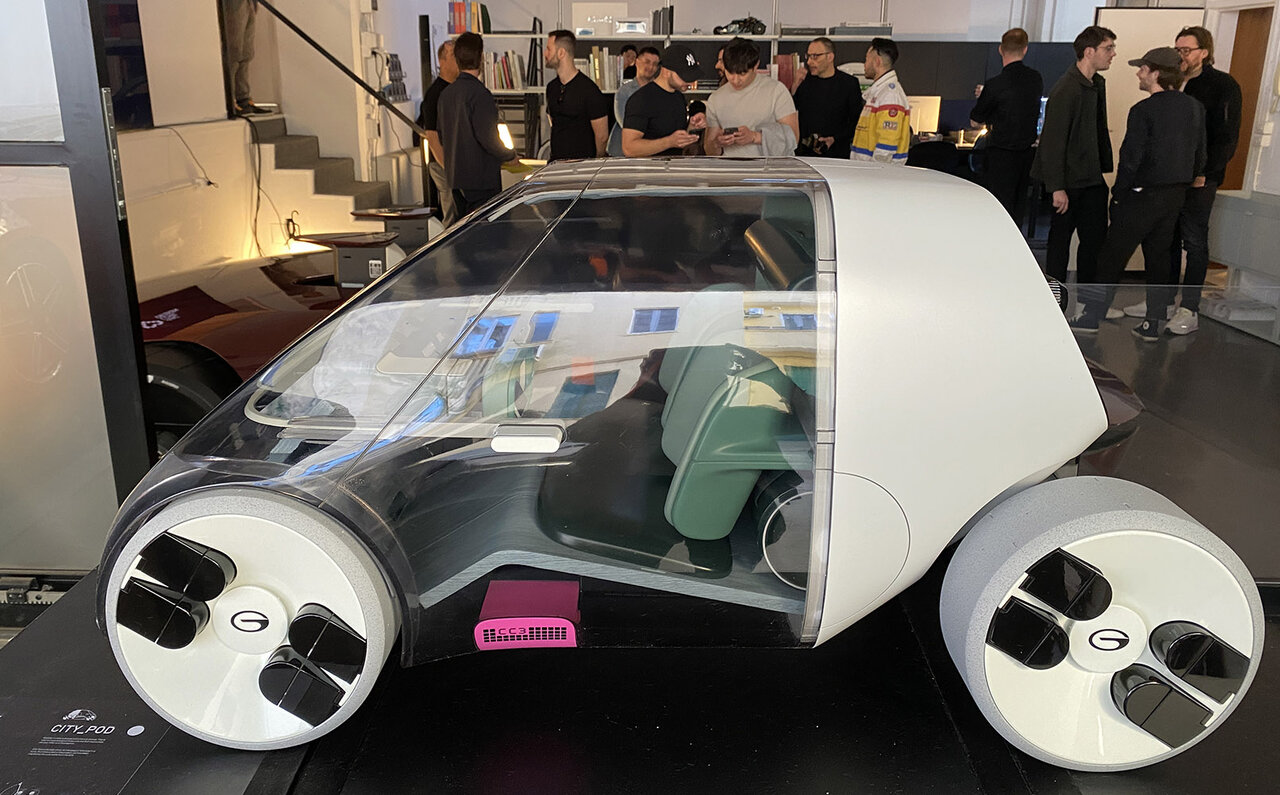
GAC CITY_POD
The "City_Box," a three-wheeled vehicle for delivery services, features a "backpack" with a zipper that allows for cargo space expansion as needed.
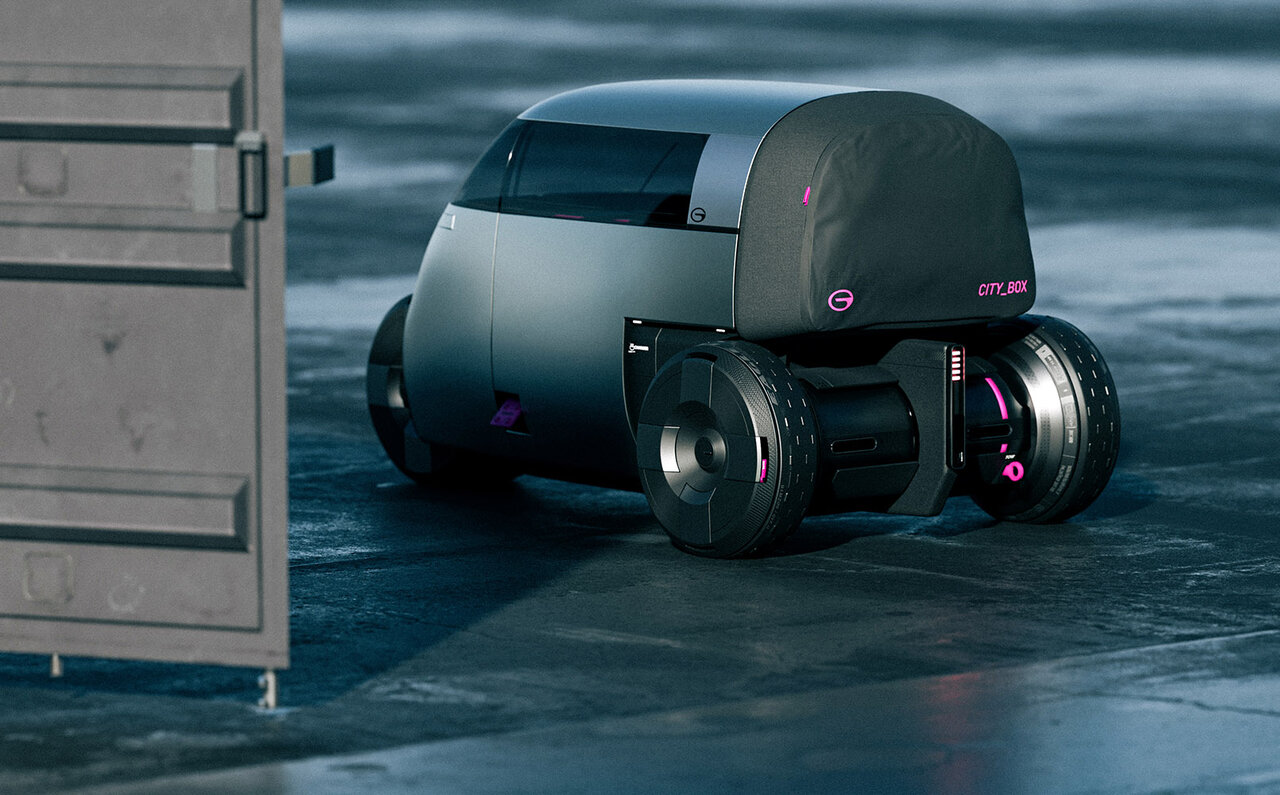
GAC CITY_BOX Photo: GAC
The "City_Run," a two-seater coupe, achieves weight reduction by using air seats instead of conventional ones.
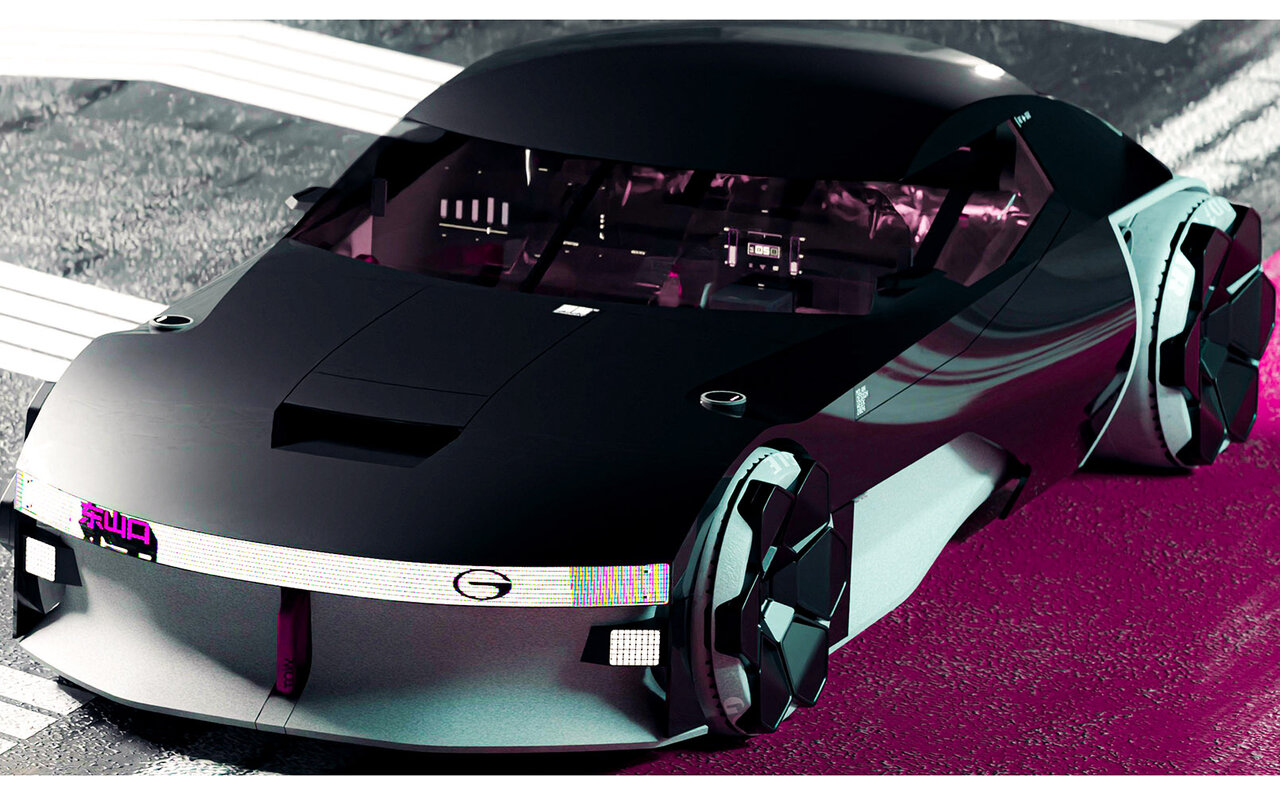
GAC CITY_RUN Photo: GAC
All three vehicles are rear-wheel drive, powered by a motor and powertrain module that can be swapped out in a short time.
Audi Focuses on Components
Following last year's event, Audi once again chose the courtyard of Portrait Milano, a luxury hotel owned by Ferragamo, as its venue, continuing with the overarching theme of "House of Progress."
This year, under the banner of "Reflections," the exhibition focused on lighting technology through an installation.
At the venue, alongside the Audi Q6 e-tron, making its world debut to the public, lighting elements were displayed like objets d'art, showcasing the technology embedded within.
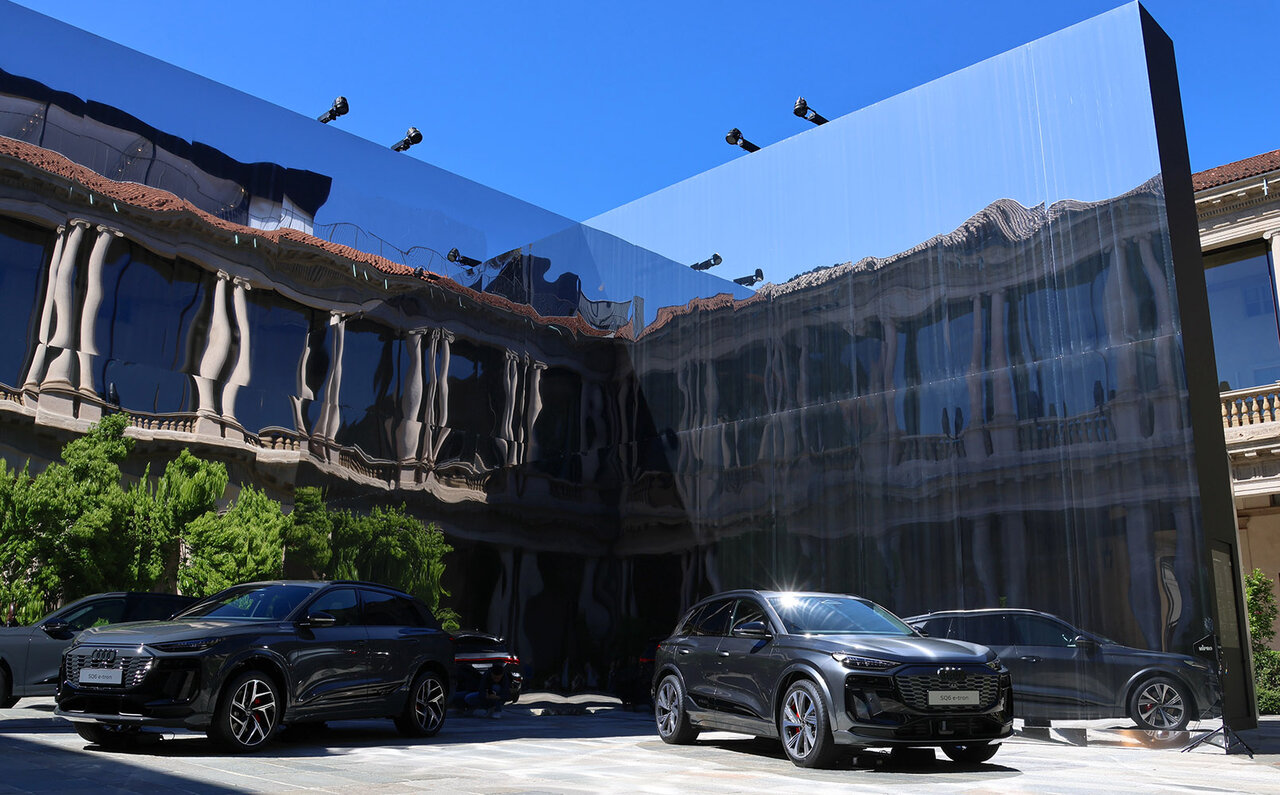
Audi “House of Progress”
The daytime running lights of the matrix LED headlights are composed of 122 LED segments. A distinctive feature is the ability for users to select lighting patterns via the digital light signature function and an app. The OLED segments in the taillights number 360.
Furthermore, Audi OLED Technology 2.0, with its diverse display capabilities, could technically enable the display of hazard warning triangles in critical situations in the future.
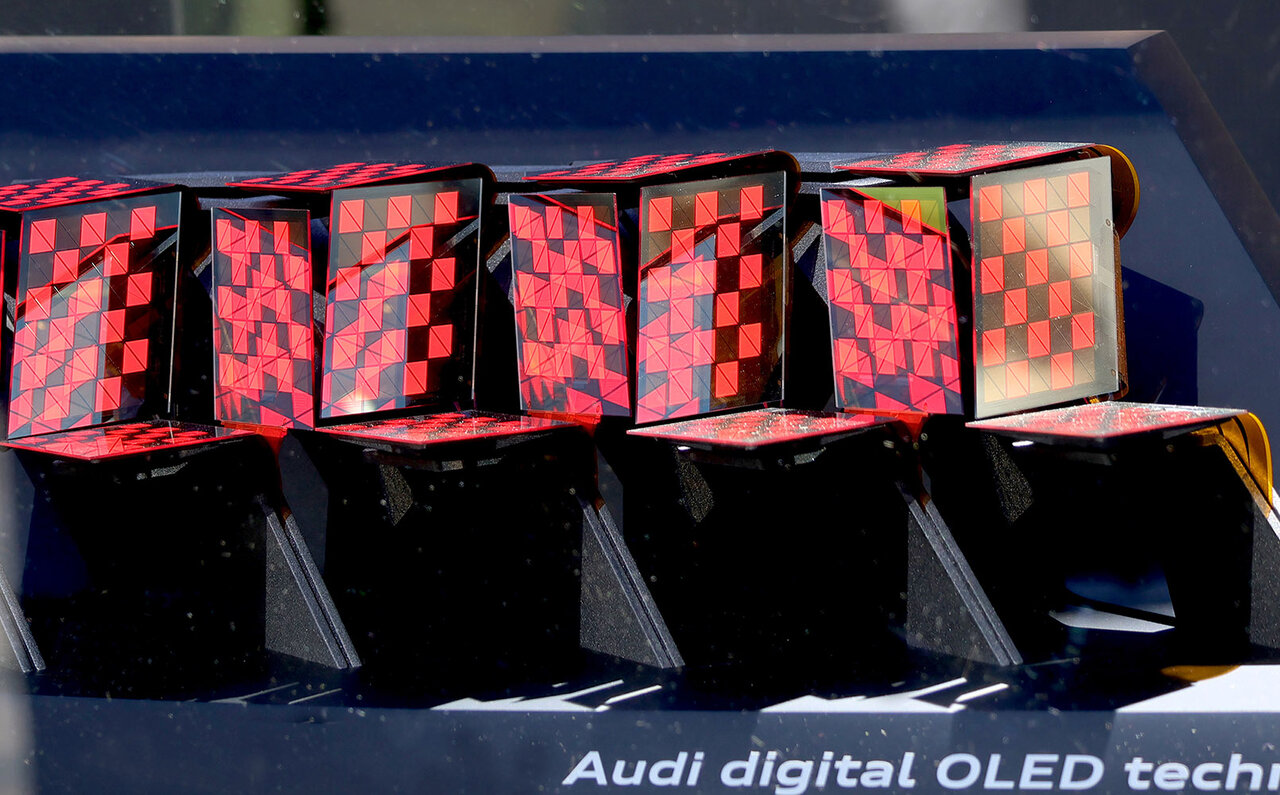
Audi Digital OLED Technology 2.0
In my view, this technology could play a role in car-to-X communication in the further future, for instance, by transmitting traffic jam and hazard information from the cloud to following vehicles.
During a talk session held on the 17th, Cesar Muntada, Audi's Director of Lighting Design, spoke about how humans have always been connected to light, from the era of "bonfires." He suggested that automotive lighting is poised to become even more exciting.
Fusion with Craftsmanship
On the other hand, Lexus, exhibiting for the 15th time since its debut in 2005, presented an approach that incorporated Japanese craftsmanship.
Two works by creators, inspired by the Lexus LF-ZC battery EV concept unveiled at the Japan Mobility Show 2023, were on display.
One of these, "BEYOND THE HORIZON" by Hideki Yoshimoto (Tangent), based in London, featured a massive 4-meter-high, 30-meter-wide screen made of Echizen washi paper behind the LF-ZC EV concept shown at the Japan Mobility Show 2023, displaying scenes of the horizon from dawn to dusk.
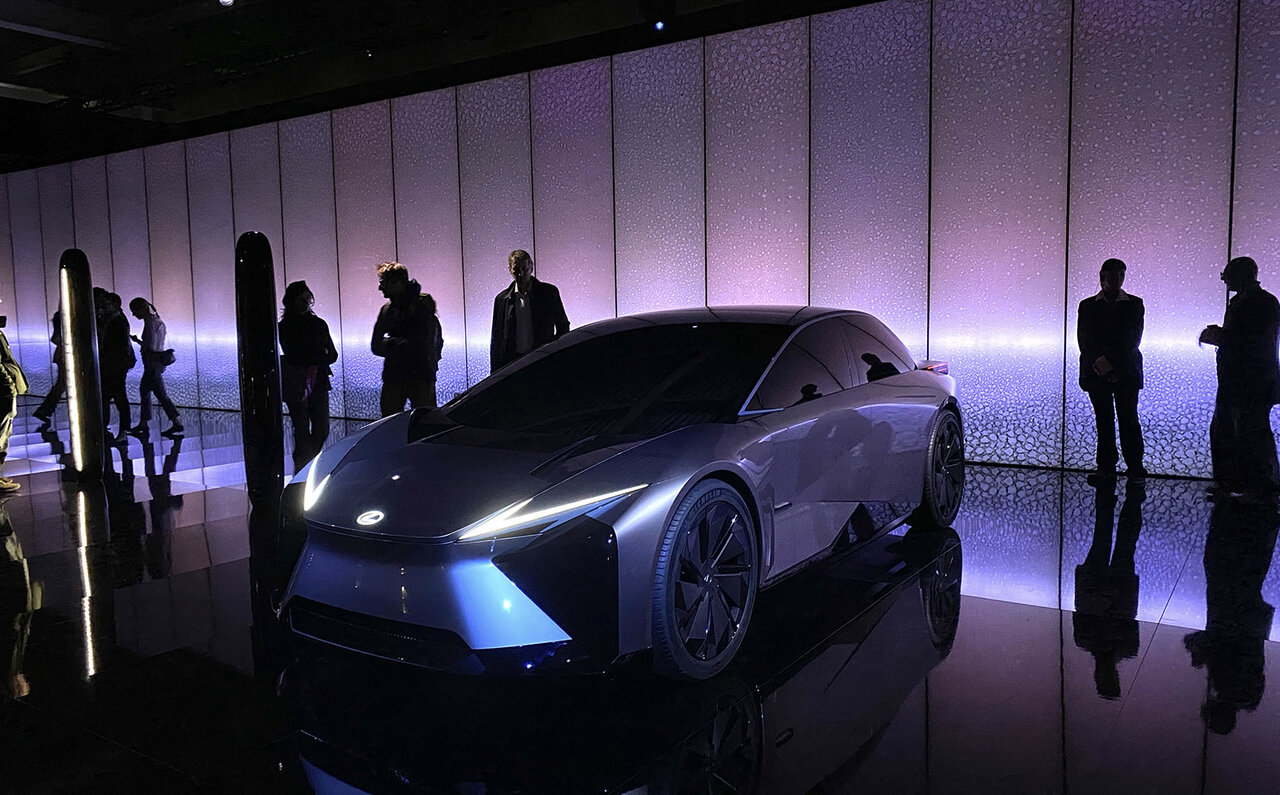
LEXUS “BEYOND THE HORIZON”
The concept car "LF-ZC" placed in the venue uses bamboo material for its interior trim, which is said to be related to this theme. But what is the underlying message?
A Lexus representative explained, "We primarily expressed the brand's philosophy of the limitless possibilities offered by software in the future of next-generation mobility and the changing experiential value brought about by software. We also incorporated the fusion of traditional craftsmanship and cutting-edge technology into the installation as a representation of the brand's stance. We hoped that visitors would intuitively grasp a part of this message from the entire space."
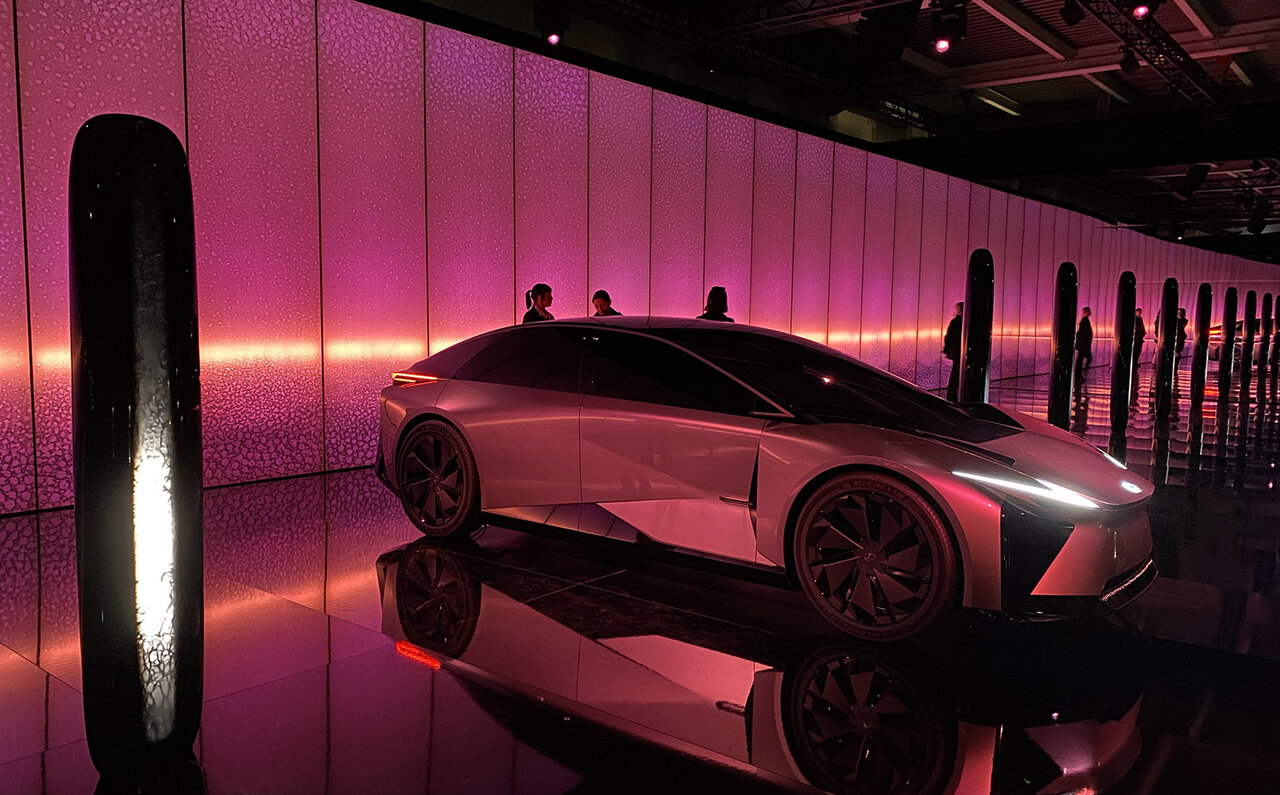
LEXUS “BEYOND THE HORIZON”
From "Showing" to "Researching"
Toyota Boshoku, a manufacturer of automotive interiors, also explored Japanese craftsmanship from a different angle.
Their theme was "CONTINUUM - Roots of comfort." Three traditional craftspeople from Toyama were invited. Visitors were first welcomed into a Japanese-style room.
When Yoshinori Shimatani's "Orin" (a type of Buddhist bell) placed in the center was struck, rings of light projected around it reacted. This aimed to pursue comfort through both auditory and visual experiences by visualizing sound.
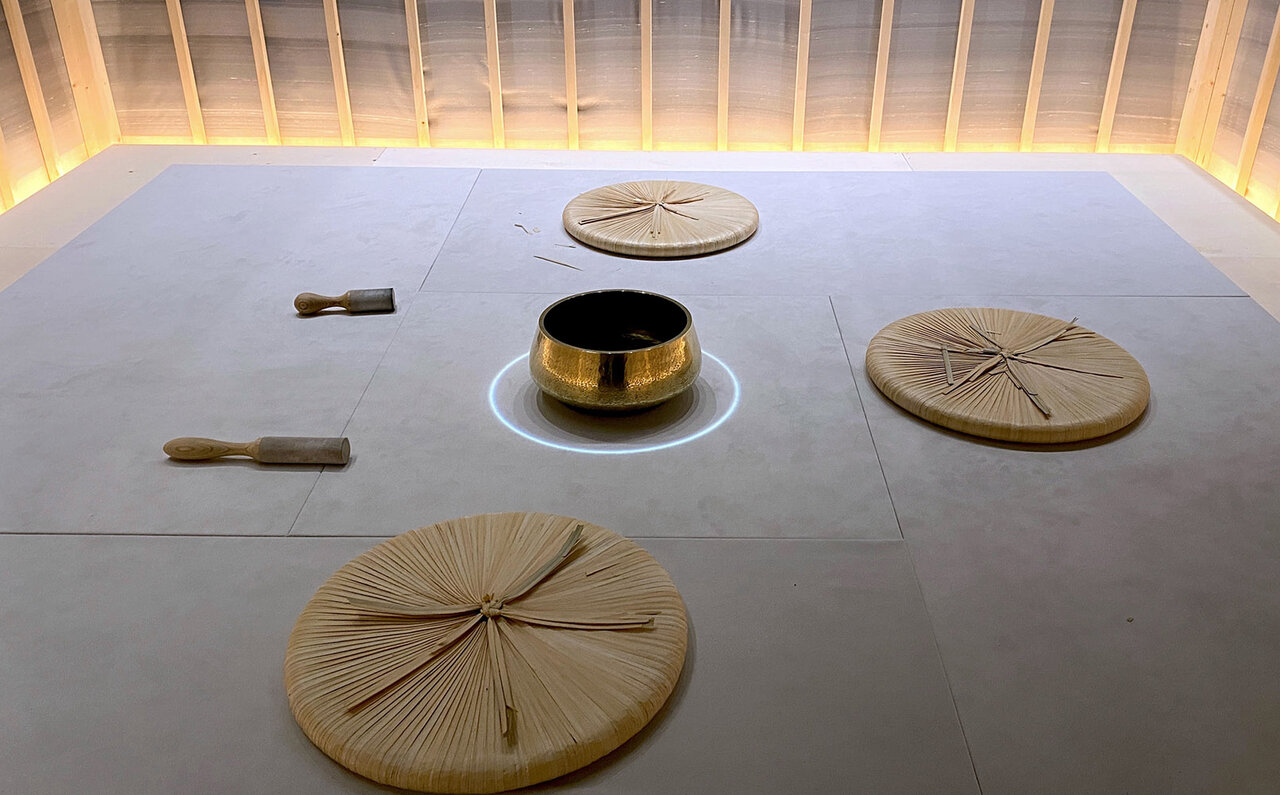
Toyota Boshoku: Collaboration with Yoshinori Shimatani, Orin Craftsman, Visualizing the sounds and vibration of orin Buddhist bells
In the second room, visitors were encouraged to touch "Shikeginu," a silk textile by Noriko Matsui. Normally, a single silkworm produces one cocoon. However, occasionally, two silkworms share a cocoon. The uneven thread from such cocoons is used to create "Shikeginu," which possesses a unique mystique due to its irregular texture.
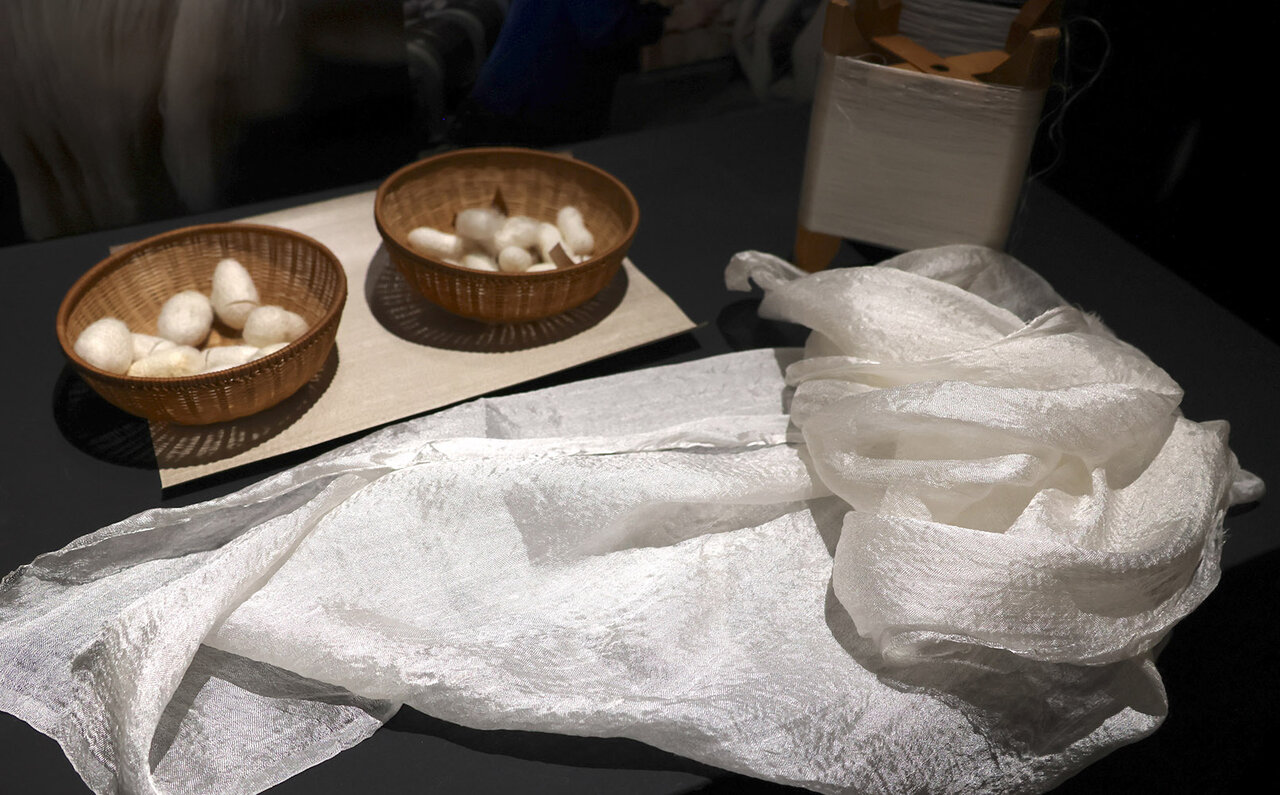
Toyota Boshoku: Collaboration with Noriko Matsui, Silk Textile Artist: Shikeginu
In one corner, Kouun Nakayama, a traditional sedge hat craftsman, demonstrated his skills on the floor. The exhibitor aimed to highlight the tactile and visual comfort derived from the meticulous weaving of sedge.
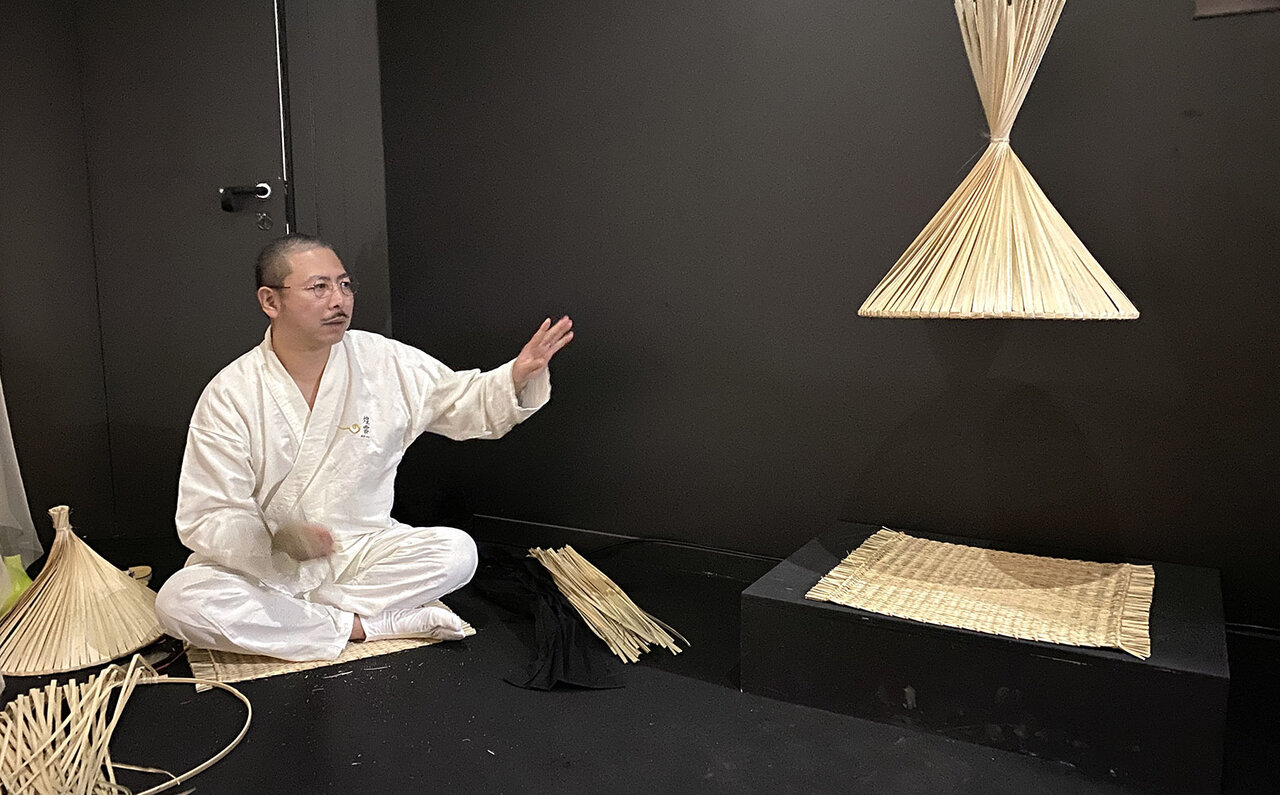
Ryo Tamura, Director of the Toyota Boshoku Milan Design Branch, and Assistant Chief Designer Yu Asai stated their ambition: "We want to research how people unfamiliar with Japan will perceive the irregularity and indescribable comfort that Japanese people find pleasing."
They added that by utilizing this feedback, they aim to explore "comfort that is not swayed by the changing times" and "what can be proposed next, following the assertive interiors prevalent today."
Although small, their pavilion took a step forward from merely "showing" to becoming an event for "research."
By pioneering various new approaches, the importance of design in automotive brands will become more widely recognized.
For automotive manufacturers, which tend to be engineer-centric, we hope that this spring event in Italy's second-largest city will serve to elevate the status of designers.