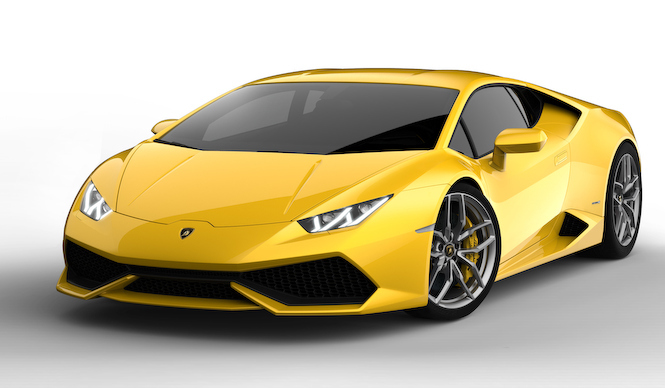
The Gallardo's Successor: Its Name is "Huracán" | Lamborghini
Lamborghini Huracan LP 610-4
The Gallardo's successor: its name is "Huracan"
LamborghiniThe successor to the "Gallardo," the "Huracan LP 610-4," has been unveiled for the first time. Its world premiere will be at the Geneva Motor Show in March, with deliveries scheduled for spring 2014.
Text by AKIZUKI Shinichiro (OPENERS)
Design theme: The Hexagon
Lamborghini today released photos of the "Huracan LP 610-4," the successor to the "Gallardo."
The new model's name, "Huracán," like previous models such as the Aventador and Gallardo, is derived from bullfighting. The Huracan, from the Spanish Conte de la Patilla breed, is known as a bull of exceptional bravery and strong offensive power, having displayed an undefeated fighting spirit in a match in Alicante in August 1879.
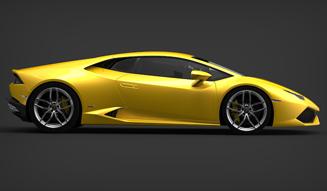
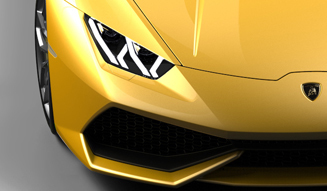
The exterior design, with its smooth surfaces and complex interplay of sharp, angular lines, connects from the tip of the A-pillar to the rear of the body in a single line. This design language carries over from the Aventador. The side windows, as suggested by the recently released teaser site "Hexagon Project",
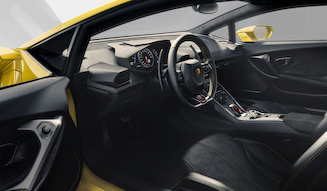
Step into the driver's seat, and you'll find a newly installed large 12.3-inch full-color TFT instrument panel. All car information, from the rev counter to the navigation map and infotainment functions, is displayed and can be freely configured by the driver. The interior materials combine Nappa leather and Alcantara, with customization options also available.
Lamborghini Huracan LP 610-4
The Gallardo's successor: its name is "Huracan"
First to feature a 7-speed dual-clutch transmission
The Huracan features a completely new chassis combining carbon fiber and aluminum. While the engine is carried over from the Gallardo, it's a 5.2-liter V10 engine that has been refined to produce a maximum output of 610 hp (448 kW) at 8,250 rpm and a maximum torque of 560 Nm at 6,500 rpm. The vehicle weighs 1,422 kg (dry), achieving a power-to-weight ratio of 2.33 kg/hp.
With a top speed of 325 km/h, 0-100 km/h acceleration in 3.2 seconds, and 0-200 km/h acceleration in 9.9 seconds, it delivers performance befitting a new generation of super sports cars. It also complies with EU6 emissions regulations, with fuel consumption of 12.5 liters/100 km (8 km/liter) and CO2 emissions of 290 g/km.
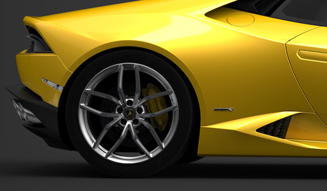
The V10 engine is paired with Lamborghini's first 7-speed dual-clutch transmission, the "Lamborghini Doppia Frizione (LDF)," and the drive system is, of course, 4WD. The Huracan's driving modes can be selected via a selector switch on the steering wheel, with three modes available: Strada (road), Sport (sports), and Corsa (race).
The brakes are carbon-ceramic, and optional features for further customizing the driving experience include the variable steering ratio system "Lamborghini Dynamic Steering" and magnetic fluid suspension damper control.
The Huracan will be manufactured on a newly established production line at Lamborghini's headquarters in Sant'Agata Bolognese, with initial shipments expected to begin in spring 2014. Private preview events will commence in over 60 cities worldwide starting in January, and the world premiere is scheduled for the Geneva Motor Show in March.