Special Feature | Eco-Car Trio Test Drive: Niigata Tour, Part 2
TOYOTA PRIUS G Touring
Mercedes-Benz E 350 BlueTEC AVANGARDE
Volkswagen Golf TSI Trendline
Special Feature: Eco Car Three-Model Comparison Tour in Niigata - Part 2
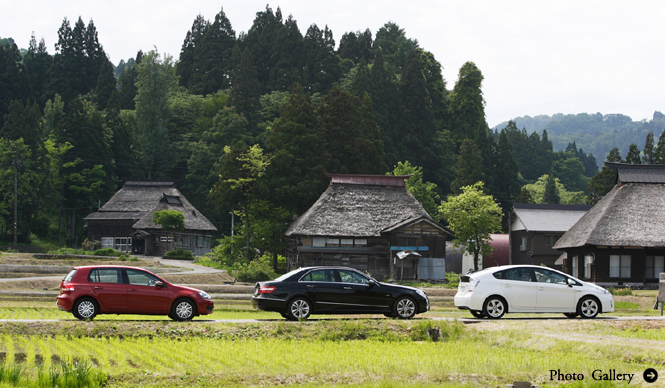
This long-term reportContinuing from last timeA special feature. We test-drove three cars: the Prius from Report Car No. 2, the E 350 BlueTEC AVANTGARDE from Car No. 3, and the much-talked-about Volkswagen Golf TSI Trendline, which achieves low fuel consumption through its direct-injection engine and downsizing concept. Our destination was Ogino-mura in Niigata, a village where thatched-roof houses still remain. Setting off for Ogino-mura, a village preserving traditional ways of life, in three latest eco cars with different approaches.
Text by OPENERSPhotos by Masayuki Arakawa
Focusing on CO2 Emissions, Not Just Fuel Economy
Person AAfter all, comparing eco cars isn't just about fuel economy, is it? I checked Mercedes' official website in Germany, and the E 350 BlueTEC's CO2 emissions are 180-188g/km. The Prius is 89g/km, and the Golf is 134g/km. This information was on the UK official site. In Japan, even the catalogs only list the 10.15 mode fuel economy. I think CO2 emissions in grams would be easier to understand than how many stars it has.
Person BWe live in an era where even sports cars like the Ferrari 458 list their CO2 emissions in their specifications.
Person AIn Europe, CO2 emissions are listed as a matter of course, alongside power and torque. It would be great if CO2 emission specs were commonly displayed in Japan too, allowing for easy comparison between models.

Person BThe Golf has an excellent ride quality, comparable to higher-class vehicles, and decent fuel economy, but it emits 134g of CO2. The hybrid Prius emits 89g. These are just catalog figures, of course, but improvements in this area would make it a more complete eco car.
Person ASpeaking of ride comfort, I found the Prius to be a bit harsh. It has already run about 17,000 km, so it might be at a disadvantage, but the tires are likely quite worn.
Person BBut even if the Prius were new, its fundamental design philosophy differs somewhat from the Golf. It's not a model that prioritizes driving comfort or handling stability; it's a car for convenient daily use.
Person ATheir approaches to car manufacturing are different. The Golf also had excellent body rigidity. In an era where German cars are generally losing their robust, no-nonsense character due to cost-cutting, Volkswagen still carries the image of classic German cars. For example, the side mirror turn signals are designed to be visible from the driver's seat.
Person BFunctionality is embodied in the design, much like older German cars. The space efficiency is also meticulously thought out, creating a perfectly balanced utility. But the Golf, originally a very basic car known as a 'bread-and-butter car,' has now become an undeniable luxury car in terms of its driving performance and interior quality.
Person AIt's like going from just bread and butter to having bacon and sausages too... (laughs).
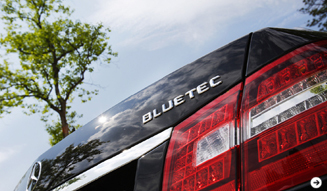
Person BYes. I think the E 350 BlueTEC's diesel engine provided excellent drivability due to its rich torque characteristics. Its quietness is also remarkable. Especially at low RPMs, it delivers high torque, making it very quiet during high-speed driving. I was impressed by the sophistication of the drivetrain. Also, for its body size, it was easy to maneuver. It turned smoothly and easily during U-turns. The minimum turning radius is 5.3 meters, by the way.
Person CI didn't find anything bothersome. Or rather, nothing that offended my senses. But that's quite something, isn't it? Although I only drove it on the highway this time, if I were told to drive for hundreds of kilometers in the E 350 BlueTEC, I feel like I actually could.
Person BI think that's precisely the appeal for Mercedes repeat customers. Driving feels as effortless as breathing. This is symbolized by the intuitively shaped seat adjustment switches, which are designed like seats themselves.
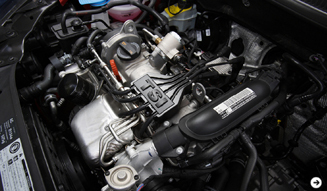
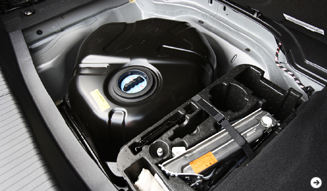
Person AThere's certainly a rationality unique to Mercedes sedans. However, the boldness to implement urea injection for exhaust gas treatment in a luxury sedan, and to remove the spare tire to accommodate a urea tank, is truly admirable. It shows Mercedes' decisive spirit in forging a new era.
TOYOTA PRIUS G Touring
Mercedes-Benz E 350 BlueTEC AVANGARDE
Volkswagen Golf TSI Trendline
Special Feature: Eco Car Three-Model Comparison Tour in Niigata - Part 2 (2)
Losing Something for New Features
Person AAs I mentioned earlier, both clean diesel and hybrid technologies have their trade-offs. Adding new functionalities means accepting drawbacks like increased weight and cost. The Golf doesn't have these.
Person BPerhaps that's reflected in the price. The basic Golf Trendline is 2.57 million yen. The Prius, after all costs, came to 2.7 million yen, didn't it?
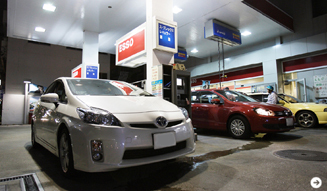
Person AHowever, the Prius has outstanding fuel economy. Toyota's hybrid technology is undoubtedly the world's best.
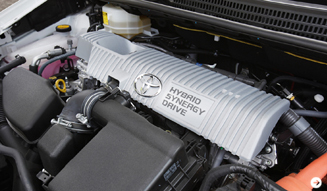
Person BWith the new model targeting the European market, they've focused on high-speed fuel efficiency. They increased the engine displacement from 1.6 liters to 1.8 liters, improving highway fuel economy, which is crucial in Europe where long-distance driving is common. The power performance during high-speed driving is also more than adequate.
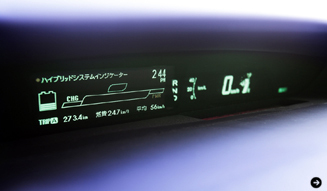
Person CThat Eco Drive Monitor in the center meter... I find myself constantly looking at it. When I accelerate uphill, I notice, 'Oh, I've entered the 'Power' zone!' It really makes you conscious of your driving.
Person BIt makes driving less boring when you're trying to control the car effectively to improve fuel economy. It's a very Japanese, almost game-like feature.
Person AThat's likely Toyota's intention. The cutting-edge hybrid system, the effect of the Eco Drive Monitor, and the user-friendly navigation system. The Prius is indeed a car that suits Japanese sensibilities.
The Three Eco Cars This Time, and Eco Cars of the Future
Person AI felt that the two models, clean diesel and hybrid, which showed some room for improvement in ride comfort this time, will become more refined in the future.
Person BFor the next 10 to 20 years, various approaches to eco cars will likely continue to evolve independently, rather than converging into one. Clean diesel will become lighter and quieter.
Person AHybrids will also see improvements in weight and cost. One answer to this might be simpler hybrid systems, like Honda's IMA. I also heard that Mercedes will release a diesel hybrid in 2011. And Golf is scheduled to debut hybrid and electric versions in 2013, which I'm really eager to try.
With the efforts of each manufacturer, there's a strong possibility that eco cars will undergo dramatic evolution. Clean diesel, hybrid, TSI, diesel hybrid, electric vehicles, and fuel cell vehicles. New approaches may emerge. While discovering the new merits of the hybrid Toyota Prius and the clean diesel Mercedes-Benz E 350 BlueTEC, our long-term test cars, we will continue to pay close attention to the forefront of eco car technology.

TOYOTA PRIUS
Body: Length 4,460 x Width 1,745 x Height 1,490mm
Wheelbase: 2,700mm
Vehicle Weight: 1,310kg
Engine: 1,797cc Water-cooled inline 4-cylinder DOHC
Max Output: 73kW (99ps) / 5,200rpm
Max Torque: 142Nm (14.5kgfm) / 4,000rpm
Transmission: Electronically controlled continuously variable transmission
CO2 Emissions: 89g/km (Toyota UK site)
Price: 2.7 million yen
Mercedes-Benz E 350 BlueTEC AVANGARDE |
メルセデス・ベンツ E 350 ブルーテック アバンギャルド
Body: Length 4,870 x Width 1,855 x Height 1,455mm
Wheelbase: 2,875mm
Vehicle Weight: 1,910kg
Engine: 2,986cc V6 DOHC
Max Output: 540kW / 1,600–2,400rpm
Max Torque: 55.1kgm / 1,600–2,400rpm
Transmission: Electronically controlled 7-speed automatic
CO2 Emissions: 180-188g/km (Mercedes official site)
Price: 7.98 million yen
Volkswagen Golf TSI Trendline |
フォルクスワーゲン ゴルフ TSI トレンドライン
Body: Length 4,210 x Width 1,790 x Height 1,485mm
Wheelbase: 2,575mm
Vehicle Weight: 1,270kg
Engine: 1,197cc Inline 4-cylinder SOHC
Max Output: 77kW (105ps) / 5,000 rpm
Max Torque: 175Nm (17.8kgm) / 1,550–4,100rpm
Transmission: 7-speed automatic (forward), 1-speed (reverse)
CO2 Emissions: 134g/km (Volkswagen UK site)
Price: 2.57 million yen