April 5, 2023
Test drive the Ferrari Purosangue in Northern Italy—an all-round supercar combining comfort and versatility | Ferrari
You Don't Feel Its Height At All
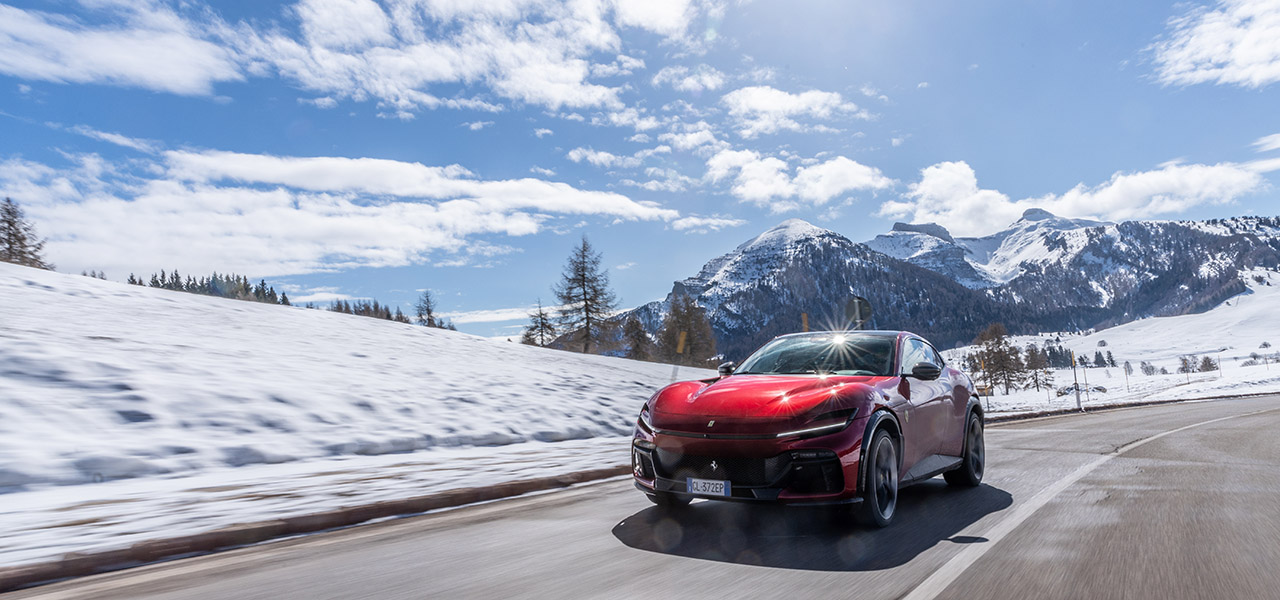
As the drive transitions from city streets to country roads and then to steep winding mountain passes, the Purosangue reveals another facet of its personality.
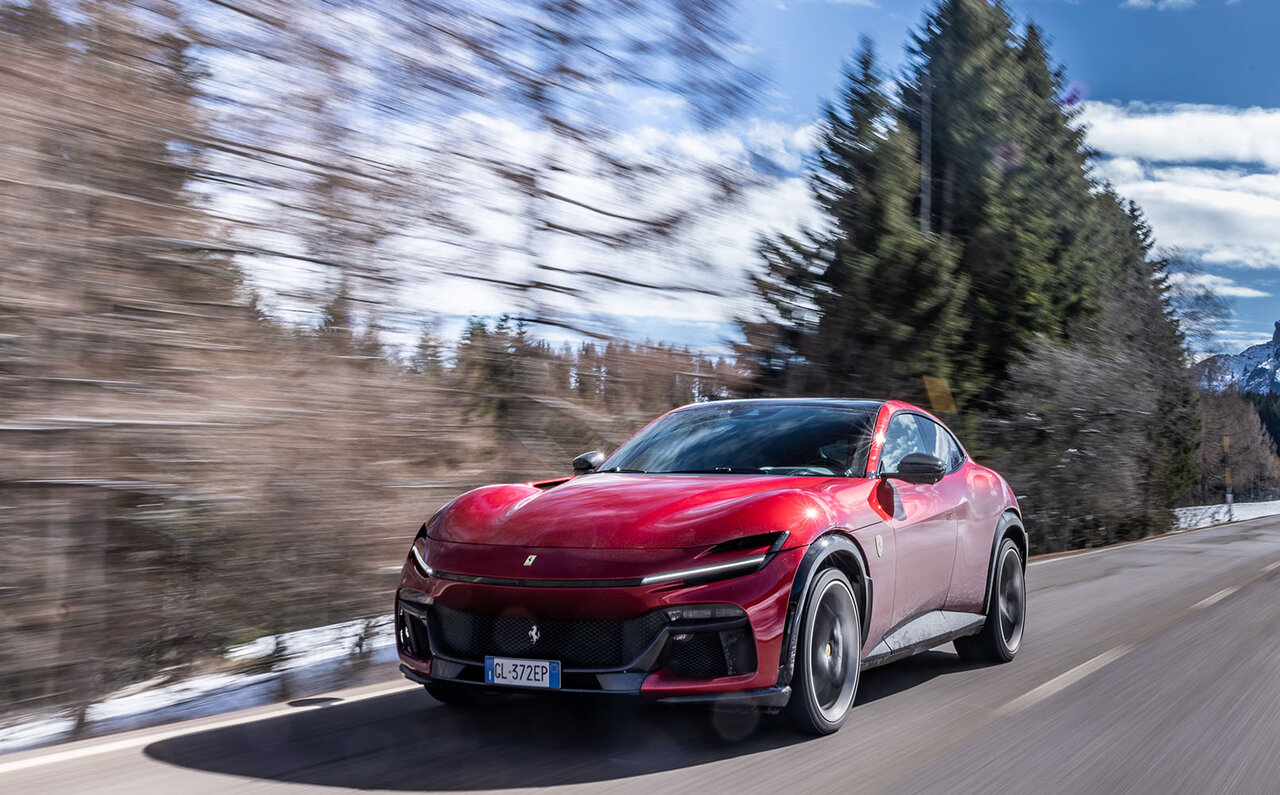
Unfortunately, the snow was only lingering by the roadside, and the road surface was dry or wet from melting snow. While it's a shame we couldn't test its performance on low-grip surfaces, the conditions were ideal for assessing the Purosangue's potential as a sports car.
Switching the Manettino, which offers four modes: "SPORT," "COMFORT," "WET," and "ICE," from "COMFORT" to "SPORT," I increased the pace.

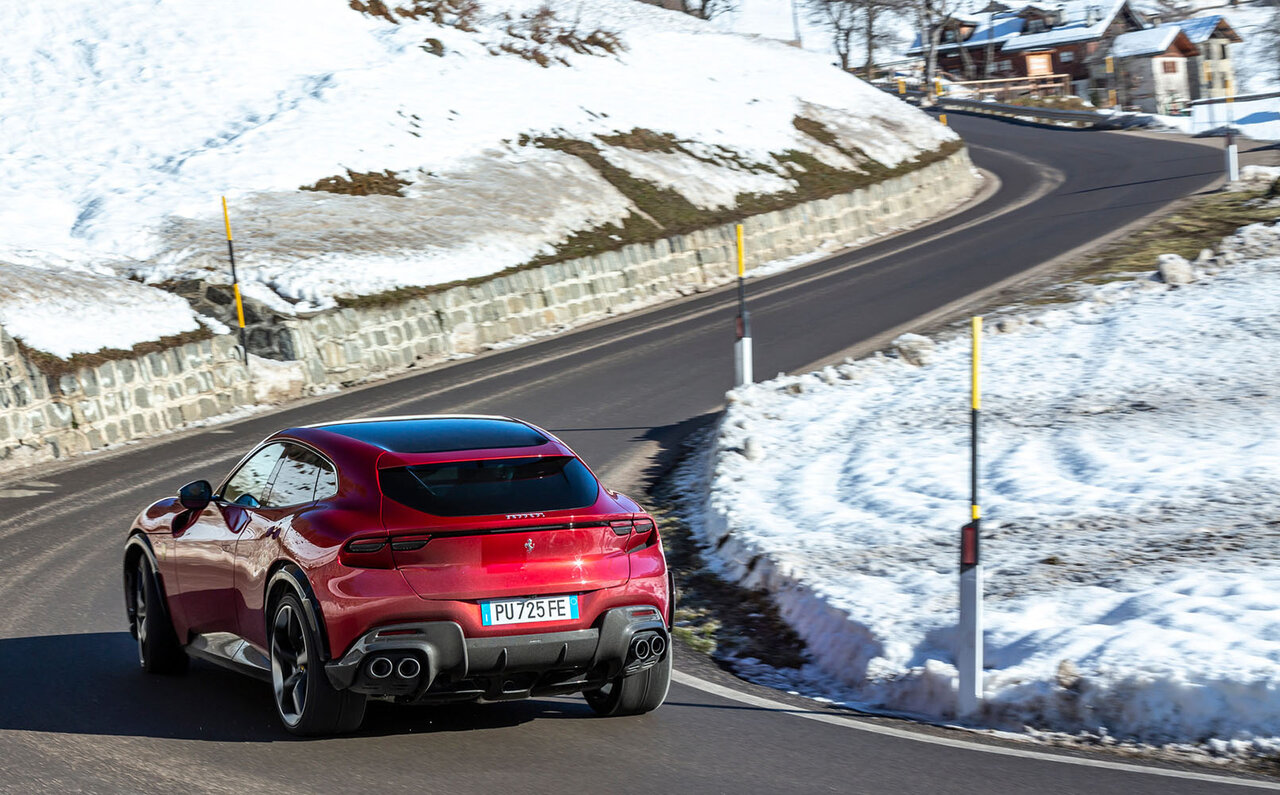
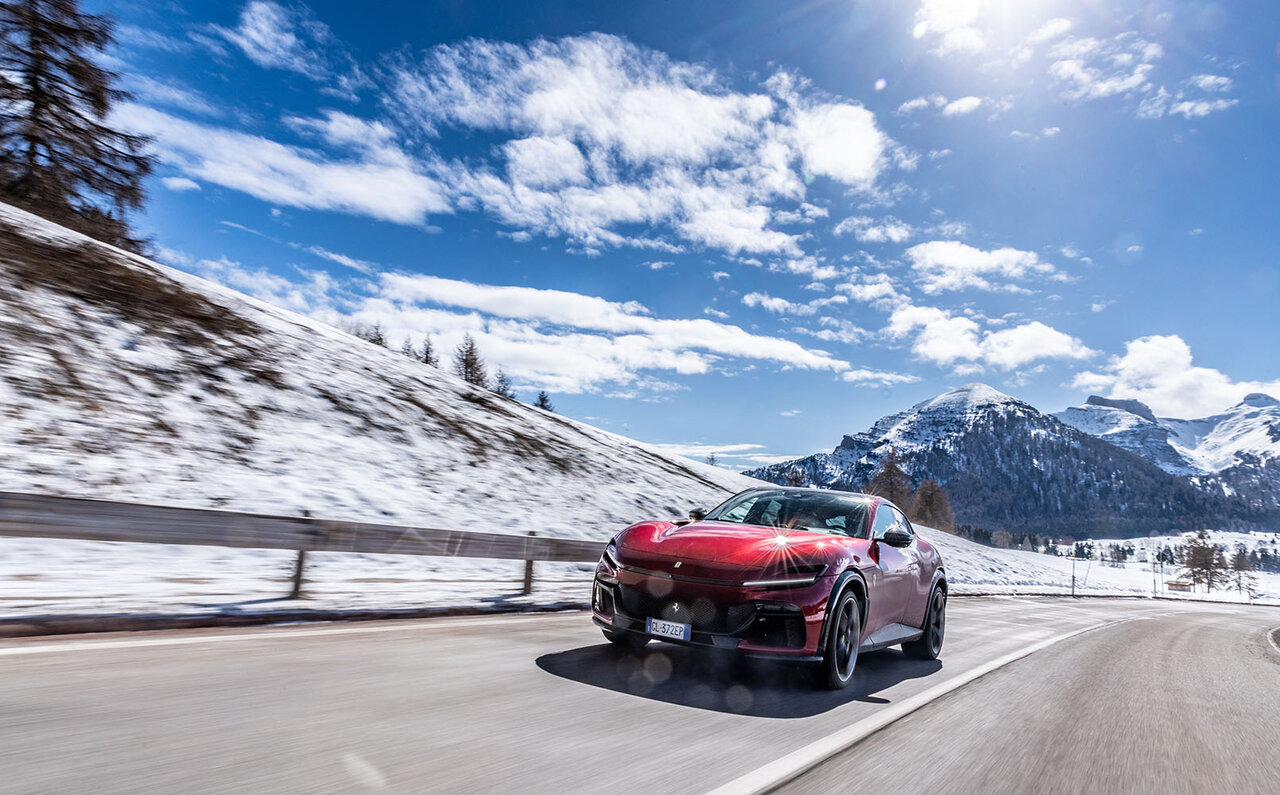
On the winding roads of the Dolomites, with their series of tight hairpin turns and short straights, the Purosangue was truly in its element. Despite its nearly 5-meter length and over 3-meter wheelbase, the car navigated corners with surprising agility, as if it were much smaller.
As I accelerated out of corners towards the straights, the V12 engine, which behaved so gently at city speeds, unleashed its full power. The tachometer needle rapidly climbed towards the 8,250 rpm redline, propelling the two-ton body forward as if warping through space.
The way the acceleration G-force increased linearly with engine RPM, accompanied by a rising, sharp, and exciting sound, is characteristic of Ferrari's V12 engines.
What's striking is the volume of the engine sound. According to Chief Test Driver Raffaele De Simone, the Purosangue's engine sound was designed with an emphasis on quality rather than sheer volume. As a result, the undeniably sensual V12 sound can be enjoyed at a refined level, seemingly considerate of passengers other than the driver.
The Purosangue features a newly developed active suspension system, which Vehicle Dynamics Project Leader Jacopo Canestri refers to as the "pillar of dynamics."
This world-first system combines a motor and actuator, powered by a 48V electrical system, with each of the four hydraulic dampers to control damping force. By controlling not only roll, pitch, and heave, but also all elements related to suspension elasticity, it ensures maximum grip under any condition.
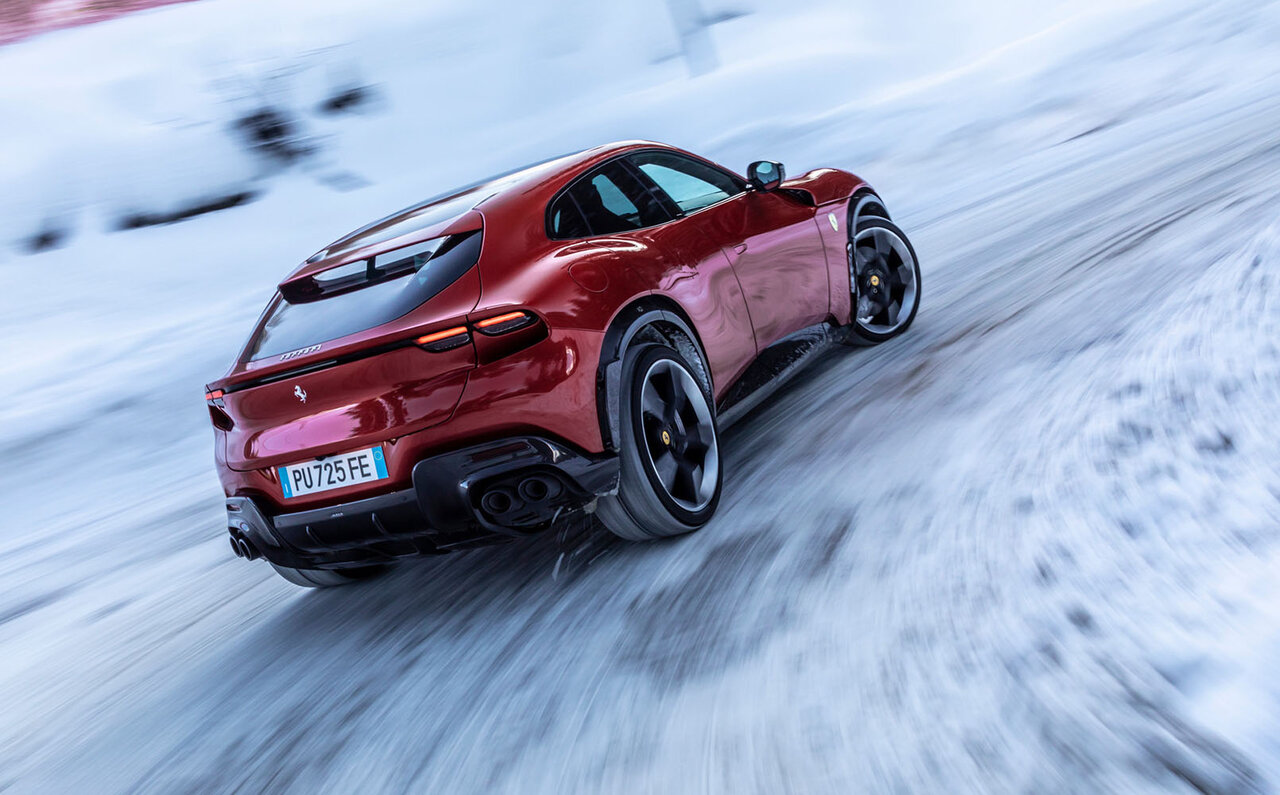
In corners, as Canestri described, body roll and pitch are suppressed, and you don't feel its height at all. Although the higher ground clearance means a higher seating position, the driving position, with the relationship between the floor and seat height, is the same as in other Ferraris, giving you the sensation of driving a sports car.
According to Canestri, this active suspension system reacts quickly, allowing it to control all vehicle movements (yaw, pitch, roll) up to 20 Hz. Furthermore, it provides unparalleled comfort regardless of road conditions. Even under strong cornering G-forces, the flat ride eliminates any sense of road imperfections, and the body remains perfectly stable, allowing the driver to confidently navigate the winding mountain roads at high speed.
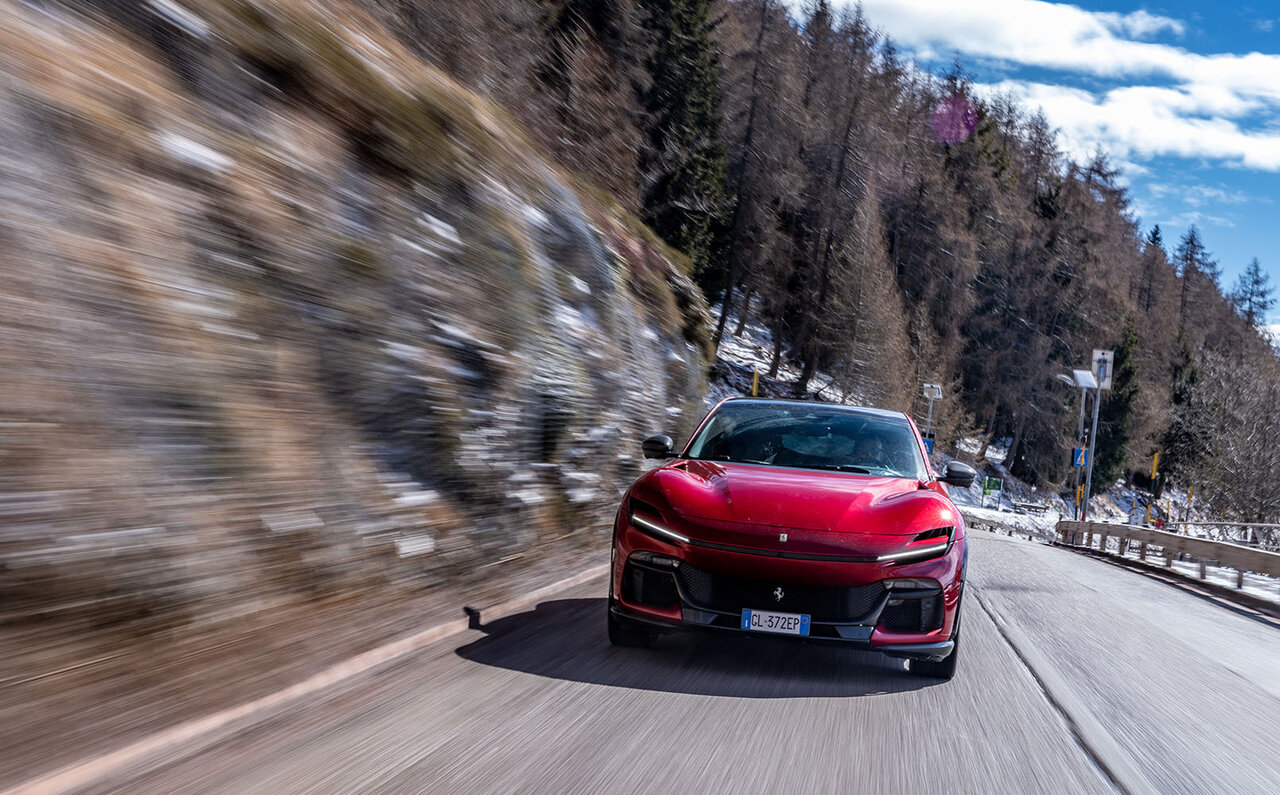
Incidentally, when the Manettino is in "COMFORT" mode, the active suspension setting is "medium" (soft is also selectable), and in "SPORT" mode, it is "hard" (medium and soft are also selectable). However, the ride comfort is excellent in either setting.
The Latest Electronic Control Devices Act Entirely as Supporting Players
The handling, like that of the 296 GTB, is remarkably natural, with the usual Ferrari sharpness subtly subdued. The steering has a satisfying weight, and it transmits sufficient road feel, allowing you to enter corners with confidence. The brake system is also a by-wire type, inherited from the 296 GTB, offering excellent feel and stopping power.
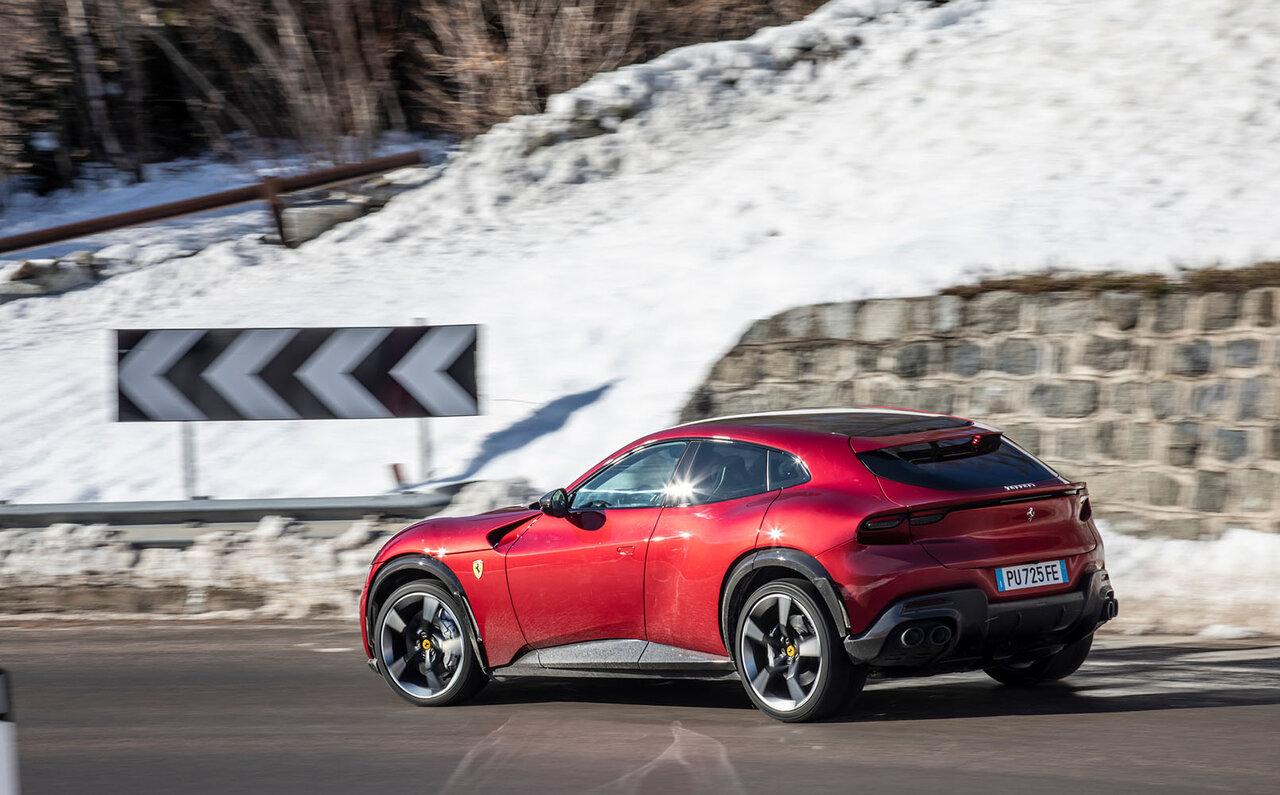
The agile stance, making you forget the car's size, is likely also due to the 4WS (four-wheel steering) derived from the 812 Competizione, which independently controls the steering angle of the rear wheels.
Meanwhile, the "4RM-S" four-wheel-drive system, originally developed for the GTC4Lusso, has been updated for the Purosangue with new control logic technology adopted from the SF90 Stradale's 4WD system.
As you accelerate out of a corner, the system optimally manages yaw by combining front-axle torque vectoring, rear-tire torque distribution via the E-Diff, and the lateral force generated by the 4WS.
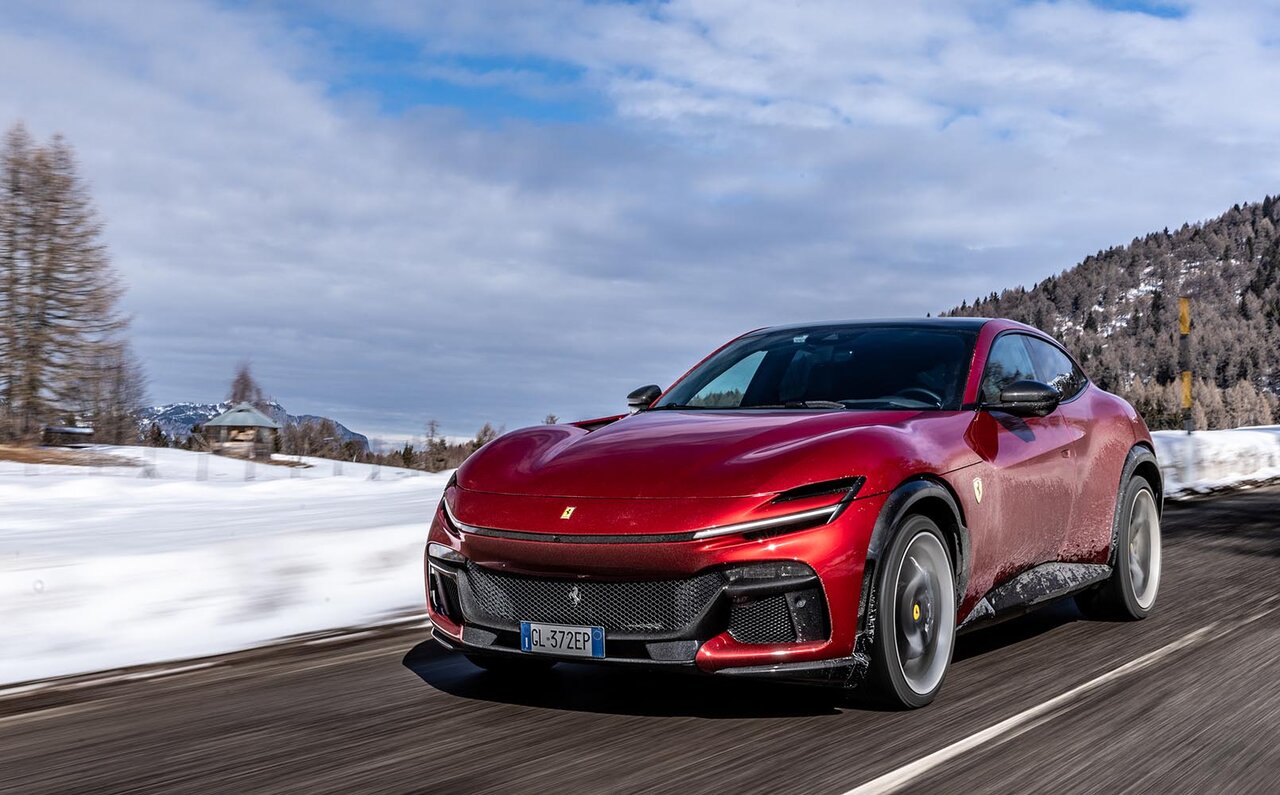
The Purosangue is packed with the latest electronic control devices, but what's noteworthy is how they act entirely as supporting players, never intruding on the driver's experience.
From the moment you start driving, you feel a sense of unity, as if your body has extended to every corner of the car. Despite its slightly higher body and four-door, four-seat configuration, the driving experience is pure "Prancing Horse."
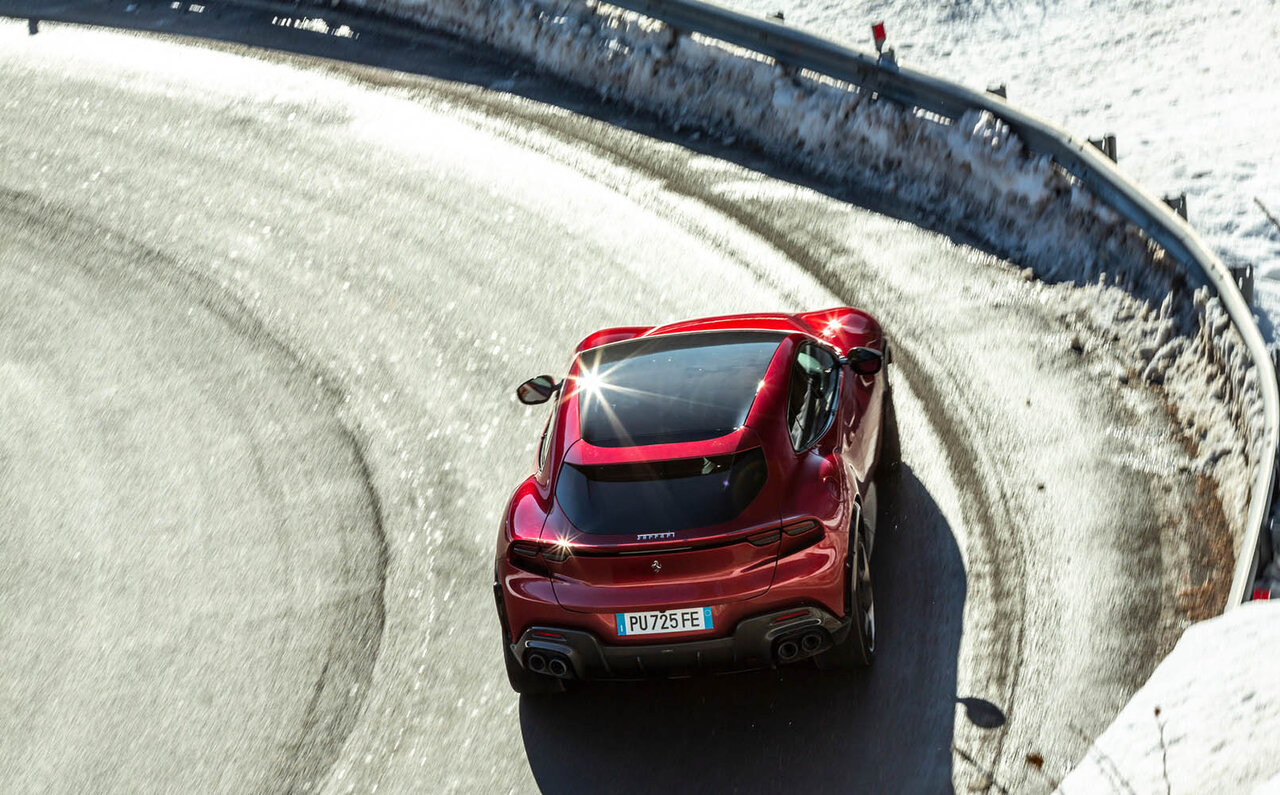
Upon returning to the hotel after the test drive, the Purosangue's body, which had been polished to a shine, was now covered in mud from splashing through melting snow. Yet, its appearance was strikingly beautiful.
It can comfortably transport four people like a luxury sedan, regardless of road conditions, be it snow or mud. And when you press the accelerator, you can always enjoy the sensual sound of the V12 and the performance that only Ferrari can deliver.
The Purosangue is truly an all-round supercar, brilliantly fusing Ferrari's inherent strengths – exhilarating driving and breathtaking interior and exterior design – with the new characteristic of versatility.

By the way, as you may know, the EU has decided to allow internal combustion engines beyond 2035, provided they use synthetic fuels produced from hydrogen and CO2, reversing its previous policy of banning them.
Enzo Ferrari once said, "The heart of every car is the engine." I can only hope that cars with such fascinating "hearts," like the Purosangue, which are now a rare breed, will continue to captivate us as members of the "Prancing Horse" family.
Ferrari Purosangue
Body Dimensions | Length 4,973 x Width 2,028 x Height 1,589 mm
Wheelbase | 3,018mm
Tread Front/Rear | 1,665 / 1,632mm
Dry Vehicle Weight | 2,033kg
Weight Distribution Front/Rear | 49% / 51%
Engine | 6,496 cc 65° V12 DOHC
Maximum Output | 725cv/7,750rpm
Maximum Torque | 716Nm/6,250rpm
Maximum Permissible RPM | 8,250rpm
Compression Ratio | 13.6:1
Transmission | 8-speed F1 Dual-Clutch
Drivetrain | 4WD
Tires Front/Rear | 255/35R22 / 315/30R23
Dry Power-to-Weight Ratio | 2.80kg/cv
0-100km/h Acceleration | 3.3 seconds
0-200km/h Acceleration | 10.6 seconds
200km/h-0km/h Braking | 129m
Top Speed | 310km/h
Price | From ¥47,600,000
Body Dimensions | Length 4,973 x Width 2,028 x Height 1,589 mm
Wheelbase | 3,018mm
Tread Front/Rear | 1,665 / 1,632mm
Dry Vehicle Weight | 2,033kg
Weight Distribution Front/Rear | 49% / 51%
Engine | 6,496 cc 65° V12 DOHC
Maximum Output | 725cv/7,750rpm
Maximum Torque | 716Nm/6,250rpm
Maximum Permissible RPM | 8,250rpm
Compression Ratio | 13.6:1
Transmission | 8-speed F1 Dual-Clutch
Drivetrain | 4WD
Tires Front/Rear | 255/35R22 / 315/30R23
Dry Power-to-Weight Ratio | 2.80kg/cv
0-100km/h Acceleration | 3.3 seconds
0-200km/h Acceleration | 10.6 seconds
200km/h-0km/h Braking | 129m
Top Speed | 310km/h
Price | From ¥47,600,000
Contact