TOYOTA SAI | Toyota Sai (Part 2) | The advantage of an extra 600cc
TOYOTA SAI | Toyota Sai (Part 2)
The advantage of an extra 600cc
The SAI is a hybrid car positioned above the Toyota Prius, which was once an unprecedented hit, with 180,000 backorders. This second part will focus primarily on our impressions from test driving the car.
Text by Fumio OgawaPhotos by Masayuki Arakawa
Recommended Grade: "S"
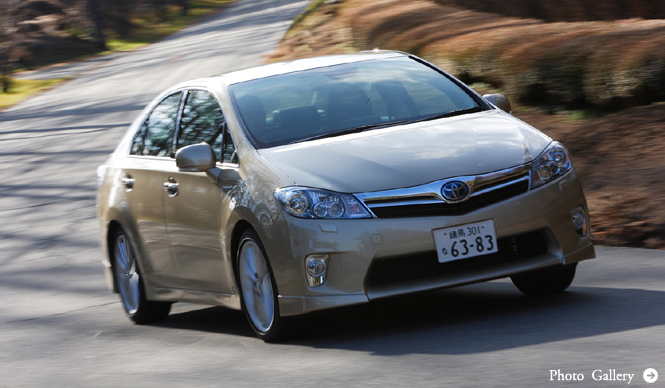
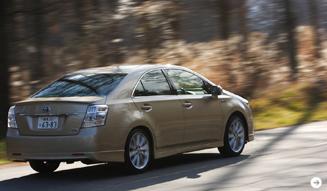
Driving the SAI, its strengths compared to the Prius are its ample torque and powerful acceleration, thanks to the 600cc larger engine displacement. Cabin noise is also considerably lower. Personally, compared to the third-generation Prius, which was disappointing due to cost-cutting, I feel the SAI's superior quality, which is also reflected in its price difference. This is also true for the ride comfort, including handling. However, the ride comfort of the "G" model with 18-inch tires is extremely "stiff." This is likely due to the low aspect ratio of the 215/45 tires and the stiff sidewalls. Uneven road surfaces transmit significant shocks.
In contrast, the "S" model with 16-inch tires offers a comfortable ride. As Toyota states, "The 16-inch tire model was developed as the standard car," it feels natural and unforced. Personally, I definitely recommend this one. With a 2-inch smaller tire diameter, it also has a tighter turning radius, making it more maneuverable in the city than the "G" model.
The quick acceleration from the electric motor, unique to hybrids, gives an agile impression, and this is not a car solely for the elderly with a strong preference for comfort. How to strike a balance like this will likely become a criterion for choosing a hybrid in the future. Beyond environmental compatibility with the hybrid system, it's about choices like prioritizing driving enjoyment or the advanced functionality of 4WD.
Simple and Functional Interior
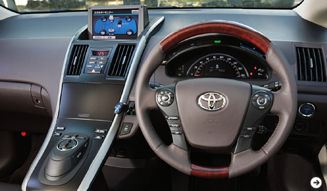
The SAI also features a newly designed dashboard. The number of switches and decorative elements like chrome have been minimized to emphasize simplicity. A control called "Remote Touch," similar to a computer mouse, is provided to consolidate operations for navigation, audio, and air conditioning. Combined with the steering wheel boss switches, these replace traditional button operations. The development engineers explained, "We made it possible to perform basic operations on the monitor screen with minimal movement of the left hand and gaze from the road ahead," indicating the application of universal design principles here.
The ease of operation of the Remote Touch, which incorporates an electric motor, has already been proven in the Lexus RX, despite its different design. The pointer moves as if drawn in, eliminating the need to stare at the screen, which also contributes to enhanced safety. The tactile feedback to the fingertips can be selected from five levels according to preference. I appreciate the philosophy of incorporating technologies from other fields into automobiles if they are beneficial.
Unfortunately, I did not have the opportunity for a long-distance test drive this time, so I cannot comment on the actual fuel economy. The manufacturer's stated figures are 23 km/liter for the 10.15 mode, and 19.8 km for the JC08 mode, which is closer to actual usage conditions, including cold starts and an increased speed from 70 km/h to 80 km/h in the 10.15 mode. This is for your reference.

TOYOTA SAI | Toyota Sai
Body | Overall Length 4,605 x Overall Width 1,770 x Overall Height 1,495 mm
Engine | 2,362cc Inline 4-cylinder DOHC
Maximum Output | 110kW [150ps] / 6,000rpm
Maximum Torque | 187Nm [19.1kgm] / 4,400rpm
Electric Motor | AC Synchronous Motor
Maximum Output | 105kW [143ps]
Maximum Torque | 270Nm [27.5kgm]
Drivetrain | Front-Wheel Drive
Transmission | Electronically Controlled Continuously Variable
Price | From 3.38 million yen