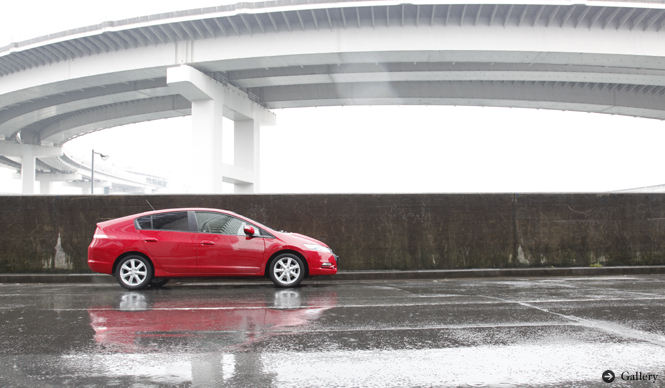
HONDA INSIGHT | Born with an Inherently Low-Cost Structure
HONDA INSIGHT (Part 1)
Inherently Low-Cost Design
In recent years, hybrid cars have begun to create a significant trend, even in Europe and North America, where they were once viewed as a temporary measure to extend the life of internal combustion engines until next-generation power sources become established. The Honda Insight, a hybrid-exclusive model launched by Honda with great anticipation to challenge the Toyota Prius, is enjoying strong sales, partly due to its affordable price of 1.89 million yen. Does it truly offer value beyond its price? Can it serve as a bridge to the future? Esteemed automotive journalist Satoshi Watanabe investigates its true worth.
By Satoshi WatanabePhotos by Kenta Yoshizawa
Hybrids Have Led Environmental Technology for a Decade
What is the ultimate answer for post-fossil fuel technologies that will power the next generation of automobiles—be it EVs, fuel cells, hydrogen combustion, or biofuels?
No one knows for sure. Currently, major automakers are relentlessly investing and researching all conceivable possibilities in preparation for what lies ahead.
Amidst this, the stance on "hybrids" seems to be solidifying. They are seen as a temporary solution to extend the life of conventional internal combustion engines until next-generation power sources become established. European and North American automakers, who once viewed them this way, are now all moving towards hybrid development. This applies to Mercedes, the VW Group, and the Big Three. The current "reading" among automakers is that hybrids will lead environmental technology for at least the next decade.


The Primary Purpose of the Insight
As you know, Toyota has built a significant advantage in this area. For the new Prius debuting this spring, they have filed for approximately 1,000 patents, both large and small. The announcement at the Detroit Auto Show in January was also impactful. Naturally, their accumulated know-how is vast, stemming from continuous development and sales. Just when it seemed there were no openings... Honda found a breakthrough.
1.89 million yen. Currently, no Toyota hybrid vehicle can match the price tag of the Insight. Yes, the primary purpose of the Insight is undoubtedly its cost performance. Behind Honda's stated goal of "aiming for a price broadly accessible to ordinary people," one can sense the underlying strategy: to challenge Toyota's stronghold, this is the only way to attack.
As a result, Toyota appears poised to employ a clever tactic of keeping the older, depreciated Prius on sale alongside the new model to counter the Insight's pricing. Regardless, the Insight deserves praise simply for bringing hybrids into the mainstream, dispelling the image of them being "potentially good, but a bit expensive."
How Was the Low Price of 1.89 Million Yen Achieved?
So, how did the Insight manage to achieve the 1.89 million yen price point? The main reason lies in the difference in hybrid systems. To put it bluntly, while the Prius system is designed with motor drive as primary, making it somewhat EV-like, the Insight's system is conceived with the engine as primary, using the motor as an assist.
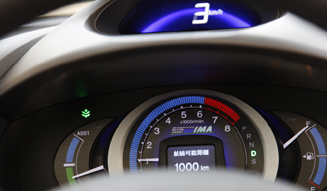
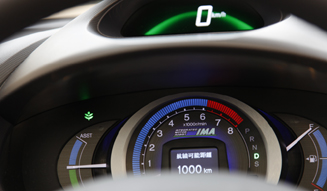
For example, the Prius has a mode that allows it to run solely on the motor, and the motor actively assists in driving even at higher speeds, demonstrating a high reliance on electric power in everyday driving conditions. This results in a unique driving feel, which is also a characteristic of the Prius.
In contrast, the Insight's hybrid system is configured to cover the engine's lower efficiency at low RPMs, such as during idling or in city driving. Consequently, one cannot experience the distinct futuristic feel—the sensation of motor-driven travel—as with the Prius. However, the system is designed to be simple, compact, and lightweight. In other words, it possesses an inherently low-cost structure and is intended for deployment across multiple vehicle models. To draw an analogy, if the Prius is akin to an electric scooter, the Insight's development objective can be likened to that of an electric-assist bicycle.