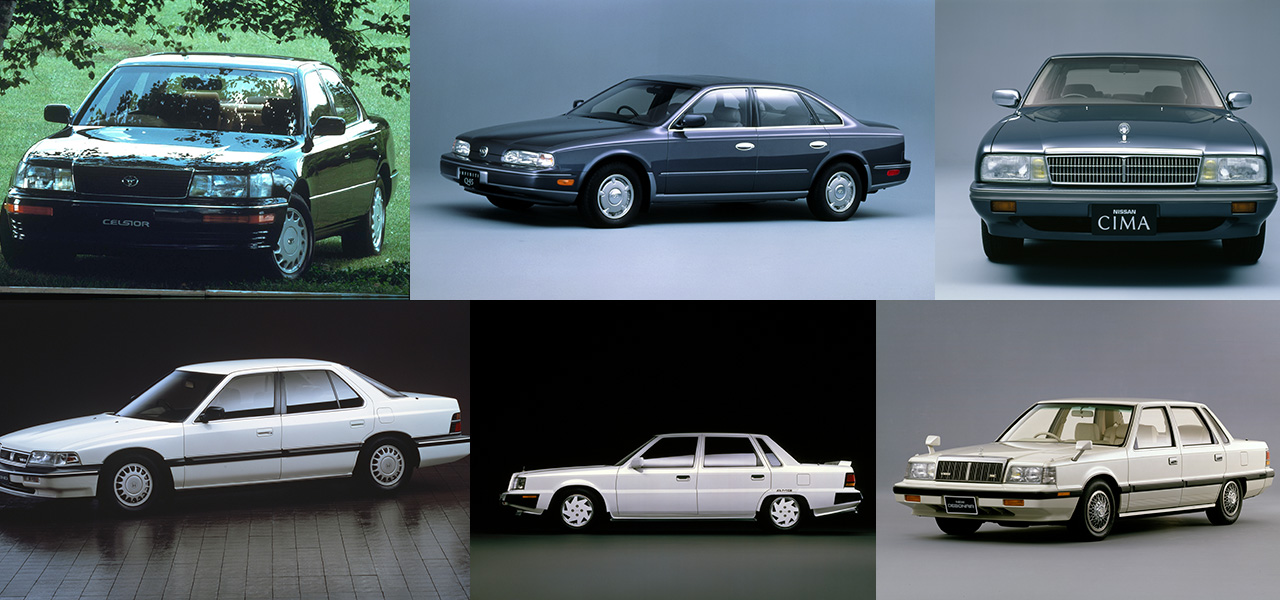
Five Japanese luxury sedans from the 1980s you'll want to drive today.
Five Japanese Luxury Sedans from the 1980s You'll Want to Drive Today
Looking back, the period from the 1980s to the early 90s was a time of great leaps for Japanese automakers. The cars that debuted then still possess a special allure. In this article, we present five luxury sedans from that era that we’d choose to drive today.
Text by OGAWA Fumio
Japanese Luxury Sedans from the Bubble Era Still Captivate
If you desire a lavish sedan, look no further. Japanese luxury sedans released in the late 1980s and early 1990s, the so-called bubble economy period, have lost none of their charm.
The 80s were a decade of advancement for Japanese manufacturers. Towards the end of the 70s, many makers had established front-wheel-drive technology, leading to the emergence of well-packaged mid-size sedans.
Until then, rear-wheel drive was common even for smaller cars due to technical stability. The 80s saw technological advancements like constant velocity joints in front-wheel-drive systems, allowing manufacturers to choose between front- and rear-wheel drive depending on the model.
A symbolic model might be the Toyota Soarer, launched with great fanfare in '81. It featured a powerful 2.8-liter inline-six engine producing 170ps. Referencing the packaging of European competitors like the Mercedes-Benz SL, it deliberately adopted rear-wheel drive, a staple of luxury cars.
This era also saw the establishment of a hierarchy: front-wheel drive for mid-size cars and below, and rear-wheel drive for sportier or higher-end models.
From another perspective, the 80s and early 90s marked a period when Japanese manufacturers began to take car manufacturing more seriously. This resulted in the excellent luxury sedans of the time.
1) Toyota Celsior (1989)
A Model That Shocked the World with its Quietness and Comfort
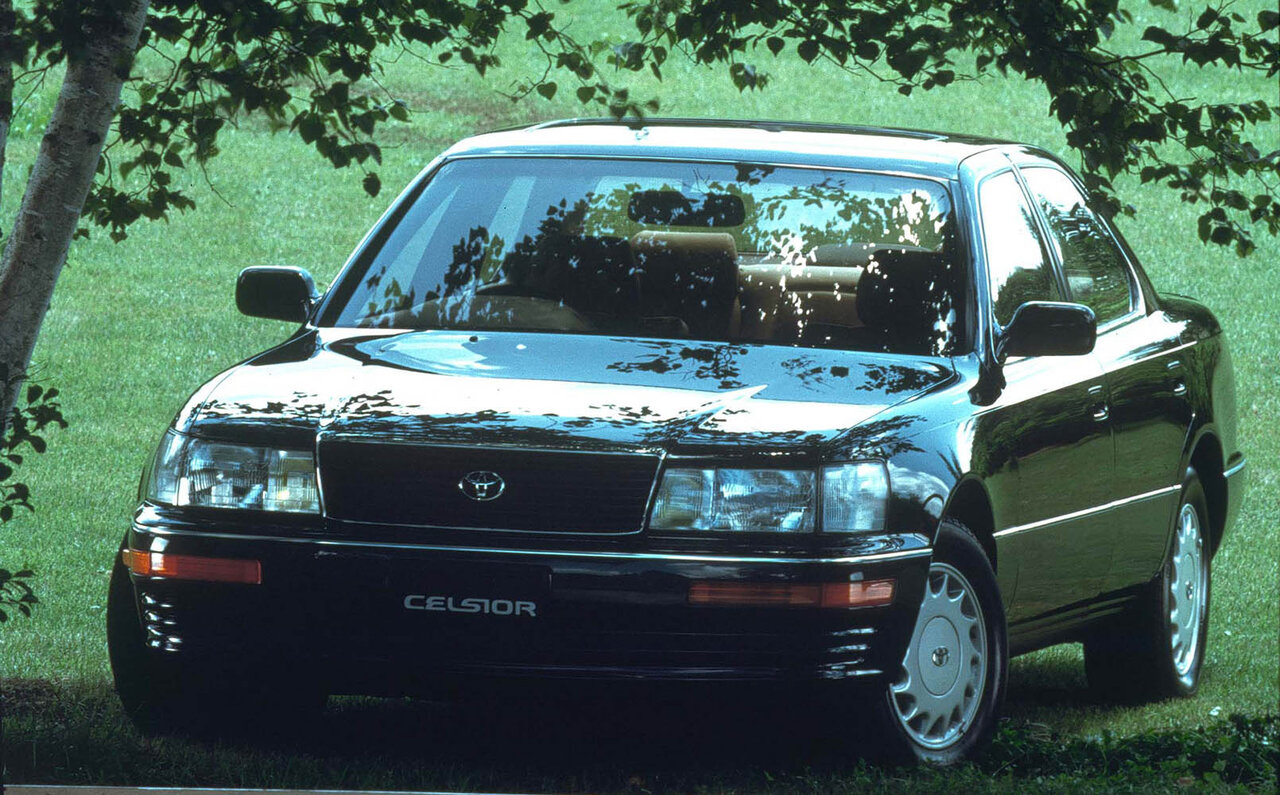
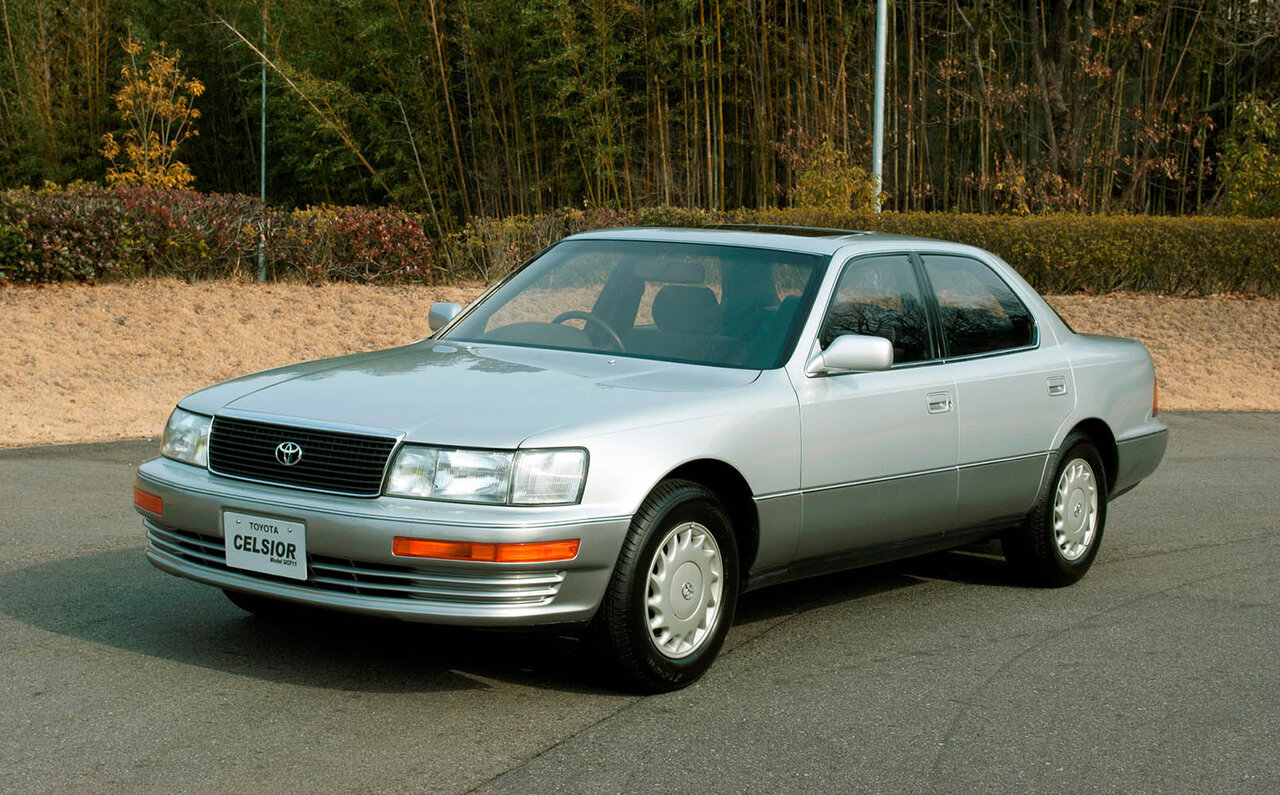
The first-generation Celsior, released in 1989, remains highly popular in the used car market. As many know, it was unveiled in January of that year in the US under the new Lexus brand as the LS400, generating global buzz.
It combined a 4-liter V8 engine with rear-wheel drive. The mechanics were sophisticated, with the top-tier 'C specification' even featuring 'wheel-stroke-sensing air suspension.' Simultaneously, its quietness and low vibration were key selling points that set Lexus apart as a luxury car.
The demonstration of stacking coupe glasses like a champagne tower on the engine and starting it without collapsing the tower was novel.
It's astonishing how little it feels dated even today. At 1.8 tons, it's considerably lighter than the current Lexus LS500 (around 2.2 tons). This contributes to its nimble handling. Even on winding roads at high speeds, it feels not old, but rather enjoyable.
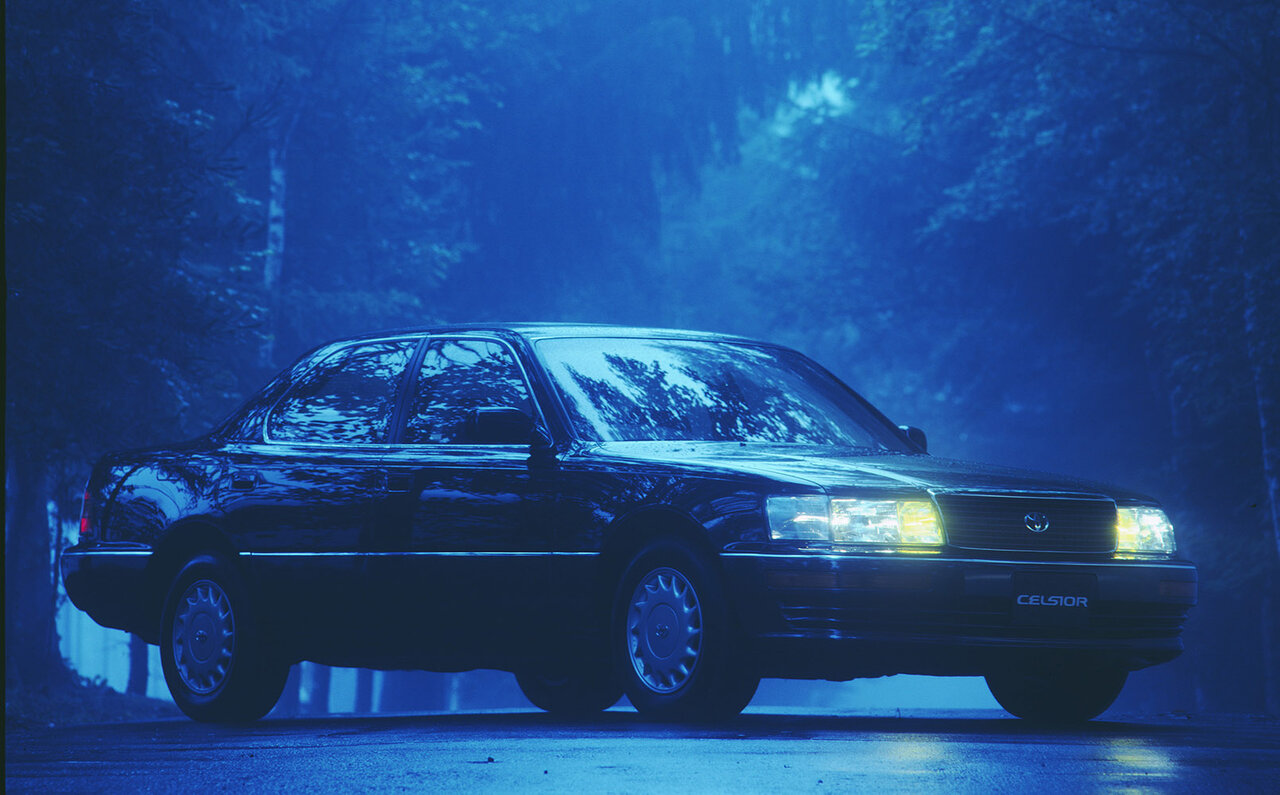
In the used market, the C specification might require significant maintenance for its suspension system, making the A specification with conventional springs the most hassle-free choice (the B specification includes Piezo TEMS).
Around the same time, Nissan launched 'Infiniti' and Honda launched 'Acura' as their luxury brands. Nissan abandoned introducing Infiniti to the Japanese market, and Honda announced the withdrawal of Acura from the Chinese market in March '22, causing a stir. While the latter is related to their EV strategy, Lexus appears to be handling its brand management successfully, as initially intended.
2) Nissan Infiniti Q45 (1989)
Its Pursuit of Driving Dynamics Evokes the BMW 7 Series
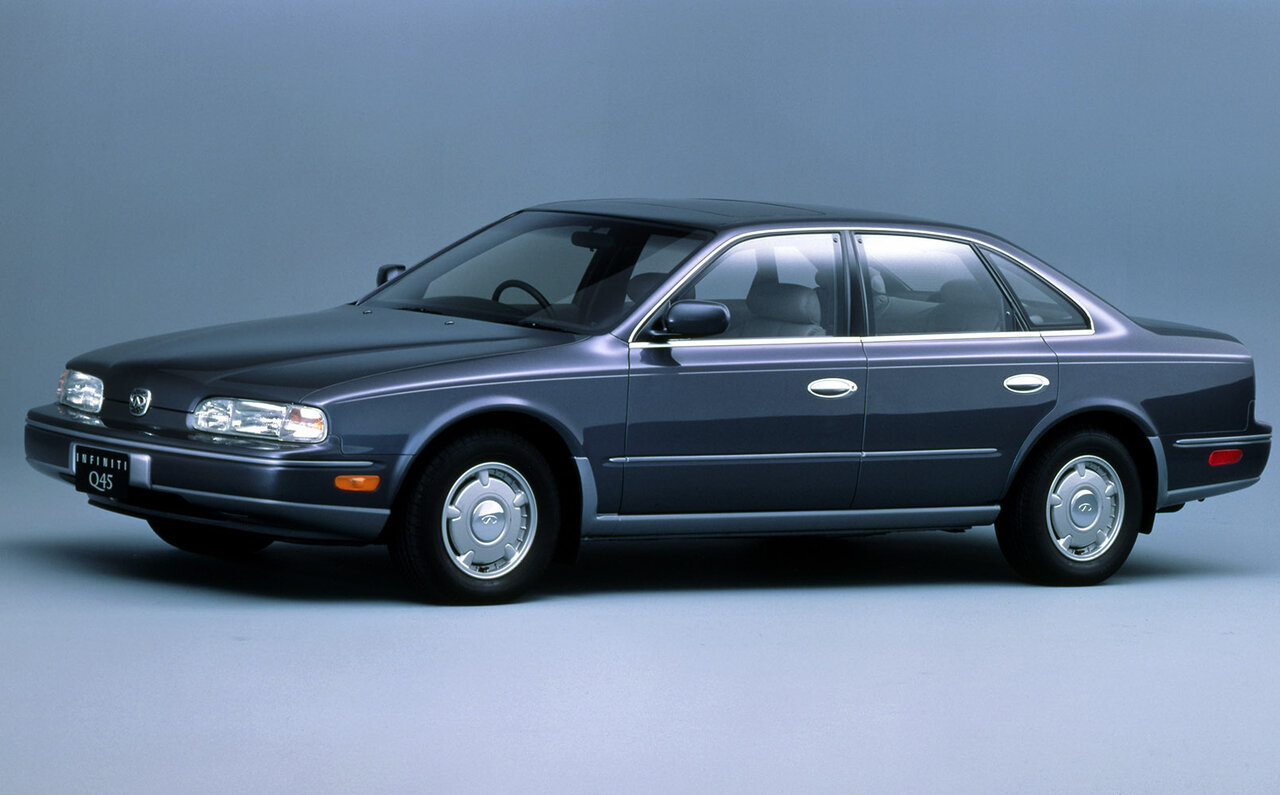
Like Toyota's Lexus, Infiniti was Nissan Motor Corporation's luxury car brand established in 1989. Its objective, similar to Lexus, was to establish a presence in the profitable luxury car segment, primarily in the North American market.
The Celsior was released in October, and the Q45 in November. Both featured a V8 engine and rear-wheel drive. The latter was "typically Nissan" in its sophisticated mechanics, boasting a four-wheel multi-link suspension and, for the first time in a production car, hydraulic active suspension.
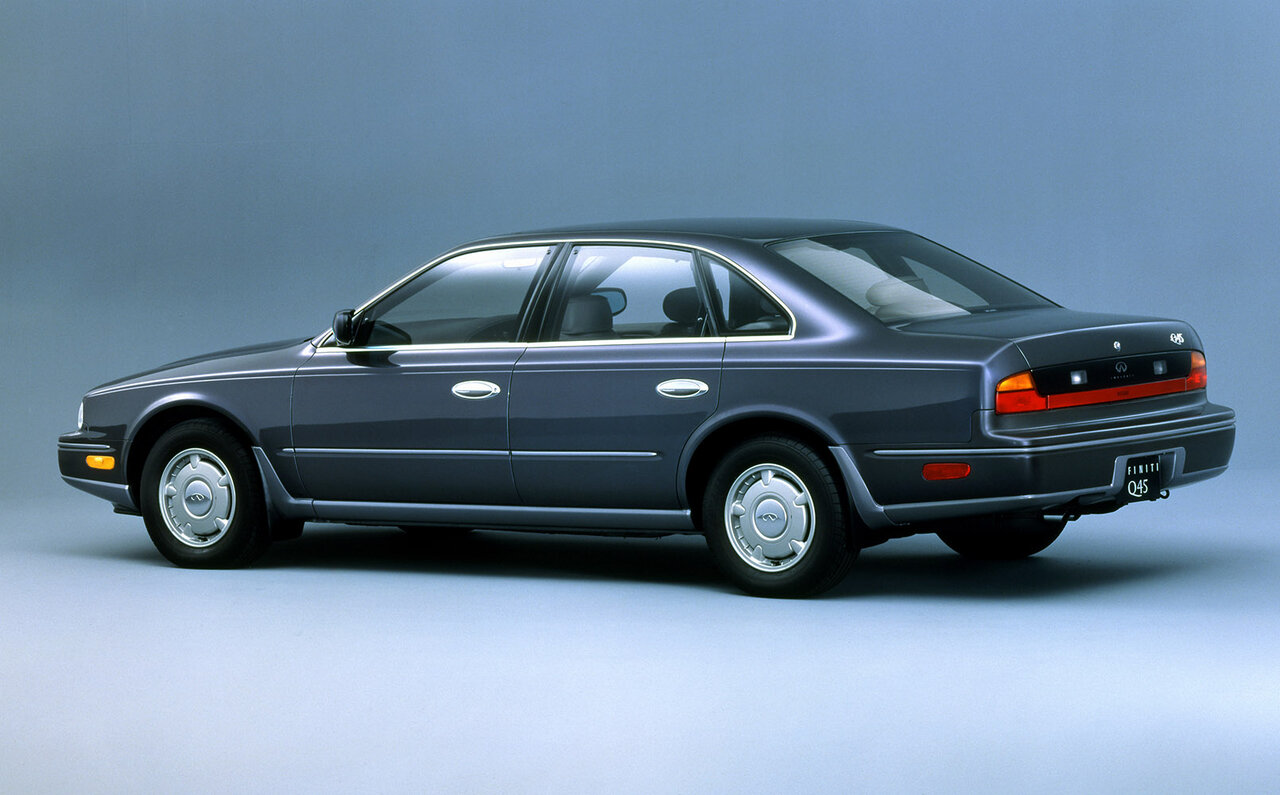
In fact, my memory of driving them back-to-back is that the Q45 was more engaging. Despite being a large sedan with a length of 5,090mm and a wheelbase of 2,880mm, its relentless pursuit of driving dynamics made it feel, if the Celsior was the Mercedes-Benz S-Class, then the Q45 evoked the BMW 7 Series.
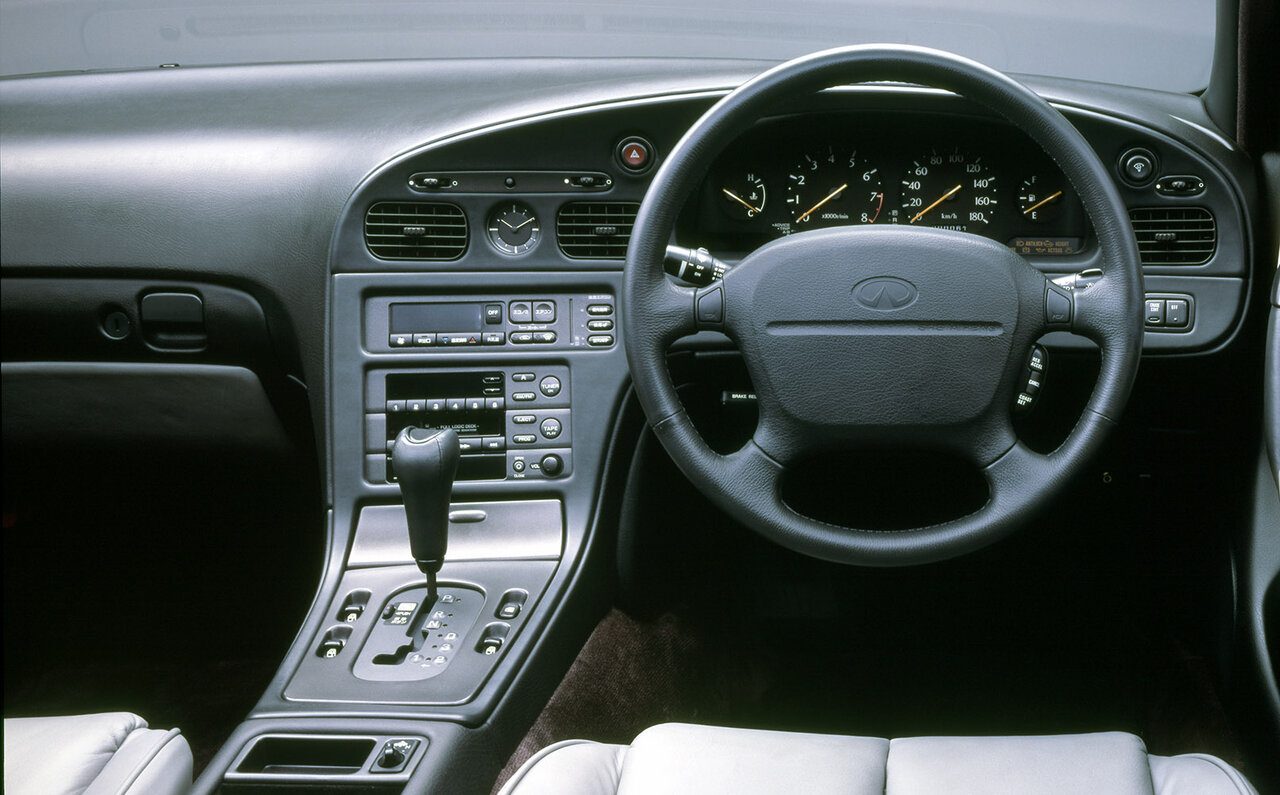
The styling, however, was problematic. The grille-less front fascia with only the Shippo emblem, and the somewhat sluggish impression created by the excessively long roofline, look quite dated now. Perhaps the second-generation President (1990), based on this car, might be more appealing today.
3) Nissan Cima (1988)
A Unique Character: Seemingly Refined, Yet Actually Wild
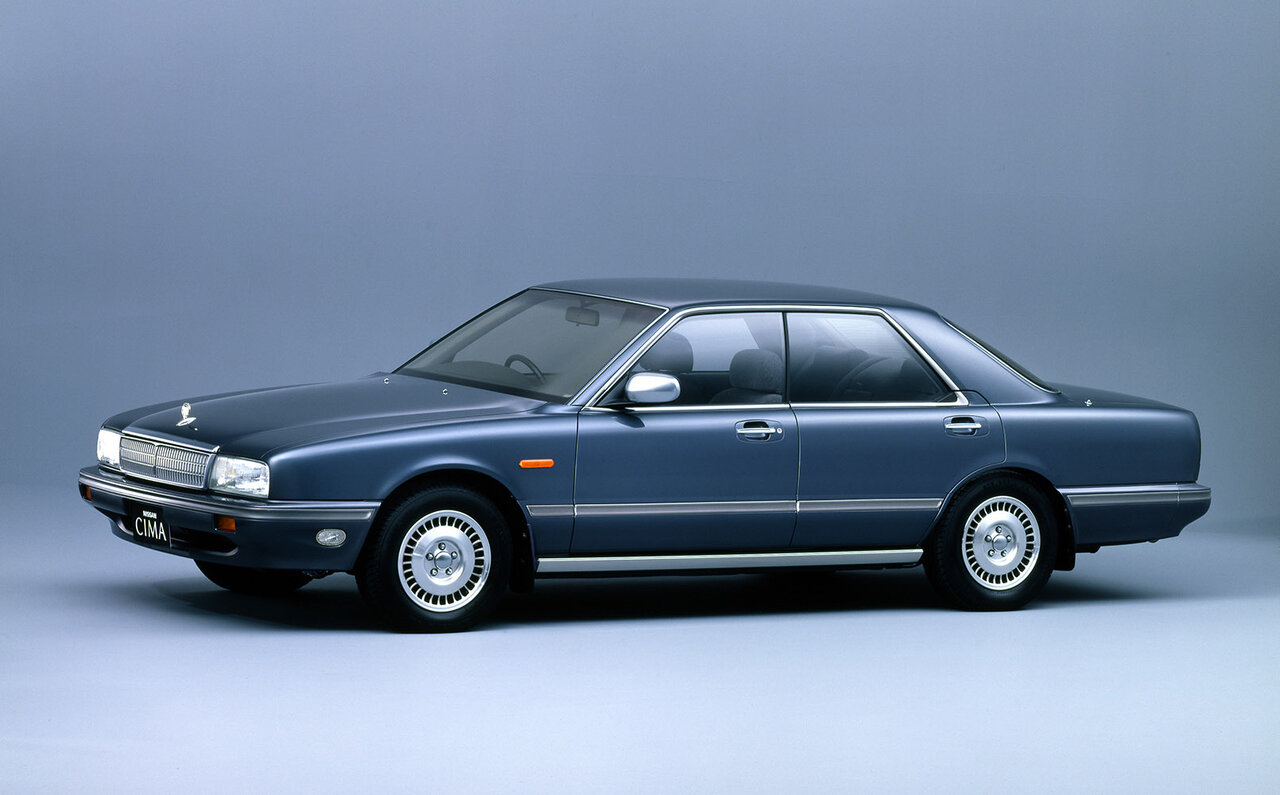
This was the peak of sporty sedans from "The Driving Nissan." Fueled by a booming market, Nissan's development team at the time packed it with everything they had, resulting in a rich package.
It was based on the Cedric/Gloria, but its body width was deliberately set at 1,770mm, breaking the 1.7-meter limit of the time. This also became a major talking point.
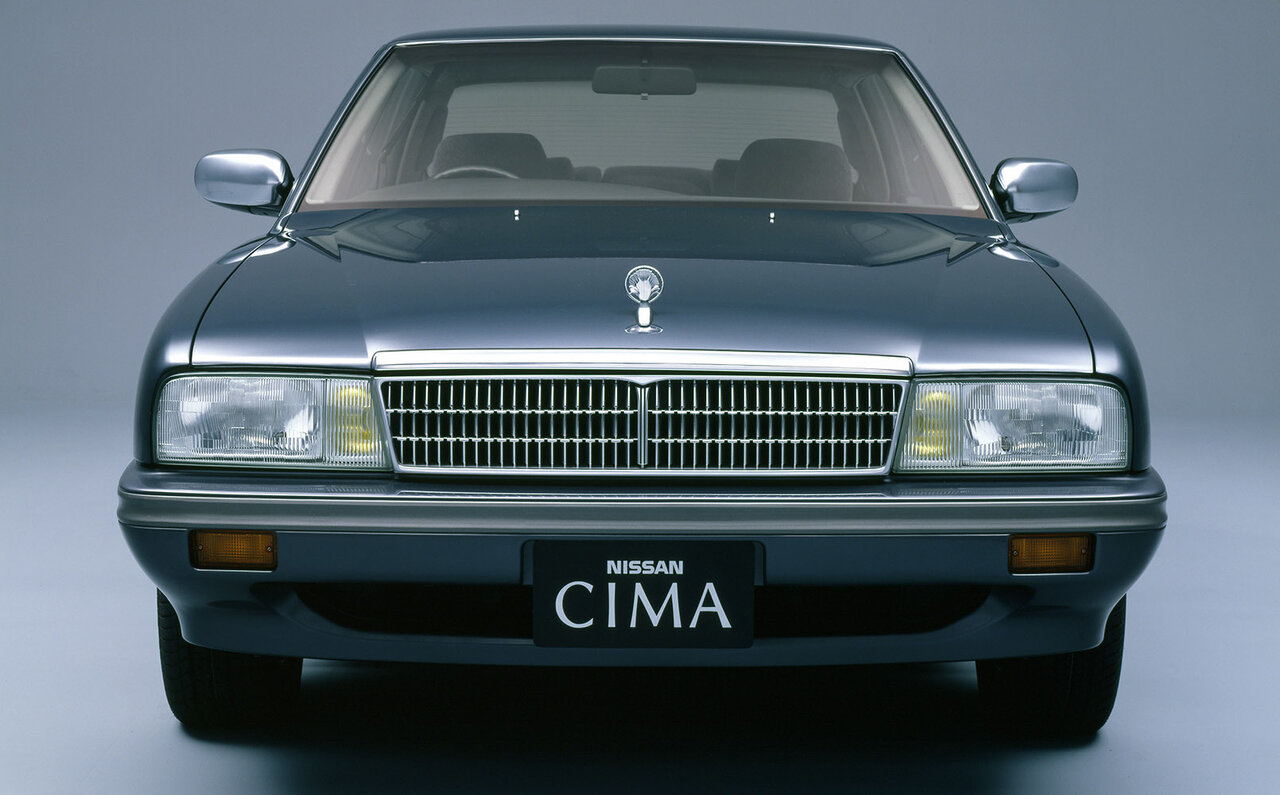
While its body size rivaled imported cars, the engine was equally powerful. The top model featured a newly developed 3-liter V6 turbo, offering power so immense that automotive journalists described it as "faster than the chassis could handle."
Higher-grade models came standard with electronically controlled air suspension. Concurrently, the 'Type II-S' variant, equipped with aero parts and sporty suspension, offered a unique character: seemingly refined but actually wild.
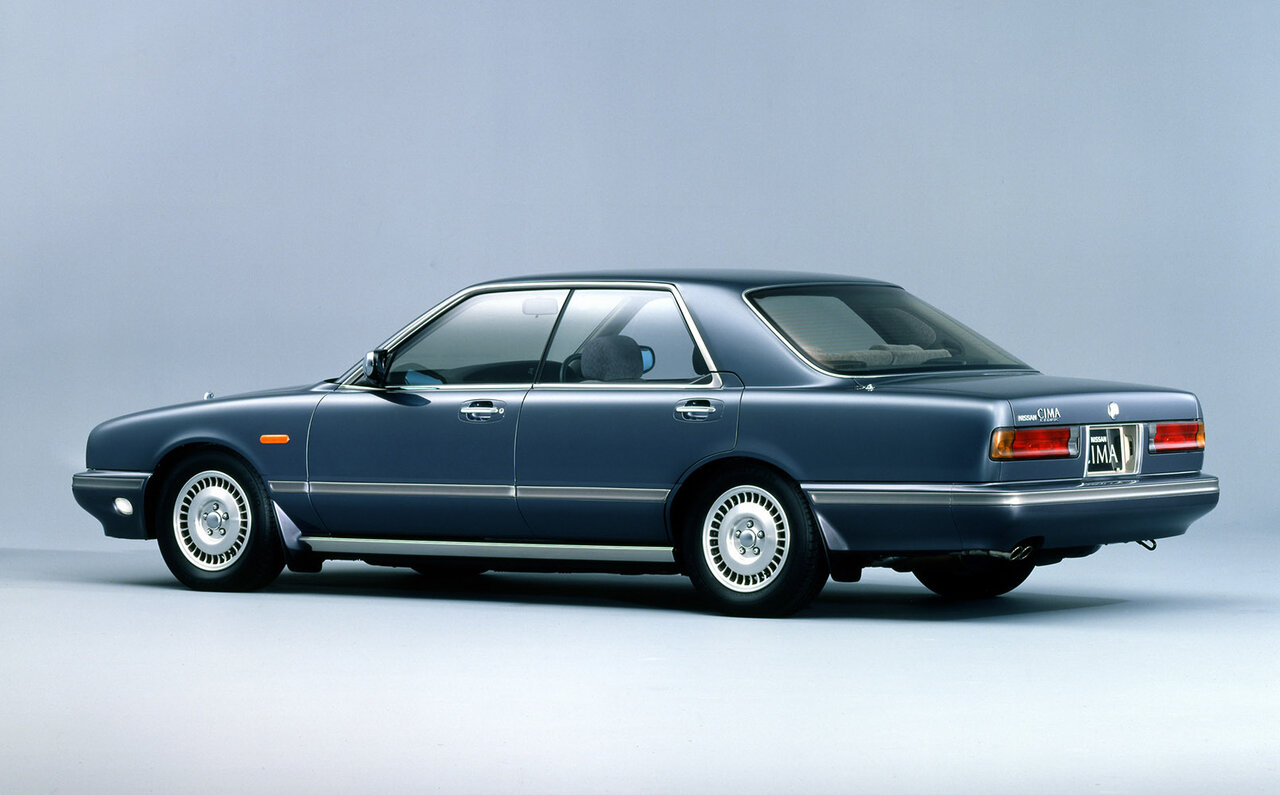
The pillarless 4-door hardtop body, a characteristic of Nissan cars at the time, also offered a unique style with its side windows fully open, which was quite appealing. This contrasted with Toyota's cautious approach to adopting such designs.
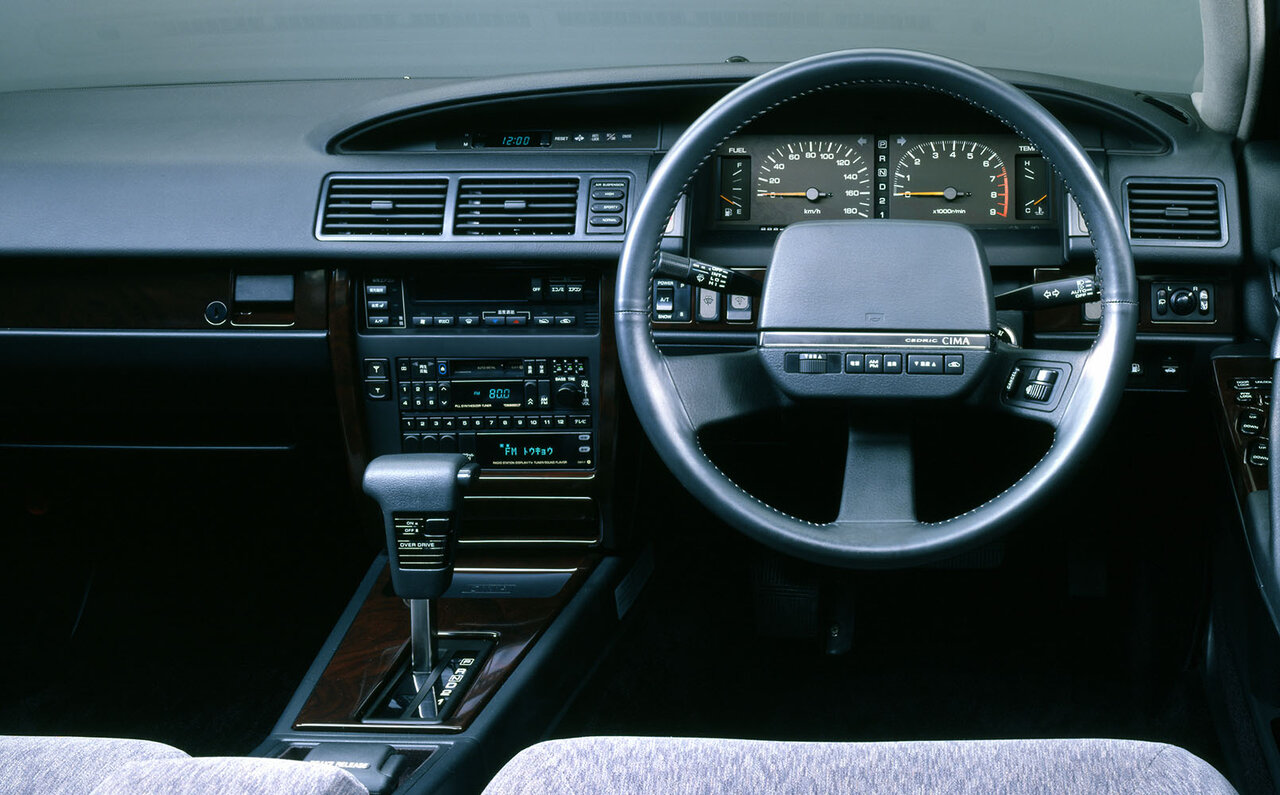
Prices in the used car market are not low, partly due to the scarcity of available units. While the first generation was sensationalized as the "Cima phenomenon," it was only produced for three years, from '88 to '91. That, too, is a rather luxurious predicament.
4) Honda Legend (1985)
A Form with High Aesthetic Appeal, "Un-Japanese" Even Today
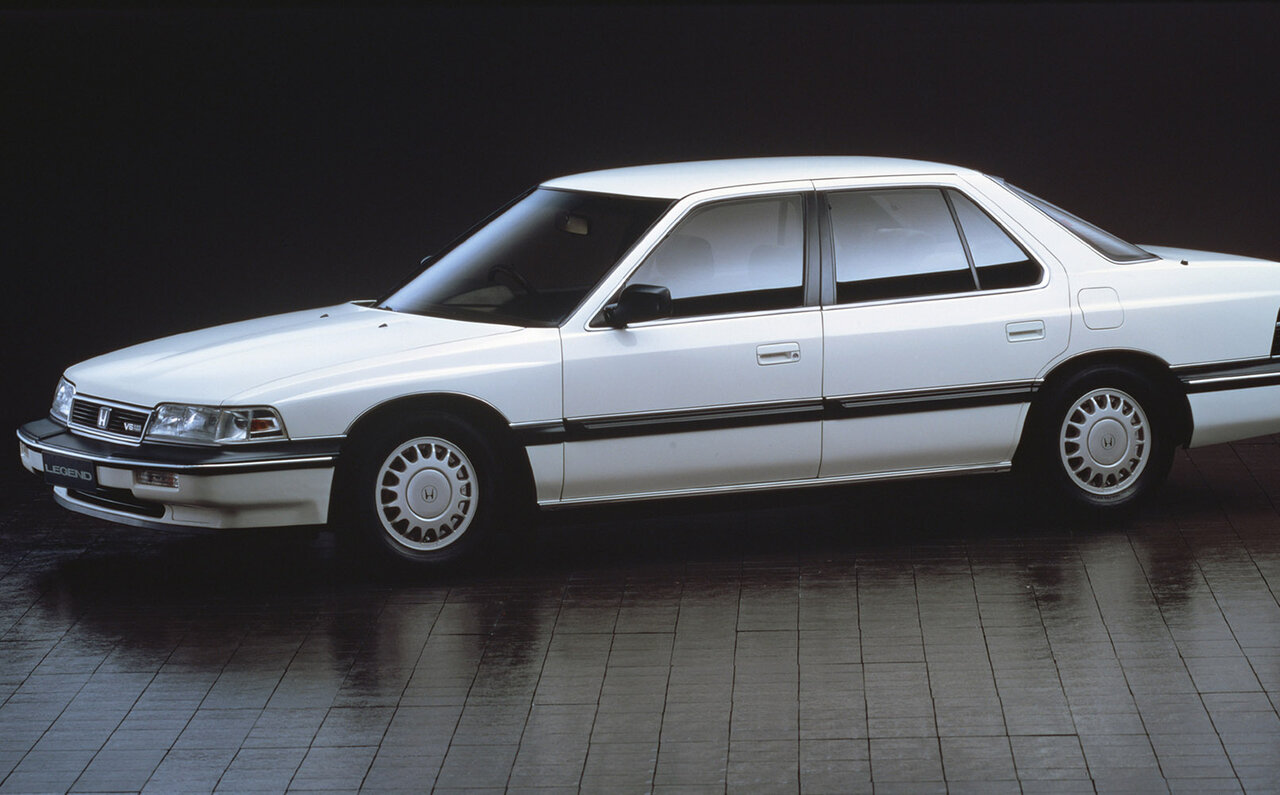
Japanese cars have a history of establishing a foothold in the global market, particularly in North America, by leveraging their price and reliability. A step beyond that, the movement towards creating cars that could only be made by them, truly emerged in the 80s. A prime example is the Honda Legend, launched in 1985.
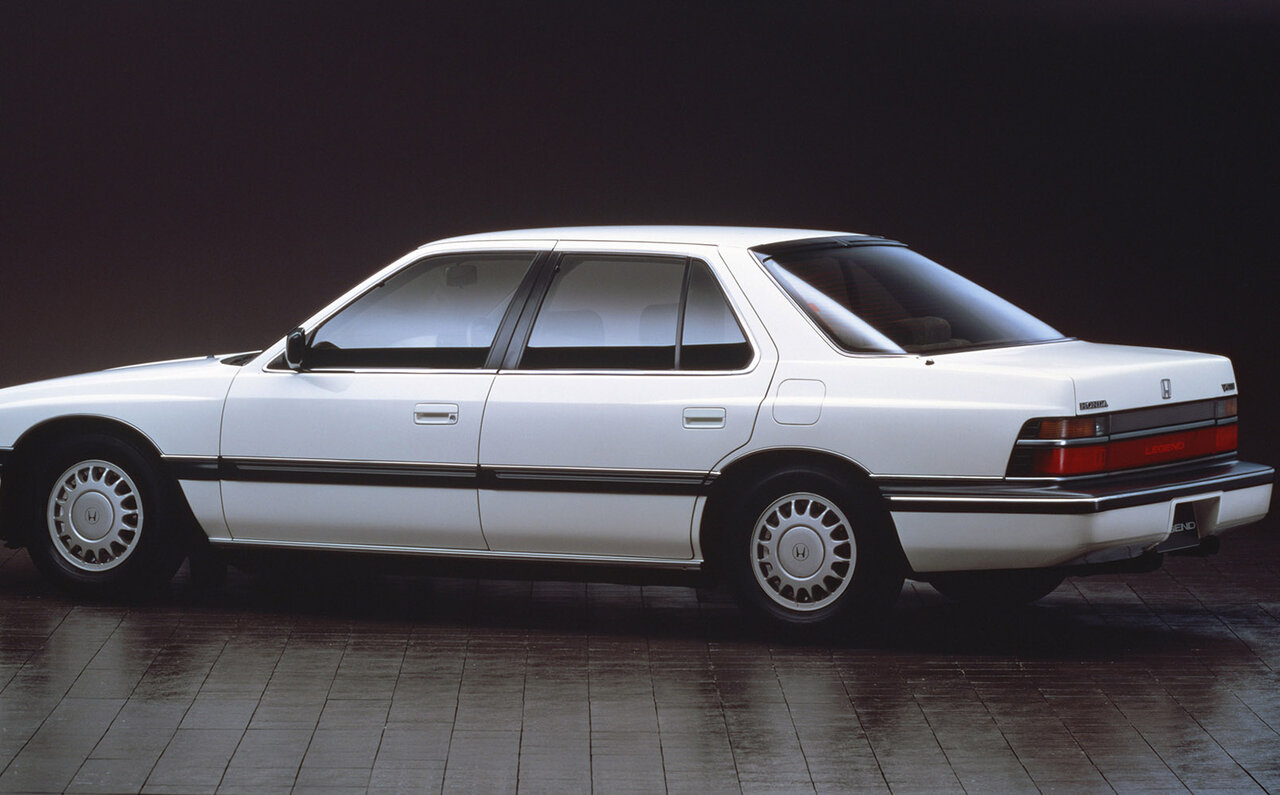
Even today, its aesthetically pleasing form is striking. Its defining feature isn't just the flowing body reaching 4.8 meters in length. In essence, a stylish form is a testament to its sophisticated engineering.
Honda, which focused on achieving a low hood line, demonstrated its commitment even in sedans by adopting double-wishbone suspension systems and transversely mounting compact V6 engines.
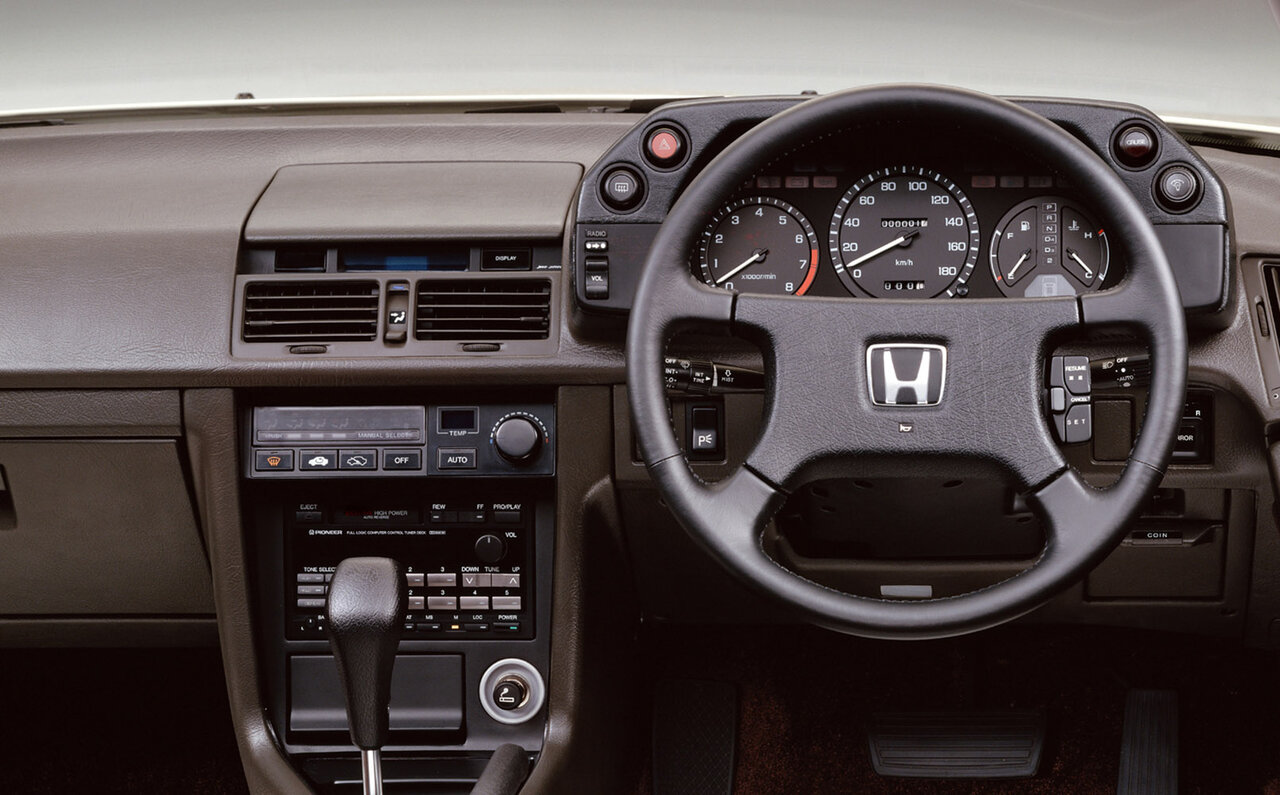
The result was the Legend, with its outstanding proportions. Furthermore, a two-door hardtop version was introduced in '87. The balance of the roof's front and rear lengths was well-executed, giving it a flowing style that was "un-Japanese." By this time, Honda was already viewing the North American market as its primary focus.
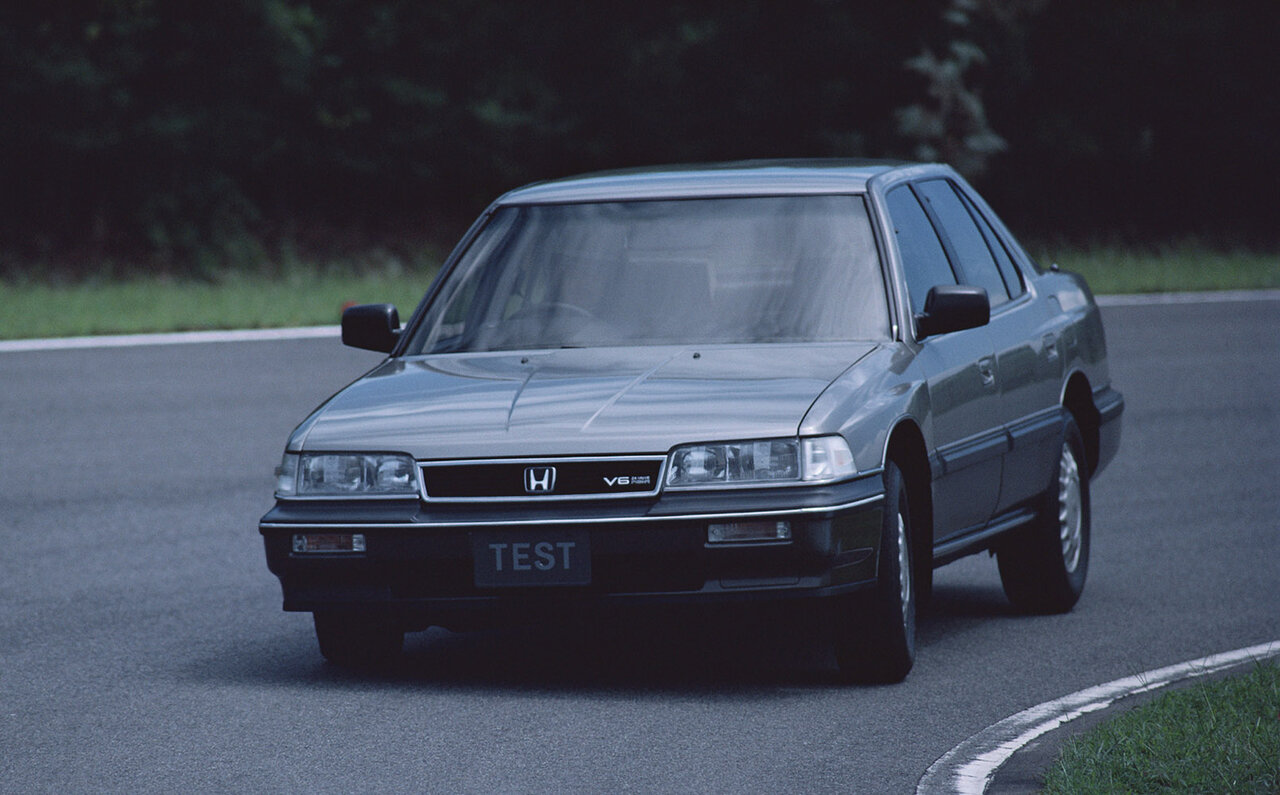
Honda's double-wishbone suspension lacked a bit in stroke, resulting in a somewhat less comfortable ride. The engine revs well, and the handling is sporty, but it lacks the smooth refinement expected of a premium class. While there are criticisms, such a stylish sedan and coupe still hold significant appeal today.
5) Mitsubishi Debonair V (1986)
A Special Model Tuned by AMG
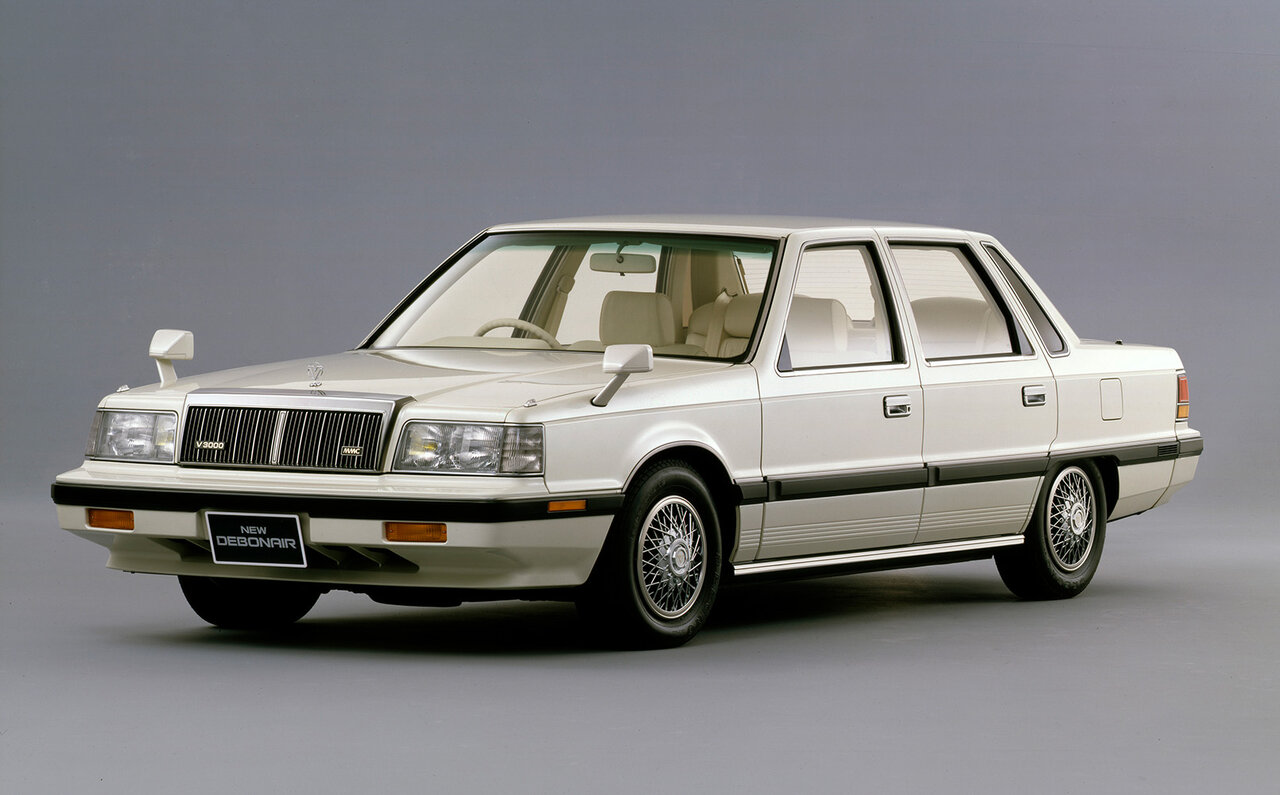
The Mitsubishi Debonair V, released in 1986, was the successor to the Debonair, which had undergone a full model change after 22 years. The 'V' in the name signifies its focus on V6 engines, with both 2-liter and 3-liter V6 options available.
The first generation debuted in 1964, so by the late 70s, it felt dated with its sluggish engine and vague handling. The Debonair V, developed as a successor for executives of the Mitsubishi Group, represented a leap forward, as if skipping three generations.
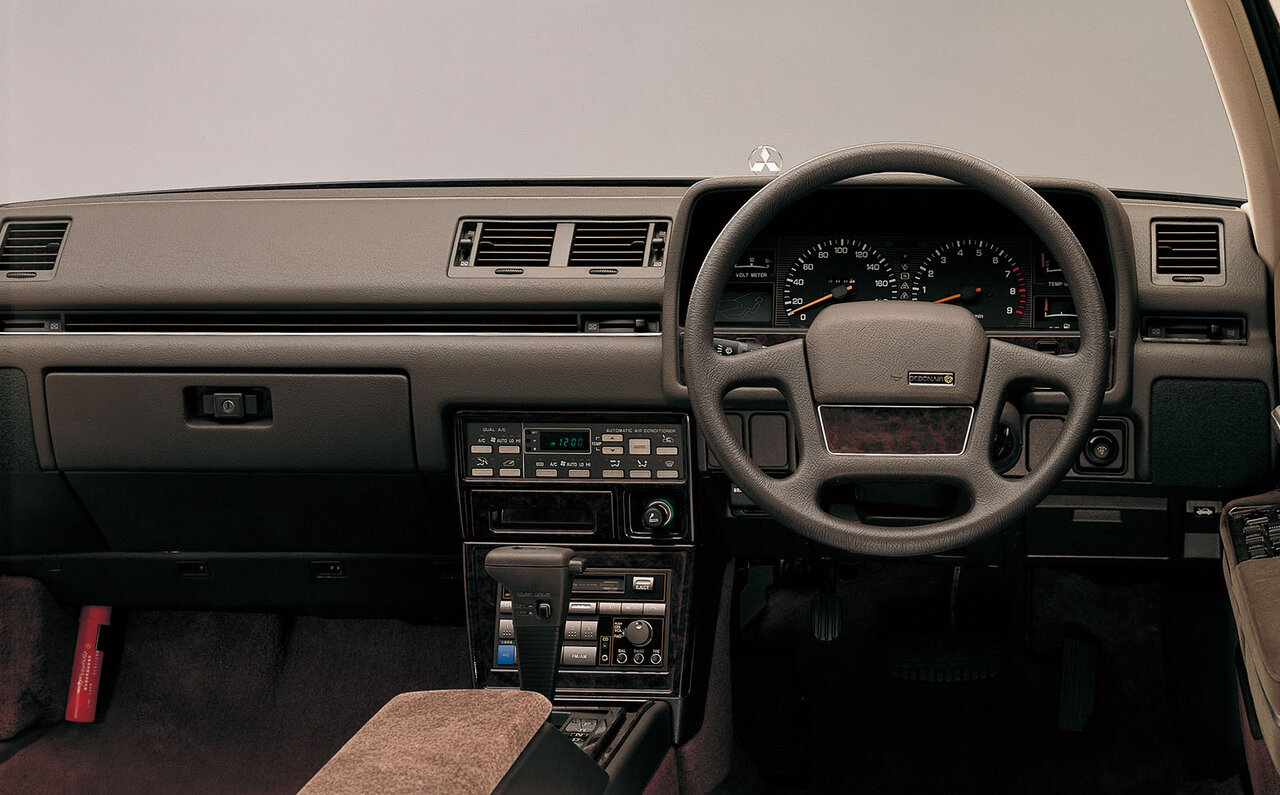
It featured a "Cyclone engine" with a jet valve to enhance swirl and ignition efficiency (later improved to 24 valves), the introduction of a supercharger from '87, electronic control suspension on some models, power-operated rear seats, and even a hands-free telephone – it was exceedingly well-equipped.
While the car name remained the same, there were chauffeur-driven versions (including ultra-long wheelbase limousines), standard models, and even sporty AMG versions. The AMG model, now known for Mercedes-AMG, was handled by Germany's AMG and featured structural reinforcements throughout the body. It also came with exclusive equipment such as 15-inch wheels, aero parts, alloy wheels, dedicated seats, a steering wheel, and dual tail exhaust pipes.
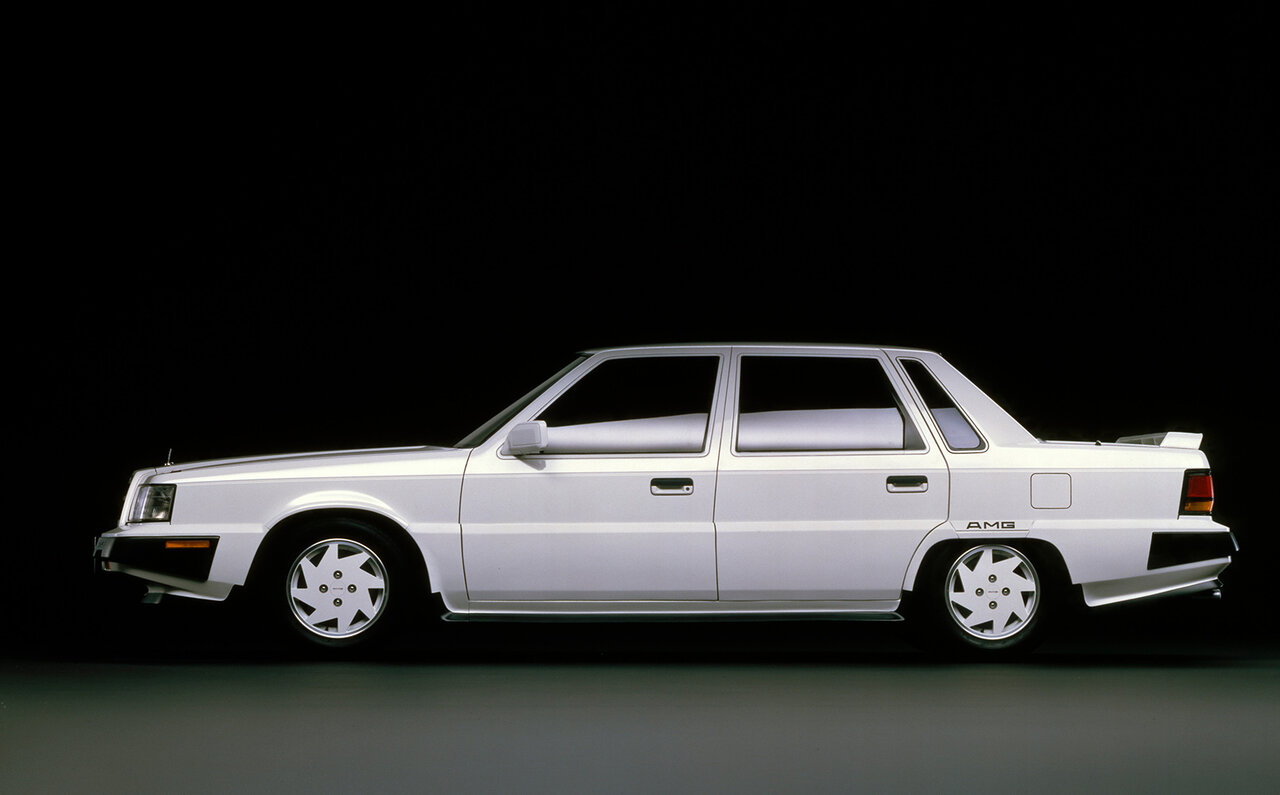
Mitsubishi Debonair V AMG Specification
While the Debonair V's styling might be considered unremarkable, the AMG version was fast and memorable. If you happen to find one in the used car market, I highly recommend taking it for a test drive.