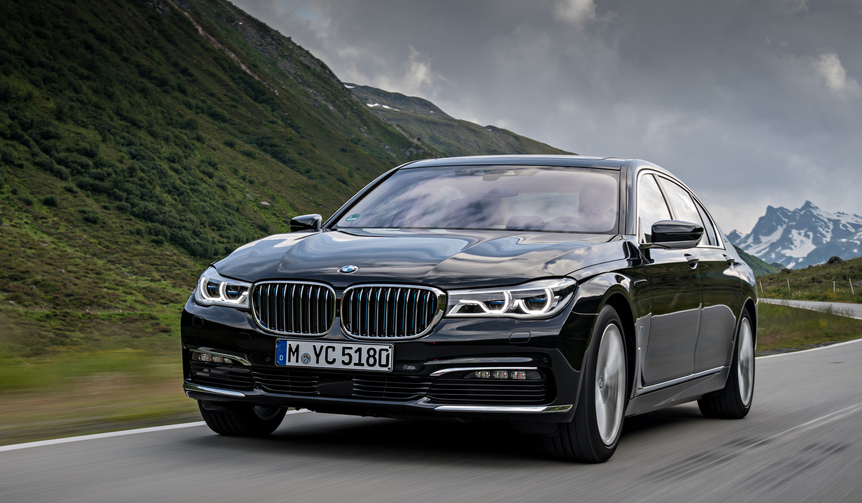
Test Drive the 7 Series Plug-in Hybrid, the 740e iPerformance | BMW
BMW 740e iPerformance | BMW 740e iPerformance
Test Drive the 7 Series Plug-in Hybrid, the 740e iPerformance
This July, in Germany, BMW's7 Seriesadded a plug-in hybrid model with a large-capacity battery capable of external charging. Yasuhisa Shimashita test drove the "740e iPerformance," which will also be introduced in Japan, ahead of time overseas. BMW, which has refined its electric vehicle technology through its sub-brand BMW i, has brought its expertise to its flagship saloon. What feedback has it brought?
Text by SHIMASHITA Yasuhisa
The Meaning Behind the New Sub-name
BMW has decided to add the "iPerformance" sub-name to its plug-in hybrid vehicle model names. Similar to the relationship between the "M" that embodies ultimate sportiness and the "M Performance" models infused with its essence, this designation signifies a model that incorporates know-how gained from electric drive "i" technology.
The newly released 740e iPerformance is the first to bear this name. Already on the market are"330e" and "225xe Active Tourer", and"X5 xDrive40e"will also have this sub-name added in the future.
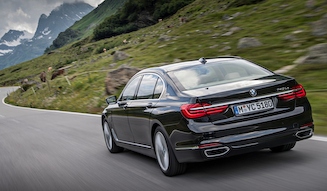
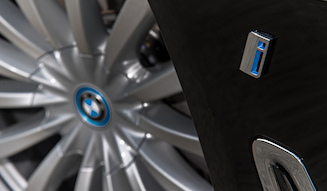
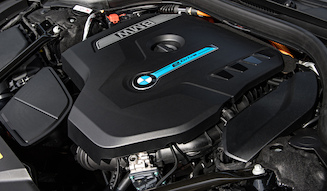
The 740e iPerformance powertrain combines a 2.0-liter inline 4-cylinder turbo engine, producing a maximum output of 258 ps and a maximum torque of 400 Nm – a first for the 7 Series – with an electric motor delivering 113 ps and 250 Nm, and an 8-speed automatic transmission, driving either the rear or all wheels.
As is common with plug-in hybrid vehicles of this type, multiple driving modes are available. In addition to the standard "AUTO eDrive" for hybrid driving, there's "MAX eDrive" for electric-only driving up to 140 km/h and for a range of up to 48 km, "BATTERY CONTROL" for charging the battery while driving, and "SAVE BATTERY" to minimize battery usage. These modes can be selected manually.
That's not all. The center console also features a "Driving Experience Control switch," allowing drivers to select from the familiar "SPORT," "COMFORT," and "ECO PRO" modes, as well as an "ADAPTIVE" mode that adjusts to the driver's patterns. With so many options, it can feel a bit complex, but—.
BMW 740e iPerformance | BMW 740e iPerformance
Test Drive the 7 Series Plug-in Hybrid, the 740e iPerformance (2)
No Complaints with the 2-liter 4-cylinder
The test car was the long-wheelbase, all-wheel-drive "740Le xDrive iPerformance." In the default "AUTO eDrive" mode, its power performance is more than adequate. There are no complaints about the sheer torque, and the electric motor's assistance is so responsive that it even imparts a sense of agility.
Regarding the feel of the 4-cylinder engine, while it felt slightly uncharacteristic of a 7 Series initially, its low overall volume and the car's quietness meant that its presence gradually faded from awareness. Whether forgetting the engine's presence is a positive for a BMW is debatable.
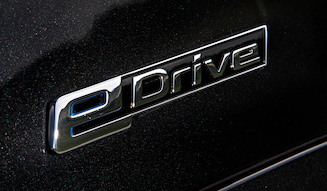
In this mode, the engine automatically shuts off when no longer needed and switches to electric motor operation. In city driving, you'll mostly be in this mode, and at speeds around 30 km/h, there's no sense of inadequacy. If you press the accelerator harder, the engine will restart automatically.
Of course, you can manually set it to "MAX eDrive" to run solely on the electric motor. In this mode, if the battery charge is sufficient, you can reach speeds of up to 140 km/h, though this is more of a "can do if you try" situation. The acceleration is certainly not sharp. If you kick down, the engine will engage automatically, but when you've manually selected "MAX eDrive," you'd prefer the engine to remain off.
BMW 740e iPerformance | BMW 740e iPerformance
Test Drive the 7 Series Plug-in Hybrid, the 740e iPerformance (3)
Hardware Excellence
The handling is also well-balanced. Despite being among the heaviest in the 7 Series lineup, the car's agility still feels remarkably nimble.
The "Carbon Core" body, which utilizes CFRP even in its structural components, undoubtedly contributes significantly to this. Furthermore, the 740e iPerformance has a smaller fuel tank, relocated to the rear from its usual position under the rear seats, to accommodate the heavy lithium-ion battery pack beneath the rear seats. This packaging, resulting in a low center of gravity and weight concentrated towards the vehicle's center, greatly enhances both driving dynamics and comfort.
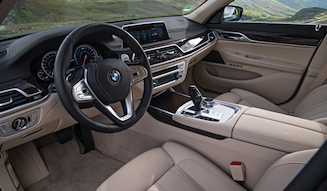
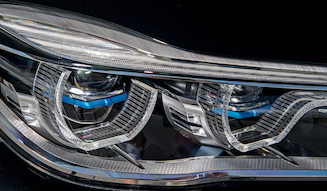
The benefits of this layout extend to the luggage space as well. With a capacity of 420 liters, the floor is low and flat, and there's ample depth.
While the 740e iPerformance is a well-conceived and highly refined piece of hardware, one might wonder about its target audience. It's difficult to imagine owners of the 7 Series frequently connecting to public charging stations in urban areas. Similarly, installing a charger at home for a mere 40-odd kilometers of electric-only range seems questionable. However, the fuel efficiency of a plug-in hybrid that is not externally charged is far from remarkable.
Therefore, potential primary users might be existing BMW owners who already have vehicles like the"i8"or"i3"and have charging facilities at home, or individuals who are drawn to new technologies but cannot yet opt for a pure EV due to their usage environment. This is a high-efficiency large-class saloon built with battery and electric drive technology born from BMW i, and a body utilizing CFRP technology pioneered by BMW i. It will be interesting to see if BMW's goal of selling the highest number of units in Japan, after China and the US, comes to fruition.

BMW 740e iPerformance
Body Dimensions | Length 5,098 × Width 1,902 × Height 1,467 mm
Wheelbase | 3,070 mm
Tread Front/Rear | 1,617 × 1,646 mm
Vehicle Weight | 1,900 kg
Engine | 1,998cc Inline 4-cylinder DOHC Turbo
Maximum Engine Output | 190 kW (258 ps) / 5,000-6,500 rpm
Maximum Engine Torque | 400 Nm / 1,550-4,400 rpm
Maximum Motor Output | 83 kW (113 ps) / 3,170 rpm
Maximum Motor Torque | 250 Nm / 0-3,170 rpm
Integrated System Maximum Output | 240 kW (326 ps)
Integrated System Maximum Torque | 500 Nm
Drive Battery | 9.2 kWh Lithium-ion
Transmission | 8-speed AT (Steptronic)
Drivetrain | FR
Minimum Turning Radius | 6.15 meters
Trunk Capacity | 420 liters
Brakes Front/Rear | Ventilated Disc / Ventilated Disc
Tires Front/Rear | 225/60R17
0-100 km/h Acceleration | 5.4 seconds
Maximum Speed | 250 km/h
Maximum Speed (Motor Only) | 140 km/h
Fuel Economy (EU Hybrid Measurement) | 2.0 ℓ/100km (approx. 50 km/ℓ)
CO2 Emissions | 45 g/km
Power Consumption | 12.5 kWh/100km
Maximum Range (Motor Only) | 48 km
BMW 740Le iPerformance
Body Dimensions | Length 5,238 × Width 1,902 × Height 1,479 mm
Wheelbase | 3,210 mm
Tread Front/Rear | 1,617 × 1,646 mm
Vehicle Weight | 1,940 kg
Engine | 1,998cc Inline 4-cylinder DOHC Turbo
Maximum Engine Output | 190 kW (258 ps) / 5,000-6,500 rpm
Maximum Engine Torque | 400 Nm / 1,550-4,400 rpm
Maximum Motor Output | 83 kW (113 ps) / 3,170 rpm
Maximum Motor Torque | 250 Nm / 0-3,170 rpm
Integrated System Maximum Output | 240 kW (326 ps)
Integrated System Maximum Torque | 500 Nm
Drive Battery | 9.2 kWh Lithium-ion
Transmission | 8-speed AT (Steptronic)
Drivetrain | FR
Minimum Turning Radius | 6.4 meters
Trunk Capacity | 420 liters
Brakes Front/Rear | Ventilated Disc / Ventilated Disc
Tires Front/Rear | 225/60R17
0-100 km/h Acceleration | 5.5 seconds
Maximum Speed | 250 km/h
Maximum Speed (Motor Only) | 140 km/h
Fuel Economy (EU Hybrid Measurement) | 2.0 ℓ/100km (approx. 50 km/ℓ)
CO2 Emissions | 45 g/km
Power Consumption | 12.6 kWh/100km
Maximum Range (Motor Only) | 48 km
BMW 740Le xDrive iPerformance
Body Dimensions | Length 5,238 × Width 1,902 × Height 1,479 mm
Wheelbase | 3,210 mm
Tread Front/Rear | 1,617 × 1,646 mm
Vehicle Weight | 2,000 kg
Engine | 1,998cc Inline 4-cylinder DOHC Turbo
Maximum Engine Output | 190 kW (258 ps) / 5,000-6,500 rpm
Maximum Engine Torque | 400 Nm / 1,550-4,400 rpm
Maximum Motor Output | 83 kW (113 ps) / 3,170 rpm
Maximum Motor Torque | 250 Nm / 0-3,170 rpm
Integrated System Maximum Output | 240 kW (326 ps)
Integrated System Maximum Torque | 500 Nm
Drive Battery | 9.2 kWh Lithium-ion
Transmission | 8-speed AT (Steptronic)
Drivetrain | 4WD
Minimum Turning Radius | 6.45 meters
Trunk Capacity | 420 liters
Brakes Front/Rear | Ventilated Disc / Ventilated Disc
Tires Front/Rear | 225/60R17
0-100 km/h Acceleration | 5.3 seconds
Maximum Speed | 250 km/h
Maximum Speed (Motor Only) | 140 km/h
Fuel Economy (EU Hybrid Measurement) | 2.1 ℓ/100km (approx. 47.6 km/ℓ)
CO2 Emissions | 49 g/km
Power Consumption | 13.2 kWh/100km
Maximum Range (Motor Only) | 45 km
*All specifications above are for the German market model.