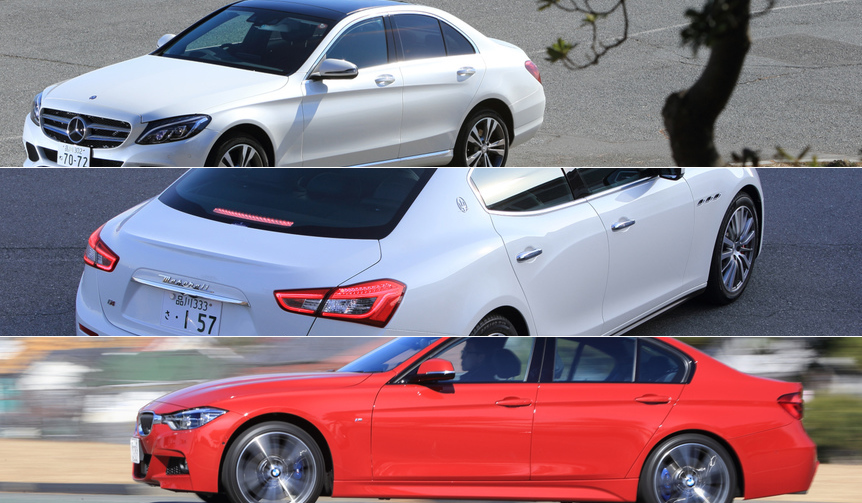
Why not? Why must we drive sedans?
BMW 340i
Mercedes-Benz C350e
Maserati Ghibli S Q4
Why not? Why must we drive sedans?
Amidst the ever-expanding lineup of imported cars, Fumio Ogawa proposes, "Let's make choices that suit our tastes" in this "Why not?" series. The second installment focuses on sedans, which, despite their conventional form, offer a diverse range of personalities, from eco-friendly to sporty and luxurious.
Why not? Why must we drive sports cars?
Text by Fumio OgawaPhotographs by Masayuki Arakawa
A Sedan That's Almost a Sports Car
Why not the Audi A4 2.0 TFSI quattro?—BMW 340i
Silky Six. This is how BMW's inline-six engines were once described. They were said to have a smooth running character, evoking the feel of silk. Sedans are typically praised for their interior space and ride comfort, yet the engine is considered the most important element. Are there any other car manufacturers like this?
When you drive the new BMW 340i"340i," you immediately realize the "tradition" is alive and well. The 3-liter inline-six engine is newly developed, and with the addition of a turbocharger, its power is 20 horsepower greater than the previous model (335i). At the same time, fuel efficiency has also been a key focus.
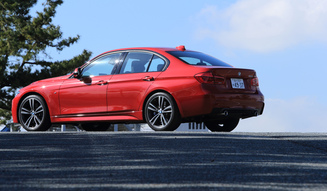
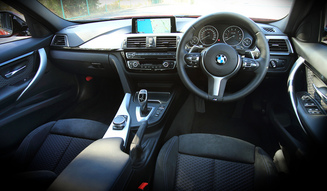
The BMW 3 Series now even features a 3-cylinder engine (in Europe). This is to pursue better fuel economy in response to the European Commission's CO2 regulations. While I haven't experienced this particular model, the 2-liter 4-cylinder version is also well-executed. Its ample power perfectly matches its sporty handling character.
For those who are considering a 3 Series anyway, I recommend the BMW 340i. As mentioned earlier, the 3 Series' appeal lies in its ability to skillfully balance sportiness, such as its sharp handling in corners, with comfort, and the excellence of the six-cylinder engine is overwhelming.
There's a saying in automotive journalism that "the car is the engine," a phrase that seemed to have faded into obscurity amidst the recent trend of downsizing. However, the BMW 340i brought that saying back to mind after a long time. It's a rare combination that I find truly moving: a sedan (and a Touring station wagon) with ample rear-seat space, yet an engine that revs satisfyingly all the way to the redline without any unpleasant vibrations when you press the accelerator.
A rival as a sporty sedan is the new Audi A4 2.0 TFSI quattro"A4 2.0 TFSI quattro." The price is ¥5.97 million, compared to the 340i's ¥7.76 million. While it has a 4-cylinder engine and a displacement of only 2 liters, its sophisticated Miller cycle mechanism allows the engine to be flexible from low RPMs, and the car's responsiveness is excellent. Above all, it's a competition of prestige, with the straight-six for one and quattro for the other.
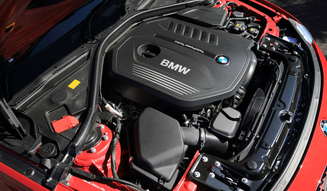
Still, if I have to say it, you should experience this straight-six while you still can. Although it has evolved, the inline-six has been the engine that made BMW's name known to car enthusiasts worldwide since its first post-war installation in the "2800" in 1968. Even though this is a new development, we don't know how long we'll be able to enjoy this engine in the future. Perhaps now is the best time.
Why not? Why must we drive sports cars?
BMW 340i
Mercedes-Benz C350e
Maserati Ghibli S Q4
Why not? Why must we drive sedans? (2)
A Hybrid That Can Also Be Driven Sportily
Why not the Lexus GS450h?—Mercedes-Benz C 350 e
The abundance of choices leads to a sense of luxury. If you subscribe to this idea, then recent Mercedes-Benz models are a prime example. Not only is the range of body styles extensive, but the lineup of powertrains is also robust.
In the realm of gasoline engines, Mercedes also excels. Not only does it offer powerful Mercedes-AMG models, but it has also recently introduced AMG Line variants with sporty suspension and other features. On the other hand, its lineup of environmentally friendly vehicles is also well-equipped.
One is diesel. As readers are likely aware, many models are available with diesel engines. In addition, the lineup of hybrid models has been steadily increasing since 2015. Currently, there are three models sold in Japan. Among them, the plug-in hybrid model, designated with an "e" at the end,C 350 e, was added in December 2015, following the earlier model, the S 550 e."
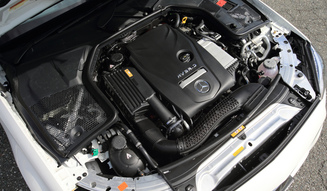

The engine is a 2-liter 4-cylinder. It is combined with an electric motor that can be charged externally, and it is claimed to have a maximum electric-only range of 30 km. The engine starts when the battery charge drops below a specified level.
The Mercedes-Benz C 350 e's strengths include its excellent fuel economy of 17.2 km/L (JC08 mode). And there's another advantage: the hybrid mode, where the engine and electric motor complement each other. Like a well-boosted engine, the electric motor's torque is added to the engine's torque.
When driven normally, the impression is of a surprisingly comfortable sedan, thanks to the suspension that softly absorbs road imperfections and the high level of quietness (especially in EV mode). On the other hand, when using Dynamic mode, for example, when cornering tightly, even if the engine's RPM drops and torque becomes weak, the electric motor, which generates a high torque of 340 Nm from the start, compensates for it, resulting in surprisingly quick acceleration out of the corner.
The Mercedes-Benz's rigid chassis and excellent handling performance are fully demonstrated when cornering through tight turns. Combined with the sensitive acceleration that responds to subtle movements of the accelerator pedal, the Mercedes-Benz C 350 e presents itself as a well-executed sporty sedan.
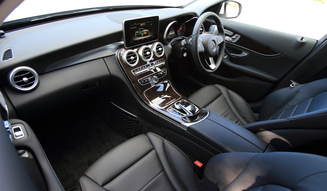
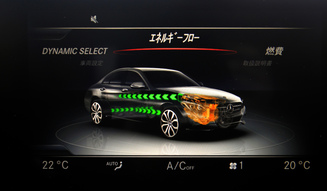
Searching for a rival, the Lexus "GS450h" comes to mind, which is equipped with a hybrid system (though not plug-in). While the GS450h is slightly larger at 4,880mm compared to the C 350 e's 4,690mm, its price is closer. The GS450h starts at ¥7.428 million, whereas the C 350 e is ¥7.07 million. The Lexus's fuel economy is 18.2 km/L (JC08 mode), making it a close competitor.
In terms of driving quality, the GS450h offers an F Sport model. While it may not reach the level of the "GS F" which is very fast even on a circuit, it's a model with impressive, well-tuned suspension. However, if you consider the Mercedes-Benz to be a quiet and unassuming sedan, your perception will change when you drive it at higher speeds.
In corners, it excels in its responsiveness when you turn the steering wheel. Even on tight curves, the car's attitude does not become unsettled by accelerator input. Its stable speed is such that many car manufacturers still say they "take it as a model." In fact, it is also a first-class enjoyable sedan.
BMW 340i
Mercedes-Benz C350e
Maserati Ghibli S Q4
Why not? Why must we drive sedans? (3)
A Large Sedan That Makes Life More Enjoyable
Why not the Mercedes S-Class?—Maserati Ghibli S Q4
If this car disappeared, the world would become a duller place. In the market for large sedans dominated by German cars (with Lexus also present), Maserati stands out as the sole Latin contender. The "Ghibli" has undergone annual improvements and may be at its best since its announcement in 2013.
Its origins lie in its shared platform with Maserati's larger sedan, the "Quattroporte", making it a rear-wheel-drive sedan. In Japan, the engine is a 3-liter V6, and recently, a diesel model with the same 3-liter V6 has been added to the lineup alongside the gasoline version.
I mentioned rear-wheel drive, but this Q4 model is equipped with an on-demand all-wheel-drive system that distributes torque to the front wheels as needed, depending on road conditions. Its greatest advantage is its ability to handle packed snow with ease (provided it's equipped with winter tires).
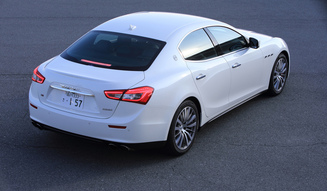
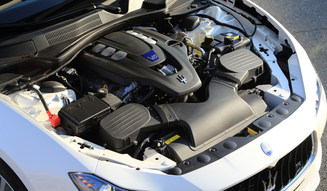
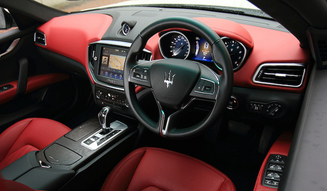
Furthermore, the Ghibli's interior is completely different from German cars, and it understands the existence of people who appreciate concepts like splendor, luxury, and even a bit of excess. In addition to firm leather seats, an option jointly developed with Ermenegildo Zegna, featuring silk material on the center of the seat and backrest, became available from 2015. This is also an option not found in German or Japanese cars.
The driving feel, in a word, conveys the developers' intention to make it enjoyable. The way the accelerator pedal is pressed and the steering wheel is turned shows a focus on fine control. The objective is not simply to corner quickly or to drive at high speeds. If you're going to reach 100 km/h, even the enjoyment of each 1 km/h acceleration leading up to it is valued.
Shortly after its release, the Ghibli had a slight issue with its straight-line stability. The steering response around the neutral position was not direct, making it feel somewhat unsettled when driving straight. Conversely, when you turn the steering wheel, the car changes direction without a moment's delay. It reminded me of the suspension geometry of Alfa Romeo cars from a bygone era.
However, the latest Ghibli has none of the unsettled feeling when driving straight. Even with a light grip on the slightly thicker steering wheel, it moves forward like an arrow, to use a well-worn expression. What the Ghibli lacks compared to German and Japanese cars are the latest safety features, including autonomous driving. Since it's a sports sedan without Ferrari or Porsche badges, one might think that's acceptable, but it's hard to say.
The pinnacle of large sedans packed with safety features is arguably the Mercedes-Benz "S-Class". The Ghibli, at 4,970mm in length, is shorter than the S-Class, and while the width difference is 150mm, it can still be considered a big sedan. While the S-Class can also be driven very sportily if desired, compared to the Ghibli, the S-Class seems to have been developed with the pursuit of functional utility as its primary goal.
The Ghibli, however, is more emotional. It seems to convey the message that "since it's a car, enjoying the drive is paramount." When you drive the Ghibli, you can agree with this sentiment. It's fun. Without cars like this, life would be rather bland. It faithfully upholds its reason for existence as an Italian car. That's truly gratifying.