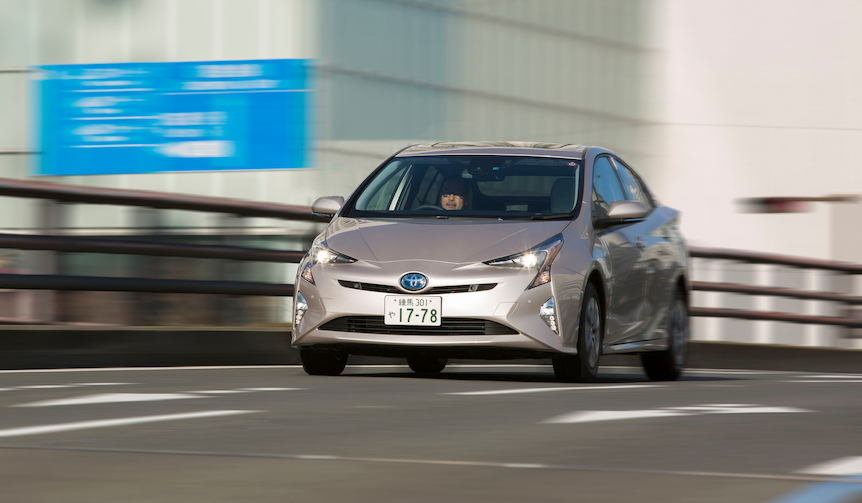
Test Drive the New Prius | TOYOTA
Toyota Prius | TOYOTA PRIUS
Test Drive: The New Prius
A Car Worth Driving for the Joy of It
The new Prius debuted on December 9th last year. This fourth-generation model represents a significant evolution, featuring Toyota's new TNGA platform and the first-ever adoption of lithium-ion batteries. Motor journalist Fumio Ogawa took it for a spin.
Text by Fumio OgawaPhotographs by Takaaki Tsukahara
The Focus of New Generation Development
To get straight to the point, for the first time, I wanted a Prius.The fourth-generation Prius, released in December 2015is so well-executed that it impresses upon test driving.
The new Prius, without becoming a plug-in hybrid, continues to pair a 1.8-liter engine with an electric motor. The engine produces a maximum output of 72kW (98ps) and a maximum torque of 142Nm, combined with a motor delivering 163Nm of maximum torque.
The engine features changes to the intake port shape and modifications to the EGR distribution path in the intake manifold for improved combustion efficiency. This achieves a maximum thermal efficiency of 40 percent. Combined with a further enhanced hybrid system, this results in fuel economy of up to 40.8 km/l (JC08 mode).
While lithium-ion batteries are available for some models, they are equivalent in performance to the conventionally offered nickel-metal hydride batteries.
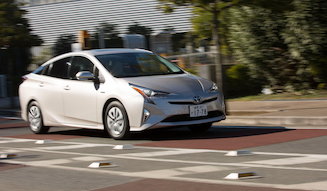
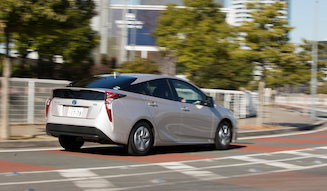
The improvement in fuel economy continues the Prius's established lineage. On the other hand, there is a completely new, noteworthy feature: the adoption of Toyota's new platform, called TNGA, in the fourth generation.
Why is the new platform the most significant feature of the new Prius? It's something I'd really like to say, 'You'll understand when you drive it.' The development of this new-generation platform (the fundamental structure of the car), named 'Toyota New Global Architecture,' has resulted in a superb improvement in handling, creating a car that is genuinely enjoyable to drive.
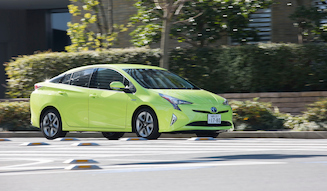
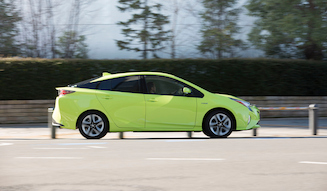
Switching from a conventional Prius to the new model is surprisingly striking in its differences. The driving position is remarkably natural.Third-generation PriusIn the previous generation, the steering wheel felt somewhat reclined, but in the new model, once settled in the seat, the steering wheel is at a natural angle within easy reach.
'We analyzed that the weaknesses of the conventional Prius lay in driving enjoyment and ride comfort. Overcoming these was one of the key objectives of our new-generation development,' explained a development engineer. The new Prius, which feels new (or rather, comfortable) just by sitting in it, has been transformed into something entirely different.
Toyota Prius | TOYOTA PRIUS
Test Drive: The New Prius
A Car Worth Driving for the Joy of It (2)
What TNGA Brings
'With TNGA (Toyota New Global Architecture), we aimed for a low center of gravity and high rigidity,' says a development representative. The new Prius reportedly underwent thorough revisions to its center of gravity height.
The previous model had a relatively high seating position, which meant that lowering the seat position resulted in a posture where one had to embrace the steering wheel (like in a truck). Of course, the higher seating position was popular among older drivers. However, the new model seems to have deliberately moved away from this for the sake of driving enjoyment.
'We received feedback from users that the slightly lower seat made ingress and egress less convenient,' the representative admits with a wry smile, but I, for one, welcome it. I'm pleased that the sense of oppression from the front seats looming in front of me when sitting in the rear has been reduced. Furthermore, the angle of the steering wheel, as well as the accelerator and brake pedals, feel incredibly natural. This aligns perfectly with the car's handling, which is sporty with good acceleration and suppressed body roll.
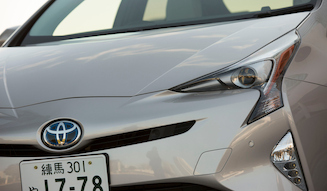
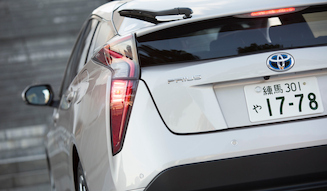
'The ultimate goal of TNGA is to establish a unified taste across all Toyota vehicles. Previously, the ideas of the Chief Engineer or the head of the project were strongly reflected in each vehicle, but the TNGA project began with the aim of standardizing that direction.'
Behind the scenes, the TNGA team (apparently divided into front-wheel drive and rear-wheel drive groups) created vehicles with a handling feel they deemed ideal and had the in-house Chief Engineers test drive them. The new Prius emerged from this process. Chief Engineer Koji Toyoshima, who oversaw the overall development, told me, 'That direction felt perfectly right.'
Vehicles developed this way are, in a word, agile. At the time of writing this article, the world is experiencing record-low oil prices. When regular gasoline is about to drop below 100 yen per liter, buying a hybrid purely for fuel efficiency might not easily recoup the cost. Some say it takes 80,000 km of driving to break even. However, the new Prius, priced around 3 million yen, is a car that makes sense to own for the sheer pleasure of driving it. It's a car with a completely different value proposition than before.
Toyota Prius | TOYOTA PRIUS
Test Drive: The New Prius
A Car Worth Driving for the Joy of It (3)
Hoping for a Sports Model
Driving the new Prius, the start is smooth. As acceleration continues, it transitions seamlessly from EV mode to engine mode, but the engine speed remains low, offering a driving experience with ample perceived power. The car's response when turning the steering wheel is natural and satisfying. It's so good that one might wish for a sports model in the future.
The tires are also newly developed and currently exclusive to the new Prius. Their characteristic is said to be the realization of 'security,' 'naturalness,' and 'premium feel' that the developers aimed for. While the previous generation also focused on high circularity for fuel efficiency, the new tires meet new standards for contact feel and noise reduction.
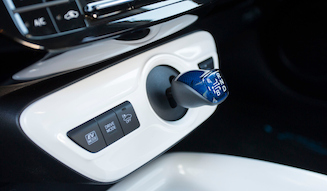
Attention has also been paid to speed control through accelerator pedal input and release. When decelerating, easing off the accelerator pedal provides a deceleration feel that matches the driver's intentions. Along with the precision in reaching target speeds by pressing the accelerator, the two pedals are finely tuned for an exquisite feel. This is an unseen quality.
As the development team mentioned their focus on brake feel, the deceleration experienced when pressing the brake pedal is another charm of the new Prius. It feels like driving a lightweight sports car. There's no servo-assistance feel to the brake pedal; the sensation of braking the naturally light vehicle is excellent. However, among the several units tested, some had a slightly rubbery feel when pressed, suggesting potential variations in quality during this early stage.
This time, I also drove the full-time 4WD model equipped with 'e-Four,' which drives the rear wheels with an electric motor. This was developed to meet the needs of users in snowy regions. The car doesn't feel particularly heavy, and its handling is natural. While there might be little reason to choose this model in non-snowy areas, it can be considered an epoch-making model in terms of expanding the Prius's world.

Toyota Prius A Premium
Body Size | Length 4,540 x Width 1,760 x Height 1,470 mm
Wheelbase | 2,700 mm
Tread Front/Rear | 1,530 / 1,540 mm
Weight | 1,380 kg
Minimum Ground Clearance | 130 mm
Engine | 1,797 cc Inline 4-cylinder DOHC
Bore x Stroke | 80.5 x 88.3 mm
Engine Max Output | 72 kW (98 ps) / 5,200 rpm
Engine Max Torque | 142 Nm (14.5 kgm) / 36,000 rpm
Front Motor | AC Synchronous Motor
Motor Max Output | 53 kW (72 ps)
Motor Torque | 163 Nm (16.6 kgm)
Battery | Lithium-ion battery (Nickel-metal hydride battery) 56 cells / 3.6 Ah
Transmission | Electric continuously variable transmission
Drivetrain | FF
Tires Front/Rear | 195/65R15
Suspension Front/Rear | Strut / Double Wishbone
Brakes Front/Rear | Ventilated Disc / Disc
Fuel Economy (JC08 mode) | 37.2 km/ℓ
CO2 Emissions (JC08 mode) | 62 g/km
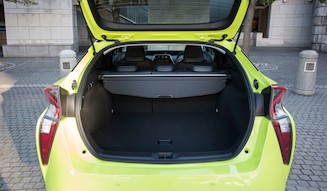
Trunk Capacity | 502 ℓ
Price | ¥3,107,455
Toyota Prius A Premium Touring Selection E-Four
Body Size | Length 4,540 x Width 1,760 x Height 1,475 mm
Wheelbase | 2,700 mm
Tread Front/Rear | 1,510 / 1,520 mm
Weight | 1,460 kg
Minimum Ground Clearance | 135 mm
Engine | 1,797 cc Inline 4-cylinder DOHC
Bore x Stroke | 80.5 x 88.3 mm
Engine Max Output | 72 kW (98 ps) / 5,200 rpm
Engine Max Torque | 142 Nm (14.5 kgm) / 36,000 rpm
Front Motor | AC Synchronous Motor
Motor Max Output | 53 kW (72 ps)
Motor Torque | 163 Nm (16.6 kgm)
Rear Motor | AC Synchronous Motor
Motor Max Output | 5.3 kW (7.2 ps)
Motor Torque | 55 Nm (5.6 kgm)
Battery | Lithium-ion battery [Nickel-metal hydride battery] 56 [28] cells / 3.6 [6.5] Ah
Transmission | Electric continuously variable transmission
Drivetrain | 4WD
Tires Front/Rear | 215/45R17
Suspension Front/Rear | Strut / Double Wishbone
Brakes Front/Rear | Ventilated Disc / Disc
Fuel Economy (JC08 mode) | 34.0 km/ℓ
CO2 Emissions (JC08 mode) | 68 g/km
Trunk Capacity | 502 ℓ
Price | ¥3,394,145
Toyota Motor Corporation Customer Service Center
0800-700-7700