Test drive of the new Prius prototype | TOYOTA
Toyota Prius
Test Drive: The New Prius Prototype
A Major Leap in Performance and Comfort
The new Prius, now in its fourth generation, represents a complete model change. Ahead of its December 9th debut, a prototype test drive was held at Fuji Speedway in November. Here is a report from automotive journalist Fumio Ogawa, who participated in the event.
Text by OGAWA Fumio
A Completely New Chassis
It’s safe to say the Toyota Prius is one of the most anticipated cars. Throughout its history, it has garnered significant attention even before its release. The current focus is on the fourth-generation Prius, which was also showcased at the 2015 Tokyo Motor Show.The model released on December 9thHowever, a prototype test drive was held in November, preceding the official launch.
At the end of November, Paris, which had recently suffered tragic terrorist attacks by ISIS, hosted the Conference of the Parties (COP) to the UNFCCC. Toyota Motor Corporation aims to increase the proportion of hybrid and fuel cell vehicles to reduce CO2 emissions from new cars by 90% by 2050 compared to 2010 levels. The unveiling of the new Prius prototype seemed to coincide with COP21 in Paris.
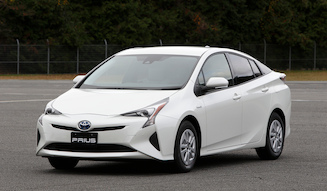
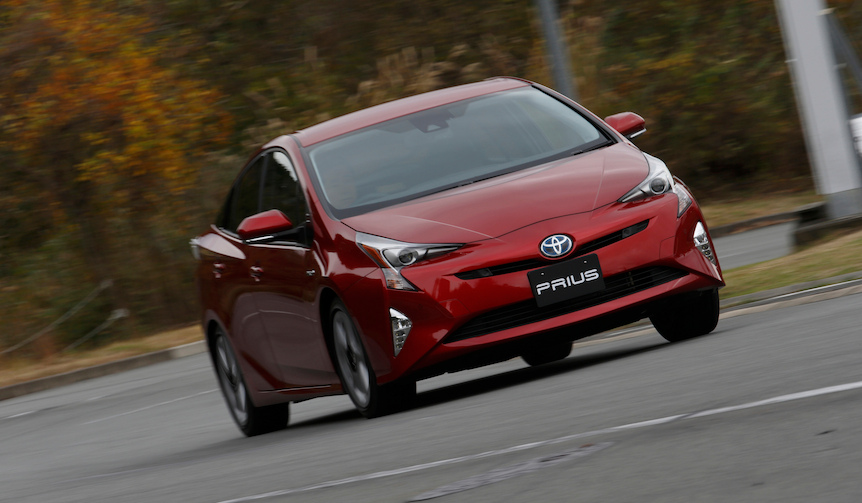
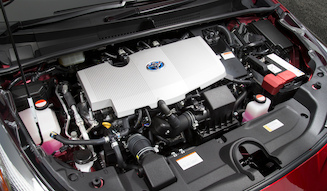
It’s not just fuel-conscious users who are drawn to the new Prius; journalists are too. While the powertrain retains the familiar 1.8-liter Atkinson cycle engine paired with an electric motor—Toyota’s unique series-parallel hybrid system driving the front wheels—Toyota representatives proudly state, "We've significantly improved the driving dynamics." Beyond its sleek new exterior, reminiscent of the fuel cell vehicle "MIRAI," the car's substantial advancements are being emphasized.MIRAIThe content itself has also progressed significantly.
It might be too early to call it the "new Prius," so for now, let's refer to it as the Prius Prototype (hereafter, "prototype"). Compared to the previous model, the most significant change is the chassis. It's developed as the first installment of Toyota's new-generation platform strategy, which they call "TNGA" (Toyota New Global Architecture).
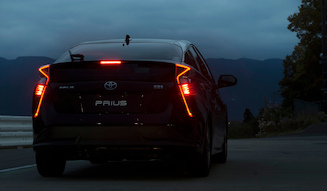
According to Toyota's internal measurements, the body dimensions are 4,540mm in length, 1,760mm in width, and 1,470mm in height. Compared to the current model, it's 60mm longer, 15mm wider, and 20mm lower. The wheelbase remains the same at 2,700mm. The aerodynamic drag coefficient (Cd) is a low 0.24.
The lower center of gravity is particularly emphasized. The development team identified "driving enjoyment" as a weakness of previous models. The new Prius aims for improved handling thanks to its new chassis.
This prototype is a Prius, yet it doesn't feel like one. It's beyond what one could imagine from the previous model.
Toyota Prius
Test Drive: The New Prius Prototype
A Major Leap in Performance and Comfort (2)
A Model with Lithium-Ion Batteries Also Appears
The prototype will be offered in two main configurations. One uses the familiar nickel-metal hydride batteries, while the other features a more compact and high-performance lithium-ion battery. There was no mention of a model change for the Prius α, which offers larger cargo space, but it is expected to be added later.
With the new chassis, the battery placement has been reconsidered, and technological advancements have led to a more compact battery. We confirmed that the lithium-ion battery model is not necessarily more powerful; the output is set to be the same for both models.
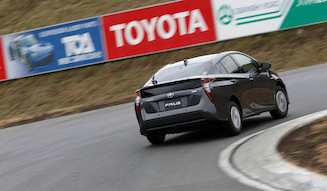
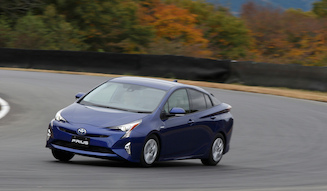
Beyond the exterior, the interior strongly conveys a sense of newness. Depending on the specifications, the cool gray interior with white seats, for example, is quite appealing. The dashboard, with its smooth synthetic resin finish, offers a modern and interesting aesthetic. While controls like the selector lever are familiar from previous models, and the meter display has been redesigned, the core concept remains, so there's no sense of disorientation. Overall, it feels modern and youthful, which is a welcome change.
Most striking, however, was the driving feel. Although the test drive was limited to a small circuit and surrounding roads, and it was a prototype, the experience was vastly different from before. The quick acceleration and sharp handling, which could be described as 'crisp' in English, completely redefined my perception of the Prius.
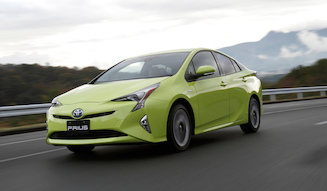
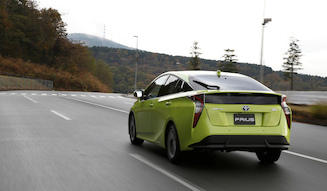
The driving position itself is a significant departure from the current model. The third generation features a unique, reclined steering wheel position, but the prototype adopts a more conventional, natural, and sporty posture, allowing you to extend your legs slightly forward. This is a superb improvement, assuming the goal is to enhance driving enjoyment.
The handling is precise, and the ability to trace lines is exceptional. During the test drive on Fuji Speedway's short circuit, the brake control, cornering accuracy, and acceleration out of turns were all impressive. The potential of the new-generation platform seems high. It gives the impression that a hybrid sports car might even be on the horizon.
The surprises with the prototype continued.
Toyota Prius
Test Drive: The New Prius Prototype
A Major Leap in Performance and Comfort (3)
Comfort Also Significantly Improved
As expected, Prius owners travel far and wide. In overseas markets, particularly Germany, the emphasis when discussing hybrid performance is often on commuting economy within urban areas. While the situation differs fundamentally from Europe, where urban fuel efficiency (CO2 emissions per kilometer) is prioritized, the Prius in Japan is no less impressive. The prototype boasts a published fuel economy of 40 km/liter.
While the fuel efficiency is attractive, another aspect that impressed us with the prototype was its high level of comfort. Although we cannot make definitive statements based on a limited test drive, the noise reduction from wind and road noise at higher speeds has significantly improved. The vibration absorption of the seats, effectively utilizing foamed materials, likely contributes, as we experienced no noticeable vibrations, even through the soles of our feet.
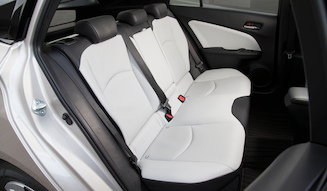
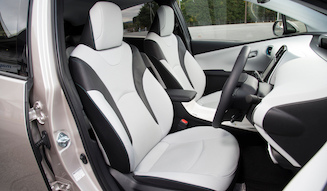
A notable improvement in comfort experienced with the prototype is the enhanced rear-seat space. In the current model, perhaps due to the focus on a lower center of gravity, the seating position is very low. In fact, it's so low that the front seats feel like a wall, making the rear less comfortable. In contrast, the prototype's hip point is raised, allowing for a much more natural and comfortable seating position. This is likely a testament to the advanced design of the new chassis. It suggests that sporty handling performance can be achieved without relying on occupants as ballast.
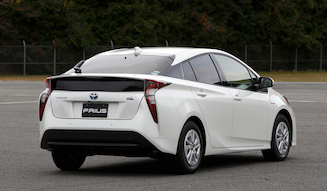
Opinions on the styling may be divided. Personally, I appreciate the continuation of the design concept, "recognizable as a Prius by its silhouette." However, the treatment of the rear, perhaps to emphasize its eco-car family status (speculation), feels overly connected to the MIRAI. I personally find the stacked design of the MIRAI's rear unconvincing, and similarly, I feel this aspect of the Prius, while aiming for perfection, falls slightly short.
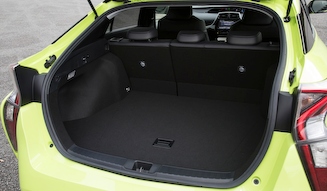
The advanced safety features also appear quite comprehensive, suggesting this car will be the culmination of the Prius lineage across three generations. Current Prius owners on the road seem to enjoy spirited driving, perhaps taking full advantage of the agile acceleration provided by the powerful electric motor. The next generation promises to be even more engaging to drive. Its enthusiastic reception is already evident.