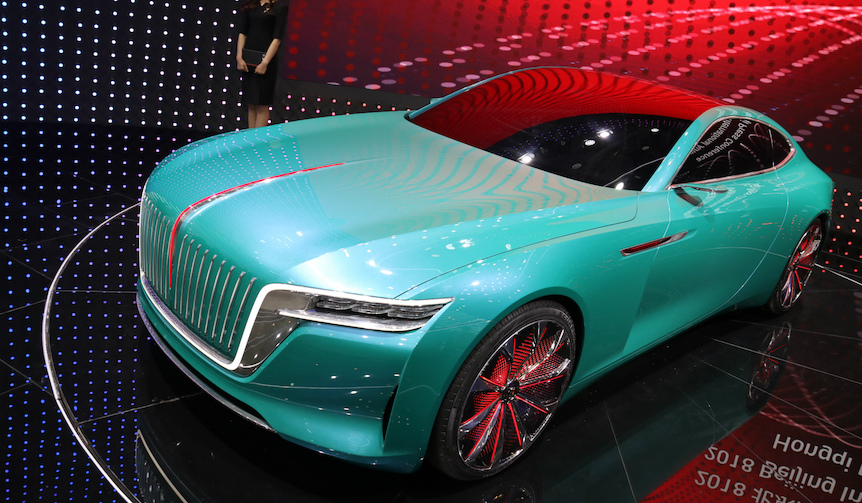
Where the East Became Turin | Auto China 2018
Beijing International Automotive Exhibition 2018 | Beijing Motor Show 2018
Concept Cars
Where the East Became Turin
Held for ten days starting April 25th this year, the Beijing Motor Show unveiled a remarkable 64 concept cars. Considering the sharp decline in such numbers at shows in Europe and North America in recent years, this alone signals an exciting motor show. Chinese manufacturers, in particular, are notable for their multifaceted approach in presenting one concept car after another. Akio Oya reports on the buzz of the venue, reminiscent of the Turin Show of yesteryear.
Photographs & Text by Akio Lorenzo OYA
German Brands Also Showcase World-Premiere Concept Cars
The Beijing Motor Show was held from April 25 to May 4, 2018.
This was the 15th iteration of the show. The exhibition area of 220,000 square meters and the number of participating countries/regions, 14, remained the same as the previous show two years ago.
However, the number of exhibitors decreased from approximately 1,600 to 1,200, and the number of exhibited vehicles also fell from 1,179 to 1,022.
Still, the sheer number of concept cars was astonishing, increasing from 46 at the previous show to 64. This stands in stark contrast to European and North American shows, where numbers have plummeted in recent years.
Two premium brands from Germany presented concept cars making their world debut.
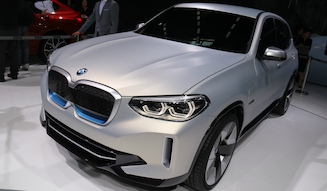
BMW exhibited the "Concept iX3." This is the first EV from BMW Group's core brand.
The production model, the new X3, which was recently introduced in Japan,X3serves as the base, while integrating the motor, transmission, and power electronics into a single unit. BMW plans to apply this method, which ensures flexibility in design and production, to other models as well.
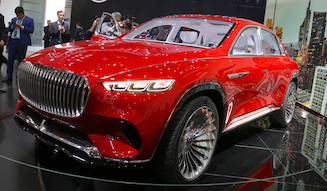
Meanwhile, the Mercedes-Benz "Vision Mercedes-Maybach Ultimate Luxury" proposes the ultimate SUV.
With four motors powering its AWD system, it achieves a maximum output of 550 kW (750 hp). The design is a "German-Chinese collaboration," with the exterior handled by a Chinese studio and the interior by a German one.
The adoption of a three-box style, despite being an SUV, reflects consideration for the local market, where sedans still hold strong appeal.
Beijing International Automotive Exhibition 2018 | Beijing Motor Show 2018
Concept Cars
Where the East Became Turin (Part 2)
Chinese Brands Focus on Concept Cars
Local Chinese brands are particularly enthusiastic about concept cars.
Current trends include the "floating roof" effect, achieved by filling all or most of the C-pillar with a black panel to make the roof appear to hover, and displays embedded in place of the radiator grille, which has become obsolete with electrification.
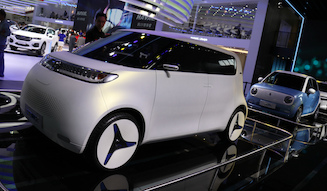
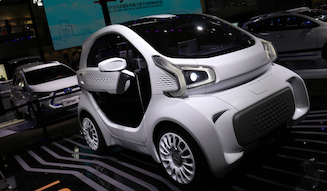
JAC (Anhui Jianghuai Automobile) also exhibited a concept EV produced using a 3D printer, showcasing a bold technological approach.
Several concept cars also served as image leaders for new sub-brands launched by established manufacturers.
For example, "Ocean" is a new brand from Changan Automobile, and "Jetour" is from Chery Automobile.
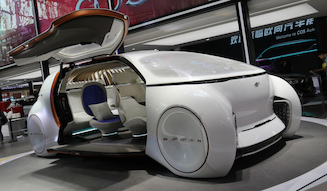
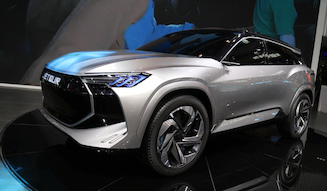
Observing this rush of concept cars brought to mind the motor shows in Turin, Italy, during the 1970s and 80s.
At that time, carrozzerias like Pininfarina, Bertone, and Michelotti were capturing global attention with their successive avant-garde concept car releases.
The scene at this year's Beijing show was truly like the "Turin of the East."
Beijing International Automotive Exhibition 2018 | Beijing Motor Show 2018
Concept Cars
Where the East Became Turin (Part 3)
Can It Truly Be "Turin"?
This impression is not mine alone. In recent years, Turin's carrozzerias have indeed been collaborating deeply with Chinese brands in various ways.
The day after my arrival, while having breakfast at a hotel in Beijing, I noticed several individuals from carrozzeria companies.
Speaking with an executive from Pininfarina, a leading car design house in Turin, at the venue, I learned that a remarkable 35 percent of their current business pertains to Chinese clients.
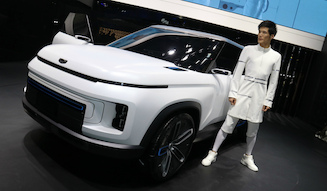
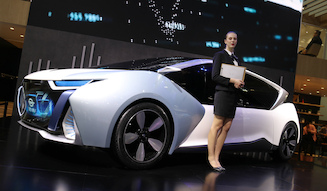
The president of another car design house candidly told me, "There's no work left in Turin anymore. Chinese business is the top priority." He added with a wry smile, "It's uncertain if I can even make it to the Concorso d'Eleganza Villa d'Este in Como (held in May)."
The unfortunate aspect of China's concept cars is that, currently, none seem poised to leave a lasting mark on automotive history like those presented at the Turin Show.
However, with strong backing from national and local governments, they are striving to realize electrification and autonomous driving ahead of the world within their vast country. While still in the conceptual stage, many concept cars incorporate 5G communication.
In just a few years, it wouldn't be surprising if concept cars destined for posterity emerge from this nation. The Chinese show, which inspires such thoughts, is the world's most exciting car exhibition.