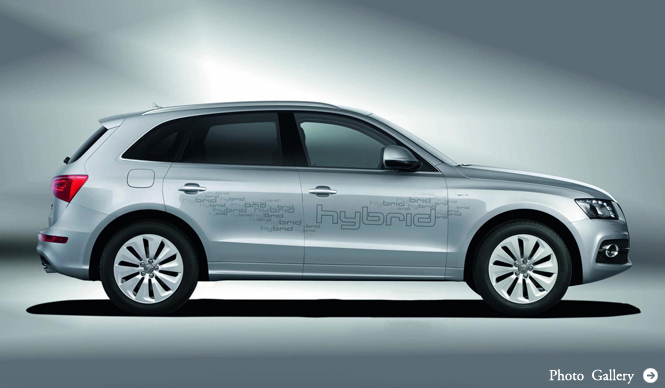
Audi Q5 hybrid quattro
Audi Q5 hybrid quattro
Introducing the Hybrid SUV with the Stance of a Sedan
Audi has begun distributing promotional videos for the "Q5 Hybrid quattro," unveiled at the Los Angeles Auto Show, which opened on November 17th.
Text by Giraffe
Top Speed of 100 km/h in Zero Emissions Mode!
The Q5 Hybrid quattro is powered by a 2.0-liter inline four-cylinder turbo "TFSI" engine producing 211ps and 350Nm of torque, combined with a motor that delivers 45ps and 211Nm. It utilizes a 12kWh lithium-ion battery, achieving a total output of 245ps and 480Nm of torque.
This allows for 0-100 km/h acceleration in 7.1 seconds and a top speed of 222 km/h. Despite its high performance, it reportedly achieves fuel economy of approximately 14.3 km/ℓ and CO2 emissions of 160g/km.
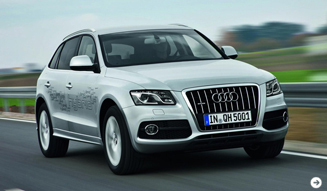
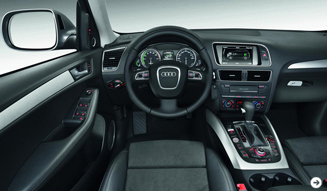
It also features the quattro all-wheel-drive system, which distributes power from the engine and motor to all four wheels, along with planned adoption of idling stop and regenerative braking. It is equipped with an EV mode that allows for motor-only driving, capable of speeds up to 100 km/h. This is 40 km/h faster than the "e-tron" hybrid model, which has been under development for some time.
The video, showcasing driving scenes and the instrumentation, can be viewed below. We encourage you to fully appreciate its driving capabilities.
BRAND HISTORY
Audi's emblem is the "Four Rings." As you may know, each ring represents one of the automotive manufacturers: Audi, DKW, Horch, and Wanderer. All were based in Saxony and were pioneers of the German automotive industry in the early 20th century. However, facing the fallout from the Great Depression after World War I, the four companies, in a bid for survival, formed Auto Union in 1932. DKW specialized in motorcycles and small cars, Wanderer in mid-sized cars, Audi in premium mid-sized cars, and Horch in luxury cars.
Following Germany's defeat in World War II, Saxony in East Germany fell under Russian occupation, and Auto Union ceased to exist. Anticipating this, the new Auto Union was established in Ingolstadt, Bavaria, in West Germany. Unlike BMW and Mercedes-Benz, Auto Union faced a challenging start without existing factories, but gradually built its strength through the production of vehicles like the DKW delivery van.
In late 1964, Auto Union came under the umbrella of Volkswagen and soon introduced new models bearing the Audi name. In 1969, it merged with NSU (known for its development of the Wankel engine), headquartered in Neckarsulm, becoming Audi NSU Auto Union. From 1985 onwards, it has continued as Audi to the present day. Technology such as quattro, dynamic performance backed by motorsport activities, elegant design, and a high-quality finish are the driving forces behind Audi's popularity.