March 20, 2015
Mercedes-Benz F800 Style | Concept Car Hinting at the Next CLS
Mercedes-Benz F800 Style
Concept Car Hints at Next-Generation CLS
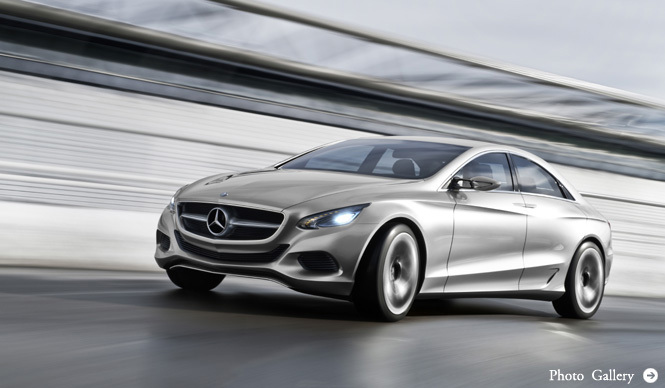
Daimler unveiled the "F800 Style" concept car at the Geneva Motor Show, offering a glimpse of the next Mercedes-Benz CLS.
By Giraffe
A New Generation Multi-Drive Platform
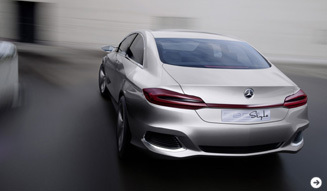
The Mercedes-Benz F800 Style, revealed at the Geneva Motor Show in March, features a futuristic exterior design with no B-pillars and sliding rear doors, suggesting significantly improved ingress and egress.
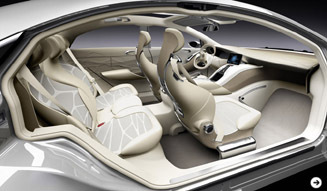
The interior is characterized by lightweight magnesium and carbon fiber seats, complemented by exquisite wood accents. This blend of advanced design and the warmth of wood is a hallmark of Mercedes craftsmanship.
Powertrain options are envisioned to include plug-in hybrid and fuel cell variants, all supported by a newly developed multi-drive platform designed for versatility.
Plug-in Hybrid Version Achieves 250 km/h Top Speed
The plug-in hybrid variant pairs a front-mounted 300 ps direct-injection V6 gasoline engine with a 109 ps electric motor, delivering a combined output of 409 ps. It utilizes the "7G-Tronic (7AT)" transmission. This powertrain is announced to achieve 0-96 km/h in 4.7 seconds and a top speed of 250 km/h (electronically limited).
Lithium-ion batteries serve as the secondary power source, enabling an electric-only range of up to 30 km. Fuel efficiency, including in EV mode, is rated at 34.48 km/l, with CO2 emissions recorded at 68 g/km.
The fuel cell version integrates a fuel cell stack at the front, with a motor and lithium-ion battery located at the rear. Hydrogen tanks are positioned beneath the floor. The motor is specified to produce a maximum output of 136 ps and 29.6 kgm of torque.
Safety features include "Distronic Plus" adaptive cruise control with traffic jam assist and "Pre-Safe 360" to prevent multi-car collisions.
The evolution of the next CLS is undoubtedly set to continue.
BRAND HISTORY
When tracing the history of the automobile, two German pioneers emerge: Gottlieb Daimler and Karl Benz. It is widely known that these two men independently developed gasoline-powered automobiles between 1885 and 1886, laying the foundation for the automotive society we know today. Although their respective companies were once seen as rivals, they joined forces to overcome the post-World War I recession, leading to the establishment of Daimler-Benz AG through their merger in 1926.
The name "Mercedes," given to their products, originated when Emil Jellinek, a Daimler customer, requested that his eldest daughter's name be used for the vehicles in exchange for taking on exclusive distribution rights outside Germany. This trademark was officially registered by Daimler in 1902.
Thus, Mercedes and subsequently Mercedes-Benz have consistently led the advancement of the automobile, actively incorporating cutting-edge technologies such as the safety passenger cell, airbags, ESP (Electronic Stability Program), and Night View, remaining at the forefront of automotive innovation.