TAG Heuer and F1: A Shared Vision Rekindled
TAG HEUER
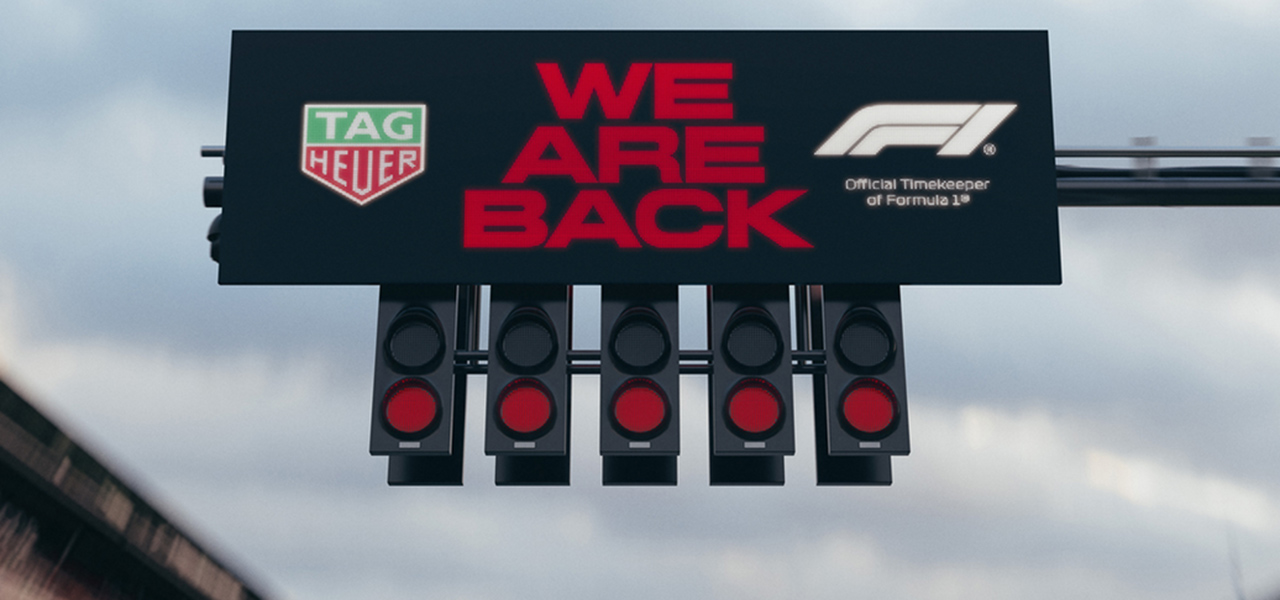
In 2025, Formula 1 (F1) will celebrate its 75th anniversary, and it has been announced that TAG Heuer will once again partner as the official timekeeper. This partnership symbolizes the long history built between F1 and TAG Heuer, and the shared passion for technology that both entities possess.
Returning as Official Timekeeper After 22 Years
TAG Heuer first adorned an F1 car with its logo in 1969 as the world's first luxury watch brand, and in 1971, it became the first to sponsor an F1 team. Through its past partnerships, TAG Heuer has achieved a remarkable record of 239 wins, 613 podium finishes, and 9,471 points in F1, establishing itself as one of the most successful brands in F1 history.
The connection between TAG Heuer and F1 has expressed shared values beyond motorsport, rooted in precision engineering, innovative technology, avant-garde material selection, and a philosophy of pursuing performance and speed.
From its inception, TAG Heuer quickly established its reputation in the watchmaking industry. In 1911, it introduced the world's first dashboard-mounted chronograph, and in 1916, it unveiled the "Micrograph," a stopwatch capable of measuring time to 1/100th of a second, setting new standards for sports timing.
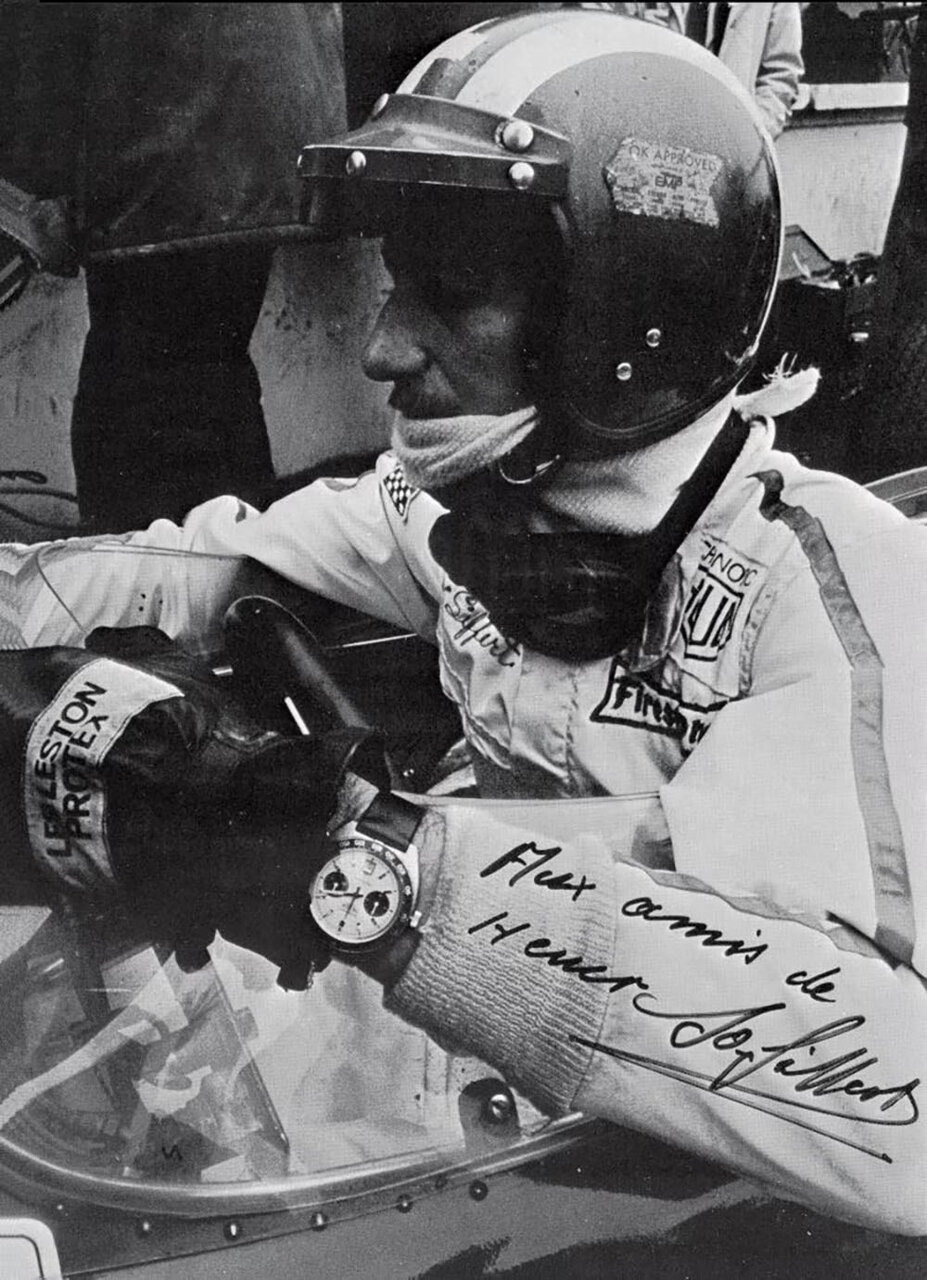
In the 1960s, as F1 experienced rapid growth, Heuer (the company's name at the time) began to forge deep connections with drivers. Jo Siffert's fondness for the "Heuer Autavia" is particularly memorable. Subsequently, Heuer signed a contract with Jo Siffert, and in 1969, the Heuer logo first appeared on an F1 car, coinciding with the launch of the groundbreaking automatic chronograph, the "Calibre 11."
In 1971, the company provided the "Le Mans Centigraph" for the timing system of a test track newly built by Ferrari, and continued to supply timing technology to many F1 teams thereafter. The relationship between TAG Heuer and Ferrari lasted until 1979, leading to a long-term partnership with McLaren in the 1980s.
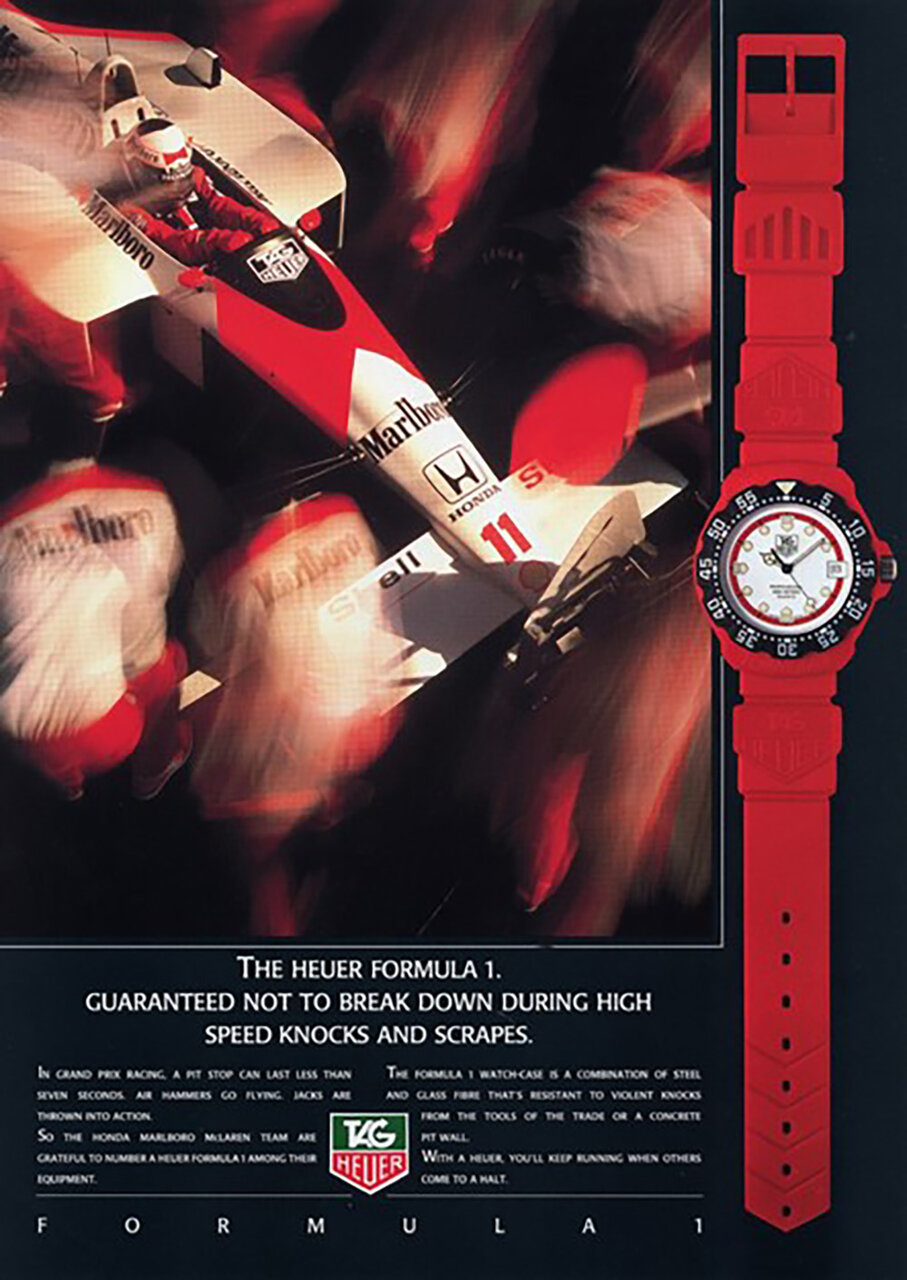
This led to the creation of the new company name, "TAG Heuer," and in 1986, the new logo was also featured on the windshield of the MP4/2C, the car with which Alain Prost won the Drivers' Championship.
That same year, TAG Heuer launched the "TAG Heuer Formula 1" collection. With its unconventional, vibrant case, strap, and dial colors, this model became a cultural icon, symbolizing the irreplaceable bond between TAG Heuer and motorsport, and evolving into an iconic watch.
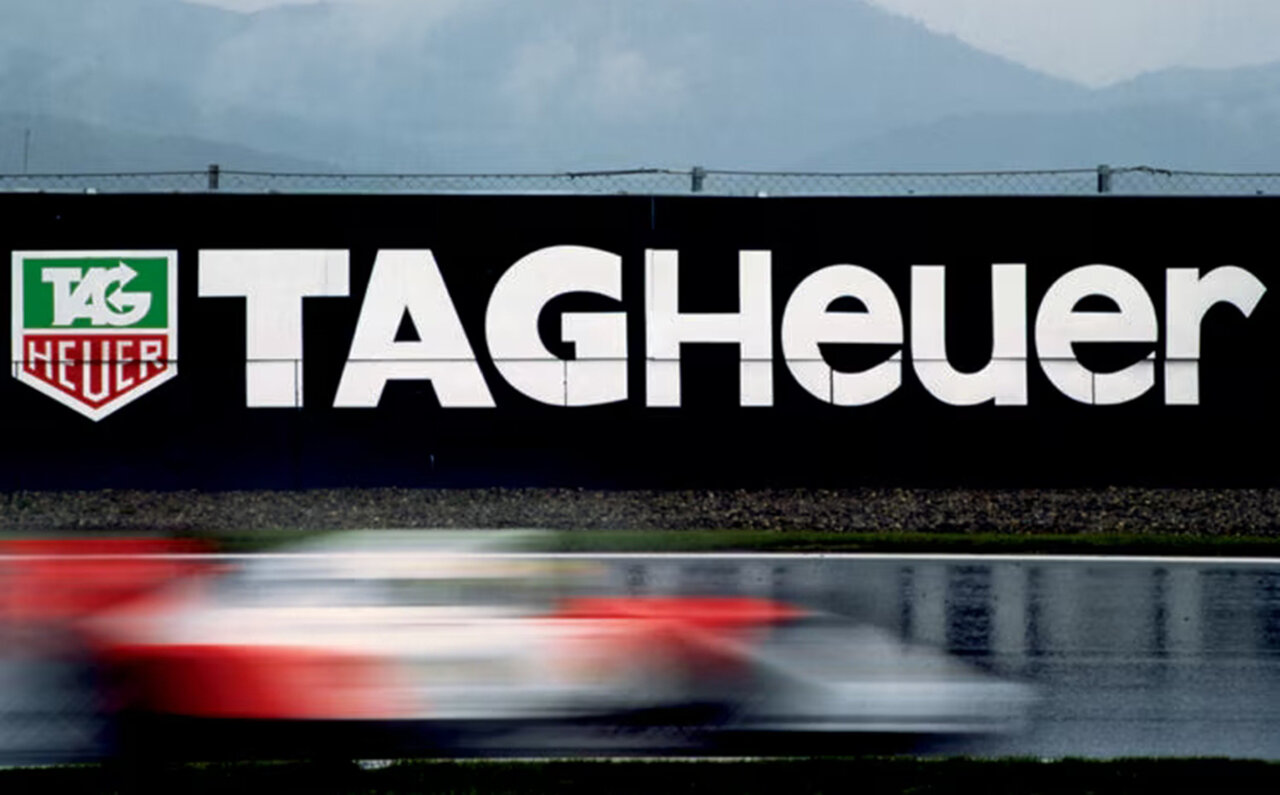
In 1992, TAG Heuer became the official timekeeper of F1, significantly enhancing the precision and reliability of F1's timing systems. Subsequently, TAG Heuer achieved numerous successes with various F1 teams, notably in 1998 when Mika Häkkinen's performance led McLaren to secure the Drivers' Championship. The role as official timekeeper continued until 2003.
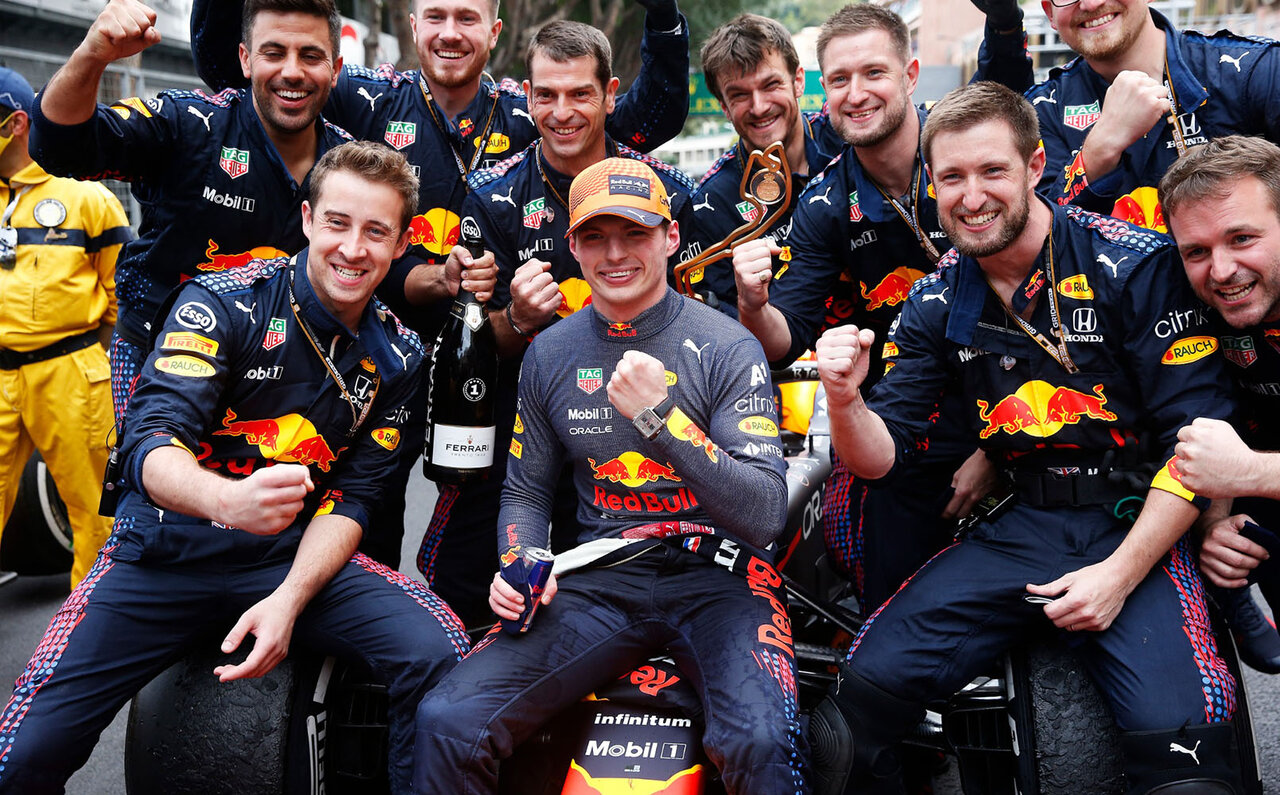
Entering the 2000s, TAG Heuer welcomed Lewis Hamilton as a new talent, witnessing his World Drivers' Championship victory in 2008. Furthermore, in 2016, a partnership with Red Bull began, supporting Max Verstappen's success and contributing to numerous championship titles.
F1's popularity has continued to surge in recent years. TAG Heuer, returning as the official timekeeper from 2025, aims to further enrich F1's history through its new partnership by engaging in circuit-side branding, new product launches, and fan events.
TAG Heuer has timed countless legendary races throughout F1 history. Expectations are high for what race developments await beyond 2025.