June 24, 2019
Remaining a watch for professionals is the brand's rule | Bell & Ross
Bell & Ross
Bell & Ross Creative Director
Interview with Bruno Belamich (1)
At BASELWORLD 2019, the Bell & Ross booth was once again awash in vibrant yellow. The centerpiece, of course, was the collaborative model with the Renault F1® Team. For this interview, we began by asking about the origins of the collaboration with the Renault F1® Team.
Text by TSUCHIDA TakashiTranslation by HASHIMOTO Yuko
A Shared Vision Was Key
—At BASELWORLD 2019, you once again expressed the world of F1 racing. But why Renault? Beyond being from the same country, France, what about the Renault brand resonates with you, and what do you aim to express as a designer?
BrunoThe collaboration with the Renault F1® Team began when the Art Director for the Renault team contacted us. When Renault decided to return to F1, their first step was to establish the team's identity, starting with selecting sponsors that aligned with their desired image. That Art Director then approached us, proposing a partnership, identifying Bell & Ross as a suitable brand for the Renault F1® Team.
My initial response was, "F1 is certainly magnificent, but the project is too large for a brand of our scale." They replied, "No, no, let's find the optimal balance for both of us," and that's how the conversation began.
For us, it was an opportunity to introduce the brand to a wider audience beyond the aviation industry, and F1 represented a completely new field that greatly interested us.
So, we conveyed that we might be able to proceed if we could create a collection for them and take on the role of communicating their image.
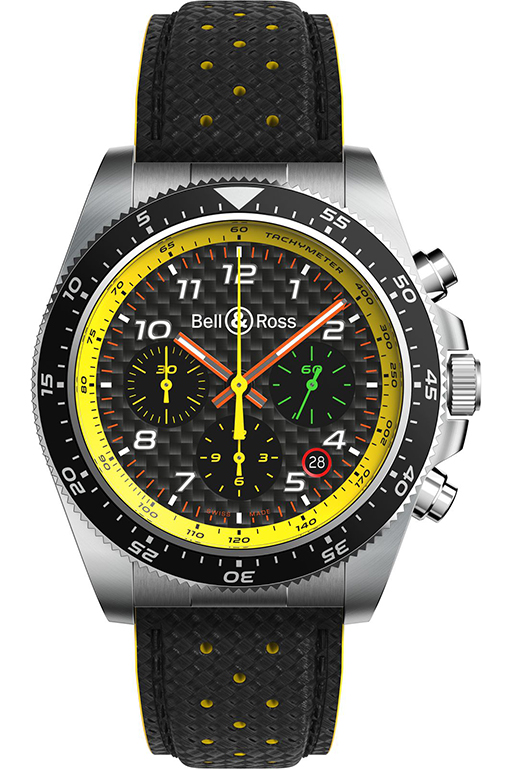
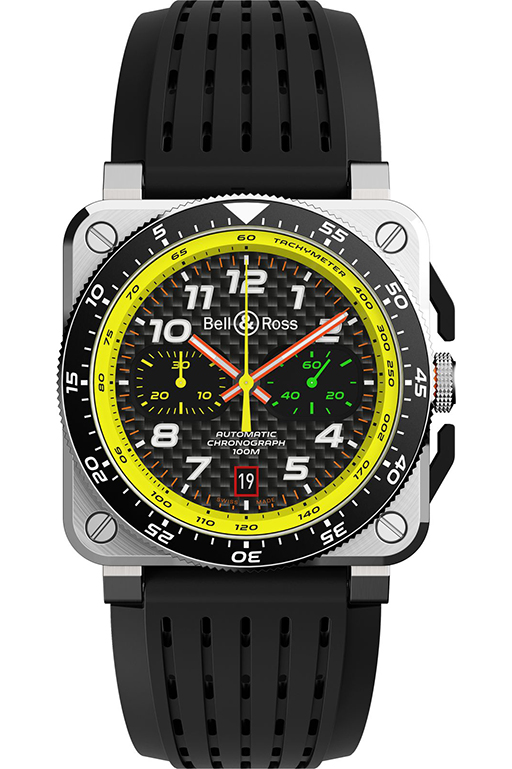
They told us, "There is no other sponsor that can play as significant a role as Bell & Ross, because Bell & Ross creates special watches with the same colors and the same spirit." They appreciated what Bell & Ross was trying to achieve and our positioning within the industry. Renault was also embarking on a new chapter, aiming for the F1 podium. We believed that challenging alongside Renault towards the pinnacle would be beneficial for Bell & Ross as well. The fact that we are both French companies is a factor, but more importantly, our shared aspirations aligned.
—Could you please explain the concept, design, and details you wanted to convey with the collaborative models with the Renault F1® Team?
BrunoAll our models are conceived with the idea of "What is F1?" and "What does it mean to be worn on the wrist of an F1 driver?" Firstly, they feature the same graphics and the same black and yellow color scheme as the Renault F1® Team. Functionally, to meet their needs, all models are chronographs.
There are two types of cases: round and square. The square cases come in three models, differing in mechanical complexity (standard movement, in-house movement, and tourbillon). This year, we have also introduced a new 43mm case size for the Vintage series.
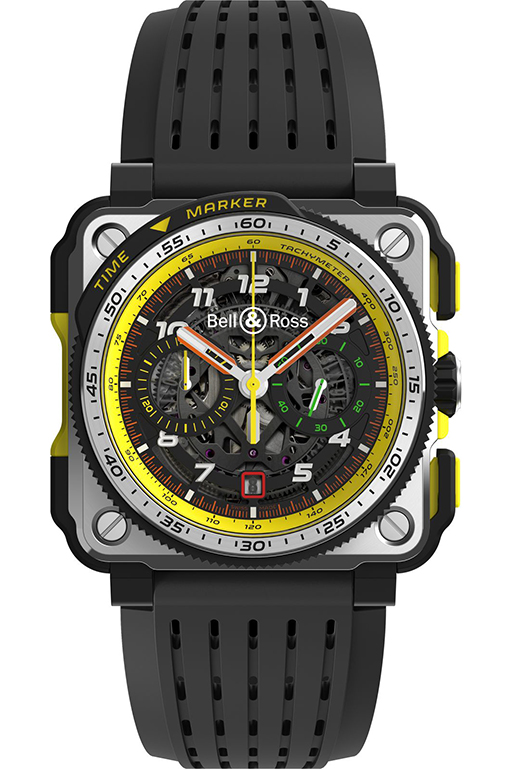
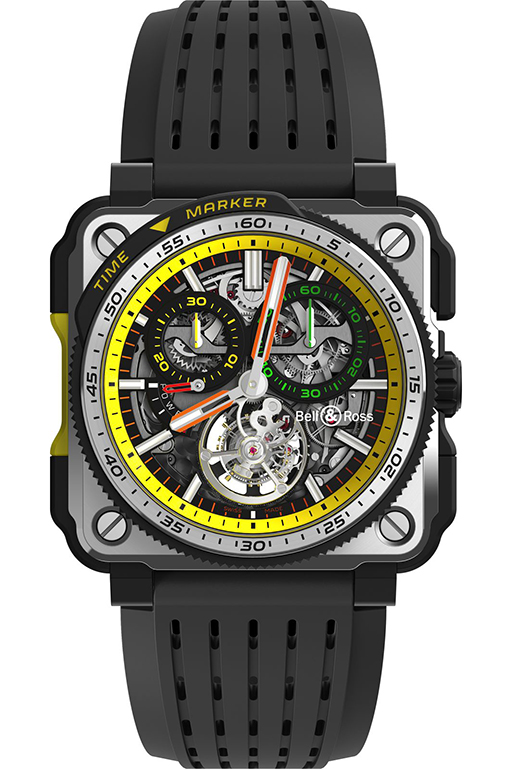
While F1 drivers don't actually wear watches during races, they tend to favor sporty and practical timepieces off the track.
—Yellow serves as an accent color in this series. How do you incorporate this color into everyday watches?
BrunoYellow is indeed not the easiest color to wear. Therefore, this time, we've used it as an accent on the inner bezel's tachymeter scale. Color, in essence, is function. We've used yellow, black, white, red, green, and orange, but the main colors are black and yellow.
Page02.What are your thoughts on the relationship between watches and fashion?
Bell & Ross
Bell & Ross Creative Director
Interview with Bruno Belamich (2)
What are your thoughts on the relationship between watches and fashion?
—Bell & Ross timepieces, inspired by aviation instrumentation and finished with a stylish aesthetic, have garnered attention from fashion enthusiasts. Mr. Belamich, how do you perceive the relationship between watches and fashion?
BrunoBell & Ross originates from the realm of professionals, encompassing "professional needs" and "professional use." Remaining a brand for professionals is a fundamental rule for us.
However, we are well aware that the majority of users today seek style and design rather than just functionality in a wristwatch. A watch is also a fashion accessory, much like shoes, and is coordinated with the wearer's attire. Our approach is to first and foremost design high-quality, practical timepieces. Users then freely choose these watches and incorporate them into their personal style.
—I understand. However, models with subdued colors, such as last year's Horo Black series, seem particularly compatible with minimalist styles like PRADA's. How do you link fashion trends with watch design?
BrunoFashion trends are, without a doubt, a source of inspiration. Fashion possesses design and creativity. As a designer, I pay attention to architecture and all forms of product design, but I also focus on fashion.
Fashion generates a great deal. The influence is perhaps even reciprocal. We observe fashion closely, and the fashion world also keeps a close eye on watch trends.
Inspiration can be found everywhere. Consider military fashion, for example. The MA-1 flight jacket, now a fashion item, originally began as a piece of professional equipment.
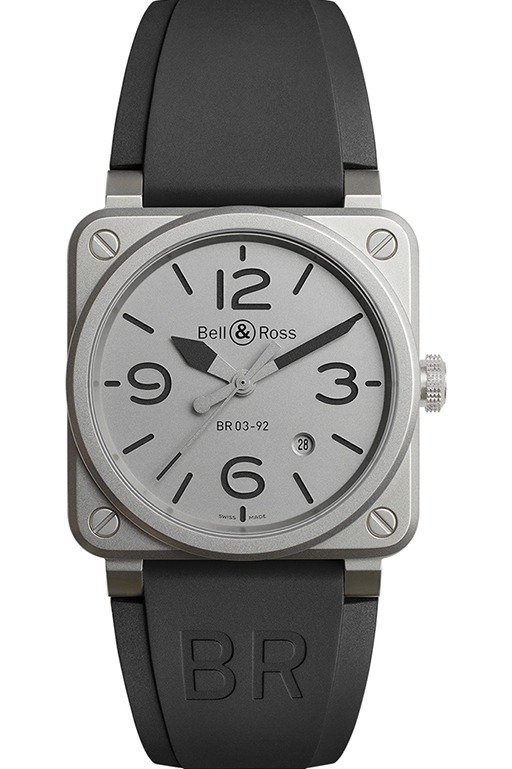
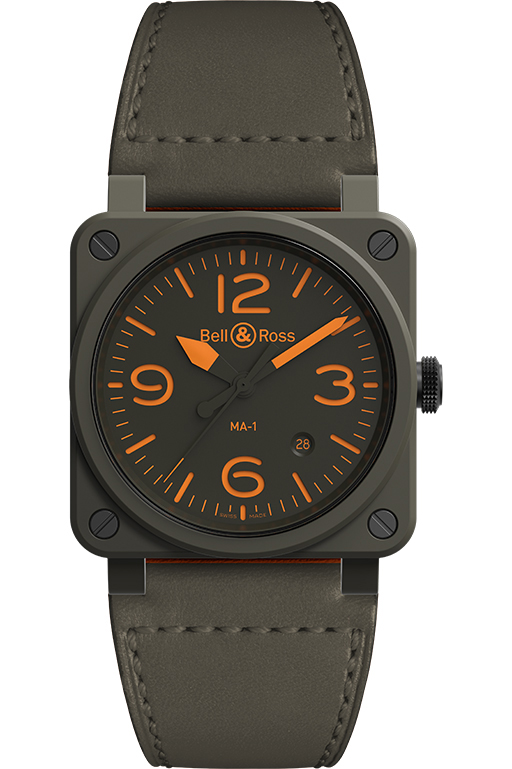
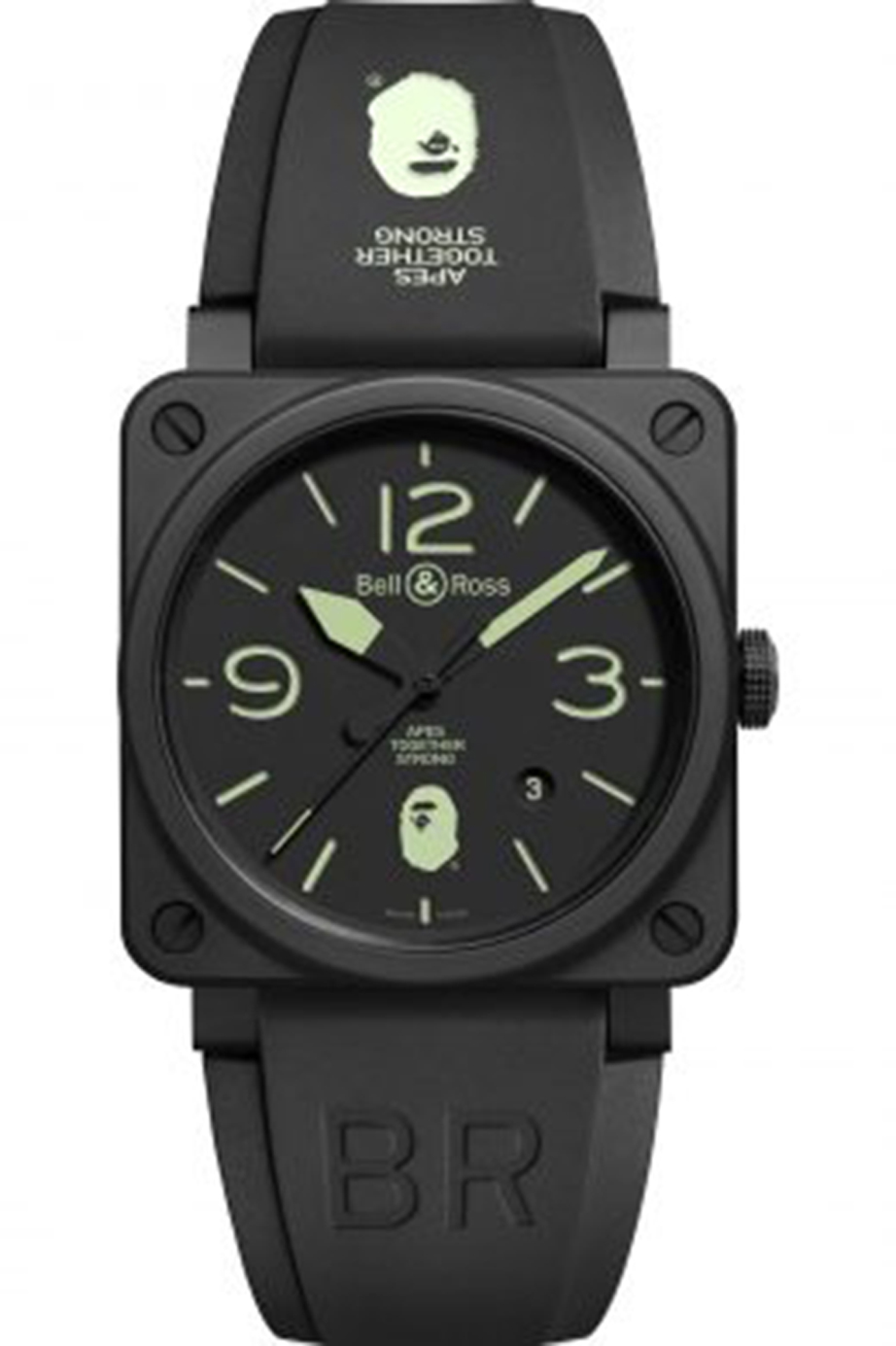
—Last year, a collaboration with A BATHING APE came to fruition. What led you to undertake this project? Collaborations with specific brands seem rare; will this continue in the future?
BrunoThe collaboration with BAPE was a truly wonderful experience. BAPE is a creative fashion brand that, like Bell & Ross, draws inspiration from military aesthetics to develop streetwear. It's also a small, family-run company, which perfectly aligned with our business philosophy; we even started the discussions without a contract initially.
The way we worked and our philosophies were so similar that the collaboration proceeded very smoothly. Naturally, the result was a great success. Despite the limited production, they sold out almost instantly.
Actually, I was aware of BAPE even before this project came about. I recall visiting a BAPE store on my first trip to Japan and being impressed by the creativity of the T-shirts displayed on a conveyor belt. Masamichi Katayama, the spatial designer, is an exceptionally talented and intelligent individual.
—We'd like to introduce you to our readers, so could you tell us a bit about yourself personally? What sparked your interest in watches, and how did you come to design them?
BrunoAs a young designer back then, I was interested in items that expressed oneself and required manufacturing technology, such as watches, fashion, sneakers, cars, and eyewear. My career began at Sinn. While not as a designer, I was involved in fine-tuning details to ensure a cohesive image and consistency within their collections (Editor's note: This was an internship during my student years).
First, I asked Mr. Sinn if I could sell Sinn watches in France, and he granted permission. However, I felt that to sell Sinn in France, we needed to rebuild the brand with our own efforts. Thus, we created exclusive limited-edition models for the French market within a "Bell & Ross by Sinn" co-branded collection. In '97, we formed a capital alliance and partnership with CHANEL, who then facilitated the integration of Sinn's production lines with the production lines in Chatellerault, Switzerland.
—When do you feel a sense of accomplishment in watchmaking? In which recent design project did you find that satisfaction? Could you be specific?
BrunoI am a perfectionist, and because of that, I have never been 100% satisfied with my work. After completing one task, I always find myself thinking if there was something more I could have done to make it better. This constant pursuit of improvement is something I share with the Japanese.
When undertaking new designs, there are always deadlines. The moment I see the ideal form for the overall balance, the size, the feel of the indices – that's when I must stop and proceed to production.