WATCH & JEWELRY /
FEATURES
November 27, 2019
Appreciating 'Cartier, Crystallization of Time' with Tomoki Yusuke | Cartier
Cartier
Witnessing the Flowing 'Crystallization of Time' at Cartier
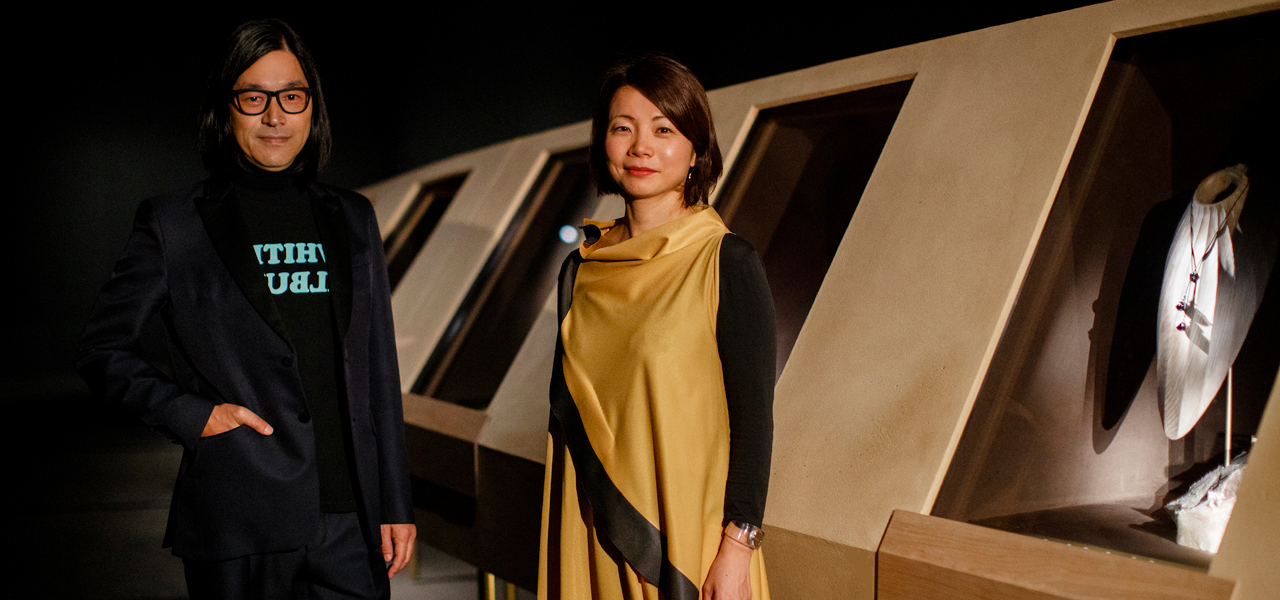
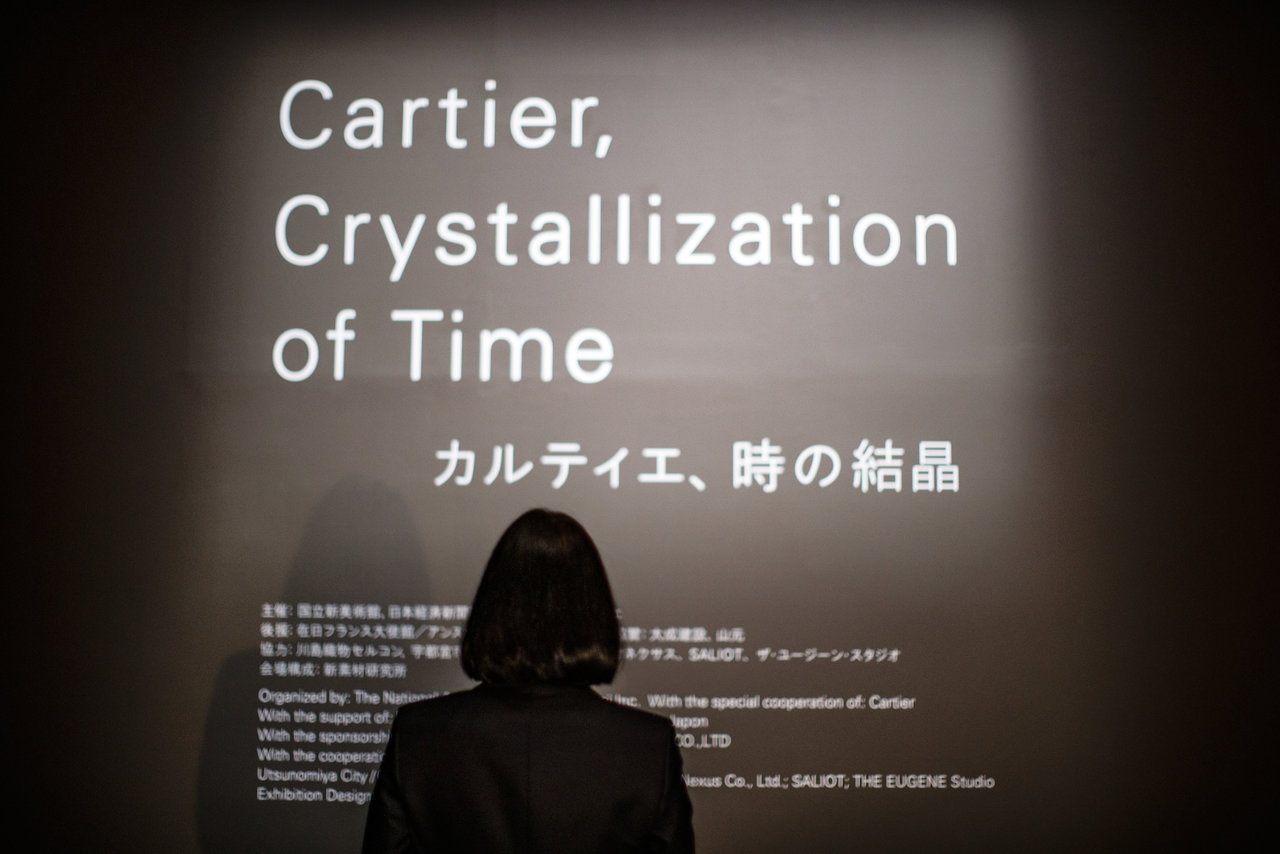
The exhibition "Cartier, Crystallization of Time," offering a glimpse into the world of Cartier's innovative designs, is now being held to great acclaim at The National Art Center, Tokyo, in Roppongi. With a focus on the exhibition's unique presentation and spatial design, which set it apart from traditional jewelry shows, Tomoki Yusuke, guided by Yayoi Motohashi, the exhibition's curator and chief researcher at The National Art Center, Tokyo, explores the secrets behind Cartier's multifaceted beauty, which embodies both timeless permanence and ever-changing trends.
Photographs by MAEDA Akira | Video production and Post-production by NODA Kenichi, SUGA Mayu, DATE Sho, SAKAGUCHI Tenshi | Hair and Make up by MOMIYAMA Atsushi | Text and Edit by ANDO Sara
Cartier's World: Timeless Yet Evolving with the Ages
Cartier has previously held exhibitions of the "Cartier Collection" at various art museums in cities around the world. This time, however, it has garnered attention not only by showcasing historical pieces but also by focusing on contemporary works from the 1970s onward.
Many of the contemporary pieces on display are privately owned, reportedly accounting for about half of the total number of exhibits. This offers a rare opportunity to see works from private collections worldwide, which are not usually publicly displayed, up close.
The exhibition space has been designed by Shinshi Kenkyusho (New Material Research Laboratory), founded by Hiroshi Sugimoto and Tomoyuki Sakagami. Their designs, which fuse traditional craftsmanship with cutting-edge technology and are finished with contemporary details, have created an exhibition space that evokes a sense of 'time' and encourages exploration. This invites a new and unprecedented viewing experience.
According to Ms. Motohashi, previous Cartier retrospective exhibitions primarily featured display arrangements that followed the brand's history. In contrast, this exhibition takes a novel approach, focusing on the creativity of design and academically dissecting the Cartier style.
Alternatively, there is a hair ornament from 1902, from the Art Nouveau period, characterized by its flowing lines reminiscent of water currents or swirling smoke, and a bracelet from 2018. Both pieces, with their simple and modern details, harbor a hidden commonality that makes it hard to believe they are separated by over a century.
These pieces are arranged contrastingly, based on design, color, material, and form, with 'time' as the axis, to explore the relationships between the works. Visitors can witness the evolution of design across eras alongside Cartier's enduring style that remains unfaded through time.
-
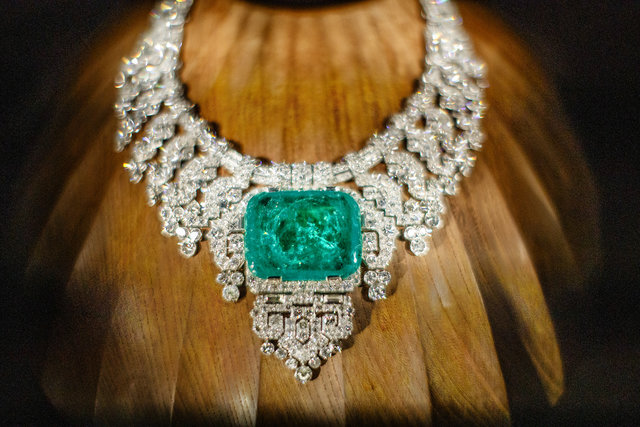
Necklace, Cartier London, Special Order, 1932
Platinum, one cushion-shaped emerald (143.23 carats), diamonds
Cartier Collection
-
Towering at the exhibition entrance is "Retrograde Clock" (2018, private collection), a work by Mr. Sugimoto using a massive antique clock. This symbolic piece aligns perfectly with the exhibition's title, "Crystallization of Time."
The presentation is designed to reverse the process of gemstones crystallizing and forming over vast eons deep within the earth, taking visitors back in time from the present moment alongside this clock. It's like searching for raw gemstones, moving backward to the origin of matter and stepping into a space that evokes the earth's interior.
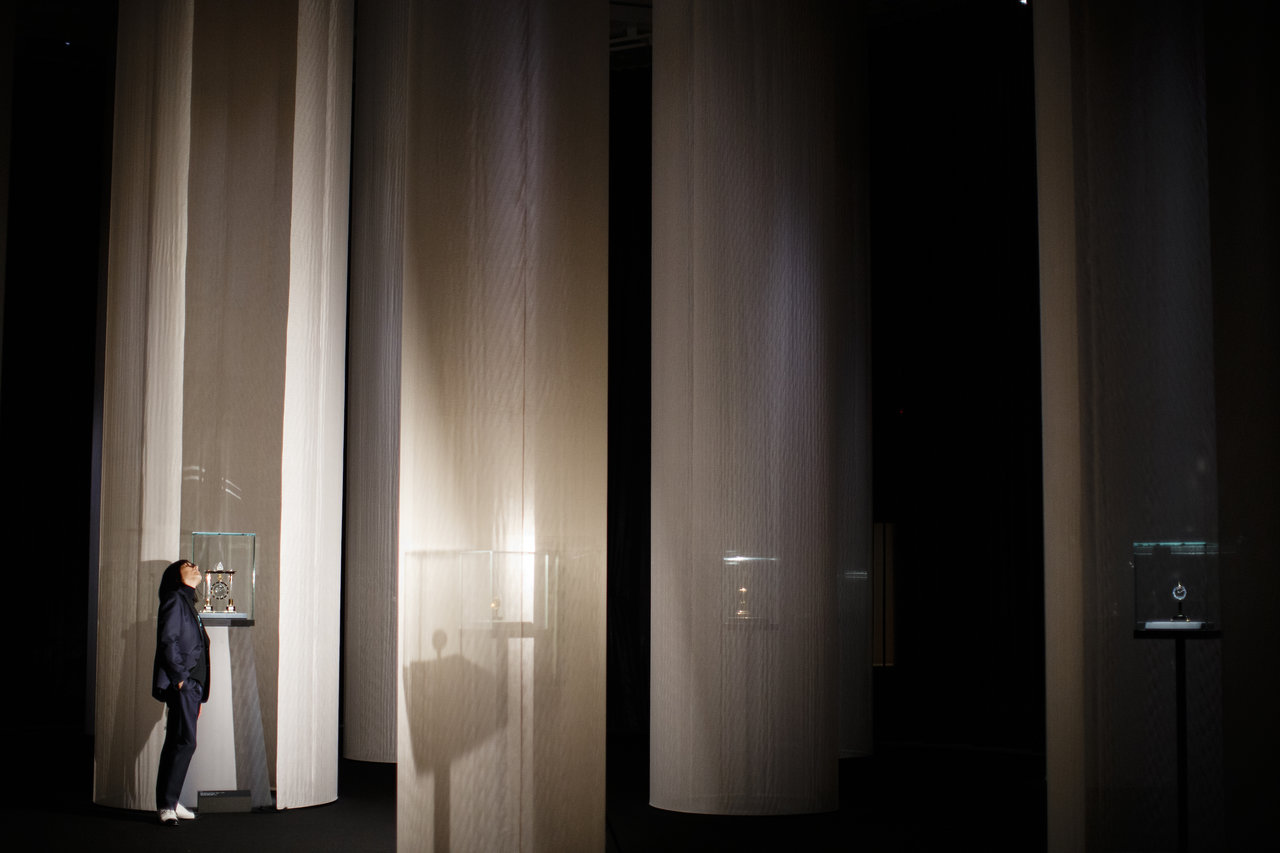
Proceeding further leads to a circular exhibition space titled "The Interstitial Time: Mystery Clocks and Prism Clocks," serving as a prologue to the main exhibition. In the vast space, surrounded by black curtains, stand twelve pillars draped with tubes of 'ra,' a traditional Japanese white textile. Arranged here are clocks such as Cartier's "Mystery Clocks" and "Prism Clocks." This space, designed to make viewers conscious of 'time,' seems to embody the essence of this exhibition, which centers on the theme of 'time.'
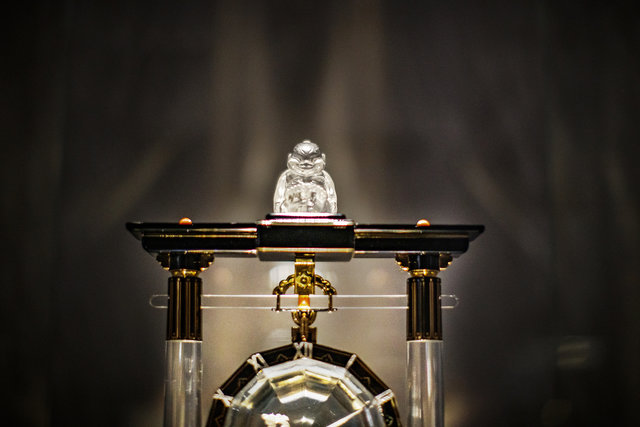
The "Mystery Clock" is a masterpiece that symbolizes Cartier's technical prowess and artistic sensibility. With no visible gears or transmission mechanisms, the hour and minute hands appear to float within crystal, displaying the time as they move. Conceived by the illusionist Jean-Eugène Robert-Houdin in the 19th century and first presented by Louis Cartier and the Maison's watchmaker Maurice Couet in 1912, it has since been cherished as one of Cartier's iconic creations in the history of watchmaking.
-
Large "Portico" Mystery Clock (detail), Cartier Paris, 1923
Yellow gold, platinum, rock crystal, diamonds, coral, onyx, black enamel
Cartier Collection
-
Single-Axis Mystery Clock, Cartier Paris, 1921
Yellow gold, platinum, citrine, onyx, white enamel, black enamel, diamonds
Cartier Collection
The exhibition is structured around the prologue, "The Interstitial Time," with subsequent sections including Chapter 1: "Transformation of Color and Material," Chapter 2: "Form and Design," and Chapter 3: "Universal Curiosity." Additionally, there is a dedicated area for "Panther" pieces and a room displaying archival materials.
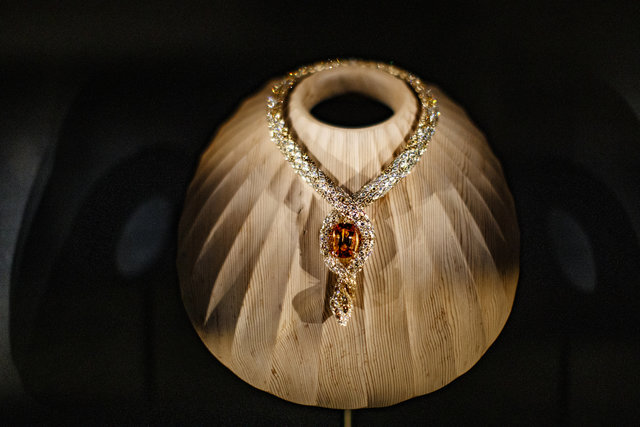
Particularly striking are the numerous pedestals and display fixtures used in the exhibition. Supporting the glittering necklaces are torsos crafted from ancient woods, such as thousand-year-old Koda杉 (Koda cedar). These custom-made pieces, carved by Buddhist sculptors, are individually shaped by hand to match the form of the jewelry.
-
Necklace, Cartier, 2013
Yellow gold, one emerald-cut yellow beryl (86.85 carats), yellow diamonds, orange diamonds, brown diamonds, onyx, emerald, diamonds
Private Collection
-
Necklace, Cartier, 2015
Yellow gold, one cushion-shaped orangey topaz (41.99 carats), one yellow-brown diamond, brown diamonds, orange diamonds, diamonds
Private Collection
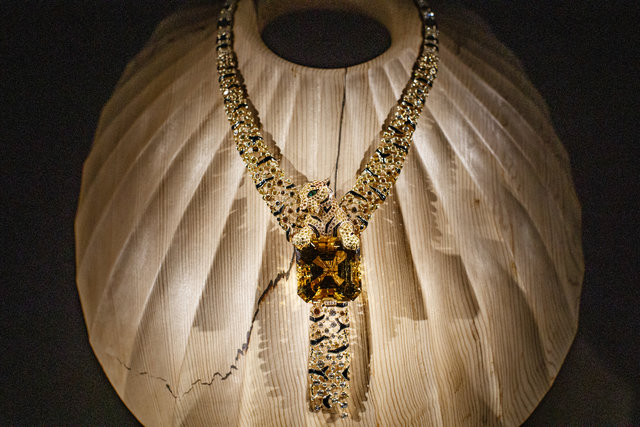
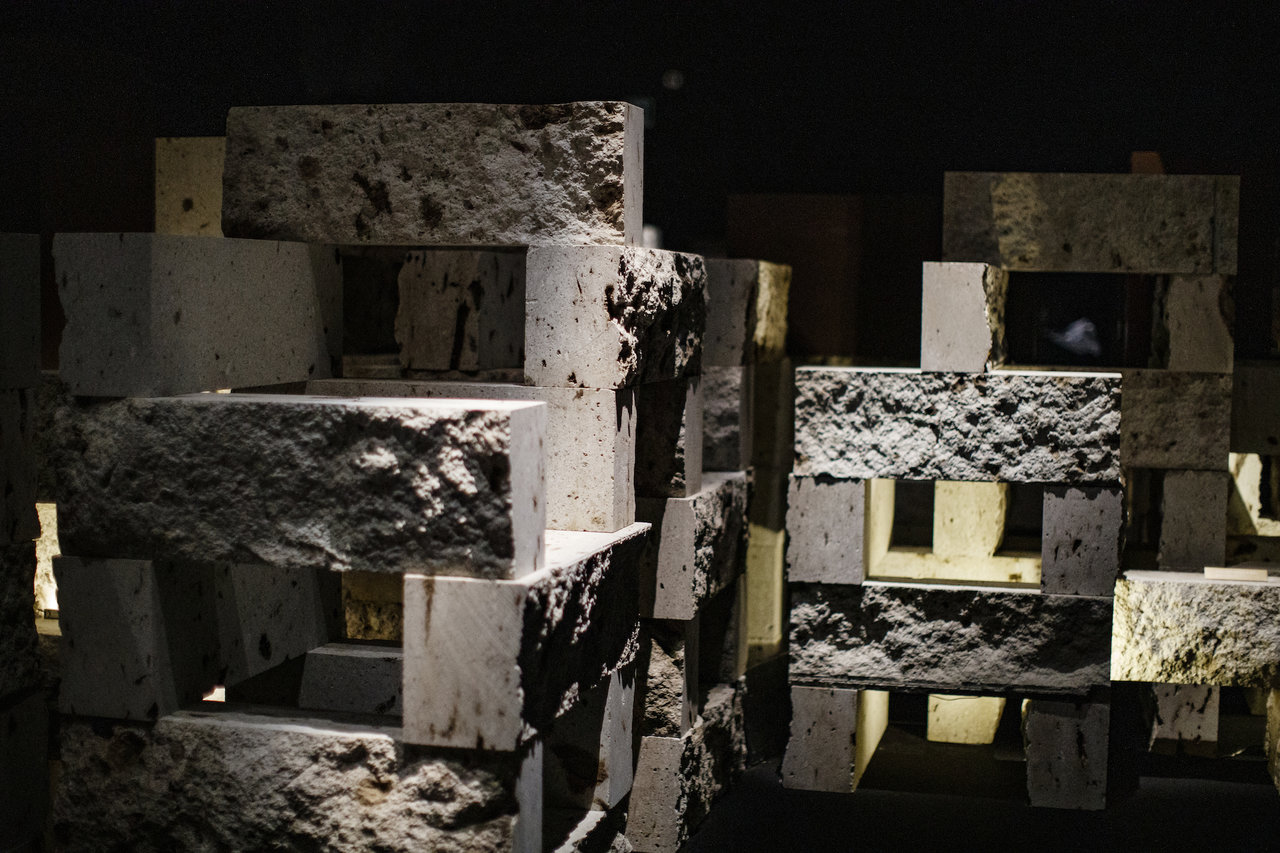
Furthermore, the blocks of Oya stone used for the display cases add a unique character to the venue. By contrasting the beautifully polished jewelry with the rugged stone, the aim was to create a spatial arrangement that evokes the exploration and discovery of gemstones within a cave.
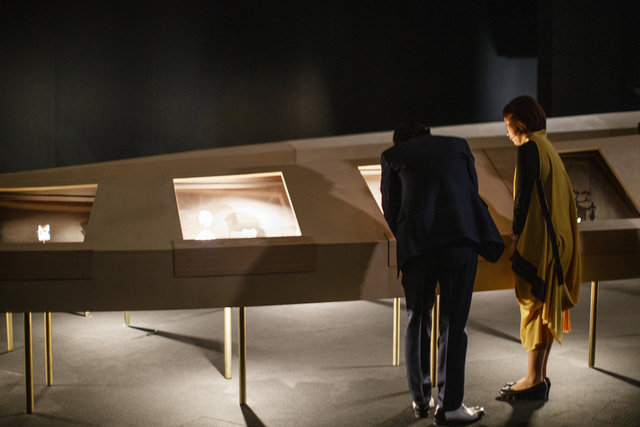
Another impressive feature is a corner where works are displayed on a massive, oval fixture measuring 16 meters in length, evoking the orbit of a comet suspended in darkness, creating an image as if existing within the cosmos. The base utilizes materials with naturally formed shapes, such as optical glass and Date-kan stone, emphasizing the contrast between nature and artifice.
"Cartier, Crystallization of Time" is an exhibition where the entire space feels like a single work of art. The integration of Japanese ancient art with high jewelry throughout the venue is a testament to the New Material Research Laboratory's approach, which treats 'time' as a crucial theme. We invite you to savor the culmination of gemstones, formed over vast periods, crystallized into Cartier jewelry through exceptional craftsmanship.
Cartier, Crystallization of Time
Dates: Ongoing - December 16 (Mon)
Venue: The National Art Center, Tokyo, Special Exhibition Gallery 2E
Address: 7-22-2 Roppongi, Minato-ku, Tokyo
Opening Hours: 10:00 - 18:00 (Fridays and Saturdays until 20:00; last admission 30 minutes before closing)
Closed: Tuesdays
Admission: General ¥1600, University Students ¥1200, High School Students ¥800
*Group discount: ¥200 off (for groups of 20 or more)
*Free admission for junior high school students and younger, and individuals presenting a disability certificate (one accompanying person included)
Number of exhibits: Approx. 300
Exhibition Design: Shinshi Kenkyusho (New Material Research Laboratory)