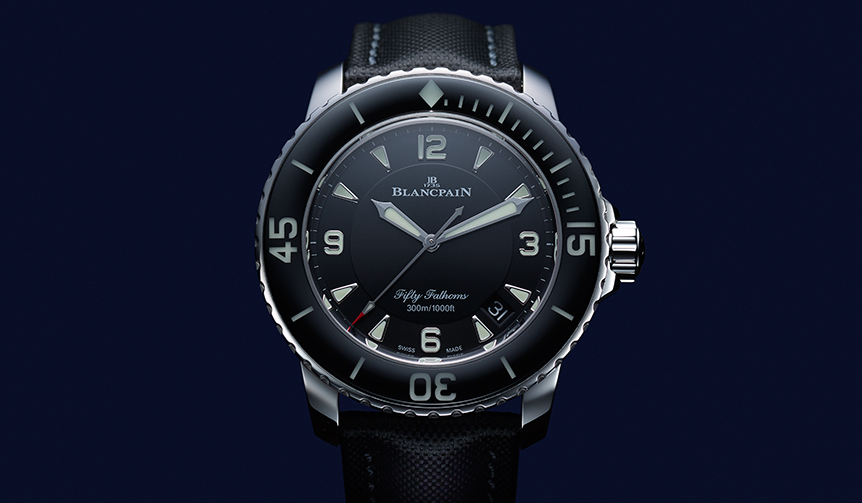
BLANCPAIN: The World's Oldest Watch Brand, Which Defined the Diver's Watch Style
Presented by BLANCPAINBLANCPAIN
BLANCPAIN: A Special Series - Part 1
The World's First Modern Dive Watch
The Story Behind the "Fifty Fathoms"
Dive watches are among the most popular types of timepieces. In 1953, BLANCPAIN developed and introduced the world's first modern dive watch, considered the progenitor of all dive watches. The "Fifty Fathoms," which has since become the standard for all dive watches and a leader in performance and quality, marks its 65th anniversary this year. Here, we will revisit the circumstances surrounding the birth of the "Fifty Fathoms" and the brand's history.
Photographs by SHIBASAKI Fumito (donna)Text by KOIZUMI Yoko
A Watch You Can Rely On in Any Extreme Situation
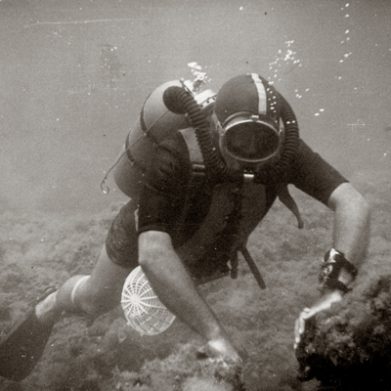
Jean-Jacques Fiechter, CEO of BLANCPAIN (1950-1980), wearing a dive watch. France. ©Blancpain
Jean-Jacques Fiechter served as CEO of BLANCPAIN for 30 years, from 1950. As an experienced diver himself, he understood from a professional standpoint that a high-performance watch was essential for a diver's safety.
However, he realized that no watch meeting these requirements had yet been released. He therefore, along with watchmakers, rushed to develop a wristwatch that could accurately measure time underwater.
Naturally, the most critical challenge in development was water resistance.
To solve this problem, BLANCPAIN developed a double-sealed crown system. By incorporating two O-rings inside the crown, they succeeded in preventing water ingress into the watch even if the crown was accidentally pulled out during a dive. Fiechter later obtained a patent for this.
Fiechter also obtained a patent for the case back sealing mechanism. In other existing systems, the O-ring could become distorted when the case back was screwed on, leading to instances of water ingress. BLANCPAIN therefore devised a method using an auxiliary metal disc to secure the O-ring in its correct position, thereby enhancing water resistance.
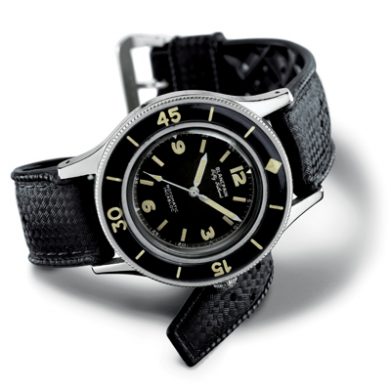
The original "Fifty Fathoms" released in 1953.
©Blancpain
The next challenge was the development of a "safe and accurate rotating bezel."
BLANCPAIN proposed the idea of rotating the bezel to align the zero marker with the minute hand, allowing divers to easily ascertain their dive time.
However, if the bezel were accidentally moved, the dive time could not be accurately measured. BLANCPAIN therefore perfected a mechanism to lock the rotating bezel, and Fiechter obtained a patent for this.
With these three patents, the core technology for dive watches
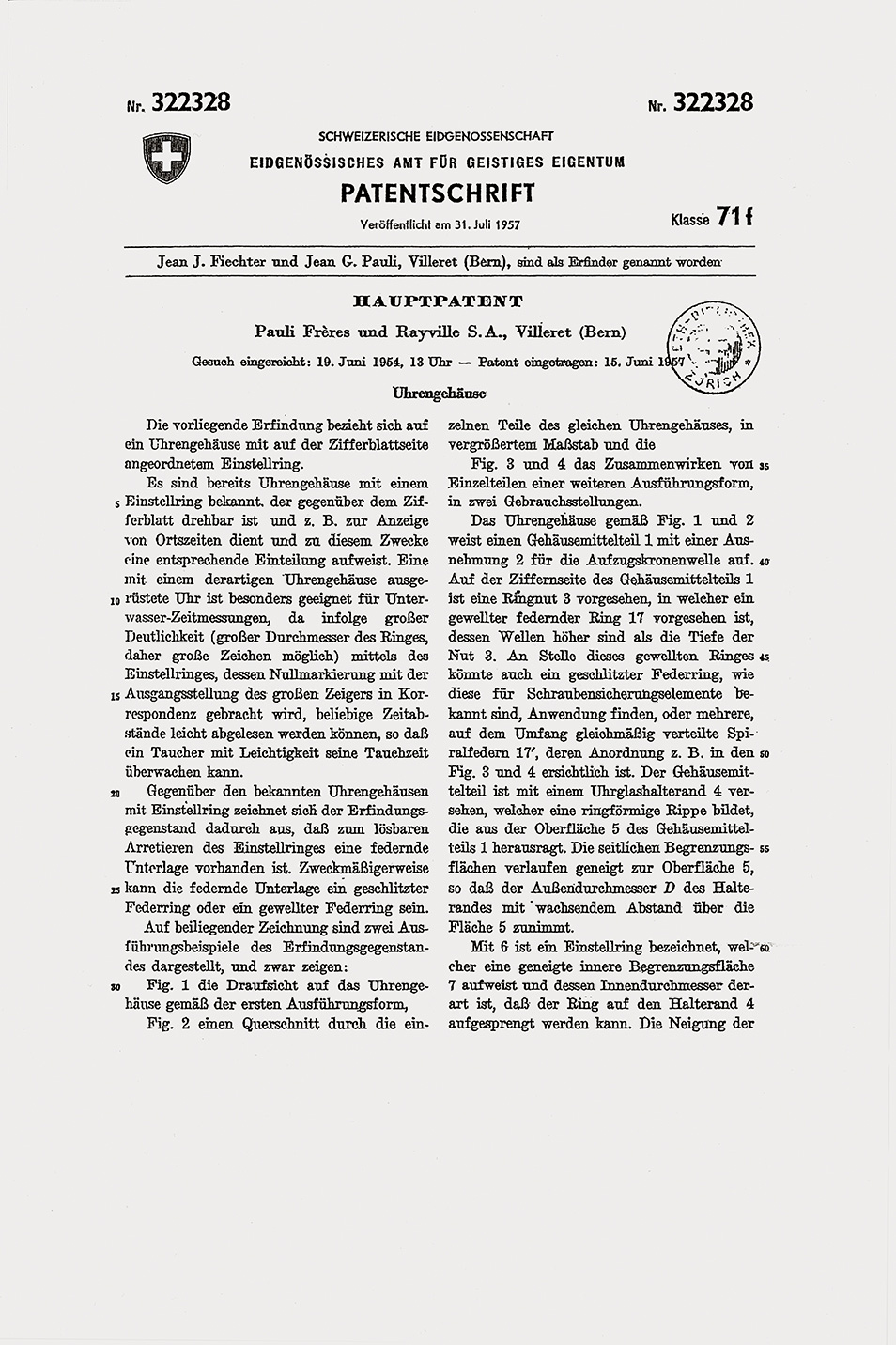
Documents detailing the three patents for the "Fifty Fathoms." 1. Double-sealed crown system. 2. O-ring for the case back (use of an auxiliary metal disc). 3. Bezel locking mechanism. ©Blancpain, Fiechter and Blancpain Patents
was recognized by the world, establishing the definition for dive watches across the industry thereafter. Furthermore, BLANCPAIN later introduced a bezel that prevented counter-clockwise rotation on dive watches to ensure even greater safety during dives.
Meanwhile, Fiechter also conceived the idea of enlarging the black dial to ensure legibility in murky water and applying white luminescent paint to the indices and hands. The "timeless face" created by the BLACK & WHITE contrast was born from this concept.
Additionally, the integration of an automatic winding movement was essential to prevent wear on the crown. All of Fiechter's ideas, poured into the development of the dive watch, took shape in the "Fifty Fathoms."
Beyond Fiechter, another individual was deeply involved in BLANCPAIN's dive watch development: Captain Robert "Bob" Maloubier and Lieutenant Claude Riffaud of the newly formed French Navy's combat swimmer unit, who were seeking high-performance dive watches.
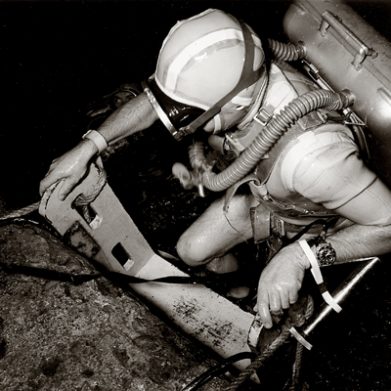
Captain "Bob" Maloubier of the French Frogmen unit, diving with a "Fifty Fathoms." ©Blancpain
In 1953, men seeking the ideal dive watch met. Fiechter delivered the "Fifty Fathoms" dive watch, produced with his watchmakers, to the French Navy. The watch performed exceptionally in all tests, and the "Fifty Fathoms" subsequently became indispensable equipment for the French Navy's combat swimmer unit.
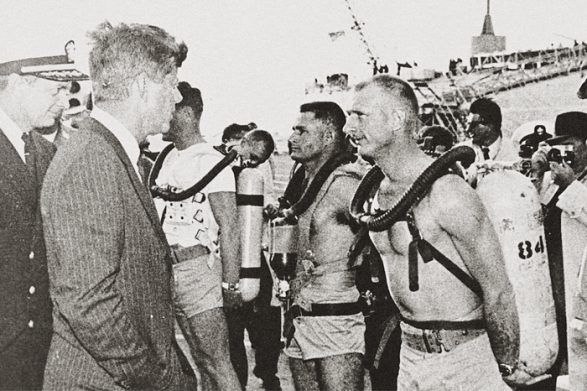
Then-President John F. Kennedy conversing with divers from the U.S. Navy SEALs wearing the "Fifty Fathoms." ©Blancpain
The "Fifty Fathoms" was officially adopted not only by the French Navy but also by naval forces in countries such as the United States, Germany, and Israel. It also became standard equipment for France's GERS (Group d'Études et de Recherches Sous-marines), a world-renowned leader in marine exploration, contributing to the academic sector. And it was the "Fifty Fathoms" that Jacques-Yves Cousteau, the world-famous diver, and his team wore during the filming of their documentary "The Silent World," which won the Grand Prix at the Cannes Film Festival.
So, what does the "Fifty Fathoms" represent for BLANCPAIN?

The BLANCPAIN manufacture in Le Brassus, in the southwestern Jura Mountains of Switzerland. ©Blancpain
BLANCPAIN created the "Fifty Fathoms," which played a crucial role in the marine field in the 20th century, and established the new genre of dive watches. Through this deepened connection with the sea, BLANCPAIN has been engaged in a wide range of marine conservation activities for many years.
In 2014, all marine conservation activities were consolidated under the name "Blancpain Ocean Commitment," and new initiatives were launched.
In the same year, the first limited edition dive watch was released, with a portion of the proceeds from its sale donated to conservation efforts. Following its success, three installments have been released to date. Its scale demonstrates a significant presence compared to other mass-market brands.
BLANCPAIN's consistent and unwavering stance becomes understandable when looking at its history.
Founded in 1735 by Jean-Jacques Blancpain in the Swiss Jura Mountains, BLANCPAIN is the world's oldest watch brand in existence, a manufacture that has produced numerous inventions and masterpieces in watchmaking history.
Even during the quartz crisis of the 1970s, which dealt a devastating blow to the Swiss watch industry, BLANCPAIN maintained its stance, refusing to produce any quartz models and continuing to deliver the essence of mechanical watchmaking. This approach undoubtedly contributed to the subsequent revival of luxury mechanical watches worldwide.
BLANCPAIN has a profound commitment to the development of mechanical watches. One testament to this is the world's first flying tourbillon, announced in 1989: the "Calibre 23," also the world's thinnest tourbillon. The brand has achieved numerous global feats, including the world's smallest complete calendar with moon phase, the world's thinnest self-winding chronograph, the world's smallest minute repeater, and the world's first one-minute flying carousel.
In the past 12 years alone, BLANCPAIN has unveiled 37 high-end calibers, solidifying its position as a manufacture that fuses tradition and innovation. Concurrently, the "Fifty Fathoms" continues to evolve as a signature and cherished item of Blancpain.
The world's oldest watch brand has extended the highest quality Swiss watchmaking, evident in its dress watches, to dive watches,
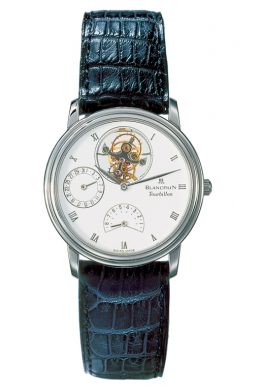
Flying Tourbillon
The "Flying Tourbillon," released in 1989, is one of BLANCPAIN's masterpieces. It is called "flying" because the pillars of the tourbillon carriage are not visible on the dial side, making it appear to float in mid-air. Achieving an 8-day power reserve while maintaining a mere 3.5mm thin movement was also remarkable.
It achieves both robustness and elegance. This is why the "Fifty Fathoms" possesses a unique charm among the many dive watches available.