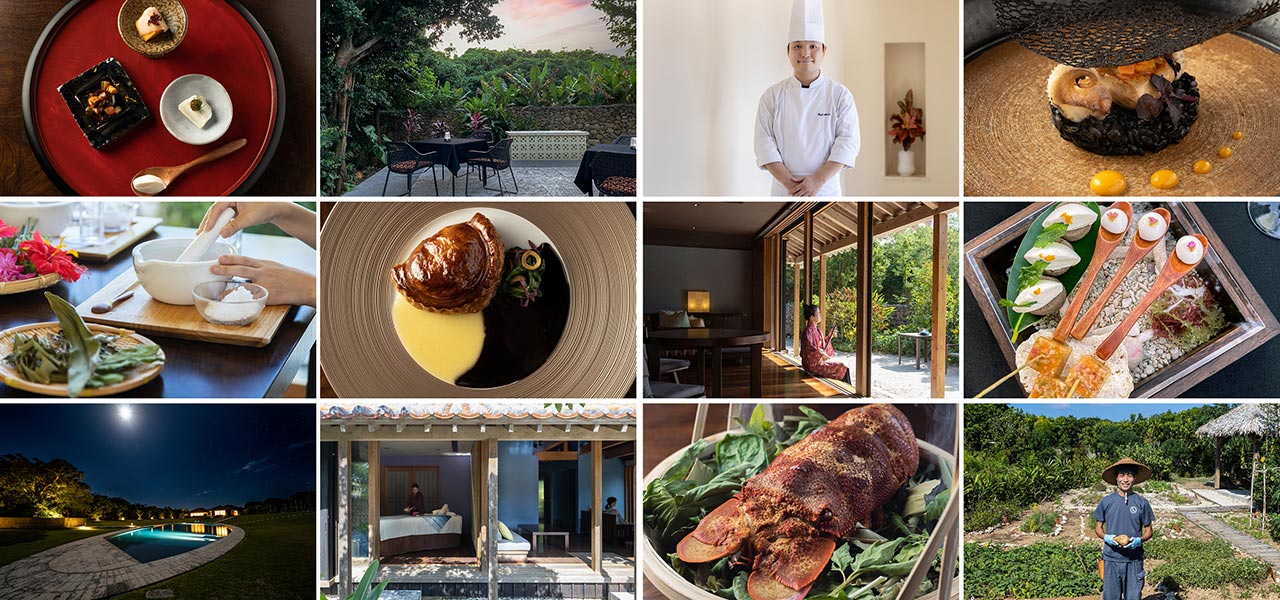
Learn and savor the history and culture of Taketomi Island: an invitation to a premium
TRAVEL|HOSHINOYA Taketomi Island
“To Know is to Savor.” Returns: HOSHINOYA Taketomi Island Edition (Part 1)
I went to try HOSHINOYA Taketomi Island's winter delicacy, "Island Terroir," again this year. Hehe.
Photographs by OHTAKI Kaku|Text by HASEGAWA Aya|Edit by TSUCHIDA Takashi
Yes, indeed! Savoring with knowledge doubles the deliciousness.
"Island Terroir" is a limited-edition winter dinner course that HOSHINOYA Taketomi Island launched in 2018. It's a blissful dinner course that brings together the finest ingredients, nurtured by Taketomi Island's unique terroir, at their peak during winter. Taketomi Island, a small island about 9 km in circumference, was formed by the uplift of coral reefs. It has its own distinct terroir, and its main harvest season, thanks to the warm climate with an average annual temperature of 24 degrees Celsius, is precisely winter.
Actually, I had the pleasure of experiencing it in 2019. You can read about my delightful experience then here.https://openers.jp/lounge/lounge_travel/f9n6i(A subtle plug, you see). I heard a whisper that "Island Terroir," now in its fourth year, has been further updated this season. What? That course, already perfected two years ago, has evolved even further? Seriously!? So, before I knew it, I was on a plane.
So, what has changed with "Island Terroir"?
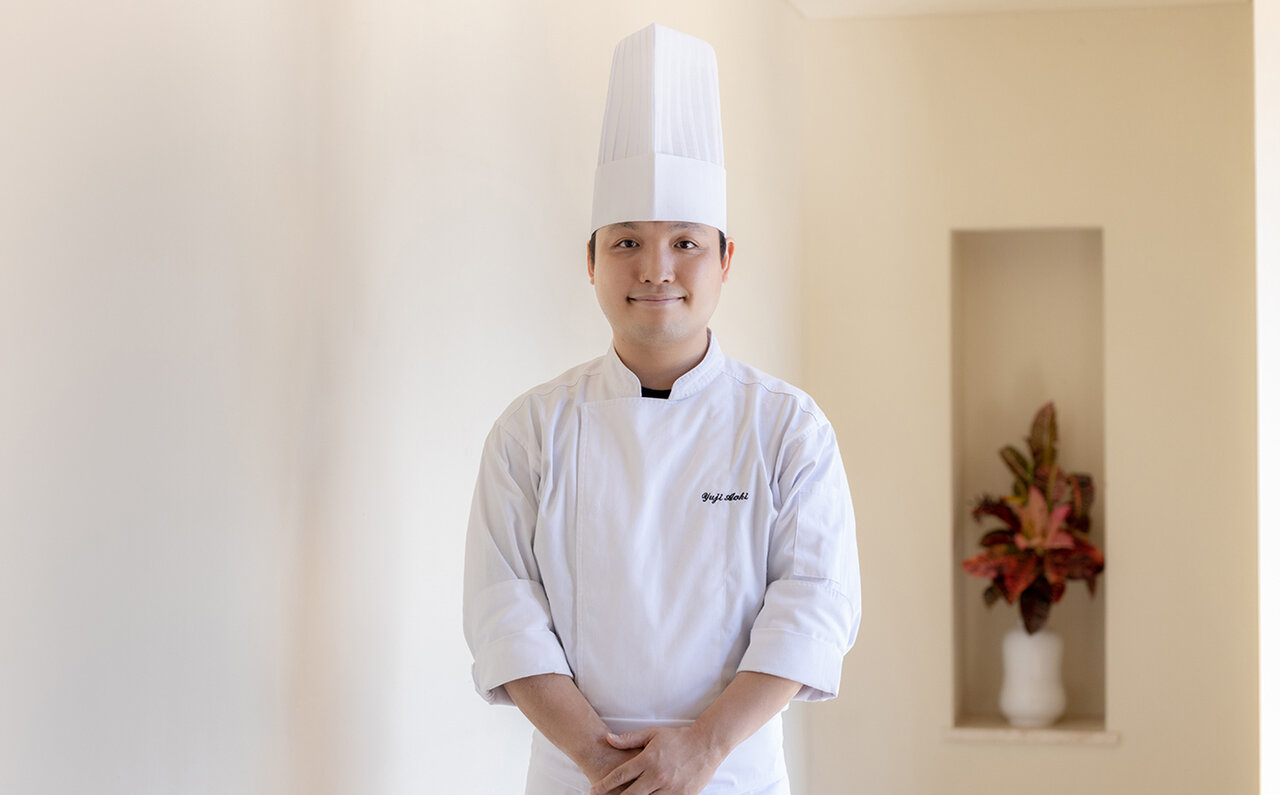
"In light of the recent impact of COVID-19, awareness of immunity has heightened. At HOSHINO RESORTS, there's also been a growing momentum to incorporate fermented foods to boost immunity," says Yuji Aoki, Head Chef at HOSHINOYA Taketomi Island.
Yuji Aoki, who became head chef in 2020, explains with a gentle smile that he has become more conscious of the ancient fermentation culture of Okinawa. Fermented foods are indeed prime examples of immunity-boosting ingredients. As the Yaeyama Islands have historically been a region where fermentation culture flourished, he says, "I wanted to create a course that could only be experienced at HOSHINOYA Taketomi Island in winter, allowing guests to feel the fermented ingredients rooted in the island."
Aoki-san, who says this, hails from Saitama Prefecture. After honing his skills at restaurants in Tokyo and France, his time in France made him acutely aware of how little he knew about Japan. Upon returning, he joined HOSHINO RESORTS, seeking to experience the regional cultures and ingredients he had previously overlooked. What, then, is the "Island Terroir" that Aoki-san creates?
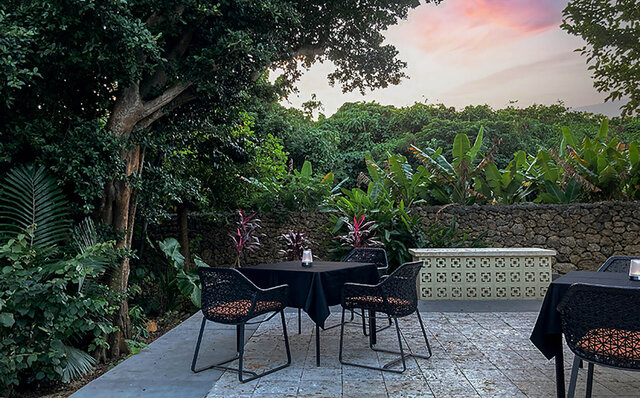
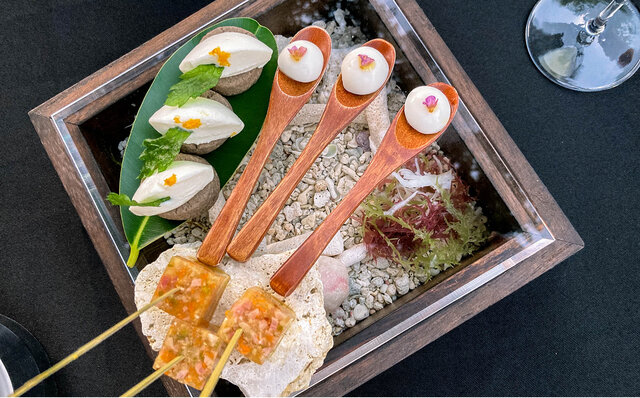
The course begins with the "Island Breeze Aperitif," served at the outdoor "Wind Terrace." Winter in Okinawa truly is wonderful, isn't it? The cool yet warm tropical breeze gently caresses your cheeks. At this time of year, you might even catch sight of the first star during aperitif time. Embracing a moment of feeling like the heroine of my own story, I'll prepare myself to savor the "Island Terroir."
Moving inside the restaurant, after the amuse-bouche, "Mud Crab and Island Tofu Coupe," came one of the highlights of the course: "Three Ways of Preparing Sweet Potato"!
Taketomi Island's soil is composed of Ryukyu limestone, formed from the uplift of coral reefs. There are no rivers or mountains, meaning rice cultivation (paddy fields) is impossible, and thus, rice cannot be grown. For this reason, the people of Taketomi Island have relied on sweet potatoes as their staple food for a long time.
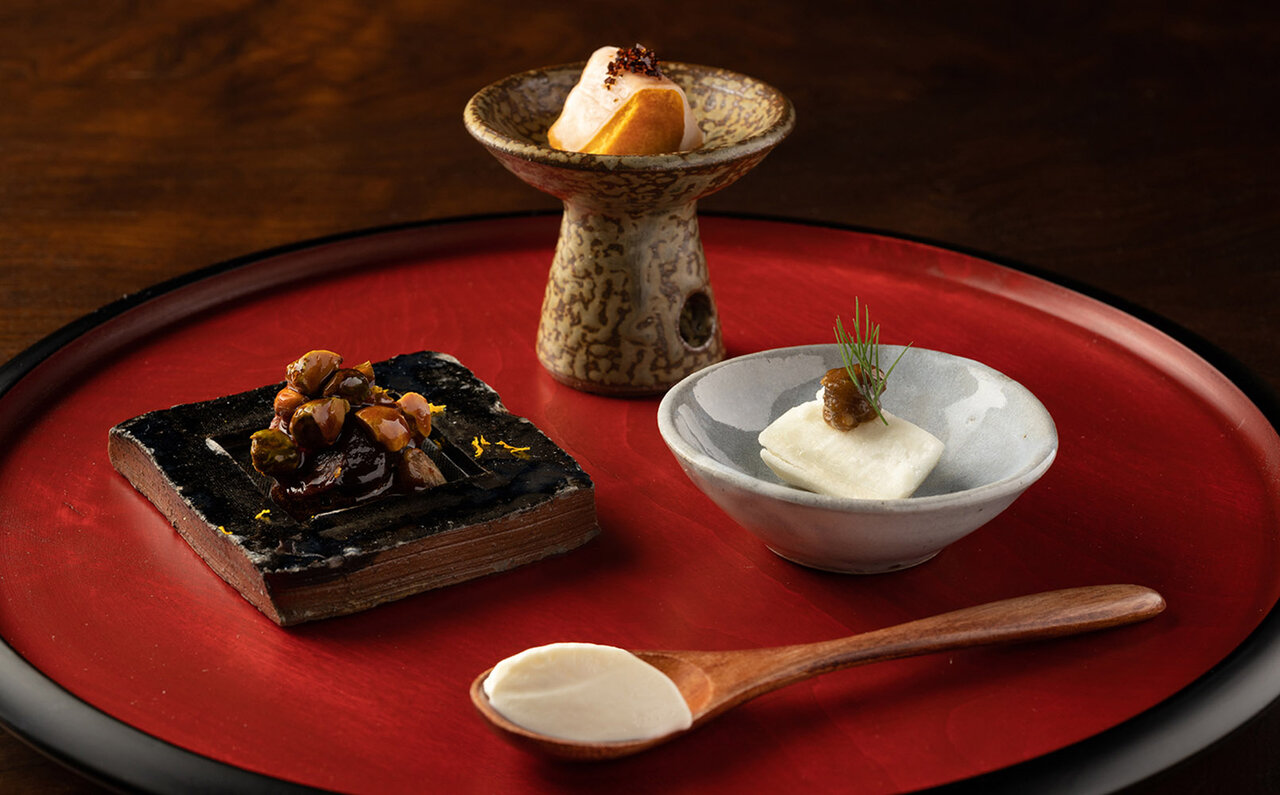
"Three Ways of Preparing Sweet Potato" is a dish that symbolizes "Island Terroir," savoring the indispensable sweet potato for the islanders in three preparations: steamed (vapeur), fried (frit), and roasted. This time, the sweet potatoes used are also in three colors...
For the steamed white sweet potato, which has a subtle sweetness, "we've added andasu (miso paste) and sour cream, familiar flavors on the island," says Aoki-san. Oh? The chewy texture is also delightful! The golden sweet potato is served as a frit coated in cured pork fat. The purple sweet potato is roasted to condense its sweetness, and then infused with the aroma of orange.
My goodness, I thought this the last time I tried it, but the versatility of sweet potato is astounding! Sweet potatoes, so familiar since childhood and evoking a sense of comfort, now inspire even a sense of reverence. These beautifully presented sweet potatoes shone on the plate.
To accompany this, we have "Imuge" (sweet potato shochu). As you might guess, it's a spirit made from sweet potatoes, originally brewed for personal consumption by commoners in the post-Meiji era using sweet potatoes and brown sugar. While its production faded over time, it has been revived with modern arrangements by three Awamori breweries on the remote islands, reappearing after nearly 100 years. "Oh, what's the difference from sweet potato shochu?" you might ask. I sense your curiosity, so allow me to explain. Sweet potato shochu is made through a primary fermentation using koji, water, and yeast to create a starter, followed by a secondary fermentation where sweet potatoes are added. Imgue, however, undergoes a tertiary fermentation after the secondary stage, where brown sugar is added. Is there any better drink to pair with "Three Ways of Preparing Sweet Potato"...? I'm already entering a state of bliss with this ultimate "Island Terroir."
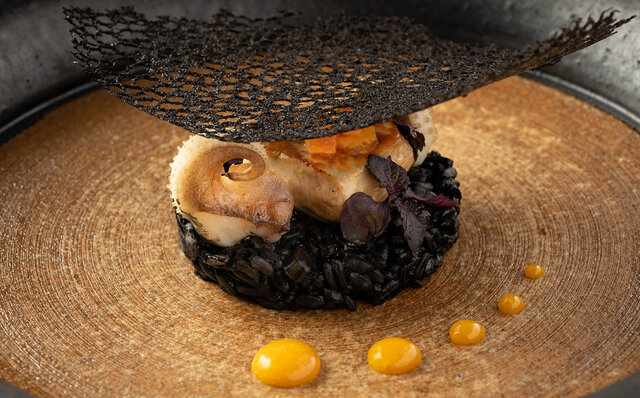
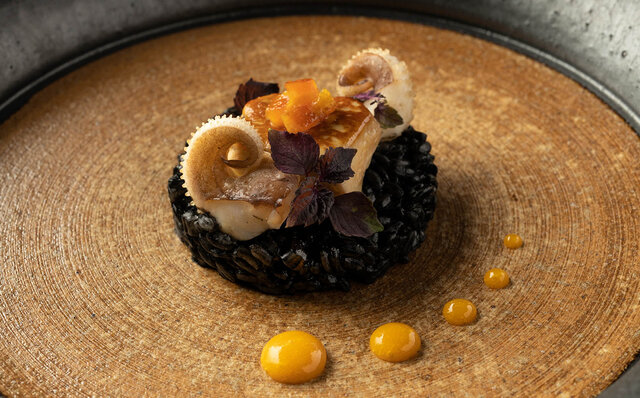
The "Foie Gras and Spear Squid Poyelle with Squid Ink Risotto" has also been upgraded. The dish's originality, pairing spear squid—a type of cuttlefish that is in season during Yaeyama winters—with foie gras, a classic French ingredient, is striking. It has been a highly popular dish since the early days of "Island Terroir," but Aoki-san has taken it a step further by marinating the foie gras in "Yaima Miso," made from fermented rice. I was thrilled by the surprisingly good compatibility of foie gras and miso! The sweet and sour sauce made with tankan (citrus) further enhances the island's essence.