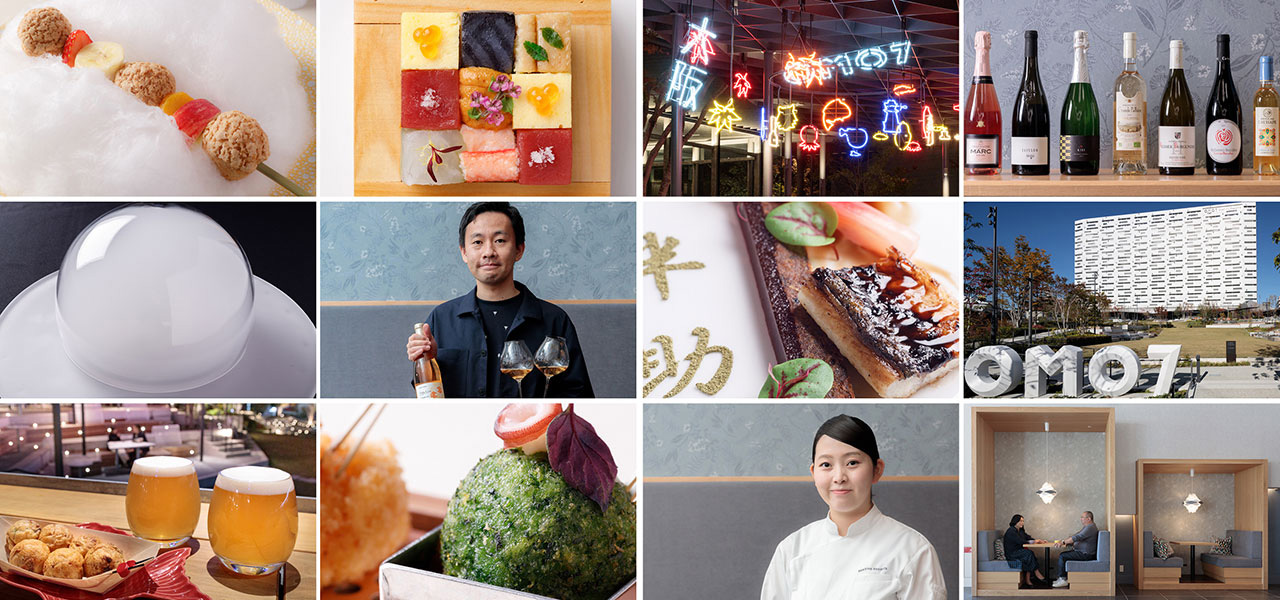
A theme park celebrating the warm, downtown spirit of Osaka. And indulge in culinary delights with Naniwa cuisine!|TRAVEL
TRAVEL|OMO7 Osaka by Hoshino Resorts
“Knowing” is Delicious! Returns: OMO7 Osaka by Hoshino Resorts Edition
I recently stayed at OMO7 Osaka (Omo by Hoshino Resorts), which opened in November 2022 in front of Shin-Imamiya Station on the JR and Nankai Electric Railways. It was truly fascinating! It might be too simple, but that's my honest impression... I stayed for one night and two days this time, but I'm already planning a two-night stay for my next visit, with ambitions to not only fully enjoy OMO7 Osaka but also to delve even deeper into Osaka's most hidden spots.
Photographs by OHTAKI Kaku | Text by HASEGAWA Aya | Edit by TSUCHIDA Takashi
First, let's explore Osaka with the OMO Rangers!
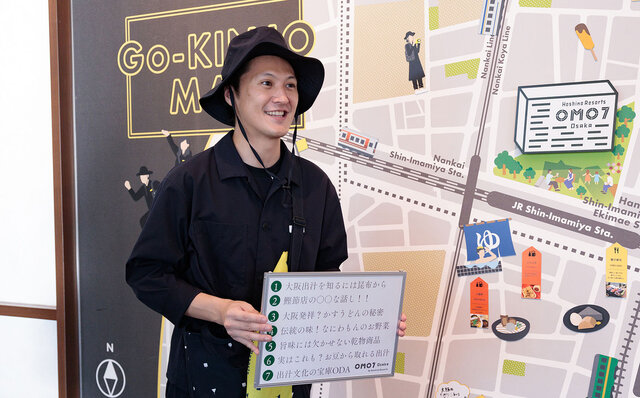
As of January 2023, "OMO" is a hotel brand by Hoshino Resorts with 11 properties nationwide. Under the concept of a "city-center hotel that gets you excited," all its facilities are packed with features that make you want to explore the city. Personally, I believe the "OMO Rangers" are the greatest strength of "OMO."
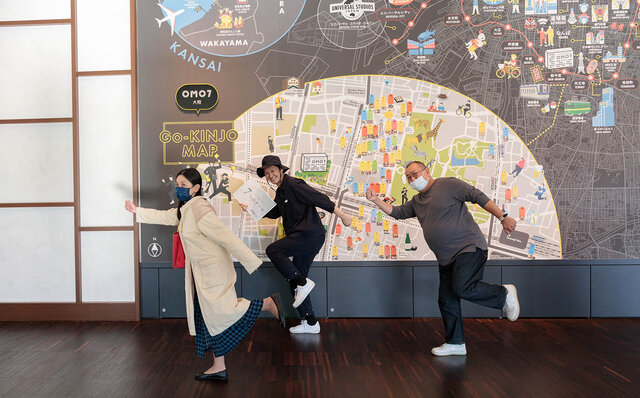
The "OMO Base" is a public space where you can gather travel information. It exists in all "OMO" facilities, and the "Gourmet MAP" board, brimming with recommended tourist information, has become a staple of "OMO." The wall-mounted board at OMO7 Osaka, approximately 4 meters high and 6 meters wide, is exceptionally large and is named the "Dodeka OSAKA Board." Prepare to be amazed by its sheer size.
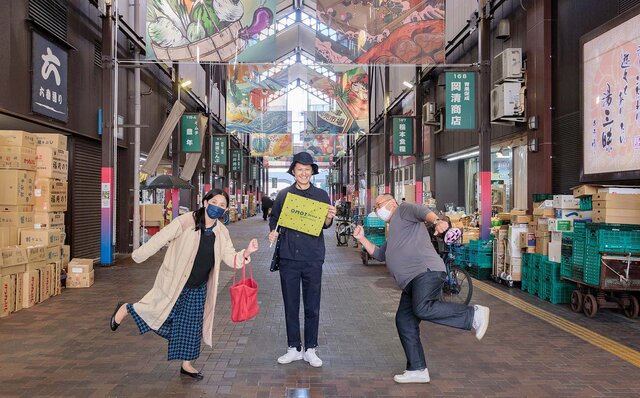
On the "E-dashi Deruremasu wa Tour," we strike the "Honaika" pose and head to the Osaka Kizhi Wholesale Market.
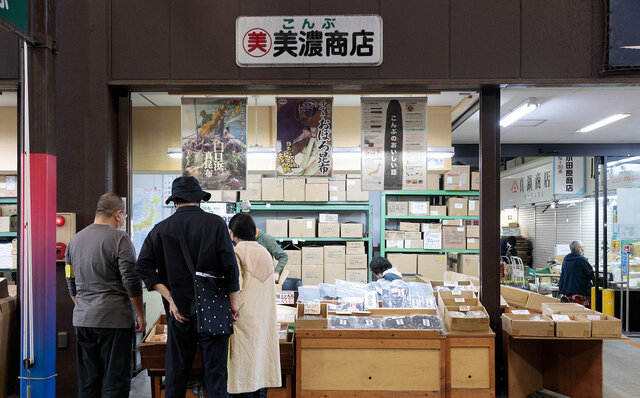
This market, about a 15-minute walk from the hotel, is the kitchen of Osaka, with about 150 specialty stores selling seafood, produce, meat, and more.
Under the guidance of the OMO Rangers, we visit shops related to Osaka's "dashi culture," including those selling kelp, bonito flakes, pickles, traditional Naniwa vegetables, dried goods, beans, and wholesale groceries.
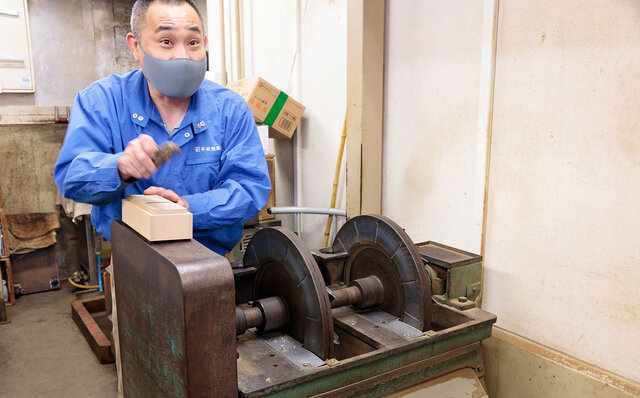
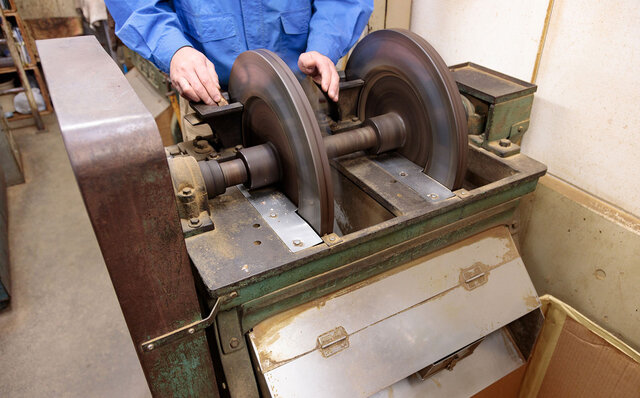
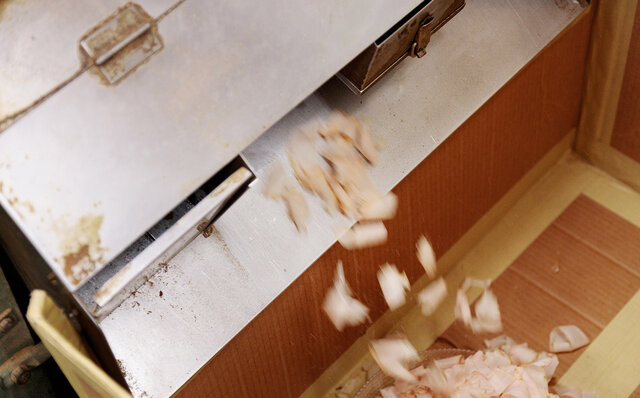
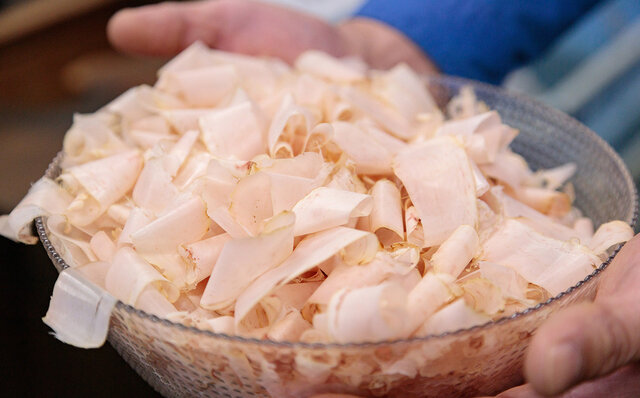
A demonstration of bonito flake shaving. The aroma is wonderful.
The old machines here are still in use. Apparently, familiar machines are easier to use.
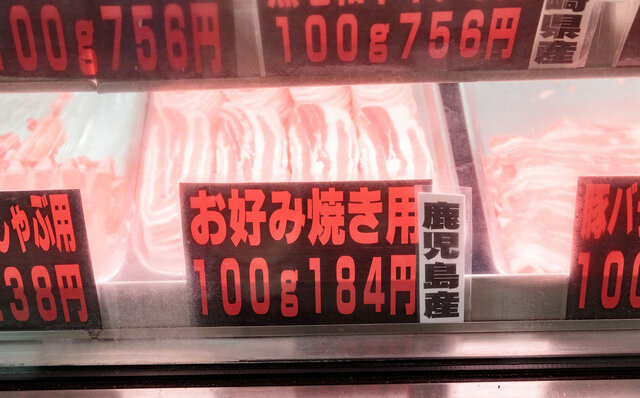
In Osaka, pork is sold specifically for okonomiyaki. Truly the home of this dish!
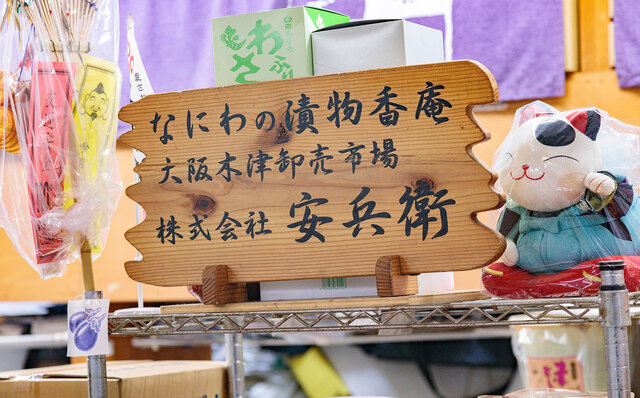
The pickles from this shop are served at the breakfast buffet in OMO Dining.
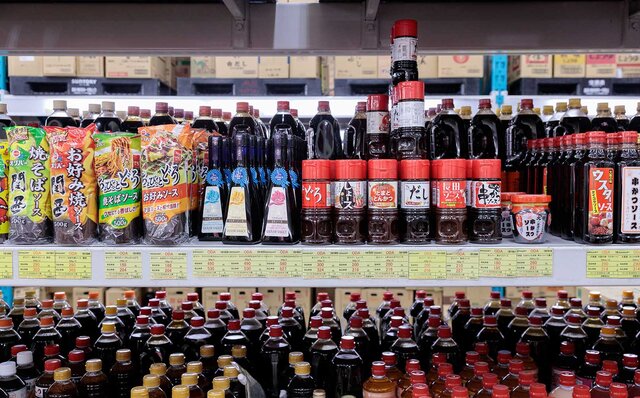
There are so many types of sauce alone.
"OMO Rangers" are Hoshino Resorts staff who know the city inside out. Each has their own area of expertise and serves as a tour leader for the "Gourmet Activities" offered at each property. Some activities are paid, while others are free, but all are designed to let you deeply and efficiently explore the charm of the city. This time, I participated in the "Honaika, Tsū na Shinsekai Sanpo" (free of charge), but OMO7 Osaka also offers activities such as the "Meccha Kushikatsu Dodduri Tour" (1,000 yen) and the "E-dashi Deruremasu wa Tour" (free).
By the way, did you know that OMO7 Osaka champions "Naniwa Luxury"?
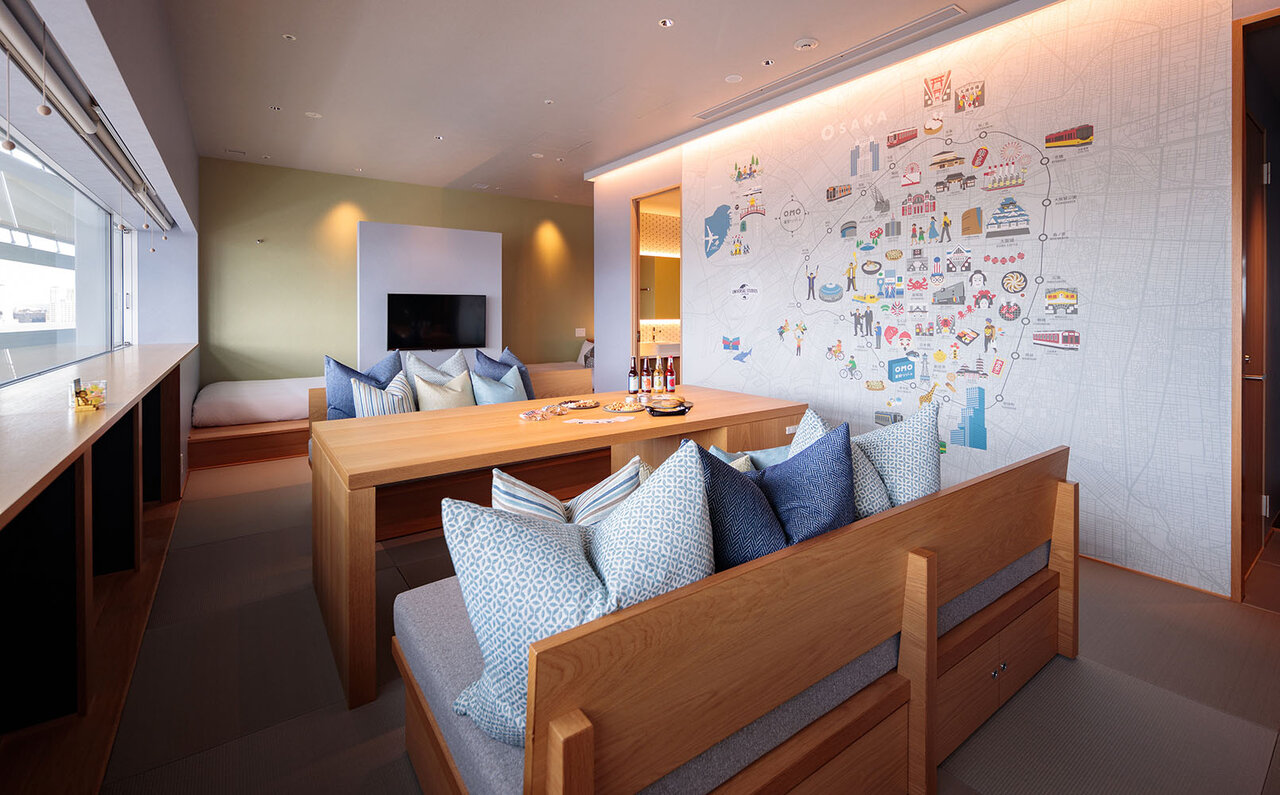
There are 8 types of guest rooms, totaling 436 rooms. Among them, the "Idobata Suite," approximately 60 square meters, is particularly popular. In the center of the room is a large table and sofa perfect for "Idobata Kaigi" (fireside chats), where guests can plan their trip while looking at the "OSAKA Board" displayed on the wall. The bed spaces in the four corners of the room, separated like semi-private rooms, are also very modern.
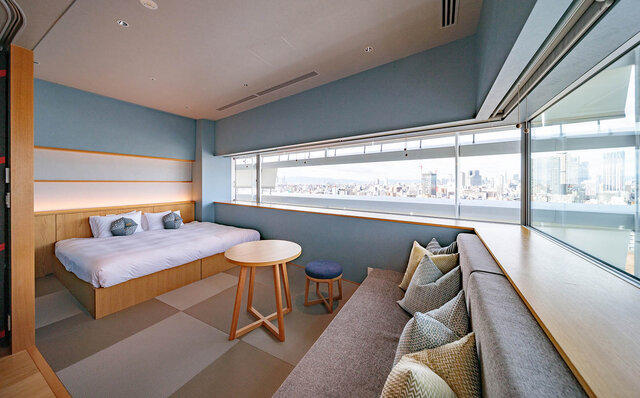
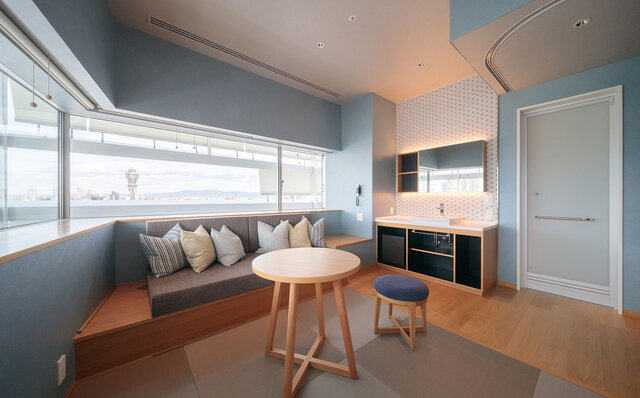
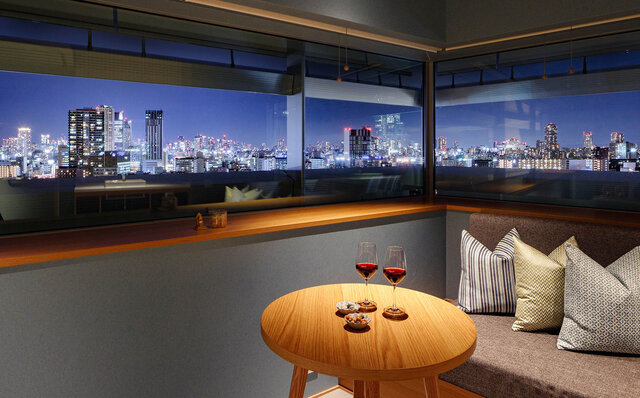
"Corner Twin." The dual-aspect windows offer breathtaking views, both day and night.
"Corner Twin." The dual-aspect windows offer breathtaking views, both day and night.
"Corner Twin." The dual-aspect windows offer breathtaking views, both day and night.
This time, I stayed in a Corner Twin room. There are only four rooms per floor, each with windows on two sides. From my room, I could see Tsutenkaku Tower.
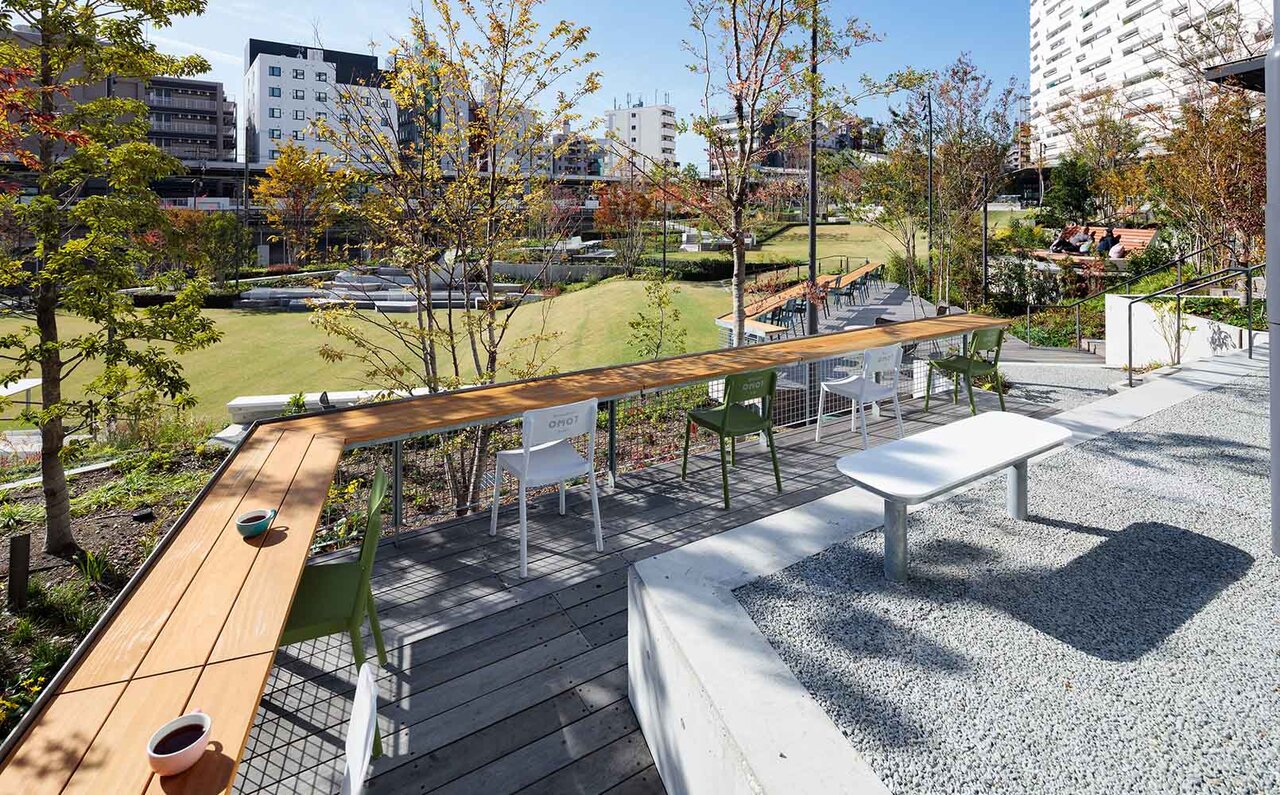
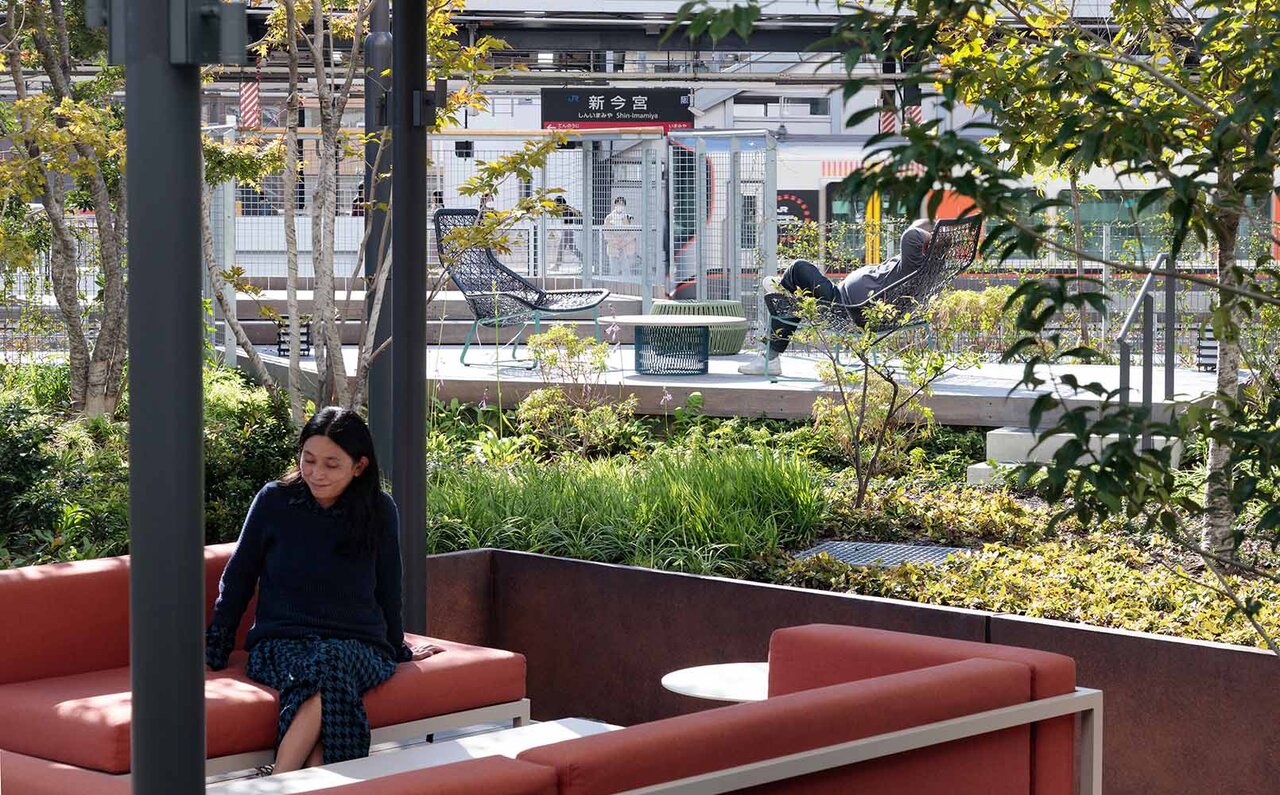
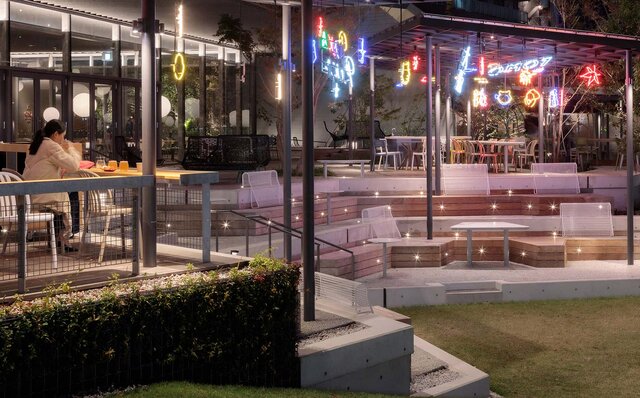
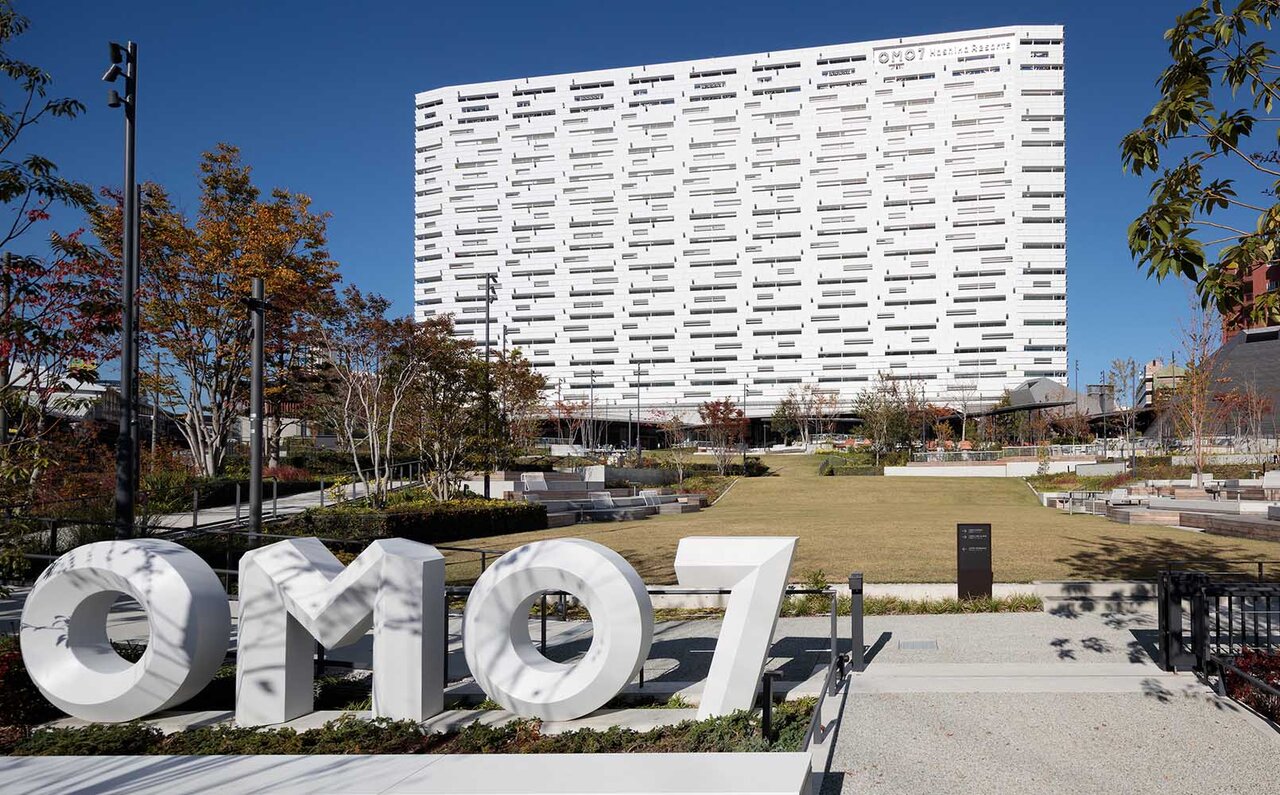
The charmingly named "Miyagurin" comes from "miya" (palace/shrine, referring to Shin-Imamiya) and "green." This spacious lawn area is terraced like rice paddies, with deck terraces, walking paths, stylish chairs, and colorful cushions, making it a perfect place to relax.
The deck terrace of "Miyagurin" is at the same height as the platform of Shin-Imamiya Station. From the easternmost gazebo, closest to the station, you can recognize acquaintances among those waiting for the train (laughs).
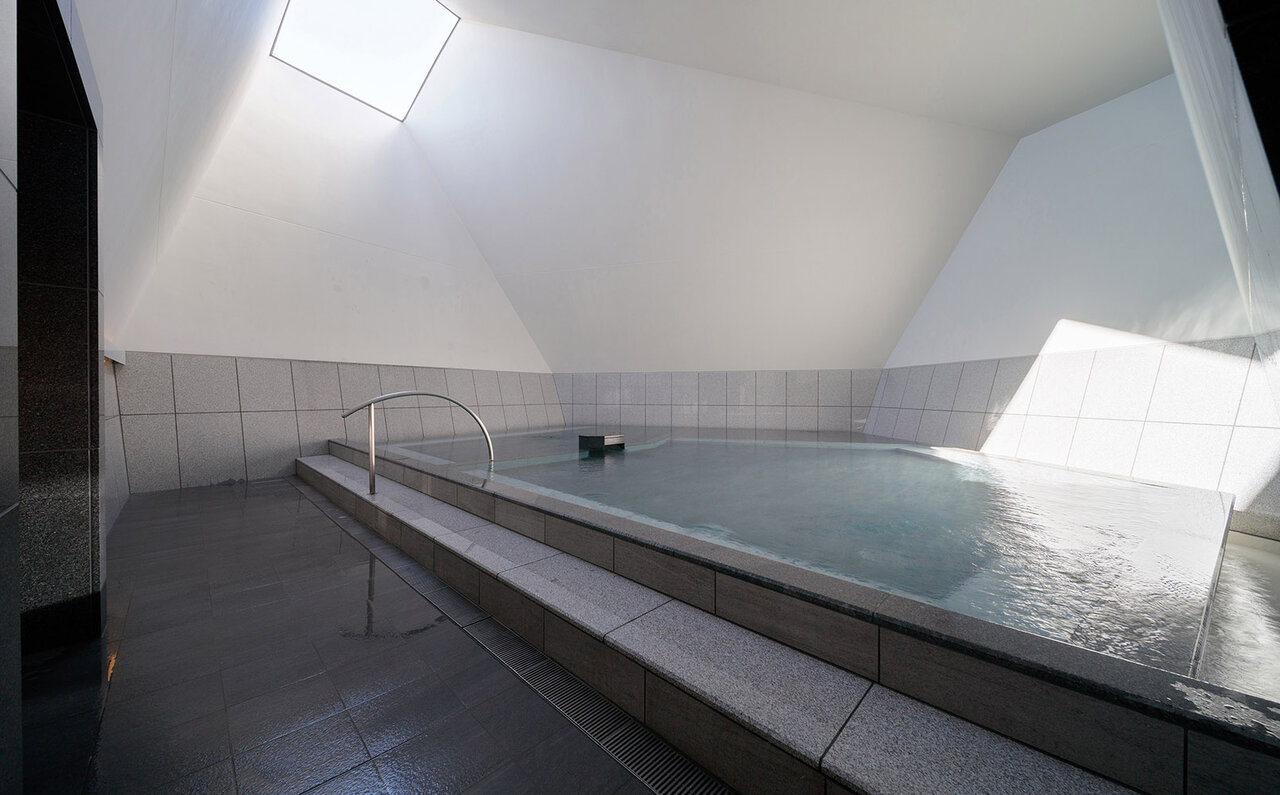
The hot spring facility, "Yuya," which embodies Osaka's public bath culture, is also wonderful. The high ceiling with skylights lets in the light beautifully. The bathtub, illuminated by the morning sun, was truly magical. And can you see it? The skylight opens! This provides a superb sense of openness! It's even designed so that rainwater doesn't fall in on rainy days. After bathing, they offered ice candy from Osaka's famous "551 HORAI." Since I don't get to eat it often living in Tokyo, this service made me incredibly happy (laughs).
The number following "OMO" indicates the extent of the hotel's facilities and services; the smaller the number, the simpler the facilities, and the larger the number, the more comprehensive they are. OMO7 Osaka, with the large number 7, is the highest-tier full-service hotel in the "OMO" brand. It offers a full-course dinner in its restaurant, something not available at other "OMO" properties.
OMO Dining
The course, themed around "expressing the essence of Osaka's food," offers two options: "Naniwa Neo Classic," a glamorous reinterpretation of Osaka's traditional dishes like hakozushi (boxed sushi) and semba-jiru (a type of soup) using French culinary techniques, and "Naniwa KUSHI Cuisine," an innovative arrangement of Osaka's soul food, kushikatsu (deep-fried skewers). Each consists of 8 courses and costs 13,000 yen.
Both sound intriguing, don't they? Furthermore, "Naniwa Neo Classic" was supervised by Tatsuro Nakasu, the executive chef of HOSHINOYA Taketomi Island, and "Naniwa KUSHI Cuisine" by Noriyuki Hamada, the executive chef of HOSHINOYA Tokyo. Both are top chefs at Hoshino Resorts, each having won the Japanese competition of the Bocuse d'Or, known as the world's most prestigious French culinary competition.
My expectations are sky-high.
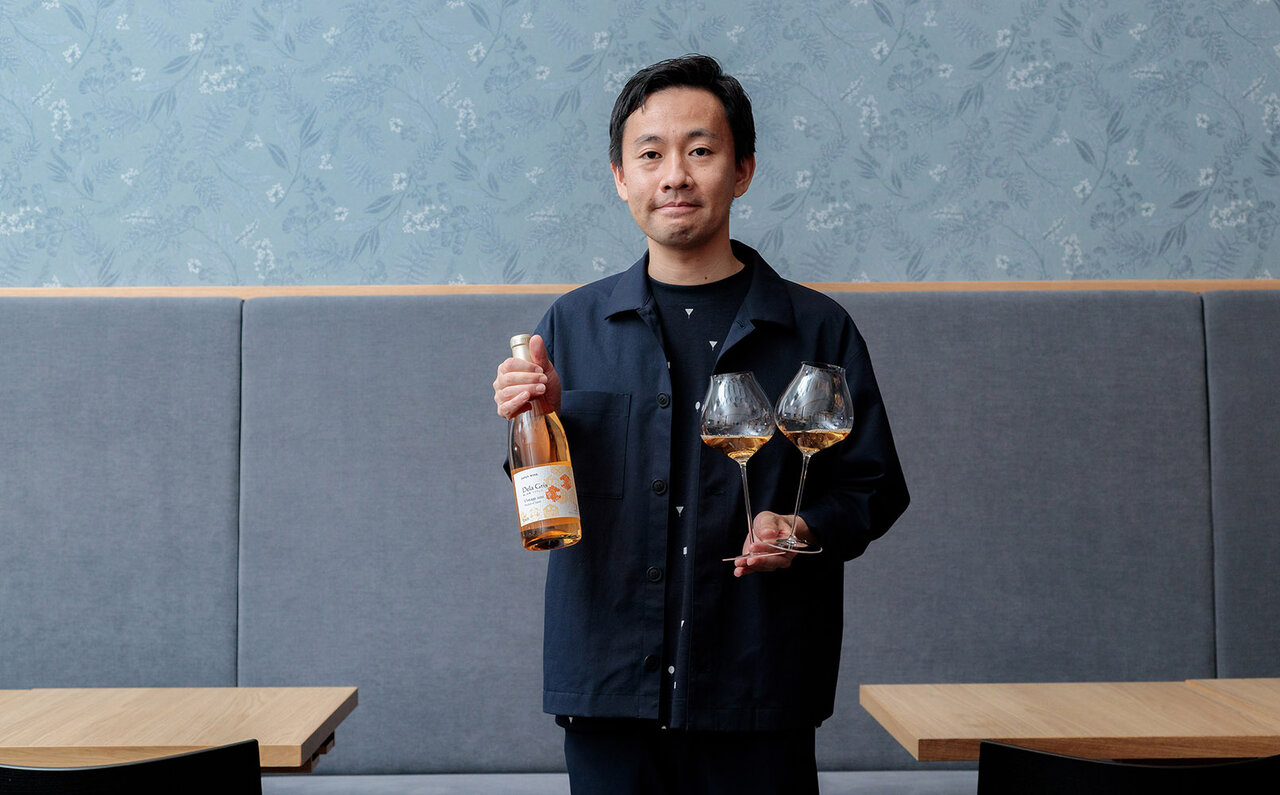
According to Manager Ken Hirai (yes, that's a name to notice!), "The pairings are decided through discussions among all the staff. The content changes depending on the season and what's available, and since this is OMO7 Osaka, we decide without being bound by convention, with a good sense of flexibility. This time, it just so happens to be all wine, but beer, sake, and spirits may also be included."
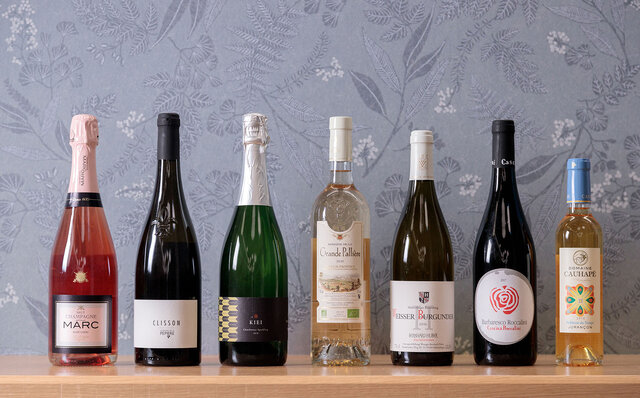
These are the pairing bottles for "Naniwa Neo Classic."
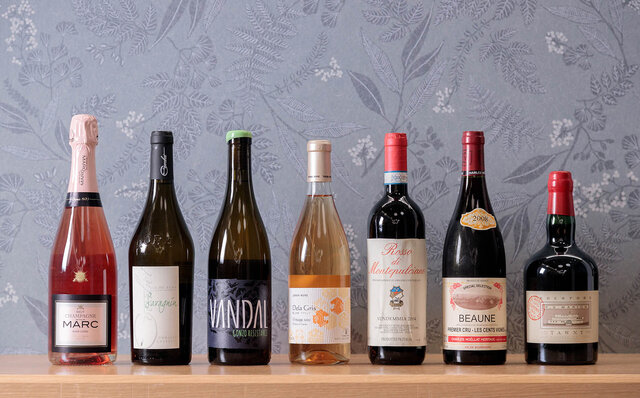
And these are the pairing bottles for "Naniwa KUSHI Cuisine."
It's also wonderful that alcoholic pairings (7 types, 8,000 yen) are available to match each course. Hmm, I'm getting even more excited.
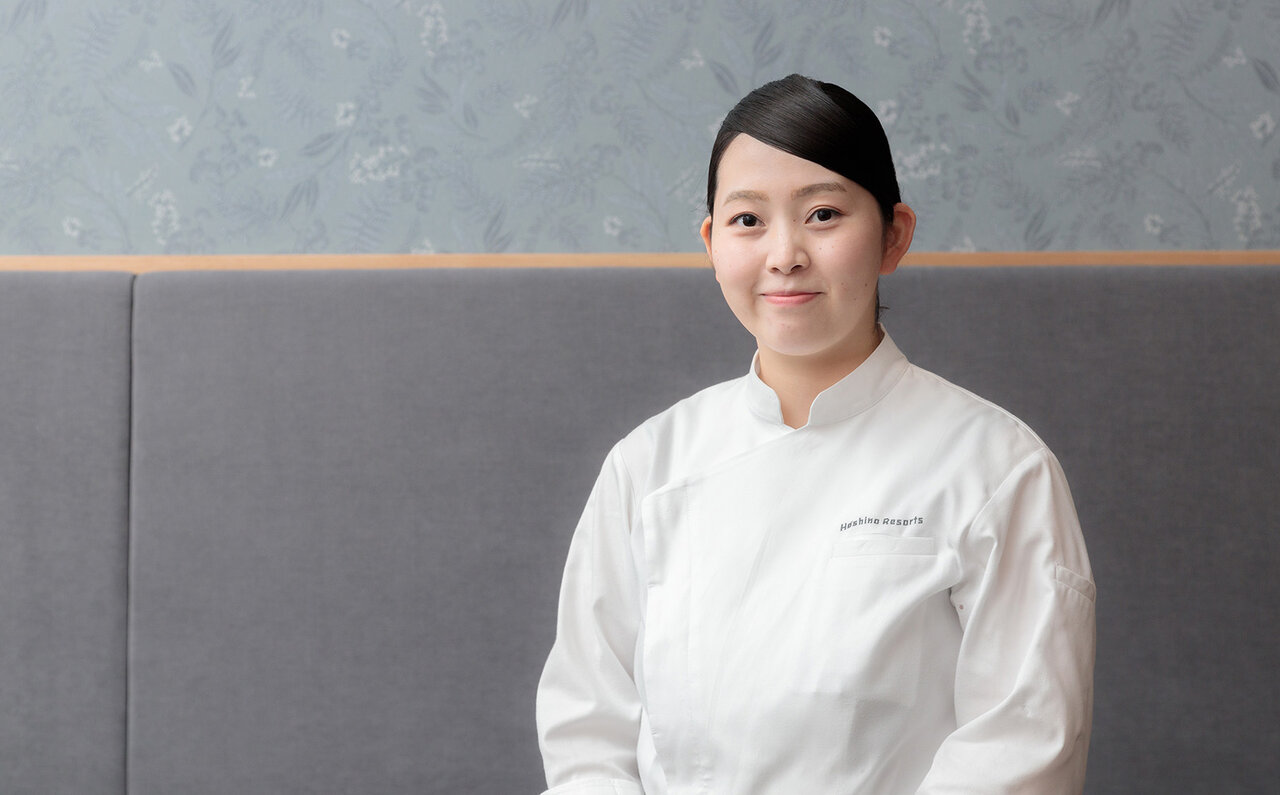
Ms. Takii, originally from Hyogo Prefecture, began her career at Hoshino Resorts TOMAMU's main dining room, "OTTO SETTE TOMAMU," and was appointed executive chef of OMO7 Osaka upon its opening.
The executive chef at OMO7 Osaka is Kyoka Takii, in her fourth year with the company. "For about one to two weeks after I was offered the position, I couldn't believe it was true,'" she says. With her fresh sensibility, Ms. Takii has adapted the dishes supervised by Mr. Nakasu and Mr. Hamada into "dishes that can be enjoyed not just by eating, but with all five senses." "There are also some playful elements, so please enjoy them," she adds with a smile.
Now, let me introduce three distinctive dishes and their pairings from each course.
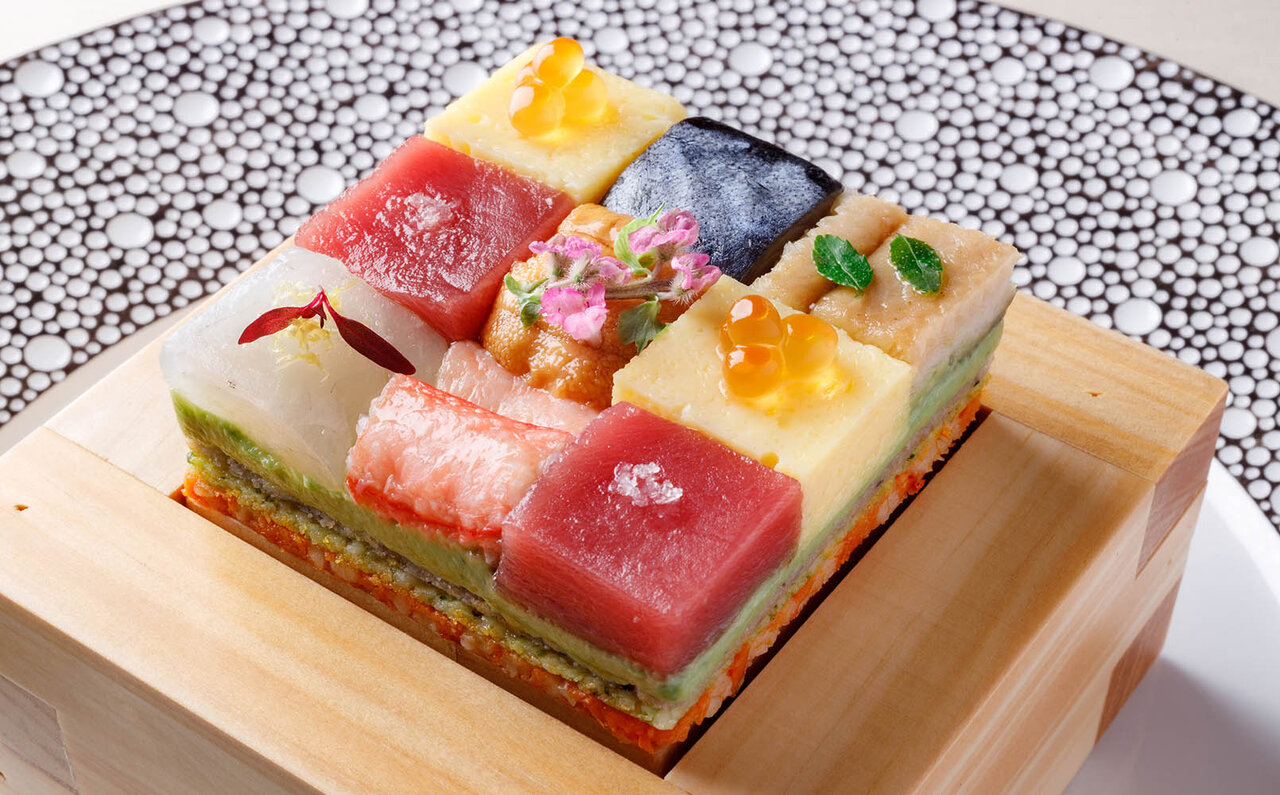
Hakozushi (boxed sushi). The container itself is also cleverly designed, embodying Osaka's spirit – not just glamorous, but also with a touch of playful humor that makes you chuckle.
The "Naniwa Neo Classic" course begins and ends with hakozushi, an unprecedented approach. The first dish is a reinterpretation of hakozushi, a traditional Osaka dish of vinegared rice and seafood packed in a wooden box. "To make it lighter," says Ms. Takii, "we used layers of avocado, couscous, risoni (a type of pasta), genovese, and potato instead of vinegared rice, creating an appetizer. The surface is vibrantly colored with ingredients like egg, mackerel, conger eel, sea bream, tuna, crab, and sea urchin. My excitement is at full throttle. As if sensing my mood, the first pairing was a rosé champagne from "Marc Brédif," infused with the aroma of blood orange. My heart fluttered even faster.
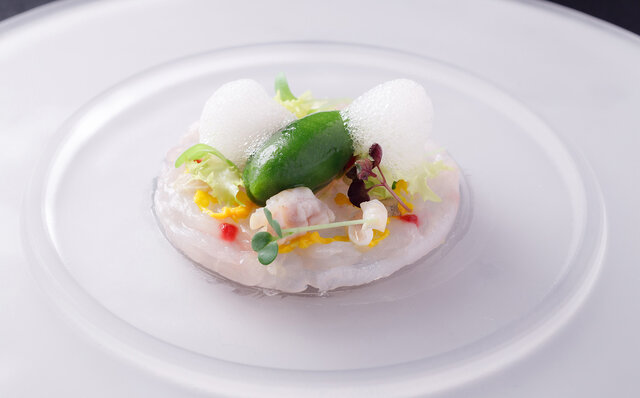
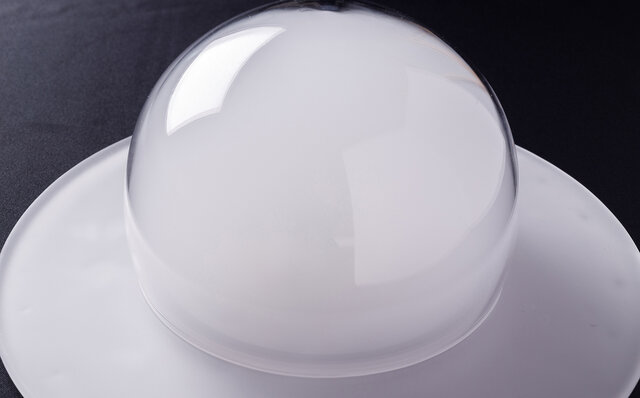
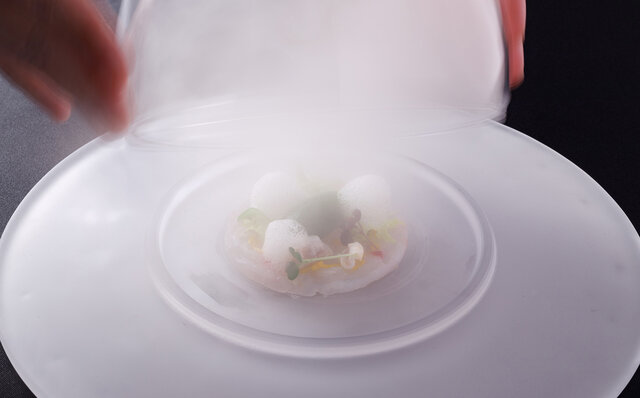
Kassen (sashimi). The presentation in a dome-shaped container with smoke is also elaborate.
Kassen (sashimi). The presentation in a dome-shaped container with smoke is also elaborate.
Kassen (sashimi). The presentation in a dome-shaped container with smoke is also elaborate.
Next is "Kassen." In Osaka, sashimi is called "kassen." For this course, we are served "tessa," which is fugu sashimi. While tessa is typically enjoyed with condiments like irizake (sake reduction), me-negi (green onions), and momiji oroshi (spicy radish paste), the "Naniwa Neo Classic" offers green onion ice cream, beet puree, and a foam made from daiginjo sake. What a surprise (laughs)! To pair with this, we have "Crisson" from Domaine de la Epierre in the Loire Valley, France, a natural wine made from 100% Muscadet. "As this dish has French elements," says Mr. Hirai, "we chose this wine with its minerality and oily, slightly bitter taste to complement it."
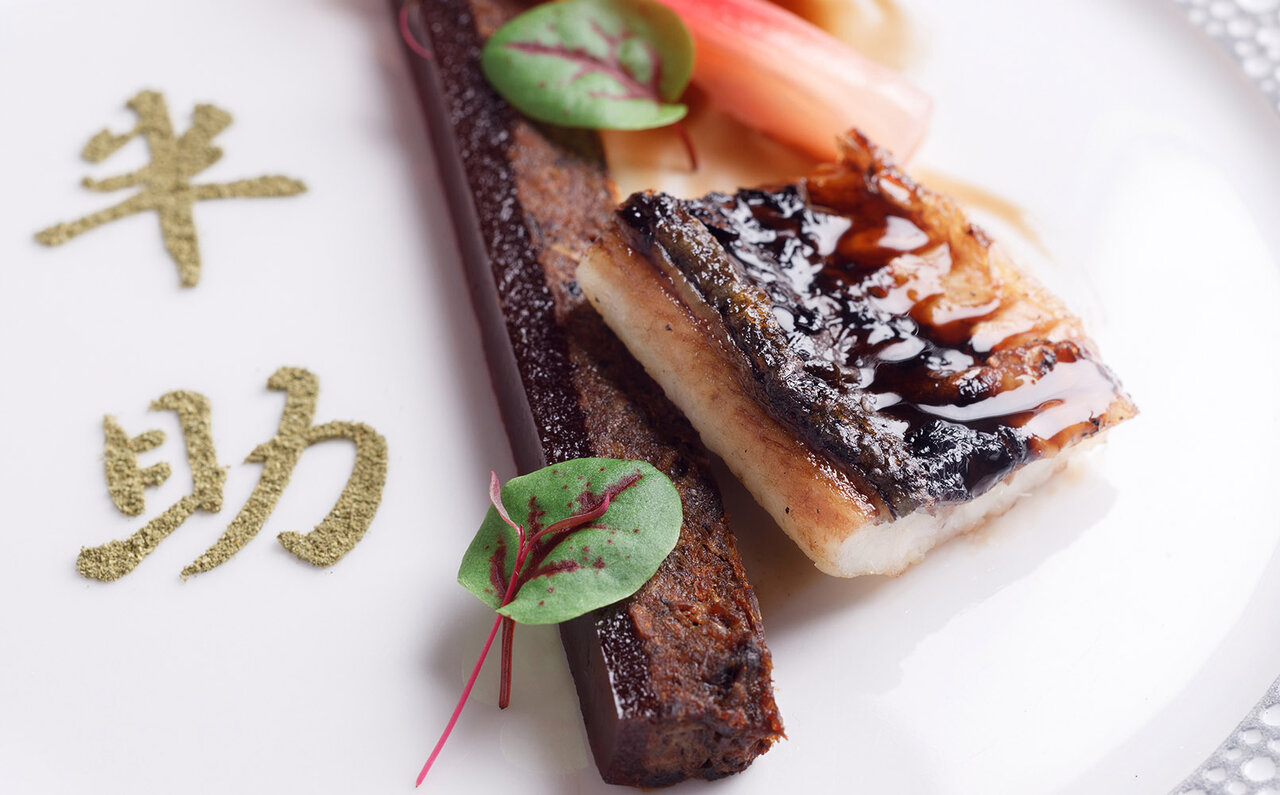
Hansuke. The eel's head is simmered in a jelly using consommé instead of dashi.
The dish, with the characters for "Hansuke" (meaning less than one yen, referring to eel heads often discarded) drawn in sansho and matcha powder, is an eel version of the French dish "Tête de fromage" (braised pig's head). In Osaka, eel heads, often discarded as they are considered to be worth less than one yen, are thoroughly simmered in a pressure cooker, expressing Osaka's food culture of using ingredients without waste. The eel meat is simmered in a sweet madeira sauce, prepared in a kabayaki (grilled eel) style.
You might expect this to be paired with sake... "It pairs wonderfully with a fruity daiginjo," says Mr. Hirai. However, the chosen companion for this "Hansuke" today is the sparkling wine "KIEI" from Kawachi Wine in Habikino City, Osaka. Made from Delaware grapes grown in their own vineyards, this bubbly wine has a rich acidity. "One of our staff suggested this might pair well, and it turned out to be a perfect match, even better than I imagined (laughs). It goes particularly well with the jelly," says Mr. Hirai.
Although there isn't a photo, the course concludes with a dessert version of "hakozushi." It features white chocolate, a base of pistachio and raspberry, topped with square-cut fruits and mascarpone.
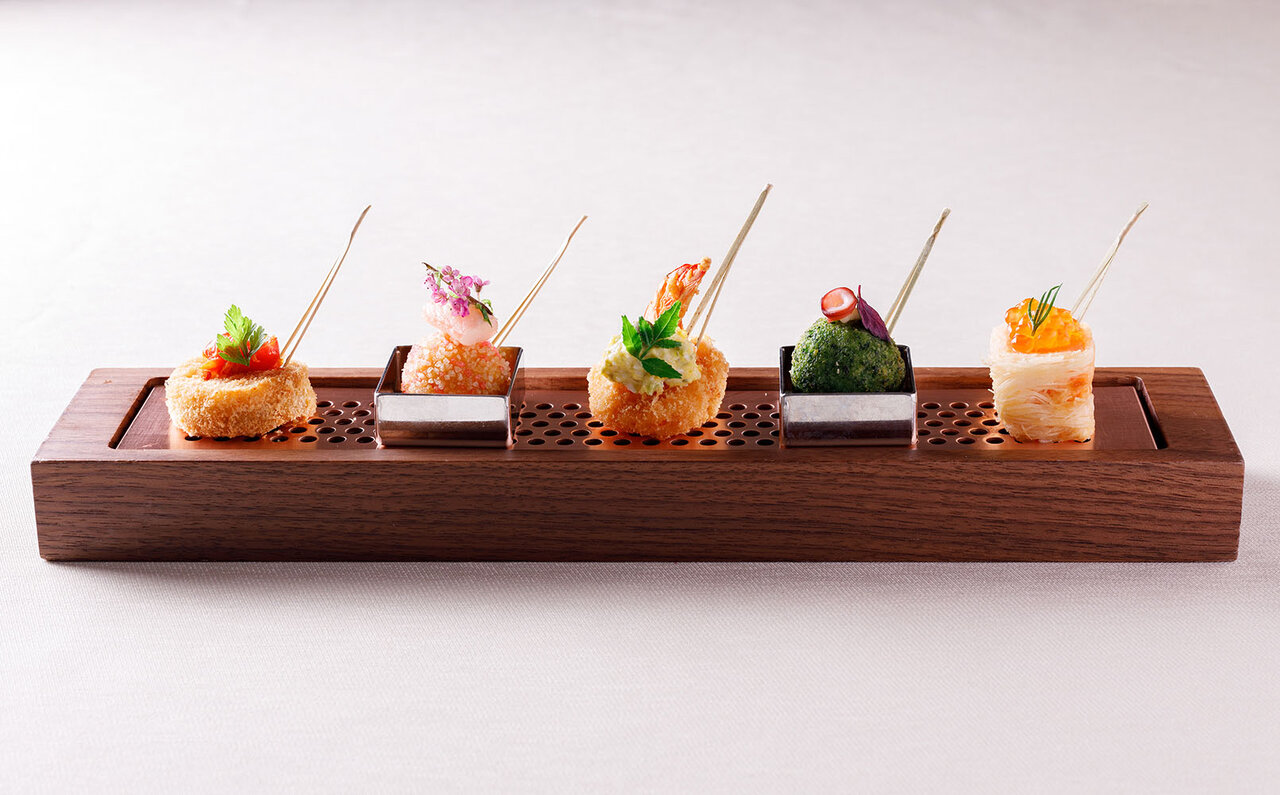
Lotus root, crab, shrimp, octopus, salmon. This appetizer, with its carefully chosen coatings and sauces for each ingredient, is a fitting start to a course that pays utmost respect to kushikatsu.
The other course, "Naniwa KUSHI Cuisine," features dishes from appetizer to dessert, all incorporating skewers. The first dish is a skewer of five types of seafood: "Lotus root, crab, shrimp, octopus, salmon." For example, the lotus root is served with a mousse of squid and scallop. The crab cream croquette is paired with an Америкaine sauce made from shrimp stock. The salmon wrapped in kataifi pastry offers a delightful crispiness. The silver square dish holding the skewers is inspired by kushikatsu sauce cans. "We hope you enjoy the appearance and the chic style of these skewer dishes," says Ms. Takii.
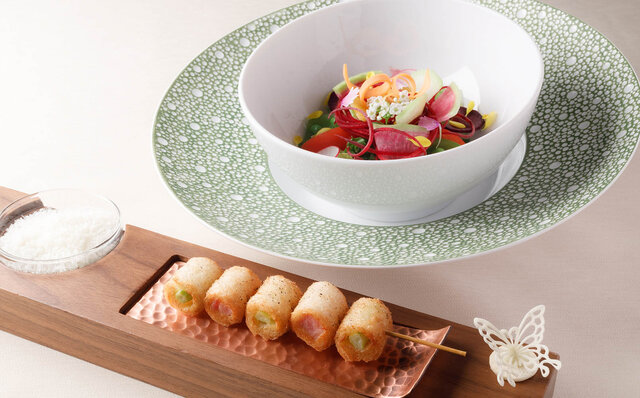
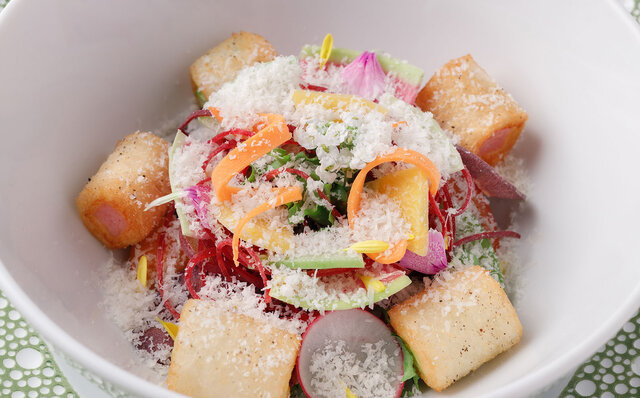
Asparagus and bacon. Beneath the fresh vegetables lies Caesar dressing. Guests then mix the skewer of asparagus, bacon, and cheese, fried in a mille-feuille style, into the dressing to complete the Caesar salad.
Asparagus and bacon. Beneath the fresh vegetables lies Caesar dressing. Guests then mix the skewer of asparagus, bacon, and cheese, fried in a mille-feuille style, into the dressing to complete the Caesar salad.
Asparagus and bacon. Beneath the fresh vegetables lies Caesar dressing. Guests then mix the skewer of asparagus, bacon, and cheese, fried in a mille-feuille style, into the dressing to complete the Caesar salad.
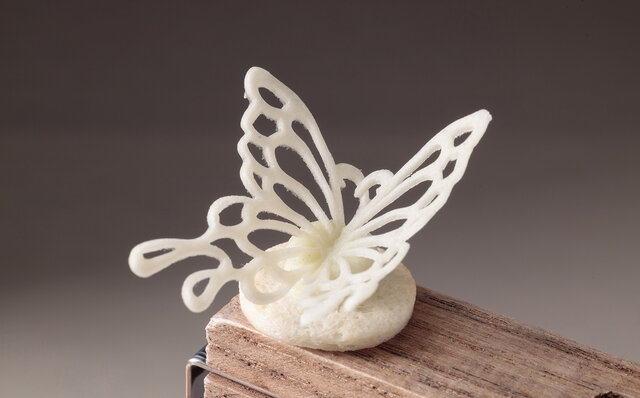
The second dish, "Asparagus and Bacon," is a Caesar salad inspired by butterflies fluttering down onto "Miyagurin." The presentation is also spectacular. In French restaurants, the main course is sometimes served under a silver cloche, right? This is the Osaka version: it's presented under a lid resembling an okonomiyaki pan. When the lid is lifted, a delicate floral aroma wafts out. Ms. Takii instructs the staff to say, "Butterflies have descended upon a flower field when serving this to guests," a testament to her confidence and dedication. The delicate butterfly tuile is, of course, edible.
The pairing is "Vandal Gonzo Resistance," a Sauvignon Blanc from Vandal, located in the Marlborough region of New Zealand. Vandal is a project launched by three winemakers based in Marlborough who, without revealing their identities, aim to disrupt traditional Marlborough wine styles. They create innovative wines, "made using not only the skins but also the whole bunches. It has the herbal aroma characteristic of Sauvignon Blanc, along with the oiliness from the bunches, making it a perfect match for the rich flavor of Caesar salad," says Mr. Hirai.
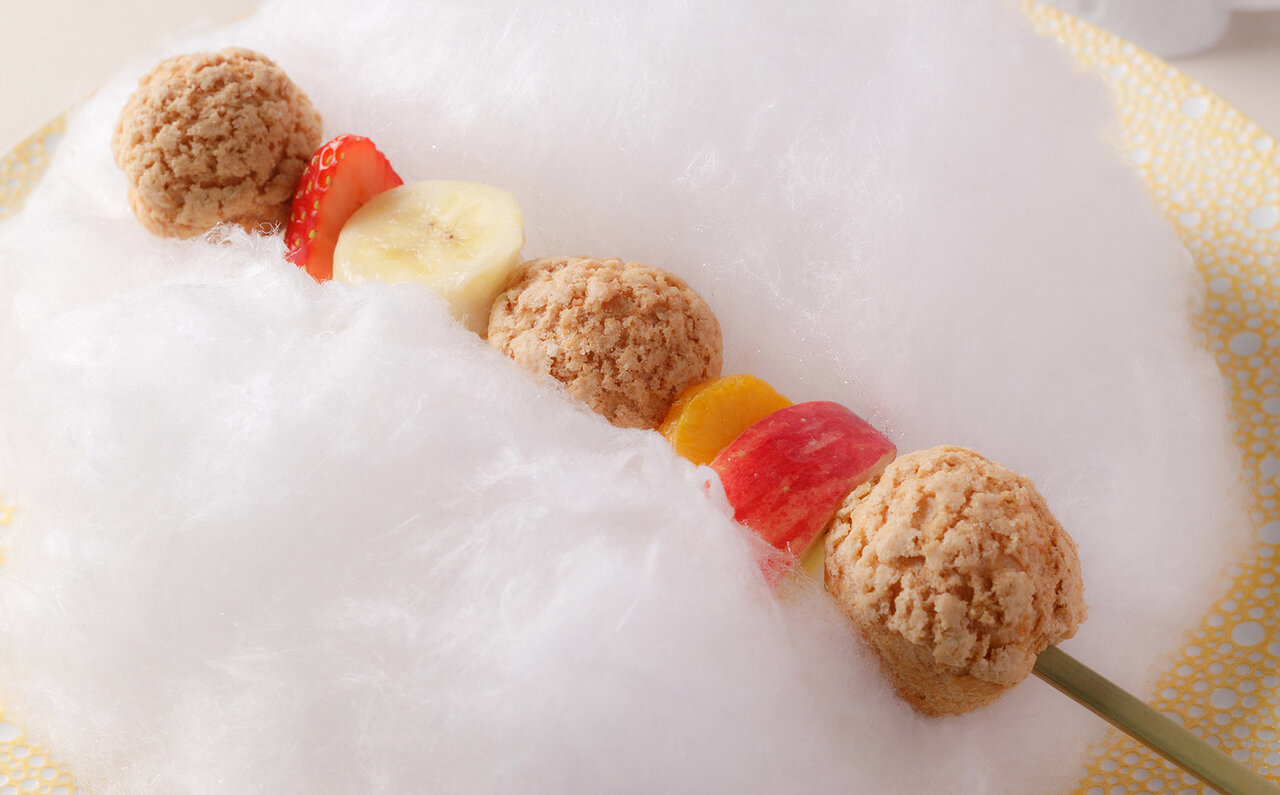
Cotton candy. When topped with Osaka's signature mixed juice, the cotton candy dissolves, revealing skewers of fruit and cream puffs.
I was also amazed by the dessert, "Cotton Candy." In a good way, of course. Cotton candy, a staple at summer festivals in the Showa era, is served on a plate. The fruits are banana and orange, ingredients of mixed juice, and the cream puffs are also mixed juice flavored – a true tribute to Osaka. Let's enjoy the melted cotton candy generously coating the skewers.
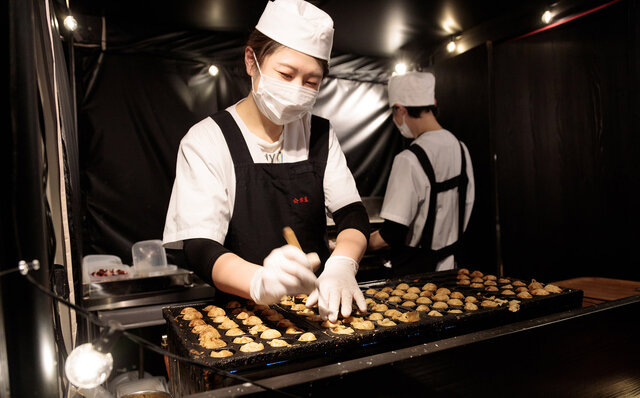
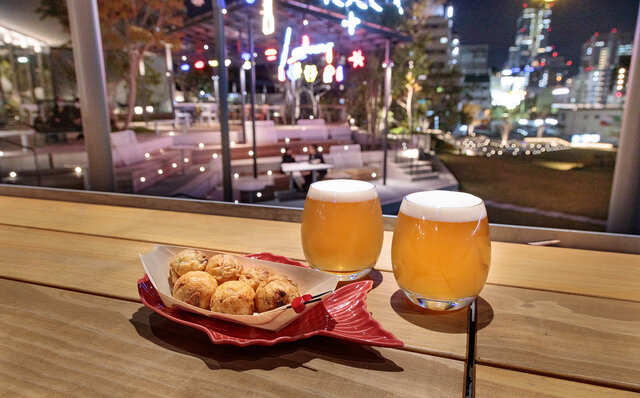
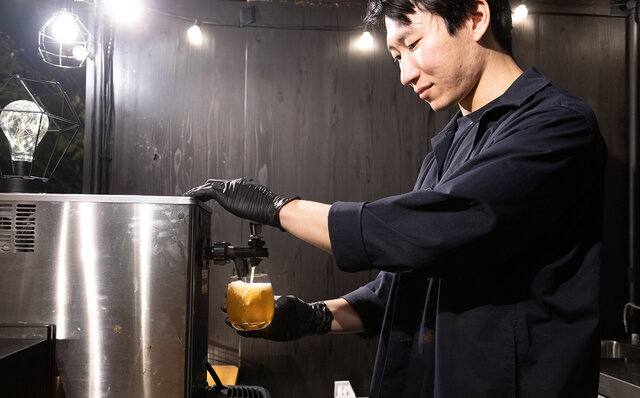
At night, "Miyagurin" becomes a festival every day! On the terrace deck, guests are treated to takoyaki freshly made by artisans from "Aizuya," said to be the birthplace of takoyaki, and craft beer brewed by Osaka's "Derailleur Brew Works." To think that such a space, fulfilling an adult's dream, exists in this world! (*Craft beer may be replaced with a different brand depending on availability and season.)
At night, "Miyagurin" becomes a festival every day! On the terrace deck, guests are treated to takoyaki freshly made by artisans from "Aizuya," said to be the birthplace of takoyaki, and craft beer brewed by Osaka's "Derailleur Brew Works." To think that such a space, fulfilling an adult's dream, exists in this world! (*Craft beer may be replaced with a different brand depending on availability and season.)
At night, "Miyagurin" becomes a festival every day! On the terrace deck, guests are treated to takoyaki freshly made by artisans from "Aizuya," said to be the birthplace of takoyaki, and craft beer brewed by Osaka's "Derailleur Brew Works." To think that such a space, fulfilling an adult's dream, exists in this world! (*Craft beer may be replaced with a different brand depending on availability and season.)
At night, "Miyagurin" becomes a festival every day! On the terrace deck, guests are treated to takoyaki freshly made by artisans from "Aizuya," said to be the birthplace of takoyaki, and craft beer brewed by Osaka's "Derailleur Brew Works." To think that such a space, fulfilling an adult's dream, exists in this world! (*Craft beer may be replaced with a different brand depending on availability and season.)
At night, "Miyagurin" becomes a festival every day! On the terrace deck, guests are treated to takoyaki freshly made by artisans from "Aizuya," said to be the birthplace of takoyaki, and craft beer brewed by Osaka's "Derailleur Brew Works." To think that such a space, fulfilling an adult's dream, exists in this world! (*Craft beer may be replaced with a different brand depending on availability and season.)
At night, "Miyagurin" becomes a festival every day! On the terrace deck, guests are treated to takoyaki freshly made by artisans from "Aizuya," said to be the birthplace of takoyaki, and craft beer brewed by Osaka's "Derailleur Brew Works." To think that such a space, fulfilling an adult's dream, exists in this world! (*Craft beer may be replaced with a different brand depending on availability and season.)
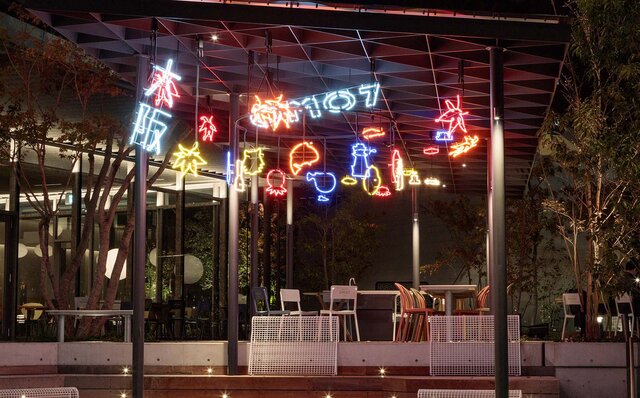
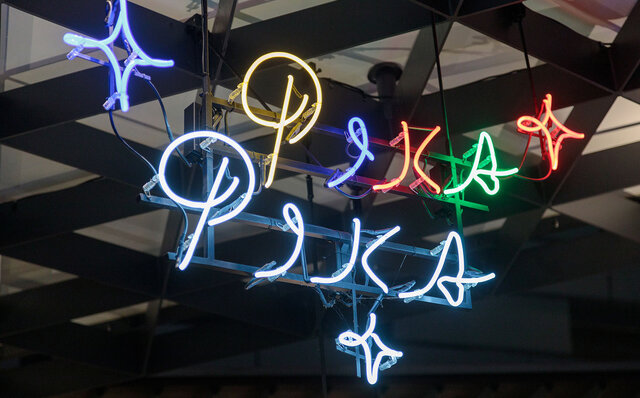
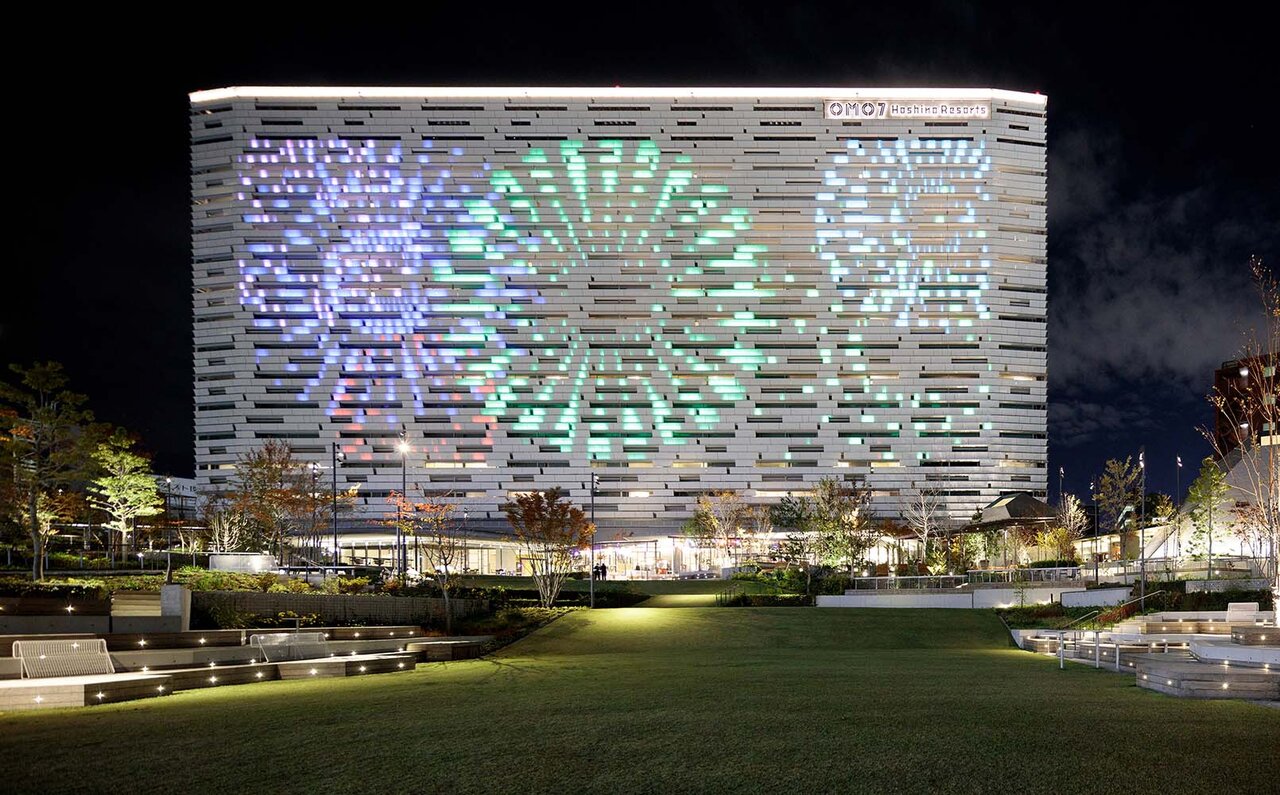
The striking white exterior of OMO7 Osaka catches the eye. The building is covered with a white membrane reminiscent of a ship's sail. Yoshiharu Hoshino, the representative of Hoshino Resorts, conceived the idea of "doing something" with this membrane. At night, the building transforms into a canvas for light art. Approximately 13,000 LED lights are projected from beneath the membrane. The content changes with the seasons, but during my late autumn visit, they were holding "PIKAPIKA Autumn Leaves Night." Fireworks, autumn leaves, and icons symbolizing Osaka were projected across the entire facade.
After finishing the 8-course meal, you should be quite full, but the "foodie festival" presented by OMO7 Osaka is not over yet. At night, "Miyagurin" offers complimentary takoyaki and local beer! Is it okay to be this happy...?
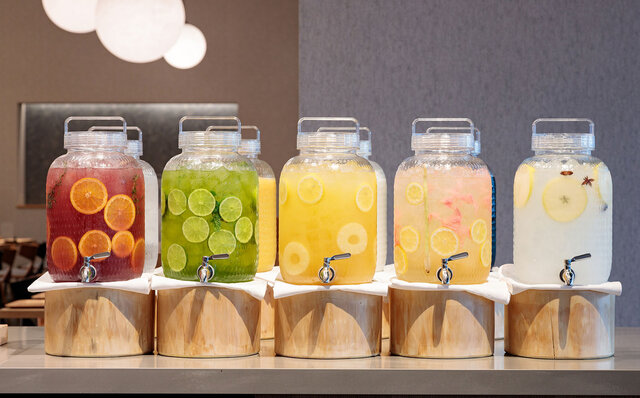
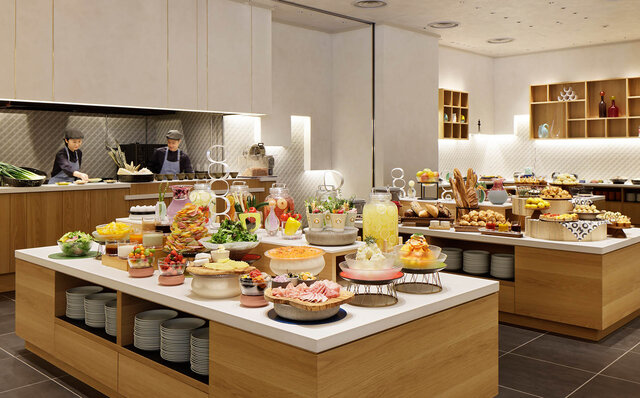
Breakfast is also a must-try! At "OMO Dining," you can enjoy a buffet bursting with Osaka flavor. As you enter the dining area, you're greeted by colorful flavored waters like lemon and grapefruit & peach. "Oh, how cute!" I exclaimed, already in photo mode, when I noticed a delicious dashi aroma wafting from further in.
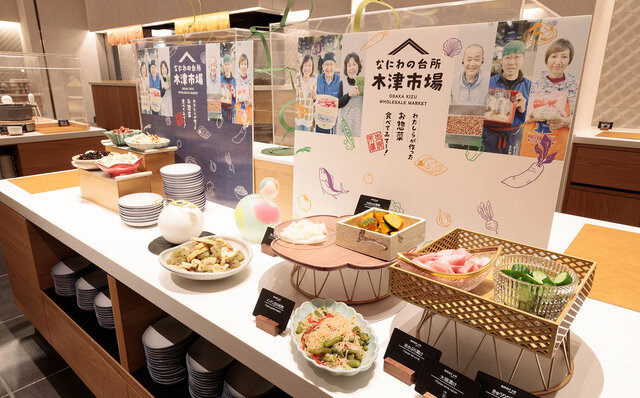
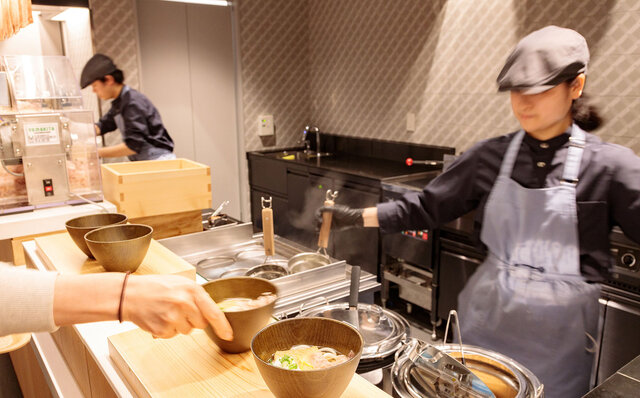
Drawn by the scent, I moved further in to find live stations preparing kitsune udon and negiyaki on the spot! Both are served with plenty of freshly shaved bonito flakes. The fluffy bonito flakes are exquisite. The fried tofu pouches (age) on the udon are soaked in dashi, and they burst with flavor, like a comforting song to my tired insides from overeating and drinking. There was also a corner with side dishes sourced from the "Osaka Kizhi Wholesale Market," about a 15-minute walk from the hotel. If you find something you like, you might consider buying it at the market. Bread, ham, and cheese are also plentiful. I don't think you'd get bored even if you came for a week, or even a month. In my personal opinion, this is a strong contender for "Breakfast of the Year" that gets you excited.
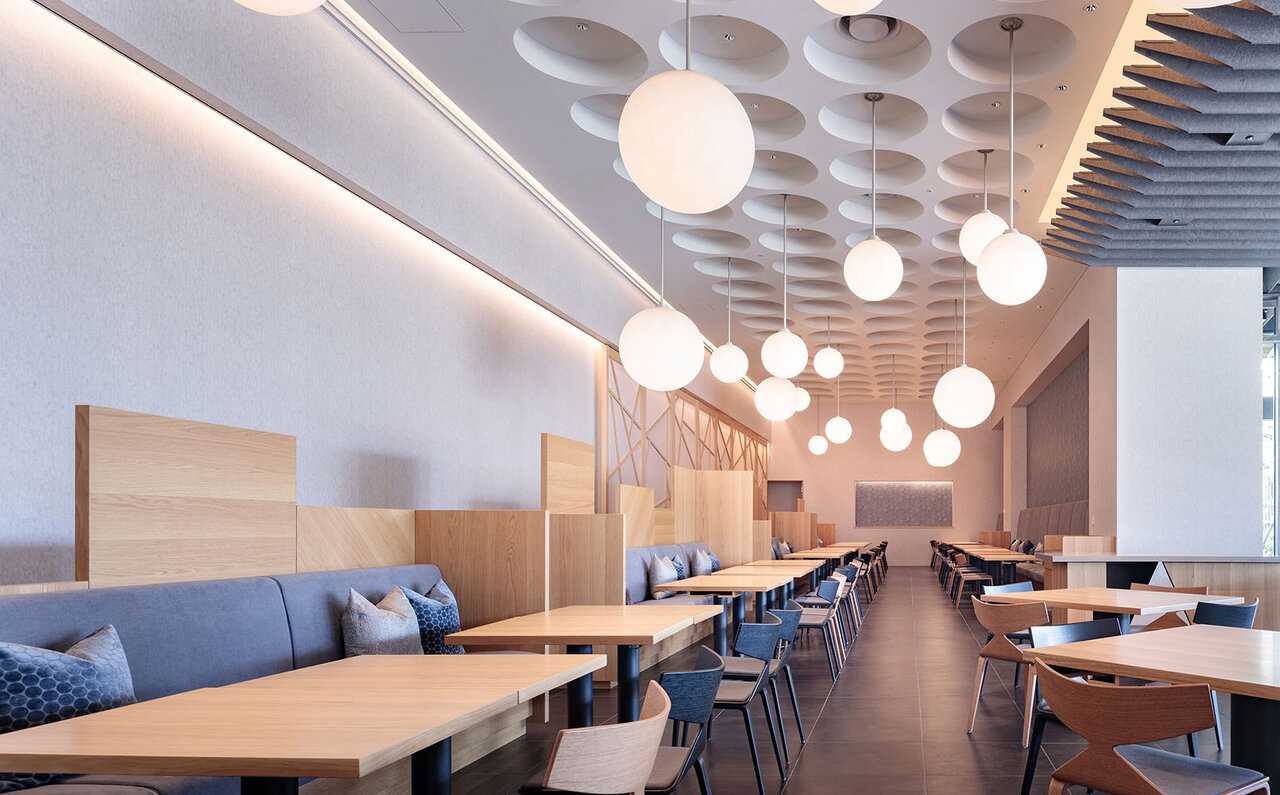
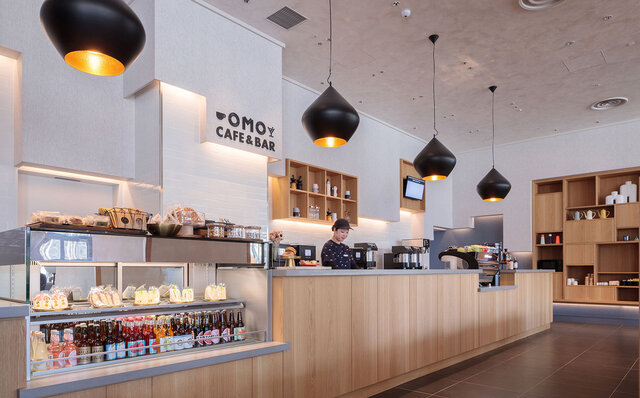
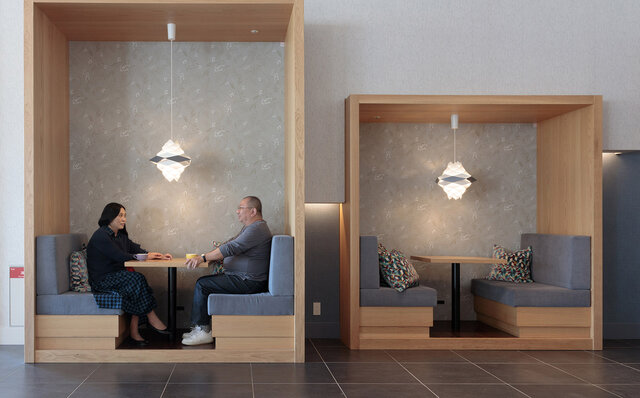
The cafeteria "OMO Cafe & Bar." This space is also accessible to non-guests. In the afternoon, it was bustling with local ladies (I assume).
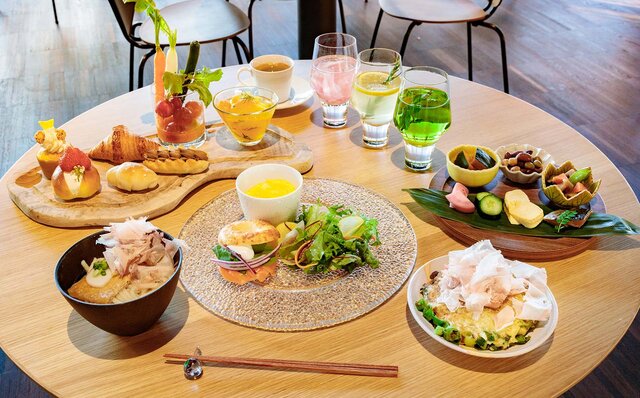
Additionally, "OMO Cafe & Bar" offers five types of morning sets. I'd love to try those next time!
OMO7 Osaka allows you to savor the traditional food culture that Osaka has cultivated over many years, while also proposing new flavors of Osaka. It felt less like staying at a hotel and more like genuinely enjoying a theme park focused on "Osaka." By the time I left, I was sure I'd love Osaka even more. Ah, I really must visit for two nights next time.
OMO7 Osaka by Hoshino Resorts Address: 3-16-30 Ebisunishi, Naniwa-ku, Osaka-shi, Osaka Prefecture Access: Directly in front of Shin-Imamiya Station on JR and Nankai Railways Number of Rooms: 436 Rates: Twin room from ¥61,000 per night (per room, tax included, includes 2 meals); Idobata Suite from ¥109,200 per night (per room, tax included, includes 2 meals)