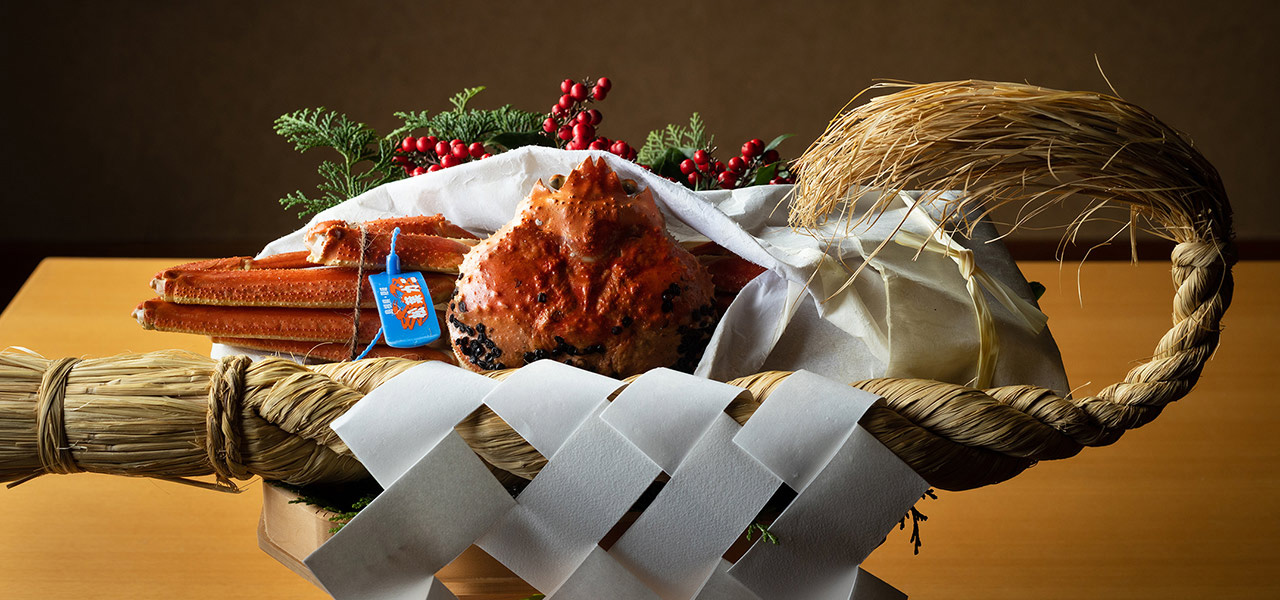
Steamed Live Crab Offering
Facing the Matsuba crab alone in Izumo. A dialogue with the gods. A moment of bliss | TRAVEL
TRAVEL | HOSHINO RESORTS Tamatsukuri
To Know is to Savor: Tamatsukuri Edition (Part 1)
I've made a groundbreaking discovery. Crabs, so engrossing to pick at that one falls silent, are perhaps a foodstuff worthy of renewed attention now that "silent dining" is recommended? This may be a disrespectful statement towards the "crab god," who reigns supreme in the realm of feasts, but shouldn't we be paying more attention to crabs right now?!
Photographs by Kaku Ohtaki | Text by Aya Hasegawa | Edited by Takashi Tsuchida
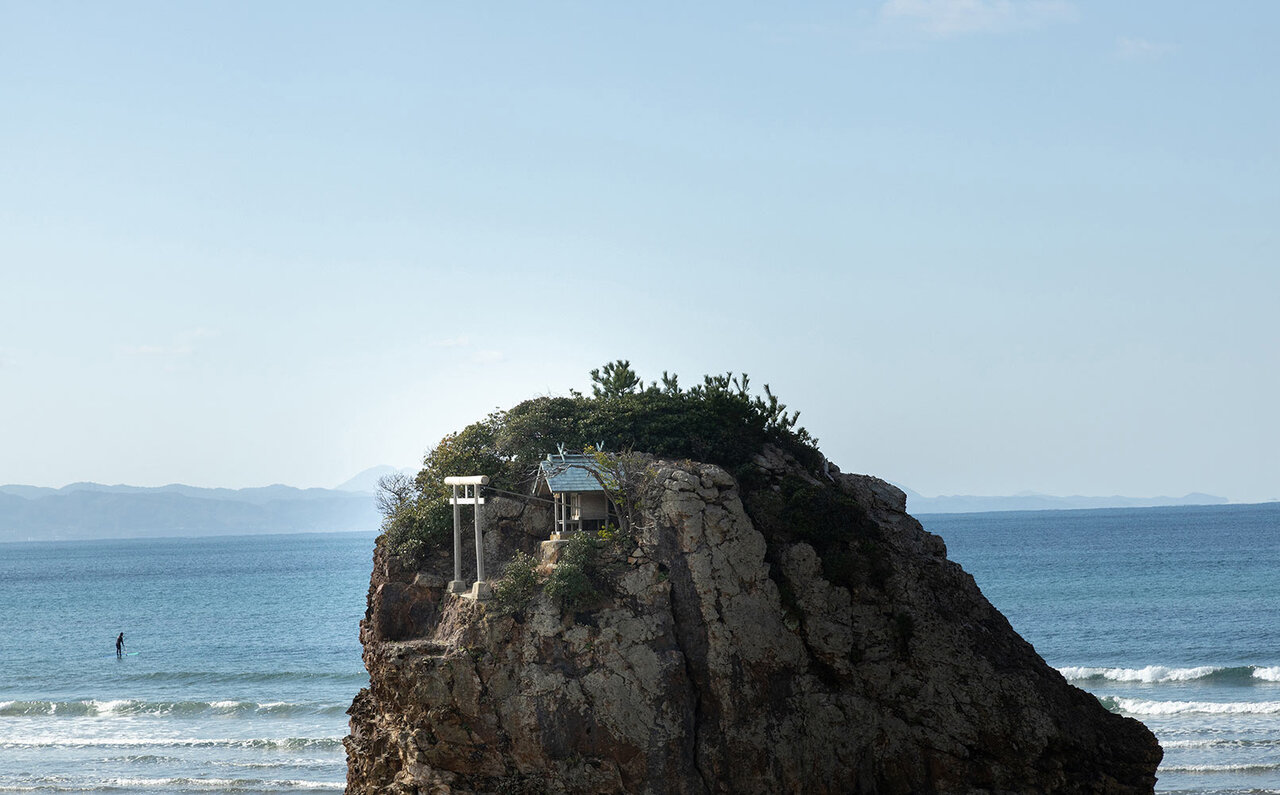
Inasa Beach. Located 1km west of Izumo Taisha Shrine, this beach is known for the myths of Kuniyuzuri (transfer of land) and Kunihiki (land pulling).
Silent Dining and Matsuba Crab: Could there be a more perfect pairing?
I thought so after visiting "KAI Tamatsukuri" in Tamatsukuri Onsen, Shimane Prefecture, this past winter. With the solo travel market expanding and the impact of the pandemic, Hoshino Resorts has been actively promoting solo travel experiences. Since 2020, KAI Kaga in Ishikawa Prefecture and KAI Tamatsukuri in Shimane Prefecture have started offering "Solo Matsuba Crab Kaiseki" meals. In their first year, over 40% of solo travelers at both facilities booked this special crab course.
Generally, at both traditional restaurants and inns, crab courses often require a minimum of two people. However, at KAI, even before the "Solo Matsuba Crab Kaiseki" plan was introduced in 2020, they were already able to accommodate individual orders for crab courses, with the philosophy of "allowing guests traveling alone to fully enjoy crab!" ...Impressive!
I had to experience this! So, I visited "KAI Tamatsukuri." To be upfront, it was one of the best crab experiences of my life, rivaling my visit to "KAI Kaga" the year before last.https://openers.jp/lounge/lounge_travel/RiznPThe sheer joy of savoring crab, with a sense of exhilaration like dining in a dragon's palace and a hint of guilt... By the end of the meal, I felt as if I had become a crab myself, giving a standing ovation... That makes no sense, does it? In short, it's that kind of kaiseki meal (laughs).
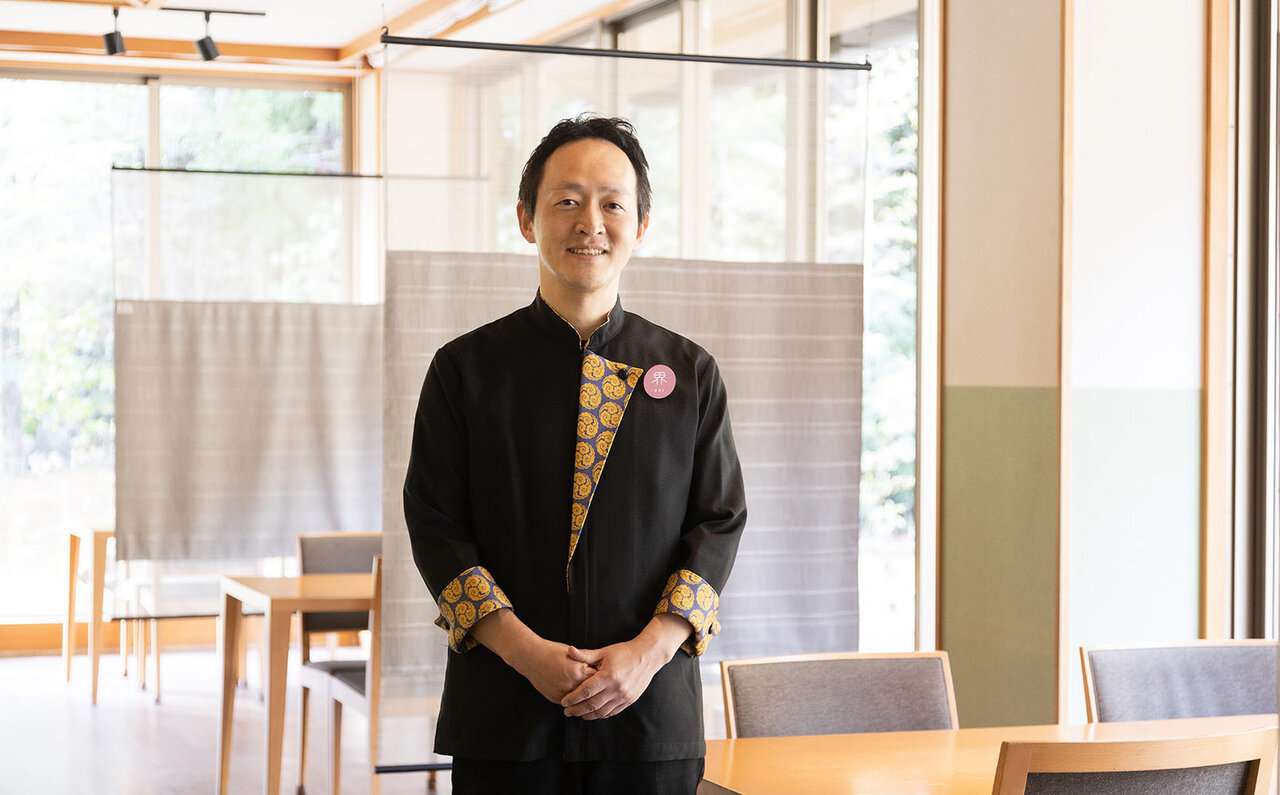
This is Masahiro Okamoto, the General Manager of KAI Tamatsukuri. He has managed various KAI properties, including KAI Kaga and KAI Anjin, and is an expert in operating onsen ryokans. Shimane Prefecture is also his hometown. His recommendations for exploring the area starting from KAI Tamatsukuri are always spot-on.
Now, let me introduce you to the dazzling "Solo Matsuba Crab Kaiseki" at Tamatsukuri.
Appetizer: Kōbako Crab
Sashimi: Assorted Sashimi
Steamed Crab: "Live Crab Offering Steam"
Grilled Shell: Grilled Crab Shell
Hot Pot: Crab and Clam Hot Pot
Meal: Crab Ojiya (rice porridge), Tamagtoji (egg drop), Pickles
Dessert: KAI Tamatsukuri Special Sake Lees Dessert
Sashimi: Assorted Sashimi
Steamed Crab: "Live Crab Offering Steam"
Grilled Shell: Grilled Crab Shell
Hot Pot: Crab and Clam Hot Pot
Meal: Crab Ojiya (rice porridge), Tamagtoji (egg drop), Pickles
Dessert: KAI Tamatsukuri Special Sake Lees Dessert
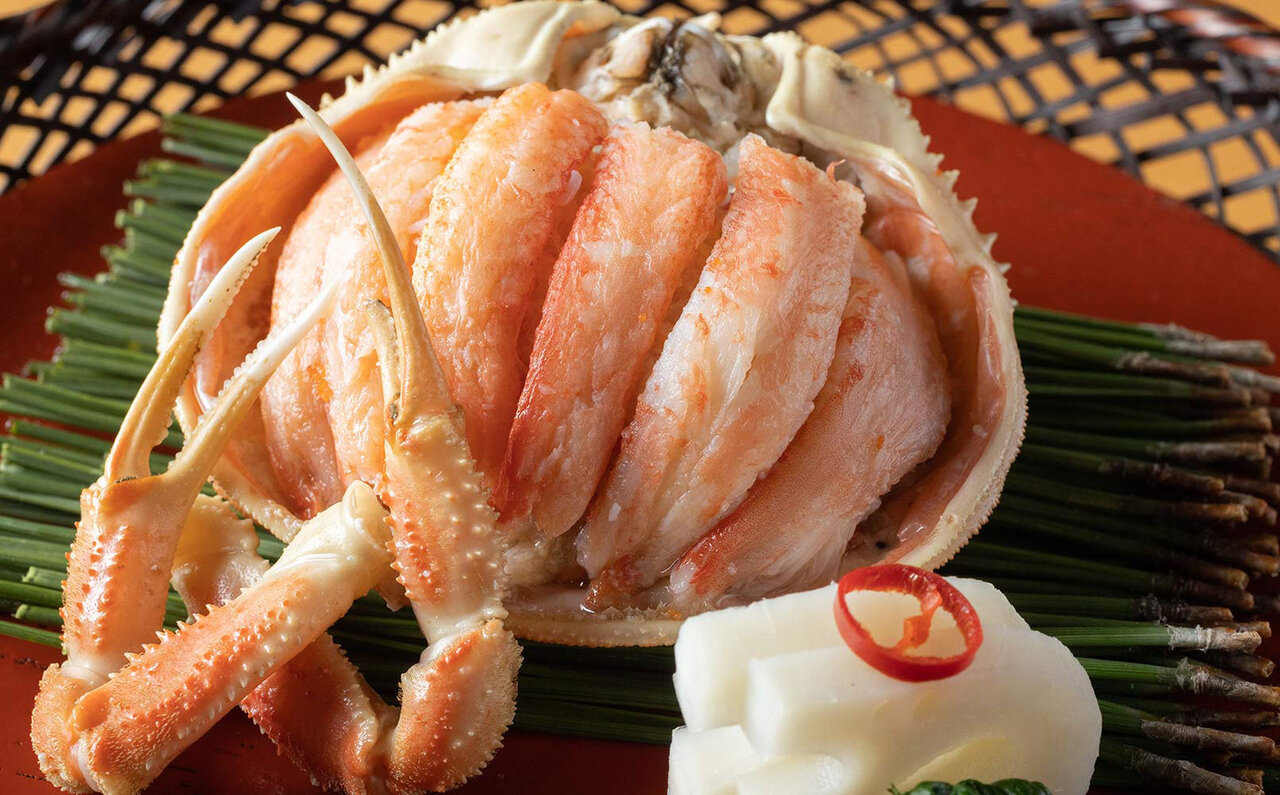
Appetizer: Kōbako Crab. The crab meat, the sensuous sweetness of the roe, and the popping milt—a perfect trinity! I was already captivated.
The "Solo Matsuba Crab Kaiseki" begins with "Kōbako Crab." According to General Manager Masahiro Okamoto, "We focused on beautiful presentation suitable for a solo diner, while bringing out the natural flavors of the ingredients." Indeed, it was breathtakingly beautiful. It's hard to imagine a more fitting start to a meal that will undoubtedly rank among the happiest dining experiences of my life.
After the sashimi, here it is: the main event, "Live Crab Offering Steam." Please refer back to the top image.
This is an original dish at KAI Tamatsukuri, inspired by the offerings made to the gods at Izumo Taisha Shrine. By steaming the crab sandwiched between cedar planks and wrapped in Japanese paper, the umami is said to be maximized without escaping. And here's something crucial, worth underlining in fluorescent pen: this dish uses Matsuba crab (a mature male snow crab caught off the San'in coast), the top star of the crab world, which enthusiasts rave about! The leg proudly bore a tag indicating its rightful origin.
Now, let's have Mr. Okamoto explain the characteristics of Matsuba crab.
"The meat is dense and the flavor is deep. The ones we have prepared today are from Oki, caught using basket fishing (a method where baskets are submerged on the seabed to catch crabs). Crabs caught this way are said to be less stressed than those caught with nets, resulting in a more refined flavor."
Is that so?! My expectations are so high I feel dizzy.
As I was overwhelmed by the sheer presence of the "Live Crab Offering Steam," which seemed to radiate a divine aura (or so it appeared to me!), the steamed crab was momentarily taken away with a polite, "Excuse me." "We'll cut it into easier-to-eat pieces so you don't get full just from peeling (laughs)," said Nami Suzuki, a staff member. How thoughtful. Yet, for some reason, I felt a strange sense of anticipation until it returned. Is this how a groom feels waiting for his bride in a wedding dress? (Definitely not!)
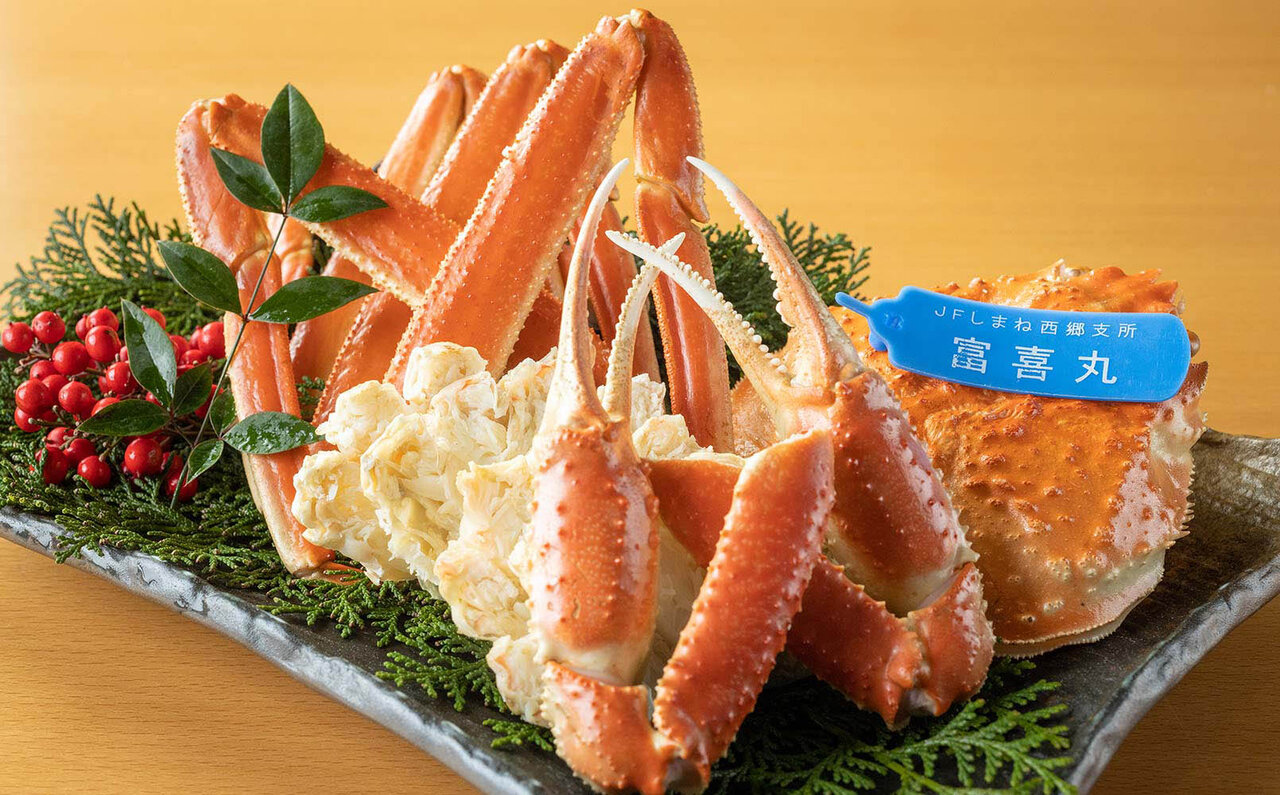
Live Crab Offering Steam (After a change of attire)
And then it returned, the steamed crab, glistening as if infused with the essence of the sea! Encased in the aroma of cedar, its flavor concentrated, it's no wonder people travel to Izumo just to savor this dish. The crab miso was also packed tightly. I paid my respects to the crab, which now existed solely for me to eat, and smiled. I whispered, "I am utterly captivated by you."
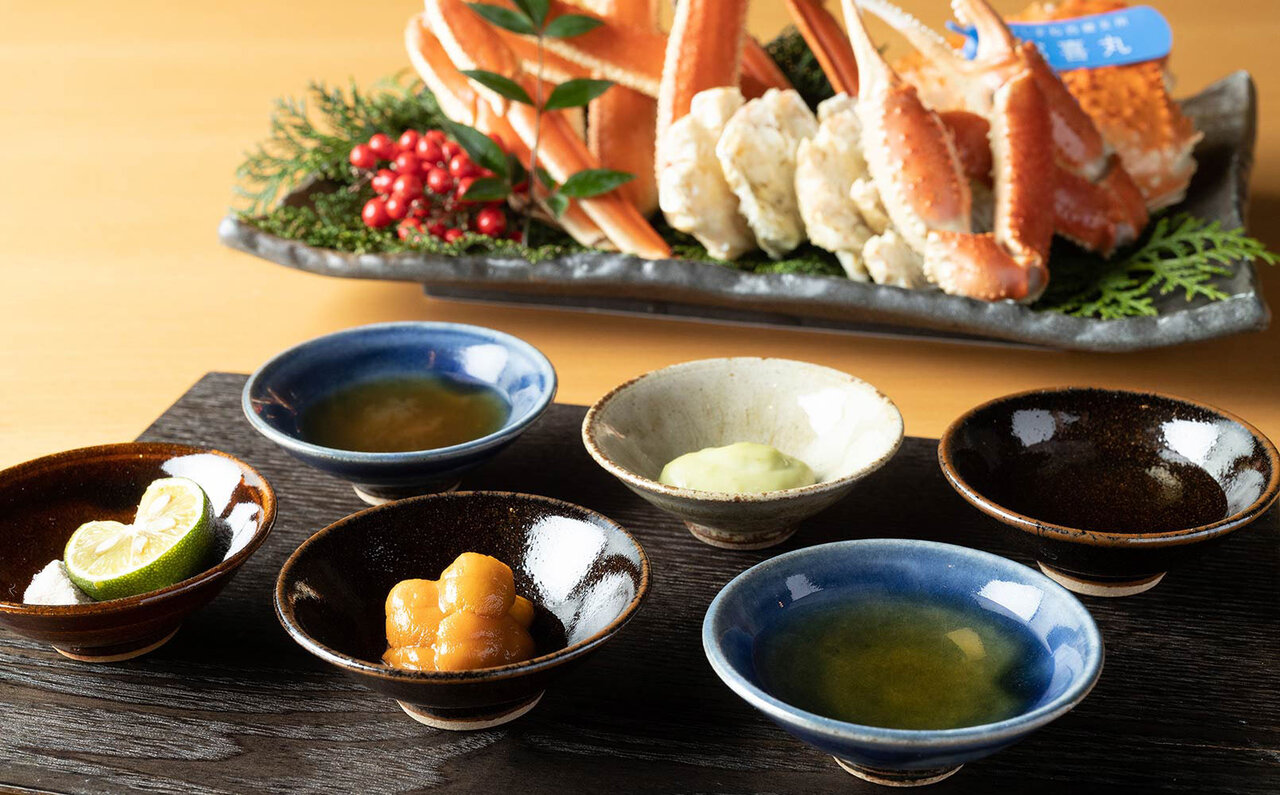
I must exclaim that to prevent palate fatigue, six types of condiments are provided for solo diners! The lineup includes crab salt with sudachi, irizake (sake reduced with soy sauce), aged shoyu, avocado mayonnaise, crab vinegar, and uni tairyo. These are exclusive to the "Solo Matsuba Crab Kaiseki"—meaning they are not served even if you order the crab kaiseki for two or more people. As an executive (self-proclaimed) of the "Japan Solo Traveler Association" (a non-existent organization), I humbly wish to present an award!
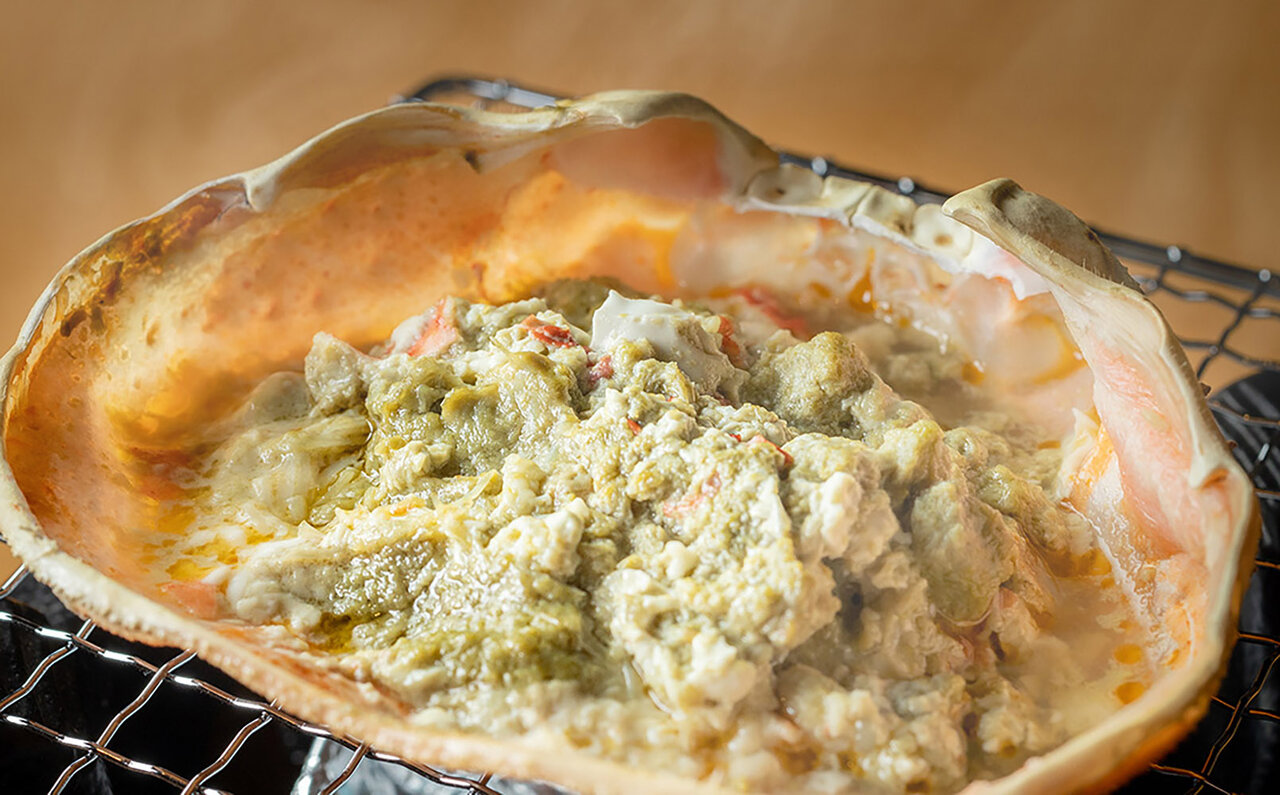
Grilled Crab Shell
Following the steamed crab, the next dish was "Grilled Crab Shell." The crab miso is mixed with mirin-seasoned sake before being heated. The texture of the meat and the flavor of the miso are distinctly different between steamed and grilled, and oh, it's so enjoyable! According to Ms. Suzuki, the biggest difference between crabs caught by basket and net lies in their miso. While I can't say for sure without comparing them side-by-side, I can confirm that the moment it touched my tongue, my taste buds and the cells in my mouth began to dance with joy.
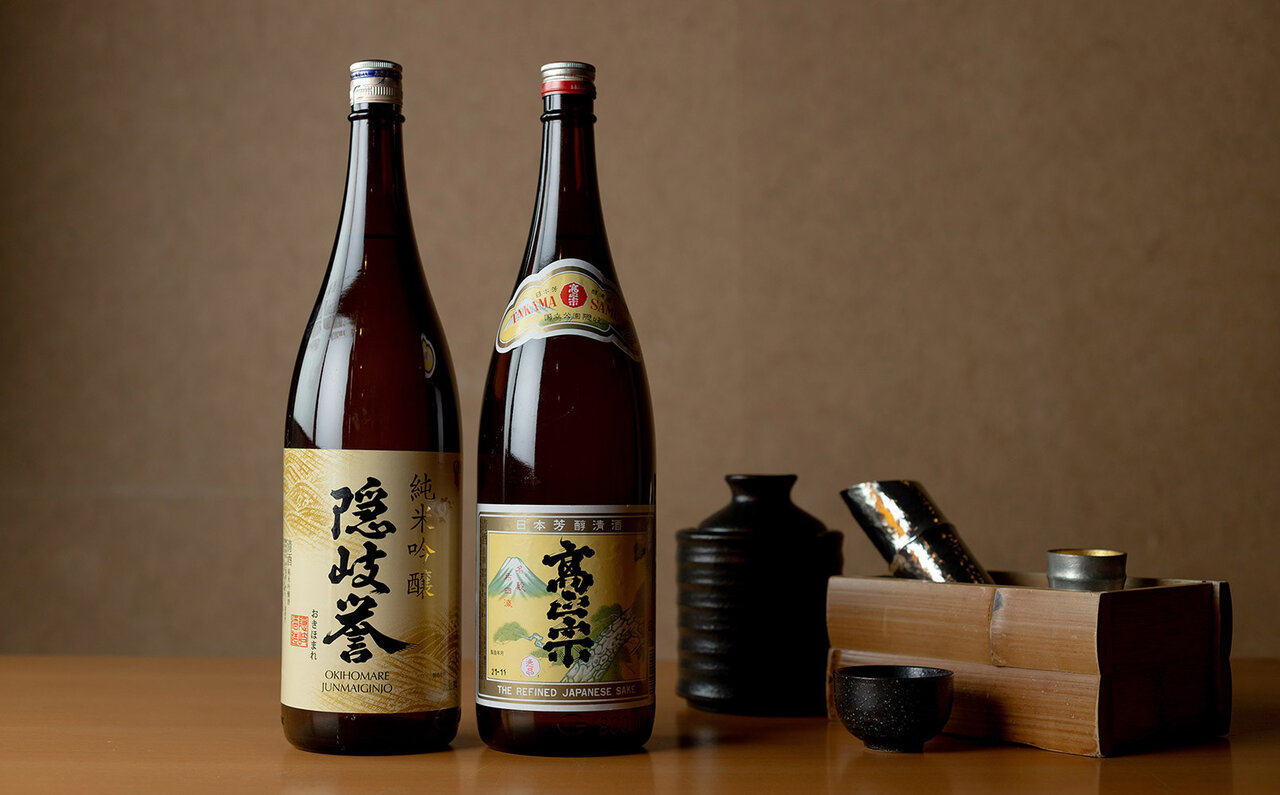
And speaking of grilled crab shells, one must have crab shell sake, right?! When I asked Ms. Suzuki, who has visited all 30 sake breweries in Shimane Prefecture, for her recommendation, she said, "I think Takamasamune, affectionately known as 'Takamasa,' is a good choice. It's made by Oki Shuzo in Oki, and it's available everywhere around here, so I call it 'the father's sake of Matsue.' When I go to an izakaya, I always start with a hot Takamasa."
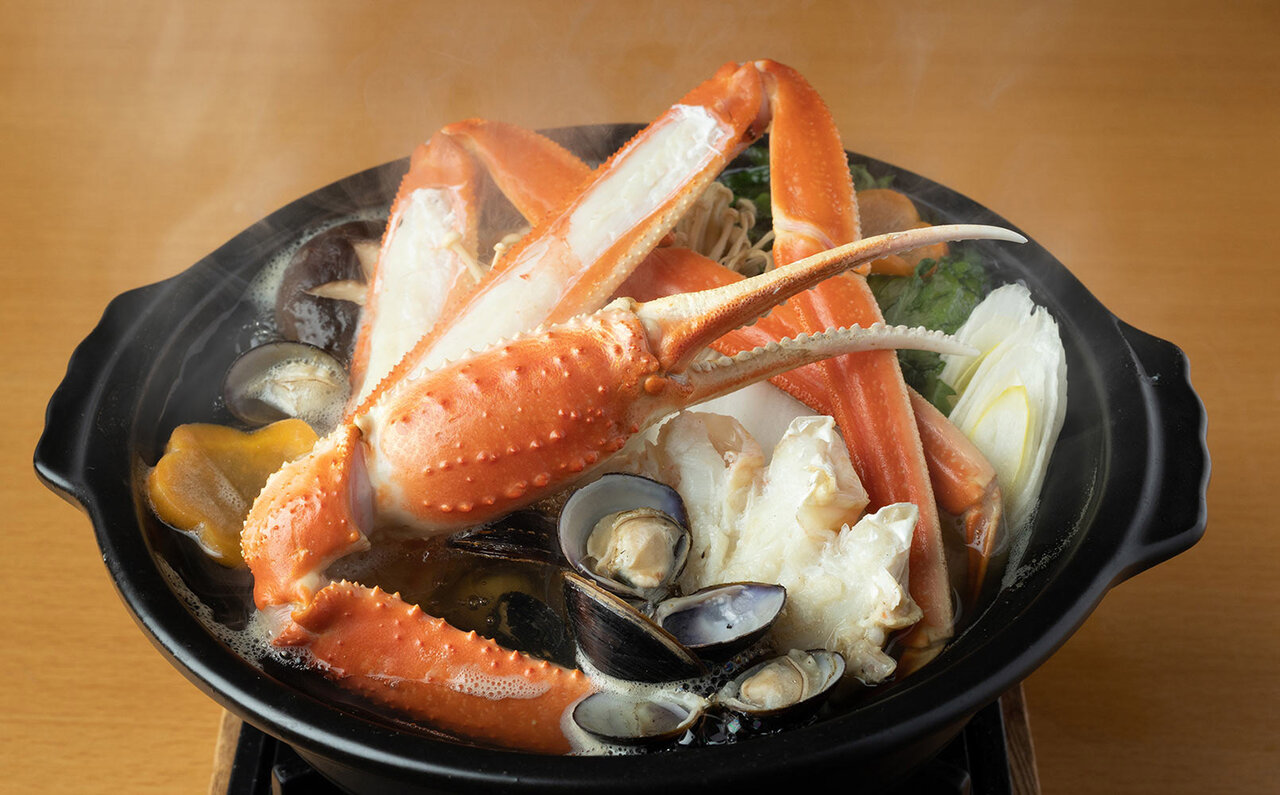
Crab and Clam Hot Pot
The main hot pot dish is "Crab and Clam Hot Pot." The soup, made with clam broth and containing clam meat, is served with vegetables and crab meat, allowing you to enjoy the simple, natural flavors. The crab in the pot is incredibly fluffy, unlike the steamed or grilled versions. Above all, the clear, simple broth perfectly enhances the crab's deliciousness. And the absolute reliability of the clams, which I felt would negate the effects of the sake I drank that day (or so I imagined), was truly reassuring.
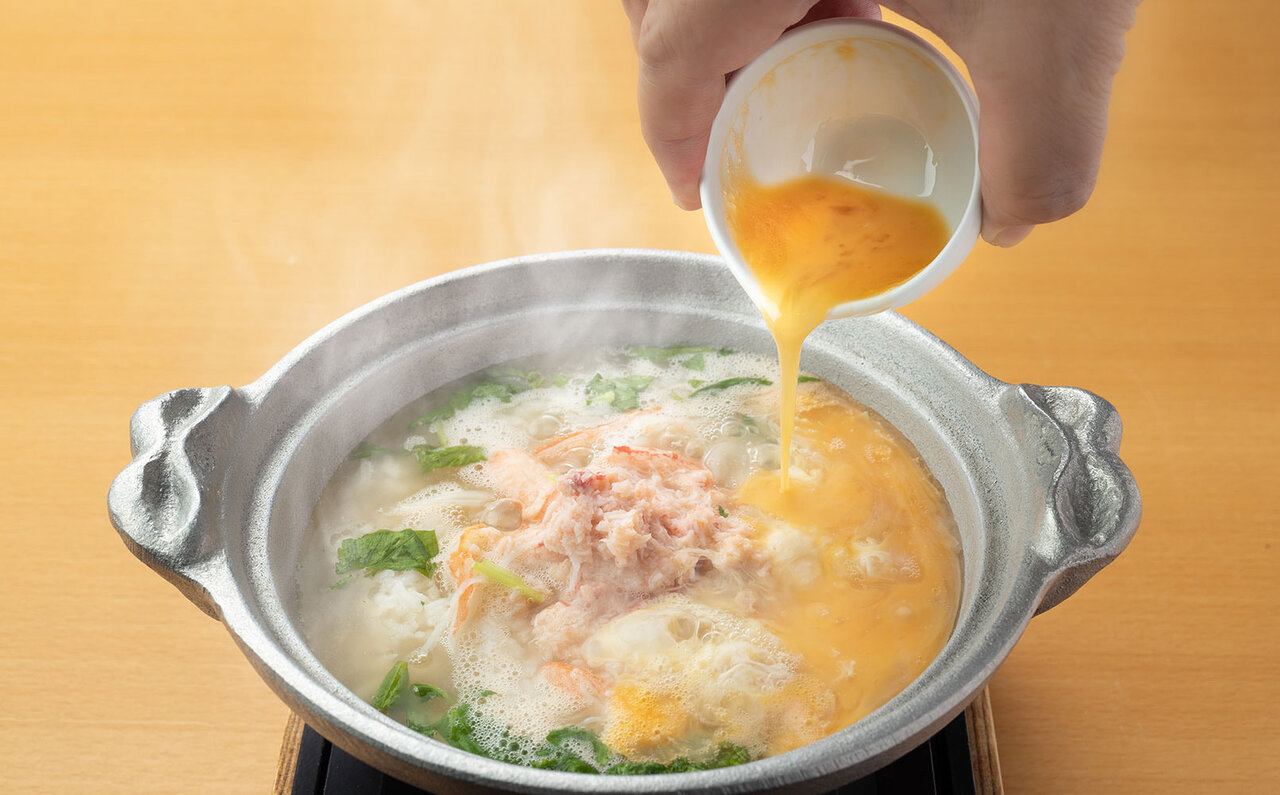
Crab Ojiya with Tamagtoji
The finale is ojiya, finished with that exquisite broth. ...It's impossible for it not to be delicious. And it's at this point that I finally realize I've been drawn into the deep, inescapable swamp of the crab world. But bring on the crab swamp! I have no regrets in my crab-filled life.
I'll also add here that I took home the tag from the Matsuba crab as a memento of this blissful experience. ...Perhaps I'll make earrings out of it (laughs).
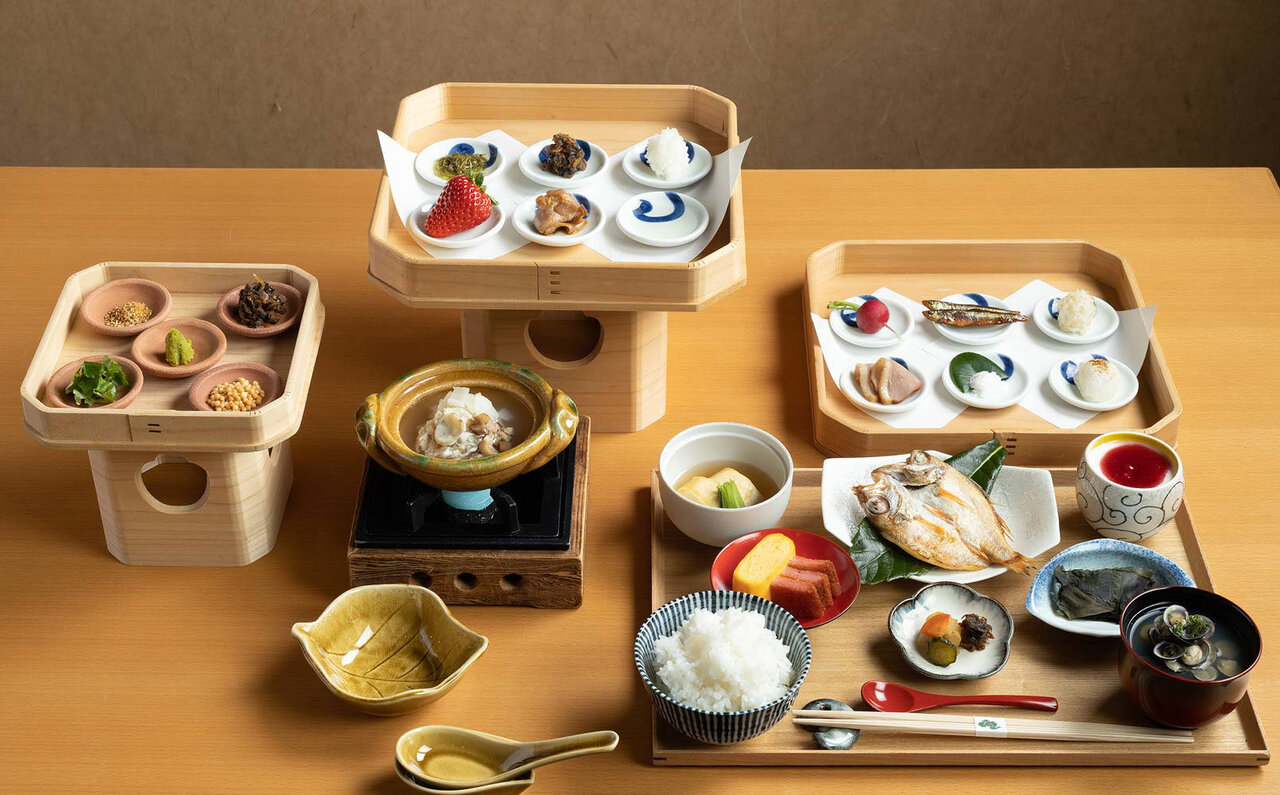
Shinsen (Sacred Food) Breakfast. This generous portion is for one person. "Uzuni" (a type of hot pot) is a traditional dish made with pufferfish, served during festivals at Izumo Taisha Shrine. It's a time-honored recipe mentioned in the "Izumo Fudoki." The broth is made from pufferfish and thickened with kudzu.
And the breakfast was also quite remarkable, or perhaps "striking" is a better word, as it was undoubtedly a dish that left a strong impression. What I had was the "Shinsen Breakfast," offered to guests staying on the plan that includes a guided tour of Izumo Taisha Shrine. "Shinsen" refers to sacred food offered to the gods, made from local delicacies. It faithfully reproduces the three most important elements of sacred food since ancient times—rice, salt, and water—along with vegetables and river fish, using local ingredients. The sight of these delicacies from mountains and seas respectfully arranged on a white cypress tray evoked a sense of divinity.
The idea is to purify the mind and body by partaking in the same meal as the gods before worship, to draw closer to them, and to pray for strong connections. However, my honest impression as a glutton was, following the "Live Crab Offering Steam" from the previous day, "The gods certainly eat quite delicious things" (laughs). At the same time, it's true that I felt as if any impurities within me were cleansed, and my posture straightened.
After becoming a king at "YUKAWATAN" earlier this year, I became a god at "KAI Tamatsukuri." I wonder what's next? Perhaps a duke?