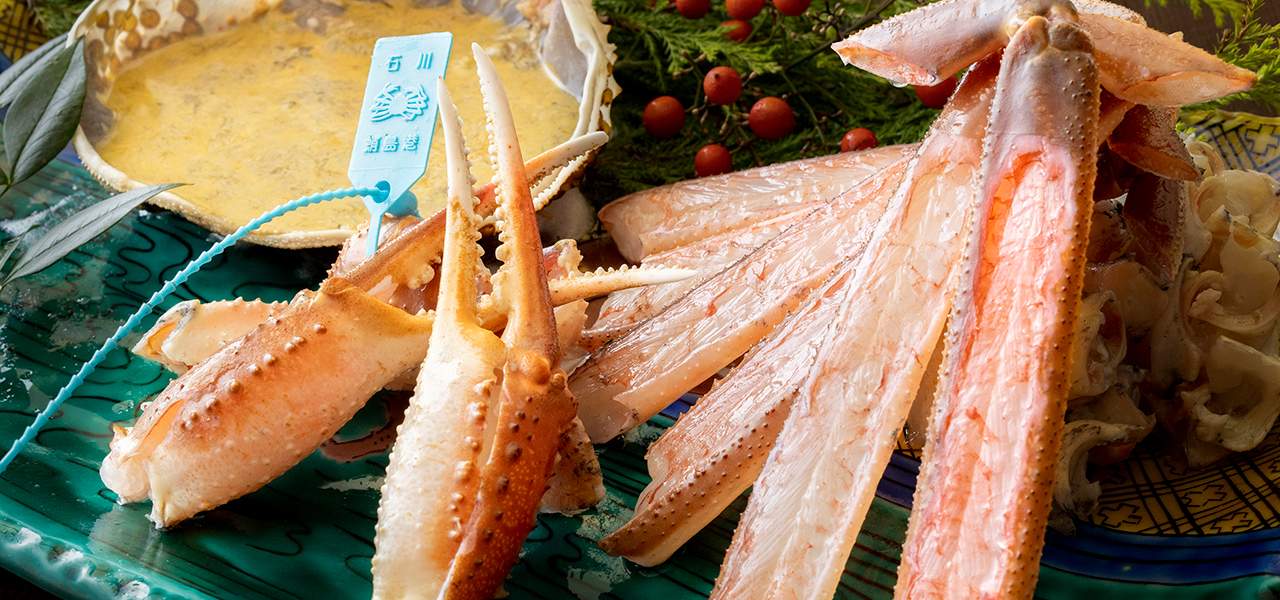
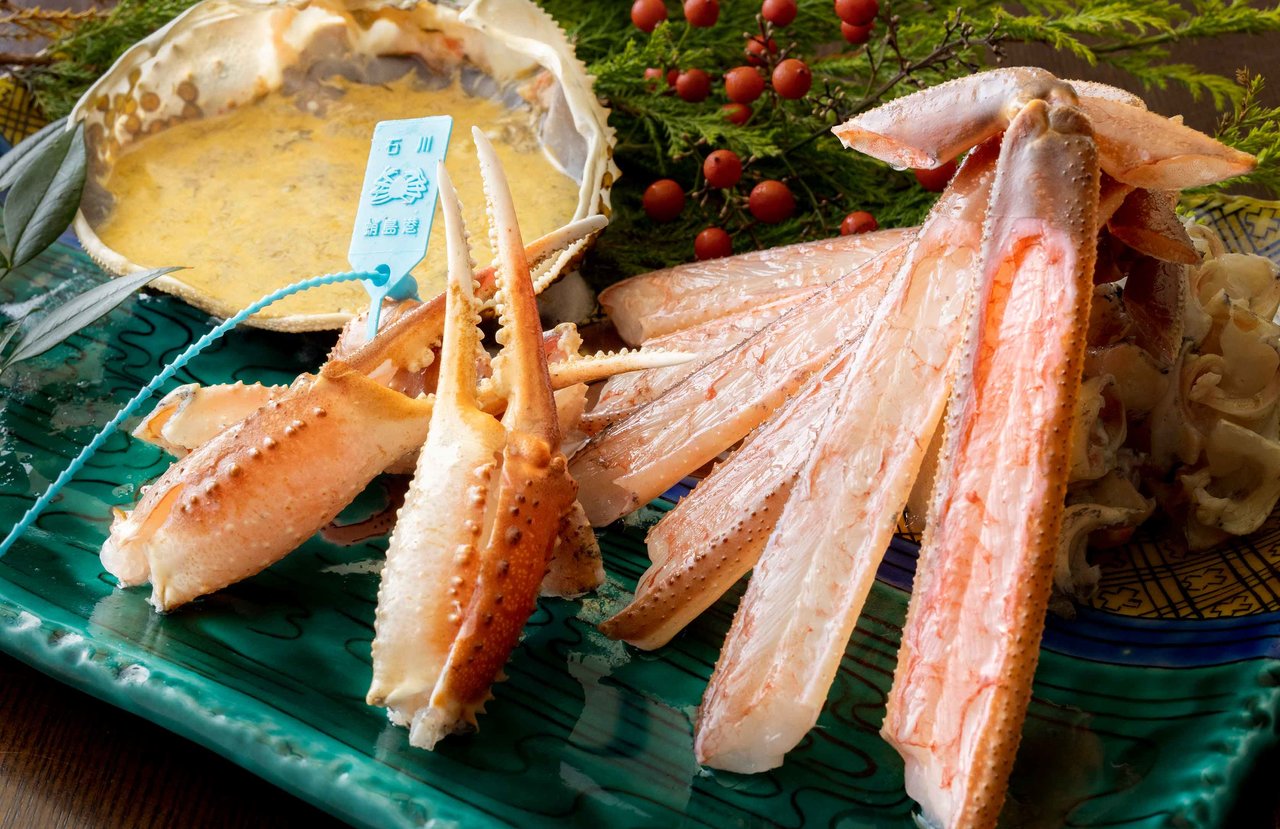
From the "Ultimate Live Crab Kaiseki with Tagged Crab," featuring grilled live crab and grilled crab
To Know Is To Taste: Hoshino Resorts KAI Kaga | TRAVEL
TRAVEL | KAI KAGA
To Encounter This Dish, Journey to KAI Kaga (Part 1)
I can't help but smile when I recall that night, surrounded by crab. It feels like this memory alone could sustain me through some tough times.
Photographs by OHTAKI Kaku | Text by HASEGAWA Aya | Edit by TSUCHIDA Takashi
A Feast of Crab: A Lifelong Memory
Forgive my bluntness from the start, but have you ever eaten your fill of crab? I'm not talking about the all-you-can-eat variety you find at bargain prices (did that just annoy you further?).
Shortly after the snow crab season opened in the winter of 2019, I visited "Hoshino Resorts KAI Kaga" (hereafter "KAI Kaga") for their "Ultimate Live Crab Kaiseki with Tagged Crab" (hereafter "Ultimate"). It was, without a doubt, the most incredible crab experience I've ever had! In fact, I doubt I'll ever encounter a better crab experience in my life...
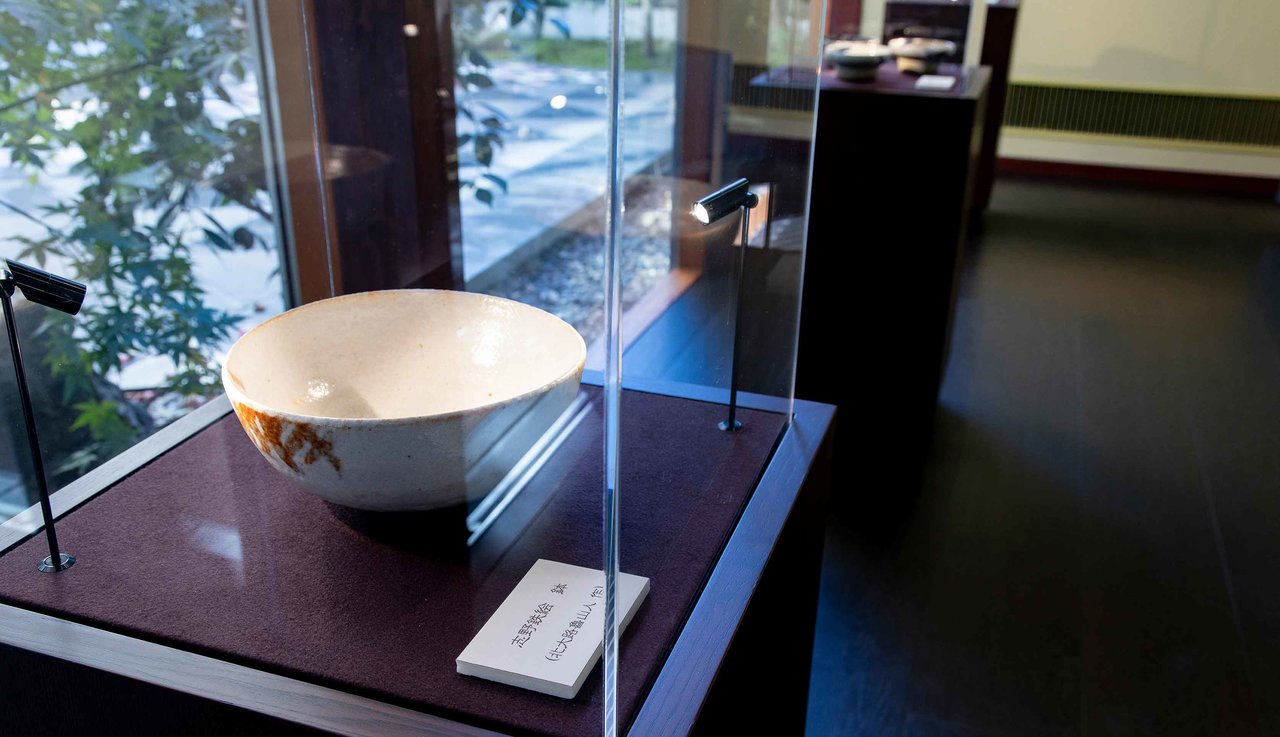
KAI Kaga is located in the heart of Yamashiro Onsen, a renowned hot spring in Ishikawa Prefecture, said to have been discovered by the high monk Gyoki about 1,300 years ago. The inn, "Shiragane-ya," which opened in 1624 and was beloved by many literary figures and artists like Rosanjin Kitaoji, transitioned its management to Hoshino Resorts in 2008. In December 2015, it reopened as "KAI Kaga," preserving the ambiance of its traditional Kaga architecture, over 390 years old, while integrating modern culture and design.
Upon the change in management, Hoshino Resorts declared its concept: "The premier culinary inn in Hokuriku." A bold statement, indeed, conveying their profound passion for cuisine. The course that "KAI Kaga" proudly offers, arguably its signature, is the "Ultimate Live Crab Kaiseki with Tagged Crab" (hereafter "Ultimate"). Many guests visit annually right after the snow crab season opens, specifically for this "Ultimate" course.
The "Ultimate" course features 1.5 crabs per person, all using live snow crabs. Comprising eight dishes prepared in various styles—sashimi, grilled, steamed, hot pot—along with dessert, it truly lives up to its name, inviting you to "master the art of snow crab."
Let me first introduce the lineup.
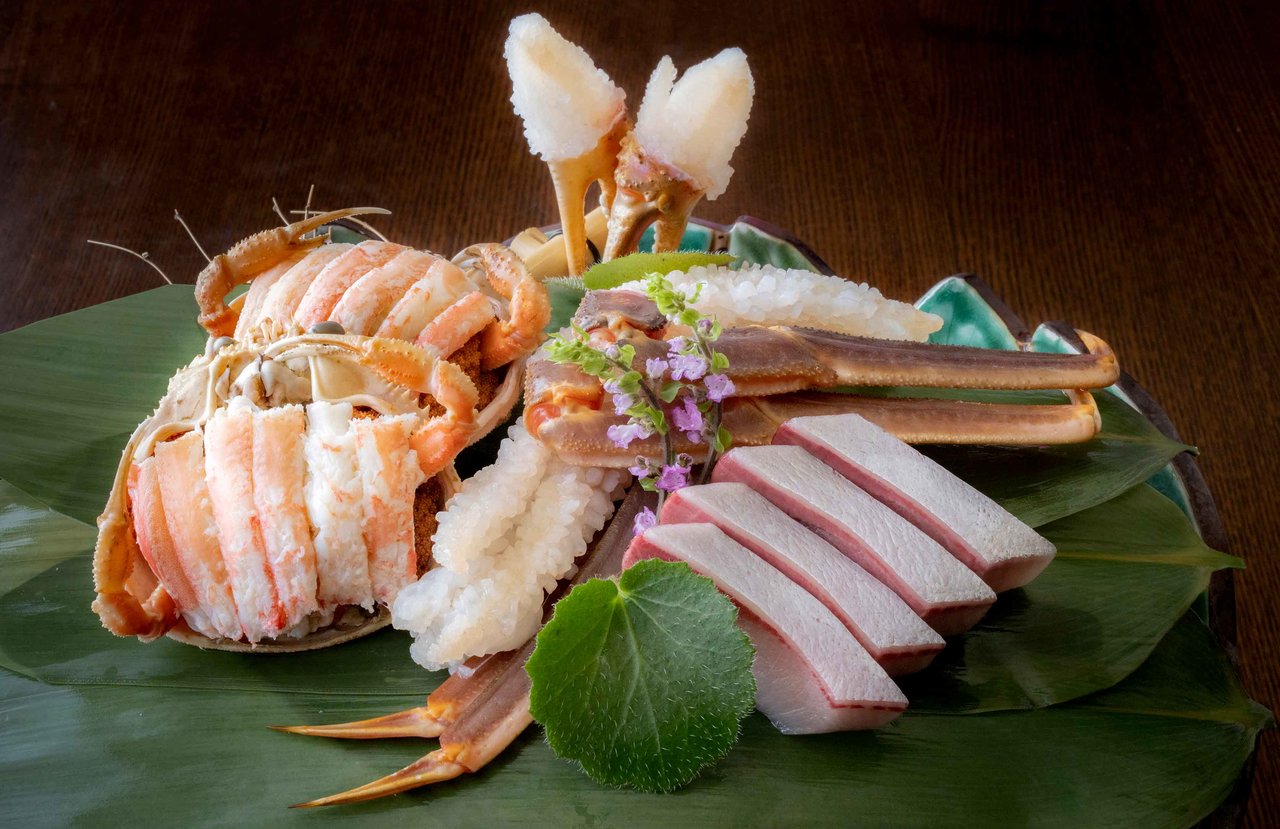
Crab Sashimi (Live Crab and Winter Yellowtail Sashimi)
Grilled Crab (Grilled Live Crab)
Kani Miso Gratin (Grilled Live Crab Shell with Miso)
Fried Dish (Crispy Fried Live Crab)
Ohitashi (Boiled Crab and Vegetables)
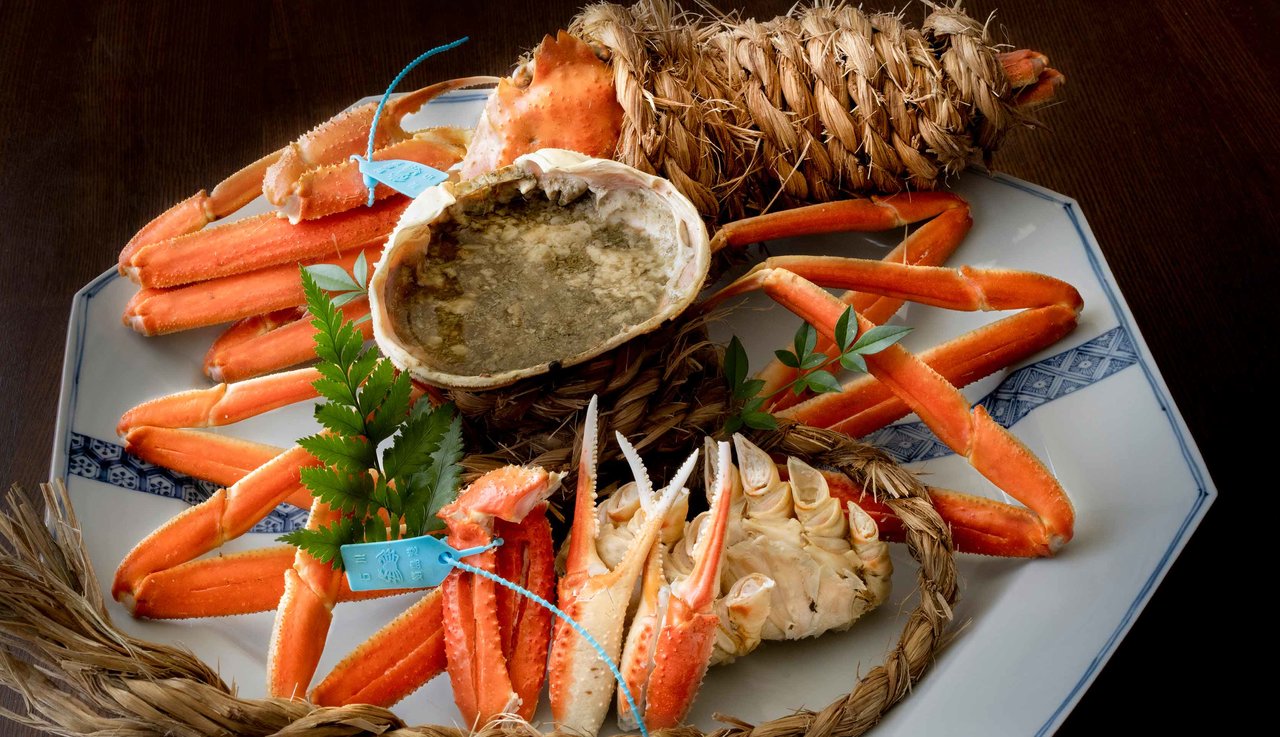
Steamed Crab (Live Crab Steamed with Straw Rope (Tagged Crab))
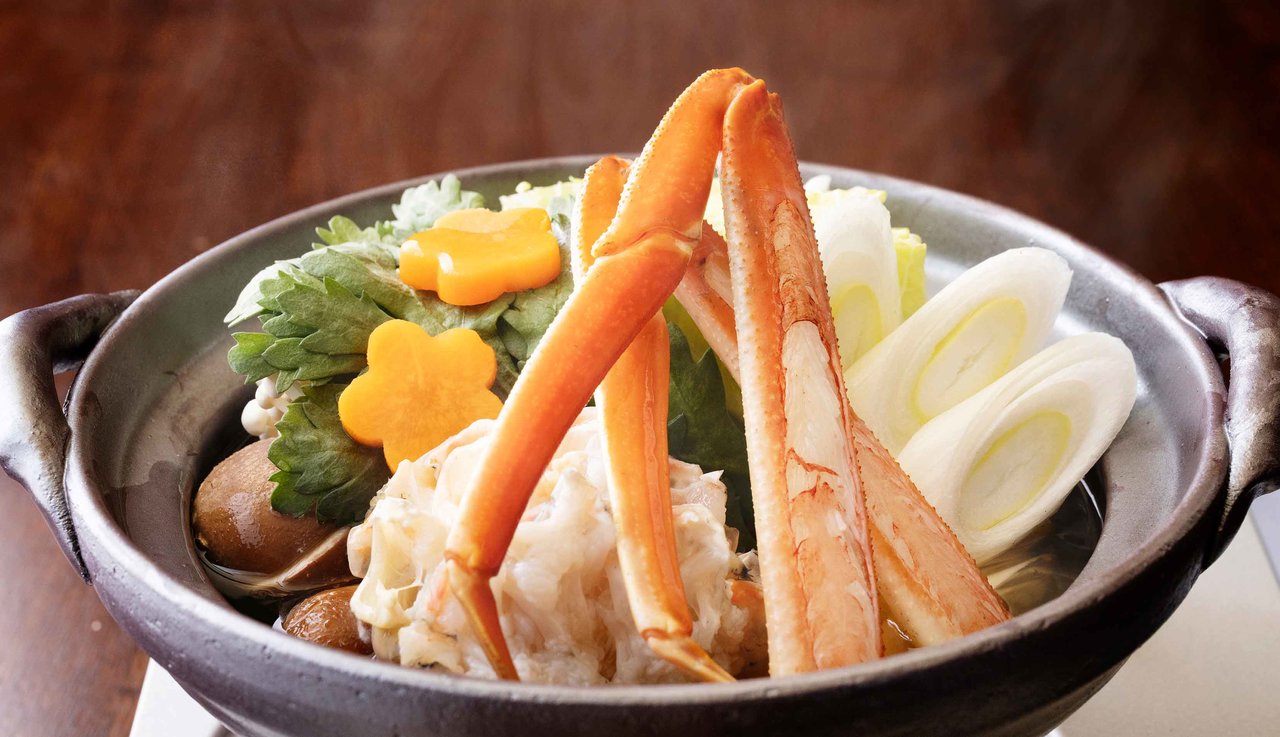
Crab Hot Pot (Live Crab Sukiyaki Hot Pot)
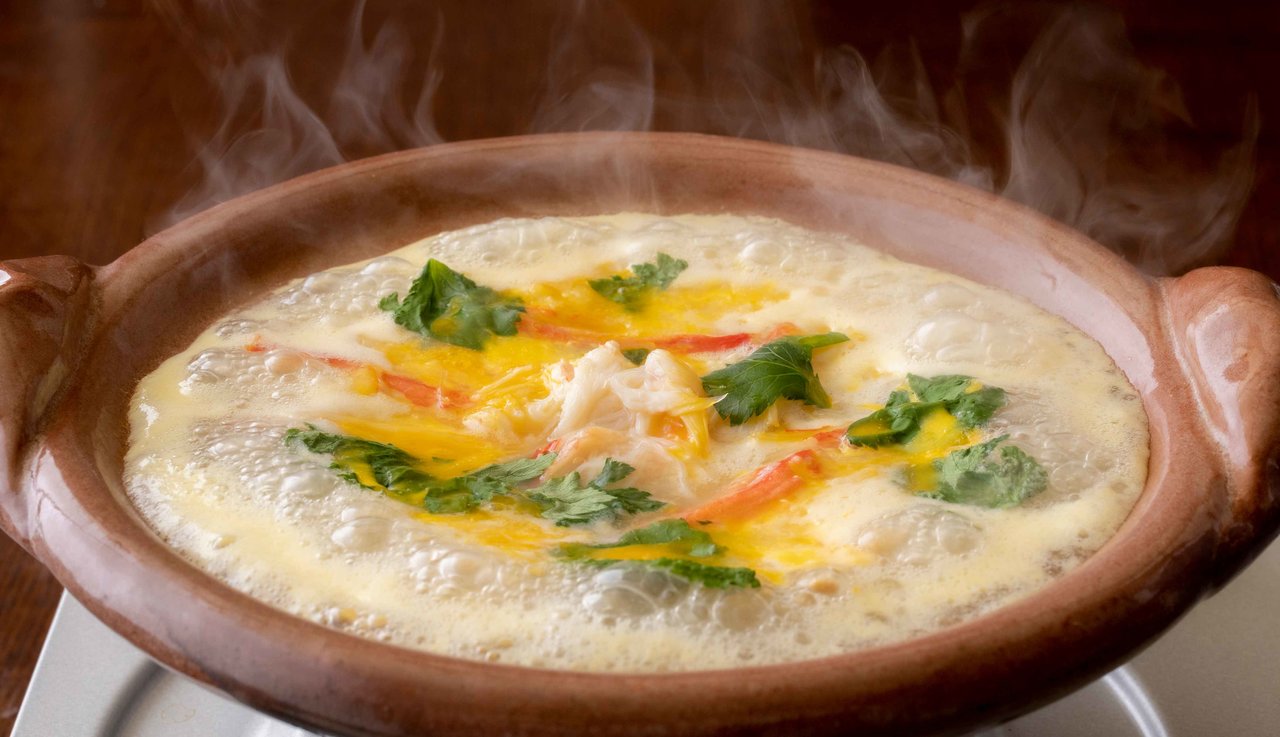
Meal (Crab Zosui, Pickles)
Dessert (KAI Kaga's Special "Kintoki" Dessert)
Do you see? Everything except the dessert is crab! A joyous immersion in crab.
The first dish to arrive was sashimi of Kani-hako (female snow crab) and winter yellowtail. The crab legs, artfully arranged like blooming flowers, were a magnificent prelude to the crab carnival that awaited. The crab was exquisitely sweet and tender, boldly announcing its arrival to a palate already set for crab. The seasonal yellowtail was served in hearty, thick slices, offering a straightforward yet gentle sweetness. I immediately requested another glass of sake!
The grilled crab and crab shell were expertly cooked at our table by the staff. As the crab began to sizzle over the charcoal, a fragrant aroma filled the air. The staff presented the perfectly cooked crab, asking, "Are you being spoiled enough?"
The light blue plastic tag signifies "tagged crab." This indicates it was landed at a fishing port within Ishikawa Prefecture. In essence, it's a mark of the highest quality. Why? Because crabs raised in the waters off Ishikawa Prefecture, with its rocky seabed, have firmer meat compared to crabs from areas with muddier seabeds.
Before I knew it, the crab miso was simmering. Its rich, elegant sweetness was almost overwhelming, and as I savored it, the staff suggested, "If you leave a little crab miso, we can prepare Kani-zake (crab sake)." Of course, I agreed! They poured sake (the brand varies by season) into the crab shell with the remaining miso and gently heated it. The resulting brew was simply divine, making me want to drink a bucketful. Incidentally, you can decide how much crab miso to leave for the Kani-zake yourself. Please, savor every last drop with no regrets.
After a fried dish using kadaif as a coating and a serving of ohitashi, the highlight of the evening arrived: the "Live Crab Steamed with Straw Rope." This dish involves wrapping a live crab in straw soaked overnight in saltwater of the same salinity as seawater, then steaming it. The head chef, inspired by Edo-period texts, recreated this dynamic dish to become a new signature of KAI Kaga. Back then, without steamers, ingredients were wrapped in damp straw or Japanese paper and steamed over a hearth.
Indeed, it's a striking visual that stays with you, but I must confess, I initially thought, "Wouldn't it be more delicious if it were simply grilled or steamed without all this fuss?" My apologies. Steaming it with the straw condenses the umami, resulting in flesh that is both fluffy and tender. It evoked the ruggedness of the winter sea, yet possessed an elegant salinity. This complex flavor was utterly captivating. It's the essence of "cuisine" as entertainment, elevating an already delicious ingredient to new heights!
The "Crab Hot Pot," prepared with a simple kelp broth, enhances the natural sweetness and umami of the crab, offering pure bliss for the eyes and palate. The crab seemed to be enjoying its warm bath (though it certainly wasn't!). The meat was meltingly tender. For the finale, the "Crab Zosui," infused with the crab's rich flavor, was served with the concept of "savoring the broth." It was the perfect, supreme dish to conclude our crab-filled feast.
A staff member shared this anecdote: "I used to come here a few times every winter for crab, but now I've decided to have the 'Ultimate' once a year. Many guests say they find it more cost-effective and satisfying."
So, instead of nibbling at crab bit by bit, it's the "Ultimate" once a year! I couldn't agree more. The exhilaration and sense of indulgence, tinged with a hint of delicious transgression, after completely devouring fresh, seasonal live crab was unlike anything I'd experienced before. My mind and stomach were completely satisfied, solidifying my resolve: "I'll be back again next year."
TRAVEL | KAI KAGA
To Encounter This Dish, Journey to KAI Kaga (Part 2)
While I've focused entirely on the "eating" aspect, KAI Kaga's cuisine also offers a "visual" delight.
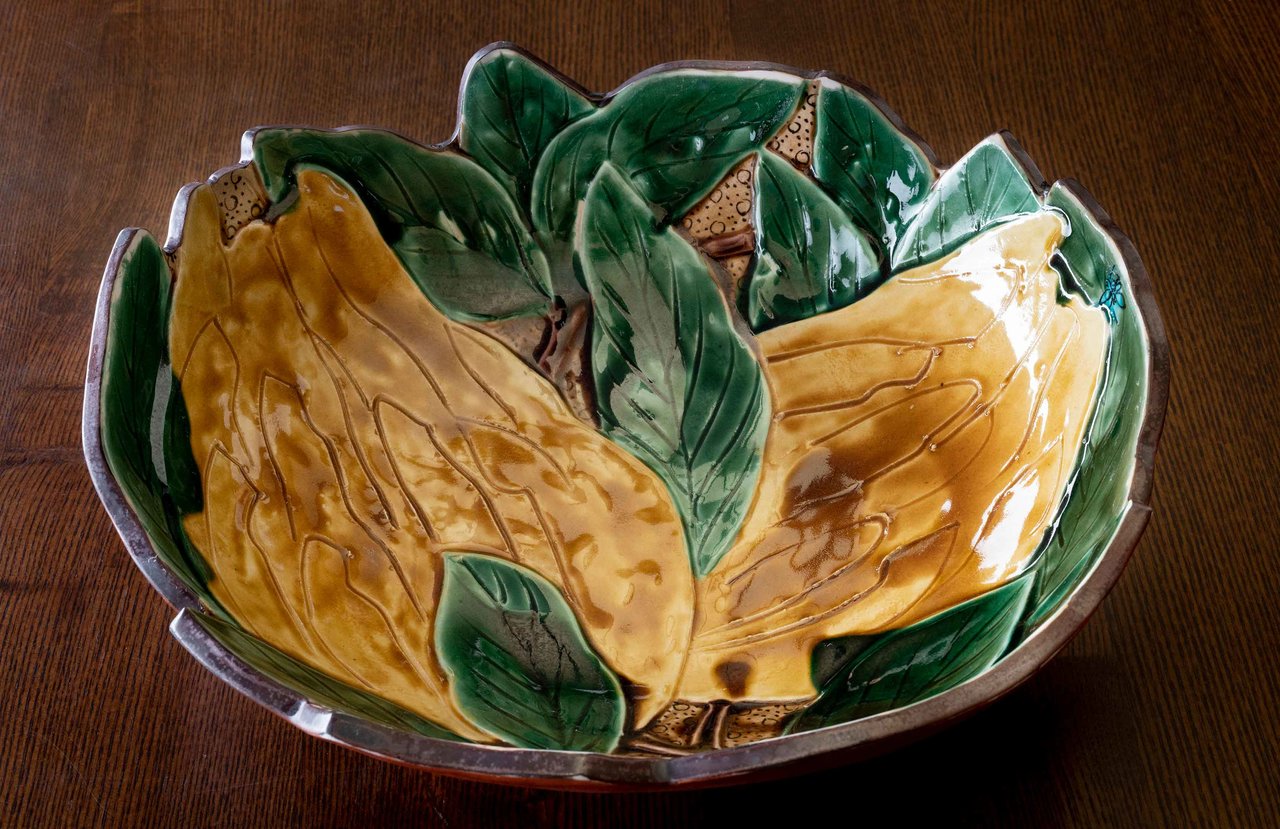
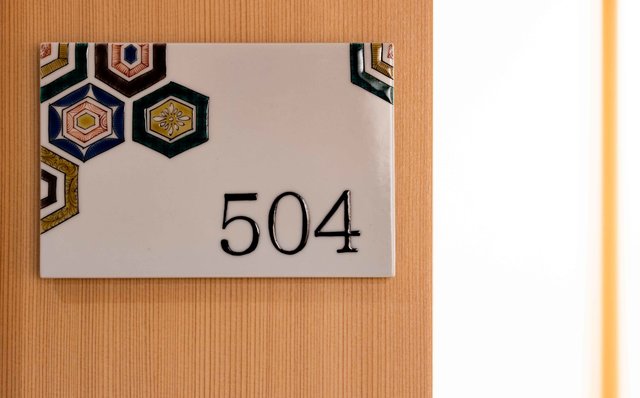
Kaga City in Ishikawa Prefecture, where KAI Kaga is located, is the birthplace of Kutani ware, Japan's representative colored porcelain. Furthermore, its predecessor, "Shiragane-ya," has a connection to Rosanjin Kitao. Following Rosanjin's philosophy that "vessels are the kimono of food," KAI Kaga actively uses tableware made of Kutani ware and Yamanaka lacquerware for its dishes. In addition to items with a long history at the inn, they also commission original pieces from young artists, crafted specifically to complement the cuisine.
For example, the sashimi in the "Ultimate" course is served on Kutani ware designed with the motif of a "Buddha's Hand" citron, created when KAI Kaga began its new chapter. The crab and yellowtail sashimi, presented on these dynamic plates, seemed almost proud.
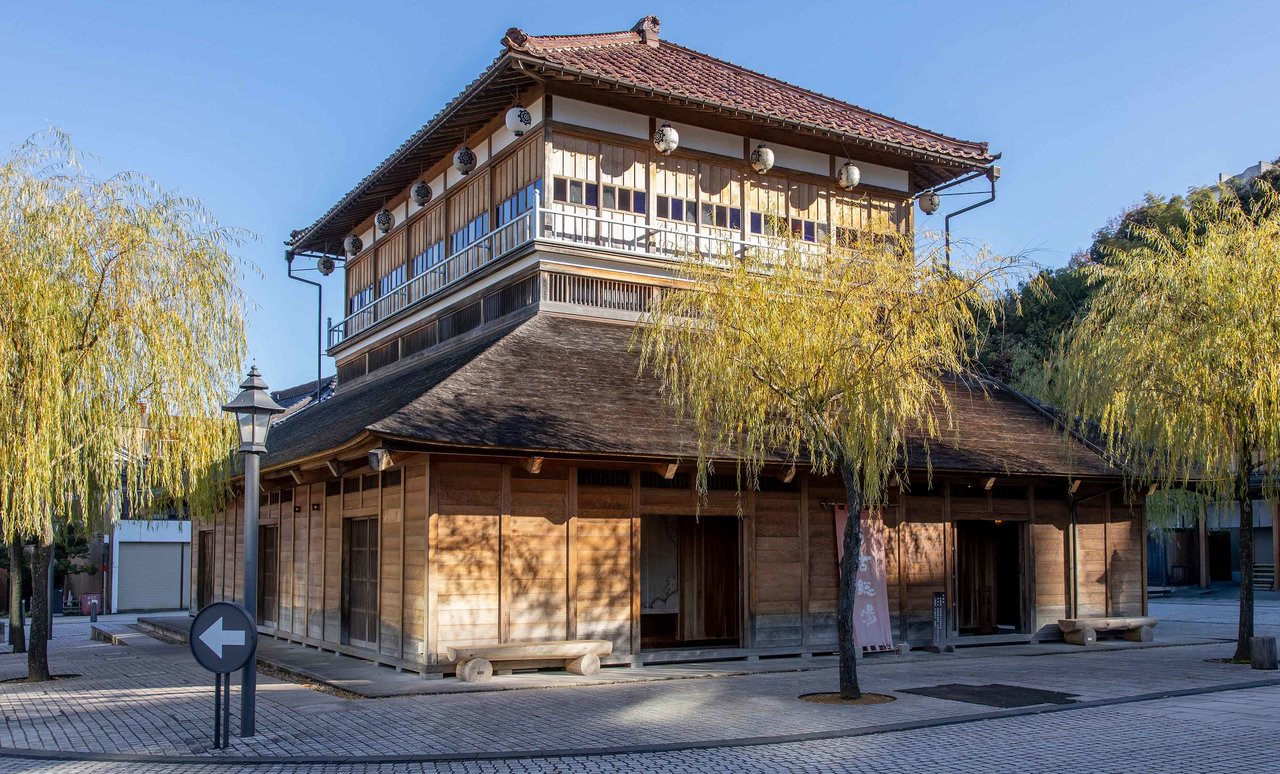
The "KAI" brand concept is to respect the region's traditions and hot spring culture while offering comfortable hospitality tailored to modern travelers. What stands out at "KAI Kaga" is the striking red *bengara* lattice structure (traditional building), with its intricate wooden joinery, which has been preserved from the "Shiragane-ya" era. This landmark of Yamashiro Onsen, with its dignified yet warm red walls, is a testament to traditional Kaga architecture.
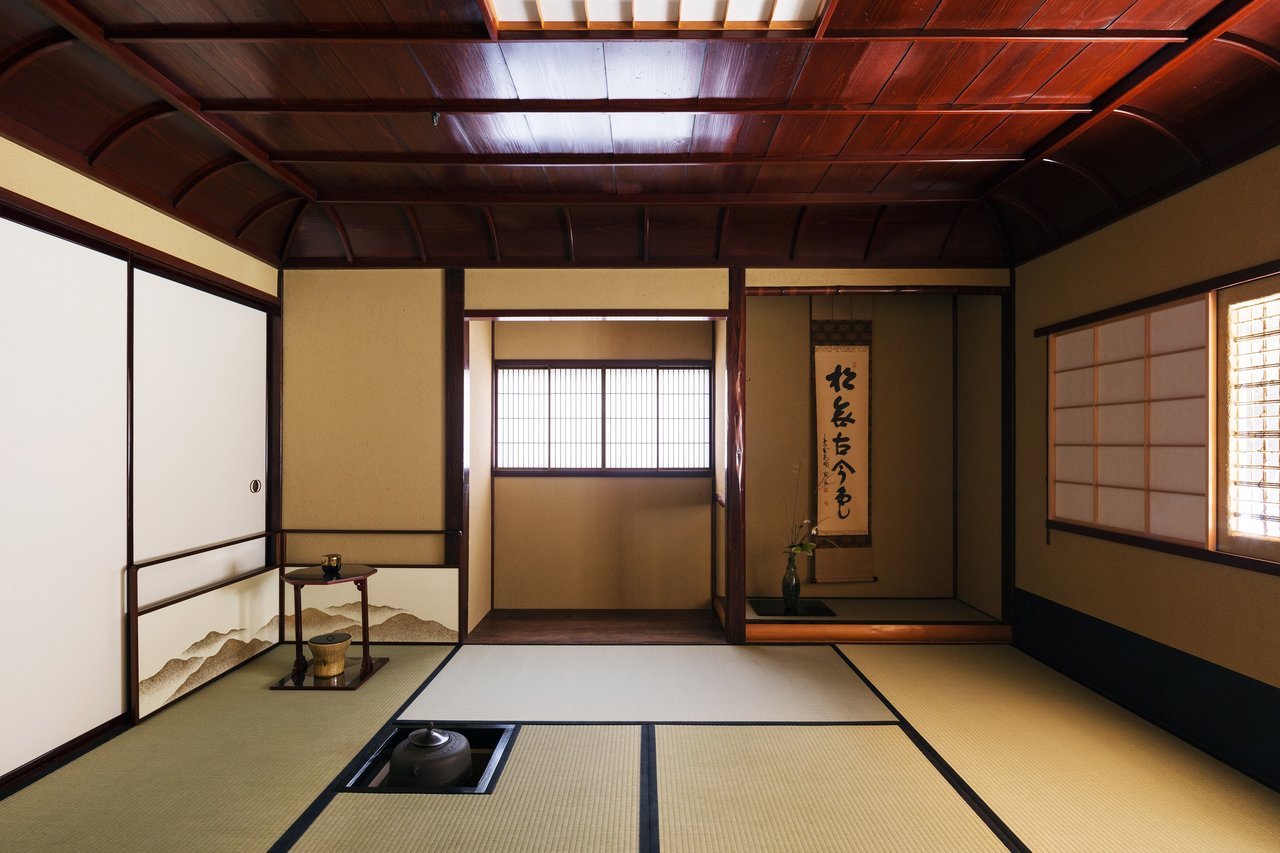
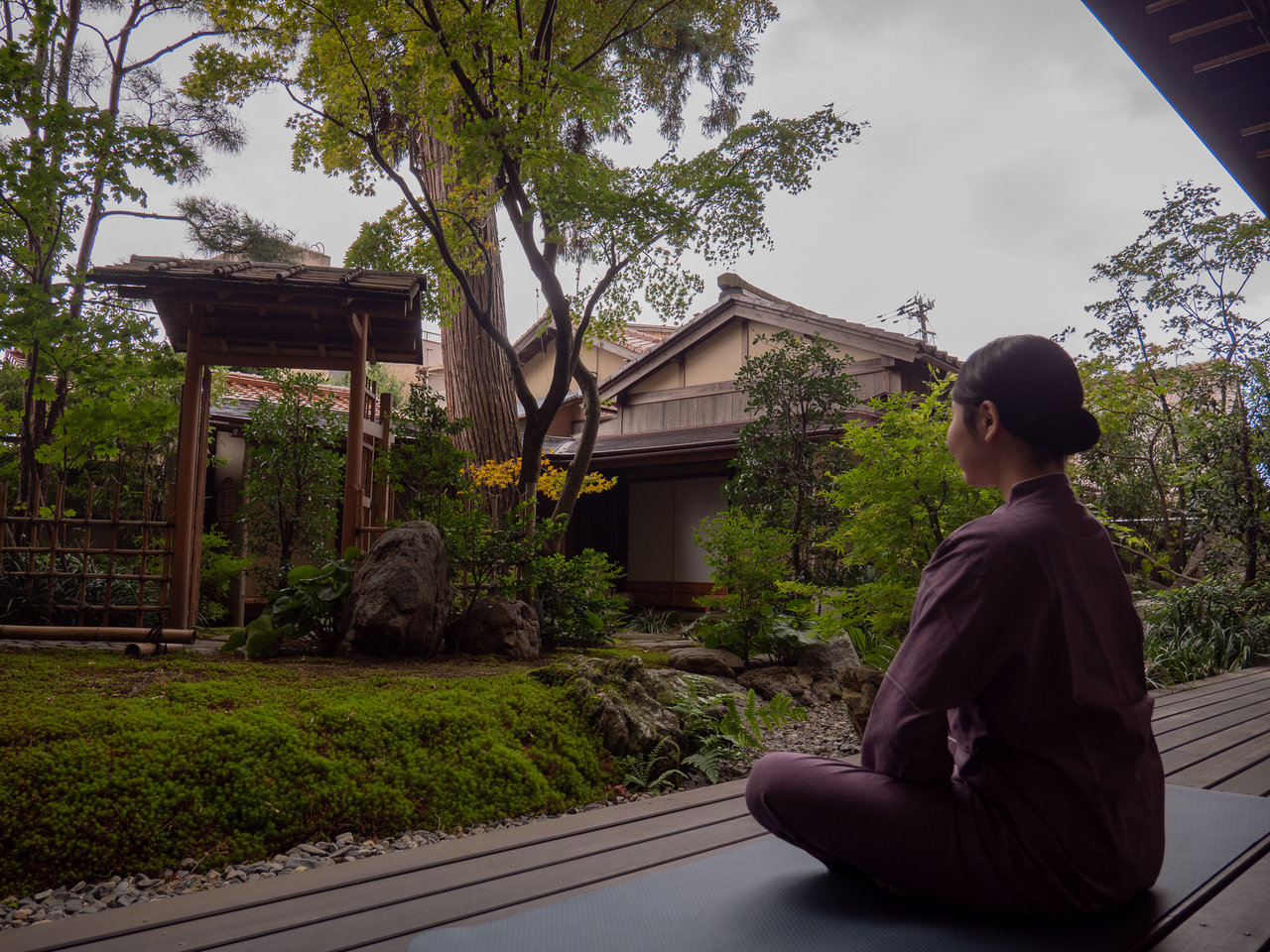
This traditional building and the tea house "Shian" (Shi-an), a restoration of a 200-year-old traditional structure, were designated as National Registered Tangible Cultural Properties in 2016. At "Shian," from 3 PM to 6 PM daily, matcha and Japanese sweets are served using Kutani ware teaware. Starting at 7 AM, the "Kaga Ohayo-san Exercise" takes place. Exercising in a tea house offers a unique, non-everyday experience, perfect for a getaway. It invigorates the mind and body, fueling the appetite for the day's culinary delights.
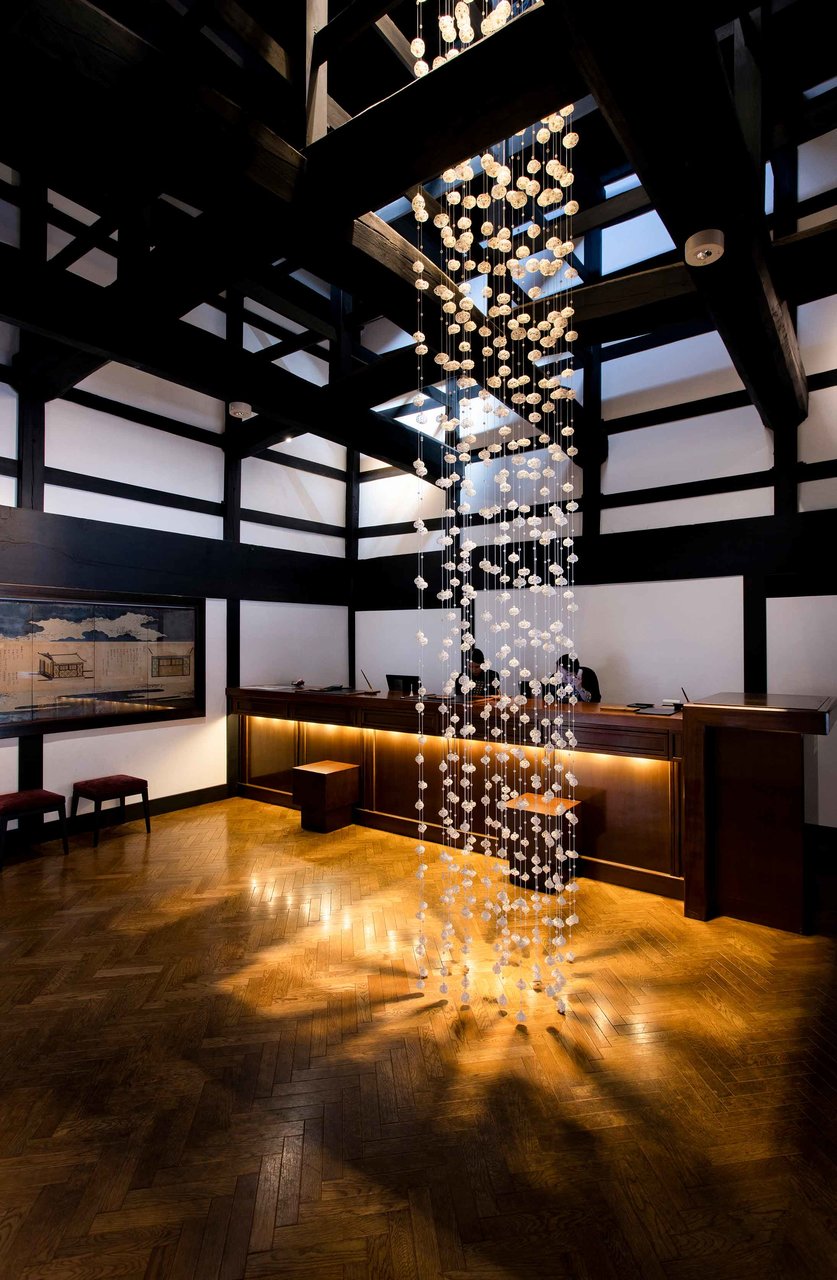
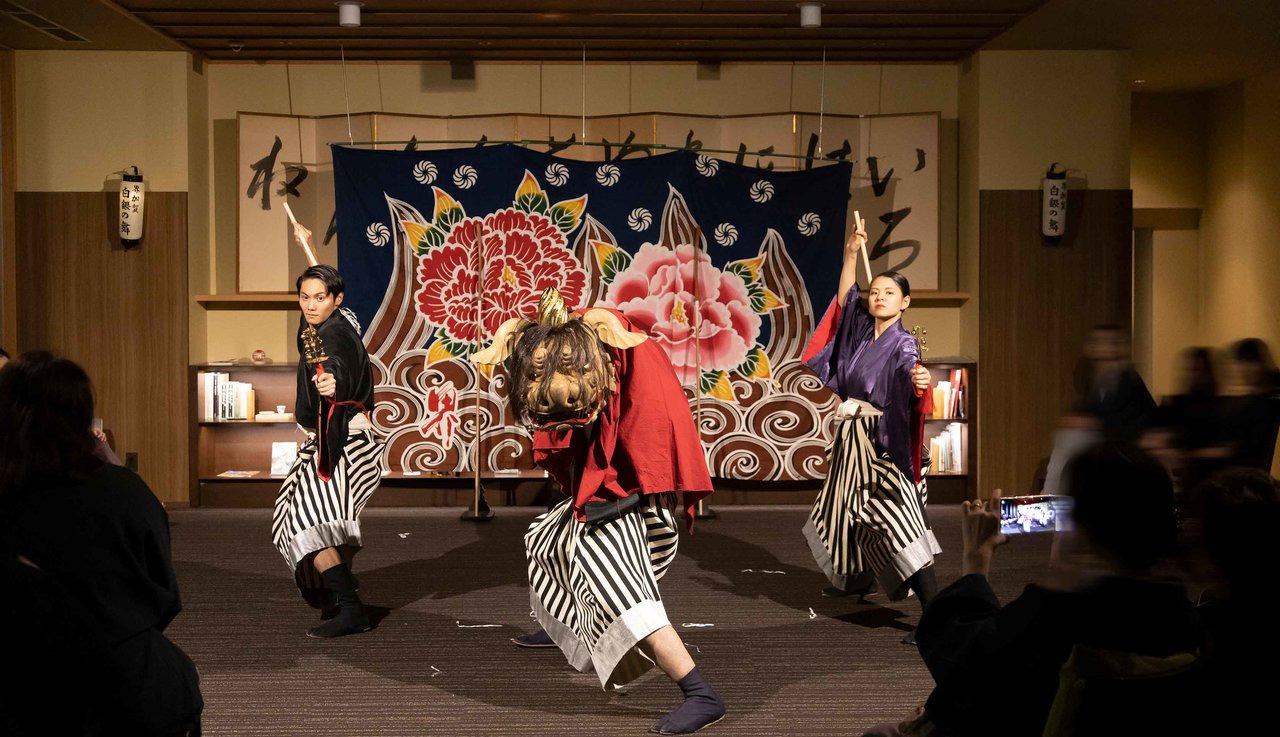
And indeed, KAI Kaga is a treasure trove of "tradition" throughout! At the front desk, guests are greeted by an art object arranged from Kaga *mizuhiki*, which evolved from ceremonial knotting for betrothal gifts. In the courtyard, visible from the connecting corridor between the traditional building and the guest rooms, is a mosaic of Kutani ware tiles inspired by the *yuzen nagashi* (dye flowing) technique of Kaga *yuzen* dyeing! Furthermore, in the travel library on the first floor of the guest room building, the "Silver Dance," an interpretation of Kaga lion dance, is performed every evening.
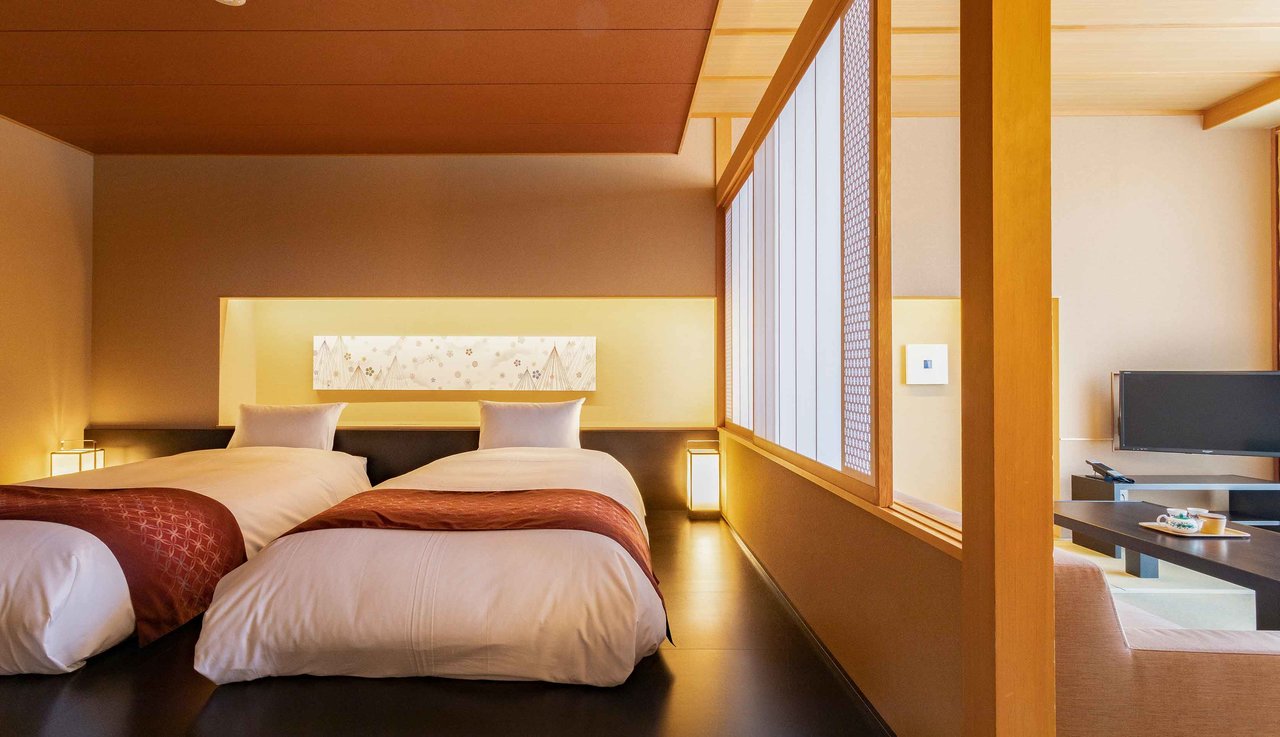
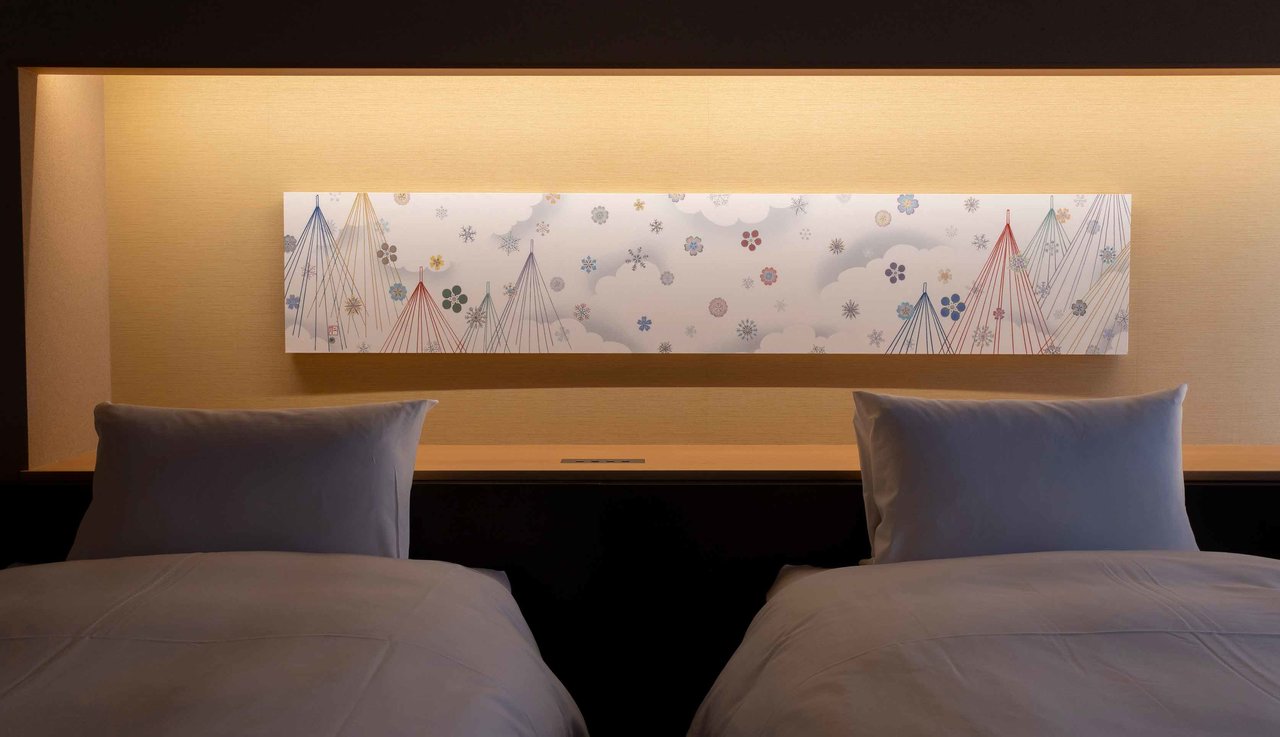
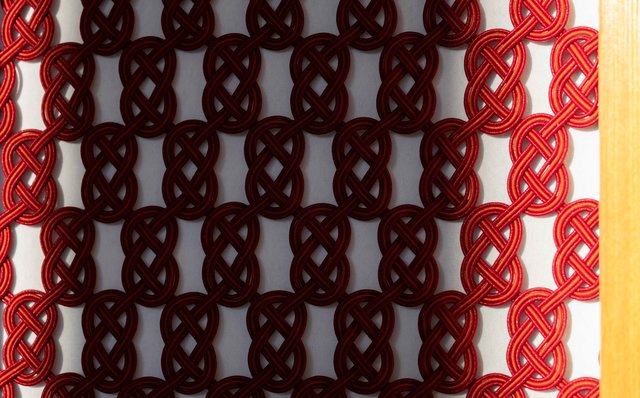
All 48 guest rooms are "Kaga Traditional Crafts Rooms," blending traditional crafts with modern comfort. They feature exquisite Yamanaka lacquerware for the hanging scrolls and tea caddies, Kutani ware tea sets, and bed panels and bed runners inspired by Kaga *yuzen*—making it hard to find anything *not* made with traditional crafts! The *shoji* screens, designed with Kaga *mizuhiki*, also exude an elegant radiance.
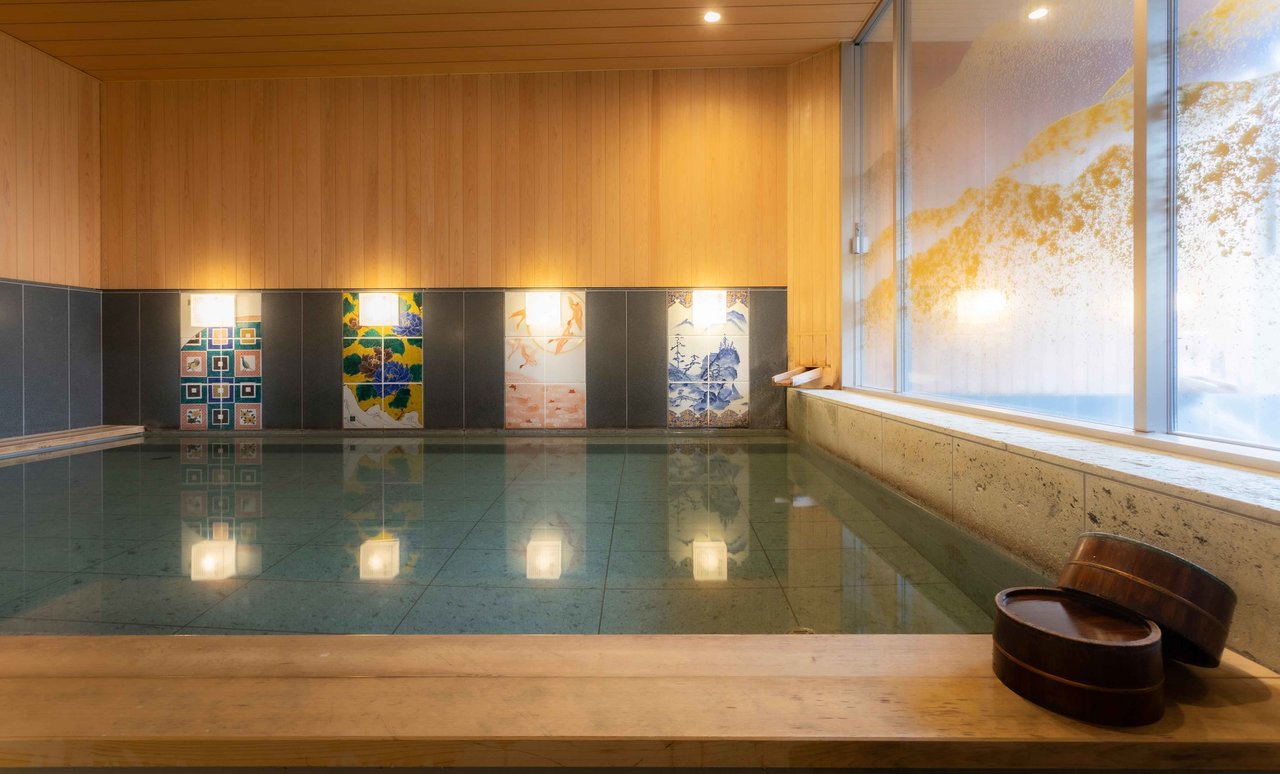
The hot spring water at Yamashiro Onsen is a "sodium, calcium, sulfate, chloride spring." This silky, smooth hot spring can be enjoyed while immersing oneself in Kaga's traditional culture. Kaga lanterns adorn the post-bath lounge, and the inner bath walls feature Kutani ware art panels designed with free expression by eight young Kutani ware artists. The partition separating the indoor and open-air baths, adorned with Kanazawa gold leaf depicting the sacred Mount Hakusan, a symbol of the Kaga region, is also quite striking.
Don't forget to visit the *soto-yu* (public bathhouses). You don't have to go far; the two main public baths in Yamashiro Onsen, So-yu and Ko-so-yu, are right in front! If you bring the "hot spring basket" from your room, you can enter Ko-so-yu for free. The retro interior, a faithful reproduction of the Meiji-era So-yu, is full of nostalgic charm. According to the inn's staff, the water is quite hot, making it ideal for a morning soak to awaken your mind and body.
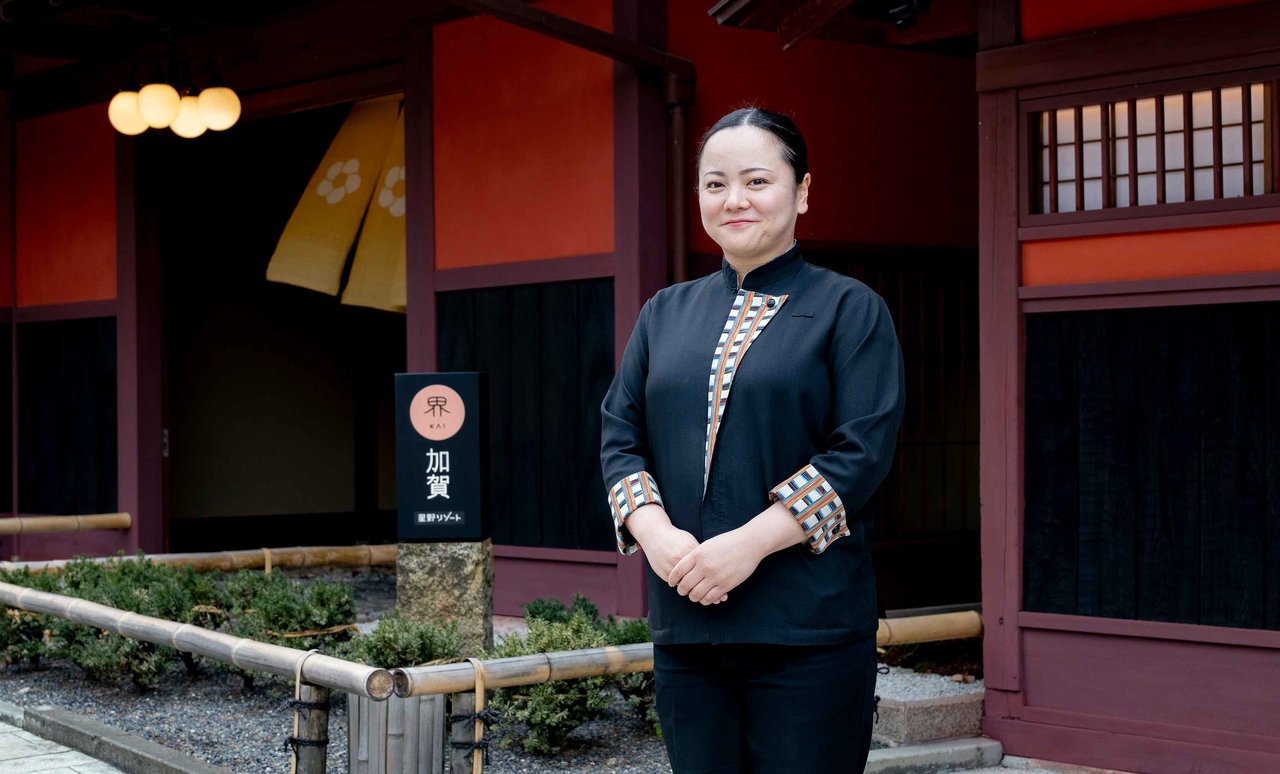
Yuri Sotomatsu, who has served as the General Manager of KAI Kaga since April 2019, aims to "advocate for a 'Royal Kaga Stay: A Splendid Sojourn.'"
"Kaga has mountains, the sea, and a rich tapestry of culture. We want our guests to enjoy the diverse culture and local specialties of Kaga."
While the words "tradition" and "culture" might sound a bit formal, actually touching and using these elements of traditional culture, subtly yet intentionally placed, offers a joyful and enriching experience. Pottery is best appreciated not just by looking, but by using. And of course, the crabs, adorned in the vibrant "kimono" of Kutani ware, await you (incidentally, for Spring/Summer 2020, you can enjoy the "Nodoguro and Abalone Kaiseki")!
Immersed in Kaga's traditions, this "Royal Kaga Stay: A Splendid Sojourn" is perhaps an exceptionally luxurious and fleeting form of "play."
KAI Kaga
Address | 18-47 Yamashiro Onsen, Kaga City, Ishikawa Prefecture
Access | Approx. 10 minutes by taxi or local bus from JR Kaga-Onsen Station
Number of Rooms | 48 (Check-in 3:00 PM, Check-out 12:00 PM)
Rates | From ¥44,000 per night (for the "Ultimate Live Crab Kaiseki" plan, per person based on double occupancy, excluding tax, including dinner and breakfast)