A Must-See for Sake Lovers: Spend a Night at a Unique Inn Adjacent to a Revived Sake Brewery for an Unforgettable Experience at BYAKU Narai | TRAVEL
TRAVEL|BYAKU NARAI
Right in the heart of the Nakasendo highway. Experience the terroir to the fullest at a renovated traditional house in Narai-juku.
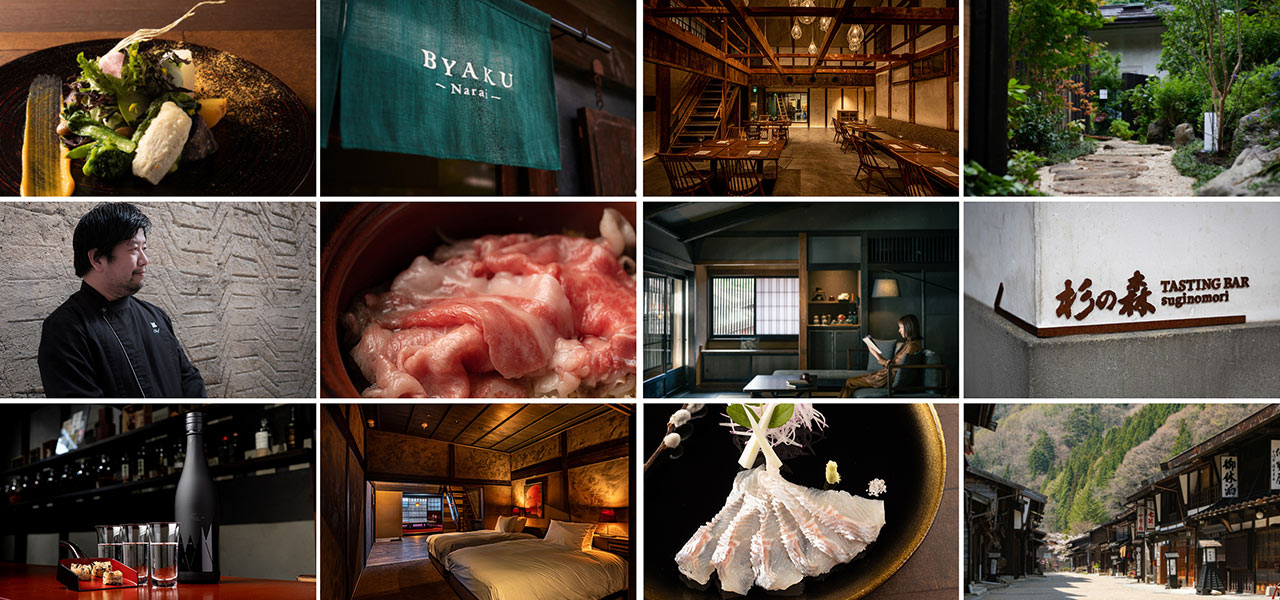
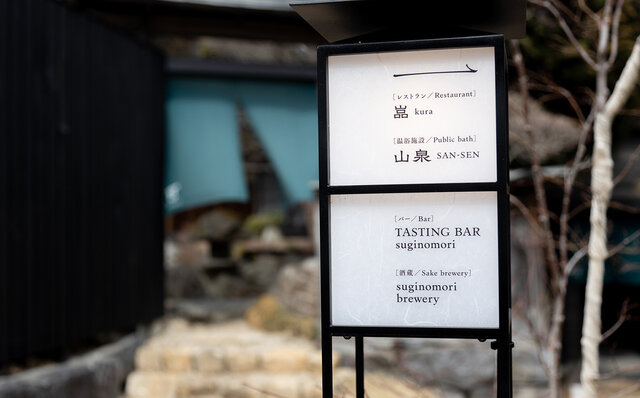
A new complex of renovated traditional houses has opened in Narai-juku, a post town in Kiso with a 400-year history. It had already generated some buzz before opening, and OPENERS has featured it once before (https://openers.jp/lounge/lounge_travel/fIWw7). The facility, which opened in August 2021, was created by renovating the buildings of the "Suginomori Brewery," founded in 1793 during the Kansei era (!), and an adjacent inn. It comprises the accommodation facility "BYAKU Narai," a restaurant, bar, hot spring facility, sake brewery, and gallery.
Photographs by OHTAKI Kaku|Text by HASEGAWA Aya|Edit by TSUCHIDA Takashi
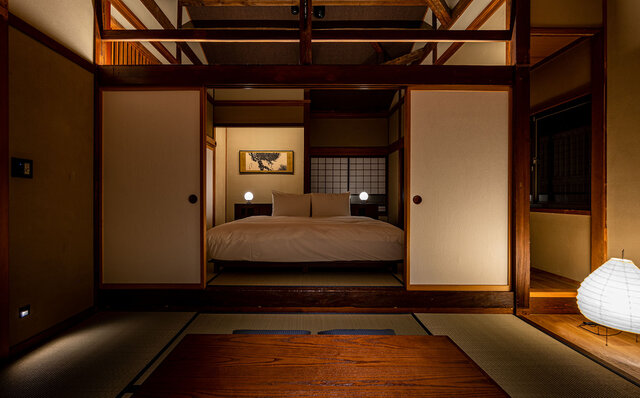
Like stepping into the world of Junichiro Tanizaki's "In Praise of Shadows"!
There's a growing trend of renovating old buildings into accommodations, restaurants, and shops. Amidst this, another captivating facility has opened. With keywords like "a restaurant with a menu supervised by one of Japan's top chefs" and "the revival of a dormant sake brewery," it's a must-visit for foodies and sake enthusiasts alike!
We plan to publish a separate article about "suginomori brewery," which carries on the name of "Suginomori Brewery" (coming soon). For now, let us introduce the other facilities.
Let's reconfirm the location of Narai-juku. Located in Kiso, described as "all mountains along the Kiso Road," it's a post town exactly in the middle of the Nakasendo highway, being the 34th station from Edo and the 34th from Kyoto. The altitude is 900 meters. The townscape, once famed as "Narai of a Thousand Houses," is designated as a National Important Preservation District for Groups of Traditional Buildings. Facing the Torii Pass, considered the most difficult section of the Kiso Road at 1,197 meters in elevation, it was once bustling with travelers. The complex facility is located right in the center of Narai-juku.
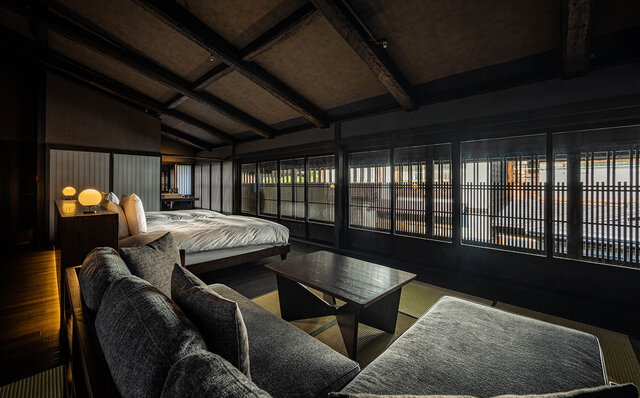
A room overlooking the main street of Narai-juku through the window.
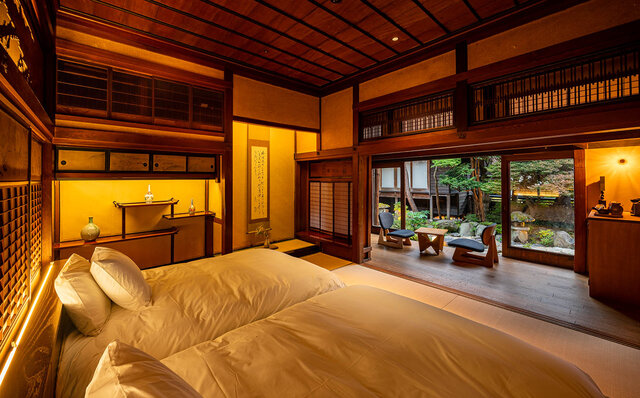
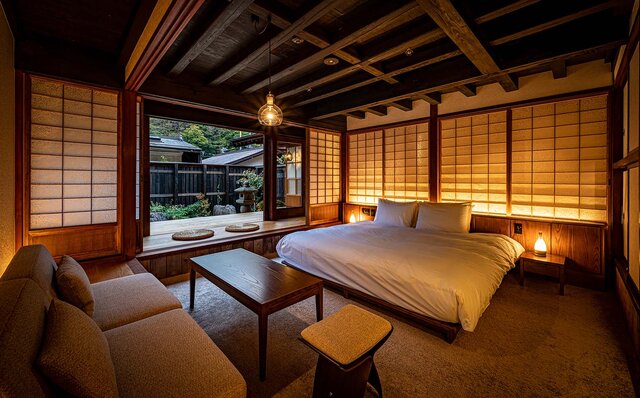
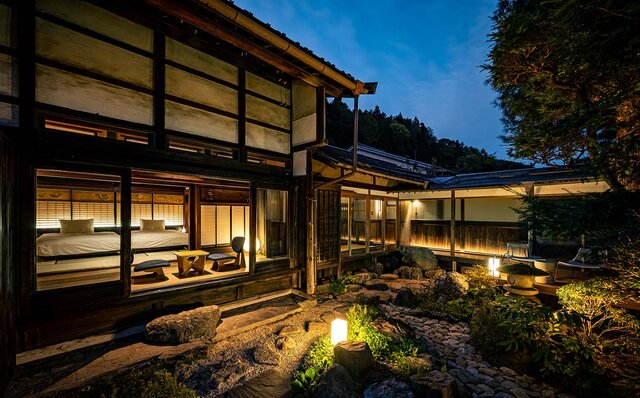
A room with an engawa (veranda) facing the inner garden.
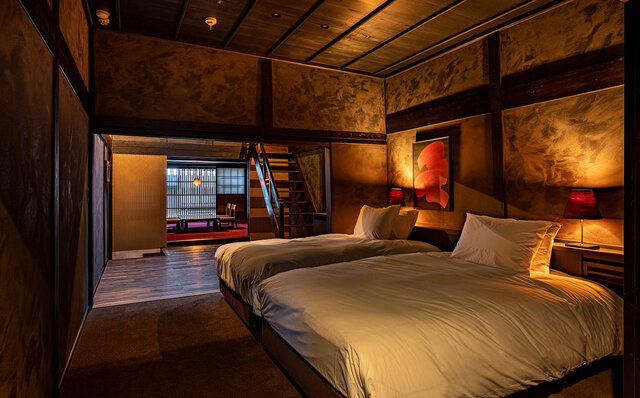
A two-story room layout.
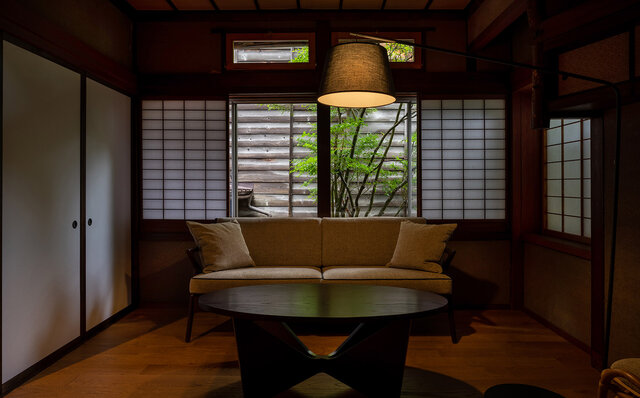
The design is pure Taisho Roman. A blend of Japanese and Western aesthetics is evident throughout.
A room with a separate living area featuring a sofa.
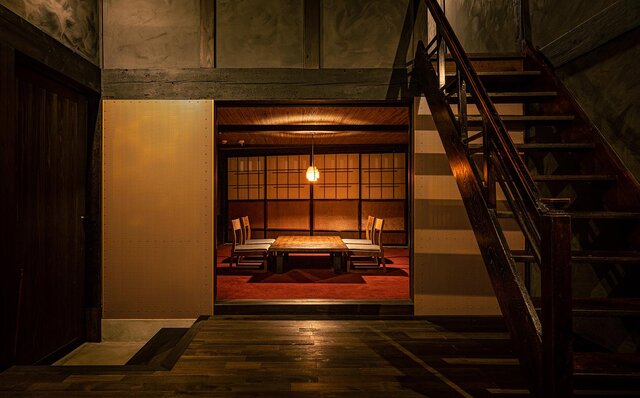
The earthen floor is cleverly utilized to expand the living space.
Relax on the engawa. Why not order some sake via room service?
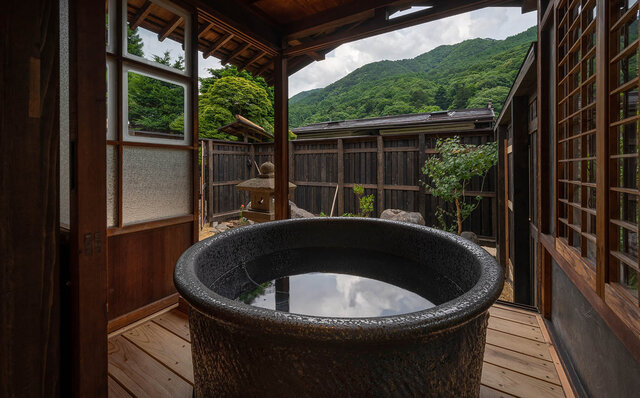
Each room has a semi-open-air bath. Available 24 hours a day with gas heating.
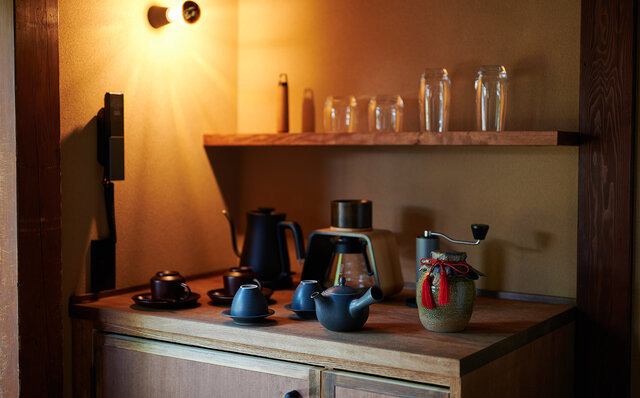
A coffee mill is provided in each room, allowing you to enjoy the aroma of freshly ground beans.
As night falls, the atmosphere becomes moody.
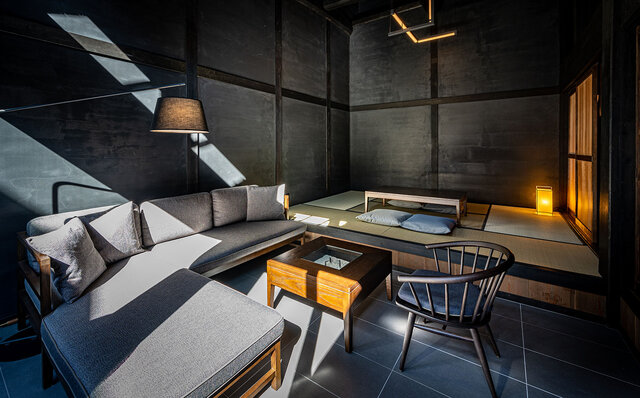
This room boasts a pleasingly high ceiling. Renovated from a sake brewery, it maximizes the advantages of the existing structure.
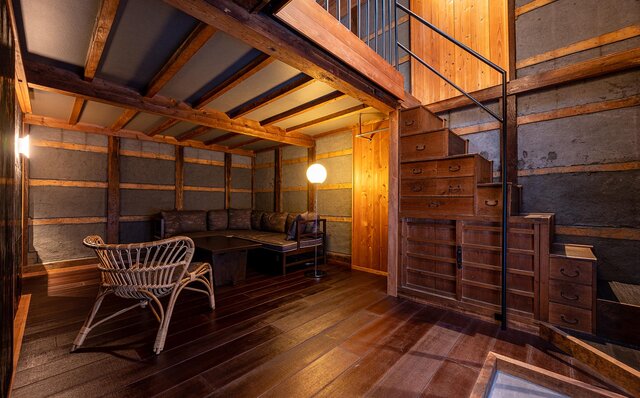
A living space with wooden floors. A traditional chest of drawers serves as stairs.
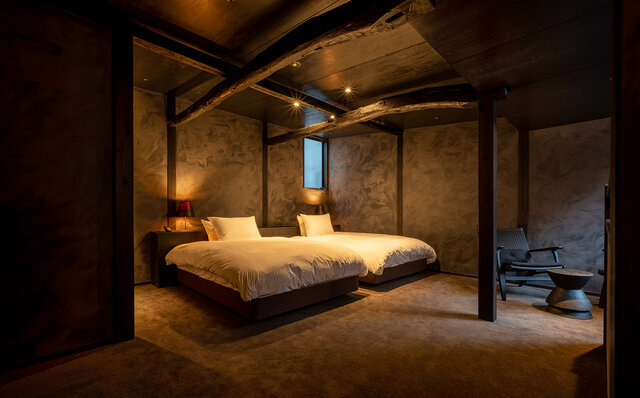
A unique room with textured plaster walls.
BYAKU Narai has a total of 12 guest rooms. All are designed to preserve the approximately 200-year-old traditional structures, and no two are alike. Rooms feature open-air baths, some occupy entire storehouses, and others have verandas, each with its own distinct character. The presentation, a delightful blend of tradition and modernity, is highly appealing, with details like lacquered solid wood coffee drippers in every room (in the Edo period, "magemono" bentwood crafts were Narai-juku's main industry). For sake lovers, the very idea of staying at a sake brewery is exciting.
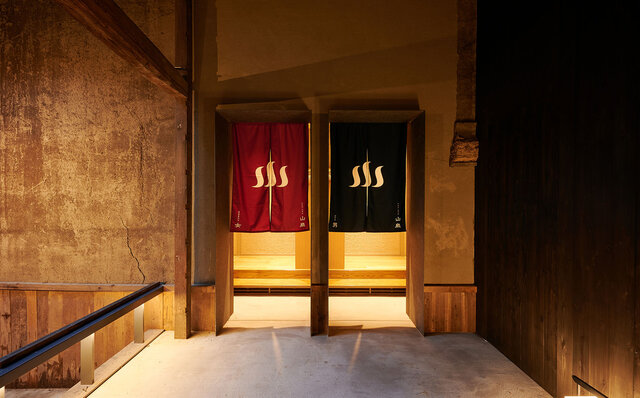
The hot spring facility "SAN-SEN"
The hot spring facility "SAN-SEN"
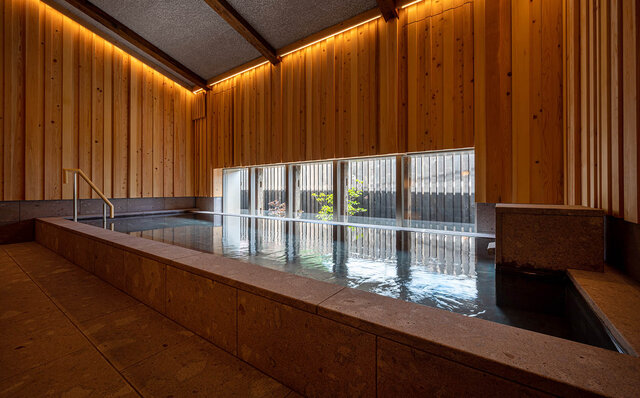
There is also the hot spring facility "SAN-SEN," built in the former sake brewery's storage area. I initially thought, "Oh, not a hot spring..." (my apologies), but I was completely captivated. Let me tell you why: the water used for "suginomori brewery's" sake is mountain spring water from the headwaters of the Shinano River, and this facility heats it using biomass fuel derived from wood chips procured from the local Kiso Forestry Association. This is the ultimate in local production for local consumption, the pinnacle of SDGs!
And the water itself—clear yet soft, with a delightful tsundere-like quality—is something you absolutely must experience. Furthermore, the design is brimming with local pride, featuring Kiso's five sacred trees (Hinoki cypress, Sawara cypress, Asunaro, Kōyamaki, and Nezuko) on the bathroom walls and Nagano-sourced Shiba stone for the flooring.
Restaurant "Kura"
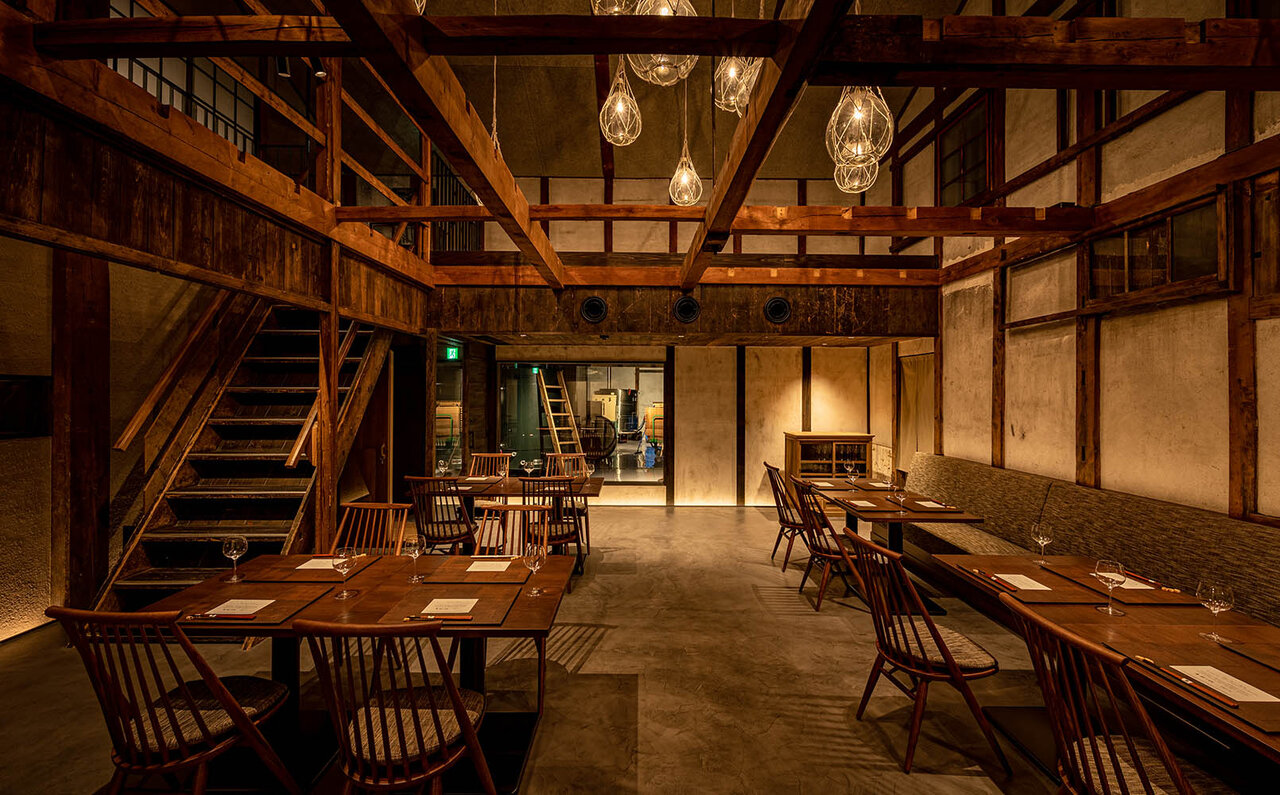
Meals are served at the restaurant "Kura," renovated from the former "Suginomori Brewery" where the main sake brewing activities took place. Located right next to "suginomori brewery," the ability to dine while observing the brewing process through glass already has me incredibly excited. As mentioned earlier, "Kura" has an even more compelling draw.
The menu is supervised by Yusuke Hasegawa of "DEN" in Jingumae, Tokyo, which was ranked No. 1 in "Asia's 50 Best Restaurants" in 2022 and is currently making waves globally. Hasegawa, known for his playful yet deeply hospitable "new style of Japanese cuisine," is exploring how to express Kiso's regional food and the wisdom and food culture of its people, shaped by the climate and environment. It's no exaggeration to say the world is watching.
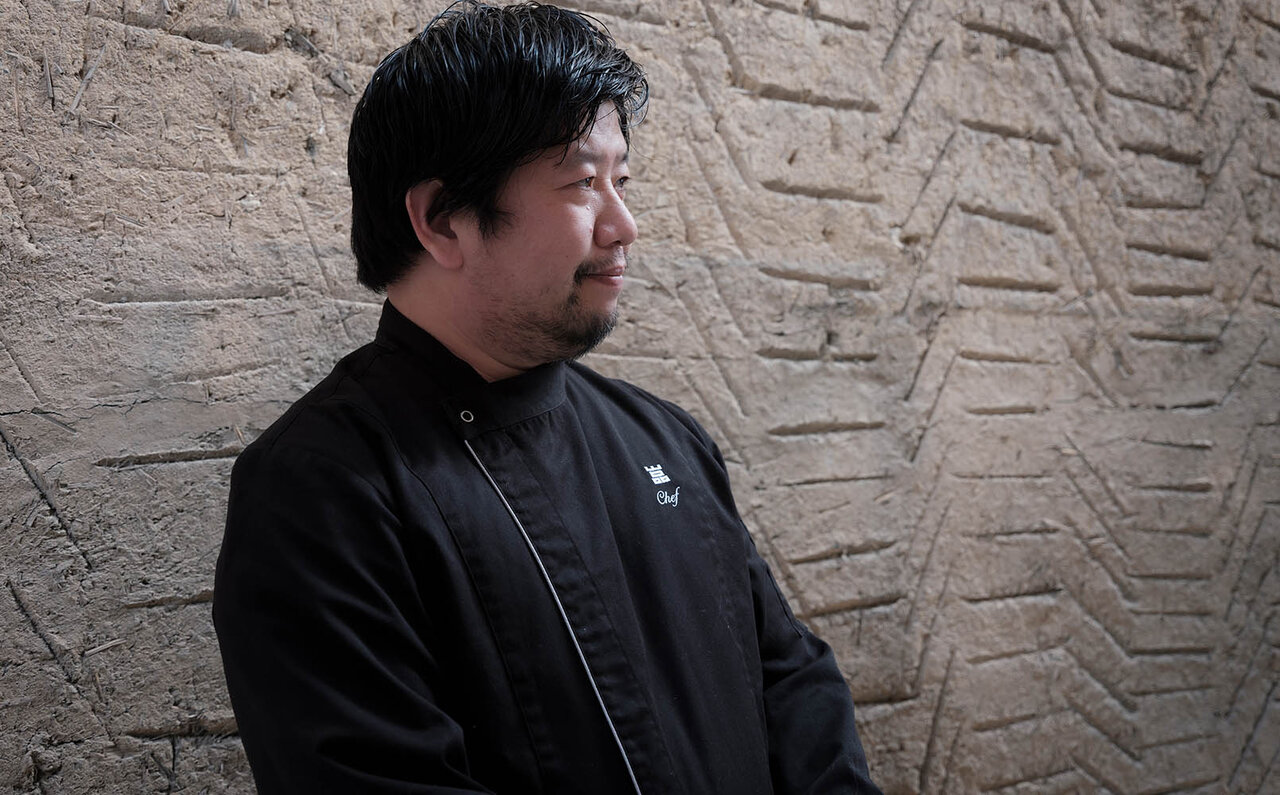
The actual cooking is done by Chef Takashi Tomimori. Tomimori, born in 1978 like Hasegawa, hails from Hiroshima Prefecture. After training in Paris, Tokyo, Kanagawa, and Nagano, he opened his own restaurant in Shiojiri City in 2011.
"My culinary philosophy is to propose ingredients that are intrinsically tied to the region, based on my inspiration at the time. I've never hesitated to incorporate Western elements into Japanese-based cuisine; in fact, I find it a very enjoyable process," Tomimori says with a smile.
When asked about his collaboration with Hasegawa, he replies, "I feel like we're creating together. Hasegawa's creativity is inspiring, and I deeply resonate with his passion for food and his approach to embodying the customer's enjoyment in his dishes."
I'm getting hungry just talking about it. Let me introduce the dishes we enjoyed during our visit, a time when the lingering chill of winter was giving way to the first hints of spring.
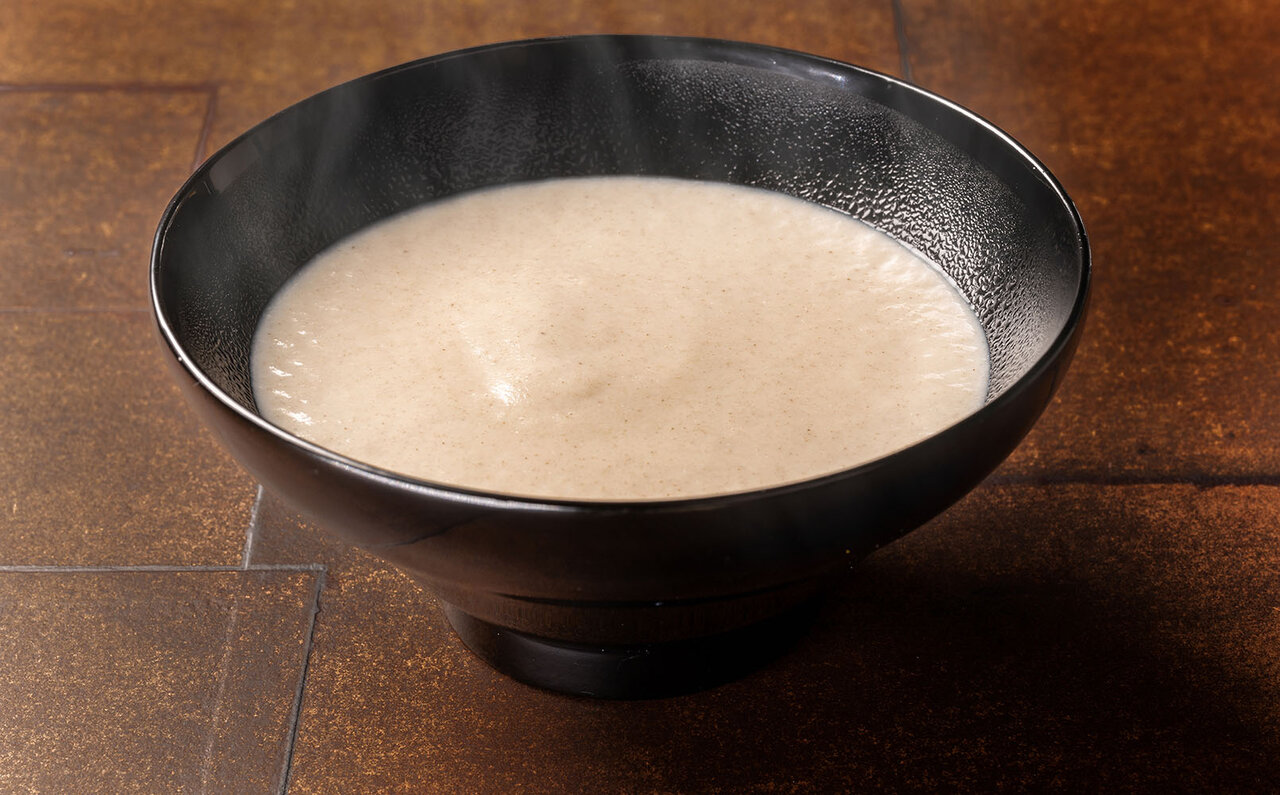
This dish, which Tomimori has been perfecting even before becoming head chef at "Kura," is designed to offer a comforting start with the most delicious seasonal vegetables. While normally finished with only bonito dashi, on colder days, the concentration and temperature are adjusted to create a richer texture.
On this day, we were served burdock root puree. A single spoonful evoked a profound, earthy flavor that gently permeated the body. If I had the funds, I'd ask Tomimori to supervise a daily changing puree soup shop in a business district, perhaps partnering with a good bakery. Investors wanted!
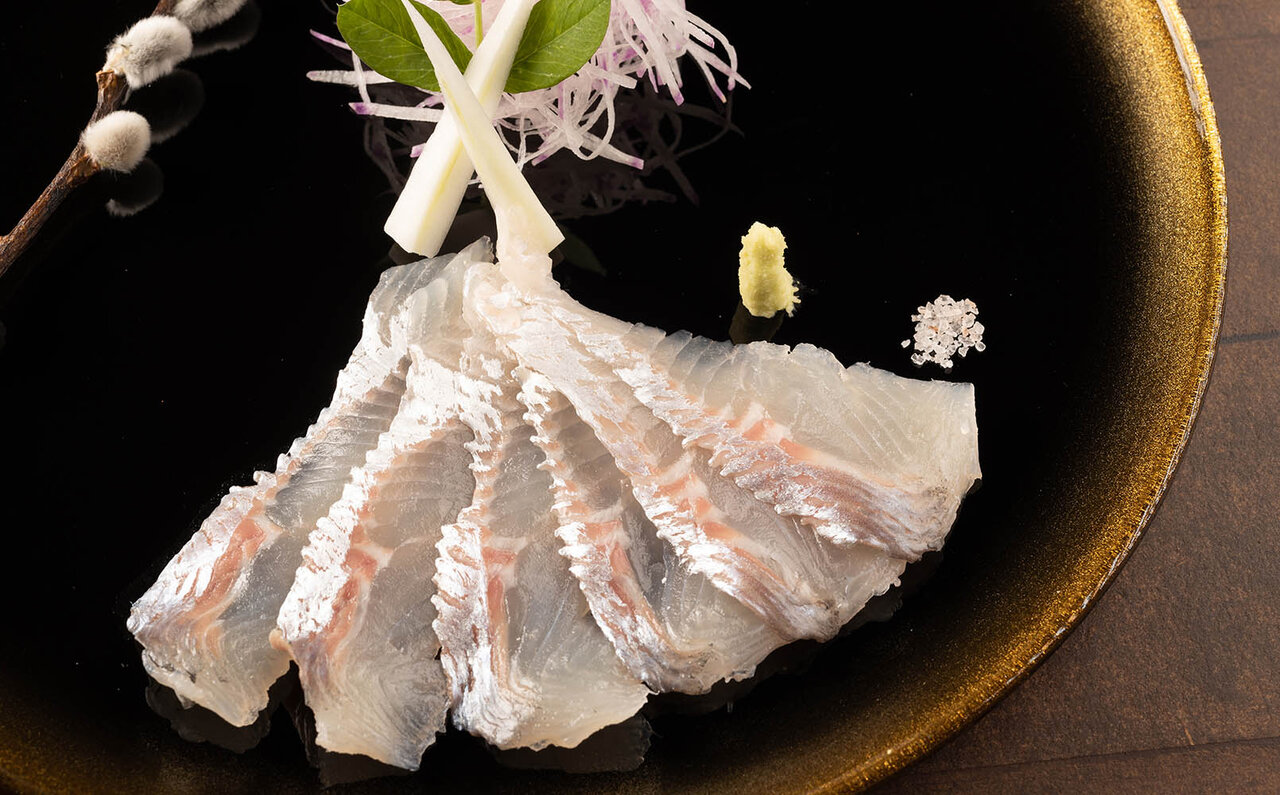
This is sashimi of Shinano Yuki Masu (a type of trout). It's served with homemade ponzu sauce, and both the sashimi and the ponzu itself are exquisite! The pairing is a Pinot Gris from GAKUFARM, a winery in Matsumoto. The reason for the pairing? It's chosen to complement the ponzu, not the trout. As for the trout, Tomimori explains, "In the colder months, it's fatty and has a good bite, so thinly sliced is best." Today, it was presented with a "deliberate retro, Showa-era feel," reminiscent of fugu sashimi. The lacquerware, with lacquer applied to glass, is also very stylish.
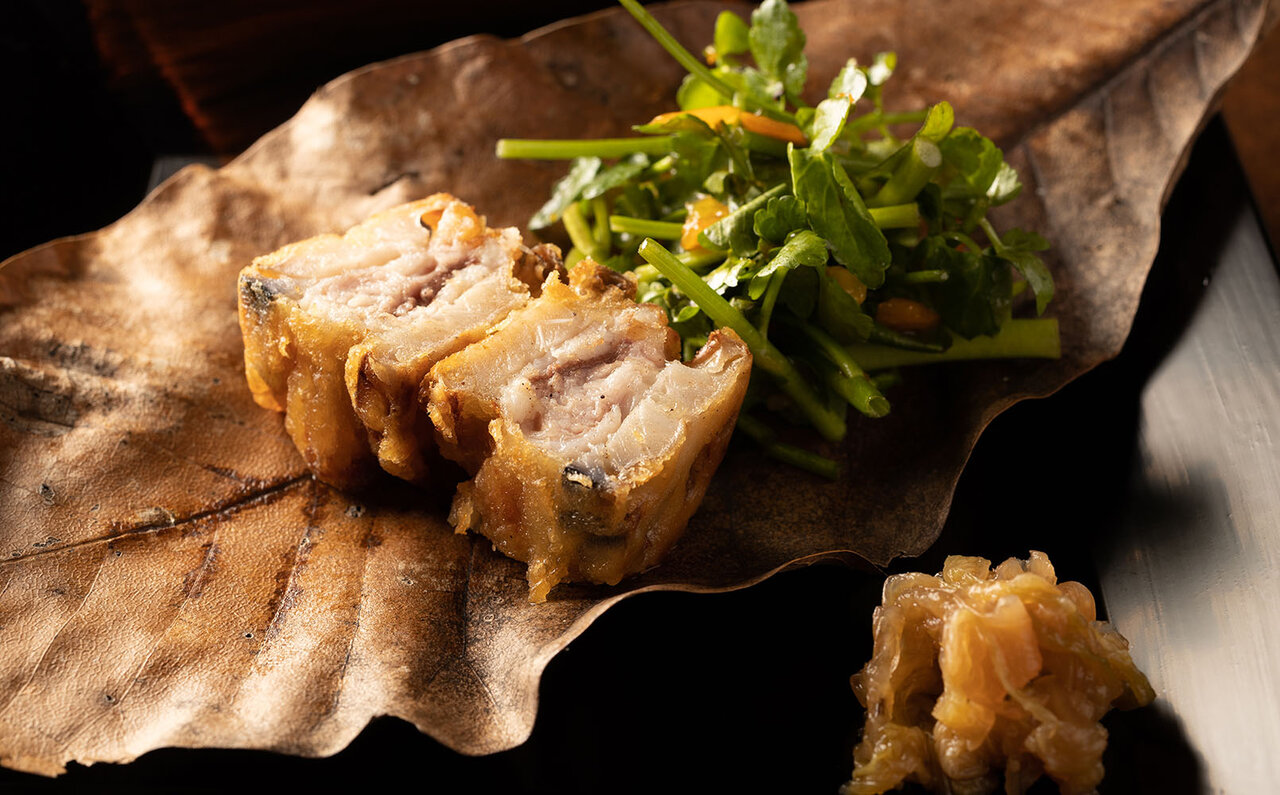
This dish features carp. In the era before modern transportation, carp was a valuable source of protein in landlocked Nagano Prefecture, especially in the mountainous Kiso region. Today, opportunities to eat carp locally are said to be diminishing. However, precisely because of this, they aim to offer carp year-round to "pass on the culture of eating carp."
They have previously offered carp in various forms, such as minced into shinjo (a type of dumpling) or served as a fritter with sauce. This time, it's lotus root sandwiched with carp, served on a magnolia leaf. The carp is mixed with fuki miso (soybean paste with Japanese butterbur), and topped with a water dropwort salad made with kumquats. Accompanying this is stewed napa cabbage. A perfectly composed dish.
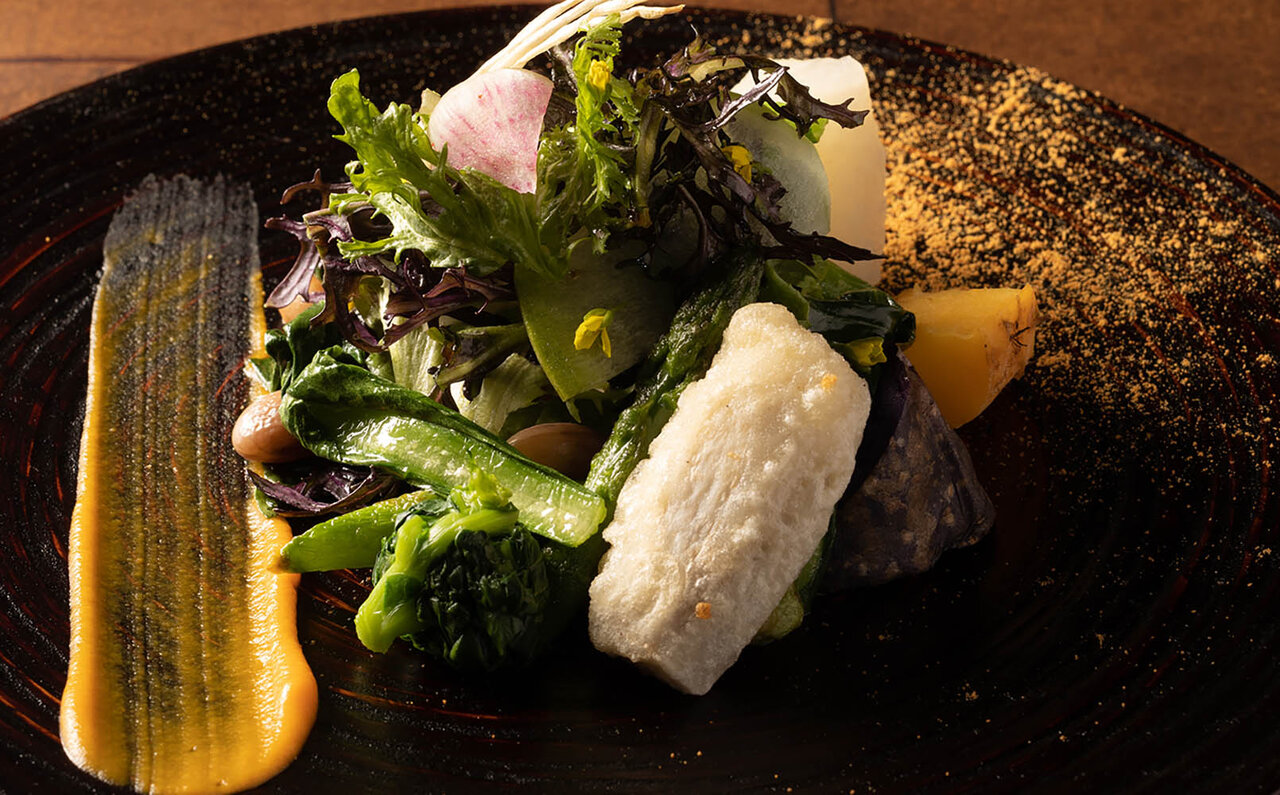
Following this is "Satoyama," a signature dish at "Kura" and Tomimori's specialty. Raw, simmered, grilled, stir-fried, deep-fried—chives, taro, turnip, Brussels sprouts, beets, and more are meticulously prepared with their respective cooking methods and seasonings, arranged beautifully on the plate. It's a stunning representation of the Kiso countryside landscape. The pairing with gin is also quite sophisticated.
Tomimori's deliberate choice to feature a vegetable-centric dish not at the beginning but in the middle of the course highlights his commitment. His deep affection for local vegetables is palpable. When Tomimori first came to Shiojiri 13 years ago, he was astonished by the deliciousness of the local vegetables and was completely captivated.
"I jokingly call this the 'best vegetable IQ in Japan.' However, despite being a treasure trove of such delicious vegetables, locals don't know how to best enjoy them. Wonderful zucchinis that would sell for 300-400 yen in the city are sold for just 50 yen. I hope that by proposing various cooking methods, I can bring joy to the producers as well."
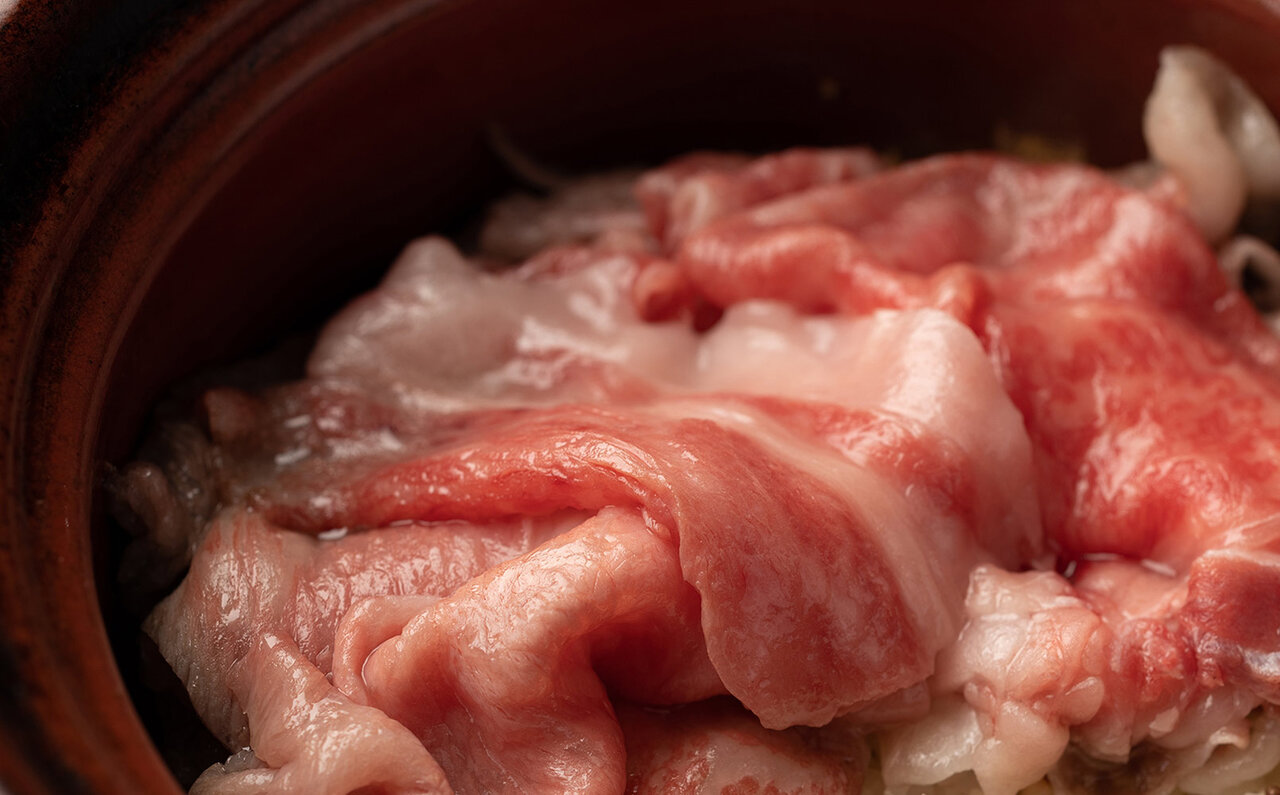
The meal concludes with rice cooked in a donabe (earthenware pot). Following the signature donabe rice of "DEN," it's adapted to "Kura's" style using rice from Shiojiri. Instead of mixed rice, the cooked ingredients are mixed into the freshly cooked rice in the donabe, embodying the "DEN" philosophy. Tomimori calls it "a celebratory rice dish," and indeed it was a feast. There are said to be various versions, but the one we had was "Sirloin Rice," using Kiso beef sirloin. The marbled fat of the Japanese beef melts beautifully into the rice, making it melt-in-your-mouth...
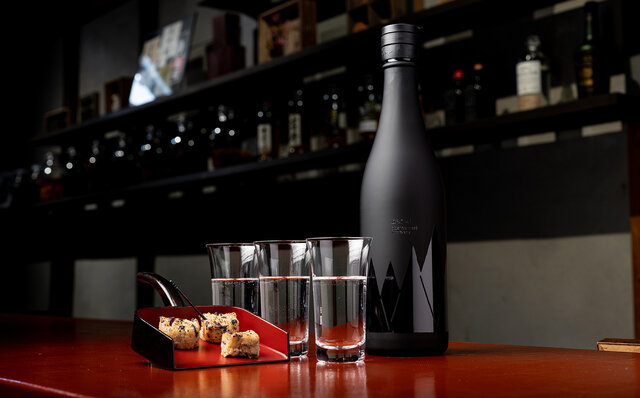
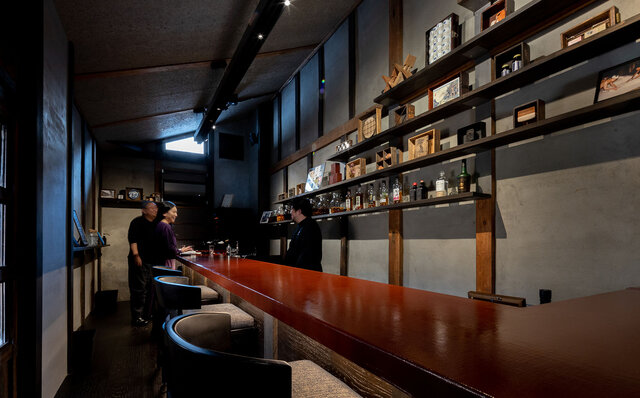
The night is far from over. Let's stop by the bar "TASTING BAR suginomori," renovated from a former miso brewery. In fact, it's a must-go! The counter, crafted with Kiso's lacquerware, is alluring, and the walls are adorned with equipment used at "Suginomori Brewery."
In this unique space, you can enjoy drinks exclusively featuring Nagano Prefecture's finest. If you're lucky, you might even get to try freshly pressed "narai," the sake brewed on-site by "suginomori brewery." Don't miss their homemade gin, infused with Kiso's five sacred trees.
The locally-inspired snacks prepared by Chef Tomimori are also enticing. There are even special pairings for "narai." A paste made from "narai" sake lees, mixed with miso and honey, and stir-fried with the local delicacy of candied hornet larvae—it's an irresistible combination! The homemade "Shinshu Deer Jerky," made from deer hunted by a veteran hunter based in South Kiso, is packed with umami that makes you want to chew it forever.
Even if you drink a little too much, your room is just a short walk away. Let yourself be intoxicated by exquisite sake with peace of mind!
The bar, like a secret base, is wonderful, and I'd love to try Tomimori's cuisine, a collaboration with Hasegawa, again in a different season. Even while still in Narai, I found myself thinking, "I could visit again just for the food."
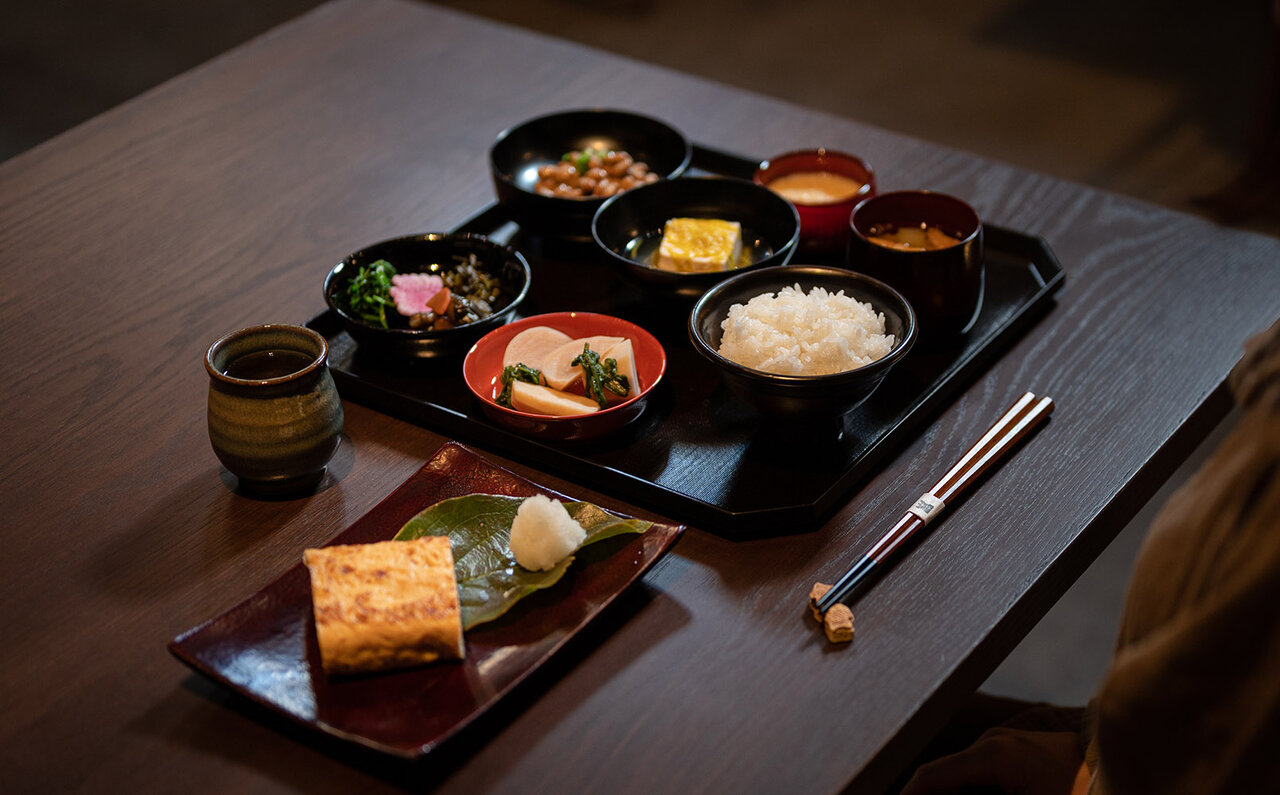
Breakfast. Simmered ganmodoki (fried tofu balls), spinach, and dried daikon. Kawanakajima natto. Pickled nozawana greens, kasuzuke (pickled in sake lees) of yamagobo. In the center, Kiso tofu with a sauce of red daikon and ginger. Miso soup with green onions.
But the simple, "mother's breakfast"-themed meal was also delightful (the tamagoyaki with Shinshu Gтарo chicken eggs was superb!), and the hot spring facility was so appealing I could visit every day. And spending time in the serene rooms is also wonderful. It seems I'll have to stay here again.
BYAKU Narai
Address: 551 Narai, Shiojiri City, Nagano Prefecture
Access: 5-minute walk from JR Chuo Line Narai Station, or 35-minute drive from Shiojiri IC
Check-in/Check-out: 3:00 PM / 11:00 AM
Room Rates: From ¥40,000 per person for 2 people (including breakfast and dinner)