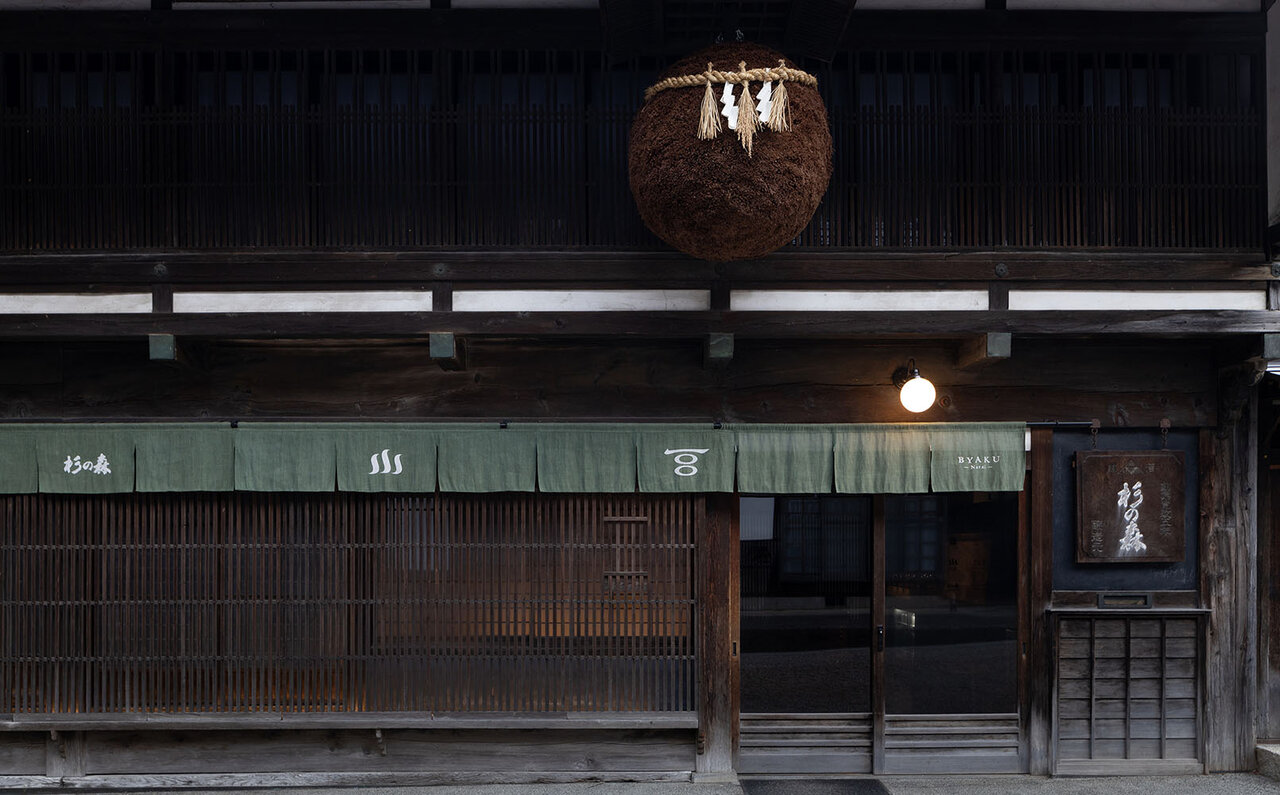
Crafted by a single Toji, by hand. Experience the philosophy of a brewery born in the Reiwa era, redefining Japanese sake. | Suginomori Brewery
suginomori brewery
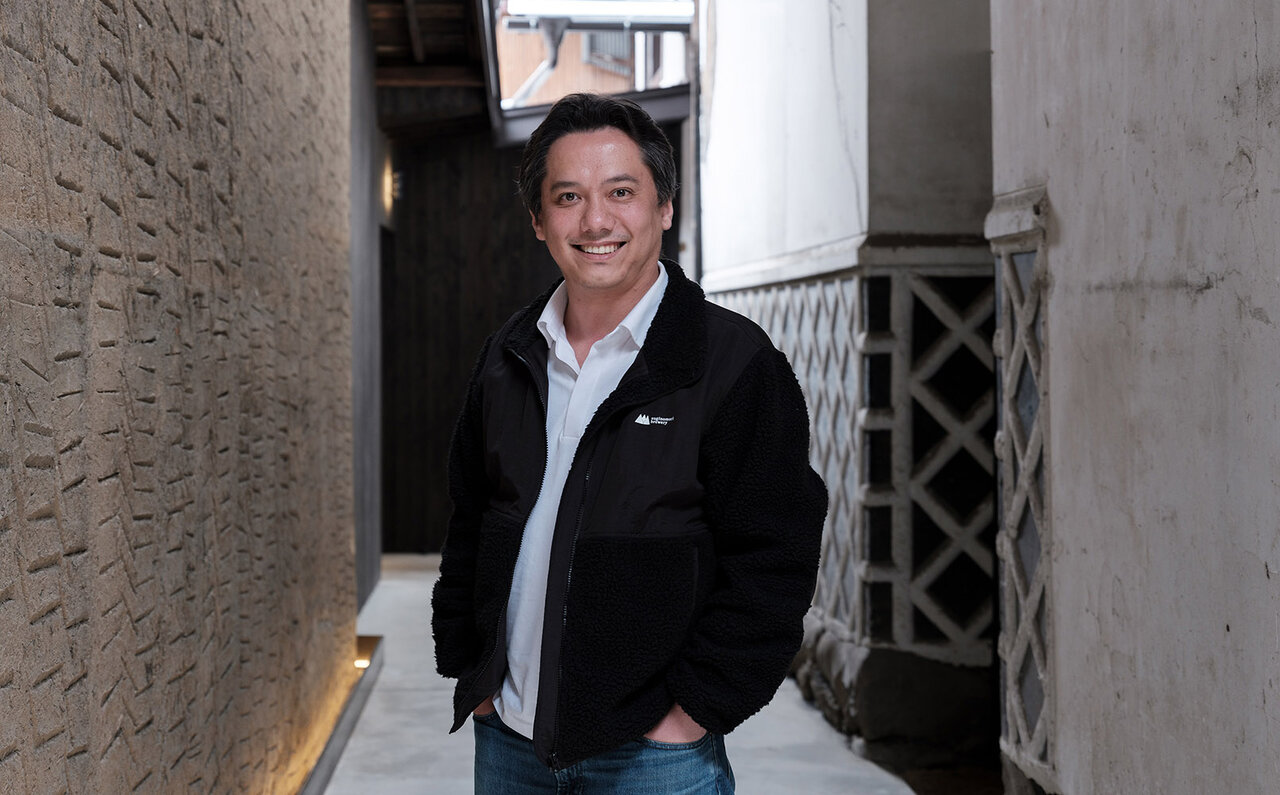
Suginomori Brewery: An Interview with Toji Masayuki Irie and Brewery Representative Hiro Sandberg
Launched in February 2022, the new Japanese sake brand "narai" is priced at ¥5,500 (tax included) for a 720ml bottle, making it somewhat expensive compared to typical sake. Furthermore, it eschews the industry norm by not listing the rice polishing ratio or the specific sake rice used for each bottle on the label. This unconventional style has sparked considerable buzz, challenging the established conventions of the Japanese sake industry. But it's not just about the novelty; the taste has received exceptionally high praise, quickly gaining popularity. Prestige hotels in Tokyo, including "Aman Tokyo" and "Grand Hyatt Tokyo," have begun stocking it, and inquiries are pouring in from overseas.
Photographs by Kaku Ohtaki | Text by Aya Hasegawa | Edit by Takashi Tsuchida
"Narai": A High-Quality, Everyday Brew That's Standard and Never Tiresome
The story of Suginomori Brewery's revival dates back to the summer of 2020. A project was launched to renovate the dormant brewery and create "BYAKU Narai," a lodging and complex facility.https://openers.jp/lounge/lounge_travel/D6gABInitially, the plan was not to continue the brewery operations. However, Hiro Sandberg, representative of Kiraku Inc., a company specializing in business planning, development, and strategic investment, stepped forward with the desire to preserve the brewery, which was both an intangible cultural asset of Japan and a spiritual pillar for the local community. Sandberg recalls:
Hiro Sandberg
"In California, where I grew up, wine tourism is well-established. You can tour wineries, and there are accommodations nearby. But such a culture isn't firmly established in Japan. Breweries are often located in places with poor transportation access, requiring car travel, which makes even tasting difficult. In that context, a brewery located right in the heart of a tourist destination like Narai-juku is truly rare."
Brewing requires professional expertise. There was also the idea of introducing an outsourced management model, common in the hotel industry, to the brewery. Sandberg approached various breweries for collaboration, but it was the summer of 2020, right in the midst of the pandemic. "Most breweries turned us down, saying they had more pressing concerns."
During this time, Sandberg visited Hidehiko Matsumoto, the Toji at "Matsumoto Shuzo" in Kyoto. "When I first showed him the blueprints and business plan, he offered a lot of critical feedback." He expressed concern about the planned 250-square-meter workspace, less than half the size of the original brewery, stating, "There's no way such a small space can be profitable." He also looked skeptical about year-round brewing, which Sandberg was considering, saying, "Achieving that might be difficult."
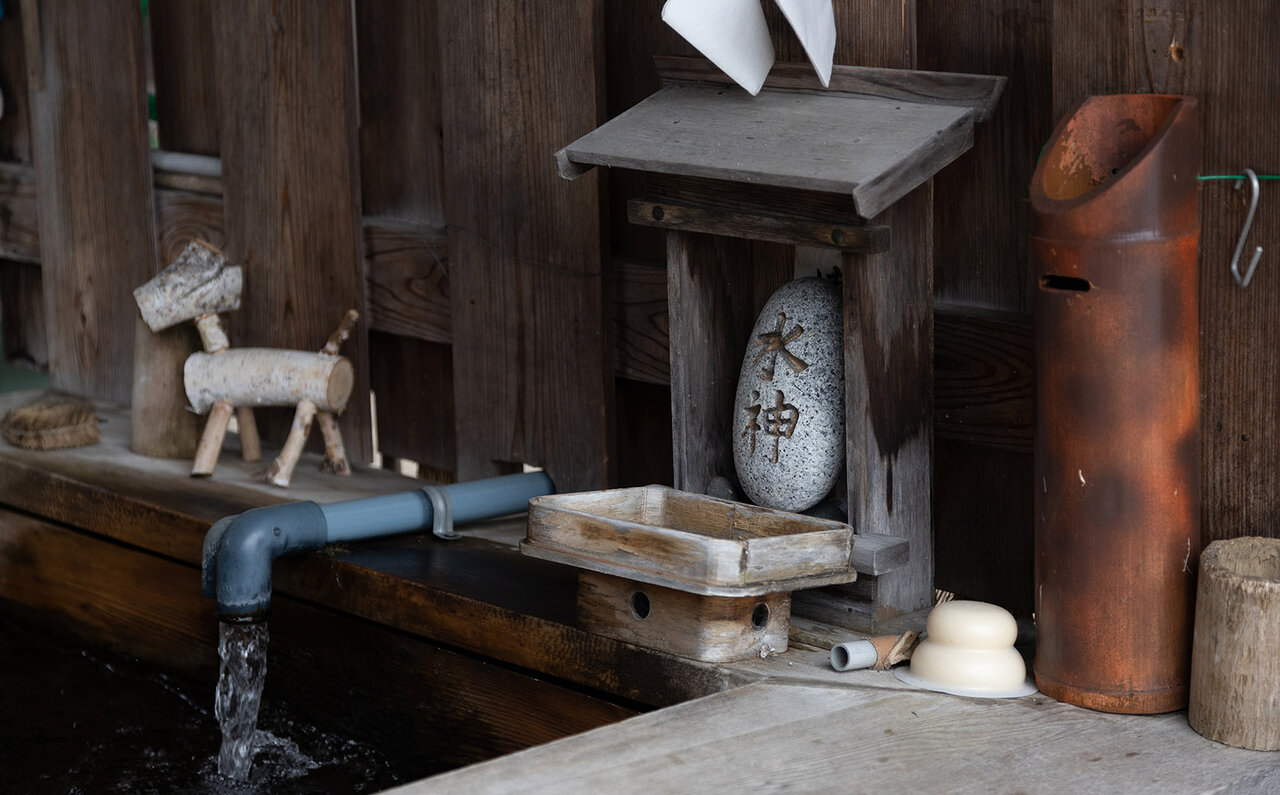
But, "After about an hour of realistic advice from a professional perspective, he told me to drink some water first, saying, 'The lifeblood of sake is water; if the water is good, I'll consider it...' I was happy because I thought he might have been leaning towards rejection during our conversation." When Sandberg brought water from Narai, which had been used since the days of the dormant "Suginomori Brewery," Matsumoto was impressed. "With this, it might be possible to make good sake. I felt potential in the texture!" he agreed to cooperate. The spring water near the watershed of the Shinano and Kiso rivers, which "Suginomori Brewery" had continued to use as a raw ingredient, was ultra-soft water, ideal for the delicate flavors of Japanese sake.
Narai-juku has several locations where spring water is utilized. This resource has been cherished and revered as a gift from the water deity for generations.
Following this exchange, Matsumoto introduced Sandberg to Masayuki Irie, who is now the Toji at Suginomori Brewery, saying, "I know a unique brewer who would be a good fit for this project. I think he'd like this environment and the challenge."
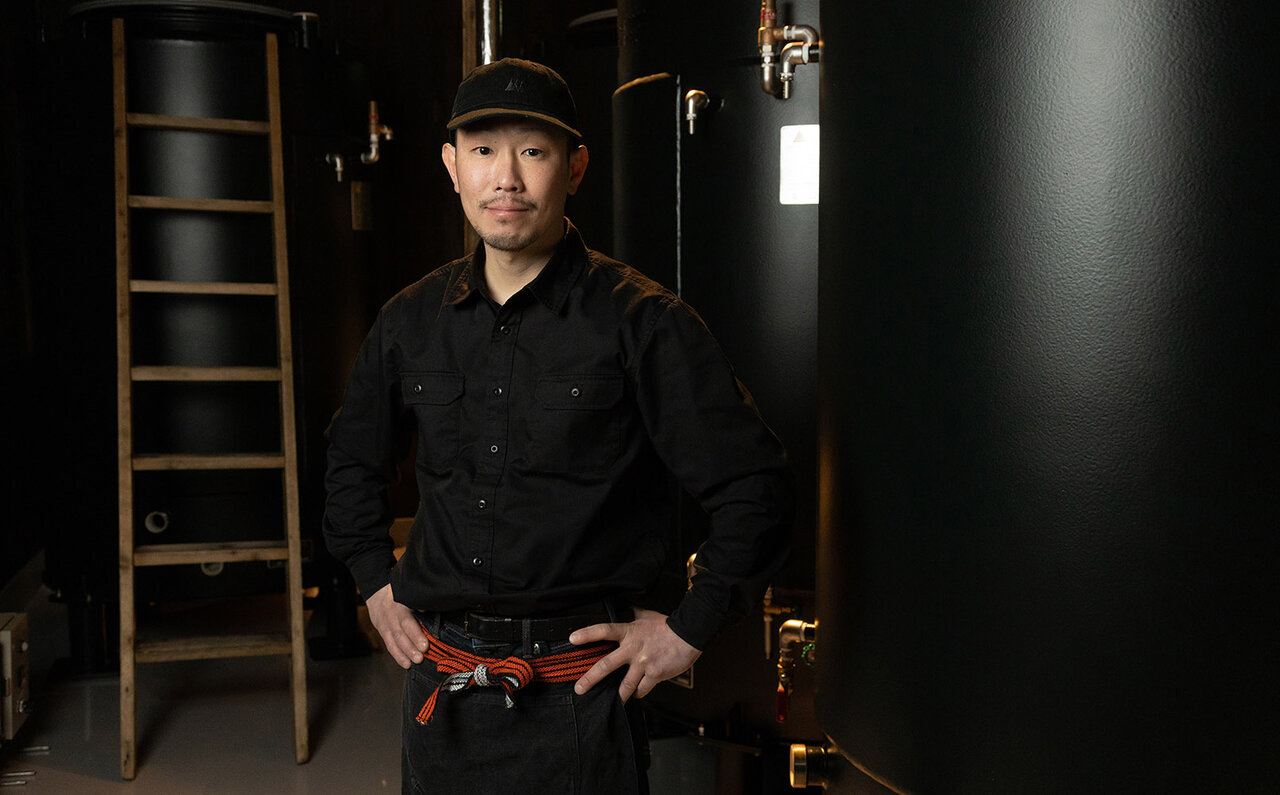
Suginomori Brewery Toji, Masayuki Irie
"Upon hearing about this, I accepted without hesitation. Firstly, the pure water, which the people of this region have protected for generations, is unique to this place. Secondly, I've always felt there were many areas where the Japanese sake industry could do better, and this was a chance to challenge those norms," Irie explains.
When asked what he aims to create, he passionately replies, "Many things, but I've always questioned the way Japanese sake is often categorized. Fixed notions like 'It's good sake because it's Junmai Daiginjo' are such a waste."
"I enjoy questioning industry assumptions and conventions (laughs). Since we're starting from scratch, I want to reset all preconceived notions. Many people believe that the more polished the rice, the better the sake, and that Yamada Nishiki is the best sake rice. But is that really true...? I want people who drink narai to find their own favorite without any preconceptions. That's why Suginomori Brewery hasn't released an official tasting note yet," says Sandberg. This is the reason why "narai" does not list the type of sake rice or the polishing ratio on its bottles.
The philosophy is to overturn any conventions or fixed ideas that raise questions – with this in mind, Suginomori Brewery began brewing in October 2021. The name of the sake brewed by Suginomori Brewery is "narai."
"By naming the brand 'narai,' most people will search the web for 'narai' rather than 'Suginomori.' This will bring up many wonderful photos of the post town. I thought this would pique interest in the region. Also, by using the place name 'narai,' we can convey the atmosphere of the area and help people imagine the story behind the sake," says Sandberg.
Indeed, it's a logical approach. And there's another reason for not listing the raw rice and polishing ratio on the bottle. By varying the sake rice used (they disclose using Miyama Nishiki, Kinmon Nishiki, and Yamazakura from Nagano Prefecture, but not which bottle uses which rice) and the polishing ratios, they aim to gather customer feedback and use it to perfect "narai."
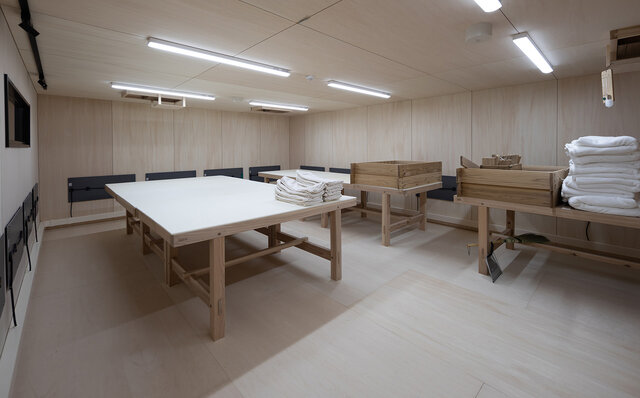
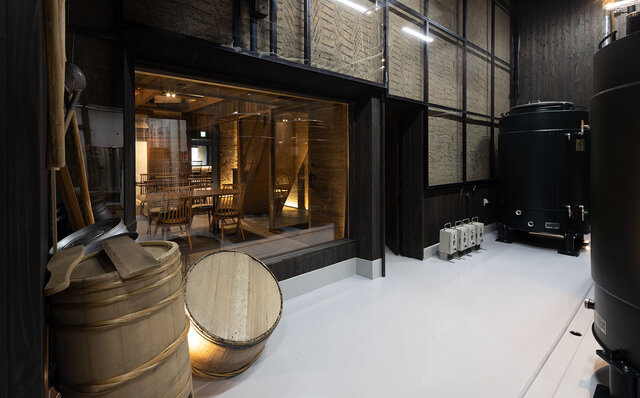
A clean koji room. The design allows views of the brewing process from the restaurant of the adjacent lodging facility, BYAKU Narai.
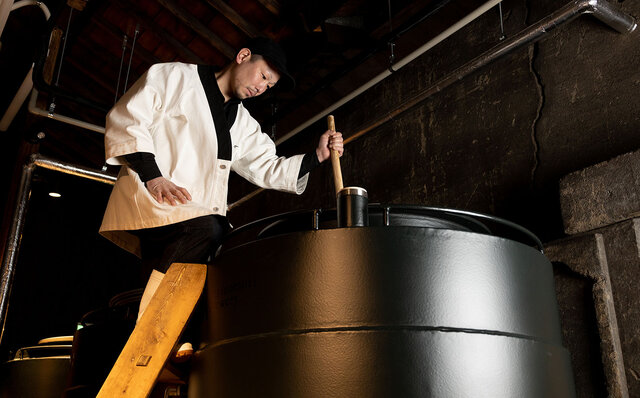
Brewing is carried out year-round by Irie and a few assistants. The motto of Suginomori Brewery is for Irie to meticulously craft every step by hand.
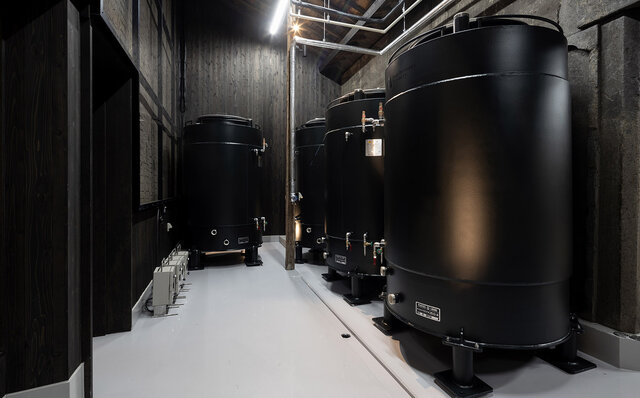
The tanks, which appear black, are actually a deep green, inspired by the Kiso mountains. While typical breweries use large tanks of 3,000L to 8,000L, Suginomori Brewery employs smaller tanks: four 1,800L and four 900L.
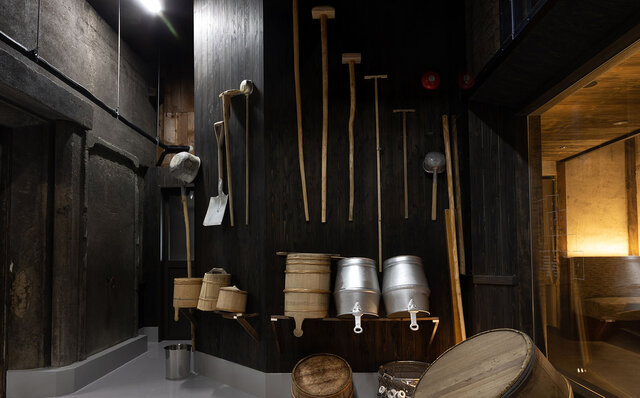
Old equipment from before the renovation is also carefully maintained and used.
The restaurant of BYAKU Narai is visible from the brewery. It's separated only by a single pane of glass, making all brewing activities completely transparent.
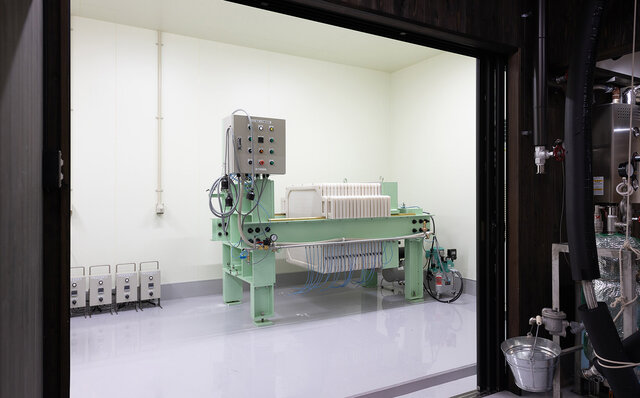
This is a press, a machine that separates sake from sake lees. It minimizes the sake's contact with air, preserving its fresh flavor and effervescence.
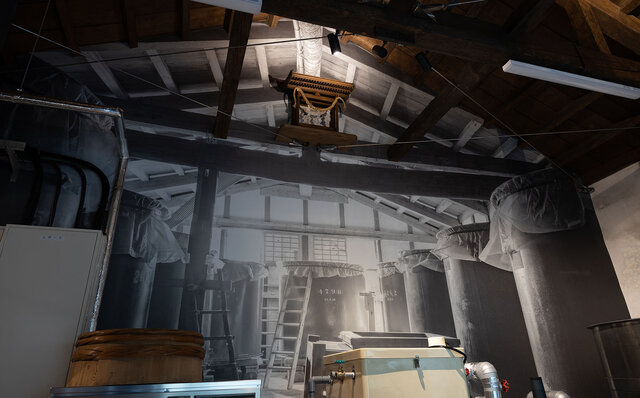
On the brewery walls, a life-sized photograph of the brewery as it was before renovation, taken from behind this wall, is displayed. A Shinto shrine is located near the ceiling.
When I asked Irie if there were any restrictions on photography during the shoot, he replied without hesitation, "Oh, we don't have any 'no photography' rules here." Even though the type of rice and polishing ratio are not disclosed, there's nothing they need to hide from public view. "We are positively considering brewery tours! I'd be delighted if this brewery could spark an interest in Japanese sake," Irie says. When asked again what kind of sake he wants to brew here, he immediately responded, "Sake that draws out the charm of the ingredients while being loved by a wide range of people."
"I feel that many recent Japanese sakes are polished too much, resulting in a diluted rice flavor. In other words, it's hard to perceive the taste of the rice. I want to clearly express the ingredients like rice and water. For 'narai' specifically, I want to create a sake that is delicious on its own and can also be paired with various meals," says Irie.
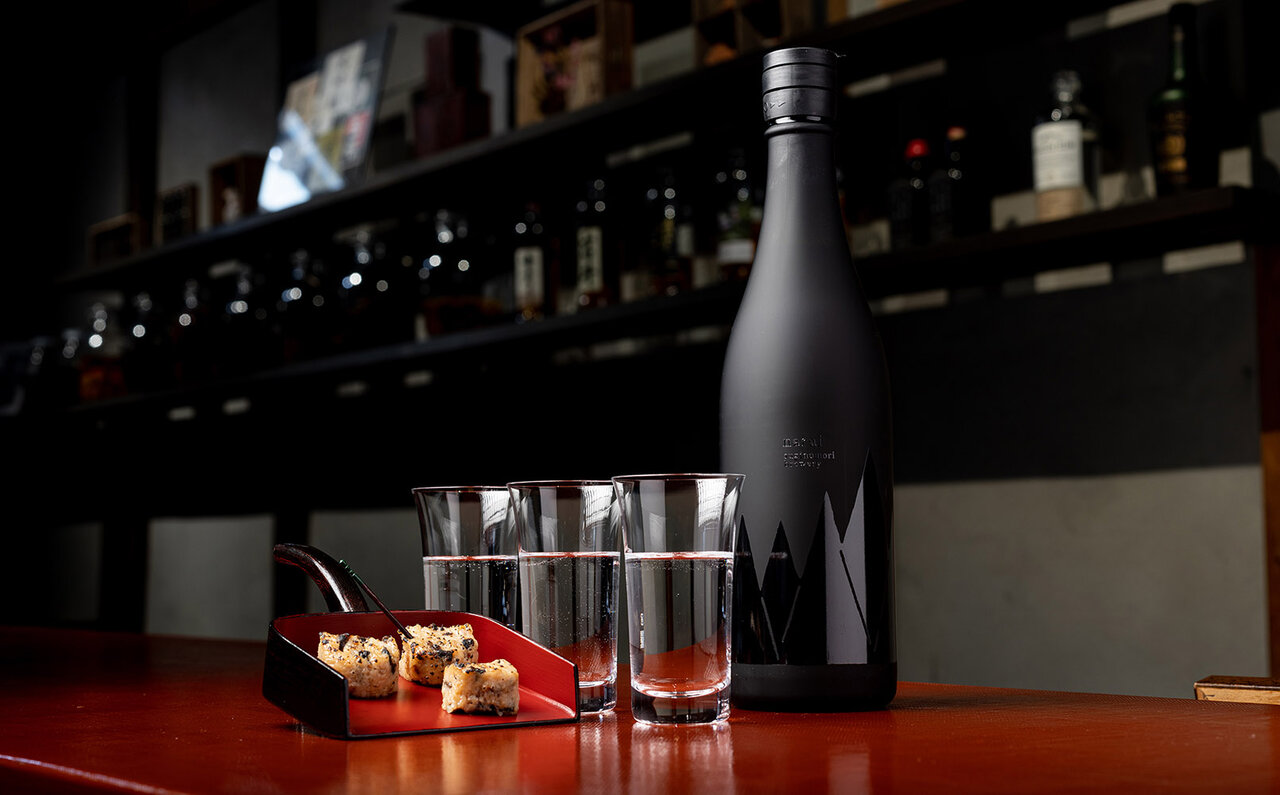
In fact, "narai" bottles do not have traditional paper labels. Instead, the labels are printed directly onto the bottle, reducing the number of steps involved in labeling. This is a clever measure to enable small-scale brewing operations.
While listening, I had the opportunity to taste freshly pressed "narai." It possesses the fruity aroma popular these days, yet retains a distinct rice texture. Additionally, its effervescence from fermentation and a clean finish are characteristic. A Japanese sake wholesaler in Singapore was reportedly surprised, saying, "I've never tasted anything like this!"
"The aroma is subtle, and it's certainly not a flashy sake. We aim for a taste that is easy for anyone to drink, yet profound," says Irie.
"Narai," a high-quality, everyday brew that is standard and never tiresome, is sure to add a touch of elegance to our sake-drinking lives. Moreover, it's a "stylish all-rounder" that pairs well with any meal. And "narai," with its focus on the flavor of the rice, tends to strongly express the characteristics of the raw ingredients. Perhaps it would be enjoyable to guess the raw rice and polishing ratio while savoring it?
Most of all, we eagerly anticipate watching the growth of Suginomori Brewery and "narai" unfold in real time.