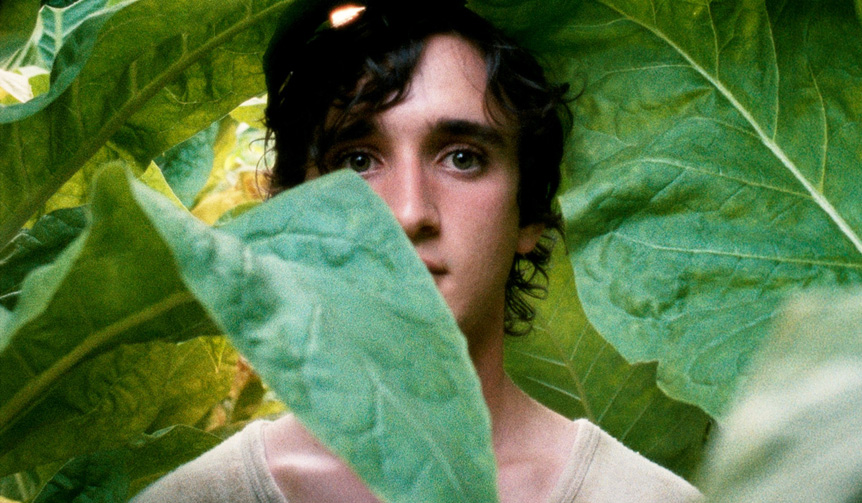
Series | Jun Makiguchi's Cinema Full Life, Part 28: "Happy as Lazzaro"
Series | Jun Makiguchi's Cinema Full Life
Part 28: Overwhelming Beauty and Innocence Like a Flower Blooming by the Roadside
Happy as Lazzaro
Perhaps overwhelming goodness is not something that attracts attention, earns gratitude, and commands respect like a cinematic hero. The fundamental goodness of being human may not lie in saving others, but in living one's life with integrity. That, in turn, may eventually save someone. This film depicts a young man who lives a miraculous life, unswayed by people or by the times.
Text by MAKIGUCHI June
A Masterpiece Reflecting Our World Through the Goodness and Innocence of a Young Man
The story is set in late 20th-century Italy. Lazzaro lives in a secluded mountain farming community, exploited by the Marchioness who conceals the abolition of the sharecropping system. His pure, trusting nature makes him an easy target for exploitation by his fellow sharecroppers.
One day, the Marchioness and her son, Tancredi, arrive from the city. The son, rebelling against his mother, plans a fake kidnapping and asks for Lazzaro's help. The good-natured Lazzaro shares his meager food rations with Tancredi and hides him in his secret spot. This incident eventually leads the sharecroppers to realize they have been deceived by their employer and to venture out into the world for the first time.
Lazzaro is one of the saints in the Bible, known for being resurrected by his friend Jesus Christ four days after his death. Many paintings depict this miracle, a subject favored by renowned artists such as Caravaggio, Rembrandt, and Van Gogh.
This motif of resurrection is also incorporated into "Happy as Lazzaro," where Lazzaro's return to the modern day quietly advocates for the necessity of "goodness" as a virtue that should be cherished regardless of the era. Furthermore, it bestows upon him, who appears pure and unremarkable in contemporary society, clear signs of sainthood.
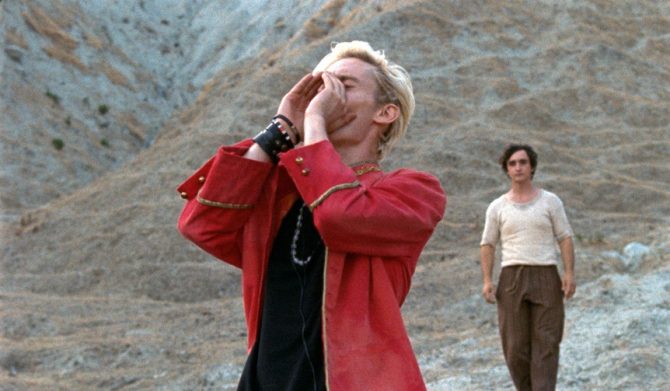
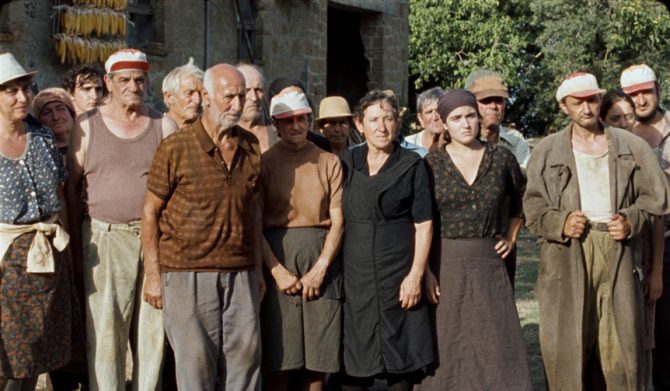
What makes this film unique is its portrayal of him not as a hero, but as a modern-day saint.
In today's world, where many people intensely dislike losing out and strongly desire to gain, even producing individuals who don't hesitate to deceive others for personal gain, many films emphasize justice. To depict justice clearly, a charismatic hero is needed—a hero who sacrifices themselves to save others and change the world.
However, director Alice Rohrwacher chose a different path: the justice of unwavering faith in human dignity. It is the overwhelming goodness and innocence that persists in one's beliefs, even when deceived or trampled upon. This is a profound virtue that makes our world a place worth living in. His beauty is vividly illuminated in contrast to the Marchioness, who continuously deceived and exploited him.
Both goodness and an innocent soul are invisible. Good people like Lazzaro do not assert themselves and thus often go unnoticed. They may not change the world. Yet, we realize that people like Lazzaro do exist, and it is through them that the world is somehow sustained as a place worth living in.
The beauty of the human spirit must somehow influence those around us, even unknowingly. Living with integrity, beautifully, without envy or jealousy, unswayed by the distractions of a world filled with杂念 (zán niàn - distracting thoughts), silently offering oneself when needed. In an era where everyone is informed, knowledgeable, and conscious of gains and losses, an innocent Lazzaro might even appear foolish.
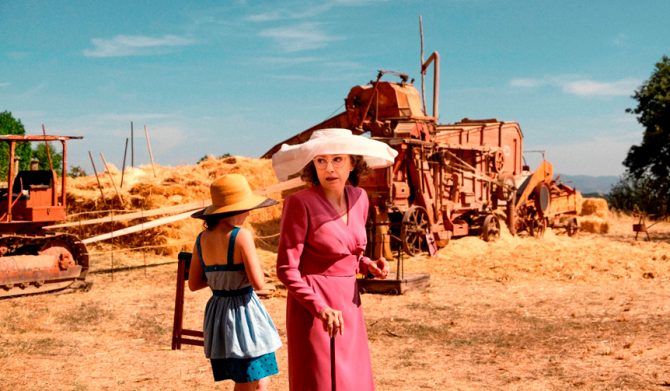
Yet, this is also a powerful beauty that can never be tarnished by anyone. It is perhaps a beauty that humanity lost long ago. To put it metaphorically, Lazzaro's presence is like a flower blooming by the roadside. At times, it may not even resist being trampled or plucked by human desires.
Many admire the vibrant, full bloom of cherry blossoms, but few notice the small flowers growing by the roadside. However, by recognizing the beauty of a single small flower, the virtues of people like Lazzaro, and by being inspired by that beauty, perhaps we can eventually transform the world into a more beautiful place.
Of course, they are not without sorrow. In fact, people like Lazzaro are likely the first to be hurt by the whims of human desires. Yet, they do not cry out loudly even when wounded. If we are exploiting them for our convenience, like the Marchioness, how truly base is our society? If we fail to recognize the existence of good people, it is likely due to our own spiritual poverty. If only we could become people who notice and appreciate them.
By acquiring wisdom and knowledge, we have completely lost the peace of mind that comes from not doubting or envying, a peace that people like Lazzaro possess. We could even equate this peace with happiness. For those who have become too cunning, this overwhelming goodness and innocence are too dazzling.
★★★★☆ A masterpiece that reminds us of the beautiful things we have lost within ourselves.

Happy as Lazzaro
Starring: Adriano Tardio, Agnese Graziani, Alba Rohrwacher, Luca Chikovani, Tommaso Ragno, Sergi López, Nicoletta Braschi, and others
Directed and Written by: Alice Rohrwacher
©2018 tempesta srl ・ Amka Films Productions・ Ad Vitam Production ・ KNM ・ Pola Pandora RSI ・ Radiotelevisione svizzera・ Arte France Cinema ・ ZDF/ARTE
Now Showing!
http://lazzaro.jp/