
An Interview with Tomoyuki Harashima, Animator at Pixar Animation Studios, on Pixar's Work Ethic
An Interview with Tomoyuki Harashima, Animator at Pixar Animation Studios
The Pixar Way
For over 20 years, Pixar Animation Studios has consistently delivered masterpieces that amaze the world and move people's hearts. What lies at the secret of its success? Tomoyuki Harashima, a Japanese animator at the studio who also worked on the animation for the latest film, 'Incredibles 2,' visited Japan and spoke about the inner workings of the studio.
Text by MAKIGUCHI June
Pixar's Secret
With its rich creativity, outstanding artistry, and the high technical skill to express them, Pixar Animation Studios has become a world-leading hitmaker. Continuously producing masterpieces like 'Toy Story,' 'Monsters, Inc.,' 'Finding Nemo,' 'Cars,' and 'The Incredibles,' Pixar captures the hearts not only of children but also of adults. Delivering laughter and tears, Pixar is truly a dream factory. What kind of magic is hidden within?
Sharing the secrets of this "magic" was Tomoyuki Harashima, who has been an animator at Pixar since 2015.
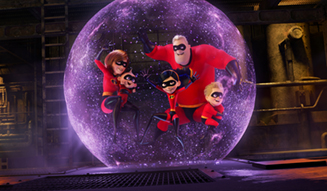

The studio prioritizes its working environment and implements various initiatives to maximize the talent of its creators, he explained.
"Pixar is a company defined by these six points: ① Play hard, work hard ② Everyone shares the common goal of creating wonderful films ③ Creativity first ④ Providing a comfortable working environment ⑤ Valuing work-life balance ⑥ Focusing on internal education."
This, in essence, is Pixar's secret. Many might be surprised to find it's not particularly unusual. However, the key to ideal organizational management lies in how well these "obvious" principles are ingrained within the company. Precisely because it's a place where talented individuals gather, creating an environment where they can perform at their best and ensuring a comfortable workplace is paramount. This, in turn, leads to talent acquisition and contributes to the company's performance.
In other words, Pixar's strength lies in its ability to execute these fundamental principles. For a continuous virtuous cycle, the philosophy of "employees first" must be the most protected tenet.
"One example is the presence of specialists who regularly check on the posture of creators. After each major project, they tour the studio, checking the positioning of desks, chairs, and computers. They offer personalized settings to prevent injuries like back or neck pain, or carpal tunnel syndrome. While the standard chair is an Aeron chair, it doesn't suit everyone. You can choose from about six types of chairs based on your body, work posture, and preferences. Of course, there are also massage therapists on staff."
Pixar spares no effort in creating a positive environment. They organize events like music and car shows that employees and their families can enjoy, and foster a shared understanding that "resting is also part of the job." Interestingly, to allow creators to personalize their workspace, decorating their desks (in private rooms or booths) is encouraged, with the company providing up to $200 for expenses. Some go as far as transforming their space into a jungle or covering the floor with sand to resemble a beach, with many supplementing the company's contribution out of their own pockets.
Furthermore, to prevent work from being concentrated among a few artists and to allow artists to focus on their work, the management team collaborates with production teams to responsibly manage project progress. To deepen inter-departmental understanding, training opportunities are provided as part of internal education, allowing employees to learn about the work of other departments.
It is precisely in such an environment that employees develop a sense of ownership. If they cannot accomplish what needs to be done, it is their own responsibility. Here, there is an equal relationship between employer and employee, with each person acting as a professional in their respective field.
Employee Creativity Drives the Environment
Harashima has been working as an artist at Pixar for three and a half years. After graduating from a science and engineering department at university and working as an engineer for two years, he resigned. Fascinated by the world of CG animation through programming, he studied independently before moving to the United States. Although he had already gained recognition for his short films, he pursued a formal education in 3D animation at an American university.
"As I was originally an engineer, I had no issues with my technical skills. However, when it came to the visual aspect, which is also an artistic field, I began to feel that my skills in art, particularly drawing, were insufficient."
In the world of CG animation, there are "modelers" who translate character designs into 3D, "sets" responsible for backgrounds and objects other than characters, "characters" who add skeletons to characters and make them movable, and "layout" artists who determine camera positions and rough character movements. Finally, in "animation," based on briefings with the director, emotional movements are added to characters (the job titles used are those at Pixar Studios).
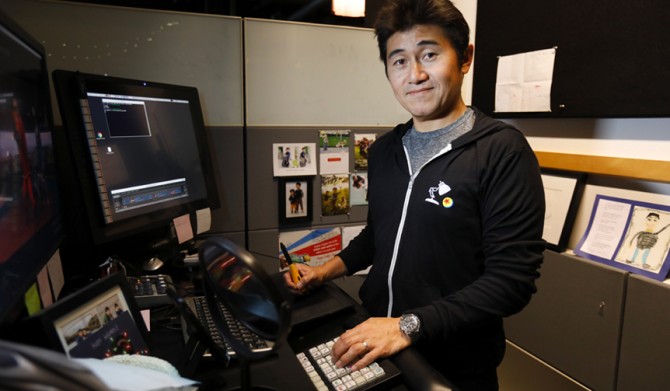
Harashima's job as an animator is to breathe life into characters. This means that drawing skills, the ability to create images from scratch, are not as crucial. Nevertheless, Harashima emphasizes that identifying his own shortcomings during his student years and acquiring those skills brought him significant benefits.
"I thought my technical skills were already sufficient, so I exclusively chose art-related classes at university. The drawing classes, in particular, were a revelation. I used to believe that drawing meant meticulously depicting the subject, but I learned that it's about expressing and conveying the atmosphere of the model and its most essential aspects. The ability to capture the essence is what truly matters."
Even though he doesn't directly use his drawing skills now, the abilities he gained then are fully utilized. Identifying what he lacks, acquiring those skills in his own way, and properly digesting what he has learned allows him to apply it across different fields. By internalizing what he has learned, it transcends mere information or specialized techniques. It becomes applicable to any job. This is likely a testament to Harashima's creativity. It's why he can confidently state, "Although I've had my ups and downs, no time has been wasted."
Harashima's connection with Pixar began during his university years. He took a class taught by a current Pixar artist. He now works alongside his former mentor as a colleague on the same projects.
"I owe my current position as an animator to the Pixar class. Therefore, I want to contribute in any way I can by sharing my experiences with young people about my work," he says, returning to Japan annually to give lectures for young audiences.
"I tell students to do things now that they can't do without investing time. Input is crucial for everything. Without input, output diminishes, and you'll only produce the same things. I can teach you how to use tools, that is, technical skills, but I can't teach you what you've personally felt. And, expand your repertoire. No one wants to be a pianist without having played the piano. You can't choose what you don't know. So, you should try everything."
This applies to everyone, regardless of age or profession. Only you can broaden your own potential. No matter how perfect the environment, everything ultimately depends on you.
Pixar's Strengths
The ideal environment that Pixar cultivates may be an essential element for creating work that moves people. To create masterpieces, one must first connect with people's emotions.
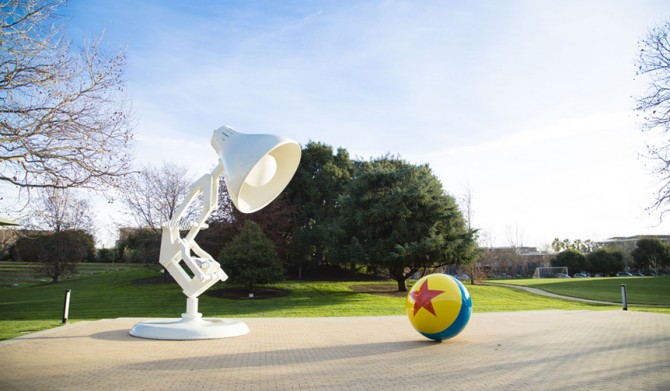
And those people are, first and foremost, the employees closest to them and their families. This also applies to the relationships between colleagues.
A Pixar film is approximately 80 to 90 minutes long. On average, about 45 animators are involved. In the months from preparation to release, a single animator can complete at most about two minutes of a scene. This also means that multiple animators are involved in a single action performed by a character. Without communication with colleagues handling the preceding and succeeding scenes, the "common goal of creating wonderful films" cannot be achieved. One scene is passed from hand to hand. This handover is called a "handshake." Even with talent, the common goal cannot be achieved if everyone is solely focused on their own assertions. The ability of many unique artists to work together hand-in-hand is likely born from the pride of being a part of Pixar.
What fosters that pride? It is the belief in "creativity first." Harashima, who has experience working at other studios, shares this perspective.
"Pixar can uphold 'creativity first' because its top leadership comes from a creative background. They know from experience what the problems are, what is needed, and what is important, and they reflect that in the production process. Many other companies have business leaders at the top, which inevitably leads to friction with the production floor."
In reality, the top leadership doesn't necessarily have to be from a creative background. As long as they understand the production floor and are committed to protecting it. The production floor, in turn, will strive to deliver the best possible results. The ability to realize this fundamental principle is Pixar's greatest strength and the secret to its success. Regardless of industry changes, the basics of an organization remain the same. This is surely the destination that Japan, as it advances workplace reforms, should aim for.
Tomoyuki HARASHIMA
Pixar Animation Studios (Animator)
Born in Kanagawa Prefecture. After graduating from the University of Electro-Communications and working as an engineer, he learned about Digital Hollywood. While enrolled at Digital Hollywood, his short film was screened at the Electronic Theater at SIGGRAPH in Los Angeles in 1999. He moved to the U.S. in 2001 and took the so-called "Pixar class," taught by Pixar animators, at the Academy of Art University in San Francisco. While at the Academy of Art, he worked as an animation intern at the long-established VFX studio Rhythm & Hues in Los Angeles on the production of 'Garfield: A Tail of Two Kitties.' He subsequently worked as an animator at DreamWorks Animation and PDI/DreamWorks on productions such as 'How to Train Your Dragon 1 & 2' and 'Madagascar 2 & 3.' At Pixar, he has worked on 'The Good Dinosaur,' 'Finding Dory,' 'Cars 3,' 'Coco,' and the latest film, 'Incredibles 2.'
https://www.pixar.com/#pixar-home
Incredibles 2
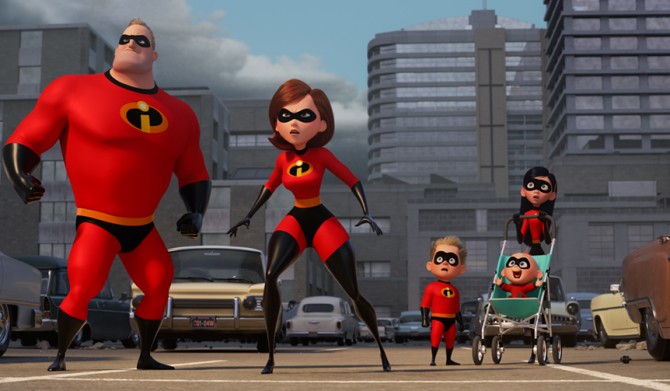
The superheroes who fought evil and protected the world are now facing public disapproval, and their activities are banned. One day, a mission to bring them back arises for Bob, a former star of the superhero world, and his family. However, the one chosen is his wife, Helen. Bob is left to be a stay-at-home dad, but—.
Written & Directed by: Brad Bird
Produced by: John Walker, Nicole Paradis Grindle
Executive Produced by: John Lasseter
Cast:
Craig T. Nelson / Tomokazu Miura (Bob)
Holly Hunter / Hitomi Kuroki (Helen)
Sarah Vowell / Haruka Ayase (Violet)
Huck Milner (Dash)
Samuel L. Jackson (Frozone)
Brad Bird (Edna Mode)
Sophia Bush (Voyd)
http://disney-studio.jp/

Incredibles 2
Advance digital release Nov 7, MovieNEX release Nov 21
Distributor: Walt Disney Japan
©2018 Disney/Pixar