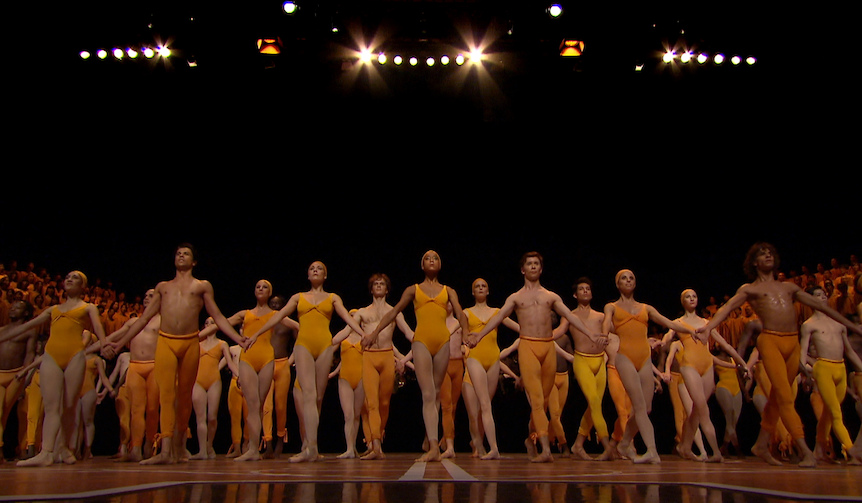
Serial | Jun Makiguchi's Cinema Full Life, Part 16: 'Dancing Beethoven'
Serial | Jun Makiguchi's Cinema Full Life
Part 16: Tracing the Miraculous Stage Where the Master Composer Met Béjart
'Dancing Beethoven'
Beethoven's Symphony No. 9 in D minor, a piece that has become a year-end tradition in Japan, is known worldwide as "humanity's greatest art." Following the fall of the Berlin Wall in 1989, Leonard Bernstein conducted a performance in Berlin that symbolized German reunification. The choral finale, "Ode to Joy," has even been adopted as the anthem of Europe.
Text by MAKIGUCHI June
A Utopia Filled with Universal Love
There was a man who choreographed this symphony, a treasure of humanity. Maurice Béjart, a revolutionary in the ballet world, known for works like 'The Rite of Spring' and 'Boléro,' also created a ballet version of the Ninth Symphony in 1964.
This documentary follows the nine months leading up to the revival of this legendary stage production in Tokyo in 2014, fifty years after its premiere. It reveals the dedication of those involved in creating a performance featuring over 80 dancers, a conductor and orchestra, soloists, and a choir—a total of 350 people—and the personal dramas hidden within. Ballet lovers will be captivated.
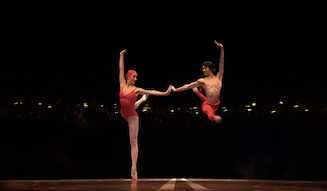
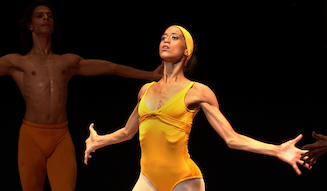
The legendary dance piece "Symphony No. 9," though hailed as a masterpiece, had been performed only a handful of times due to its immense scale. After Béjart's death in 2007, it was even considered impossible to restage. However, the Tokyo Ballet, celebrating its 50th anniversary, decided on a co-production with the Ballet Béjart Lausanne. Through rigorous rehearsals, they achieved a miraculous performance with the Israel Philharmonic Orchestra conducted by Zubin Mehta.
Honestly, as someone who deeply loves Beethoven and his works, I felt the Ninth Symphony was a piece that shouldn't be tampered with. It's a personal sentiment, of course. But because the music itself is a perfect, almost "sacred" entity, I've never been particularly receptive to arrangements or novel interpretations.
With these thoughts in mind, I watched the documentary. However, any initial anxieties I had gradually faded as the film progressed. The primary reason was my intuitive sense that the explosive expressions of freedom, fraternity, and the joy of life by the performers harmonized perfectly with the spirit Beethoven imbued in his symphony.
The primal dynamism of the dancers, reminiscent of an era when dance was an offering to the gods, evokes a sense of pure prayer and aspiration. It felt as though the visual representation captured the very wish Beethoven intended when he composed the Ninth.
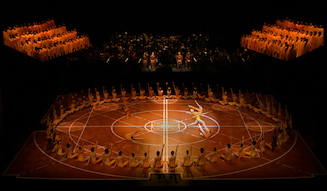
The film uses the phrase "watching music," and indeed, this stage production allows us to visually savor the masterpiece that is the Ninth Symphony. One wonders how Beethoven, who had already lost most of his hearing by the time he composed it, would have felt if he could have seen it.
Considering that the symphony itself was inspired by Friedrich von Schiller's poem "Ode to Joy," it becomes clear that great art, born from profound spirit, is passed down, expands into various forms, and achieves immortality.
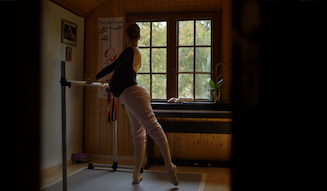
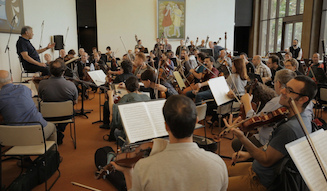
The essence of creation lies in freely moving through people's hearts and generating unexpected richness. The sight of individuals from different nationalities and cultural backgrounds dancing, quite literally hand in hand, embodies the "utopia filled with universal love" that Beethoven entrusted to this piece.
Through Béjart's choreography, this renowned piece found a new form of expression. Yet, no matter how it was interpreted, the Ninth Symphony remained the Ninth Symphony—an enduring treasure of humanity. Its unwavering greatness and timeless power were once again powerfully demonstrated.
This film is a must-see for ballet and Beethoven enthusiasts alike. It's also recommended for anyone seeking renewed conviction about peace and fraternity during this year-end and New Year season. Witness this dazzling utopia through one of the greatest stages humanity can create.
★★★☆☆
While I couldn't help but wish I had seen the live performance, I'm grateful for the existence of this documentary that also touches upon its behind-the-scenes stories.
'Dancing Beethoven'
Choreography: Maurice Béjart
Director: Arantxa Aguirre
Music: Ludwig van Beethoven, Symphony No. 9 in D minor, Op. 125
Starring: Mariya Roman / Ballet Béjart Lausanne: Élisabeth Platel, Julien Favreau, Katerina Shapkina, Keisuke Nasuno, Oscar Chacón, Miki Nakanishi / The Tokyo Ballet: Mizuka Ueno, Dan Kanemoto, Mika Yoshioka / Kristin Lewis, Mihoko Fujimura, Kei Fukui, Alexander Vinogradov, Kouyukai Chorus / Gil Roman (Artistic Director, Ballet Béjart Lausanne), Zubin Mehta (Music Director, Israel Philharmonic Orchestra)
Distribution: Cinka
Now playing nationwide at Human Trust Cinema Yurakucho, Shinjuku Musashinokan, YEBISU GARDEN CINEMA, and other theaters starting December 23 (Saturday).
©Fondation Maurice Béjart, 2015 ©Fondation Béjart Ballet Lausanne, 2015
Jun Makiguchi
After working with Kyodo News, a film festival secretariat, and a magazine editorial department, she became an independent writer. She currently writes film columns and interviews for women's and men's magazines, focusing on lifestyle topics such as fashion, food, and music seen on screen.