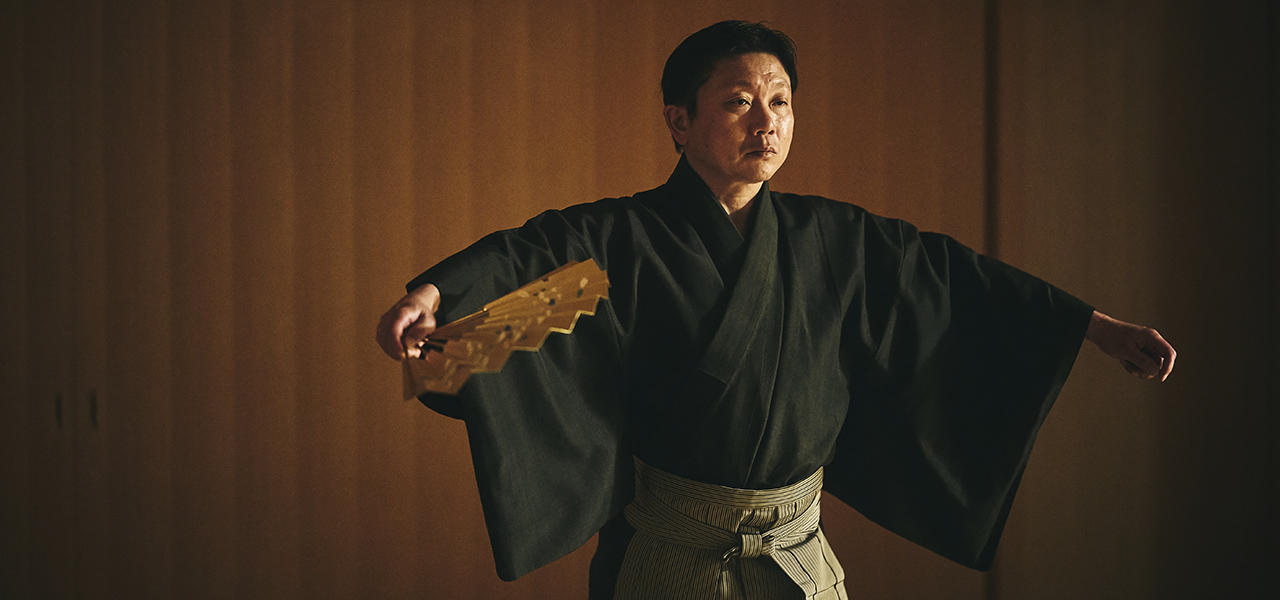
Words from the OPENERS: "When you shave off the sharp edges, what remains is individuality."
Words from the OPENERS | Noh Actor of the Kita School, Shinya Tomieda
Those referred to as intellectuals and those at the center of the economy often have an appreciation for Noh. It is said that Noh possesses unique, continuously inherited styles, and deciphering them reveals a universality that resonates with the present day. If this is the case, might understanding the world of Noh offer various insights? Yoichiro Maeda, who served as editor-in-chief of "LEON" magazine and is now the creative director of "OPENERS," interviewed Shinya Tomieda, a principal performer of the Kita school of Noh.
Text by AMARI Mio | Photographs by TAKAYANAGI Ken | Interview by OPENERS
Noh, perfected by Kan'ami and Zeami during the Muromachi period and favored by powerful figures of the time such as Ashikaga Yoshimitsu, Toyotomi Hideyoshi, and Tokugawa Ieyasu, is a uniquely Japanese traditional performing art where stories unfold through characters adorned in masks and beautiful costumes, accompanied by chanting and instrumental music. There are five schools for the *shite* (principal performer): Kanze, Hōshō, Komparu, Kongō, and Kita. Shinya Tomieda, from the Tomieda family of the Kita school—which was the main lineage serving the Kato and Hosokawa families of Higo—not only hosts his own "Moyōka no Noh" but also actively performs as a next-generation Noh actor, participating in projects like "Shibuya Noh" that aim to pass on the tradition of Noh to contemporary times, transcending school boundaries.
He made his debut at the age of three, but upon entering university, he desired to explore worlds beyond Noh. After graduation, he took a job as an editor at a publishing company. However, through a magazine project, he reconnected with the poet Akiko Baba, who had been a cherished figure since his childhood, prompting him to re-examine his own origins. By being present in the later years of his grandfather, the acclaimed master Kikuo Tomieda, he re-evaluated Noh and his own life path. Encouraged by figures like Shirasu Masako and Akiko Baba, he returned to the world of Noh.
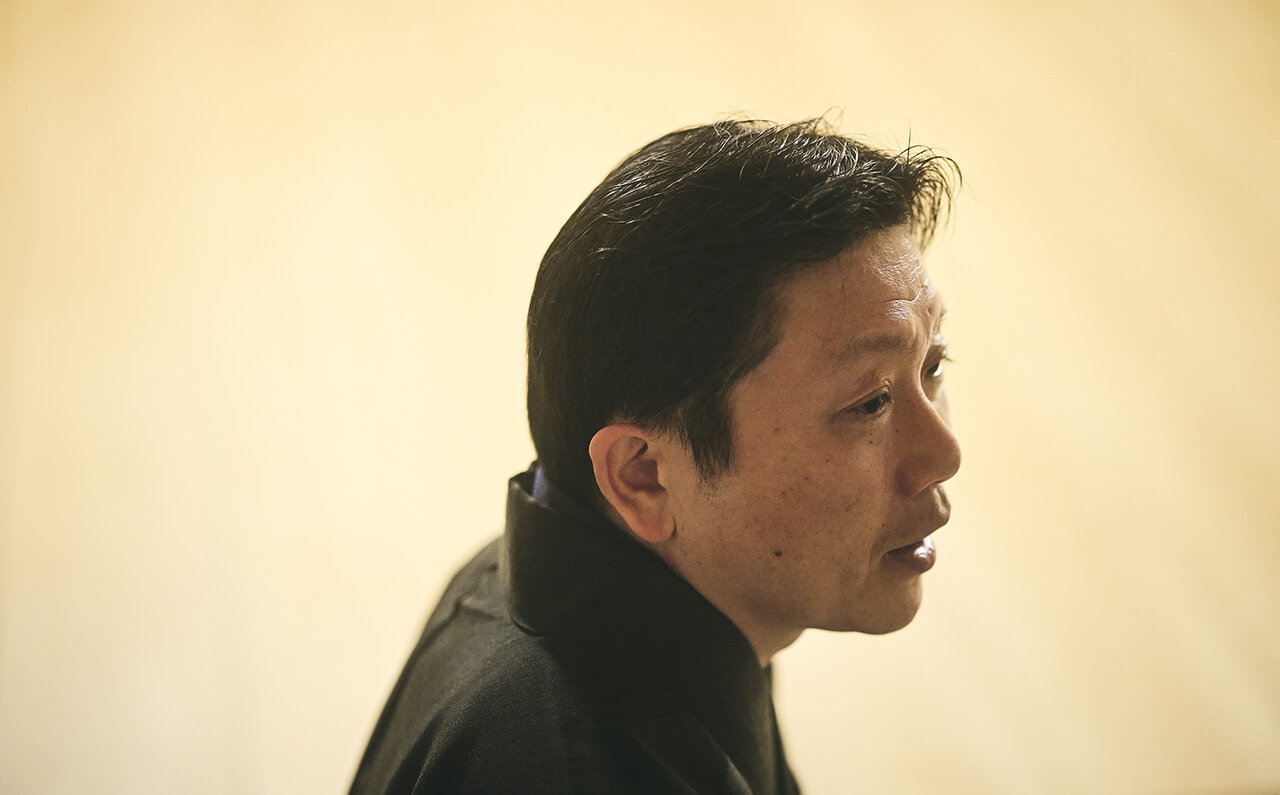
Subtle Differences, Profound Impact.
MaedaOne of your previous statements that left a strong impression on me was, "Subtle differences are profound differences." Although every line and movement in Noh is predetermined, the evaluation can vary even when performing the same piece.
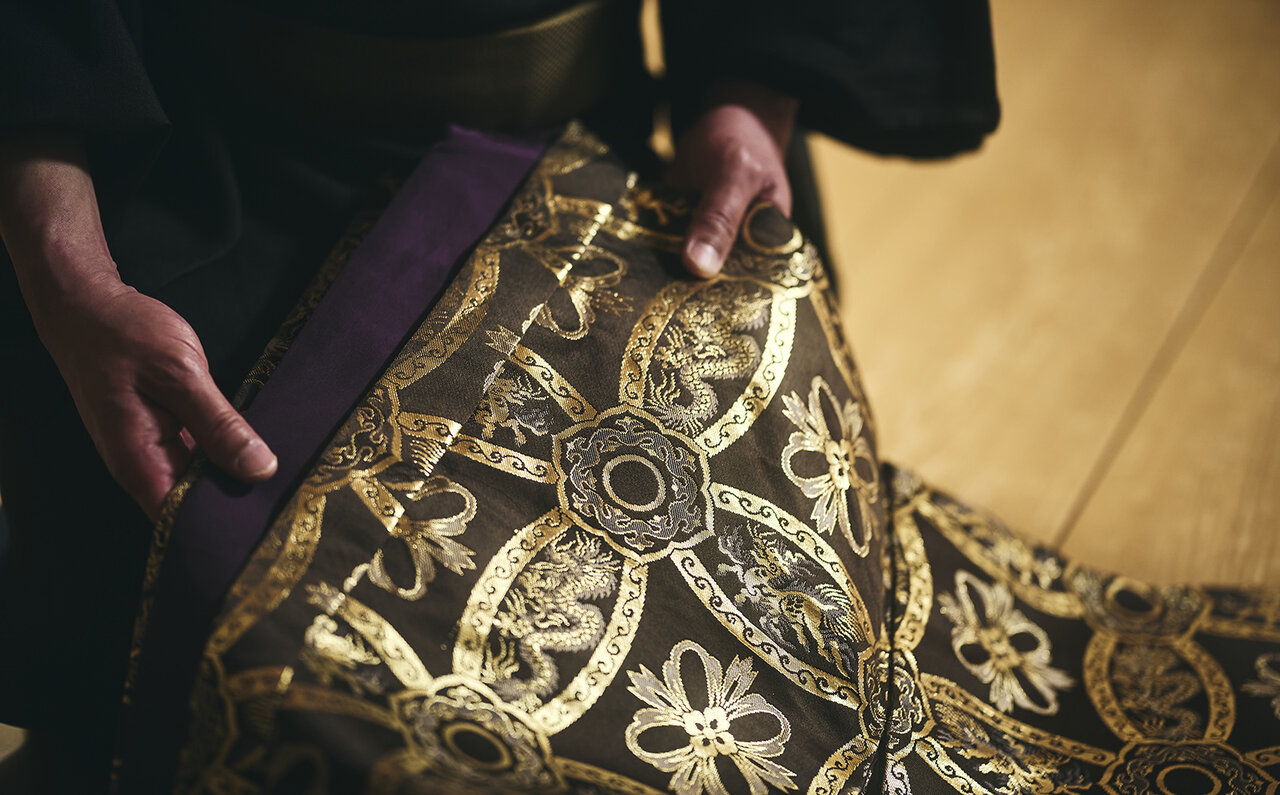
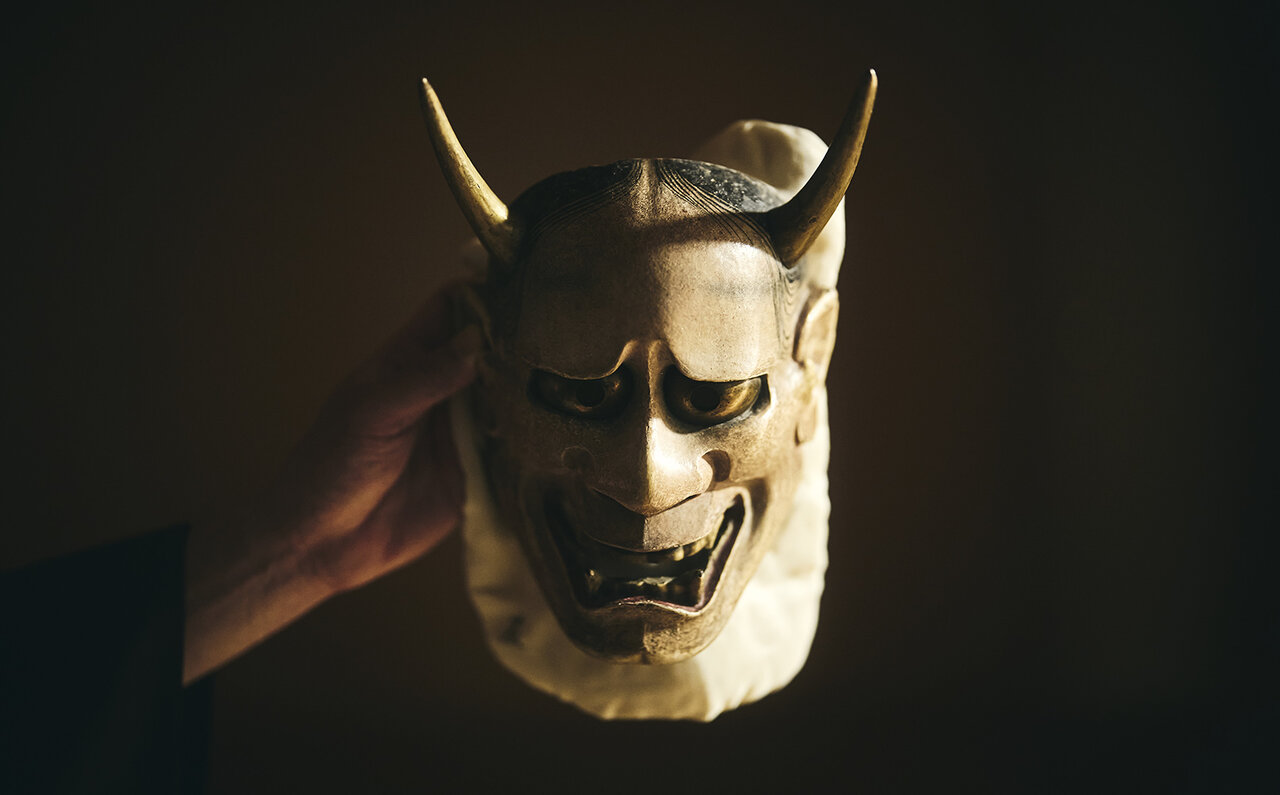
TomiedaNoh is an intangible cultural asset. This means it vanishes as it is performed, leaving no physical form. Therefore, if one thinks "this much is enough," that is how it will be. That is precisely why setting goals and maintaining motivation are crucial. Regarding physical movements, I engage in constant dialogue with myself and practice daily. Furthermore, if I have the opportunity, I want to present a performance with the finest masks and costumes. So, if I encounter something that deeply moves me, I strive to be able to wear it. Of course, there are physical limitations, but I believe that the accumulation of such small efforts supports the performance, so I try not to give up if I feel even a sliver of possibility.
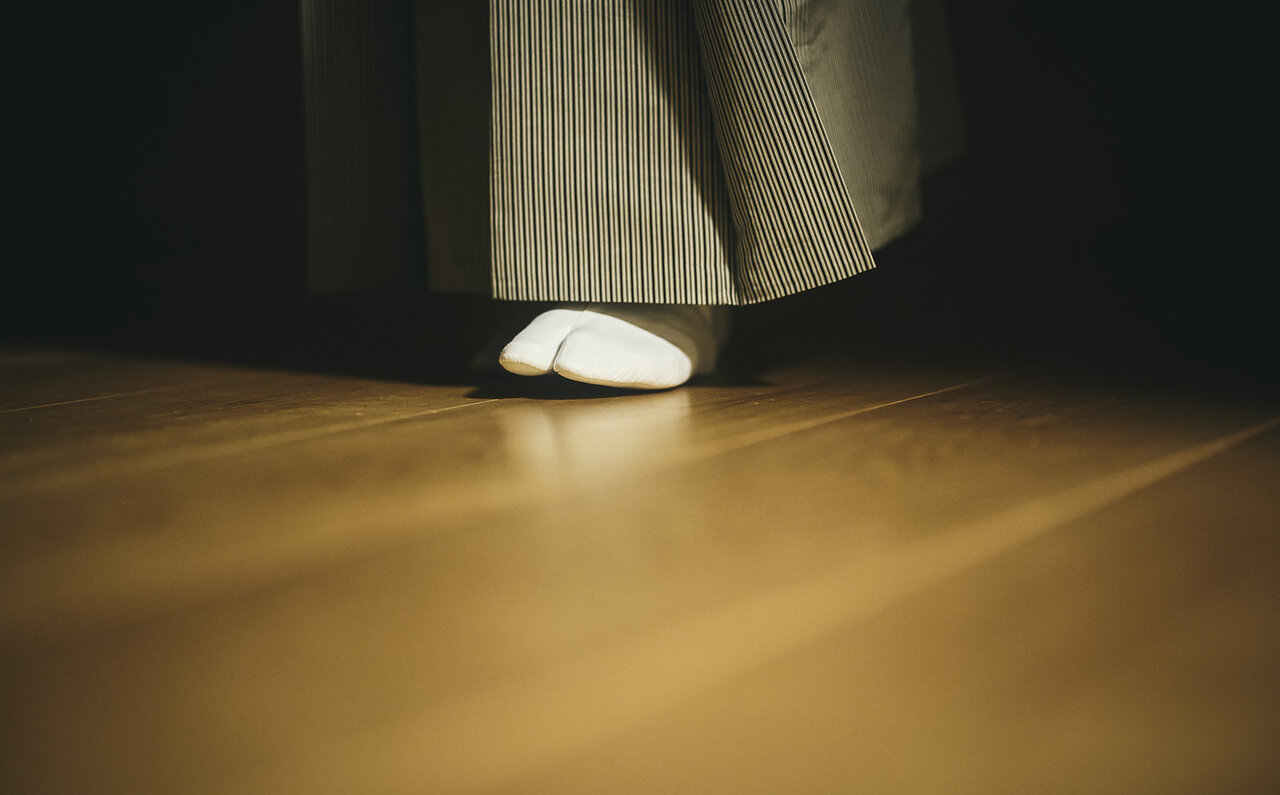
A Single Moment of Intensity.
MaedaIt must be difficult for the general public to imagine the process of creating a Noh performance. One might assume that professionals who have honed their skills would conduct extensive rehearsals when gathering for a single stage, but I understand that you do very little.
TomiedaIn our world, we call rehearsal "mōshiawase," and we do it perhaps once or twice. Sometimes we proceed to the performance without any "mōshiawase" at all. Of course, there are cases where the number of rehearsals increases, such as for new pieces or major works like "Dōjōji." However, since a Noh performance is typically a one-day event, it is fundamentally a single, decisive attempt.
MaedaIn general society, we refine plans through extensive discussion and enhance teamwork. Compared to that, the Noh value of creating something excellent by each individual honing their own craft strikes me as fresh.
TomiedaI made my debut at the age of three. I barely remember it. Like many *shite* performers, myself included, I have many seniors with whom I have had such long associations that I can't recall when we first met, and I have a good sense of their disposition. We also have a sufficient level of trust, so I only need to pour all my concentration into that one performance. As humans, we may make mistakes on stage, but we approach it with the understanding that we can rely on each other.
A Gift for Learning.
MaedaThe master-disciple relationship is indispensable in the arts. I imagine it's difficult to accept everything a master teaches. Yet, you say, "Don't wait for a master who is good at teaching. Become good at learning yourself. That way, you can acquire more."
TomiedaWe generally cannot choose our masters. Therefore, the master bears full responsibility for the disciple. Of course, we can also receive guidance from senior disciples. While I am grateful for this, the way things are taught varies from person to person, even when conveying the same message. It is the student who must carefully decipher the true meaning behind the words, understanding the intention with which they were spoken. Since we cannot choose our masters, we must consider it natural to become adept at learning in order to grow.
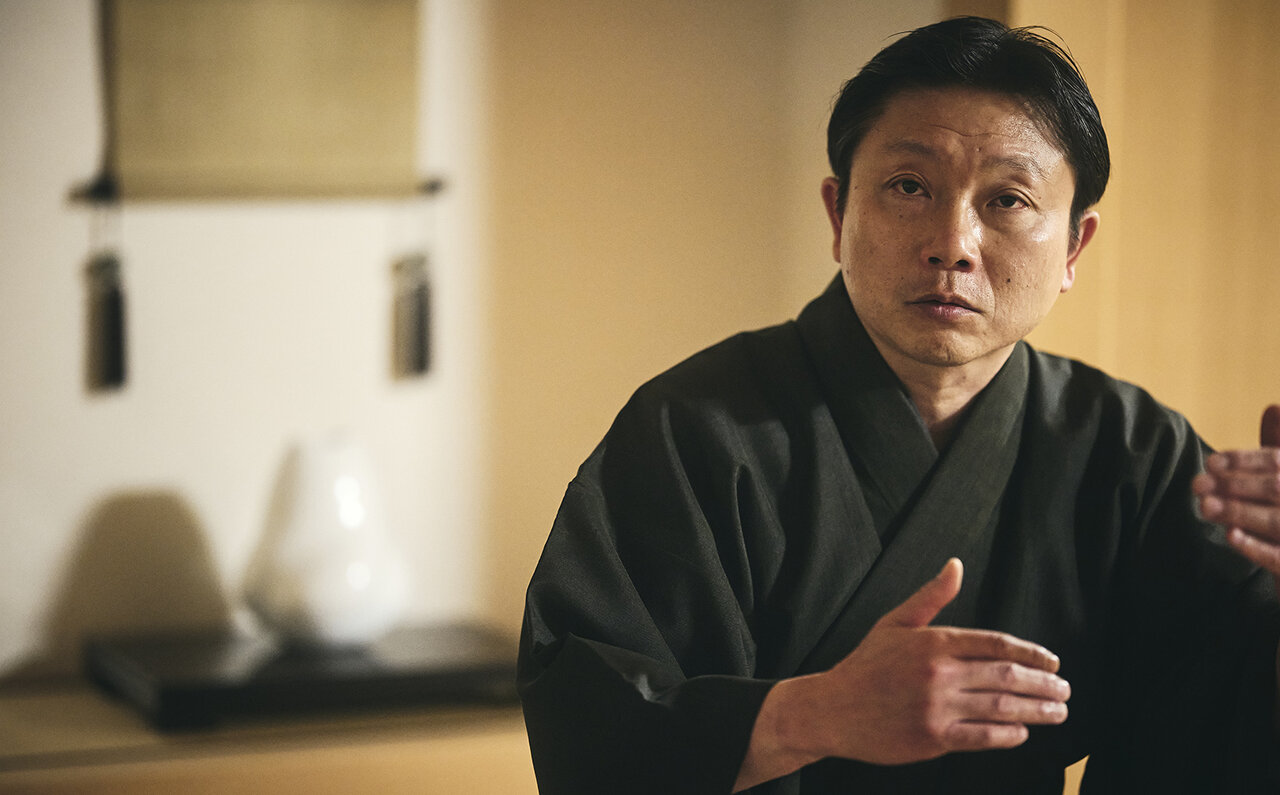
Swallow It Whole.
MaedaSo, you mean to swallow it whole first?
TomiedaI believe that is how it becomes beneficial. If I inject my own subjective views, I lose sight of the other person's perspective. Even if I have a certain amount of experience, I first try to believe 100% of what the other person is saying. It may turn out that we disagree after consideration, but that very process of thought is important.
MaedaIn today's world, where the phrase "stomach it" is prevalent and reasons are often sought, your stance of "swallow first, then think" is unique.
TomiedaTo put it extremely, it comes down to "liking" or "disliking," "good" or "bad." In other words, not just in the world of Noh, but in general company organizations, aren't there moments when you think, "I might like what this person is doing," or "That person is amazing. I wouldn't do it that way, but..."? Isn't that how people navigate life, by finding compromises? I believe it is important to distinguish between the values of "good/bad" and "like/dislike" in our choices and criteria, and to consider them in a balanced way.
Individuality Cannot Be Hidden.
MaedaWhile we live in an era that respects individuality, individuality exists in ambiguity that cannot be quantified. How does one acquire individuality in the arts?
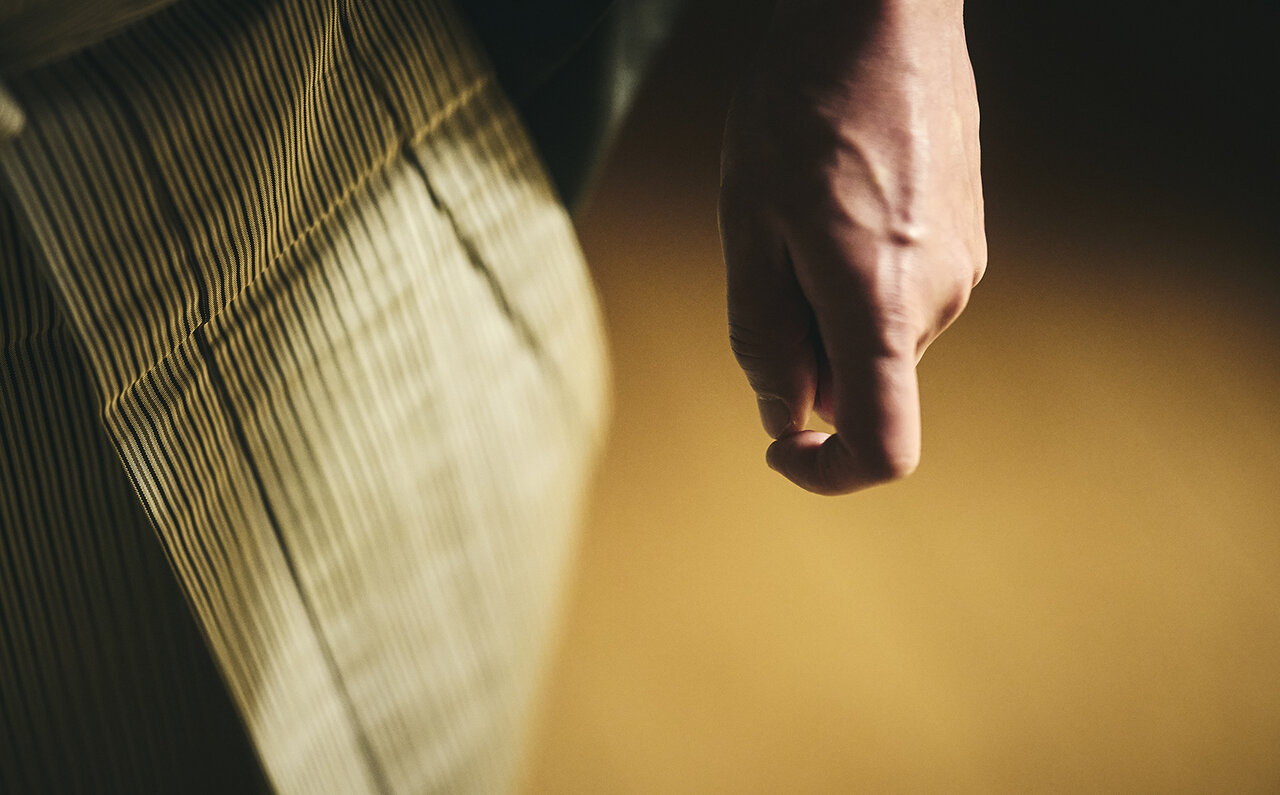
TomiedaOur practice begins with negation. We believe that by shaving off the rough edges, what remains is the actor's individuality. Naturally, physical build and bone structure also play a role. Individuality isn't something you acquire; isn't it something that inevitably emanates from within?
MaedaThe importance of nurturing individuality is also emphasized in education. What are your thoughts on this?
TomiedaThis might be a bit of a tangent, but regarding Noh, there are always performances that are considered excellent. However, they are difficult to imitate, which is frustrating. I heard this second-hand, but the late Daigoro Fujita, a master flute player of the Isso school and a Living National Treasure, apparently said something like this: "The parts that my amateur disciples can imitate are my own flaws. It's impossible for someone with little experience to easily imitate the skills of a professional, and there's no benefit in imitating what can be imitated."
Presence Cannot Be Mimicked.
MaedaThose are truly profound words. You mentioned that the beauty of Noh emanates not only when in motion but also when still. That struck me as particularly significant.
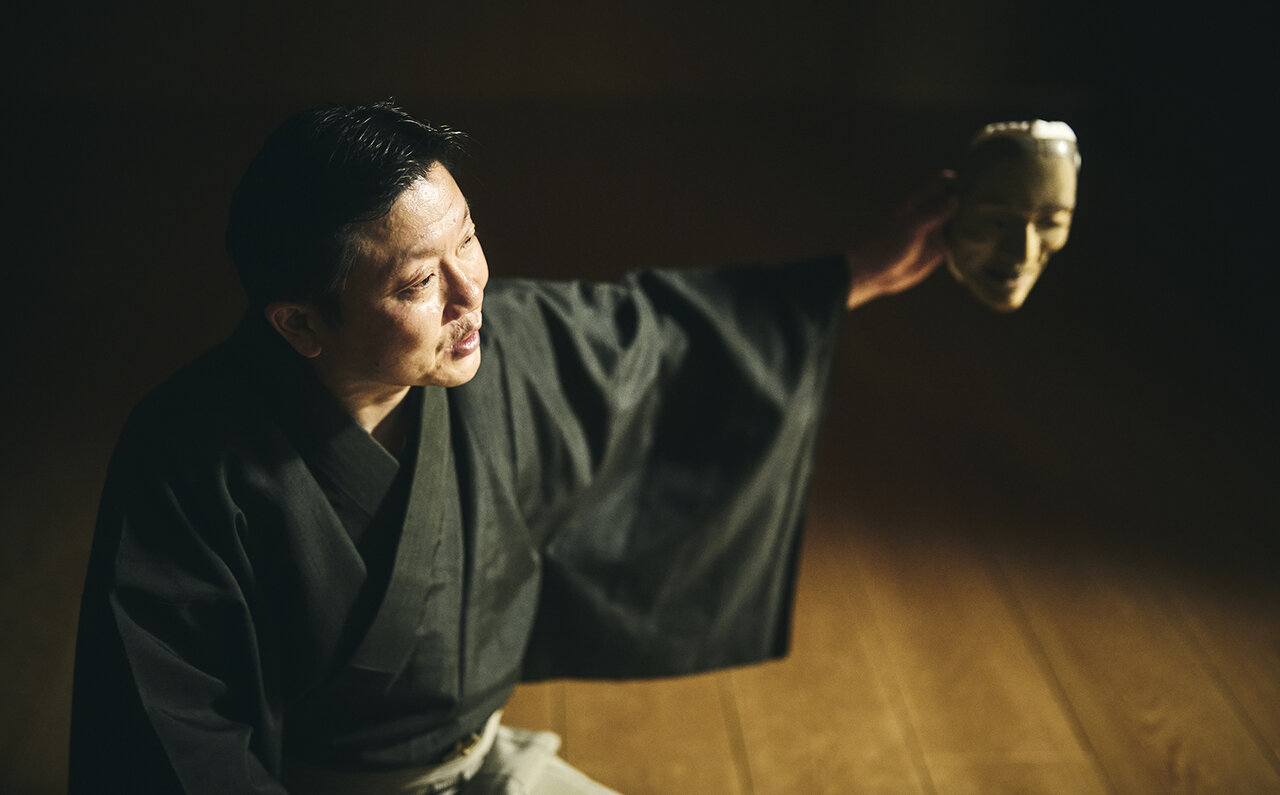
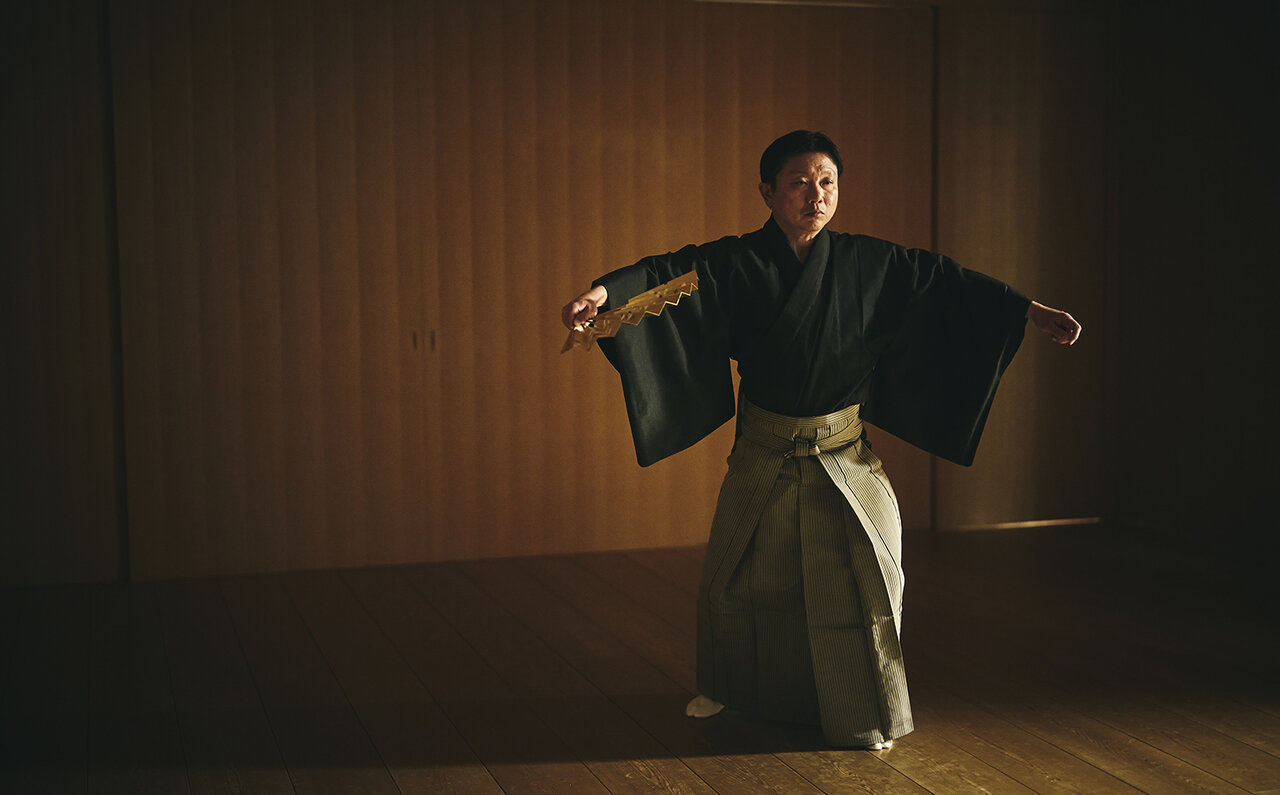
TomiedaWhen teaching Noh to amateurs, they all try to move smoothly. Noh seems to give that impression, but each time, I caution them to focus on the moments of stillness. You see, to create a deep shadow, you need strong light, don't you? It's similar; when you focus on the stillness, the way movement is perceived changes considerably. In our world, we call the sliding footwork "hakobi" (movement), but perhaps actors considered masters don't try to make their "hakobi" look beautiful.
MaedaIs that true for you as well?
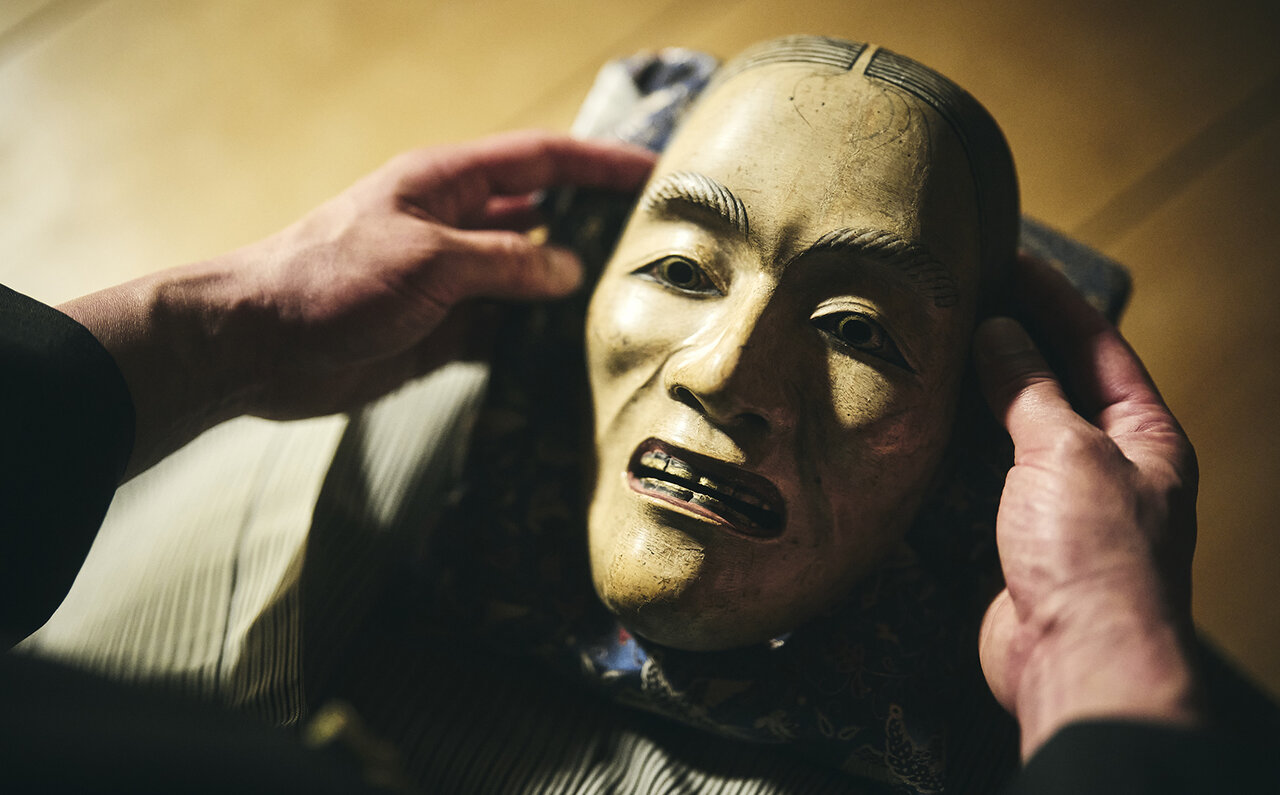
TomiedaOh no, I haven't reached that level. However, I try to avoid consciously focusing on my feet. My uncle (Living National Treasure Akio Tomieda) always tells me, "Do it with your waist." For example, when rapidly turning a Noh mask from one point to another, a movement called "men o kiru" (cutting the mask), he instructs me to turn with my waist, not my neck. It's easy to tense your muscles, but relaxing unnecessary tension is much harder than one might think. So, the idea is to have the source of power in your waist.
MaedaIn the business world too, there are individuals with a beautiful, upright posture. I find that many successful people have this quality. Precisely, Mr. Tomieda, what is a beautiful presence to you?
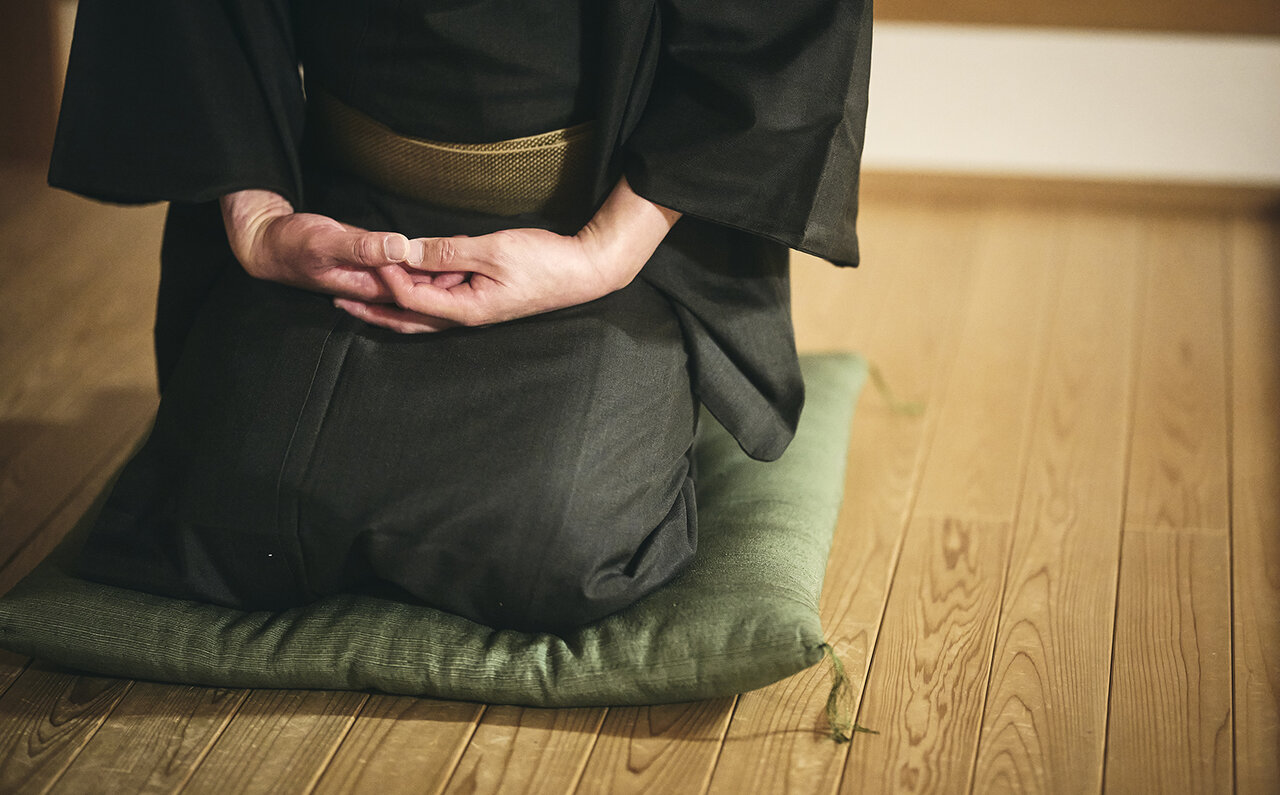
TomiedaMy uncle, and my grandfather as well, had a beautiful presence. They didn't stand beautifully with the intention of doing so, which is precisely why it cannot be imitated. What are they thinking while standing? Perhaps they are contemplating grand matters, or perhaps nothing at all. Isn't that what presence is? It's something that unconsciously emanates from the accumulation of daily life. That's why it appears beautiful. Above all, presence should not create a sense of incongruity.
Only Accumulated Experience Becomes Art.
MaedaFinally, let's discuss what Noh is. You once said, "Noh is not entertainment. Of course, there are pieces with strong entertainment value, but I think of it as something akin to temples or Buddhist statues." Ultimately, this means one cannot enjoy it without understanding its meaning and background, right? I felt that Noh could be beneficial in understanding what true cultivation is.
TomiedaCompared to, say, a typical movie, Noh is very difficult to understand. Some people might find it boring. Then why do they find it boring? On the other hand, why do some people find it interesting? When you consider these questions, you realize that watching Noh is akin to confronting yourself. It might be similar to a work of art where the scenery changes depending on whether you have the eye to see it or not.
MaedaUltimately, appreciating Noh tests oneself, doesn't it? Unlike entertainment that provides easily accessible emotion to anyone, Noh is something to be enjoyed actively, not passively.
TomiedaI believe performing arts are objects of preference. It's natural for sensibilities to align or not, and some people who are sensitive may still find it uninteresting. That is also valid.
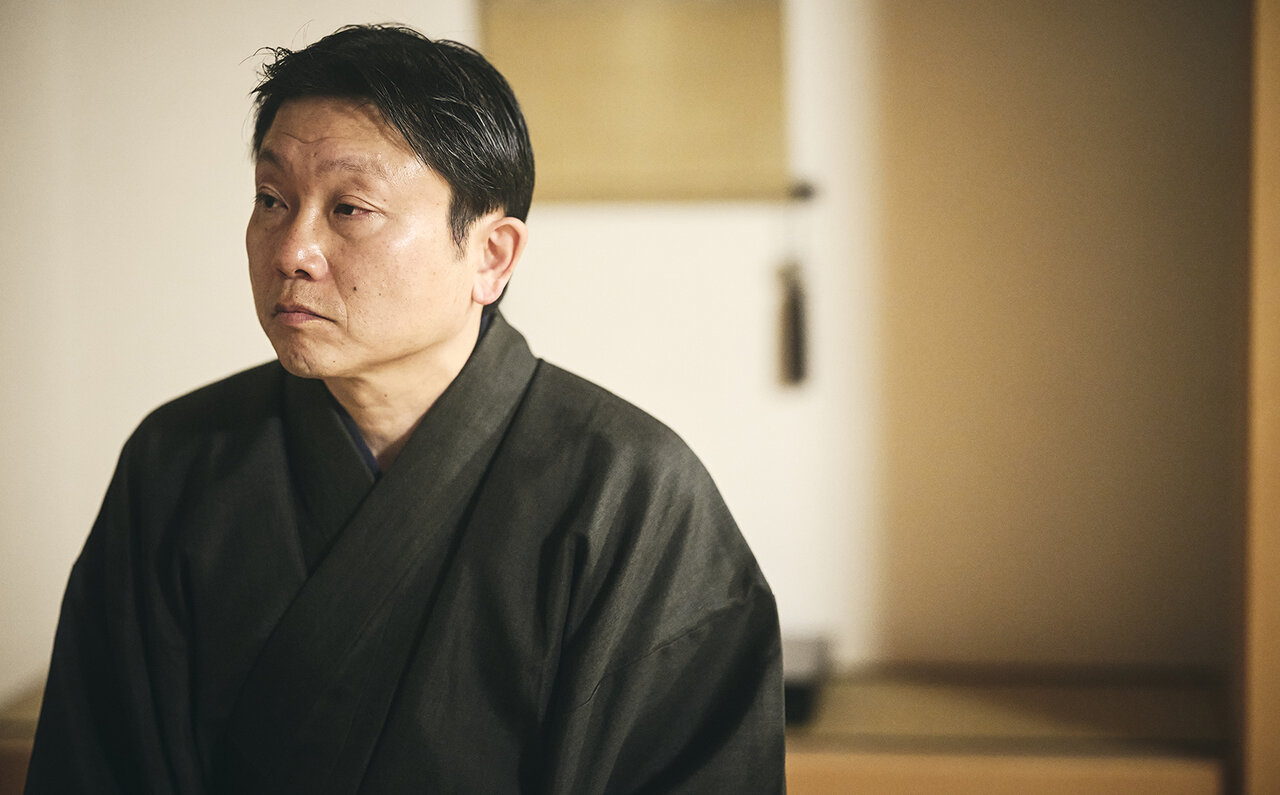
MaedaWe are told we live in an age of sensibility. Or, with the advancement of AI, it's said that the accumulation of knowledge is losing its meaning. However, listening to your story, I am reminded that Noh can only be established through a vast accumulation of traditions spanning several centuries, combined with your own experiences.
TomiedaIt's about incorporating everything that Noh has built up over time, including the seemingly unnecessary, into oneself, rather than measuring it by whether it's essential for the stage. Becoming good at learning, individuality, presence—all of these depend on how much experience, or stock, one has accumulated within oneself.
As mentioned at the beginning, Tomieda once worked at a publishing company out of a desire to understand worlds beyond Noh. This experience, viewed from a different perspective, imbues his Noh with a unique quality. The interview, centered on "What can be gained from Noh?" ultimately became an opportunity to test whether one possesses the intelligence of experience necessary to enjoy Noh.
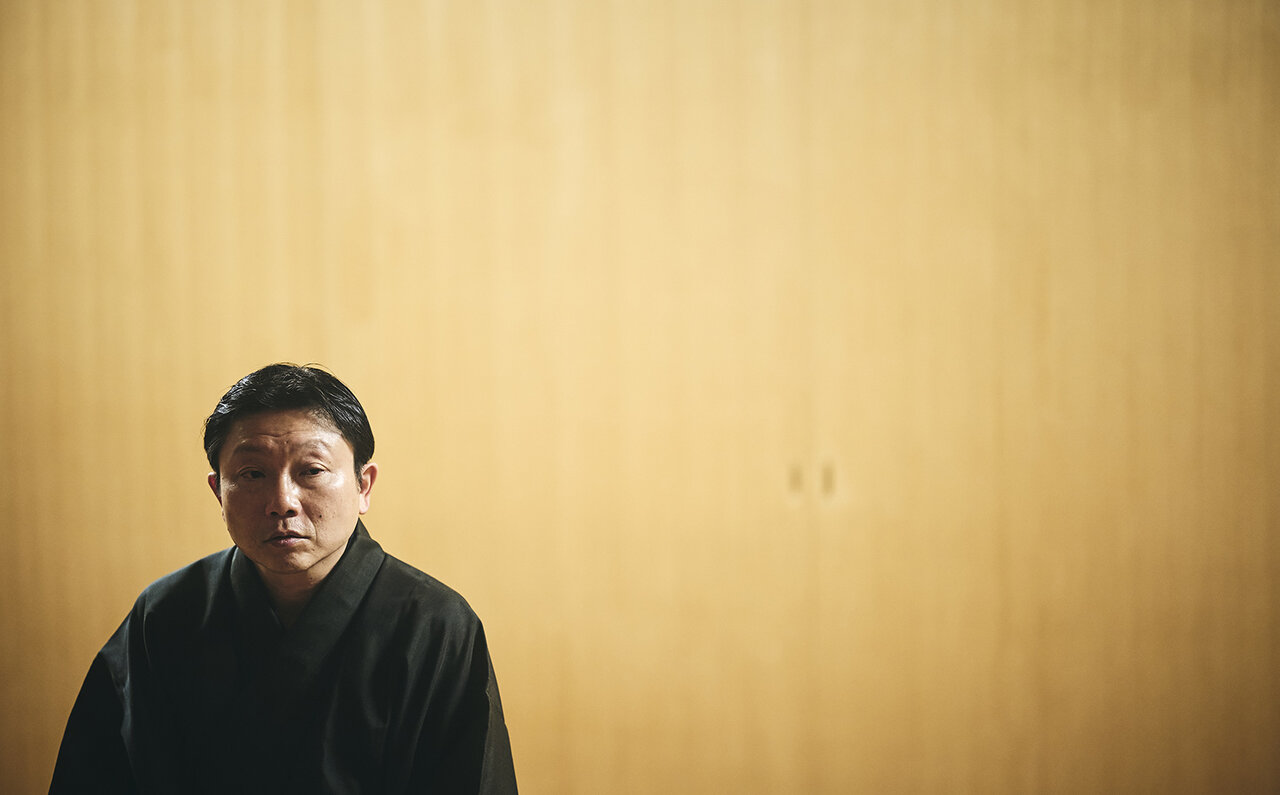
Shinya Tomieda
Noh actor (shite) of the Kita school, principal member. Member of the Nohgaku Association. Certified holder of Important Intangible Cultural Property. Born 1969 in Tokyo. Grandson of the late Kikuo Tomieda, principal member of the Kita school. Made his debut at age 3 with the dance piece "Tsukimiyadono." Studied under the late Minoru Kita, 15th headmaster of the Kita school. After training as a live-in disciple within the Kita school's head family, he now studies under his uncle, Akio Tomieda. He performed "Shōshō Ran" in 2004, "Dōjōji" in 2008, and "Ishibashi (Red Lion)" in 2011. Member of "San no Kai." Director of "Moyōka no Noh." Scheduled to perform "Yamauba" at the 12th Moyōka no Noh on Sunday, July 20, 2025, at Kita Noh Theater.
https://tomoeda-kai.com/schedule-noh/6305/
Noh actor (shite) of the Kita school, principal member. Member of the Nohgaku Association. Certified holder of Important Intangible Cultural Property. Born 1969 in Tokyo. Grandson of the late Kikuo Tomieda, principal member of the Kita school. Made his debut at age 3 with the dance piece "Tsukimiyadono." Studied under the late Minoru Kita, 15th headmaster of the Kita school. After training as a live-in disciple within the Kita school's head family, he now studies under his uncle, Akio Tomieda. He performed "Shōshō Ran" in 2004, "Dōjōji" in 2008, and "Ishibashi (Red Lion)" in 2011. Member of "San no Kai." Director of "Moyōka no Noh." Scheduled to perform "Yamauba" at the 12th Moyōka no Noh on Sunday, July 20, 2025, at Kita Noh Theater.
https://tomoeda-kai.com/schedule-noh/6305/
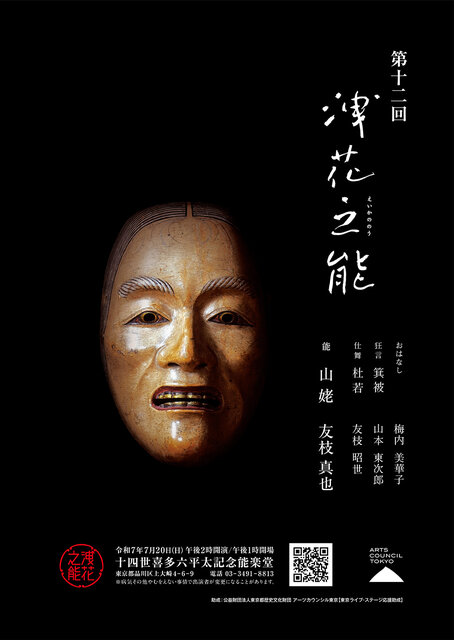
Tickets for "Yamauba" will go on sale starting at 10:00 AM on Monday, April 21, 2025. For details, please visit the website "Tomieda Family Noh" (https://tomoeda-kai.com/schedule-noh/6305/) or contact the Moyōka no Noh office (TEL: 03-3590-1802).