SAKE HUNDRED: Ryushi Ikoma x Yamanashi Meijo Head Brewer Ryoko Kitahara - A Special Conversation | SAKE HUNDRED
Sponsored
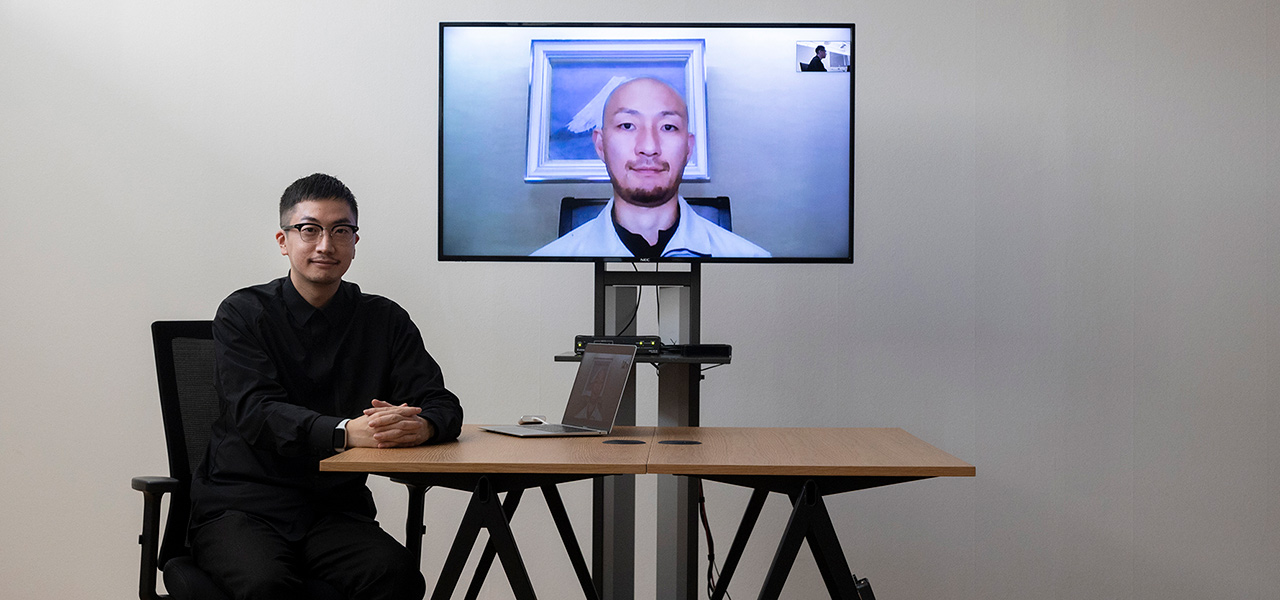
—You must often be asked how it differs from Champagne, as another sparkling beverage?
KitaharaJapanese sake and wine, both being fermented beverages, are often compared. However, their fundamental flavor compositions differ significantly due to their origins: grains versus fruits. For instance, grains lack the characteristic acidity found in fruits. I believe they are distinct entities and not directly comparable.
IkomaMy perspective is not to fit sparkling sake into the value framework of Champagne, but rather to expand the spectrum of sparkling wine by including sparkling sake. This is the philosophy of "SAKE HUNDRED."
This approach allows customers to choose between grape-derived or grain-derived sparkling options for their meals, broadening their selection and enhancing their enjoyment. It elevates the value of customer satisfaction and creates richer experiences.
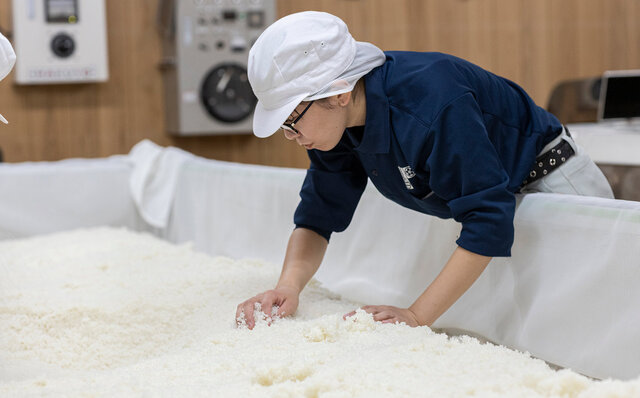
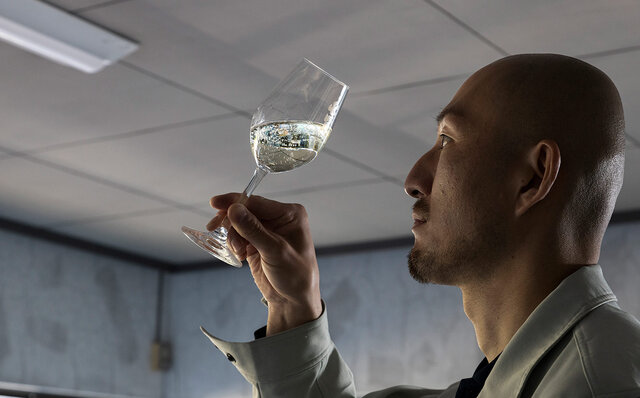
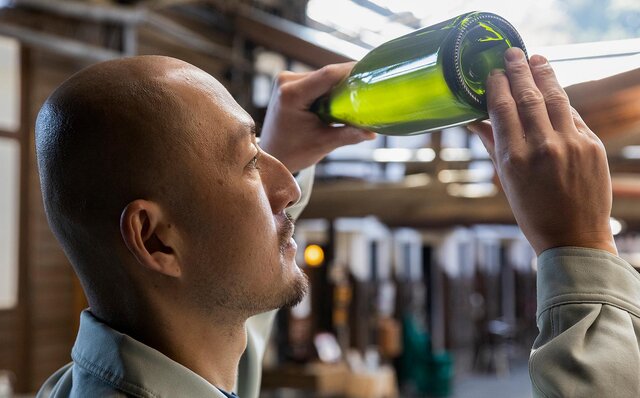
Brewing at Yamanashi Meijo (Koji room). While many tasks that were once physically demanding have been mechanized and automated, the importance of processes requiring human touch is also emphasized. Here, rice koji is spread by hand, allowing the brewer to sense the condition of the rice through touch, which informs subsequent steps.
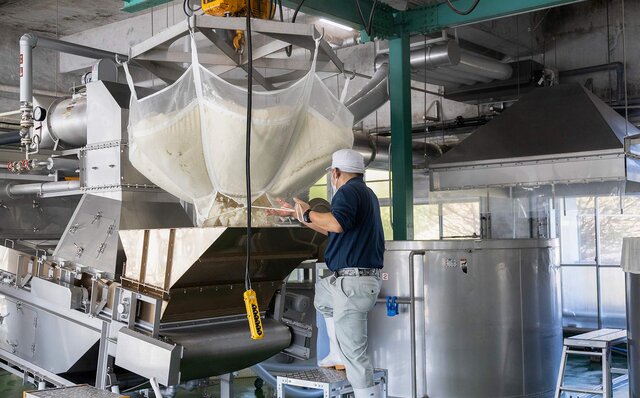
Steamed rice is lifted by a crane and then sent to the tank, blended optimally with water, rice, and koji at a controlled speed via conveyor belt for uniform mixing. This advanced brewing method is adopted by only a few breweries nationwide. It replaces strenuous labor, allowing for meticulous attention to tasks requiring human dexterity.
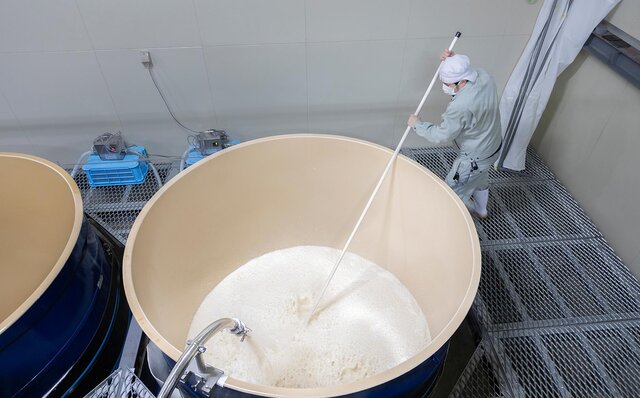
By increasing the scope of automated control through sensors and programmed conditions, tasks requiring human senses are simplified and "visualized." This achieves sharp and stable quality control, unattainable in traditional brewing where multiple tasks had to be managed simultaneously based on intuition. Most importantly, it eliminates waste in the process.
—Do you receive many inquiries about the price?
IkomaI have long felt, and publicly stated, that Japanese sake is "too inexpensive for its potential." At the same time, I recognize that the environment surrounding sake breweries has been slow to change, remaining bound by past conventions.
There was a period when sake was the top source of national tax revenue, serving as an efficient means of taxation. To increase tax revenue, the government imposed taxes based on the volume sold, not the price. In essence, this encouraged breweries to sell large quantities of inexpensive sake.
After the war came the era of high economic growth. The market then demanded "good products at low prices." Breweries responded by diligently researching and offering delicious sake at affordable prices. Indeed, there are still many delicious and inexpensive sakes available today.
However, the concept of "pursuing high-quality products with added value" was left behind in this process. While a high-volume, low-margin business can thrive with high demand, the reality is that sales of inexpensive sake are declining. Conversely, the demand for premium sakes, priced in the thousands or tens of thousands of yen, is increasing.
Consumer values have shifted from an era of consuming large quantities of inexpensive items to one of appreciating and savoring quality.
The sake produced by "SAKE HUNDRED" incorporates numerous new brewing technologies and equipment. The time invested and the level of technical expertise are vastly different from the past. This is precisely why we can achieve the flavor profile of "SHINSEI," as described earlier.
"Sake brewing is teamwork," says Kitahara. He emphasizes that human relationships are paramount. He likens team building to his experience playing soccer at Nirasaki High School.
Yamanashi Meijo's sparkling sake undergoes secondary fermentation after bottling, with the addition of moromi. However, Kitahara's established theory is to intentionally limit the contact period with the lees.
—"SHINSEI" was released on October 7, 2021. How do you feel now?
KitaharaIt feels like sending a child out into the world. However, it doesn't end with its release. Moving forward, we will continue to nurture it together with Ikoma-san and the team, offering support when needed and guidance when necessary.
I believe various sparkling sakes will enter the market in the future. Over time, some will be eliminated, new ones will emerge, and then be eliminated again. This cycle will lead to the maturation of both the sake and the market, with only products that truly capture the essence remaining in the end.
It took Champagne centuries to establish its current status. Given the current circumstances, sparkling sake might achieve something similar in a shorter timeframe, but I don't expect to witness that era within my lifetime.
Everything we are doing now is for the next generation. I see myself merely as a parent planting seeds. Therefore, I want to ensure I plant good seeds.
IkomaAt "SAKE HUNDRED," we believe our sake "must be loved by world-class chefs and sommeliers." As it is still in its nascent stages, our immediate goal is to cultivate it carefully so that it becomes cherished by many.
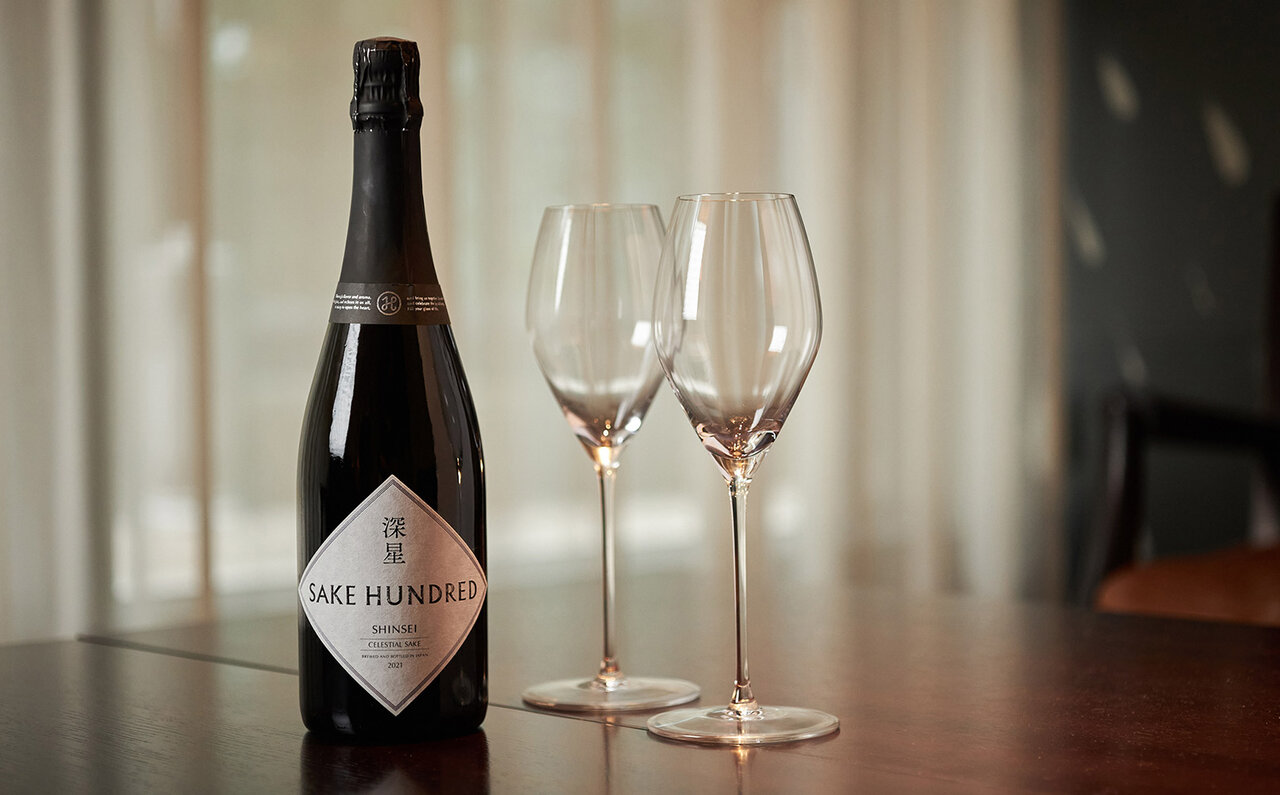
Price | ¥35,200 (incl. tax / excl. shipping)
Brewery | Yamanashi Meijo (Yamanashi)
Rice | Yumeyamada 100% (Yamanashi Prefecture)
Rice Polishing Ratio | 67% (Koji rice 57%, Kake rice 67%)
Alcohol Content | 12.0%
Sake Meter Value | -7
Acidity | 2.4
Amino Acid Value | 1.5
Pasteurization | 1 time
Volume | 720ml