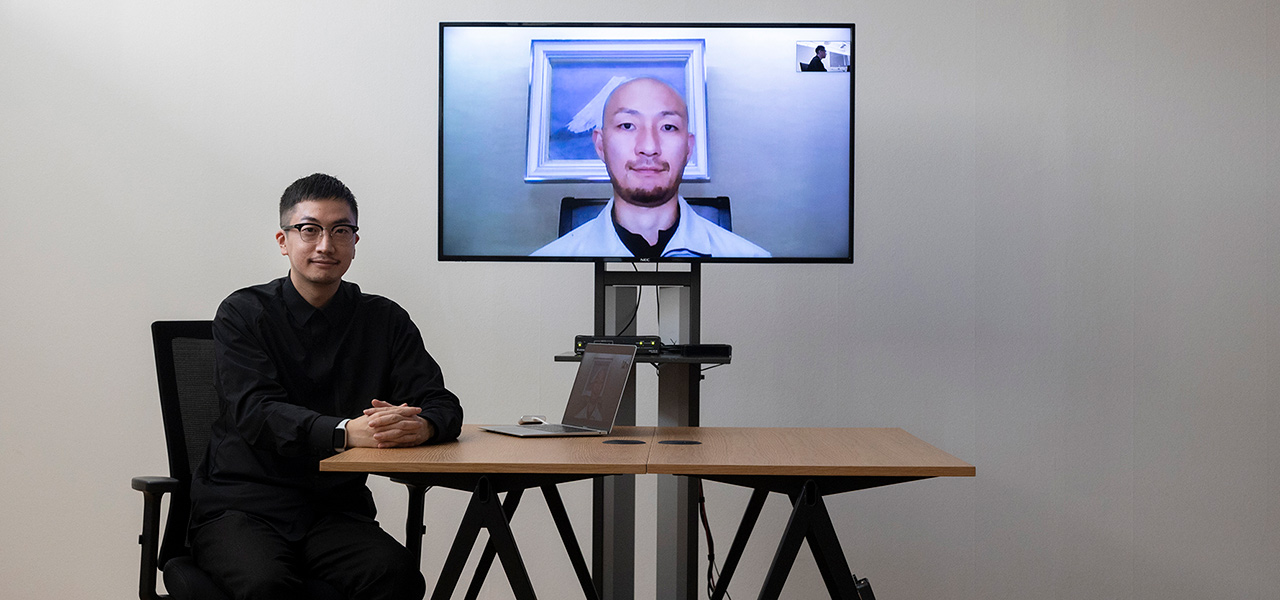
Ryushi Ikoma of SAKE HUNDRED and Ryoko Kitahara, Head Brewer at Yamanashi Meijo, on screen.
SAKE HUNDRED: Ryushi Ikoma x Yamanashi Meijo Head Brewer Ryoko Kitahara - A Special Conversation | SAKE HUNDRED
SponsoredSAKE HUNDRED
Subtle Umami and Aroma, Enhanced by Effervescence: A Global Appeal to Terroir
On October 7, 2021, the premium Japanese sake brand "SAKE HUNDRED" launched its new sparkling sake, "深星|SHINSEI." The brewing partner is Yamanashi Meijo, known as a pioneer in sparkling sake. This occasion brought together Ryushi Ikoma, the brand owner, and Ryoko Kitahara, Head Brewer at Yamanashi Meijo, for a Zoom conversation. We invited them to discuss the "supreme taste" they pursued and the significance of "SHINSEI."
Photographs by OHTAKI Kaku | Text by KOIZUMI Yoko | Edit by TSUCHIDA Takashi
Please enjoy reading this with a glass of "SHINSEI"!
—Your latest creation, "SHINSEI," is garnering significant attention. Ryoko Kitahara from Yamanashi Meijo is the head brewer. Could you start by telling us about the initial concept?
Ikoma(Hereafter, titles are omitted) To put it in a nutshell, it's "sparkling sake that pairs well with food." While it might be a niche product in the global context, sparkling sake offers a unique pleasure where the inherent umami and aroma of Japanese sake become more delicate with the bubbles, leading to evolving flavors. I felt this characteristic made it exceptionally well-suited for pairing with cuisine.
When we think of bubbly beverages, Champagne often comes to mind, evoking images of delightful experiences. However, sparkling sake has the potential to transcend its role as merely a celebratory drink, often ending with a toast.
In other words, it's a food-pairing sake enhanced by effervescence.
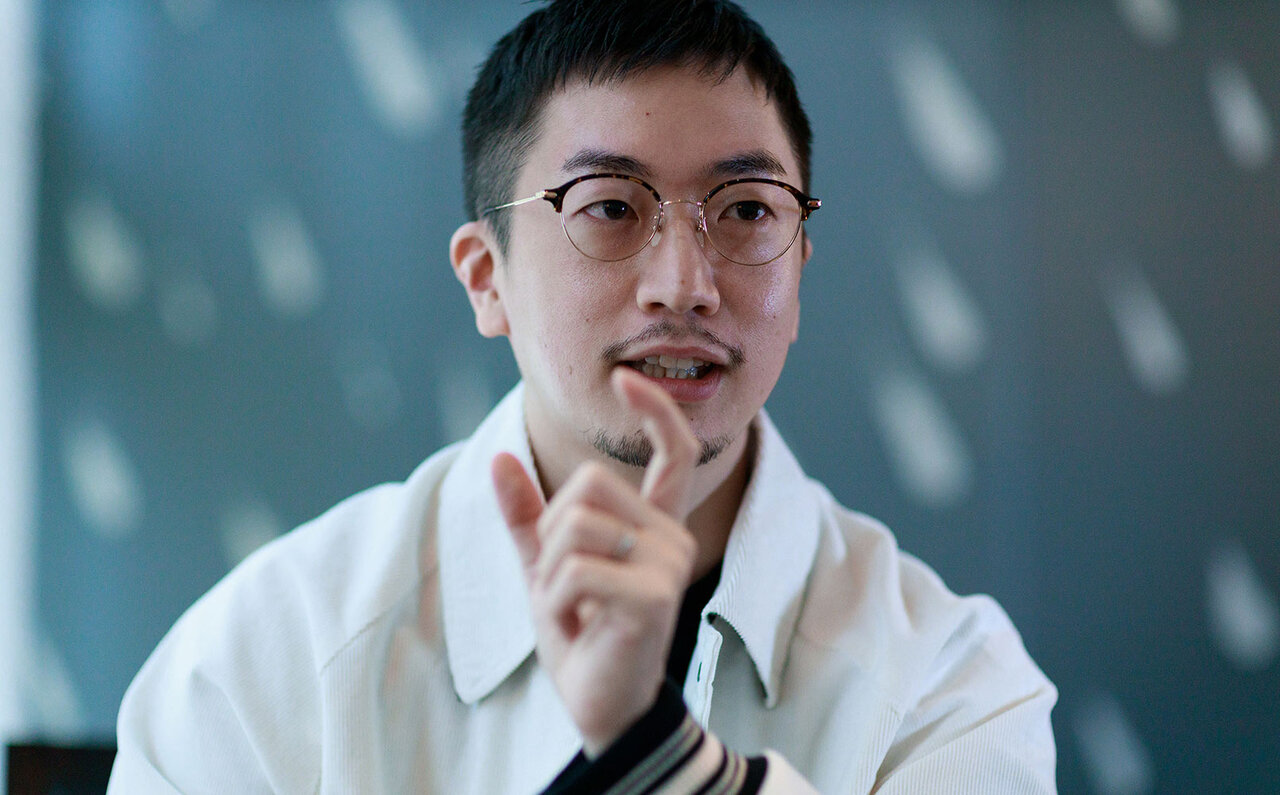
Ryushi Ikoma, SAKE HUNDRED Brand Owner. "Sparkling sake is crafted using a unique technique called secondary fermentation in the bottle, with absolutely no additives. Some might dismiss it as simply 'adding bubbles to sake,' but that's far from the truth! The flavor and effervescence are determined solely by the rice, water, and koji, requiring exceptional brewing skill. I want to showcase to the world that such remarkable sake exists in Japan. That's also why we decided to create this sparkling sake."
To reiterate, producing sparkling sake is not easy. That's why we approached Ryoko Kitahara, the head brewer at Yamanashi Meijo.
Kitahara-san is a leading figure who has dedicated himself to refining the techniques for producing sparkling sake, possessing absolute confidence and conviction in its quality. Beyond his craftsmanship, his "humanity"—a blend of artisanal dedication with a cool, business-minded perspective—was truly compelling.
Kitahara-san and I shared the sentiment that, looking at the current landscape of sparkling sake, many offerings are simply junmai daiginjo with added carbonation, leaving something to be desired. We agreed that for "SAKE HUNDRED," we needed something with a more complex, aromatic, alluring, and distinctively立体 (three-dimensional) flavor profile. That's the essence of our conversation.
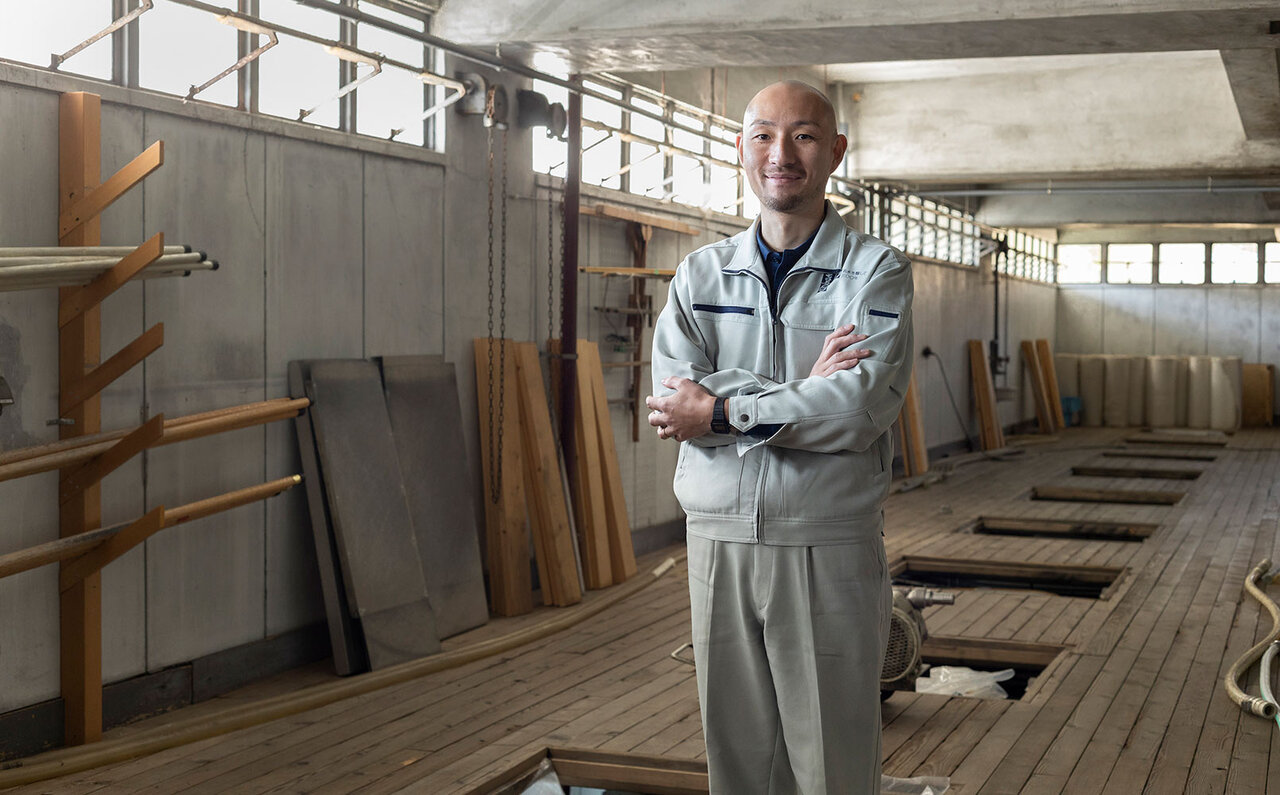
Ryoko Kitahara, Head Brewer at Yamanashi Meijo. At the age of 30, upon becoming head brewer, he initiated a radical reform, discarding previous know-how. Despite having senior colleagues older than him, he resolutely pursued a new sake quality design, eventually dominating awards in the sparkling sake category.
KitaharaIt was a great honor and pleasure to be chosen as the brewer for a sparkling sake under the "SAKE HUNDRED" brand. However, the responsibility was equally immense. I knew I couldn't approach this with a half-hearted effort, so I committed myself fully, dedicating considerable thought and deliberation.
"SHINSEI" is one of the most refined products among the sparkling sakes I have created to date.
IkomaI've always believed that, in addition to rice, "water" is crucial for Japanese sake. In wine, terroir is highly valued, but from that perspective, the terroir for Japanese sake is its "water."※If we are to compete in the global premium beverage market, we must articulate the "terroir of water." That's my conviction.
※Derived from the French word "terre," meaning "land." For varieties of wine, coffee, tea, etc., it refers to characteristics arising from the geography and climate of the growing region.
※Derived from the French word "terre," meaning "land." For varieties of wine, coffee, tea, etc., it refers to characteristics arising from the geography and climate of the growing region.
Japanese sake is made from three components: rice, water, and koji. Of these, water cannot be easily transported. It is the most "local" element, obtainable only in the region where the brewery is located, yet it is a major factor in determining the sake's character.
When we proposed the idea for "SHINSEI," Kitahara-san took our staff to the water source.
As the leading figure and a proven expert in sparkling sake, Kitahara-san undoubtedly understood and practiced the concept of "water as terroir" long before we did. I felt a profound sense of resonance.
His deep-seated philosophy, almost a reverence for "water," is truly remarkable.
KitaharaProducts made in the same region share unique characteristics of that locale. This applies not only to grapes but to all agricultural products, and water is no exception. Our region is covered by the granite of Mount Kaikomagatake and the volcanic rocks of the Yatsugatake. As water filters through these rocks, the mineral content changes.
People often comment, "The water at your brewery is delicious and pure." However, I believe we should delve deeper into *why* it's delicious and *what specific characteristics* it imparts to sake brewing.
In sake brewing, water is used most extensively in every process. It's essential for washing rice, soaking rice, and even for the steam used to cook the rice. Despite water's profound influence, I realized that if we remain content with the notion of just "good water," we cannot create sake that uniquely reflects our region's character.
Subsequently, I began focusing on water as a central theme, dedicating research to it. Specifically, we discovered that the widely acclaimed "Kyo-kai No. 9" yeast, considered excellent for ginjo sake, did not pair well with our water, leading us to discontinue its use. By re-examining sake with water as the focal point, many things became clear. The defining characteristic of Yamanashi Meijo's brewing is its "stance of engaging with the waters of Hakushu."
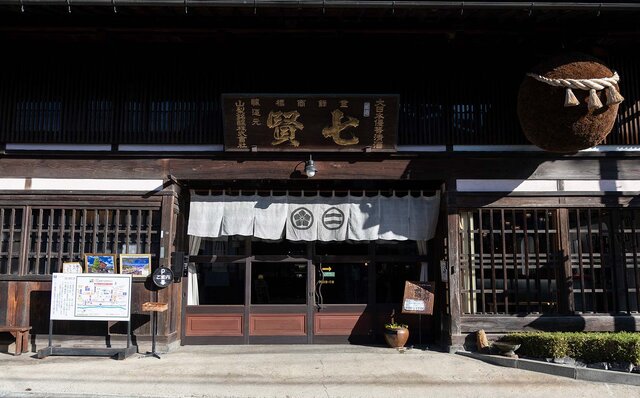
—What kind of sake is "SHINSEI," created by the two of you?
Ikoma"SHINSEI" possesses a transparency that forms a complex, multi-layered flavor profile, thereby offering an elegant experience. This is a value unique to this sake. Even after numerous tastings, I always find myself thinking, "This is truly delicious!" (laughs).
KitaharaAfter drinking "SHINSEI" and setting down the glass, the moment of appreciating the rising bubbles is a unique value of "SHINSEI." I want people to see it as a completely different category from traditional sake, and I anticipate that the birth of "SHINSEI" will open new doors in the future.
IkomaThe delicate bubbles are indeed a charm of "SHINSEI," and this is a testament to Yamanashi Meijo's technical expertise. But what is truly unique to "SHINSEI" is its "long finish." I recall a discussion where you, Kitahara-san, advocated for a shorter finish, while I wanted to extend it further.
KitaharaResponding to the keyword "finish," I focused on designing a flavor that unfolds complexly over time, accompanied by bubbles.
The aroma emerges upon pouring, but the key lies in the yeast. We selected and blended yeasts that would produce a more fragrant profile than our other sparkling sakes.
Each of our sparkling sakes has a unique recipe, and "SHINSEI" is no exception, featuring a completely original formula. We employed a double fermentation brewing method, which is a rich process that requires significant time and effort, resulting in its complex flavor.
Additionally, we've brought out a refreshing acidity, akin to that of apples, which serves as a subtle accent.
IkomaAmong Yamanashi Meijo's products, I believe this one has an exceptionally long finish. The aroma is delicate and evolves with time and temperature. To fully appreciate this, I encourage savoring it slowly. The extended experience itself is a significant part of its appeal.