Shinko Nagata (SHIBUYA DESIGN) x Ichiro Miura (KDDI) Dialogue: What Kind of Talent, Careers, and Work Styles Are Needed in an Era of Change? | au 5G
au 5G | Shibuya 5G Entertainment Project
Why Unique Individuals Gather for the "Shibuya 5G Entertainment Project"
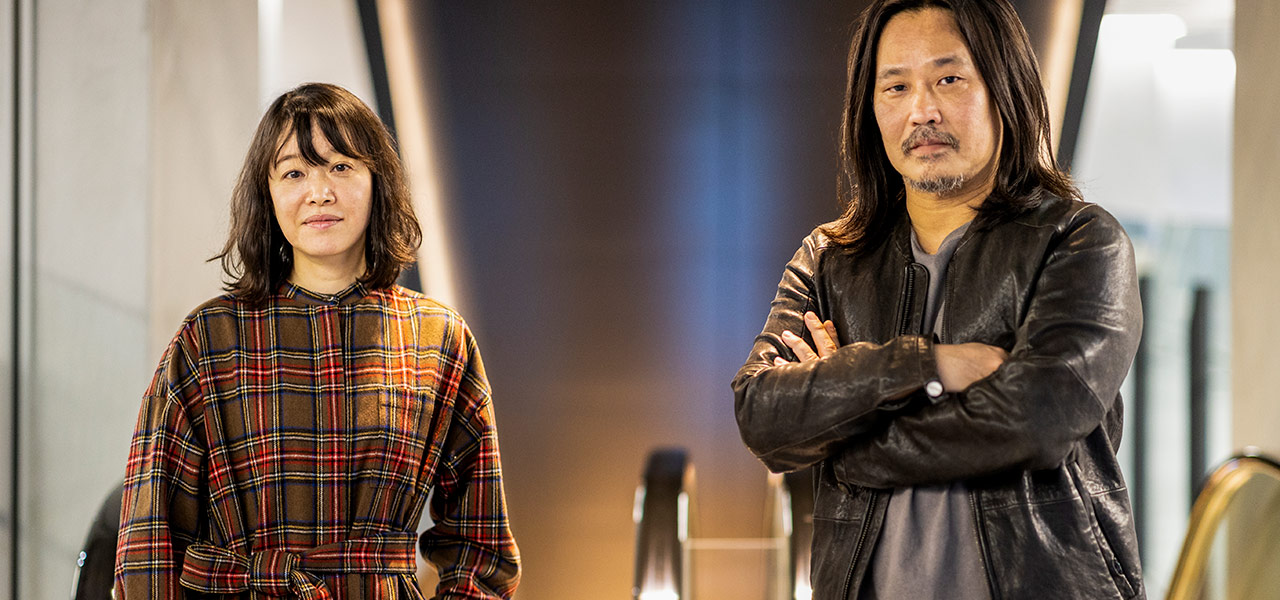
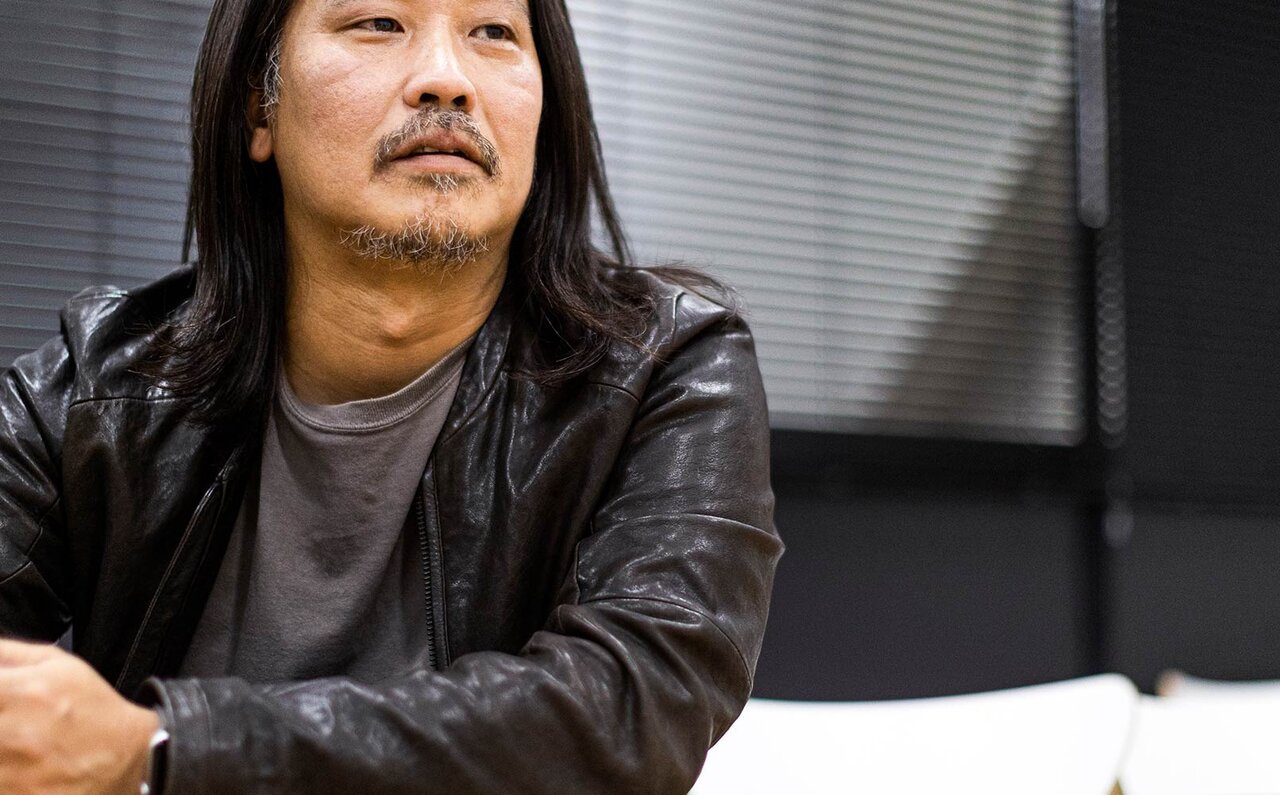
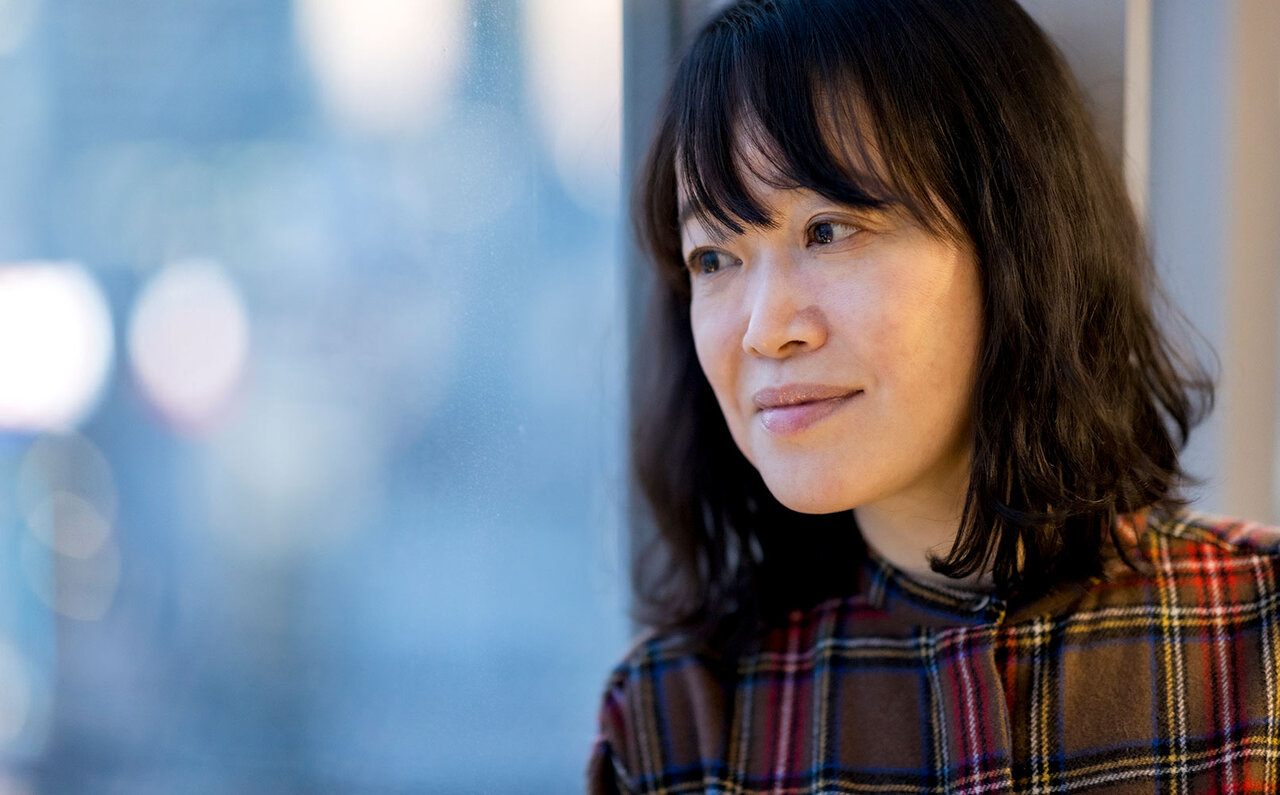
A conversation between Shinko Osada, director and deputy secretary-general of the general incorporated association "Shibuya Future Design," and Ichiro Miura, General Manager of Innovation at KDDI Corporation. Osada previously served as Marketing Director at Red Bull Japan, where she orchestrated numerous events, including the Air Race. Miura is known for his groundbreaking initiatives, such as large-scale anniversary events during his tenure at Diesel Japan.
These two individuals with unique career paths are now colleagues on the "Shibuya Entertainment Project," a collaborative initiative by KDDI, the Shibuya Tourism Association, and Shibuya Future Design. This project is also the organization behind "Virtual Shibuya," launched in May 2020 as Shibuya Ward's official "Second Shibuya." Here, we explore the background of this innovative endeavor to recreate Shibuya in a virtual space, while also examining the talent, careers, and work styles needed in an era of change.
Text & Edit by TOMIYAMA Eizaburo Photo by MAEDA Akira
From Nokia to Red Bull. A Career Shift from NTT to Diesel
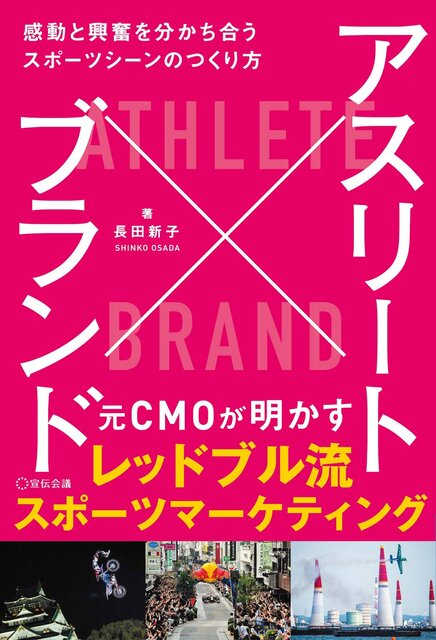
MiuraOsada, you recently published the book "Athlete x Brand: How to Create Sports Scenes Where Excitement is Shared," among other diverse activities. I thought it would be interesting to discuss careers and work today.
OsadaWe first met in 2007, didn't we? I remember being introduced to you at a party when you were at Diesel. But I think we really started talking at the "Big Beach Festival."
MiuraBefore Red Bull, you were at Nokia, correct?
OsadaThat's right. I joined Red Bull Japan in 2007. A big reason was that I wanted to move into a completely different industry. At the time, switching from the telecommunications industry to FMCG (Fast-Moving Consumer Goods) was unusual, so I saw it as an opportunity. I also enjoyed watching sports.
MiuraI moved from NTT to a foreign-affiliated advertising agency, and then to Diesel Japan. The projects I handled at the advertising agency, such as designing communication strategies for IBM's middleware, weren't services I could easily relate to personally. I wanted to do marketing with products that were more familiar and understandable.
OsadaSo, we both started our careers in the telecommunications industry.
MiuraAnd both Red Bull and Diesel had similar aspirations, didn't they? Both are challenging companies, so I think that shared spirit is why we met at Big Beach.
OsadaI thought, "Wow, there are some really energetic people here!" (laughs) I remember it quite vividly.
Switching Industries Always Comes with Culture Shock
MiuraHahaha. I imagine Red Bull had many such people too. Did you experience culture shock when you first joined?
OsadaI wore a suit on my first day and was surprised at how out of place I felt. But once you get used to an environment with diverse people, it actually becomes easier to work in.
MiuraI wasn't wearing a suit, but since I was in apparel, I initially felt intimidated, like I was being judged on my outfits (laughs).
OsadaThat feeling of being tested. "Who is this person?" That's common when you first start somewhere, isn't it?
MiuraExactly, there's that initial atmosphere of "let's see what they can do." In reality, everyone was very kind, and it turned out to be a great company. But that initial culture shock was significant, and figuring out how to fit in might have been similar to my experience at KDDI.
OsadaThat's what challenges are all about, isn't it? But you felt potential in your new workplace, right?
MiuraI felt a great deal of potential. I knew Diesel was a strong brand, and I believed there was room for me to grow there. How about you, Osada?
OsadaNokia is a telecommunications company, so they offered not just mobile devices but also various services. Red Bull, on the other hand, has just one product. If it didn't sell well, there was a risk of withdrawal, which was a significant difference. However, they had many assets for building the brand and culture, with content ranging from F1 to music. In that sense, I felt I could leverage my past experience.
What Matters is Giving Your All to the Task at Hand
MiuraThe motivation for changing jobs often comes from things like "being able to utilize my skills" or "finding it more rewarding," doesn't it?
OsadaIn my case, my previous work had a strong B2B focus, so I really wanted to engage in true consumer marketing.
MiuraThat's similar for me. This might sound philosophical, but I've always tried to live fully in each environment I'm in. As a student, I was a backpacker traveling the world. After joining NTT, once I felt I had accomplished what I could there, I looked for my next best step. That led me to "change jobs."
I think changing jobs is about how you view the company. Some people describe joining a company as "getting married," but I see it more like "getting a girlfriend." A girlfriend evolves over time, doesn't she? Similarly, companies that suit you change as your life stages change, and your compatibility with them shifts as you grow. While staying with one company for a lifetime is admirable, I don't believe it's the only "right way." What's important is to give your all to the task at hand and achieve results.
OsadaFor me, rather than aiming for promotion, I wanted to broaden my interests horizontally. In other words, expand the scope of my career. I believe this also leads to a richer life. Meeting people allows you to encounter individuals you want to work with, and it opens up possibilities for future endeavors. I feel I've grown through these experiences.
If You Say "No" When You're Young, You Limit Your Options
MiuraWas marketing something you had always wanted to do?
OsadaI hadn't considered it at all, or rather, I didn't have the luxury to. In my first job, I also did sales. As I did various things, when someone suggested, "Why don't you try this?" I just said, "Yes," without saying "No." If you say "No" when you're young, you limit your options, don't you? Everything started with "I'll try it!"
MiuraSo, your marketing responsibilities gradually increased naturally.
OsadaAt Red Bull, too, the marketing and communications departments were initially separate, but then I was told, "Why don't you manage both?" and I said, "Okay, I will." I tend to go with the flow while gradually asserting what I want to do.
MiuraLooking back at my career, I'm glad I experienced both sales and marketing. I think sales experience is particularly important.
OsadaOtherwise, you just spend money without understanding the feeling of selling a product.
MiuraFor example, even when spending 100,000 yen on marketing, you have to calculate, "How many pairs of jeans do I need to sell to cover this?" Whether you have that perspective – that this money can only be spent after selling dozens of pairs – makes a difference.
OsadaWhen I was in sales, it was often for high-value items like system implementations. I really thought about why that company needed it at that moment and how it would change things once implemented. So, it's not just about selling; it's about how the company and its people become happier, what changes, and only then, how to approach the marketing. Doing both helps you appreciate the value of each.
Motivation Stems from a Spirit of Challenge and Curiosity
During your time at Red Bull, Osada, you organized many events, such as running F1 cars on public roads, holding the Air Race in Makuhari, Chiba, and orchestrating street events. Miura, you also held numerous large-scale events with Diesel. What prompted you to leave such exciting environments?
MiuraI felt I had done everything I could, to the point where I couldn't think of any new approaches. Then, the timing naturally felt right. I believed it was time to pass the torch to younger talent and move on to my next career.
After some time, I felt a desire to take on new challenges within a major Japanese company again, and through a fortunate connection, I joined KDDI. Coincidentally, that timing was the same as yours, Osada.
OsadaThat was in 2017. Until then, I had only known foreign companies. So, the idea of working with Japanese companies and "urban development" seemed interesting. Around that time, this organization (Shibuya Future Design) was being established, and I started helping out as a volunteer about three months before I left my previous job. As I got involved, I realized I could leverage the strengths of new companies and my network to do something for people and the city. I decided to join because I felt it had the potential to be a truly new organization. Everyone was surprised at first.
MiuraI was surprised too.
OsadaSince it was a newly established organization that no one knew, everyone seemed to think I had joined a design company (laughs).
It seems like you're both pursuing next-generation trends, such as the "urban development" led by Shibuya Future Design and the virtual space created by KDDI using "5G."
OsadaThat wasn't something I had considered at all.
MiuraMe neither. It just happened that way as a result.
Urban Development is Difficult Because the Target is "Residents," Not "Consumers"
Was it more about wanting to engage in broader communication aimed at a wider audience?
OsadaFrom a marketing perspective, there were two reasons. First, the "Shibuya" brand itself is very attractive. There's potential for branding and marketing on a global scale. As a resident of Shibuya Ward, I also have a strong affection for the place.
Second, the target audience is not "consumers" but "residents." This includes people who work there, and the goal is to make them love the city, encourage them to continue living there, and create places for them to work and engage in activities. This perspective is entirely different from what I've done before. It's not about the typical approach of "delivering messages and products to the target demographic." In that sense, it's truly challenging, and regardless of whether "marketing" is the right term, thinking about what to do for a wide range of residents is a new challenge.
MiuraA significant factor in KDDI's decision to collaborate with Shibuya Future Design was the belief that "with Osada involved, this project has potential." To be clear, this is a project undertaken by the organization, not by me personally. However, I could confidently propose this to the company because Osada was on board. Furthermore, I had supportive colleagues within KDDI and talented employees who were genuinely committed to the initiative.
OsadaWe had already conducted various experiments for about a year and a half before "Virtual Shibuya" came into being.
MiuraInitially, we faced challenges like too many people at the scramble crossing, and the potential for over-tourism during the Olympics. We also aimed to increase foot traffic by making the city's attractions more widely known. KDDI sought to address these issues using technologies like AR and VR, along with 5G.
Even with Cutting-Edge Technology, It All Comes Down to People and Trust
OsadaMany people might think "Virtual Shibuya" suddenly appeared due to the pandemic, but that's not the case.
MiuraThat's right. We conducted experiments at an incredible pace. But what I appreciate about working with you, Osada, is the importance of action. It's better to take action with calculated risks than to overthink it. That's something we resonate with.
OsadaAs a public organization, we sometimes face criticism, but surprisingly few people complain after something has been implemented. Whether it's a success or a failure, it's better to move forward with "I want to do more" after trying something. However, public institutions cannot always take such risks, so it's crucial for intermediary organizations like ours to conduct experiments and provide feedback.
MiuraUltimately, it's about "people," more than the mechanics of the system. The people at Shibuya Future Design and KDDI are all approaching this with a certain level of commitment. It might sound like a matter of spirit, but it's a surprisingly important point.
Osada"Trust" and "Proactivity" are essential. We still discuss things online almost every day. While I could technically delegate and say, "I'll leave the rest to you," that's not how we operate.
MiuraWhile virtual reality and 5G might seem like cold, inorganic worlds of "0s" and "1s," the reality is that KDDI, Shibuya Future Design, and Shibuya Ward engage in passionate discussions and actions. That's where the significant value lies. So, while similar "containers" might be created elsewhere, I can confidently say that functional, or rather, valuable creations won't emerge easily. This is because the depth of discussion and the speed of execution are overwhelmingly different.
Shibuya is a City for Challenges, Where New Things Will Continue to Emerge
After the pandemic, what do you think the future holds for human life and work, including the city of Shibuya?
OsadaI believe Shibuya's appeal will endure. It has a history of constant innovation, and it's home to a diverse and fascinating population. Furthermore, the businesses that are thriving even in these circumstances are loved by locals or have loyal regular customers; they all possess some form of loyalty. Including Virtual Shibuya, we are constantly thinking about how to serve them, so I don't think the city itself will fade away. I believe this applies to Japan as a whole.
MiuraShibuya is a city where intangible cultures, like those of "chimer" and "kogals," have flourished. I hope that Virtual Shibuya will grow as a platform and become a place for disseminating such intangible cultural assets. In the future, I believe everything will become a hybrid of real and virtual. Shibuya Ward's promotion of a "Creative Cultural City" will likely embody this.
OsadaWork styles are changing, and there's talk of vacant office spaces becoming an issue, but I'm very interested in how those spaces will be utilized effectively. I feel this is a time when new things, including virtual ones, are being created.
MiuraShibuya is a city where you can take on challenges in such changing times. And with you, Osada, acting as a liaison with the local government, you are an invaluable presence.
Talent, Careers, and Work Styles Needed in an Era of Change
To reiterate, what are the talent, careers, and work styles needed in this era of change?
OsadaI personally want to continue embracing new challenges while evolving with the times. As one gets older, pride can become an obstacle, leading to conservatism. However, by directing that pride towards "interest" and "society," I hope to achieve both "change" and "evolution." What's crucial is the environment and the people with whom you take action. This remains constant, even as one ages. With experience added, the number of collaborators increases, and the methods evolve.
To reiterate, I aim to broaden my horizons while gradually deepening my expertise, allowing my career and personal growth to advance in tandem.
MiuraThe future is uncertain. What's needed is to accumulate diverse "experiences" and see more of the world. Exposure to different cultures is particularly important. It doesn't have to be global; even within Japan is valuable. The key is "experiencing it firsthand."
Then there's the "resolve" and "spirit of challenge" to give your all to the present moment. Becoming conservative out of fear of the future is the worst thing you can do. It's about continuing to challenge yourself, even with risks involved. Continuously challenging yourself with full effort is the surest path to future security and success.
As times change, organizations must change, and individuals must change too. The ability to adapt flexibly to change is also crucial. There are no "absolutes" or "eternals" in anything. It's vital to flexibly adapt yourself to the situation and create the best environment.
Finally, the most important thing: it's not about whether you're in a "good company" that matters when you work. It's about how many "good people" you can work with. To work with good people, you must strive to consistently practice "what is right." No matter how large the organization or company, it ultimately comes down to "people." Can you be someone that others want to work with and strive alongside? That is my greatest challenge as well.
In this era of uncertainty, I believe the key to future work styles lies in honing your individual strengths, acquiring the ability to adapt flexibly through experience, and dedicating yourself to working with the best colleagues in this one precious life, while continuously embracing challenges.
Shinko Osada | Shibuya Future Design
After serving in sales, marketing, and public relations roles for information and communication, as well as corporate systems and services at AT&T and Nokia, she joined Red Bull Japan in 2007. For the first three years, she headed communications, and from 2010 for seven and a half years, as Chief Marketing Officer (CMO), she focused on establishing the energy drink category in Japan and embedding the Red Bull brand and products in the Japanese market. She left at the end of September to become independent. Currently, she serves as Director and Deputy Secretary-General of the General Incorporated Association Shibuya Future Design, established in April 2018. She is also a director of the Marketing Career Association and representative of NEW KIDS Inc.
"Athlete x Brand: How to Create Sports Scenes Where Excitement is Shared"
Author: Shinko Osada / Publisher: Senden Kaigi
¥1,800 (excluding tax)
"The Red Bull brand grew because we consistently supported cultures that others overlooked and engaged deeply with them." The former Red Bull CMO reveals how to win brand fans. The book also includes interviews with four individuals, including aerobatic pilot Yoshide Muroya and Hiroki Kimura, President of Mixi, Inc.
Ichiro Miura | KDDI Corporation
General Manager, Innovation at KDDI Corporation
Graduated from Seikei University. From 1996, he worked at NTT (Nippon Telegraph and Telephone Corporation), Ogilvy and Mather, and served as Manager of the Public Relations and Advertising Department at DIESEL JAPAN before establishing a PR consulting firm. In 2017, he joined KDDI Corporation as General Manager of Innovation, focusing on areas such as business promotion. In January 2020, he launched the "Shibuya 5G Entertainment Project" with 70 private companies and Shibuya Ward, leading the creation of 5G, tech, and entertainment businesses originating from Shibuya.
From 1995, he was also involved in the launch and production of large-scale festivals in Japan and Australia for approximately five years. During his university years, he also traveled to over 60 countries as a backpacker.